
Perawatan peralatan farmasi bukan sekedar memperbaiki mesin ketika berhenti. Program pemeliharaan yang baik menjaga peralatan tetap bersih, dapat diandalkan, tepat, dan siap untuk produksi sekaligus mengurangi waktu henti yang tidak terduga dan menghindari risiko kualitas. Di bawah Praktik manufaktur yang baik dari FDA saat ini, peralatan yang digunakan untuk memproduksi, proses, mengemas, atau menyimpan produk obat harus dibersihkan dan dipelihara pada interval yang tepat, didukung oleh prosedur dan catatan tertulis. Otomatis, mekanis, dan peralatan elektronik juga harus dikalibrasi secara rutin, diperiksa, atau diperiksa di bawah program tertulis.
Untuk pabrik farmasi, tujuan praktisnya jelas: tahu mesin mana yang paling penting, mengidentifikasi komponen yang paling mungkin mempengaruhi kualitas produk atau waktu kerja, pertahankan mereka sebelum kegagalan, mendokumentasikan pekerjaan tersebut, dan terus menyempurnakan rencana dari data operasi nyata. Panduan Praktik yang Baik untuk Pemeliharaan ISPE juga memperlakukan pemeliharaan sebagai program area GMP yang terstruktur dan bukan kumpulan pekerjaan perbaikan yang terisolasi..
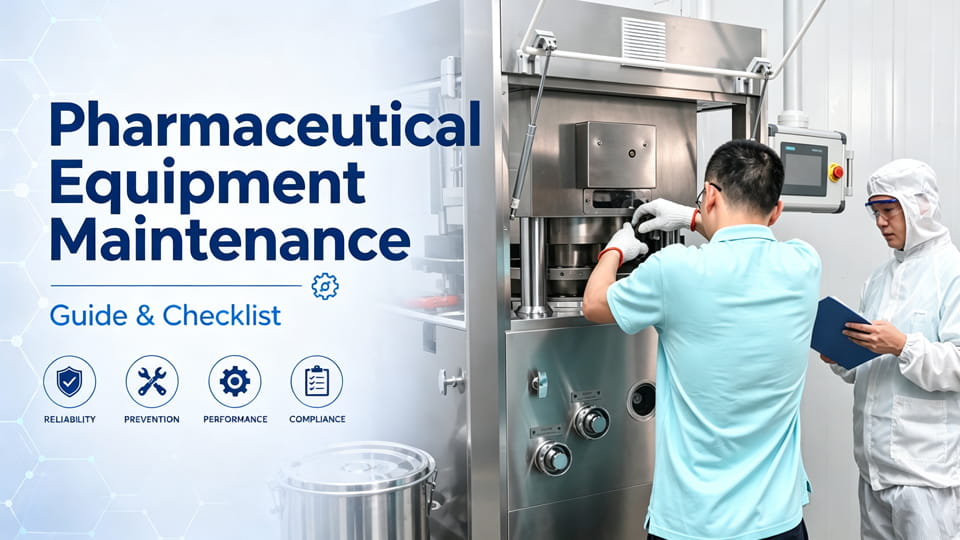
Panduan ini menjelaskan cara membangun sistem tersebut, dengan daftar periksa pemeliharaan peralatan farmasi praktis, jadwal pemeliharaan, saran khusus mesin, dan pertimbangan GMP untuk mesin cetak tablet, pengisi kapsul, mesin melepuh, mesin hitung, dan kartoner.
Pemeliharaan Peralatan Farmasi adalah pemeriksaan yang direncanakan, pembersihan, Pelumasan, pengaturan, dukungan kalibrasi, memperbaiki, dan pekerjaan penggantian yang digunakan untuk menjaga produksi farmasi dan mesin pengemasan tetap berfungsi sebagaimana mestinya.
Ini mencakup lebih dari sekedar teknisi pemeliharaan dengan kotak peralatan. Program pemeliharaan farmasi yang lengkap menghubungkan produksi, rekayasa, jaminan kualitas, operator, manajemen suku cadang, dokumentasi, dan pemasok peralatan.
Mengapa itu penting??
Ada empat pendekatan pemeliharaan yang berguna:
| Jenis Perawatan | Pemicu | Penggunaan Terbaik | Batasan Utama |
| Pemeliharaan reaktif | Peralatan telah gagal | Kekritisan rendah, komponen murah | Menghasilkan waktu henti yang tidak direncanakan dan dapat menyebabkan kerusakan sekunder |
| Pemeliharaan preventif | Waktu, siklus, batch, atau jam operasional | Suku cadang yang aus secara rutin, Pelumasan, inspeksi, servis terjadwal | Dapat mengganti suku cadang lebih awal dari yang diperlukan jika intervalnya tidak diatur dengan baik |
| Pemeliharaan berdasarkan kondisi | Kondisi terukur melewati batas yang ditentukan | Bantalan, motor, sistem vakum, komponen yang sensitif terhadap suhu | Membutuhkan pengukuran yang andal dan batas penerimaan |
| Pemeliharaan prediktif | Tren atau model menunjukkan perkembangan kemunduran | Peralatan kritis dimana peringatan dini mempunyai nilai yang tinggi | Membutuhkan data yang cukup, disiplin pengawasan, dan kemampuan teknis |
Bagi sebagian besar produsen farmasi, jawaban terbaik bukanlah memilih hanya satu metode. Ini menggunakan pemeliharaan preventif sebagai fondasinya, pemeliharaan reaktif untuk item berisiko rendah yang sesuai, dan metode berbasis kondisi atau prediktif yang membenarkan kekritisan peralatan.
Praktis program pemeliharaan preventif dalam industri farmasi dimulai dengan peralatan—bukan dengan daftar periksa umum yang diunduh dari internet.
Alur kerja sederhana terlihat seperti ini:
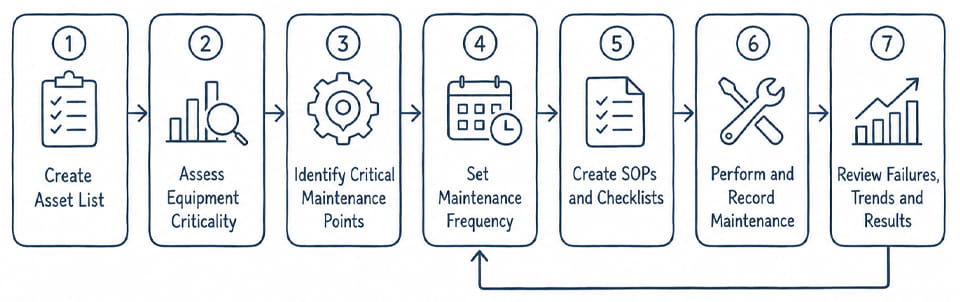
Bagian yang penting adalah panah terakhir. Jadwal pemeliharaan farmasi akan ditingkatkan seiring dengan Anda mempelajari bagaimana peralatan tersebut berperilaku.
Jadwal berikut adalah a templat awal, bukan frekuensi regulasi. Interval sebenarnya harus mengikuti rekomendasi produsen peralatan dan penilaian risiko di lokasi Anda, jam operasional, bahan, riwayat pemeliharaan, dan keadaan tervalidasi. FDA mewajibkan jadwal pemeliharaan dan EU GMP mengharapkan peralatan dirawat dengan baik dan peralatan pengukuran dan kontrol yang relevan diperiksa pada interval yang ditentukan.
| Frekuensi | Tugas Pemeliharaan Peralatan Farmasi yang Direkomendasikan |
| Sehari-hari / setiap shift | Bersihkan area kontak produk yang dapat diakses; menghilangkan debu dan residu; periksa kebocoran, kebisingan yang tidak biasa, getaran, bagian yang longgar, penjaga yang rusak, alarm yang tidak normal, masalah udara/vakum, dan keausan perkakas yang jelas; verifikasi perangkat keselamatan sebelum pengoperasian |
| Mingguan | Periksa dan bersihkan sensor, filter, rantai, ikat pinggang, garis vakum, perlengkapan pneumatik, pengumpan, rel panduan, perkakas, dan titik ekstraksi debu; lumasi titik-titik yang disetujui jika diperlukan |
| Bulanan | Periksa bantalan, kamera, komponen penggerak, motor, sambungan listrik, segel, gearbox, penyelarasan perkakas, kinerja vakum, pemanas, dan memakai suku cadang; meninjau alarm dan riwayat perbaikan |
| Triwulanan | Lakukan pemeriksaan mekanis dan kelistrikan lebih dalam; memverifikasi pengaturan dan instrumentasi penting; periksa sirkuit keselamatan dan rakitan dengan tingkat keausan tinggi; meninjau kegagalan berulang dan konsumsi suku cadang |
| Tahunan | Melakukan inspeksi menyeluruh atau overhaul terencana berdasarkan kondisi mesin; ganti suku cadang yang umurnya terbatas jika dibenarkan; memverifikasi status kalibrasi dan sistem keselamatan; meninjau program PM, riwayat pemeliharaan, dokumentasi, dan pelatihan |
Untuk daftar periksa pemeliharaan peralatan farmasi harian, operator adalah garis pertahanan pertama Anda. Minta mereka untuk mencari perubahan: kebisingan baru, lebih banyak bubuk di sekitar segel, respons vakum yang lebih lambat, motor yang lebih hangat, pelacakan film yang tidak stabil, atau peningkatan tingkat penolakan. Perubahan kecil sering kali muncul sebelum kerusakan total.
Pekerjaan mingguan harus fokus pada komponen yang menumpuk debu atau kendur secara bertahap, menyumbat, mengering, atau pakai. Pemeliharaan bulanan dilakukan lebih mendalam pada sistem penggerak, sambungan listrik, penyelarasan, segel, perkakas, dan majelis yang bergerak.
Pekerjaan triwulanan dan tahunan tidak boleh menjadi sebuah ritual di mana teknisi hanya mencentang kotaknya saja. Bandingkan kondisi mesin sebenarnya dengan pemeriksaan sebelumnya. Periksa kesalahan berulang. Lihatlah komponen yang diganti. Tanyakan apakah frekuensi perawatannya masih tepat.
Pelumasan memerlukan perhatian khusus. Pelumas yang terlalu sedikit meningkatkan gesekan; menggunakan pelumas yang salah atau mengaplikasikannya di tempat yang mungkin terkontaminasi dapat menimbulkan masalah lain. JinLu memiliki yang terpisah Panduan Pelumas Peralatan Farmasi mencakup pemilihan pelumas dan pertimbangan pemeliharaan untuk mesin farmasi.
Saran pemeliharaan peralatan farmasi generik hanya berlaku sejauh ini. Nilai sebenarnya berasal dari mengetahui apa yang harus diperiksa pada setiap mesin.
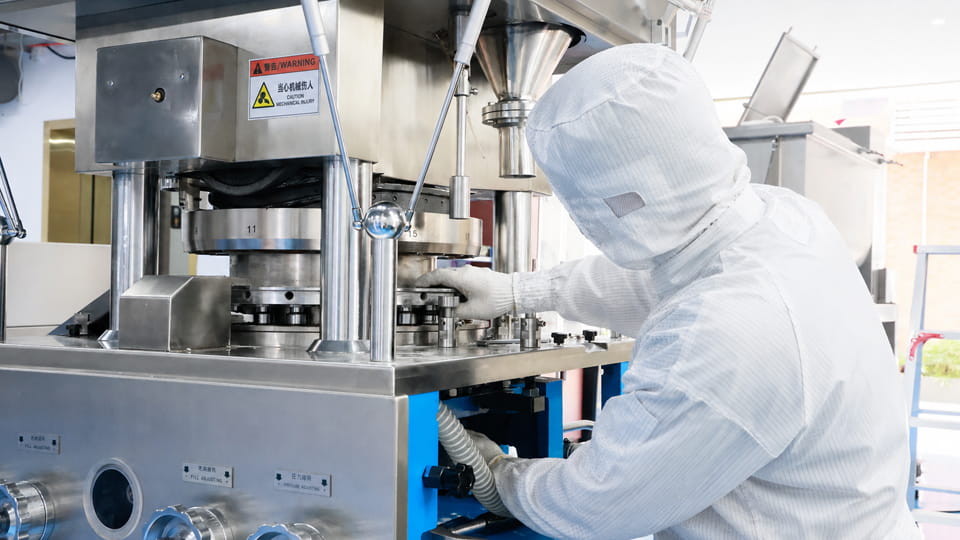
Pemeliharaan mesin cetak tablet. Fokus pada pukulan dan kematian, menara, track cam atas dan bawah, rol kompresi, Force Feeder, sistem penggerak, titik pelumasan, ekstraksi debu, dan perlindungan keselamatan. Akumulasi bubuk di sekitar turret atau perkakas dapat mempercepat keausan dan menyebabkan cacat tablet, sementara perkakas yang rusak atau keselarasan yang buruk perlu segera diselidiki. Mesin press tablet JinLu menggunakan rakitan seperti menara putar, pengumpan paksa, sistem vakum, sistem kompresi, dan perlindungan kelebihan beban, membuat titik pemeriksaan logis ini dalam program pemeliharaan preventif mesin cetak tablet. Lihat JinLu Jajaran Mesin Press Tablet.
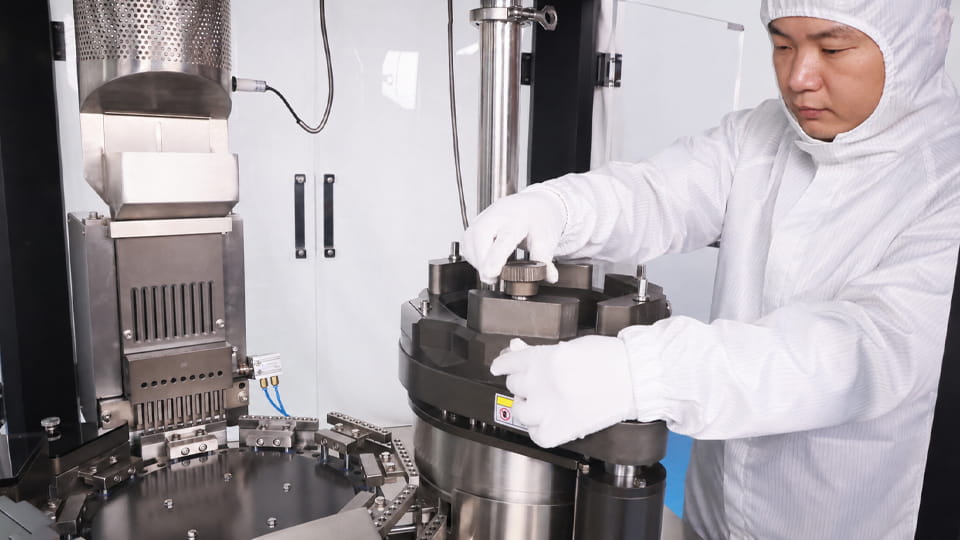
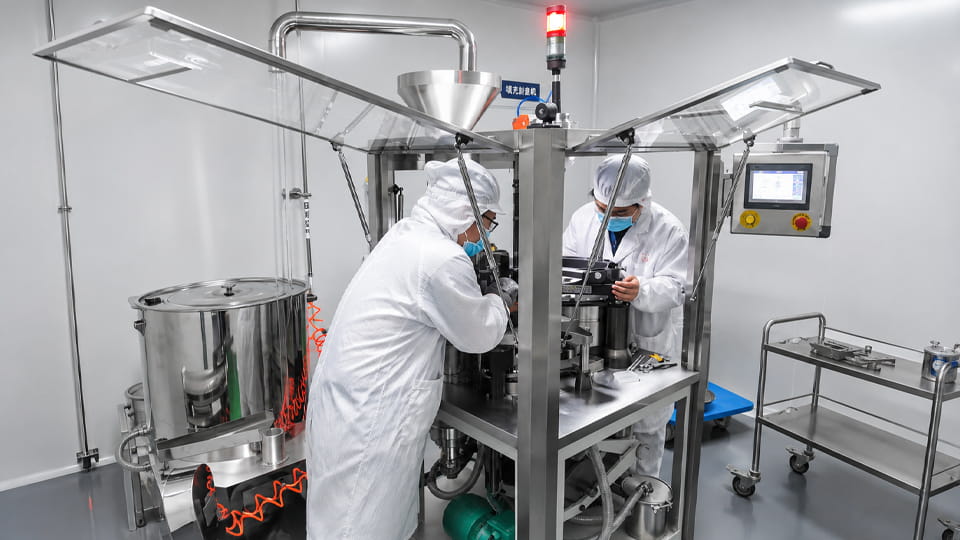
Perawatan mesin pengisian kapsul. Simpan pengumpan kapsul, sistem pemisahan, lingkaran kosong, komponen dosis, rakitan tamping atau pengisian, stasiun penguncian, kamera, dan area pengontrol debu bersih dan disetel dengan benar. Perhatikan terutama jika ada bubuk yang memasuki ruang mekanis, penurunan kinerja vakum, ketidaksejajaran kapsul, dan suara kamera yang tidak normal. Pengisi kapsul otomatis JinLu menggunakan rakitan pengisian modular dan, pada model tertentu, bantalan bebas oli dimaksudkan untuk mengurangi kebutuhan perawatan. Untuk panduan tingkat komponen yang lebih mendalam, melihat Cara Merawat Mesin Pengisian Kapsul Otomatis dan itu Rangkaian Mesin Pengisian Kapsul.
Perawatan mesin melepuh. Periksa stasiun pembentukan dan penyegelan, pemanas, pelat penyegel atau rol, rol pemandu, ketegangan film, pengumpan, perkakas pemotongan, pendinginan, sensor, komponen pneumatik, dan sistem vakum. Debu atau residu pada permukaan penyegelan, komponen yang aus, kesejajaran yang salah, dan kondisi pemrosesan yang tidak stabil dapat dengan cepat terlihat sebagai segel yang lemah atau kemasan yang cacat. Mesin blister JinLu menggabungkan pembentukan, makanan, penyegelan panas, daya tarik, dan fungsi pemotongan, jadi penyelarasan antar stasiun sangatlah penting. Lihat Jajaran Mesin Blister Packing dan JinLu Panduan Masalah Mesin Blister.
Mesin hitung dan karton. Pada penghitung tablet dan kapsul, menjaga saluran getaran, permukaan makan, sensor fotolistrik atau penglihatan, area penghilangan debu, penanganan botol, menolak sistem, dan komponen pneumatik bersih dan ditempatkan dengan benar. Peralatan penghitungan JinLu dirancang untuk diintegrasikan ke dalam jalur pembotolan, sedangkan produk JL-16C-nya menggunakan modular, desain tertutup dimaksudkan untuk menyederhanakan perawatan dan membatasi masalah debu. Pada suatu Mesin Karton, perhatikan baik-baik komponen pengambilan vakum, cangkir hisap, majalah karton, rantai, panduan, sensor, sistem selebaran, membentuk stasiun, dan deteksi produk/karton karena beberapa stasiun terkoordinasi harus beroperasi secara berurutan.
Pemeliharaan, pembersihan, dan kalibrasi saling berhubungan, tetapi keduanya tidak dapat dipertukarkan.
| Aktivitas | Tujuan Utama | Contoh Khas |
| Pembersihan | Hapus residu produk, debu, residu bahan pembersih, dan kontaminasi | Membersihkan stasiun pemberian dosis kapsul setelah batch |
| Pemeliharaan | Mempertahankan atau memulihkan kinerja mekanik/listrik | Mengganti bantalan yang aus atau menyetel sistem penggerak |
| Kalibrasi | Konfirmasikan bahwa perangkat pengukur atau kontrol bekerja dalam akurasi yang ditentukan | Memeriksa suhu, tekanan, berat, atau pengukuran gaya terhadap referensi |
FDA memperjelas tanggung jawab tersebut. Bagian 211.67 memerlukan prosedur pembersihan dan pemeliharaan tertulis, termasuk tanggung jawab, jadwal, metode dan bahan, pembongkaran atau perakitan kembali jika diperlukan, perlindungan peralatan bersih, pemeriksaan kebersihan sebelum digunakan, dan catatan. Bagian 211.68 menambahkan kalibrasi rutin, inspeksi, atau pengecekan otomatis, mekanis, dan peralatan elektronik berdasarkan program tertulis.
Oleh karena itu, SOP yang berorientasi GMP dapat menggunakan daftar periksa ini:
| Elemen SOP | Apa yang Harus Didefinisikan |
| Tujuan dan ruang lingkup | Peralatan dan kegiatan tercakup |
| Tanggung jawab | Operator, pemeliharaan, rekayasa, QA, atau peran kontraktor |
| Frekuensi | Waktu, jam operasional, siklus, kelompok, atau pemicu berbasis kondisi |
| Keamanan dan persiapan | Isolasi, penguncian, status pembersihan, APD yang diperlukan |
| Metode pemeliharaan | Inspeksi, pengaturan, penggantian, Pelumasan, peralatan, bahan yang disetujui |
| Pembongkaran/perakitan kembali | Urutan dan pemeriksaan yang diperlukan sebelum memulai ulang |
| Kriteria penerimaan | Apa yang dimaksud dengan kondisi mesin yang dapat diterima |
| Pemeriksaan pasca pemeliharaan | Kebersihan, penjaga, Pengaturan, uji coba, kalibrasi atau rekualifikasi jika memungkinkan |
| Dokumentasi | Tanggal, teknisi, pekerjaan yang dilakukan, bagian yang digunakan, temuan, penyimpangan, persetujuan |
Posisi UE sangat selaras. Bab GMP UE 3 mengatakan peralatan manufaktur harus dirancang, terletak, dan dipelihara untuk tujuan yang dimaksudkan; perbaikan dan pemeliharaan tidak boleh menimbulkan bahaya kualitas produk; peralatan harus mudah dibersihkan; peralatan pengukuran dan pengendalian harus dikalibrasi dan diperiksa pada interval tertentu dengan catatan; dan peralatan yang rusak harus disingkirkan atau diidentifikasi dengan jelas jika memungkinkan.
Hal ini tetap menjadi masalah inspeksi aktif dan bukan persyaratan lama yang ada dalam buku peraturan. Surat peringatan FDA dikeluarkan pada 2025 Dan 2026 terus menyalahkan perusahaan atas prosedur pembersihan dan pemeliharaan peralatan yang tidak memadai atau kegagalan yang terkait dengannya 21 CFR 211.67.
Salah satu kesalahan perawatan yang paling umum adalah menjalankan semuanya sampai gagal. Cara lainnya adalah dengan memberikan interval servis yang sama pada setiap alat berat, mengabaikan perubahan kecil pada kebisingan atau getaran, menggunakan pelumas yang salah, pelumasan berlebihan, menunda pemeriksaan sensor, menyimpan catatan yang buruk, tidak membawa suku cadang penting, dan memulai kembali produksi tanpa pemeriksaan pasca pemeliharaan yang tepat.
Pemeliharaan prediktif dapat membawa program lebih jauh lagi. Daripada bertanya, “Apakah sudah waktunya untuk mengganti bantalan ini?Anda bertanya, “Apakah bearingnya benar-benar memburuk?” Masukan yang berguna termasuk getaran, suhu, tekanan, arus motorik, riwayat alarm, tren vakum, dan data proses yang ada. Sebuah studi manufaktur farmasi yang menggunakan jalur pengisian aseptik yang beroperasi menemukan bahwa perubahan jangka panjang dalam data pemantauan proses dapat dikaitkan dengan kesalahan peralatan dan digunakan untuk mendukung intervensi yang direncanakan sebelumnya..
Manfaat praktisnya adalah tidak setiap pabrik membutuhkan kecerdasan buatan. Informasi tren dapat membantu memindahkan pemeliharaan dari kalender tetap ke keputusan berbasis bukti.
Untuk mengurangi biaya pemeliharaan, mulailah dengan dasar-dasar yang membosankan: standarisasi suku cadang umum jika memungkinkan, menjaga ketersediaan komponen aus yang penting, operator kereta api memperhatikan kerusakan, ikuti praktik pelumasan yang benar, mendokumentasikan kegagalan yang berulang, dan melibatkan OEM ketika polanya tidak jelas. JinLu, Misalnya, menyediakan dokumentasi teknis, pelatihan, pemeliharaan preventif dan korektif, pemecahan masalah jarak jauh, dan cadangan parameter/perangkat lunak sebagai bagian dari penawaran dukungannya.
Biaya pemeliharaan juga mulai dari pengadaan. FDA 21 CFR 211.63 secara khusus mensyaratkan peralatan farmasi memiliki desain yang sesuai, ukuran, dan lokasi untuk memfasilitasi pengoperasian yang dimaksudkan, pembersihan, dan pemeliharaan. Saat membandingkan pemasok mesin farmasi, cari titik perawatan yang dapat diakses, pembongkaran kontak produk yang mudah, perkakas modular, diagnostik kesalahan yang dapat dimengerti, suku cadang aus yang tersedia, manual yang bagus, dukungan jarak jauh, dan waktu tunggu suku cadang yang realistis.
Ajukan pertanyaan sederhana kepada pemasok sebelum membeli: “Tunjukkan kepada tim pemeliharaan kami bagaimana kami akan mengakses, membersihkan, memeriksa, dan ganti suku cadang yang paling sering aus.” Mesin yang menghemat sepuluh menit setiap pergantian atau mempermudah pemeriksaan bisa lebih bernilai sepanjang masa pakainya dibandingkan mesin dengan harga beli yang sedikit lebih rendah..
Dalam manufaktur farmasi, pemeliharaan = keandalan + kualitas + kepatuhan. Bagus Pemeliharaan Peralatan Farmasi bukan tentang melakukan lebih banyak pemeliharaan dan lebih banyak tentang melakukan pemeliharaan yang tepat pada waktu yang tepat. Memilih peralatan yang tepat adalah langkah pertama; menindaklanjuti program pemeliharaan terstruktur juga sama pentingnya. Dengan melakukan pengecekan harian, berpegang teguh pada jadwal, dan mendokumentasikan setiap tindakan, Anda mencegah kejutan, mengurangi biaya, dan menjaga keselamatan pasien.
Dan Jeinlu memetik, kami merancang mesin kami (mesin press tablet, pengisi kapsul, dll.) dengan mempertimbangkan kebersihan dan kemudahan perawatan. Tetapi bahkan mesin terbaik pun membutuhkan perhatian dan kasih sayang. Kami mendorong Anda untuk menerapkan tips dalam panduan ini pada peralatan Anda sendiri, Dan selalu lihat manual mesin Anda untuk lebih spesifik.
Jika Anda memiliki pertanyaan tentang program pemeliharaan atau memerlukan dukungan teknis untuk saluran Anda, teknisi kami di Jinlu siap membantu. Perawatan yang tepat menjaga saluran Anda tetap berjalan lancar – dan pada akhirnya, menjaga kualitas Anda tetap tinggi dan biaya rendah.
Siap meningkatkan waktu kerja mesin Anda? Hubungi tim dukungan JinluPacking atau jelajahi rangkaian lengkap peralatan pengemasan farmasi kami untuk melihat bagaimana kami merancang agar mudah dibersihkan dan dirawat.
Tidak ada interval perawatan tunggal yang berlaku untuk setiap mesin farmasi. Frekuensi perawatan harus didasarkan pada rekomendasi pabrikan peralatan, jam operasional, beban produksi, kekritisan peralatan, karakteristik produk, dan riwayat pemeliharaan sebelumnya. Peralatan yang sering digunakan atau kritis mungkin memerlukan inspeksi harian atau mingguan, sementara pemeliharaan preventif yang lebih mendalam mungkin dijadwalkan setiap bulan, triwulanan, atau setiap tahunnya.
Pemeliharaan preventif adalah pemeliharaan terencana yang dilakukan sebelum peralatan rusak. Biasanya mencakup inspeksi, pembersihan, Pelumasan, pengaturan, penggantian komponen aus, pemeriksaan keamanan, dan pengujian fungsional pada interval tertentu. Program pemeliharaan preventif yang baik membantu produsen farmasi mengurangi waktu henti yang tidak terduga, mempertahankan kinerja mesin yang konsisten, dan mengidentifikasi keausan komponen sebelum mempengaruhi produksi atau kualitas produk.
Daftar periksa pemeliharaan peralatan farmasi harus mencakup komponen mekanis, titik pelumasan, sistem penggerak, sensor, komponen listrik, sistem pneumatik dan vakum, perangkat keselamatan, perkakas, segel, filter, dan bagian aus lainnya. Itu juga harus mencatat ID peralatan, tanggal pemeriksaan, teknisi, temuan, bagian diganti, tindakan korektif, dan tanggal pemeliharaan terjadwal berikutnya.
Ya. GMP mensyaratkan pemeliharaan peralatan produksi farmasi agar kerusakan atau kontaminasi tidak mempengaruhi kualitas produk. Di bawah FDA 21 CFR 211.67, produsen harus menetapkan dan mengikuti prosedur pembersihan dan pemeliharaan peralatan tertulis, termasuk tanggung jawab yang diberikan, jadwal pemeliharaan, metode, inspeksi, dan catatan. Interval perawatan yang tepat harus ditentukan berdasarkan peralatan dan proses, bukan menggunakan satu jadwal universal.
Pemeliharaan preventif biasanya dilakukan sesuai dengan waktu yang telah ditentukan, jam operasional, siklus, atau jadwal produksi. Pemeliharaan prediktif menggunakan data kondisi peralatan untuk menentukan kapan pemeliharaan benar-benar diperlukan. Misalnya, getaran, suhu motorik, tekanan vakum, arus listrik, atau tren alarm dapat membantu mengidentifikasi masalah yang berkembang sebelum kegagalan. Banyak pabrik farmasi menggunakan pemeliharaan preventif sebagai landasan dan pemeliharaan prediktif untuk peralatan penting.
Produsen farmasi harus menyimpan catatan yang dengan jelas menunjukkan pemeliharaan apa yang dilakukan, ketika itu selesai, siapa yang melakukannya, permasalahan apa yang ditemukan, dan tindakan perbaikan atau penggantian suku cadang apa yang diperlukan. Catatan peralatan utama juga dapat mencakup informasi pembersihan dan penggunaan, identifikasi peralatan, referensi kumpulan, inspeksi, pemeriksaan kalibrasi, penyimpangan, dan kegiatan tindak lanjut. Catatan harus dapat dilacak, kronologis, dan mudah diambil selama inspeksi GMP.
Mulailah dengan daftar peralatan lengkap dan klasifikasikan setiap mesin menurut dampaknya terhadap kualitas produk, keamanan, dan produksi. Kemudian tinjau manual pemeliharaan OEM, mengidentifikasi komponen keausan kritis, dan menentukan interval pemeriksaan atau penggantian berdasarkan jam pengoperasian, intensitas produksi, sejarah kegagalan, dan risiko. Tetapkan tanggung jawab, membuat daftar periksa khusus peralatan, mendokumentasikan pekerjaan yang telah selesai, dan secara teratur menyesuaikan jadwal menggunakan data pemeliharaan aktual.
Tidak semua aktivitas pemeliharaan memerlukan kualifikasi ulang penuh, namun perbaikan atau perubahan yang signifikan harus dinilai dampaknya terhadap kinerja peralatan dan status tervalidasi. Mengganti komponen aus rutin dengan komponen setara mungkin hanya memerlukan pemeriksaan pasca-pemeliharaan tertentu. Perubahan yang memengaruhi pengaturan penting, sistem kontrol, akurasi pengukuran, perangkat lunak, bagian kontak produk, atau parameter pengoperasian mungkin memerlukan kalibrasi, verifikasi, mengubah kendali, atau rekualifikasi sebagian sebelum produksi dilanjutkan.
Pendekatan yang paling efektif adalah menggabungkan pemeliharaan preventif berbasis risiko dengan inspeksi operator yang baik dan akses cepat ke suku cadang penting. Operator harus melaporkan kebisingan yang tidak normal, getaran, suhu, kebocoran, kehilangan vakum, kesalahan sensor, atau meningkatkan tingkat penolakan sebelum menjadi kegagalan besar. Tim pemeliharaan juga harus menganalisis kerusakan yang berulang, menyimpan riwayat layanan yang akurat, memantau komponen penting, dan bekerja sama dengan produsen peralatan ketika masalah yang berulang tidak dapat diselesaikan secara internal.
Pembeli harus mengevaluasi aksesibilitas perawatan sebelum berfokus hanya pada kecepatan alat berat dan harga pembelian. Carilah akses yang mudah untuk memakai suku cadang, pembongkaran kontak produk yang cepat, perkakas modular, suku cadang yang terstandarisasi, titik pelumasan yang jelas, diagnostik PLC yang berguna, komponen listrik dan pneumatik yang dapat diakses, dan prosedur pembersihan sederhana. Pemasok juga harus menyediakan manual perawatan, daftar suku cadang, pelatihan, dokumentasi teknis, dukungan jarak jauh, dan layanan purna jual yang dapat diandalkan.
Referensi:
1.Panduan Praktek yang Baik: Pemeliharaan Edisi ke-2 —— ISPE
2.Jaminan mutu obat-obatan: ringkasan pedoman dan materi terkait: volume 2: Praktik manufaktur dan inspeksi yang baik, 10edisi ke-7 —— SIAPA
3.21 CFR § 211.182 Log Pembersihan dan Penggunaan Peralatan —— eCFR
4.Saya Topik Q 7 Cara Pembuatan yang Baik untuk Bahan Aktif Farmasi —— Badan Obat Eropa
5.Pedoman praktik manufaktur yang baik dan praktik distribusi yang baik: Pertanyaan dan jawaban —— Badan Obat Eropa
6.Pemeliharaan Preventif Peralatan Farmasi yang Ditargetkan —— Gerbang Penelitian