

Dalam manufaktur farmasi, pembersihan peralatan yang efektif sangat penting untuk menjaga kualitas produk dan mencegah kontaminasi silang antar batch. Dirancang dengan baik validasi pembersihan proses membantu produsen membuktikan bahwa prosedur pembersihan mereka dapat secara konsisten menghilangkan residu produk dan memenuhinya Persyaratan GMP. Untuk tim produksi dan pembeli peralatan, memilih mesin farmasi dengan desain yang mudah dibersihkan juga dapat mempermudah validasi, mengurangi waktu henti, dan meningkatkan efisiensi produksi secara keseluruhan.
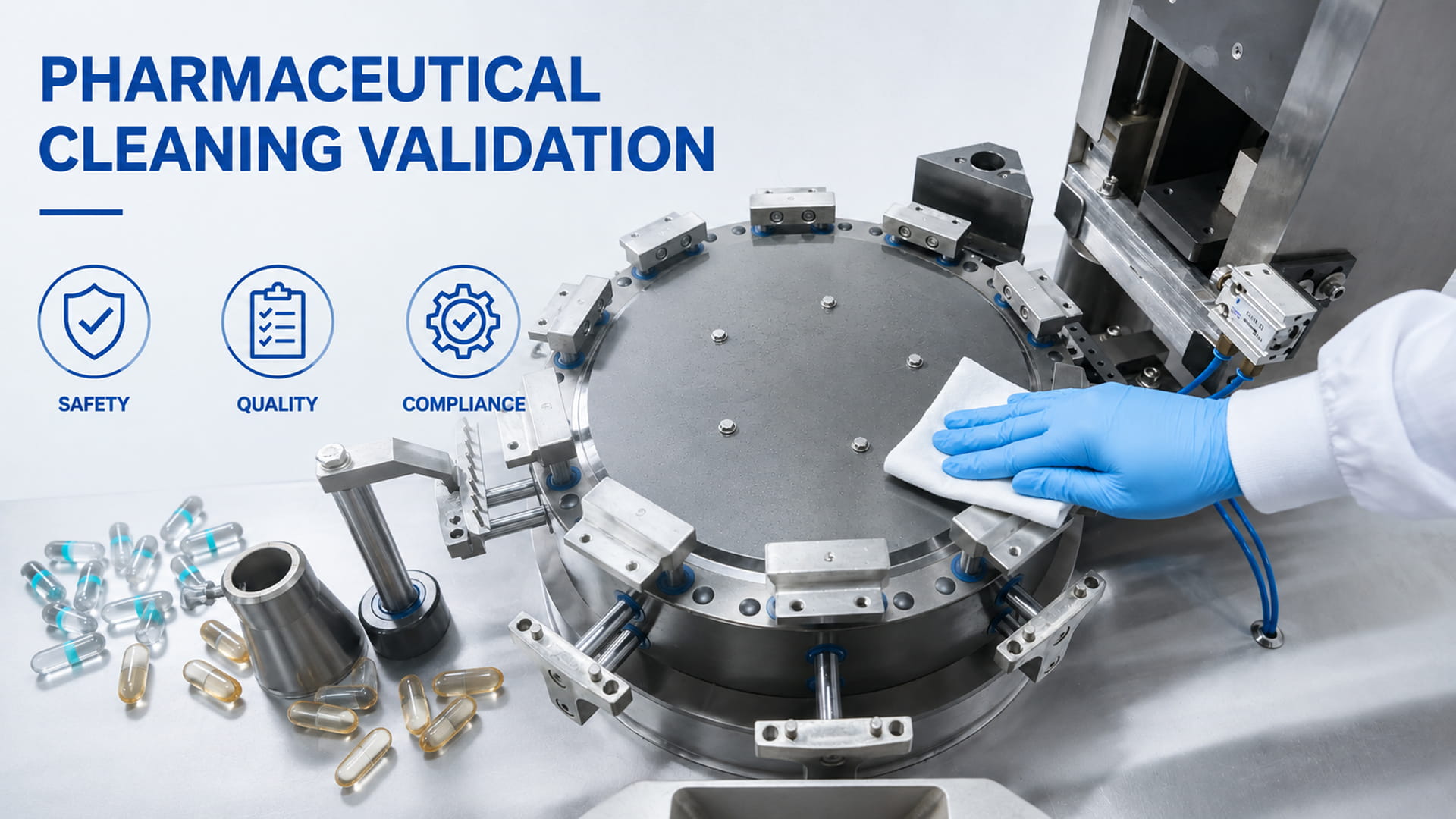
Secara sederhana, validasi pembersihan memberikan bukti obyektif bahwa prosedur pembersihan secara konsisten memenuhi standar yang telah ditentukan. Seperti yang dikatakan oleh salah satu sumber industri, validasi pembersihan adalah a “jaminan terdokumentasi” bahwa pembersihan dapat dilakukan secara andal dan berulang-ulang untuk mencapai tingkat kebersihan yang telah ditentukan. Dalam praktiknya, ini berarti menunjukkan sisa-sisa produk sebelumnya, agen pembersih, dan mikroba dihilangkan hingga tingkat yang dapat diterima pada semua permukaan yang bersentuhan dengan produk.
Regulator setuju. Misalnya, FDA 21 CFR 211.67(A) membutuhkan setiap peralatan (khusus atau multi guna) menjadi “dibersihkan… untuk mencegah… kontaminasi yang dapat mengubah keselamatan, identitas, kekuatan, kualitas, atau kemurnian produk obat”. WHO juga menjelaskan bahwa tujuan validasi pembersihan adalah untuk membuktikan peralatan dibersihkan secara konsisten dari produk, deterjen, dan residu mikroba ke tingkat yang dapat diterima untuk mencegah kontaminasi dan kontaminasi silang. Dengan kata lain, validasi pembersihan adalah tentang keselamatan pasien: memastikan satu batch produk tidak dapat “terbawa” dan mencemari batch produk berikutnya.
Program validasi pembersihan menyeluruh memberikan kepercayaan kepada produsen (dan jaminan regulator) itu kontaminasi silang dikendalikan. Tanpa itu, sisa-sisa yang ampuh API atau alergen dari satu kelompok dapat berakhir pada produk berikutnya, berpotensi merugikan pasien atau menyebabkan a mengingat. FDA secara eksplisit menyatakan perusahaan itu “harus memvalidasi bahwa prosedur pembersihan sudah memadai untuk memastikan tidak terjadi kontaminasi silang”. Hal ini sangat penting dalam fasilitas multiproduk (umum di CDMO dan pembuat suplemen). Panduan WHO menekankan bahwa validasi pembersihan sangat penting di pabrik multiproduk, dan harus diterapkan pada semua peralatan produksi dan prosedur sanitasi.
Selain kontaminasi, validasi pembersihan adalah tentang memastikan kualitas produk. Jika peralatan tidak dibersihkan dengan benar, sisa bahan kimia atau pertumbuhan mikroba dapat membahayakan identitas, kekuatan, dan kemurnian dari batch berikutnya. Pendeknya, validasi pembersihan menjaga kualitas produk dan kesehatan pasien. Hal ini juga merupakan keharusan bagi peraturan. Apakah Anda berada di bawah yurisdiksi FDA (21 Bagian CFR 211) atau GMP UE (EMA/I), pihak berwenang memerlukan validasi pembersihan yang terdokumentasi sebagai bagian dari program GMP yang lengkap. Kegagalan memvalidasi pembersihan dapat mengakibatkan surat peringatan, produk dipegang, dan bahkan mengingatnya.
Persyaratan peraturan: FDA, Ema, SIAPA, gambar/s. Semua pedoman utama memerlukan validasi pembersihan, namun dengan penekanan yang sedikit berbeda. Di KITA, CGMP FDA (Judul 21 CFR 211.67) menjabarkan persyaratan dasar: peralatan harus dibersihkan untuk mencegah kontaminasi silang. Panduan FDA merekomendasikan penggunaan metode pengambilan sampel dan analisis yang efektif untuk membuktikan kebersihan. Terutama, FDA menjelaskan hal itu “membilas sendirian… tidak dapat diterima” untuk validasi; perusahaan harus langsung menyeka permukaan jika memungkinkan. Dalam praktiknya, ini berarti Anda biasanya menggabungkan pengambilan sampel usap dan bilas untuk mencakup seluruh area.
Di UE, EMA Lampiran GMP UE 15 (2015) dan panduan EMA memerlukan validasi pembersihan sebagai bagian dari validasi proses. Mencaplok 15 menyatakan secara eksplisit “Validasi pembersihan harus dilakukan untuk memastikan efektivitas prosedur pembersihan untuk semua peralatan yang bersentuhan dengan produk.”. Ia juga mengatakan batas carry-over harus dibenarkan secara toksikologi (berbasis kesehatan) evaluasi. Dengan kata lain, tentukan kriteria penerimaan Anda secara ilmiah (lihat di bawah) dan mendokumentasikan alasannya. Pendekatan UE menekankan a berbasis risiko, berbasis kesehatan strategi: menghitung Carryover Maksimum yang Diijinkan (imut-imut) atau Paparan Harian yang Diizinkan (PDE) nilai residu aktif.
WHO dan PIC/S juga menawarkan bimbingan. Itu SIAPA GMP TRS 1019 (2019) Mencaplok pada validasi menjelaskan validasi pembersihan itu “memberikan bukti terdokumentasi bahwa prosedur pembersihan yang disetujui akan menghasilkan peralatan yang bersih, cocok untuk tujuan penggunaannya”. Dokumen WHO ini (referensi umum di seluruh dunia) menyoroti bahwa validasi pembersihan tidak diperlukan untuk pembersihan sepele (lantai, dinding) Tetapi adalah diperlukan untuk peralatan kontak produk yang penting di pabrik multiproduk. Panitia PIC/S (konsorsium regulator) juga mendefinisikan validasi pembersihan sebagai bukti bahwa residu akan dihilangkan “di bawah tingkat sisa maksimum yang diijinkan secara ilmiah”.
Bersama, sumber-sumber ini menetapkan elemen penting: menentukan batas residu yang dapat diterima, mengembangkan prosedur pembersihan yang kuat, sampel menggunakan metode yang divalidasi, menganalisis dengan tes yang sesuai, dan menunjukkan bahwa setiap peralatan dapat dibersihkan secara konsisten hingga batas tersebut.
Validasi pembersihan pada dasarnya adalah sebuah proyek. Berikut adalah garis besar langkah demi langkah dari proses yang umum:
Panduan FDA jelas tentang hal itu “membilas saja tidak dapat diterima” sebagai satu-satunya metode verifikasi. Dalam praktiknya, kombinasi sampel usap dan bilas digunakan. Pilih lokasi pengambilan sampel yang representatif pada setiap peralatan (biasanya tempat yang paling sulit dibersihkan). Sebelum pengujian, validasi bahwa metode pengambilan sampel Anda cukup memulihkan residu target (dikenal sebagai studi pemulihan).
Validasi pembersihan seringkali menghadapi kendala. Tantangan utama meliputi:
Keseluruhan, pertahanan terbaik adalah a pendekatan berbasis risiko (seperti yang didorong oleh ICH Q9 dan panduan industri). Fokuskan upaya validasi pada area/produk berisiko tinggi (API yang kuat, peralatan bersama) dan mendokumentasikan fokus itu.
Faktor penentu keberhasilan validasi pembersihan adalah desain peralatan. FDA secara eksplisit mewajibkan peralatan dirancang untuk memfasilitasi pembersihan. Dalam praktiknya, mencari:
Dengan menentukan fitur desain ini, Anda secara drastis mengurangi waktu pembersihan dan upaya validasi. Misalnya, Mesin pengisian kapsul Jinlu dibuat dengan hopper yang mudah dilepas, saluran tahan karat, dan pelindung debu tertutup – semuanya untuk meminimalkan akumulasi residu. Demikian pula, lepuh Dan mesin pengemas kantong dengan panel akses tanpa alat membantu operator menjangkau semua permukaan untuk dibersihkan. Memilih peralatan yang tepat di awal adalah setengah dari perjuangan dalam validasi pembersihan.
Pengisi kapsul layak mendapat perhatian khusus. Mesin ini menangani bubuk dan kapsul, jadi pembersihan menyeluruh adalah suatu keharusan. Poin-poin penting untuk membersihkan saluran pengisian kapsul meliputi:
Mesin kapsul dalam layanan GMP sering dijalankan di lingkungan yang keras (bubuk berdebu). Pengisi kapsul Jinlu mengatasi hal ini dengan menggunakan lapisan anti-statis dan hopper tertutup untuk membatasi keluarnya bubuk, membuat pembersihan lebih aman dan validasi lebih mudah.
Untuk mengikat semuanya, berikut beberapa praktik terbaik secara menyeluruh:
Gambar: Lingkungan laboratorium analitis yang bersih (pengepakan melepuh atau lab QA). Validasi pembersihan yang baik memerlukan prosedur pembersihan yang tepat dan pengujian yang akurat (misalnya. HPLC, Daftar Isi) untuk memastikan tidak ada residu yang tersisa. Daftar Periksa Validasi Pembersihan: Tabel ringkasan singkat item-item utama.
| Barang | Persyaratan |
| Peralatan diidentifikasi | Buat daftar semua mesin kontak produk |
| Prosedur pembersihan | Tertulis, disetujui, dan diikuti (SOP) |
| Rencana pengambilan sampel | Metode (usap/bilas), lokasi, frekuensi |
| Kriteria penerimaan | Didefinisikan (Batasan MACO/PDE) |
| Metode analitis | Tes yang divalidasi (HPLC, Daftar Isi, dll.) |
| Laporan validasi | Protokol selesai, hasil disetujui oleh QA |
Validasi pembersihan yang tepat sangat penting untuk produksi farmasi GMP. Ini melindungi kualitas produk dan keselamatan pasien dengan mencegah kontaminasi silang. Peralatan yang dirancang dengan baik sangat mengurangi kesulitan validasi: bagian kontak baja tahan karat yang halus, zona mati minimal, dan pembongkaran yang cepat berarti pembersihan menjadi lebih cepat dan konsisten. Dan Jeinlu memetik, kami merancang pengisi kapsul, pengepakan melepuh, dan memenuhi prinsip-prinsip ini untuk membantu produsen mematuhi standar GMP global.
Dalam ringkasan, validasi pembersihan farmasi adalah tentang pembuktian "membersihkan" dengan data dan dokumentasi. Dengan mengikuti proses terstruktur – memilih produk dengan kondisi terburuk, menetapkan batasan (seperti MACO), menulis SOP pembersihan yang jelas, pengambilan sampel dengan cerdas, dan pengujian dengan HPLC/TOC – Anda dapat menunjukkan kepatuhan terhadap regulator dan tim kualitas. Ingat: berinvestasi di Peralatan ramah GMP Sekarang (tahan karat, desain ergonomis) untuk menghemat waktu memvalidasi nanti. Jika Anda mencari mesin pengisian atau pengemasan kapsul yang dibuat untuk memudahkan pembersihan dan kepatuhan, pertimbangkan jajaran Jinlu Packing Mesin pengisian kapsul, pengepakan melepuh, Dan jalur pengisian farmasi. Peralatan kami dirancang untuk pergantian cepat dan pembersihan menyeluruh, membantu memastikan validasi Anda berjalan lancar.
Siap menyederhanakan validasi pembersihan Anda? Hubungi Pengepakan Jinlu untuk mempelajari bagaimana mesin pengisian dan pengemasan kapsul kami yang sesuai GMP dapat memenuhi kebutuhan manufaktur farmasi Anda.
Validasi pembersihan adalah proses terdokumentasi yang digunakan untuk membuktikan bahwa prosedur pembersihan peralatan farmasi dapat menghilangkan residu produk secara konsisten, bahan aktif farmasi (API), agen pembersih, dan potensi kontaminan ke tingkat yang dapat diterima.
Dalam manufaktur farmasi, validasi pembersihan memberikan bukti bahwa peralatan cocok untuk memproduksi batch berikutnya tanpa menyebabkan kontaminasi silang atau mempengaruhi kualitas produk.
Validasi pembersihan penting karena peralatan farmasi sering digunakan untuk memproduksi produk atau batch yang berbeda. Tanpa validasi yang efektif, residu yang tersisa dapat mencemari produk berikutnya dan berdampak pada keamanannya, identitas, kekuatan, atau kemurnian.
Proses validasi pembersihan yang dilakukan dengan benar membantu produsen:
• Mencegah kontaminasi silang
• Memenuhi persyaratan kepatuhan GMP
• Meningkatkan keselamatan produksi
• Mengurangi risiko kualitas selama pergantian produk
Proses validasi pembersihan biasanya mencakup penilaian peralatan, pengembangan prosedur pembersihan, menetapkan kriteria penerimaan, contoh, pengujian analitis, dan dokumentasi validasi.
Kriteria penerimaan validasi pembersihan menentukan tingkat residu maksimum yang diperbolehkan setelah pembersihan, termasuk residu API, agen pembersih, dan kontaminan potensial.
Sebagian besar peralatan manufaktur farmasi yang bersentuhan dengan produk memerlukan validasi pembersihan, termasuk mesin pengisian kapsul, mesin press tablet, mixer, dan peralatan penanganan bubuk.
Dua metode pengambilan sampel yang umum adalah pengambilan sampel usap dan pengambilan sampel bilas. Produsen sering kali memilih metode berdasarkan desain peralatan, aksesibilitas, dan karakteristik residu.
Desain peralatan secara langsung mempengaruhi efisiensi pembersihan. Mesin dengan permukaan halus, lebih sedikit area mati, dan komponen yang mudah dilepas lebih mudah dibersihkan dan divalidasi.
Frekuensi validasi pembersihan tergantung pada penggunaan peralatan, perubahan produk, risiko proses, dan persyaratan peraturan. Validasi ulang mungkin diperlukan setelah perubahan besar pada peralatan atau prosedur pembersihan.
Verifikasi pembersihan memastikan bahwa operasi pembersihan tertentu memenuhi persyaratan, sedangkan validasi pembersihan membuktikan bahwa proses pembersihan dapat diandalkan dan dapat diulang seiring berjalannya waktu.
Produsen peralatan dapat mendukung validasi pembersihan dengan menyediakan desain mesin yang ramah GMP, struktur yang mudah dibersihkan, spesifikasi bahan, dan dokumentasi yang diperlukan untuk kualifikasi dan validasi.
Referensi:
1.Validasi Proses Pembersihan —— KITA. Badan Pengawas Obat dan Makanan
2.Tanya Jawab tentang Persyaratan Praktik Manufaktur yang Baik Saat Ini | Peralatan —— KITA. Badan Pengawas Obat dan Makanan
3.Memandu: Siklus Hidup Validasi Pembersihan – Aplikasi, Metode, & Kontrol —— ISPE
4.Panduan validasi pembersihan (GUI-0028) —— Kesehatan Kanada
5.EudraLex – Volume 4 – Praktik manufaktur yang bagus (GMP) pedoman —— Komisi Eropa
6.Validasi Pembersihan: Panduan Lengkap untuk Kesehatan – Pendekatan Berbasis di Chemical Cross – Penilaian Risiko Kontaminasi —— PDA JPST