Apa Itu Spesifikasi Kebutuhan Pengguna (URS) di Farmasi?Panduan Lengkap Peralatan Farmasi
Apa Itu Spesifikasi Kebutuhan Pengguna (URS) di Farmasi?Panduan Lengkap Peralatan Farmasi
Agustus 17, 2026
Tidak ada komentar
A Spesifikasi Persyaratan Pengguna (URS) di dalam manufaktur farmasi adalah dokumen dasar yang mendefinisikan Apa suatu sistem atau peralatan harus dicapai untuk memenuhi kualitas, pertunjukan, dan kebutuhan peraturan. Itu ditulis oleh pemilik peralatan (perusahaan farmasi) dan menguraikan fungsi-fungsi yang diperlukan, kapasitas, bahan, dan fitur GMP pada peralatan. URS memastikan bahwa semua pemangku kepentingan (produksi, rekayasa, QA) menyepakati persyaratan sebelum pengadaan atau desain dimulai. Ini memberikan dasar untuk proposal pemasok dan menjadi referensi selama desain, pengujian, dan validasi.
Poin Penting
URS mendefinisikan apa yang perlu dicapai oleh peralatan farmasi, termasuk tujuan penggunaannya, kapasitas, pertunjukan, kualitas, keamanan, dan persyaratan operasional.
Bagus URS farmasi harus memuat persyaratan yang jelas dan terukur yang bisa diverifikasi nanti.
Untuk mesin pengemasan, URS mungkin mencakup spesifikasi produk, format paket, kecepatan produksi, bahan, utilitas, otomatisasi, pembersihan, keamanan, dan dokumentasi.
URS tidak sama dengan spesifikasi desain. URS mendefinisikan hasil yang diperlukan; produsen peralatan mengembangkan solusi teknis.
URS dapat memberikan referensi untuk pengadaan peralatan, evaluasi pemasok, DQ, LEMAK/SAT, IQ, oke, dan PQ.
URS yang jelas membantu mengurangi kesalahpahaman antara produsen farmasi dan pemasok peralatan sebelum mesin dirancang dan dibuat.
Untuk proyek mesin pengemasan, semakin awal pembeli mendefinisikan persyaratan seperti jenis produk, format kemasan, kecepatan sasaran, dan ekspektasi GMP, semakin mudah untuk mengevaluasi peralatan yang sesuai.
Apa Itu Spesifikasi Kebutuhan Pengguna (URS) di Farmasi?
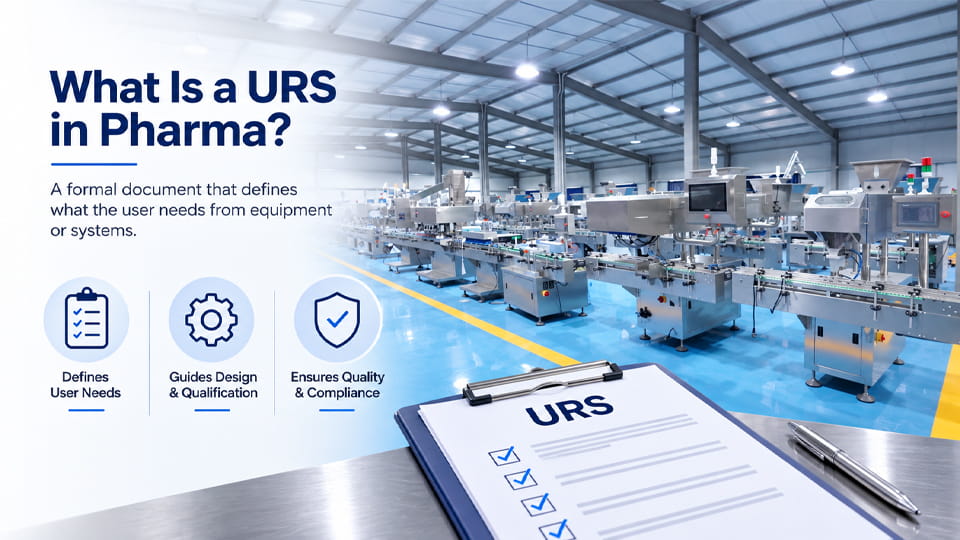
A Spesifikasi Persyaratan Pengguna (URS) adalah dokumen formal yang menangkap kebutuhan dan harapan pengguna untuk peralatan atau sistem dalam industri farmasi. Ini menggambarkan Apa yang harus dilakukan oleh peralatan – mis. tingkat target produksi, format produk, ketepatan, dan fungsi pengaturan – tanpa resep Bagaimana untuk mencapainya. URS bertindak sebagai jembatan antara insinyur proses atau pengguna produksi dan pemasok peralatan. Ini mengkomunikasikan visi dan batasan pengguna sehingga pemasok dapat merancang, mengutip, dan membangun sistem untuk memenuhi kebutuhan tersebut.
Misalnya, mungkin ditentukan oleh URS:
Itu penggunaan yang dimaksudkan (misalnya. “Kemas lepuh tablet 10–60 hitungan”).
Kriteria kinerja (misalnya. “≥ 100,000 lecet per jam”).
Persyaratan peraturan dan GMP (misalnya. “Desain higienis, kemampuan bersih untuk <10 residu ppm”).
Bahan konstruksi (misalnya. “Semua komponen yang bersentuhan dengan produk terbuat dari baja tahan karat 316L”).
Utilitas dan lingkungan (misalnya. “Beroperasi di ruang bersih Kelas C, membutuhkan daya 380V, 6 bar air”).
Dengan mendefinisikan persyaratan dengan jelas di awal, URS menjadi landasan untuk semua tahapan selanjutnya – tinjauan desain, evaluasi pemasok, pengujian, dan validasi. Panduan peraturan (misalnya. Lampiran UE 15, FDA 21 Bagian CFR 11, GAMP5) secara eksplisit mengharapkan persyaratan pengguna yang terdokumentasi sebagai titik awal untuk kualifikasi peralatan. Dalam praktiknya, menulis URS memaksa tim lintas fungsi (produksi, QA, validasi, rekayasa) untuk menyelaraskan dengan tepat apa yang harus dilakukan peralatan agar produk dapat dibuat dengan benar.
Mengapa URS Penting dalam Manufaktur Farmasi?
URS yang dibuat dengan baik sangat penting untuk keberhasilan proyek yang sesuai dengan GMP. Alasan utamanya meliputi:
Kejelasan Persyaratan: URS mendokumentasikan semua harapan (keluaran, kualitas, keamanan, dll.) di satu tempat. Hal ini menghindari kebingungan dan memastikan pemasok mengetahui secara pasti apa yang dibutuhkan. Tanpa URS, persyaratannya mungkin tidak jelas atau diabaikan, menyebabkan desain ulang yang mahal.
Dasar Kualifikasi Desain (DQ): URS berfungsi sebagai dasar untuk kualifikasi desain. Hal ini memungkinkan Anda untuk memverifikasi bahwa desain yang diusulkan memenuhi semua persyaratan. Lampiran GMP UE 15 secara eksplisit menyatakan bahwa “persyaratan spesifikasi kebutuhan pengguna harus diverifikasi selama kualifikasi desain”.
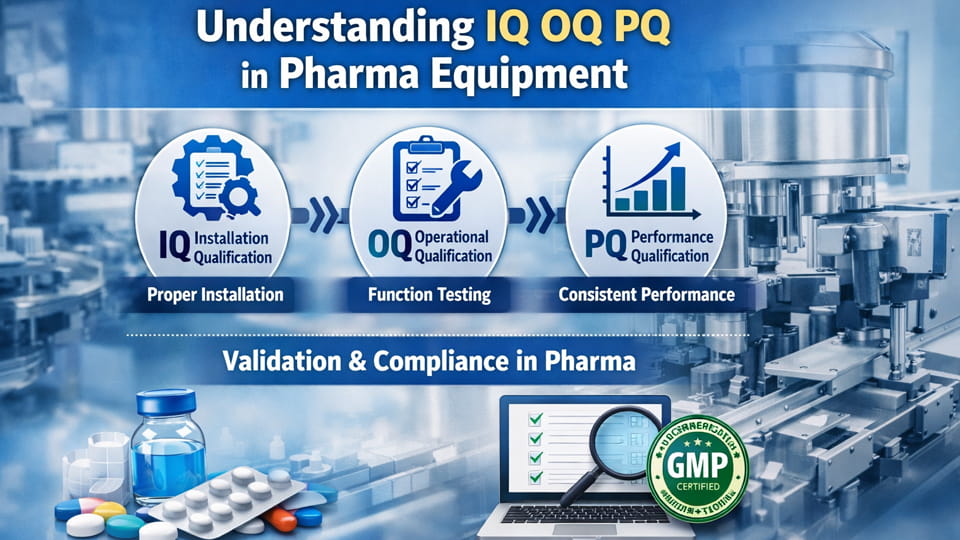
Validasi & Pengujian: Setiap aktivitas kualifikasi ditelusuri kembali ke URS. Panduan FDA menjelaskan Kualifikasi Instalasi itu (IQ) memverifikasi pemasangan peralatan terhadap spesifikasi yang disetujui “yang ditentukan dalam URS (MISALNYA., bahan konstruksi)”. Kualifikasi Operasional (oke) pengujian apakah peralatan beroperasi sebagaimana mestinya, dan Kualifikasi Kinerja (PQ) mengonfirmasi bahwa produk tersebut secara konsisten memenuhi spesifikasi yang ditentukan dalam Tahap 1 (URS). Pendeknya, apakah di FAT, DUDUK, IQ, OQ atau PQ, setiap pengujian memverifikasi satu atau lebih persyaratan URS.
Manajemen Risiko & Kepatuhan terhadap GMP: Dengan memasukkan atribut kualitas penting (CQA), Fitur desain GMP, dan persyaratan peraturan di URS, tim dapat mengatasi risiko sejak dini. Misalnya, menentukan kriteria desain higienis di awal untuk mencegah masalah kontaminasi di kemudian hari. Praktik terbaik industri menekankan penggabungan QA, keamanan, dan kebutuhan kepatuhan di URS sehingga “sistem akhir dapat memenuhi kebutuhan bisnis dan kepatuhan”.
Komunikasi & Pemilihan Pemasok: URS adalah referensi umum antara perusahaan farmasi dan vendor peralatan. Hal ini memungkinkan pemasok untuk menyiapkan proposal yang secara langsung sesuai dengan kebutuhan pengguna. Ini juga membantu mengevaluasi tawaran – mesin dapat diperiksa berdasarkan URS (melalui FAT/SAT) untuk melihat mana yang paling memenuhi kebutuhan Anda.
Pengendalian Biaya dan Jadwal: Persyaratan yang jelas berarti lebih kecil kemungkinan terjadinya scope creep atau fitur yang terlewat. Hal ini mengurangi risiko penundaan proyek dan pengerjaan ulang yang mahal.
Contoh – Kategori Konten URS:
Kategori URS
Contoh Persyaratan
Tujuan Penggunaan
Proses dan produk apa yang ditangani peralatan tersebut.
Kapasitas/Kinerja
Tingkat keluaran (MISALNYA., lecet/menit), ukuran tumpukan, ketepatan.
Produk & Kemasan
Jenis produk, dosis, ukuran paket, bahan (MISALNYA., PVC).
Bahan (Kontak)
Semua bagian yang bersentuhan dengan produk (MISALNYA., 316aku SS, permukaan akhir).
GMP & Pembersihan
Desain higienis, kemampuan bersih (tidak ada kaki mati), CIP mudah.
Lingkungan/Utilitas
Kelas ruang bersih, suhu/kelembaban, kekuatan, udara, kosong, dll..
Kontrol & Data
kebutuhan PLC/HMI, penyimpanan resep, pencatatan data, kontrol akses.
Keamanan
Penjaga, E-berhenti, saling bertautan, alarm, standar keselamatan.
Dokumentasi
manual, gambar, sertifikat, dokumen pelatihan.
Kualifikasi
Paket FAT/SAT, dan hasil IQ/OQ/PQ dengan kriteria lulus.
Catatan Verifikasi: Setiap item URS harus jelas dan terukur. Misalnya, tentukan angka pastinya (misalnya. “100 botol/menit” atau “suhu ruang maks 30°C”) sehingga pengujian seperti FAT/OQ dapat memverifikasinya secara objektif. Selalu sertakan kriteria penerimaan (misalnya. “segel harus memiliki kekuatan 0,01MPa 5 detik”) jika memungkinkan.
Apa yang Harus Dicakup dalam URS Farmasi?
URS farmasi biasanya mencakup area ini:
Tujuan Penggunaan & Cakupan: Jelaskan langkah prosesnya (isian, penyegelan, pelabelan, dll.), produk dan format kemasan, dan bagaimana peralatan tersebut cocok dengan keseluruhan proses. Ini menetapkan konteks untuk hal lainnya.
Kapasitas dan Throughput: Tentukan keluaran sasaran (unit/jam atau ukuran batch). Misalnya: "Mengemas 50,000 kemasan blister dosis satuan per shift 8 jam.” Sertakan kondisi startup/shutdown atau rentang turndown.
Detail Produk dan Kemasan: Tentukan karakteristik produk (ukuran tablet, berat, sensitivitas kelembaban) dan format kemasannya (jenis botol, dimensi kartu melepuh, ukuran karton). Jika beberapa produk atau ukuran digunakan, daftar masing-masing.
Bahan Konstruksi: Buat daftar bahan dan standar yang diperlukan. Di bidang farmasi, baja tahan karat (304/316L) dan polimer tingkat FDA umum digunakan untuk bagian kontak. Sertakan persyaratan penyelesaian permukaan (misalnya. Ra ≤0,8 μm) dan pelapis atau pelapis apa pun.
Fitur GMP dan Desain: Sertakan kriteria desain yang higienis (misalnya. tidak ada kaki atau celah yang mati, kemampuan drainase). Referensikan standar atau pedoman apa pun yang berlaku (Lampiran GMP UE 11, ISO, ASTM). Untuk sistem yang terkomputerisasi, perhatikan kebutuhan integritas data (jejak audit, tanda tangan elektronik per 21CFR11).
Utilitas dan Lingkungan: Detail utilitas yang dibutuhkan (kekuatan: tegangan/fasa, tekanan/aliran udara terkompresi, air pendingin, kosong, dll.) dan kondisi lingkungan (kelas ruang bersih, rentang suhu/kelembaban).
Kontrol dan Data: Jelaskan kebutuhan otomatisasi: Platform PLC/HMI, bahasa, manajemen resep, alarm, dan konektivitas (Ethernet/SCADA/MES). Nyatakan persyaratan penyimpanan atau pelaporan data apa pun (catatan kumpulan, pelacakan OEE).
Persyaratan Keamanan: Daftar fitur keselamatan (misalnya. tirai tipis, pemberhentian darurat, penjaga yang saling bertautan) dan standar keselamatan yang relevan (Ce, Ul). Sertakan persyaratan ergonomis atau keselamatan operator (penguncian/penandaan, Zona LOTO).
Dokumentasi dan Layanan: Memerlukan pengiriman panduan pengguna, gambar as built drawing, catatan kalibrasi, sertifikat materi, cadangan perangkat lunak, dan pelatihan bagi operator/petugas pemeliharaan.
Pengujian dan Kualifikasi: Tentukan FAT (Uji Penerimaan Pabrik) kriteria dan ruang lingkup IR/WH/PQ. Misalnya: “Pemasok harus melakukan FAT di lokasi mereka yang menunjukkan kepatuhan terhadap semua poin URS dan memberikan laporan FAT.”
Persyaratan URS untuk Peralatan Pengemasan Farmasi
Mesin pengemasan memiliki beberapa pertimbangan URS khusus. Selain hal-hal umum di atas, termasuk:
Kecepatan Pengemasan: Tentukan tarif target (misalnya. 200 botol/menit, 50 karton/menit, 80 lecet/menit). Jika beberapa mesin/jalur terintegrasi, memperjelas throughput untuk masing-masing.
Rangkaian Produk: Cantumkan semua varian produk yang harus ditangani (tablet vs. kapsul, diameter botol berbeda, gaya topi, dll.). Jika saluran menangani berbagai format, termasuk diperlukan waktu pergantian dan bagian format apa pun yang diperlukan.
Format Paket: Untuk lecet, tentukan ukuran kartu, tata letak rongga, jenis foil (Ketebalan PVC/PVDC, Alu/PVdC). Untuk botol, berikan jenis wadah dan volume pengisian. Untuk karton, tentukan dimensi dan jenis penutupan. Detail ini memastikan mesin dikonfigurasi dengan benar.
Penanganan Material: Rinci semua pengumpan, pemisah, atau saringan yang diperlukan untuk dosis padat. Untuk bubuk/cairan, tentukan toleransi dosis dan kebutuhan reservoir.
Bahan: Seperti biasanya, semua bagian yang bersentuhan dengan produk harus sesuai untuk farmasi (misalnya. SS316L). Jika produk korosif atau asam terlibat, perhatikan adanya lapisan atau bahan khusus.
Pembersihan & Pergantian: Jika diharapkan terjadi pergantian produk yang sering, memerlukan komponen pelepasan cepat atau CIP (Pembersihan di Tempat) fitur. Untuk saluran steril, menentukan klasifikasi ruang bersih dan metode sterilisasi.
Kontrol: misalnya. “Jalur tersebut akan menggunakan PLC Allen-Bradley dengan antarmuka SCADA, mendukung kontrol resep.” Tentukan serialisasi label atau konektivitas apa pun ke peralatan hulu/hilir.
Integrasi: Jika bagian dari garis yang lebih besar, memerlukan kompatibilitas (misalnya. konveyor, pelacakan kumpulan, pemindai kode batang). Dokumentasikan antarmuka apa pun (listrik, mekanis, komunikasi) diperlukan.
Utilitas: Garis pengemasan sering membutuhkan udara bertekanan (misalnya. 5 bar pada X NL/menit) dan mungkin menggunakan vakum atau nitrogen. Berikan persyaratan minimum.
Keamanan: Dengan banyak operator di sekitar, termasuk tirai tipis atau kontrol dua tangan di stasiun pemuatan/penolakan. URS harus mencerminkan aturan keselamatan situs Anda (misalnya. kepatuhan CE).
Misalnya, mungkin termasuk mesin Blister URS: “Kemampuan penyegelan panas hingga 200°C, menampung film PVC/PVDC setebal 300µm, pengumpan melepuh terintegrasi dan konveyor trim, 4-melacak format melepuh dengan pergantian <15 menit, semua bagian kontak di SS316L, keluaran ≥80 lecet/menit pada 100% efisiensi." Hal spesifik seperti itu memungkinkan pembuat mesin memenuhi kebutuhan Anda.
Bagaimana URS Sesuai dengan Proses Kualifikasi?
URS adalah titik awal siklus hidup kualifikasi peralatan. Aliran yang disederhanakan adalah:
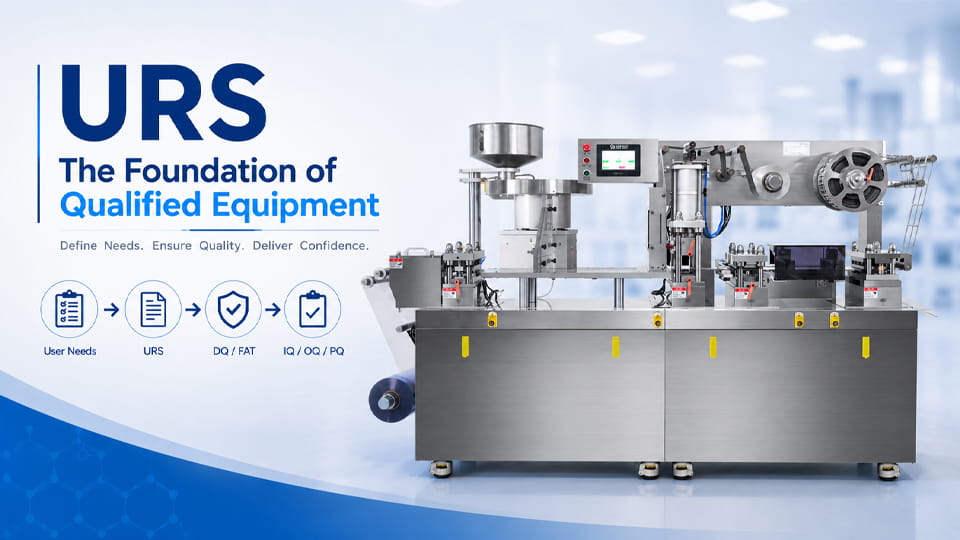
URS → DQ: Setelah URS disetujui, desain peralatan (gambar, spesifikasi) ditinjau dalam Kualifikasi Desain untuk memastikan semua persyaratan URS terpenuhi. Dalam ulasan desain, insinyur dan QA menelusuri keluaran desain dan membandingkannya dengan setiap item URS.
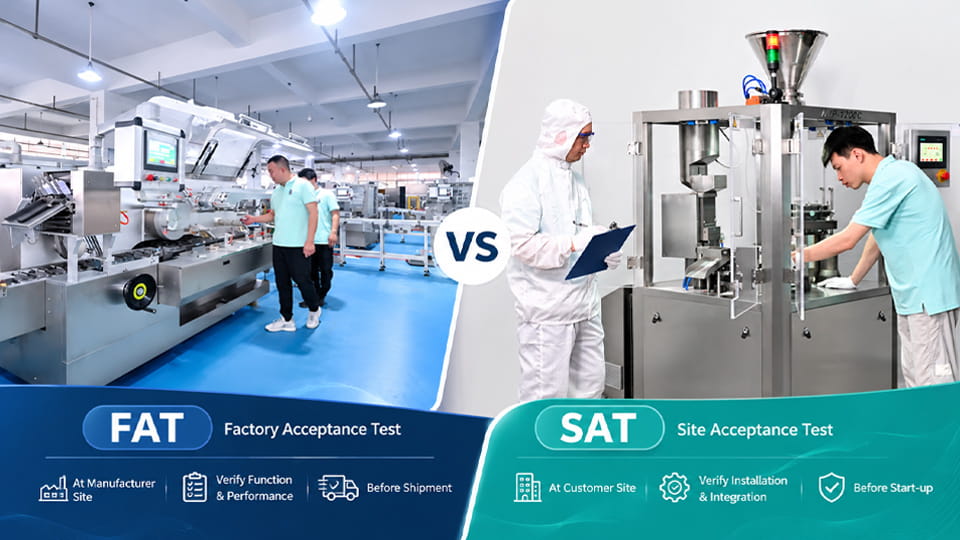
URS → FAT/SAT: Pengujian Penerimaan Pabrik (GEMUK) dilakukan di lokasi vendor untuk menunjukkan mesin memenuhi URS sebelum pengiriman. Mencaplok 15 bahkan menyarankan untuk memverifikasi kepatuhan URS di lokasi vendor jika dibenarkan. Setelah instalasi, Pengujian Penerimaan Situs (DUDUK) mengonfirmasi semuanya masih berfungsi di tempatnya (terkadang langkah FAT dan SAT tumpang tindih).
URS → IQ: Kualifikasi Instalasi memeriksa apakah peralatan yang dipasang sesuai dengan spesifikasi URS. Misalnya, Panduan FDA menyatakan IQ harus memverifikasi bahwa “semua aspek fasilitas, kegunaan, atau peralatan yang dapat mempengaruhi kualitas produk… mematuhi spesifikasi yang disetujui sebagaimana didefinisikan dalam URS (MISALNYA., bahan konstruksi)”. Dalam prakteknya ini berarti memeriksa perpipaan, listrik, dan rincian struktural terhadap URS.
URS → OQ/PQ: Kualifikasi Operasional menguji mesin tersebut beroperasi sebagaimana dimaksud. FDA mencatat OQ memverifikasi peralatan “beroperasi[S] sebagaimana dimaksudkan di seluruh rentang operasi yang diantisipasi”. Kualifikasi Kinerja kemudian menunjukkan keluaran konsisten yang memenuhi kriteria yang ditentukan URS. Dengan kata lain, di bawah OQ/PQ Anda menjalankan mesin dengan material nyata dan mengonfirmasi metrik (kecepatan, menghasilkan, tingkat cacat, dll.) menurut URS.
Di setiap tahap, protokol pengujian ditelusuri kembali ke persyaratan URS. Jika URS mengatakan “Dispense 100 ml ±2%,” maka tes OQ akan mengukur volume yang dikeluarkan untuk memenuhi itu. URS mengubah tujuan yang tidak jelas menjadi tes yang obyektif.
URS vs Spesifikasi Fungsional vs Spesifikasi Desain
Penting untuk mengetahui perbedaan dokumen-dokumen ini:
Dokumen
Mendefinisikan (Cakupan)
Pengarang
Spesifikasi Persyaratan Pengguna (URS)
Apa yang pengguna perlukan dari sistem untuk dilakukan (kebutuhan fungsional dan peraturan).
Perusahaan Farmasi (pemilik)
Spesifikasi Fungsional (FS)
Bagaimana sistem akan memenuhi URS (fungsi, modul perangkat lunak, fitur).
Itu URS jawaban Apa pertanyaan: “Pertunjukan yang luar biasa, keamanan, dan fitur kepatuhan diperlukan?” Ini membuat metode solusi tetap terbuka.
Itu Spesifikasi Fungsional memecah URS menjadi fungsi sistem (misalnya. “Sistem kontrol akan berhenti otomatis pada alarm dan mencatat kode kesalahan”).
Itu Spesifikasi Desain menyediakan desain sebenarnya (gambar CAD, kode PLC, rincian vendor/produsen).
Hindari menentukan secara berlebihan di URS. Misalnya, jangan mewajibkan merek atau tipe motor PLC tertentu kecuali benar-benar diperlukan. URS harus fokus pada kebutuhan, bukan detail desain. Seperti yang dicatat oleh para pakar industri, memasukkan rincian teknis yang berlebihan dalam URS dapat membatasi solusi yang fleksibel. Detail tersebut termasuk dalam spesifikasi Fungsional/Desain.
Siapa yang Bertanggung Jawab Mempersiapkan URS?
Umumnya, itu pengguna farmasi (pembeli) bertanggung jawab atas URS. Sebuah tim lintas fungsi biasanya menyusunnya:
Insinyur Produksi/Proses: Tentukan tujuan penggunaan, keluaran, dan integrasi proses.
Penjaminan/Validasi Mutu: Memberikan persyaratan GMP, kebutuhan integritas data, dan kriteria peraturan.
Pemeliharaan/Rekayasa: Tentukan utilitas, suku cadang, akses pemeliharaan, dan ruang instalasi.
Peraturan/QA: Pastikan lampiran atau pedoman (Mencaplok 15, Mencaplok 1 untuk steril, dll.) ditangani.
Pengadaan: Mengkoordinasikan format dokumen dan dapat memperjelas poin teknis.
Vendor peralatan dapat memberikan masukan (apa yang mungkin dilakukan, kinerja khas, dll.), tetapi URS terakhir harus berasal dari pengguna. Melibatkan seluruh pemangku kepentingan sejak dini (produksi, QA, rekayasa, validasi) adalah praktik terbaik. Misalnya, QA mungkin memenuhi persyaratan sanitasi, dan Proses mungkin menentukan ukuran umpan. URS harus mengintegrasikan perspektif ini sehingga benar-benar mencerminkan kebutuhan Anda.
Cara Menulis URS Farmasi yang Baik
Ikuti langkah-langkah ini untuk membuat yang jelas, URS yang dapat diuji:
Tentukan Tujuan Penggunaan: Mulailah dengan deskripsi dan tujuan sistem secara singkat (misalnya. “URS untuk mesin pengisian cairan di lini produk ABC”). Ini menentukan panggungnya.
Cantumkan Peraturan/Standar yang Berlaku: Sertakan panduan yang relevan (Lampiran GMP UE 15/11, 21 Bagian CFR 11, OLAHRAGA 5, dll.) sehingga kebutuhan kepatuhan tidak terlewatkan.
Jadilah Spesifik dan Terukur: Nyatakan persyaratan dengan nilai atau pengujian yang tepat. Daripada “kecepatan tinggi”, tentukan “minimum 500 botol/jam di 80% mengisi". Setiap persyaratan harus dapat diverifikasi secara objektif.
Detil Kebutuhan Produk dan Proses: Jelaskan varian produk, sifat material, kondisi lingkungan. Misalnya: “Diameter tablet 6–10mm; beroperasi pada suhu 20–25°C, 40–60% kesehatan reproduksi.”
Tentukan Bahan dan Kriteria Desain: Definisikan dengan jelas bahan kontak (misalnya. SS316L), selesai (Ra), kelas kebersihan, dll.. Hal ini memungkinkan pemeriksaan IQ mengonfirmasi spesifikasi “as-built”..
Sertakan Utilitas dan Kebutuhan Ruang: Dokumentasikan catu daya, tekanan/aliran udara, kualitas air, beban, dan persyaratan pondasi atau ruangan khusus apa pun.
Jelaskan Kontrol dan Penanganan Data: Tentukan preferensi sistem kontrol (merek PLC, bahasa HMI), jumlah resep, pencatatan alarm/peristiwa (jejak audit untuk CFR 21Part 11), dll.. Kalau jalurnya harus terintegrasi dengan MES, catat itu.
Garis Besar Fitur Keamanan: Buat daftar interlock pengaman yang diperlukan, menjaga, pemberhentian darurat, dan kepatuhan terhadap standar keselamatan (Ce, Ul). Jangan mengabaikan keselamatan operator (misalnya. penerangan, tangga, penguncian/penandaan).
Rencanakan FAT/SAT: Tunjukkan bahwa mesin akan menjalani FAT dan SAT, dan kriteria penerimaan mana yang akan diuji (misalnya. “Semua poin URS akan dimasukkan dalam protokol FAT dengan hasil yang terukur”).
Tinjau dan Revisi: Pastikan semua persyaratan jelas, jelas, dan dapat dilacak. Tetapkan ID unik jika berguna untuk pelacakan. Libatkan QA/Validasi untuk memverifikasi tidak ada hal penting yang hilang.
Praktik terbaik utama: melibatkan pengguna dari semua kelompok, menggunakan bahasa yang sederhana, dan menghindari istilah-istilah yang ambigu. URS yang baik menggunakan daftar poin atau tabel, dan setiap item memiliki kriteria untuk pengujian. Seperti yang dikatakan oleh salah satu sumber industri: setiap persyaratan harus “spesifik dan dapat diuji”. Lewat sini, Anda dapat langsung menghubungkan setiap langkah FAT/IQ/OQ kembali ke item URS.
Kesalahan Umum Saat Menulis URS
Terlalu Tidak Jelas: Persyaratan seperti “mudah digunakan” atau “kecepatan tinggi” tanpa angka tidak dapat diuji. Selalu ukur atau tentukan kriteria penerimaan.
Bahasa Berpusat pada Desain: Tulisan “PLC harus Siemens” atau “pakai tiga motor” melampaui URS. Tetap fokus pada kebutuhan (Apa, bukan bagaimana).
Metode Verifikasi Tidak Ada: Jika Anda tidak bisa mengatakan cara mengujinya, itu perlu klarifikasi. Misalnya, “harus tersegel dengan benar” harus menyertakan spesifikasi uji kebocoran.
Mengabaikan GMP/Integritas Data: Lupa menyebutkan alarm, cadangan data, atau Bagian 11 kepatuhan dapat menyebabkan masalah audit.
Mengabaikan Utilitas/Lingkungan: Kelalaian umum adalah tekanan udara, fase daya, kelas kamar, atau bahkan berat total (beban lantai).
Melewatkan Pembersihan/Pergantian: Di bidang farmasi, CIP dan pergantian yang cepat seringkali penting. Mengabaikannya dapat menyebabkan desain ulang di kemudian hari.
Tidak Melibatkan Seluruh Stakeholder: Jika QA atau produksi tidak terlibat, persyaratan (misalnya. kemampuan bersih, kebutuhan operator) mungkin terlewatkan.
Harapan yang Tidak Realistis: Throughput yang terlalu menjanjikan atau perkiraan suhu yang terlalu rendah dapat menjadi bumerang. Angka dasar pada data proses nyata.
Tidak Ada Kontrol Versi: Memperlakukan URS sebagai draf yang dapat diedit dapat membingungkan tim. Setelah selesai, itu harus menjadi dokumen yang terkendali.
URS yang terlalu umum atau terlalu detail dapat menimbulkan masalah. Bertujuan untuk jelas, kebutuhan pengguna yang jelas.
Contoh URS Mesin Pengemas Farmasi
Di bawah ini adalah contoh sederhana entri URS untuk a mesin pengemas melepuh. (Nilai sebenarnya akan datang dari produk dan target spesifik Anda.)
Persyaratan
Contoh (Mesin pengemasan blister)
Jenis mesin
Mesin pengepakan Blister putar otomatis
Produk
Tablet (6–10mm Ø) dan kapsul (8–12mm Ø)
Bahan Melepuh
Film PVC/PVDC 300 μm, atau foil Alu/PVdC 20/30 μm
Jumlah Trek
4-mesin lintasan (untuk siklus melepuh)
Kecepatan Keluaran
≥ 80 lepuh terisi per menit
Penyegelan
Segel panas dengan perkakas atas/bawah; suhu penyegelan 170–200°C; kekuatan penyegelan 3kN
Pergantian
Perubahan format masuk < 30 menit antar produk
Konstruksi
Baja tahan karat SS316L untuk komponen yang bersentuhan dengan produk, Ra ≤ 0.8 μm
Sistem Pengendalian
PLC Allen-Bradley dengan 10″ HMI; penyimpanan resep hingga 20 format
Utilitas
400 VAC, 5 bar udara bertekanan (100 tidak/menit), 50 kekuatan Hz
Keamanan
Penjaga yang mematuhi CE dan E-stop; pintu akses yang saling bertautan
FAT di situs vendor yang mencakup semua titik URS; pemasok menyediakan dokumen IQ/OQ/PQ
Catatan: Ini adalah contoh ilustratif. URS Anda yang sebenarnya akan menyertakan nilai yang relevan dengan ukuran produk Anda, kelas ruang bersih, persyaratan peraturan, dan rencana validasi.
Mesin Pengemas Blister Cair DPP-270Pro
Daftar Periksa URS untuk Pengadaan Peralatan
Sebelum menyelesaikan URS, pastikan Anda telah melindunginya:
Tujuan penggunaan / langkah proses
Jenis produk dan format kemasan
Kapasitas produksi dan jangkauan operasi
Bahan konstruksi dan permukaan akhir
Fitur GMP/desain higienis
Persyaratan pembersihan dan CIP
Utilitas dan kondisi lingkungan
Kontrol dan integritas data (HMI, SCADA, Bagian CFR21 11)
Persyaratan keselamatan dan penjagaan
Dokumentasi (manual, gambar, sertifikat)
FAT/SAT dan hasil kualifikasi
Pemeliharaan, suku cadang, dan kebutuhan pelatihan
Daftar periksa yang lengkap membantu menemukan bagian yang hilang sebelum pemasok menawar proyek tersebut.
Kesimpulan
A Spesifikasi Persyaratan Pengguna (URS) adalah titik awal untuk setiap proyek peralatan farmasi. Ini mendefinisikan kebutuhan pengguna dan menjadi dasar untuk desain dan validasi peralatan yang sesuai. Dengan mengeja Apa peralatan harus dilakukan – dengan jelas, kriteria yang terukur – URS memandu pengadaan, proposal pemasok, dan tes kualifikasi.
Untuk jalur pengemasan farmasi, URS yang kuat memastikan Anda pengepakan melepuh, penghitung tablet, kartoner, dan mesin pembotolan memberikan hasil yang dibutuhkan dan memenuhi standar desain GMP. Saat produksi Anda, QA, dan tim teknik berkolaborasi dalam URS, Anda meminimalkan kesalahpahaman dan menyiapkan jalur mulus menuju FAT, IQ, oke, dan PQ.
Jika Anda menyiapkan URS untuk mesin atau jalur pengemasan, Ingat: tentukan apa yang Anda perlukan, membuatnya terukur, dan menghubungkannya dengan persyaratan GMP. Jinlu Packing berspesialisasi dalam mesin pengemasan farmasi – mulai dari pengepakan melepuh dan pengisian kapsul hingga jalur pengemasan dan pembotolan. Dengan URS yang jelas di tangan, kami dapat menyesuaikan proposal peralatan dan dukungan validasi kami dengan kebutuhan Anda.
Hubungi Pengepakan Jinlu untuk bantuan ahli dalam menentukan dan mengkualifikasi mesin pengemasan farmasi Anda berikutnya. Tim kami yang berpengalaman dapat membantu menerjemahkan URS Anda menjadi patuh, solusi berkinerja tinggi.
FAQ tentang Spesifikasi Kebutuhan Pengguna (URS) di Farmasi
Apa itu Spesifikasi Kebutuhan Pengguna (URS) dalam farmasi?
URS adalah dokumen tertulis yang merinci ekspektasi pengguna terhadap mesin atau sistem sebelum dirancang atau dibeli. Ini mencantumkan kinerjanya, fungsionalitas, dan kebutuhan kepatuhan yang harus dipenuhi oleh peralatan. Dengan kata lain, hal ini memberi tahu pemasok secara tepat apa yang dibutuhkan oleh proses tersebut.
Mengapa URS penting dalam industri farmasi?
URS memastikan bahwa peralatan dikembangkan sesuai dengan GMP, keamanan, dan persyaratan integritas data. Hal ini memberikan kejelasan tentang apa yang diperlukan agar desainer dapat membangun sesuai standar, sistem berkualitas tinggi. Tanpa URS yang jelas, peralatan mungkin tidak memenuhi persyaratan utama, menyebabkan pengerjaan ulang yang mahal atau ketidakpatuhan terhadap peraturan.
Siapa yang biasanya menulis URS?
Biasanya orang yang menjalankan prosesnya (spesialis produksi atau produk) menyusun URS, dengan masukan dari teknik, QA, dan tim validasi. Hal ini memastikan semua perspektif tercakup. Tinjauan akhir dan persetujuan harus melibatkan QA untuk memastikan bahwa kebutuhan peraturan telah dipenuhi.
Kapan URS harus dibuat?
URS harus dipersiapkan sebelum membeli atau membuat peralatan – tepat setelah keputusan bahwa sistem baru diperlukan, dan sebelum desain rinci atau pemilihan vendor.
Apa yang harus dimasukkan dalam URS?
Bagian penting dari URS farmasi biasanya mencakup ruang lingkup proyek, persyaratan fungsional (apa yang dilakukannya), persyaratan kinerja (seberapa baik ia melakukannya), kebutuhan kepatuhan terhadap peraturan, integritas data, dan kriteria penerimaan. Ini mungkin juga mencakup bagian tentang keselamatan, pemeliharaan, dokumentasi, pelatihan, dll..
Apa perbedaan antara URS dan Spesifikasi Persyaratan Fungsional (FRS)?
URS mendefinisikan apa yang dibutuhkan pengguna (kebutuhan bisnis, fungsi tingkat tinggi). FRS (atau spesifikasi fungsional) datang kemudian dan menjelaskan bagaimana sistem akan melakukannya. Bayangkan URS sebagai “kita membutuhkan keluaran X dan akurasi Y”, sedangkan FRS akan merinci solusi teknis atau alur kerja untuk mencapai hal tersebut. Umumnya, jangan menduplikasi spesifikasi fungsional di URS.
Bagaimana tautan URS ke validasi (IR/WH/PQ)?
URS adalah dasar untuk semua pengujian validasi. Setiap aktivitas kualifikasi ditelusuri kembali ke persyaratan di URS. Misalnya, jika URS memerlukannya 10,000 botol/jam, PQ (Kualifikasi Kinerja) akan menguji output itu. Mencaplok 15 secara eksplisit menyatakan persyaratan URS harus diverifikasi selama DQ dan berfungsi sebagai referensi selama IQ/OQ/PQ.
Bisakah vendor menulis URS untuk kami?
Sementara vendor dapat menjelaskan bagaimana mereka akan memenuhi persyaratan, URS harus tetap menjadi milik pengguna. Hal ini harus mencerminkan proses spesifik dan prioritas GMP Anda, bukan hanya apa yang telah dibangun pemasok sebelumnya. Anda mungkin mendapatkan masukan vendor mengenai kelayakan teknis, namun URS akhir harus divalidasi oleh tim Anda (QA/validasi) untuk menghindari bias.
Apakah URS diwajibkan oleh regulator?
Ya. Pedoman GMP (Lampiran UE 15, FDA 21 CFR, dll.) memerlukan spesifikasi peralatan yang terdokumentasi. Mencaplok 15 secara eksplisit meminta URS atau spesifikasi serupa di awal kualifikasi. Demikian pula, Bagian FDA 11 dan GAMP5 menekankan persyaratan terdokumentasi dengan jelas. Selama audit, regulator akan mengharapkan untuk melihat URS atau spesifikasi untuk setiap mesin kritis.
Apa yang terjadi jika kita melewatkan URS?
Melewatkan atau menulis URS yang buruk sering kali menyebabkan kesenjangan desain dan masalah kepatuhan. Anda mungkin mendapatkan mesin yang tidak memenuhi kebutuhan produksi atau tidak memiliki fitur GMP penting. Pharmaguideline memperingatkan bahwa URS yang tidak jelas menyebabkan “biaya berlebihan yang terkait dengan desain ulang dan kualifikasi peralatan karena ketidakjelasan”. Selalu mulai dengan URS yang baik – ini adalah jalur paling efisien menuju kepatuhan, sistem sesuai spesifikasi.
Fu Kecil, Pendiri Jinlupacking, membawa 20 keahlian bertahun-tahun di sektor mesin farmasi. Di bawah kepemimpinannya, Jinlu telah berkembang menjadi pemasok tepercaya yang mengintegrasikan desain, produksi, dan penjualan. Petty bersemangat berbagi pengetahuan industrinya yang mendalam untuk membantu klien menavigasi kompleksitas pengemasan farmasi, memastikan mereka menerima bukan hanya peralatan, namun merupakan kemitraan layanan terpadu yang disesuaikan dengan tujuan produksi mereka.