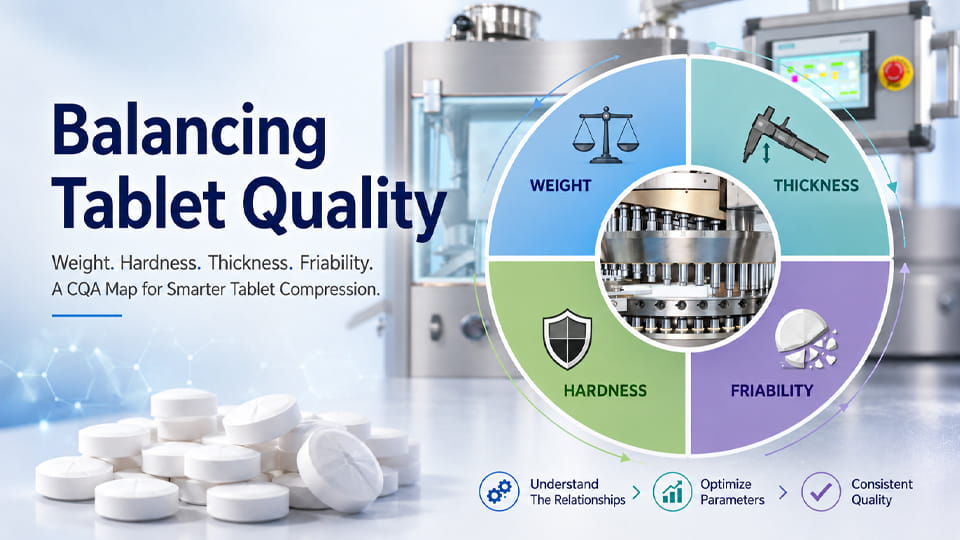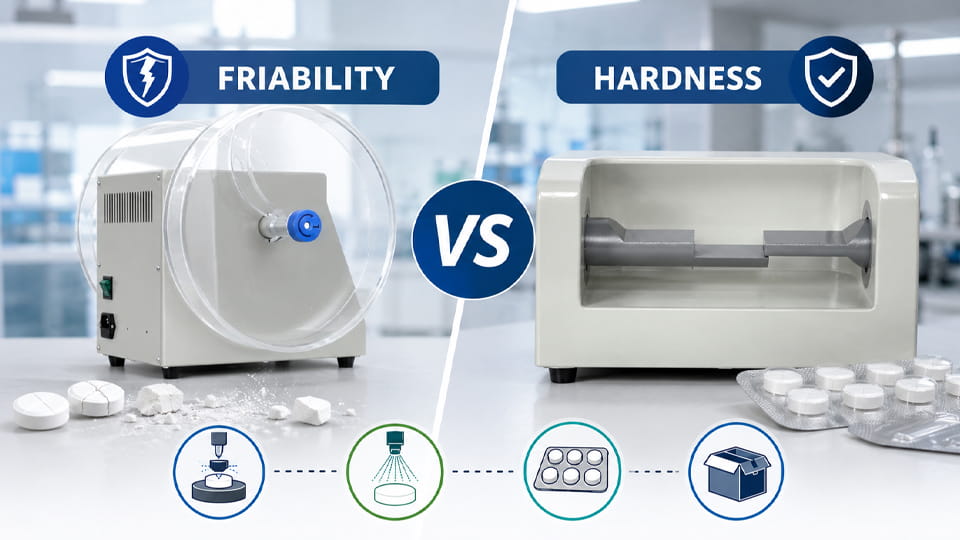

टेबलेट के वजन में भिन्नता—गोलियों के बीच द्रव्यमान में अंतर—मामूली लग सकता है, लेकिन यह दवा की गुणवत्ता और खुराक सटीकता के लिए एक गंभीर मुद्दा है. कई कारक वजन की स्थिरता को बिगाड़ सकते हैं: ख़राब पाउडर प्रवाह, असमान डाई फिलिंग, ग़लत फीडर या फ़िल-कैम सेटिंग, उच्च प्रेस गति, सामग्री पृथक्करण, टूलींग घिसाव और मशीन अंशांकन. व्यवहार में, समस्या निवारण के लिए पाउडर की चरण-दर-चरण जांच की जाती है, फ़ीड प्रणाली, भरना, मूल कारण ढूंढने और उसे ठीक करने के लिए सेटिंग्स और टूलिंग दबाएँ. निवारक उपायों में पाउडर दानेदार बनाने/प्रवाह में सुधार करना शामिल है (ग्लाइडिंग नृत्य, उचित नमी), हॉपर में जबरन फीडिंग या बाफ़ल्स का उपयोग करना, कैम/भरण गहराई का अनुकूलन, और उपकरण बनाए रखना (टूलींग, सेंसर, पीएलसी सिस्टम) नियमित रूप से. आधुनिक रोटरी टैबलेट मशीन सर्वो-नियंत्रित भरण के साथ, वास्तविक समय वजन/दबाव की निगरानी, और स्वतः-अस्वीकृति टैबलेट के वजन को स्वचालित रूप से स्थिर कर सकती है. संक्षेप में, स्थिर टैबलेट वजन प्रारंभ होगा लगातार पाउडर प्रवाह और डाई फिलिंग के साथ, लेकिन बनाए रखना हाई-स्पीड ऑपरेशन के तहत इसके लिए उचित फीडर सेटअप की आवश्यकता होती है, मशीन नियंत्रण और निगरानी.
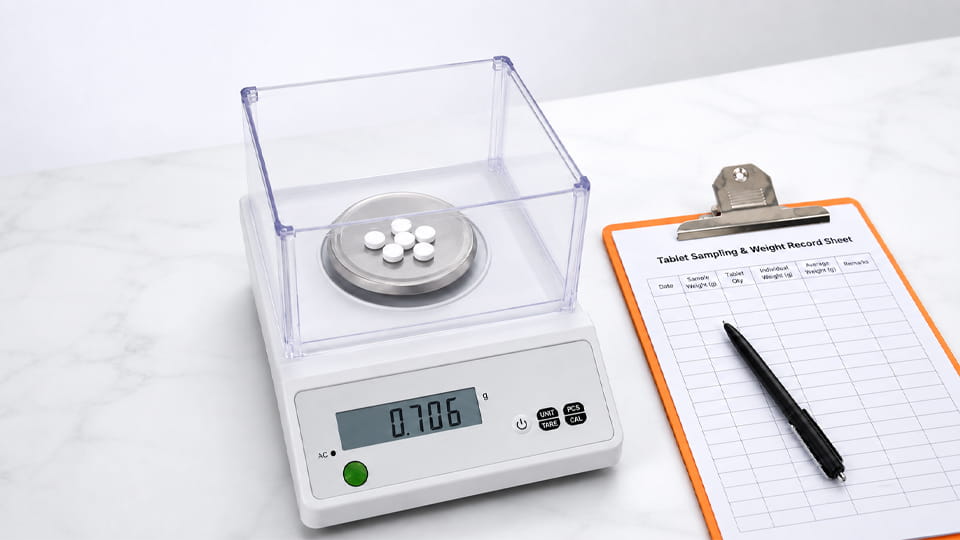
टैबलेट के वजन में भिन्नता बस टैबलेट के द्रव्यमान की गैर-एकरूपता है बैच. दूसरे शब्दों में, समान वजन की अपेक्षित गोलियाँ अलग-अलग निकलती हैं. उच्च वजन भिन्नता फार्मा में खुराक की एकरूपता के लिए एक लाल झंडा है (एक टैबलेट में बहुत अधिक या बहुत कम एपीआई हो सकती है). टेबलेट का लगातार वजन महत्वपूर्ण है: यह माना जाता है कि यदि प्रत्येक टैबलेट का वजन नियंत्रित किया जाता है, फिर दवा की सामग्री (एपीआई) एक समान है. वास्तव में, खासियत <905> खुराक इकाइयों की एकरूपता पर निर्माताओं को एक साधारण वजन-भिन्नता परीक्षण का उपयोग करने देता है केवल जब टैबलेट काफी बड़ा हो (≥25 मिलीग्राम खुराक या ≥25% एपीआई). यदि गोलियाँ छोटी हैं या उनमें दवा कम है, इसके बजाय उन्हें सामग्री एकरूपता परीक्षण का उपयोग करना चाहिए. संक्षेप में, वजन भिन्नता को नियंत्रित करना यह सुनिश्चित करने का एक तरीका है कि प्रत्येक टैबलेट में इच्छित खुराक शामिल है.
| अवधि | इसका क्या मतलब है | मुख्य सरोकार |
| टेबलेट वजन भिन्नता | व्यक्तिगत टैबलेट द्रव्यमान में भिन्नता | प्रत्येक गोली में समान मात्रा में पाउडर होना चाहिए (द्रव्यमान) |
| सामग्री एकरूपता | सक्रिय औषधि सामग्री में भिन्नता | प्रत्येक टैबलेट में एक समान मात्रा में एपीआई होनी चाहिए |
| टेबलेट वजन नियंत्रण | टेबलेट द्रव्यमान को स्थिर करने के लिए समायोजन प्रक्रिया/मशीन | सभी गोलियों में लगातार डाई फिल और एक समान वजन प्राप्त करना |
मेज़: टेबलेट एकरूपता से संबंधित मुख्य शब्द. एक अच्छी वज़न-नियंत्रण प्रणाली का लक्ष्य वज़न भिन्नता को समाप्त करना है, विश्वसनीय खुराक सुनिश्चित करना.
वजन में बदलाव लगभग हमेशा एक लक्षण होता है, मूल मुद्दा नहीं. आमतौर पर इसका मतलब है कि फीडिंग या संपीड़न प्रक्रिया में कुछ एक समान नहीं है. The सामान्य कारणों में शामिल करना:
यदि दाने या पाउडर सुचारू रूप से प्रवाहित नहीं होते हैं, डाई भरना अनियमित होगा. संसक्त चूर्ण, बहुत महीन या रोएँदार कण, या एक विस्तृत कण-आकार वितरण पाउडर को पाटने का कारण बन सकता है, चूहे का बिल, या हॉपर और फीड फ्रेम में अलग करें. उदाहरण के लिए, बहुत अधिक बड़े समूहों वाला एक बैच जुर्माना भरने के दौरान रुक सकता है, या विपरीत. इसके कारण कुछ में ओवरफिलिंग होती है और कुछ में अंडरफिलिंग होती है. व्यवहार में, खराब प्रवाह क्षमता अक्सर यादृच्छिक वजन परिवर्तन के रूप में दिखाई देती है. एक समाधान दानेदार बनाने में सुधार करना या प्रवाह-सहायक जोड़ना है (कोलाइडल सिलिका जैसे ग्लाइडेंट) इसलिए पाउडर समान रूप से बहता है. नमी और कण आकार को नियंत्रित करना (मिलिंग या छनाई के माध्यम से) भी मदद करता है.
टेबलेट का वजन है तय करना प्रत्येक पासे में कितनी सामग्री प्रवेश करती है. डाई फिल की गहराई या आयतन में कोई भी बदलाव सीधे टैबलेट के वजन को बदल देता है. यदि हॉपर में पाउडर का स्तर है, फ़ीड फ्रेम या ढलान परिवर्तन (फीडिंग सिस्टम डिज़ाइन या पाउडर जमने के कारण), भरण चक्र-दर-चक्र भिन्न हो सकता है. आधुनिक रोटरी प्रेस की खुराक मात्रा के अनुसार होती है (गहराई भरें), इसलिए अस्थिर भराव वजन में उतार-चढ़ाव के बराबर होता है. डाई फिलिंग के एक अध्ययन में, शोधकर्ताओं का कहना है कि "डाई फिल की पुनरुत्पादकता बहुत महत्वपूर्ण है क्योंकि यह टैबलेट के वजन और वजन में भिन्नता को निर्धारित करती है". दूसरे शब्दों में, कुछ भी जो पाउडर को प्रत्येक गुहा को असमान रूप से भर देता है - जैसे खराब फ़ीड फ्रेम संरेखण, परिवर्तनीय फ़ीड पैन स्तर, या बहुत कम रुकने का समय—टैबलेट का वजन असमान हो जाएगा.
फ़ीड फ़्रेम (फ़ोर्स्ड फीडर/पैडल या ग्रेविटी फ़ीड) सही ढंग से सेट किया जाना चाहिए. यदि पैडल की गति बहुत अधिक या कम है, या पैडल और डाई के बीच का अंतर बंद है, प्रति डाई पाउडर की मात्रा बदल जाती है. उदाहरण के लिए, यदि फ़ीड फ्रेम घिसा हुआ/गलत संरेखित है या पैडल कोण गलत है, कुछ स्टेशनों को व्यवस्थित रूप से कम या ज्यादा पाउडर प्राप्त होगा. अचीवकेम का कहना है कि गलत संरेखित पैडल या बंद फ़ीड पथ "पाउडर का असमान वितरण" का कारण बनते हैं, असंगत डाई फिलिंग और...वजन भिन्नता के कारण". यह सुनिश्चित करना कि फीडर साफ है, ठीक से समायोजित, और उपयोग कर रहे हैं जबरदस्ती खाना खिलाना खराब-प्रवाह पाउडर के लिए स्थिरता में काफी सुधार हो सकता है.
बुर्ज पर भराव की गहराई या कैम प्रोफ़ाइल पाउडर के थोक घनत्व के लिए सही होनी चाहिए. एक भराव कैम जो बहुत उथला है वह डाई को कम भर देगा (गोलियाँ बहुत हल्की), जबकि अत्यधिक गहरा फिल कैम ओवरफिल हो जाएगा, अतिरिक्त को हटाने की आवश्यकता है (जो पुन: परिचय और असमान भराव का कारण बन सकता है). भराव की गहराई में छोटे-छोटे परिवर्तन भी सीधे वजन परिवर्तन का कारण बनते हैं: अधिक गहराई → अधिक पाउडर → भारी गोलियाँ (और इसके विपरीत). कम भराव गहराई या असंगत प्रवाह के कारण गोलियाँ कम वजन की हो जाती हैं, जबकि ओवरफिल से गोलियों का वजन अधिक हो जाता है. जब भी कोई नया फॉर्मूलेशन या टैबलेट आकार चलाया जाता है तो कैम को ठीक करना और नमूना वजन की निगरानी करना आवश्यक है.
प्रेस को तेजी से चलाने से प्रत्येक डाई का फीडर के नीचे व्यतीत होने वाला समय कम हो जाता है. यदि गति पाउडर की डाई को फिर से भरने की क्षमता से अधिक हो जाती है, कुछ डाई कम भरी होंगी. उच्च RPM फ़ीड फ़्रेम को "भूखा" कर सकता है, विशेष रूप से गुरुत्वाकर्षण-आधारित पाउडर के साथ. जैसा कि जिनलू की समस्या-निवारण मार्गदर्शिका चेतावनी देती है, “प्रेस को बहुत तेजी से चलाने से हालत खराब हो सकती है [उतार-चढ़ाव] प्रत्येक पासे को भरने के लिए पर्याप्त समय न देकर". समाधान या तो धीमा करना है या सक्रिय रूप से स्विच करना है जबरन भोजन प्रणाली जो तेज गति से चल सकता है. अक्सर, जब वजन में भिन्नता केवल उच्च गति पर दिखाई देती है, इसका मतलब है कि फ़ीड सिस्टम को अनुकूलन की आवश्यकता है (उच्च पैडल गति या वैक्यूम सहायता) स्वयं प्रक्रिया के बजाय.
मिश्रित चूर्ण में, पृथक्करण से कुछ डाईज़ को अधिक एपीआई मिल सकती है और अन्य को कम एपीआई मिल सकती है (या वजन के अनुसार इसके विपरीत). उदाहरण के लिए, यदि हॉपर संचलन के दौरान मोटे दवा के कण सूक्ष्म कणों से अलग हो जाते हैं, हॉपर से निकलने वाली पहली गोलियाँ भारी हो सकती हैं (अच्छा-अमीर) और बाद वाले हल्के होते हैं (मोटे-अमीर). इस तरह का पृथक्करण वजन और सामग्री की एकरूपता दोनों को प्रभावित करता है. सामान्य इलाज घटकों को एक साथ लॉक करने के लिए बहुत अच्छी तरह से मिश्रण/दानेदार बनाना सुनिश्चित करना है, और पृथक्करण को कम करने के लिए हॉपर/फीडर को डिज़ाइन करें (उदाहरण के लिए:. लाइव-बॉटम हॉपर या बैफल्स का उपयोग करना). संक्षेप में, यदि घटकों को भरने से पहले समान रूप से वितरित नहीं किया जाता है, टैबलेट का वजन असमान होगा.
भौतिक घूंसे पहनना, मर जाता है, या फ़ीड तंत्र भिन्नता ला सकते हैं. घिसे हुए या चिपके हुए घूंसे समान गहराई तक नहीं पहुंच सकते, घिसे हुए डाई पाउडर की मात्रा को थोड़ा बदल सकते हैं, और ढीली टूलींग भरण मात्रा को बदल सकती है. उदाहरण के लिए, एक घिसा-पिटा फीड फ्रेम स्क्रेपर फीडर में कम या ज्यादा पाउडर डाल सकता है. यहां तक कि मामूली मशीन कंपन या गलत संरेखित बुर्ज कैम भी भिन्नता का कारण बन सकता है. अत्यधिक घिसाव से पहले पंच/डाई को बदलने के लिए नियमित रखरखाव और बुर्ज संरेखण की जांच करना महत्वपूर्ण है. अनेक प्रेस दोष अंततः यांत्रिक मुद्दों पर वापस आते हैं, इसलिए टूलींग और यांत्रिकी का निरीक्षण करना एक महत्वपूर्ण समस्या निवारण कदम है.
अंत में, साधारण सेटअप त्रुटियाँ वजन में भिन्नता का कारण बन सकती हैं. उदाहरणों में गलत स्तर सेंसर अंशांकन शामिल है (गलत भराव गहराई के कारण), गलत सेट पूर्व संपीड़न (हवा को अलग तरह से फँसाना), या दोषपूर्ण वजन नियंत्रण सेंसर. यदि ऑन-बोर्ड स्वचालित वजन नियंत्रण प्रणाली कैलिब्रेट नहीं की गई है, यह ग़लत ढंग से समायोजित हो सकता है. यहां तक कि गंदा मुक्का मारने जैसी चीजें भी (इसकी प्रभावी ज्यामिति को बदलना) या ग़लत ढंग से दोबारा जोड़ा गया फ़ीड फ़्रेम वजन घटा सकता है. सावधान अंशांकन (ए का उपयोग करना चकवेया और सेटिंग्स सत्यापित कर रहा हूँ) यह सुनिश्चित करता है कि नियंत्रण प्रणाली सटीक डेटा पर काम करती है.
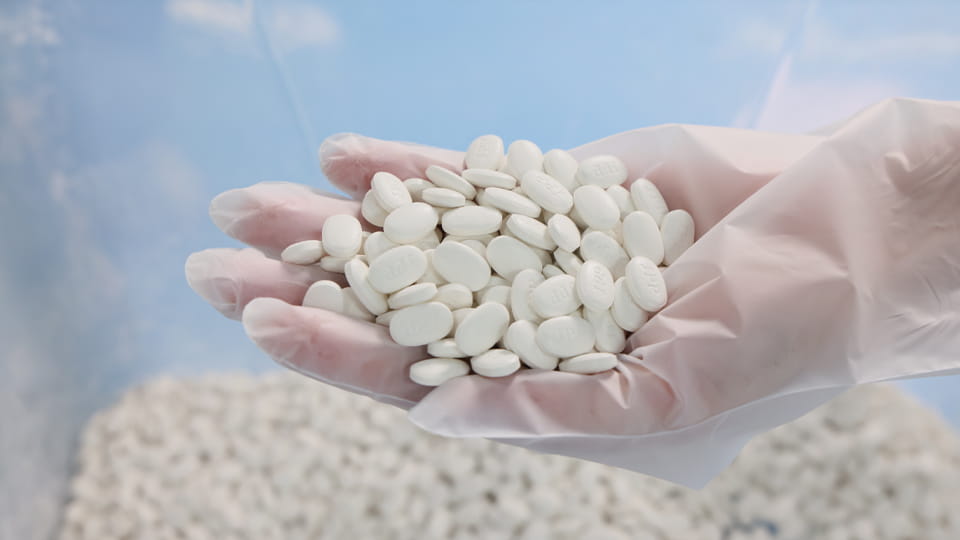
जब अनियमित टैबलेट वजन का सामना करना पड़ा, तार्किक चरण-दर-चरण दृष्टिकोण का उपयोग करें. परिवर्तन एक समय में एक कारक और प्रभाव का निरीक्षण करें. एक विशिष्ट निदान अनुक्रम है:
इन चरणों का पालन करके (प्रत्येक परिवर्तन के बाद अक्सर टैबलेट के वजन या मोटाई का चार्ट बनाया जाता है), आप अपराधी को अलग कर सकते हैं. कई मामलों में, सरल समायोजन (चप्पू की गति थोड़ी अधिक, एक स्पर्श और अधिक भरें गहराई, एक ब्रिजिंग बिंदु की सफाई) विविधता को वापस सीमा में लाएगा.
वजन में भिन्नता को रोकने का अर्थ है सभी पहचाने गए कारकों को सक्रिय रूप से नियंत्रित करना:
संक्षेप में, रोकथाम के बारे में है स्थिरता हर कदम पर-अच्छा फार्मूला, विश्वसनीय खिला, सटीक मशीन नियंत्रण, और निगरानी. रोकथाम के एक औंस की लागत किसी आउट-ऑफ़-स्पेक लॉट को दोबारा बनाने या ख़त्म करने की तुलना में बहुत कम है.
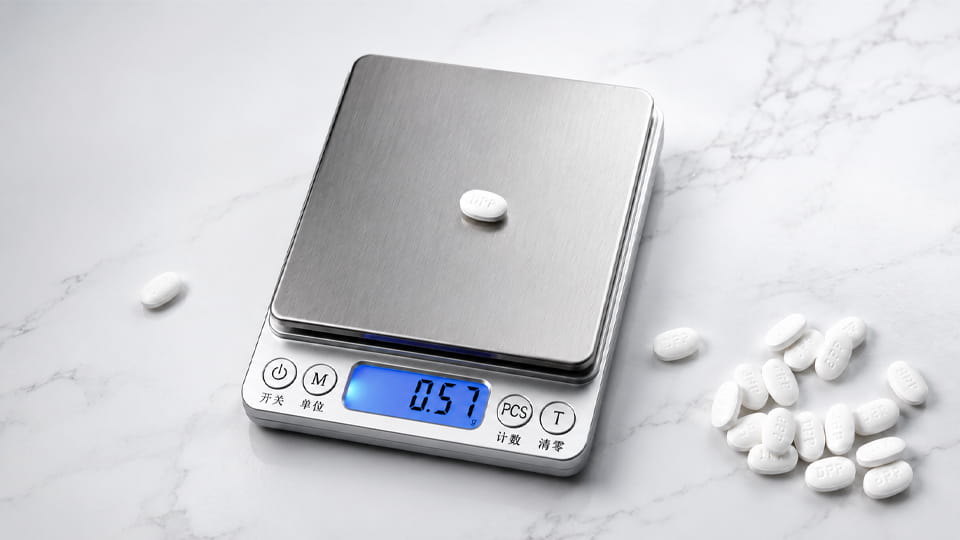
यह भेद करने में मदद करता है वजन भिन्नता (समस्या) से वजन नियंत्रण (समाधान). वज़न में भिन्नता लक्षण को संदर्भित करता है - गोलियाँ लक्ष्य वजन सहनशीलता को पूरा नहीं करती हैं, एक गुणवत्ता मुद्दा. इसके विपरीत, वजन नियंत्रण के बारे में है प्रक्रिया और उपकरण ऐसी विशेषताएं जो टैबलेट के वजन को स्थिर रखती हैं. उदाहरण के लिए, “वजन नियंत्रण” इसमें सर्वो-संचालित भरण समायोजन शामिल हो सकता है, फ़ीडबैक लूप्स, और उन प्रणालियों को अस्वीकार करें रोकना वजन में भिन्नता पहले स्थान पर होने से. वज़न भिन्नता के बारे में सोचें दोष (आप पैमाने पर क्या देखते हैं) और उपकरण के रूप में वजन नियंत्रण (आप मशीन को कैसे समायोजित करते हैं).
आधुनिक रोटरी टैबलेट प्रेस अब अंतर्निर्मित वजन-नियंत्रण प्रणाली प्रदान करते हैं. ये प्रणालियाँ लक्ष्य भार तक पहुँचने के लिए ऑपरेशन के दौरान स्वचालित रूप से भराव की गहराई या पैडल पिच को बदल देती हैं. वे वास्तविक संघनन बल को मापने और वजन का अनुमान लगाने के लिए प्रत्येक पंच पर लोड सेल या दबाव सेंसर का उपयोग कर सकते हैं. व्यवहार में, इसका मतलब यह है कि यदि कोई बाहरी टैबलेट पाया जाता है, प्रेस तुरंत उसे सुधार कर बाहर कर देती है. यह पुराने "मैनुअल हैंडव्हील" युग के विपरीत है जहां ऑपरेटरों को आंख या अनुभव से समायोजन करना पड़ता था.
सीधे शब्दों में कहें तो, यदि वजन में भिन्नता एक बाधा है, वज़न नियंत्रण 4-पहिया-ड्राइव समाधान है. यह अच्छे प्रोसेस सेटअप की आवश्यकता को दूर नहीं करता है (आपको अभी भी स्थिर पाउडर की आवश्यकता है, अच्छे फीडर, वगैरह।), लेकिन यह एक सक्रिय सुरक्षा जाल प्रदान करता है.
हाँ-आधुनिक टैबलेट प्रेस मशीनइन्हें विशेष रूप से वजन भिन्नता को कम करने के लिए डिज़ाइन किया गया है. वे जैसी तकनीकों को शामिल करते हैं:
संक्षेप में, जिनलू की HZP और HGZP श्रृंखला जैसे पिल प्रेसर एकरूपता के लिए बनाए गए हैं. उनकी विशेषताएं-सर्वो फिलिंग, मल्टी-पैडल फीडर, वास्तविक समय वजन/दबाव प्रतिक्रिया और एआई-संचालित अस्वीकृति- टैबलेट वजन भिन्नता को न्यूनतम करने के लिए एक साथ कार्य करते हैं. इसका मतलब यह नहीं है कि आप बुनियादी बातों को नजरअंदाज कर सकते हैं (अगर आपका पाउडर ख़राब है, कोई भी मशीन आपको नहीं बचा सकती), लेकिन ये उच्च-स्तरीय कार्य उत्पादन को अधिक मजबूत और क्षमाशील बनाते हैं.
गोली दबाने वाली मशीन खरीदते या निर्दिष्ट करते समय, उन कारकों पर विचार करें जो वजन स्थिरता को प्रभावित करते हैं:
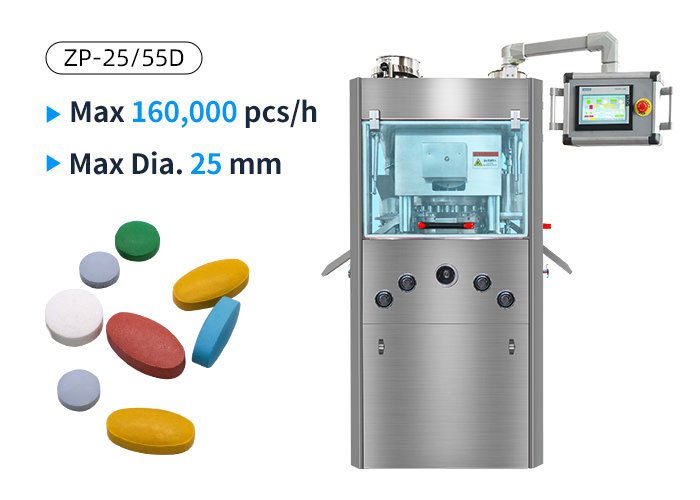
अंत में, ऐसी मशीन चुनें जो आपके उत्पाद की माँगों से मेल खाती हो. उदाहरण के लिए, उच्च मात्रा वाली चमकीली गोलियों के लिए मजबूर फीडर के साथ एक मजबूत बड़े प्रेस की आवश्यकता हो सकती है (की तरह 400 केएन प्रेस), जबकि वजन नियंत्रण के साथ मानक बी-टूल रोटरी पर छोटी विटामिन की गोलियाँ ठीक हो सकती हैं. जब संदेह हो, निर्माता के दिशानिर्देशों से परामर्श लें: टैबलेट प्रेस मशीन चयन पर जिनलू की क्रेता मार्गदर्शिका टैबलेट के व्यास जैसे विचारों पर आधारित है, परत गिनती, आउटपुट, और आपकी आवश्यकताओं के अनुरूप टैबलेट प्रेस से मेल खाने में मदद करने के लिए प्रवाहशीलता.
| संकट | संभावित कारण | अनुशंसित कार्रवाई |
| गोलियाँ लगातार बहुत भारी | गहराई भरें बहुत अधिक गहरा सेट करें | फिल कैम की गहराई कम करें / सेटिंग्स भरें |
| गोलियाँ लगातार बहुत हल्का | भरने की गहराई बहुत उथली निर्धारित की गई है | भराव की गहराई को थोड़ा बढ़ाएँ |
| टेबलेट का वजन बेतरतीब ढंग से उतार-चढ़ाव होता है | ख़राब पाउडर प्रवाह या ब्रिजिंग | दानेदार बनाने/प्रवाह में सुधार करें (स्लाइडिंग जोड़ें, मिक्स) |
| वज़न गति के साथ बदलता है | डाई फिलिंग उच्च RPM पर नहीं चल सकती | प्रेस की गति कम करें या फीडर दक्षता बढ़ाएँ |
| वजन अलग-अलग होता है स्टेशनों के बीच | टूलींग का गलत संरेखण या स्टेशन असंतुलन | पंच/डाई का निरीक्षण करें और फ़ीड फ़्रेम को पुनः संरेखित करें |
| वज़न एक दौड़ में बह जाता है | हॉपर स्तर बदल रहा है / घिसाव | पाउडर आपूर्ति की जाँच करें (हॉपर स्तर), फ़ीड सिस्टम को कैलिब्रेट करें |
| उच्च आर्द्रता पर उच्च भिन्नता | नमी प्रवाह को प्रभावित कर रही है | पर्यावरण पर नियंत्रण रखें; डीह्यूमिडिफ़ायर का परीक्षण करें |
त्वरित संदर्भ: संभावित कारणों और समाधानों से दोष का मिलान करें. कई समाधानों में भराव की गहराई में बदलाव शामिल है, पाउडर प्रवाह में सुधार, या फीडर सेटिंग्स ट्यूनिंग.
लगातार टैबलेट का वजन प्राप्त किया जा सकता है, लेकिन केवल कई कारकों को नियंत्रित करके. यह प्रारंभ होगा एक अच्छी तरह से डिज़ाइन किए गए फ़ॉर्मूले और समान पाउडर कणिकाओं के साथ, लेकिन रहता है केवल तभी सुसंगत जब डाई हर चक्र में समान रूप से भरी जाती है और टैबलेट मशीन की सेटिंग्स स्थिर रहती हैं. व्यवहार में, इसका मतलब है पाउडर प्रवाह को अनुकूलित करना, फीडर पैरामीटर, कैम और गति भरें, और टूलींग को सर्वोत्तम स्थिति में रखना. आधुनिक तकनीक एक शक्तिशाली सहायता प्रदान करती है: के साथ दबाता है सर्वो-संचालित भरण समायोजन, इन-डाई सेंसर, और स्वतः-अस्वीकृति स्वचालित रूप से छोटे विचलनों को ठीक कर सकती है और आउट-ऑफ़-स्पेक टैबलेट को रोक सकती है.
उदाहरण के लिए, जिंलू पैकिंग टैबलेट प्रेस स्वचालित फीडिंग और वजन-नियंत्रण सुविधाओं को संयोजित करें - सक्रिय फ़ीड फ्रेम से लेकर वास्तविक समय दबाव की निगरानी तक - वजन विचलन को सीमित सीमा के भीतर रखने के लिए. यदि आपके उत्पाद के लिए स्थिर वजन नियंत्रण महत्वपूर्ण है, इन क्षमताओं के साथ एक पिल प्रेस चुनना महत्वपूर्ण है.
सटीक वजन नियंत्रण और स्वचालित निगरानी वाली टैबलेट पंचिंग मशीन की तलाश है? जिनलू पैकिंग से संपर्क करें आपकी टेबलेट उत्पादन आवश्यकताओं पर चर्चा करने के लिए. हमारे विशेषज्ञ समाधान सुझा सकते हैं (मानक से रोटरी टैबलेट प्रेस मशीनें उच्च गति के लिए एचजेडपी या बड़े आकार के प्रेस) जो आपके फॉर्मूलेशन और गुणवत्ता आवश्यकताओं से मेल खाता हो, वजन भिन्नता की समस्याओं को खत्म करने में आपकी मदद करना.
आम तौर पर, कोई भी कारक जो डाई फिलिंग को असमान बनाता है, वजन में भिन्नता पैदा करेगा. सामान्य अपराधी असंगत पाउडर प्रवाह हैं (खराब दाने या नमी के कारण), असमान डाई फिलिंग (गहराई या हॉपर मुद्दे भरें), अनुचित फीडर सेटिंग, बहुत अधिक बुर्ज गति, सामग्री पृथक्करण, या उपकरण घिसाव. उदाहरण के लिए, यदि फ़ीड फ़्रेम पैडल समान रूप से स्वीप नहीं कर रहे हैं (गलत संरेखण या घिसाव के कारण), कुछ अंडरफिल मर जाते हैं. अक्सर इसका समाधान पाउडर और खिलाने की प्रक्रिया का शुरू से अंत तक निरीक्षण करना होता है.
संपीड़न के दौरान असंगत भार का आमतौर पर मतलब होता है कि भरण चरण असंगत है. बुर्ज के प्रत्येक घुमाव से समान मात्रा में पाउडर मिलना चाहिए. यदि कोई कैम थोड़ा सा बंद है, या यदि पाउडर का प्रवाह भिन्न होता है (उदाहरण के लिए:. क्योंकि हॉपर का स्तर गिर गया), गोलियों का वजन अलग-अलग होगा. ऐसा तब भी हो सकता है जब सेटिंग्स को दोबारा ट्यून किए बिना प्रेस की गति बदल दी जाए, या यदि उपकरण घिसने से डाई का आयतन बदल गया है.
पहला, सुनिश्चित करें कि पाउडर का प्रवाह स्थिर है (अच्छे दाने, एकसमान मिश्रण, आवश्यकतानुसार ग्लिडेंट/स्नेहक). फिर सुनिश्चित करें कि डाई फिलिंग सुसंगत है: खराब प्रवाह वाले पाउडर के लिए फ़ोर्स्ड फीडर का उपयोग करें, पाउडर का स्तर स्थिर रखें, और सही भराव गहराई निर्धारित करें. फीडर की गति और पैडल संरेखण को ट्यून करें, और यदि आवश्यक हो तो मशीन को धीमा कर दें. कई लोग इन-प्रोसेस मॉनिटरिंग का भी उपयोग करते हैं (जाँच करने वाले, दबाव सेंसर) जो स्वचालित रूप से आउटलेर्स को अस्वीकार कर देता है, वितरण को प्रभावी ढंग से मजबूत करना. नियमित रखरखाव और अंशांकन (चप्पुओं की सफाई, घिसे हुए हिस्सों को बदलना) वजन भी कम रखता है.
यदि कोई पाउडर अनियमित रूप से बहता है, कुछ डाई कम भर सकती हैं जबकि अन्य अधिक भर सकती हैं. उदाहरण के लिए, पाउडर जो हॉपर में या फ़ीड फ्रेम में "चूहा-छेद" भरता है, खाली मर जाता है, हल्की गोलियों की ओर अग्रसर. के साथ -साथ, जब एक पुल अचानक टूट जाता है, यह अतिरिक्त पाउडर को अगले कुछ डाई में डाल देता है, भारी गोलियाँ पैदा कर रहा है. सारांश, अच्छा प्रवाह = समान डाई फिलिंग (और वजन), जबकि ख़राब प्रवाह से उतार-चढ़ाव होता है. इसीलिए निर्माता प्रवाह में सुधार और वजन भिन्नता को कम करने के लिए मैग्नीशियम स्टीयरेट या सिलिका जोड़ सकते हैं.
हाँ. उच्च बुर्ज गति फीडर के नीचे डाई के रहने के समय को कम कर देती है. बहुत उच्च RPM पर, गुरुत्वाकर्षण-आधारित फ़ीड फ्रेम संपीड़न से पहले डाई को पूरी तरह से फिर से नहीं भर सकता है. इससे कम वजन की गोलियाँ और अधिक बिखराव होता है. यदि वजन में भिन्नता केवल उच्च गति पर दिखाई देती है, समाधान आमतौर पर धीमी गति या बेहतर फीडर होता है (एक सक्रिय पैडल प्रणाली की तरह). कुछ आधुनिक प्रेस फ़ीड को गति के साथ सिंक्रनाइज़ करके या दोहरे-फ़ीड सिस्टम का उपयोग करके इस समस्या से बचते हैं.
टैबलेट का वजन अनिवार्य रूप से संपीड़न से पहले डाई में पाउडर की मात्रा से निर्धारित होता है. लगातार डाई भरने का मतलब है लगातार द्रव्यमान. यदि डाई भरण की मात्रा भिन्न होती है (कैम सेटिंग्स के कारण, हॉपर का उतार-चढ़ाव, या फ़ीड फ़्रेम समस्याएँ), वजन भिन्न होता है. अच्छी आदत यह है कि नियमित रूप से यह सत्यापित किया जाए कि पासे की मात्रा सही है (उदाहरण के लिए:. एक नमूना टैबलेट का वजन बनाम मापें. निर्दिष्ट बिंदू) और प्रत्येक पासे को समान रूप से भरा रखने के लिए फिल कैम या फ़ीड सेटिंग्स को समायोजित करें.
वज़न भिन्नता एक भौतिक माप है: प्रत्येक गोली का वजन कितना है. सामग्री एकरूपता एक रासायनिक उपाय है: कितनी दवा (एपीआई) प्रत्येक टेबलेट में है. जब दवा अच्छी तरह मिश्रित हो और टैबलेट का एक महत्वपूर्ण हिस्सा बन जाए, वजन को नियंत्रित करने से लगातार खुराक सुनिश्चित की जा सकती है. लेकिन बहुत शक्तिशाली दवाओं के लिए (छोटी खुराक, <25% टेबलेट का), यूएसपी को व्यक्तिगत सामग्री परीक्षण की आवश्यकता होती है. दूसरे शब्दों में, भार भिन्नता द्रव्यमान को मापती है, जबकि सामग्री की एकरूपता दवा की मात्रा को मापती है. दोनों "खुराक इकाइयों की एकरूपता" के पहलू हैं, लेकिन वजन भिन्नता तभी पसंदीदा परीक्षण है जब टैबलेट का आकार और दवा का अंश सारगर्भित मानदंडों को पूरा करता है.
हाँ. कई प्रेसों में अब बंद-लूप वजन नियंत्रण प्रणालियाँ शामिल हैं. उदाहरण के लिए, एक सर्वो मोटर वजन लक्ष्य तक पहुँचने के लिए वास्तविक समय में भरण गहराई को समायोजित कर सकती है, सेंसर से मिले फीडबैक के आधार पर. जिनलू के आधुनिक प्रेस एक सर्वो-संचालित फिलिंग रेल का उपयोग करते हैं जो लगातार वजन विचलन को सही करता है. उनके पास वास्तविक समय में वजन निरीक्षण भी होता है: यदि कोई टैबलेट लक्ष्य से बाहर आ जाता है, मशीन इसे तुरंत बाहर निकाल सकती है. तो सही प्रेस के साथ, अधिकांश वजन नियंत्रण स्वचालित है.
एक मजबूर फीडर में पैडल या स्क्रू होते हैं जो सक्रिय रूप से पाउडर को डाई में धकेलते हैं. इसका मतलब है कि प्रत्येक चक्र में प्रत्येक डाई को पाउडर से "पैक" किया जाता है. यह ब्रिजिंग जैसे सामान्य मुद्दों को रोकता है और समान वितरण सुनिश्चित करता है. व्यवहार में, एक मजबूर फीडर प्रत्येक भराव को अधिक प्रतिलिपि प्रस्तुत करने योग्य बनाकर टैबलेट के वजन को स्थिर रखता है. जिनलू के मार्गदर्शक ध्यान देते हैं कि मजबूर फीडरों को जोड़ने या समायोजित करने से अक्सर चिपचिपे या महीन पाउडर के लिए भिन्नता कम हो जाती है. अनिवार्य रूप से, यह भरने की प्रक्रिया को अप्रत्याशित गुरुत्वाकर्षण प्रवाह पर कम निर्भर बनाता है.
अच्छे उपकरणों से परे, रोकथाम स्मार्ट प्रक्रिया नियंत्रण के बारे में है: प्रक्रिया निगरानी का उपयोग करें (टेबलेट का वजन ट्रैक करें, वास्तविक समय में कठोरता), मानक संचालन प्रक्रियाओं का पालन करें, और नियमित जांच करें. इन-प्रोसेस नियंत्रण स्थापित करें जैसे "यदि औसत वजन कम हो जाता है।" >0.5%, रुकें और समायोजित करें।” निवारक रखरखाव कार्यक्रम लागू करें. फॉर्मूलेशन और मिश्रण का मानकीकरण करें. अंततः, ऑपरेटरों को प्रारंभिक चेतावनी संकेतों पर ध्यान देने के लिए प्रशिक्षण देना (प्रेस ध्वनि में परिवर्तन की तरह) किसी बड़ी समस्या से पहले बहाव पकड़ सकते हैं. लक्ष्य एक प्रारंभिक चेतावनी प्रणाली है: पकड़ो ए 1% एक बैच तैयार करने के बजाय शिफ्ट करें 5%.
संदर्भ:
1. पबमेड—— पैडल फीडर के साथ रोटरी डाई फिलिंग के दौरान फार्मास्युटिकल पाउडर का प्रवाह व्यवहार
2.साइंसडायरेक्ट—— टैबलेट प्रेस डाइज़ को भरने के दौरान पाउडर मिश्रण गुणों पर फ़ीड फ़्रेम के प्रभावों का अध्ययन
3.एफडीए Q4B अनुलग्नक 6 —— खुराक इकाइयों की एकरूपता सामान्य अध्याय
4.पबमेड—— रोटरी प्रेस में डाई फिलिंग की चुनौती-सामग्री गुणों और प्रक्रिया मापदंडों का एक व्यवस्थित अध्ययन
5.पबमेड—— निरंतर विनिर्माण में टैबलेट वजन परिवर्तनशीलता की भविष्यवाणी
6.पबमेड—— हाई-स्पीड रोटरी टैबलेट प्रेस के फोर्स्ड फीडर में पैडल गति को अनुकूलित करके टैबलेट वजन परिवर्तनशीलता को कम करना