फार्मास्युटिकल मैन्युफैक्चरिंग में, बैच उत्पादन दवाएँ बनाने की मानक विधि बनी हुई है. प्रत्येक बैच - एक बार में उत्पादित एक परिभाषित मात्रा - को एक अद्वितीय सौंपा गया है बैच संख्या. के लिए यह संख्या महत्वपूर्ण है पता लगाने की क्षमता, गुणवत्ता नियंत्रण, और जीएमपी/एफडीए अनुपालन. उत्पादों को वापस उनके बैच रिकॉर्ड से जोड़कर, निर्माता मुद्दों की तेजी से जांच कर सकते हैं, दोषों को अलग करें, और यदि आवश्यक हो तो लक्षित रिकॉल करें. आधुनिक पैकेजिंग लाइनें (छाले पड़ना, बॉटलिंग, कार्टनिंग, लेबलिंग) कोडिंग और निरीक्षण प्रणालियों को एकीकृत करें जो प्रत्येक इकाई पर बैच नंबर प्रिंट और सत्यापित करें. यह आलेख बताता है कि बैच उत्पादन और बैच संख्याएँ क्या हैं, वे फार्मा में क्यों मायने रखते हैं?, और कैसे पैकेजिंग मशीनरी (कोडिंग प्रिंटर, लेबलर, दृष्टि प्रणाली, वगैरह।) सटीक बैच ट्रैकिंग सुनिश्चित करें. हम खरीद/उत्पादन प्रबंधकों और पैकेजिंग इंजीनियरों को यह समझने में मदद करने के लिए सर्वोत्तम प्रथाओं और अक्सर पूछे जाने वाले प्रश्नों को भी शामिल करते हैं कि बैच नंबरिंग का लाभ कैसे उठाया जाए। गुणवत्ता, अनुपालन और दक्षता.

फार्मास्युटिकल उद्योग में, ए “बैच” आम तौर पर एक ही उत्पादन चक्र के दौरान निर्मित उत्पाद की एक विशिष्ट मात्रा को संदर्भित करता है - जो समान उत्पादन निर्देशों के आधार पर होता है - जिसमें समान गुणवत्ता विशेषताएं होती हैं. यू.एस. के अनुसार. एफडीए परिभाषा, ए “बैच” एक समान गुणवत्ता के लिए अभिप्रेत थोक औषधि पदार्थ या खुराक रूप सामग्री की एक विशिष्ट मात्रा है.
बैच उत्पादन का अर्थ है बनाना मात्रा निर्धारित करें एक ही बार में किसी उत्पाद का, फिर अगले बैच के लिए एक नई दौड़ शुरू करना. इसमें प्रत्येक उत्पादन चरण के माध्यम से कच्चे माल का प्रसंस्करण शामिल है (मिश्रण, दानेदार बनाने का कार्य, COMPRESSION, वगैरह।) के लिए एक बैच, सभी चरणों को पूरा करना, फिर अगला बैच शुरू होने से पहले उपकरण की सफाई करें. यह अलग है निरंतर विनिर्माण, जहां लाइन कभी नहीं रुकती. पारंपरिक बैच प्रसंस्करण में, "वर्तमान बैच को अगले बैच को संसाधित करने से पहले समाप्त होना चाहिए".
फार्मास्युटिकल निर्माण में बैच रन विशेष रूप से आम हैं क्योंकि कई फॉर्मूलेशन के लिए सख्त नियंत्रण और बैचों के बीच कभी-कभी क्लीन-आउट की आवश्यकता होती है. प्रत्येक बैच एक उत्पादन करता है इकाइयों की निश्चित संख्या - कहना 100,000 गोलियाँ या 50,000 कैप्सूल. ऐसा करने से, कंपनियां मांग और गुणवत्ता की जरूरतों के अनुरूप उत्पादन कर सकती हैं. उदाहरण के लिए, यदि टेबलेट का फार्मूला बदलता है या भिन्न होता है टेबलेट प्रेस ज़रूरी है, नया बैच नियंत्रित परिस्थितियों में नए सिरे से शुरू होता है. यह चरण-दर-चरण दृष्टिकोण बनाए रखने में मदद करता है स्थिरता.
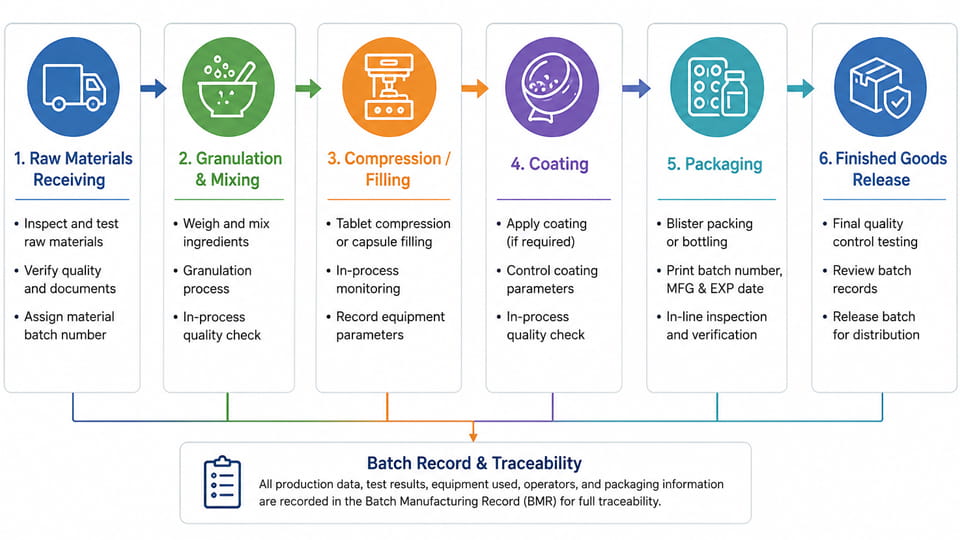
आकृति: फार्मास्युटिकल विनिर्माण में सरलीकृत बैच उत्पादन प्रवाह.
व्यवहार में, कैप्सूल भरने या टैबलेट बैच को संपीड़ित करने के बाद, लाइन अक्सर रुक जाती है, साफ़ हो जाता है, और अगला बैच शुरू हो गया है. यह जीएमपी की आधारशिला है, क्योंकि यह क्रॉस-संदूषण को रोकता है और प्रत्येक बैच को व्यक्तिगत रूप से जांचने देता है. अगर कुछ गलत होता है (मान लीजिए कि एक प्रयोगशाला परीक्षण विफल हो गया), केवल उस बैच को पृथक किया गया है. जैसा कि एक उद्योग स्रोत नोट करता है, “बैच उत्पादन का उपयोग करना, दवा कंपनियां किसी उत्पाद की विशिष्ट मात्रा का उत्पादन कर सकती हैं और फिर बदलती मांग के अनुसार अपनी प्राथमिकताओं को समायोजित कर सकती हैं।.
ए बैच संख्या (कभी-कभी बहुत संख्या कहा जाता है) उत्पाद के एक बैच को दिया गया एक अद्वितीय कोड है. यह प्रत्येक इकाई पर अंकित या मुद्रित होता है (या उसका पैकेज) उस बैच से. सामान्य शर्तों में, एक बैच नंबर प्रत्येक टैबलेट या शीशी को सटीक उत्पादन रन से जोड़ता है. विशेषज्ञों के अनुसार, "बैच नंबर एक विशिष्ट पहचानकर्ता है जो उत्पादों के एक समूह को सौंपा गया है जो समान परिस्थितियों में एक साथ निर्मित किए गए थे". एक अन्य उद्योग मार्गदर्शिका इसका सार प्रस्तुत करती है: एक बैच एक बार में उत्पादित मात्रा है, और बैच नंबर उस रन की पहचान करता है.
बैच नंबर कैसा दिखता है? कोई एक वैश्विक प्रारूप नहीं है - कंपनियां अपनी स्वयं की कोडिंग बनाती हैं. अक्सर एक बैच संख्या में कुछ संयोजन शामिल होता है तारीख, लाइन या प्लांट कोड, और एक क्रम. उदाहरण के लिए: बी12345678-एबी, जहां "बी" एक उत्पाद कोड या श्रेणी हो सकता है, संख्याएँ एक अनुक्रमिक बैच आईडी हैं, और "एबी" पौधे या रेखा को इंगित कर सकता है. वैसे ही, एक संख्या की तरह TAB240501-001 "TAB" के रूप में टूट सकता है (टेबलेट के लिए उत्पाद कोड), "240501" (मई 1, 2024), और "001" (बैच 1 दिन का). एक और उदाहरण: CAP250318A03 कैप्सूल का मतलब हो सकता है (टोपी), दिनांक 25-मार्च-18, लाइन ए, बैच 03. कुंजी निरंतरता है: कोड के प्रत्येक भाग का अर्थ है.
प्रारूप की परवाह किए बिना, बैच नंबर सभी उत्पादन रिकॉर्ड में दर्ज किया गया है. इसका "लगातार और व्यवस्थित रूप से प्रलेखित - उत्पादन से लेकर भंडारण तक". आमतौर पर यह मुद्रित होता है दोनों प्राथमिक पैकेजिंग पर (एक गोली की बोतल की तरह) और द्वितीयक पैकेजिंग पर (जैसे कोई कार्टन या डिब्बा). संक्षेप में, बैच नंबर शेल्फ पर मौजूद उत्पाद और उसके निर्माण इतिहास के बीच की कड़ी है.
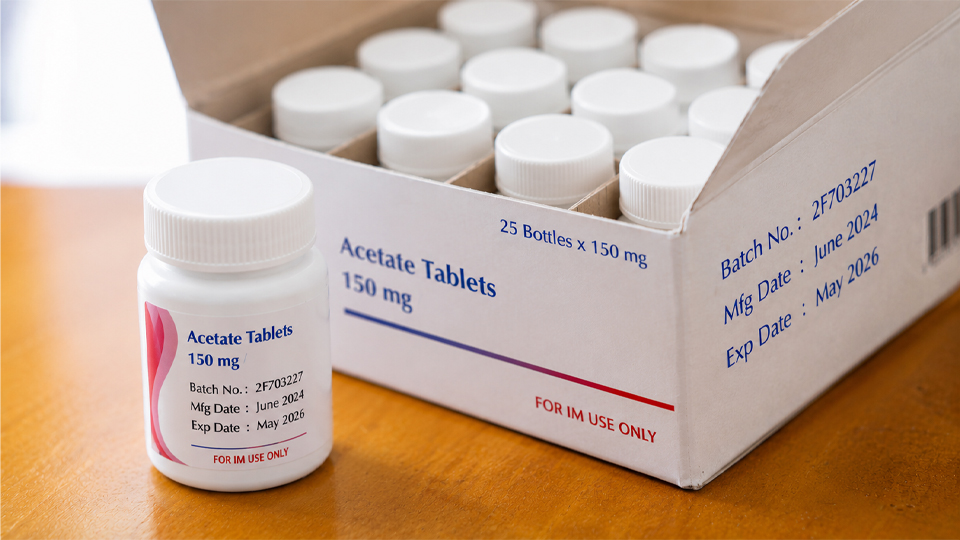
बैच नंबर होना केवल एक अतिरिक्त लेबल जैसा प्रतीत हो सकता है, लेकिन यह वास्तव में एक है जीएमपी आवश्यकता और एक महत्वपूर्ण गुणवत्ता वाला उपकरण. दुनिया भर के नियामक फार्मास्युटिकल उत्पादों के लिए बैच नंबरिंग अनिवार्य करते हैं. उदाहरण के लिए, यूएस एफडीए के सीजीएमपी नियम (21 सीएफआर 211.130) स्पष्ट रूप से दवा लेबलों पर बहुत अधिक मात्रा अंकित करने या संख्या नियंत्रित करने की आवश्यकता होती है "बैच के निर्माण और नियंत्रण के इतिहास के निर्धारण की अनुमति देता है". दूसरे शब्दों में, अमेरिका में बेची जाने वाली प्रत्येक दवा का एक बैच होना चाहिए (बहुत) इस पर नंबर है ताकि इसके पूरे इतिहास का पता लगाया जा सके. उसी प्रकार, ईयू और पीआईसी/एस जीएमपी दिशानिर्देश स्पष्ट करते हैं कि उत्पाद की गुणवत्ता और रोगी सुरक्षा सुनिश्चित करने के लिए प्रत्येक बैच को विशिष्ट रूप से पहचाना और रिकॉर्ड किया जाना चाहिए।.
यह इतना महत्वपूर्ण क्यों है? हम कारणों को ट्रैसेबिलिटी में समूहित कर सकते हैं, अनुपालन, गुणवत्ता, की वापसी, और जांच:
बैच नंबर ट्रैसेबिलिटी एंकर हैं. वे तैयार उत्पाद और उसे बनाने में लगी हर चीज के बीच सीधा संबंध बनाते हैं. बैच नंबर के साथ, आप उत्तर दे सकते हैं “कौन सा कच्चा माल, ऑपरेटरों, मशीनों, और परीक्षण के परिणाम इस बैच में गए?”. उदाहरण के लिए, यदि दवा का बैच चिह्नित है बीएन12345, गुणवत्ता टीमों को ठीक-ठीक पता है कि किन सामग्रियों के लॉट नंबरों का उपयोग किया गया था (कहना, एपीआई बहुत सारे और उत्तेजक बहुत), कौन सा टैबलेट प्रेस इस्तेमाल किया गया था, कौन से ऑपरेटर ड्यूटी पर थे, और यहां तक कि प्रक्रियाधीन जांचों और अंतिम क्यूसी परीक्षणों के परिणाम भी. “बीअटैच नंबर एक मौलिक उद्देश्य की पूर्ति करते हैं: पता लगाने की क्षमता”. वे आपको समस्याओं का पता लगाने देते हैं और शुरू से अंत तक हर चरण का सत्यापन करते हैं. संक्षेप में, प्रत्येक बैच संख्या विनिर्माण प्रक्रिया में एक विस्तृत ब्रेडक्रंब ट्रेल की तरह है.
फार्मास्युटिकल जीएमपी (गुड मैनुफैक्चरिंग प्रैक्टिस) नियमों ज़रूरत होना यह पता लगाने की क्षमता. एजेंसियों को उम्मीद है कि हर बैच का इतिहास दर्ज किया जाएगा. उदाहरण के लिए, ईयू जीएमपी क्यू में&ए, निरीक्षकों का ध्यान है कि थोक और तैयार उत्पाद बैचों को स्पष्ट रूप से जोड़ा जाना चाहिए (अक्सर संबंधित बैच कोड का उपयोग करके). वे चेतावनी देते हैं कि थोक में असंबंधित बैच नंबर रखना बनाम. अंतिम पैक है "अवांछनीय" क्योंकि यह स्मरण प्रयासों को भ्रमित कर सकता है. ऊँचे स्तर पर, पीआईसी/एस दिशानिर्देश बताते हैं कि कंपनियों को अवश्य रखना चाहिए प्रत्येक बैच के लिए वितरण रिकॉर्ड ताकि जरूरत पड़ने पर किसी भी बैच को तुरंत वापस बुलाया जा सके. वैसे ही, मैं Q7A (एपीआई के लिए) कहते हैं, "एक ऐसी प्रणाली होनी चाहिए जिसके द्वारा प्रत्येक बैच का वितरण ... उसे वापस बुलाने की अनुमति देने के लिए आसानी से निर्धारित किया जा सके". दूसरे शब्दों में, नियामकों को उम्मीद है कि बैच नंबर पूरे जीएमपी रिकॉर्ड सिस्टम में बंधे होंगे: बैच निर्माण रिकॉर्ड, पैकेजिंग रिकॉर्ड, वितरण लॉग, वगैरह. बिना बैच नंबर के, इन आवश्यकताओं को पूरा करना असंभव होगा.
बैच नंबर होने से गुणवत्ता नियंत्रण व्यवस्थित हो जाता है. प्रत्येक बैच का परीक्षण उसकी अपनी योग्यताओं के आधार पर किया जाता है: परख, विघटन, पवित्रता, बाँझपन इत्यादि. यदि कोई परीक्षण विफल हो जाता है, लैब बैच को उसके नंबर से तुरंत पहचान सकती है और उस कोड वाली सभी इकाइयों को हटा सकती है. जैसा कि एक गाइड बताता है, “यदि गुणवत्ता संबंधी कोई समस्या पाई जाती है, प्रभावित बैच को जल्दी से अलग किया जा सकता है और मूल कारण की पहचान और समाधान करने के लिए उसका विश्लेषण किया जा सकता है।. व्यवहार में, इसका मतलब है कि असंगत या घटिया परिणाम केवल एक बैच को प्रभावित करते हैं, संपूर्ण उत्पादन नहीं. बैच संख्या असफल परीक्षा परिणाम को वास्तविक बैच सामग्री से जोड़ती है. यह दृष्टिकोण सुधारात्मक कार्रवाइयों की गारंटी देता है (जैसे पुनर्प्रसंस्करण या अस्वीकृति) केवल वहीं लगाएं जहां जरूरत हो, और गलती से अन्य अच्छे बैचों को नहीं.
रिकॉल स्थिति में बैच नंबर अपरिहार्य हैं. यदि कोई सुरक्षा चिंता उत्पन्न होती है - कहें, प्रयोगशाला परीक्षण में पाई गई अशुद्धता या रोगियों द्वारा रिपोर्ट की गई प्रतिकूल घटनाएं - कंपनी को यह पहचानने की ज़रूरत है कि कौन से उत्पाद प्रभावित हैं. क्योंकि प्रत्येक भेजे गए बॉक्स या बोतल में वह अद्वितीय बैच कोड होता है, रिकॉल केवल उन्हीं इकाइयों को लक्षित कर सकता है. पीआईसी/एस मार्गदर्शन कहता है कि प्रत्येक बैच के लिए वितरण रिकॉर्ड बनाए रखा जाना चाहिए "वापसी को सुविधाजनक बनाने के लिए". और उद्योग विशेषज्ञ इसकी पुष्टि करते हैं: "उत्पाद स्मरण प्रभावशीलता के लिए बैच ट्रैसेबिलिटी आवश्यक है". जीएमपी ट्रेंड्स ने चेतावनी दी है कि बिना यूनिक बैच नंबर के, एक स्मरण एक दुःस्वप्न बन जाता है. यदि दो अलग-अलग उत्पाद एक बैच नंबर साझा करते हैं, आपको बाज़ार से आवश्यकता से अधिक सामान निकालना पड़ सकता है, रोगी को नुकसान या कानूनी नुकसान का जोखिम उठाना. उचित बैच कोडिंग के साथ, केवल समस्याग्रस्त बैच वापस लिया गया है, बचने वाला समय, लागत और चिंता. “सभी उत्पादों को वापस बुलाने के बजाय, केवल प्रभावित बैचों को वापस लेने की आवश्यकता है" एक लक्षित स्मरण में.
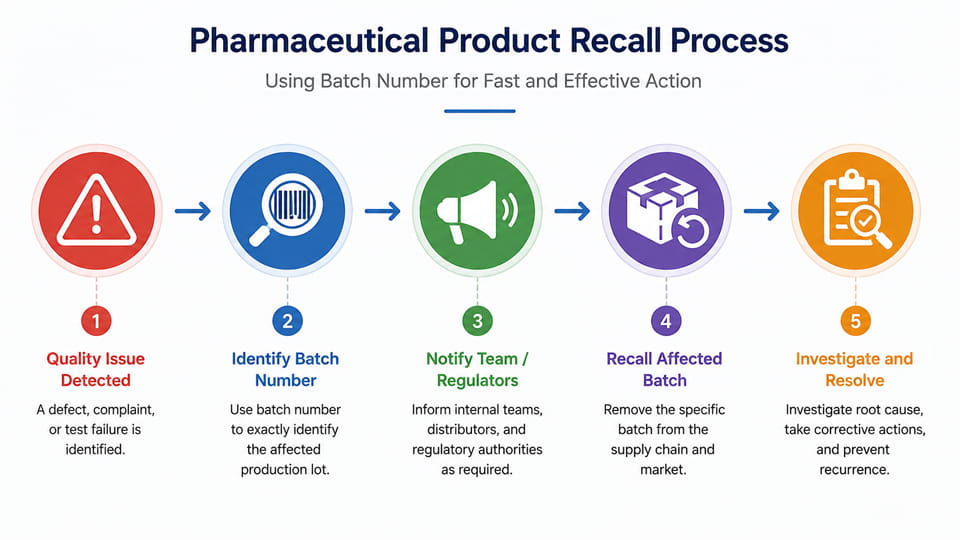
आकृति: बैच नंबरों का उपयोग करके उत्पाद वापस मंगाने की प्रक्रिया को सरल बनाया गया.
जब भी कुछ गड़बड़ होती है - चाहे वह ग्राहक की शिकायत हो, एक विचलन, या एक असफल परीक्षण - बैच नंबर जांच को सरल बनाते हैं. गुणवत्ता टीमें उस बैच के सभी पहलुओं का पता लगा सकती हैं. वे बिल्कुल जानते हैं कौन इसे संभाला, कब और कहाँ यह बनाया गया था, और क्या सामग्री प्रयोग किये गये. “किसी उत्पाद का निर्माण किसने किया, जब इसका निर्माण किया गया था, जहां इसका निर्माण किया गया था, कौन सी मशीनें और कच्चे माल का उपयोग किया गया". इस जानकारी का मतलब है कि आपको अनुमान लगाने की ज़रूरत नहीं है. उदाहरण के लिए, यदि एक गोली की कठोरता परीक्षण विफल, क्यूए जांच कर सकता है कि क्या उस विशेष बैच में अलग-अलग दानेदार नमी या एक अलग प्रेस गति थी. दूसरे शब्दों में, बैच नंबर ब्लाइंड स्पॉट को खत्म करते हैं और मूल-कारण विश्लेषण को गति देते हैं.
सारांश, नियामकों द्वारा बैच संख्या की आवश्यकता होती है (एफडीए, ईएमए/तस्वीर/एस, कौन) क्योंकि वे सुनिश्चित करते हैं पूर्ण पता लगाने की क्षमता और नियंत्रण प्रत्येक निर्मित बैच का. वे सीधे जीएमपी अनुपालन का समर्थन करते हैं, गुणवत्ता आश्वासन, और सुरक्षित, कुशल स्मरण. वास्तव में, फार्मा जैसे विनियमित उद्योगों में, बैच नंबरिंग वैकल्पिक नहीं है - यह एक कानूनी आवश्यकता है. यदि कोई निर्माता अपने बैच में किसी दोष का पता नहीं लगा पाता है, नियामक जुर्माना लगा सकते हैं और रिकॉल विनाशकारी रूप से व्यापक हो सकता है.
कई उद्योगों में, शर्तें बैच संख्या और बहुत संख्या अक्सर एक दूसरे के स्थान पर उपयोग किया जाता है. फार्मास्यूटिकल्स में, "बैच नंबर" अधिक सामान्य है (जीएमपी और बैच रिकॉर्ड से जुड़ा हुआ), लेकिन अवधारणा समान है. मुख्य अंतर दायरा है:
| बैच संख्या | बहुत संख्या | |
| परिभाषा | ए की पहचान करता है एकल उत्पादन संचालन शर्तों के एक सेट के तहत एक उत्पाद का. | अक्सर एक बड़े समूह को संदर्भित करता है जिसमें एक ही नुस्खा या समय सीमा साझा करने वाले कई बैच शामिल हो सकते हैं. |
| उद्योग उपयोग | फार्मास्यूटिकल्स में मानक (और जीवविज्ञान) बैच उत्पादन और रिलीज़ परीक्षण के लिए. | खाने में आम, प्रसाधन सामग्री, वगैरह।; कभी-कभी फार्मा में उपयोग किया जाता है, लेकिन कई बैचों को कवर कर सकता है. |
| पता लगाने की क्षमता | एक बैच के विस्तृत इतिहास से जुड़ा हुआ (सामग्री, उपकरण, अभिलेख). | कई बैचों को एक साथ जोड़ता है, आमतौर पर नमूनाकरण या क्यूए में समूहीकरण के लिए, विस्तृत अनुरेखण के बजाय. |
| उदाहरण | बैच #001 जनवरी में दौड़ के लिए 1, 2024 एक एंटीबायोटिक टेबलेट का (एक रन). | बहुत 202401 बैच शामिल हो सकता है #001 और #002 जनवरी में बनी उन्हीं एंटीबायोटिक गोलियों की 2024. |
ए बैच संख्या आमतौर पर एक विशिष्ट विनिर्माण रन को संदर्भित करता है, जबकि ए बहुत संख्या इसमें समान परिस्थितियों में किए गए कई रन शामिल हो सकते हैं. व्यवहार में, कुछ कंपनियाँ इन्हें पर्यायवाची रूप से उपयोग करती हैं. लेकिन सख्त जीएमपी शर्तों में, प्रत्येक बैच का अपना रिकॉर्ड और नंबर है. कई नियामक दस्तावेज़ (जैसे एफडीए और पीआईसी/एस) वास्तव में देखें लॉट या बैच नंबर एक साथ, यह स्वीकार करते हुए कि वे ट्रैसेबिलिटी उद्देश्यों के लिए कार्यात्मक रूप से समान हैं.
एक बैच संख्या अक्षरों और संख्याओं के एक साधारण संयोजन की तरह दिख सकती है, लेकिन इसके पीछे सावधानीपूर्वक डिज़ाइन की गई पहचान प्रणाली है. प्रत्येक फार्मास्युटिकल कंपनी आंतरिक मानक संचालन प्रक्रियाओं के माध्यम से अपने स्वयं के नंबरिंग नियम स्थापित करती है (रियायतों), यह सुनिश्चित करना कि किसी भी दो उत्पादन बैचों को कभी भी समान पहचानकर्ता प्राप्त न हो.
एक विशिष्ट बैच संख्या आमतौर पर विनिर्माण जानकारी के कई टुकड़ों को जोड़ती है. उदाहरण के लिए:
टैब-240501-001
यादृच्छिक पात्र होने के बजाय, प्रत्येक अनुभाग विशिष्ट अर्थ रखता है. “टैब” एक टैबलेट उत्पाद का प्रतिनिधित्व कर सकता है, “240501” विनिर्माण तिथि इंगित करता है, जबकि “001” उस दिन पूर्ण किए गए पहले उत्पादन बैच की पहचान करता है.
कुछ निर्माता अतिरिक्त पहचानकर्ता जैसे उत्पादन लाइनें भी शामिल करते हैं, कार्यशालाएं, या बदलाव. एक कैप्सूल निर्माता, उदाहरण के लिए, जैसे बैच नंबर उत्पन्न कर सकता है सीएपी-250318-बी02, कहाँ “बी” उत्पादन लाइन बी को संदर्भित करता है और “02” उस शिफ्ट के दौरान उत्पादित दूसरे बैच का प्रतिनिधित्व करता है.
सटीक प्रारूप एक कंपनी से दूसरी कंपनी में भिन्न होता है, लेकिन प्रत्येक प्रभावी बैच नंबरिंग प्रणाली तीन बुनियादी सिद्धांतों का पालन करती है:
ये सिद्धांत निर्माताओं को मिनटों के भीतर किसी भी उत्पाद का पूरा उत्पादन इतिहास प्राप्त करने की अनुमति देते हैं, जीएमपी ऑडिट के दौरान नियामक निरीक्षक बिल्कुल यही अपेक्षा करते हैं.
प्रत्येक बैच के लिए संपूर्ण विनिर्माण प्रक्रिया को दस्तावेज़ में दर्ज किया जाना चाहिए बैच उत्पादन रिकार्ड (बीपीआर), ए के रूप में भी जाना जाता है बैच विनिर्माण रिकार्ड (बीएमआर). ये रिकॉर्ड प्रत्येक बैच के लिए उत्पादन डायरी के रूप में काम करते हैं, यह प्रदर्शित करना कि उत्पाद का निर्माण अनुमोदित फार्मूले के अनुसार किया गया था, विनिर्माण निर्देश, और जीएमपी आवश्यकताएँ. एफडीए नियमों के तहत, प्रत्येक दवा उत्पाद बैच के लिए एक बैच उत्पादन और नियंत्रण रिकॉर्ड तैयार किया जाना चाहिए और इसमें संपूर्ण उत्पादन और नियंत्रण जानकारी शामिल होनी चाहिए.
एक विशिष्ट बीपीआर में शामिल है:
The बैच संख्या संपूर्ण बीपीआर में दिखाई देता है और सभी विनिर्माण रिकॉर्ड को एक साथ जोड़ने वाले प्रमुख पहचानकर्ता के रूप में कार्य करता है. एक बार उत्पादन पूरा हो गया, गुणवत्ता आश्वासन द्वारा बीपीआर की समीक्षा और अनुमोदन किया जाना चाहिए (क्यूए) बैच जारी होने से पहले विभाग. जीएमपी निरीक्षण के दौरान, नियामक अधिकारी सावधानीपूर्वक सत्यापित करते हैं कि बीपीआर में दर्ज की गई जानकारी तैयार उत्पाद पर मुद्रित बैच नंबर से मेल खाती है. एक व्यापक बैच रिकॉर्ड प्रणाली निर्माताओं को उत्पादन रिकॉर्ड शीघ्रता से प्राप्त करने की अनुमति देती है, प्रयोगशाला परिणाम, और जब भी गुणवत्ता की जांच हो तो वितरण की जानकारी, ग्राहक शिकायत, या उत्पाद स्मरण घटित होना, इसे आधुनिक फार्मास्युटिकल गुणवत्ता प्रबंधन की आधारशिलाओं में से एक बनाना.
आधुनिक फार्मास्युटिकल पैकेजिंग लाइनें आमतौर पर स्वचालित कोडिंग और निरीक्षण प्रणालियों के साथ एकीकृत होती हैं जो कर सकती हैं बैच नंबरों को स्वचालित रूप से प्रिंट और सत्यापित करें पूरी पैकेजिंग प्रक्रिया के दौरान. पैकेजिंग प्रारूप पर निर्भर करता है, विभिन्न प्रकार के उपकरण अलग-अलग तरीकों से बैच जानकारी लागू करते हैं:
जिनलू पैकेजिंग के टर्नकी फार्मास्युटिकल पैकेजिंग समाधान कोडिंग को एकीकृत करते हैं, निरीक्षण, और एकल उत्पादन लाइन में स्वचालन. उदाहरण के लिए, एक ब्लिस्टर पैकेजिंग लाइन स्वचालित रूप से एक अद्वितीय प्रिंट कर सकती है बैच संख्या और प्रत्येक ब्लिस्टर पैक पर क्यूआर कोड होता है जबकि एक इनलाइन विज़न निरीक्षण प्रणाली तुरंत प्रिंट गुणवत्ता और सटीकता की पुष्टि करती है. यह स्वचालित सत्यापन उत्पाद ट्रैसेबिलिटी और डेटा अखंडता में सुधार करते हुए मानवीय त्रुटि को काफी कम करता है.
सारांश, फार्मास्युटिकल पैकेजिंग उपकरण की एक विस्तृत श्रृंखला - जिसमें शामिल है टैबलेट प्रेस, कैप्सूल भरने वाली मशीनें, फफोली पैकिंग मशीनें, बोतल पैकेजिंग लाइनें, लेबलिंग मशीनें, और कार्टनिंग मशीनें-प्राथमिक या द्वितीयक पैकेजिंग पर बैच नंबर और अन्य ट्रैसेबिलिटी जानकारी मुद्रित करने के लिए इंकजेट या लेजर कोडिंग सिस्टम के साथ एकीकृत किया जा सकता है. बैच संख्या प्रबंधन को स्वचालित करके, दवा निर्माता उत्पादन क्षमता में सुधार कर सकते हैं, उत्पाद ट्रैसेबिलिटी को मजबूत करें, और वैश्विक जीएमपी आवश्यकताओं का अनुपालन सुनिश्चित करें.
सारांश, बैच उत्पादन और बैच नंबरिंग सुरक्षित की रीढ़ हैं, अनुरूप फार्मास्युटिकल विनिर्माण. वे कंपनियों को आत्मविश्वास के साथ दवाएँ बनाने देते हैं - यह जानते हुए कि वे हमेशा किसी भी समस्या का पता लगा सकते हैं और उसे अलग कर सकते हैं. बैच उत्पादन एक समान गुणवत्ता और पृथक नियंत्रण सुनिश्चित करता है, जबकि बैच नंबर ट्रैकिंग एंकर प्रदान करते हैं. एक साथ, वे जीएमपी नियमों को पूरा करते हैं और रोगी की सुरक्षा की रक्षा करते हैं. वैकल्पिक - स्पष्ट बैचों या संख्याओं के बिना उत्पादन - एक विनियमित वातावरण में वस्तुतः अकल्पनीय है.
फार्मास्यूटिकल्स के लिए, सक्षम पैकेजिंग मशीनरी में निवेश करना ट्रैसेबिलिटी में भी निवेश करना है. जिनलू पैकिंग के कोडर, लेबलिंग मशीनें, कार्टनर और निरीक्षण प्रणालियाँ जीएमपी को ध्यान में रखकर बनाई गई हैं - यह सुनिश्चित करना कि प्रत्येक इकाई में सही बैच की जानकारी हो. यह सुनिश्चित करने के लिए कि आपका अगला बैच सुरक्षित है, आज्ञाकारी और पूरी तरह से प्रलेखित, विचार करना टर्नकी समाधान जो बैच कोडिंग और स्वचालित ट्रैसेबिलिटी को एकीकृत करता है.
आपकी ट्रैसेबिलिटी में सुधार करने के लिए तैयार है? जिनलू पैकिंग की पूरी रेंज देखें फार्मास्युटिकल पैकेजिंग मशीनें - बैच कोडर और लेबलर से लेकर कार्टनर और विज़न निरीक्षण तक - प्रिंट करने के लिए डिज़ाइन किया गया, सत्यापित करें, और अपने बैच नंबर त्रुटिरहित तरीके से रिकॉर्ड करें. जिनलू से संपर्क करें इस बात पर चर्चा करने के लिए कि एक पैकेजिंग लाइन कैसे बनाई जाए जो हर बैच को ट्रैक पर रखे.
एक बैच नंबर (या लॉट संख्या) किसी दवा के एक उत्पादन संचालन के लिए दिया गया एक अद्वितीय कोड है. यह समान परिस्थितियों में एक साथ बनी सभी इकाइयों की पहचान करता है. कोड उस उत्पाद को उसके विनिर्माण रिकॉर्ड से जोड़ता है (सामग्री, प्रक्रिया, परीक्षण). अनिवार्य रूप से, यह दवा के एक बैच के लिए एक आईडी टैग है.
बैच नंबर पता लगाने की क्षमता की अनुमति देते हैं. यदि कोई गुणवत्ता संबंधी समस्या या सुरक्षा संबंधी चिंता उत्पन्न होती है, कंपनियां और नियामक हर कदम पर उस बैच का तुरंत पता लगा सकते हैं - कच्चा माल, उपकरण, ऑपरेटरों, परीक्षा के परिणाम, वितरण, वगैरह. यह जीएमपी नियमों के अनुसार आवश्यक है और हर चीज के बजाय केवल प्रभावित बैच को वापस बुलाना संभव बनाता है.
फार्मास्यूटिकल्स में, इन्हें अक्सर एक दूसरे के स्थान पर उपयोग किया जाता है, लेकिन कभी-कभी बारीकियों के साथ. एक बैच नंबर आमतौर पर एक विशिष्ट विनिर्माण रन को संदर्भित करता है. लॉट संख्या कभी-कभी समान परिस्थितियों में बनाए गए बैचों के समूह को संदर्भित कर सकती है. कई निर्माता इन्हें पर्यायवाची मानते हैं, लेकिन मुख्य बात आपके दस्तावेज़ीकरण में निरंतरता है.
बैच उत्पादन का अर्थ है एक बार में सीमित मात्रा में उत्पाद बनाना. प्रत्येक बैच पूर्ण विनिर्माण प्रक्रिया से गुजरता है, फिर अगला शुरू करने से पहले पूरा किया जाता है. यह पारंपरिक तरीका है गोलियाँ, कैप्सूल, वगैरह. निरंतर प्रवाह प्रक्रिया के विपरीत चरण दर चरण बनाए जाते हैं.
कंपनियां एक निर्धारित प्रारूप का उपयोग करके बैच नंबर बनाती हैं. सामान्य तत्वों में दिनांक शामिल है (उदा।, YYMMDD), एक उत्पाद या संयंत्र कोड, शिफ्ट या लाइन पहचानकर्ता, और एक अनुक्रमिक संख्या. उदाहरण के लिए, "TAB240501-001" का मतलब टेबलेट से हो सकता है 2024-05-01, बैच 001. कुछ लोग अधिक जानकारी के लिए पत्र जोड़ते हैं. सटीक प्रारूप भिन्न होता है, लेकिन इसे गुणवत्ता प्रणाली में परिभाषित किया गया है और लगातार उपयोग किया जाता है.
आपकी कंपनी की योजना पर निर्भर करता है, एक बैच नंबर उत्पादन तिथि जैसी चीजों को एनकोड कर सकता है, उत्पाद कोड, उपकरण लाइन, बदलाव और क्रम. लक्ष्य बैच को विशिष्ट पहचान योग्य बनाना है. उदाहरण के लिए, येवोन बताते हैं कि B12345678-AB जैसे कोड में, "बी" उत्पाद प्रकार का संकेत दे सकता है, "12345678" विशिष्ट बैच, और साइट या लाइन "एबी"।.
ट्रैसेबिलिटी का मतलब है कि आप विनिर्माण के माध्यम से किसी उत्पाद की यात्रा का अनुसरण कर सकते हैं. यह रोगी सुरक्षा और नियामक अनुपालन के लिए महत्वपूर्ण है. यदि कोई दवा सुरक्षा समस्या सामने आती है, आपको पता होना चाहिए कि कौन से बैच प्रभावित हो सकते हैं. ट्रैसेबिलिटी आपको उत्तर देने देती है, “किस बैच ने उस कच्चे माल का उपयोग किया?” और “कौन सी इकाइयाँ किन बाज़ारों में गईं?“इसके बिना, कंपनियां सटीक रिकॉल या जांच नहीं कर सकीं. नियामक ठीक इसी कारण से जीएमपी में ट्रैसेबिलिटी को अनिवार्य करते हैं.
यदि किसी दवा में कोई दोष या संदूषण पाया जाता है, कंपनी यह पता लगाने के लिए बैच रिकॉर्ड का उपयोग करती है कि कौन सी उत्पाद इकाइयाँ प्रभावित हैं. वे नियामकों को सूचित करते हैं, फिर थोक विक्रेताओं और फार्मेसियों को प्रभावित बैच नंबरों को वापस करने या संगरोध करने का निर्देश दें. बैच संख्या के कारण, केवल ख़राब बैच ही खींचा जाता है. यही कारण है कि हम "प्रत्येक बैच के लिए... वापस बुलाने की सुविधा के लिए" वितरण रिकॉर्ड बनाए रखते हैं।. उत्पाद को हटाने के बाद, क्यूए पुनरावृत्ति को रोकने के लिए मूल कारण की जांच करता है.
एक बीएमआर (इसे बैच प्रोडक्शन रिकॉर्ड भी कहा जाता है) एक बैच के निर्माण में की गई हर चीज़ का विस्तृत लॉग है. इसमें उत्पाद का नाम शामिल है, बैच संख्या, सूत्रों, प्रयुक्त उपकरण, ऑपरेटरों के नाम, टाइम स्टाम्प्स, और सभी परीक्षण परिणाम. जीएमपी को बीएमआर को "उत्पाद का नाम और बैच नंबर" सूचीबद्ध करने की आवश्यकता है. बीएमआर अनिवार्य रूप से एक बैच का "जन्म प्रमाण पत्र" है.
बैच उत्पादन बहु-उत्पाद संयंत्रों के लिए लचीलापन और प्रत्येक रन के लिए सरल दस्तावेज़ीकरण प्रदान करता है. प्रक्रियाओं को चरण-दर-चरण मान्य करना और योग्य बनाना आसान है. यदि किसी बैच में कोई समस्या देर से पाई जाती है, अन्य उत्पादों को प्रभावित किए बिना पूरे बैच को स्क्रैप किया जा सकता है. निरंतर विनिर्माण से दक्षता लाभ होता है लेकिन अक्सर भारी निवेश और सख्त नियंत्रण की आवश्यकता होती है. कई फार्मा कंपनियां अभी भी बैच मोड पर निर्भर हैं, विशेष रूप से छोटे पैमाने या विशेषीकृत दवाओं के लिए.
संदर्भ:
1.बैच उत्पादन\बहुत संख्या——विकिपीडिया
2.वर्तमान अच्छे विनिर्माण अभ्यास आवश्यकताओं-रिकॉर्ड और रिपोर्ट पर प्रश्न और उत्तर -- हम. खाद्य एवं औषधि प्रशासन
3.21 सीएफआर § 211.188 – बैच उत्पादन और नियंत्रण रिकॉर्ड. —— कानूनी सूचना संस्थान
4.Q7A सक्रिय फार्मास्युटिकल सामग्री के लिए अच्छा विनिर्माण अभ्यास मार्गदर्शन -- हम. खाद्य एवं औषधि प्रशासन