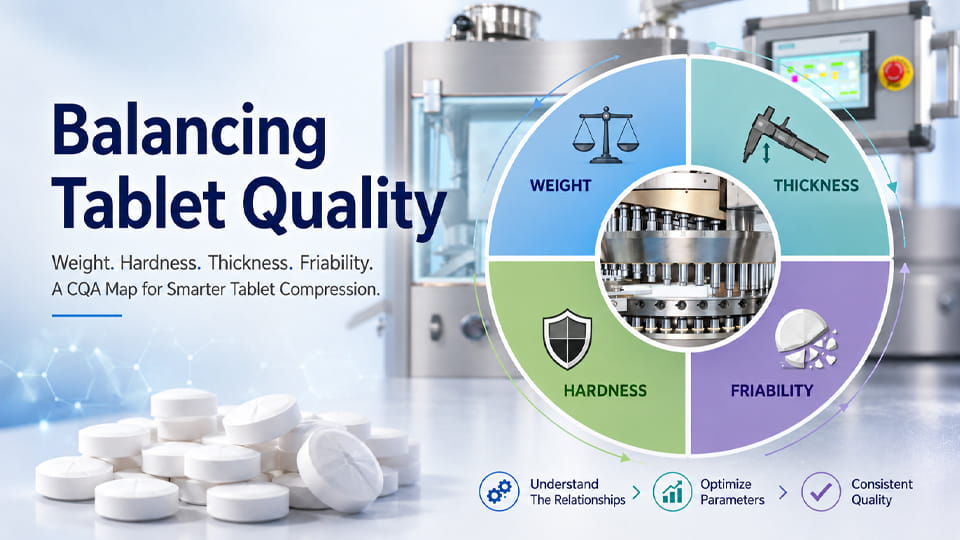

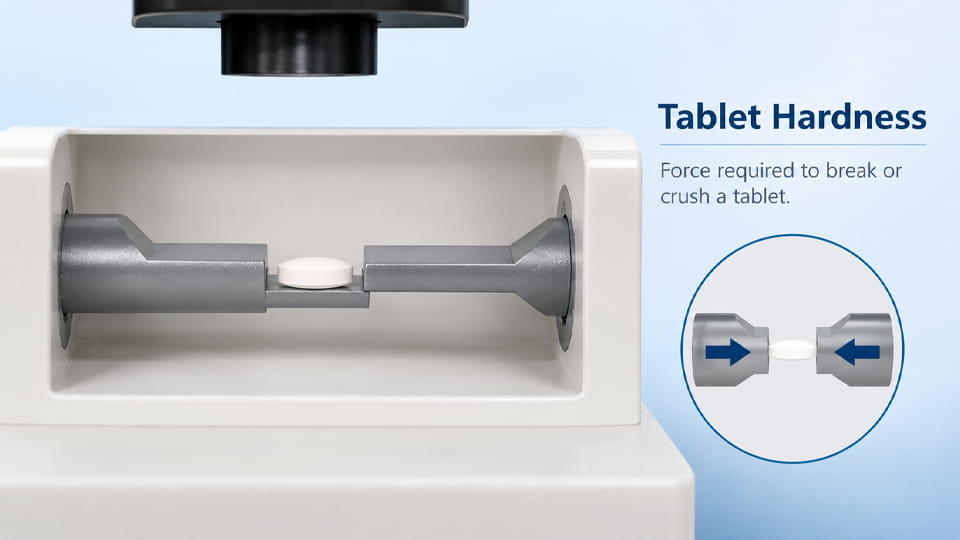
में टेबलेट निर्माण, कठोरता और मुलायमता दो प्रमुख गुणवत्ता उपाय हैं. कठोरता (तोड़ने वाला बल) हमें बताता है कि एक टैबलेट टूटने से पहले कितना दबाव झेल सकता है. भुरभुरापन मापता है कि टेबलेट की सतह कितनी आसानी से उखड़ जाती है या गिरने या संभालने पर नष्ट हो जाती है. दूसरे शब्दों में, कठोरता की जाँच आंतरिक शक्ति, जबकि भुरभुरापन जाँचता है सतह स्थायित्व. दोनों गुण डाउनस्ट्रीम प्रसंस्करण को प्रभावित करते हैं - टैबलेट को कैसे संपीड़ित किया जाता है से लेकर उन्हें कैसे लेपित किया जाता है और अंत में पैक किया जाता है. यह लेख बताता है कि भुरभुरापन बनाम कठोरता क्यों मायने रखती है, प्रत्येक का परीक्षण कैसे किया जाता है, और वे टैबलेट संपीड़न को कैसे प्रभावित करते हैं, कलई करना, और वास्तविक उत्पादन लाइनों में पैकेजिंग गुणवत्ता.
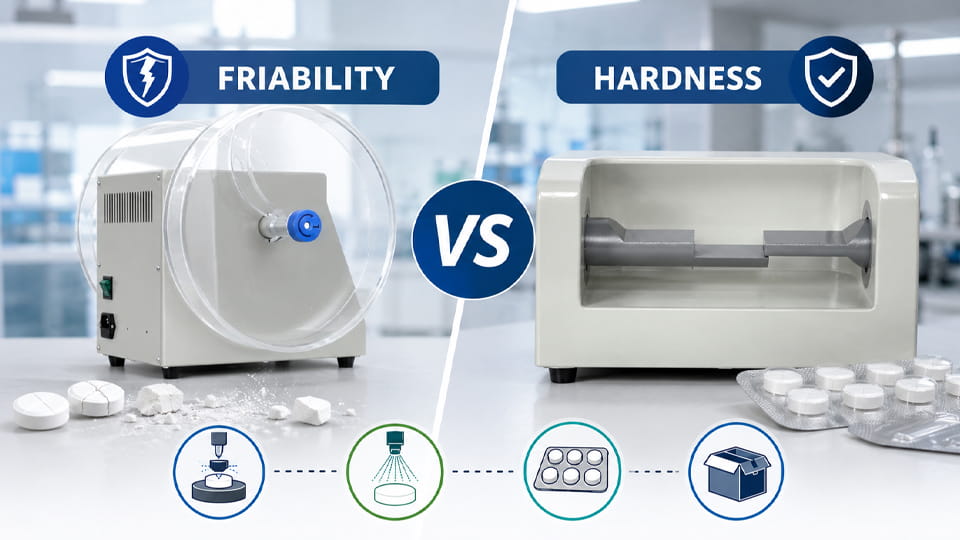
गोली की कठोरता (तकनीकी रूप से "टैबलेट तोड़ने वाला बल") किसी टैबलेट को संपीड़न द्वारा तोड़ने के लिए आवश्यक बल है. व्यवहार में, कठोरता को टैबलेट को दो निहाई या प्लेटेंस के बीच रखकर और उसके टूटने तक बल लगाकर मापा जाता है. आधुनिक कठोरता परीक्षक (मैनुअल या डिजिटल) चरम बल को किलोग्राम या न्यूटन में मापें. टैबलेट ब्रेकिंग फोर्स के लिए महत्वपूर्ण है गुणवत्ता नियंत्रण: एक टैबलेट इतना मजबूत होना चाहिए कि वह हैंडलिंग का सामना कर सके, पैकेजिंग, और बिना तोड़े शिपिंग. अमेरिका. और यूरोपीय फार्माकोपियास कठोरता के लिए मानकीकृत तरीके निर्दिष्ट करते हैं (तोड़ने वाला बल) परीक्षण. कुछ उद्योग साहित्य इस शब्द को पसंद करते हैं "तोड़ने वाली शक्ति" कठोरता से अधिक,चूँकि भौतिक विज्ञान में "कठोरता" का अर्थ आम तौर पर सतह इंडेंटेशन का प्रतिरोध होता है, जबकि टैबलेट परीक्षण संपीड़न शक्ति को मापता है.
टैबलेट की कठोरता फॉर्मूलेशन और प्रक्रिया मापदंडों से प्रभावित होती है. उच्च संपीड़न बल आम तौर पर कठोर गोलियाँ प्राप्त होती हैं, जबकि बाइंडर और स्नेहक जैसे फॉर्मूलेशन कारक भी कठोरता को प्रभावित करते हैं. उदाहरण के लिए, एक बाइंडर बढ़ाना (उदाहरण के लिए:. पीवीपी या एचपीएमसी) आमतौर पर टैबलेट की ताकत बढ़ जाती है, जबकि बहुत ज्यादा चिकनाई (मैग्नीशियम स्टीयरेट) अंतरकणीय बंधन को कमजोर कर सकता है. टेबलेट का आकार, आकार, और सरंध्रता भी भूमिका निभाती है: मोटी या सघन गोलियों को तोड़ने के लिए अक्सर अधिक बल की आवश्यकता होती है.
बहुत कम कठोरता (अल्पसंपीड़न) गोलियाँ का कारण बनता है दरार, उखड़ना या टुकड़े होना आसानी से. बहुत अधिक कठोरता, तथापि, इसके नकारात्मक पहलू हो सकते हैं: बहुत कठोर गोलियाँ हो सकती हैं धीरे-धीरे विघटित होना या शरीर में बहुत धीरे-धीरे घुलता है. एक गोली जो बहुत सख्त है वह भी हो सकती है मरीजों के लिए निगलना मुश्किल है. इस प्रकार, टैबलेट डिज़ाइन को प्रदर्शन के साथ यांत्रिक शक्ति को संतुलित करना चाहिए. व्यवहार में, निर्माता एक स्वीकृति सीमा निर्धारित करते हैं (उदाहरण के लिए:. 4-10 किलो या तो) उत्पादन के दौरान बल तोड़ने के लिए.
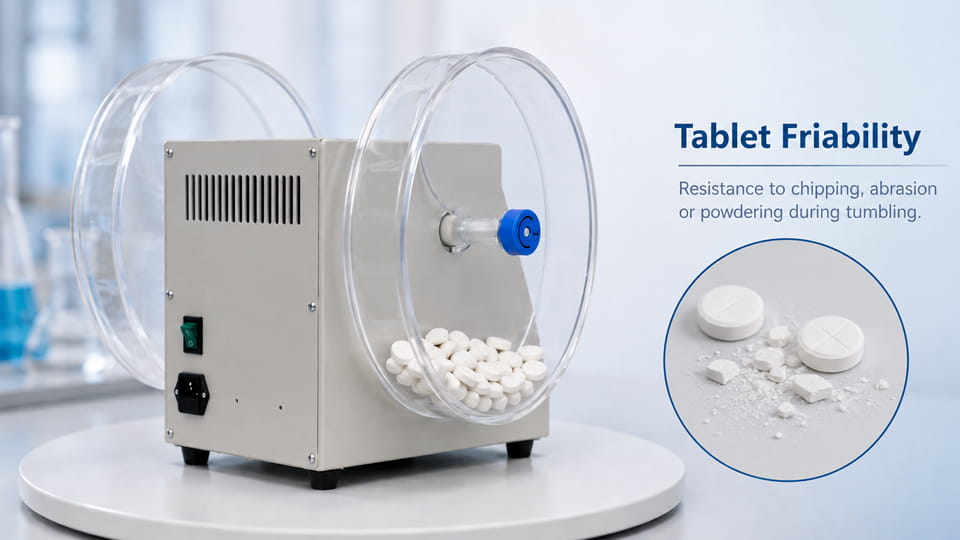
टेबलेट का भुरभुरापन इस बात का माप है कि यांत्रिक तनाव के अधीन टेबलेट कितनी आसानी से टूट जाती है या अपना द्रव्यमान खो देती है, जैसे लड़खड़ाना या टकराना. ढीलापन परीक्षण इसमें घूमने वाले ड्रम में धूल निकाली गई गोलियाँ रखना शामिल है (रोश भुरभुरा), आमतौर पर 25rpm पर, और उन्हें अधीन करना 100 क्रांतियों. प्रत्येक क्रांति हैंडलिंग और परिवहन के दौरान तनाव का अनुकरण करने के लिए गोलियों को एक निश्चित ऊंचाई पर गिराती और गिराती है. परीक्षण के बाद, गोलियाँ एकत्र की जाती हैं, और किसी भी प्रकार की ढीली धूल हटा दी जाती है. वजन घटाने का प्रतिशत निर्धारित करने के लिए गोलियों को पहले और बाद में तौला जाता है, जो इस प्रकार बताया गया है मुलायमता. उदाहरण के लिए, the खासियत <1216> और Ph.Eur. मोनोग्राफ इस प्रक्रिया का वर्णन करते हैं.
भुरभुरापन उतना ही कम होगा, टैबलेट घर्षण या छिलने के प्रति उतना ही अधिक प्रतिरोधी होता है. एक स्वीकार्य भुरभुरापन सीमा परंपरागत रूप से है ≤1.0% वजन घटना. टेबलेट जो इस सीमा से अधिक खो देते हैं, या जो परीक्षण के दौरान स्पष्ट रूप से टूट या टूट गया हो, भुरभुरापन मानदंड में विफल. टेबलेट की भुरभुरापन विशेष रूप से संबोधित करती है संपीड़न के बाद स्थायित्व - यह कोटिंग पैन में चेहरे पर पड़ने वाले शारीरिक तनाव का अनुकरण करता है, कन्वेयर, बोतल भरने वाले, छाला रेखाएँ, और पैकेजिंग. उच्च भुरभुरापन टैबलेट के किनारों पर चिप्स के रूप में प्रकट होता है, दृश्यमान दरारें, या अतिरिक्त धूल. इस प्रकार ढीलापन एक गुणवत्ता विशेषता है जो पैकेजिंग और हैंडलिंग की मजबूती से निकटता से जुड़ी हुई है.
ये परीक्षण समान लगते हैं लेकिन विभिन्न तनावों की जांच करते हैं. सामान्य शर्तों में:
दो गोलियों की कल्पना करो: एक पर परीक्षण किया गया 20 केपी (किलोपॉन्ड) क्रश फोर्स का (बहुत कठिन) और एक पर 5 केपी (कोमल). आप सोच सकते हैं 20 केपी टैबलेट अविनाशी है, लेकिन अगर इसके किनारें भंगुर हैं, यह अभी भी भुरभुरेपन वाले ड्रम में 2-3% द्रव्यमान खो सकता है - स्वीकार्य सीमा से दोगुना. व्यवहार में, एक टेबलेट हो सकता है "अत्यंत कठोर - कुचलने के लिए महत्वपूर्ण बल की आवश्यकता होती है - फिर भी आश्चर्यजनक रूप से भंगुर।". इससे पता चलता है क्यों दोनों परीक्षणों की आवश्यकता है. नीचे दी गई तालिका अंतर को संक्षेप में प्रस्तुत करती है:
संक्षेप में: कठोरता प्रतिरोध करती है कुचल, जबकि भुरभुरापन प्रतिरोध करता है छिल. एक मजबूत टैबलेट डिज़ाइन दोनों को संतुलित करता है: इसे धूल के बिना प्रेस और मशीनों से बचना चाहिए, फिर भी ठीक से घुल जाता है.
| पैरामीटर | गोली की कठोरता (तोड़ने वाली ताकत) | टेबलेट भुरभुरापन |
|---|---|---|
| यह क्या मापता है | एकल लागू बल का प्रतिरोध (संपीड़न या तनाव) फ्रैक्चर का कारण बन रहा है | बार-बार घर्षण का प्रतिरोध, प्रभाव, और टुकड़े करना (गिरने पर वजन कम होना) |
| विशिष्ट तनाव प्रकार | विफलता तक एक बार का बड़ा संपीड़ित या तीन-बिंदु फ्लेक्सुरल लोड | एकाधिक बार गिरना/गिरना (आम तौर पर 100 रोटेशन) झटके से निपटने का अनुकरण |
| मुख्य उद्देश्य | टेबलेट की तोड़ने की क्षमता का मूल्यांकन करें (संपीड़न के तहत फॉर्मूलेशन की मजबूती) | संप्रेषण के दौरान स्थायित्व का मूल्यांकन करें, कलई करना, और पैकेजिंग |
| टेस्ट आउटपुट | ब्रेकिंग बल मान (उदाहरण के लिए:. न्यूटन या केपी में) | परीक्षण के बाद प्रतिशत वजन कम होना (और क्षति के लिए दृश्य निरीक्षण) |
| गुणवत्ता से लिंक करें | संपीड़न पैरामीटर सेट करता है; यह सुनिश्चित करता है कि बल लगाने पर गोलियाँ नहीं टूटेंगी | पैकेजिंग लाइन सेटिंग सेट करता है; यह सुनिश्चित करता है कि टैबलेट कोटिंग/परिवहन में जीवित रहें |
| अन्य परीक्षण द्वारा प्रतिस्थापित? | नहीं. अलग तनाव; अपने स्वयं के माप की आवश्यकता है. | नहीं. अलग परीक्षण तर्क; कठोरता परीक्षण का स्थान नहीं ले सकता. |
ऊपर दी गई तालिका इस पर प्रकाश डालती है कठोरता और भुरभुरापन विभिन्न पहलुओं को मापते हैं. कठोरता (तोड़ने वाला बल) यह एक बार का तनाव परीक्षण है, जबकि भुरभुरापन परीक्षणों में निम्न स्तर के झटके दोहराए गए. महत्वपूर्ण बात, एक टेबलेट हो सकता है कठिन फिर भी नाजुक या विपरीत. उदाहरण के लिए, उच्च ब्रेकिंग बल वाला एक टैबलेट अभी भी हो सकता है भुरभुरापन परीक्षण में असफल होना यदि इसके किनारे आसानी से चिपक जाते हैं या आंतरिक जुड़ाव असमान है. संक्षेप में, कठोरता और भुरभुरापन संबंधित हैं लेकिन विनिमेय नहीं हैं - दोनों का मूल्यांकन किया जाना चाहिए.
टैबलेट कठोरता परीक्षक एक टैबलेट पर तब तक नियंत्रित बल लगाते हैं जब तक कि वह टूट न जाए. एक ठेठ परीक्षक में, दो सपाट निहाई (प्लेट का) टैबलेट पकड़ें - एक स्थिर, एक चल रहा है. परीक्षक ब्रेक पर बल को रिकॉर्ड करता है. मैनुअल परीक्षक (मोनसेंटो की तरह वसंत-आधारित) और आधुनिक डिजिटल परीक्षक (लोड सेल और इलेक्ट्रॉनिक रीडआउट के साथ) आम हैं. इलेक्ट्रॉनिक परीक्षक सटीक प्रदान करते हैं, दोहराए जाने योग्य माप और अक्सर व्यास और मोटाई को एक साथ मापते हैं. परीक्षण के दौरान, जैसे कारक टेबलेट अभिविन्यास (चपटी सतह वाली गोलियों के लिए) या विशेष जुड़नार (असामान्य आकृतियों के लिए) सुसंगत परिणाम सुनिश्चित करने के लिए सावधानीपूर्वक नियंत्रित किया जाता है. मापा गया ब्रेकिंग बल गुणवत्ता नियंत्रण को सूचित करता है: बैच तभी स्वीकार किए जाते हैं जब कठोरता उस फॉर्मूलेशन के लिए निर्धारित सीमा के भीतर आती है.
ए भुरभुरा या भुरभुरापन परीक्षक हैंडलिंग का अनुकरण करने के लिए एक पारदर्शी ड्रम में गोलियों का एक नमूना डालता है. मुख्य कदम (प्रति यूएसपी/Ph.Eur.) हैं: 1. टेबलेट के नमूने की धूल हटाएँ और उसका वजन करें (उदाहरण के लिए:. 6.5 जी या 10 गोलियाँ). 2. गोलियों को एक घूमने वाले ड्रम में रखें जिसके अंदर एक लिफ्टिंग टैब हो. 3. के लिए 25rpm पर घुमाएँ 100 क्रांतियों (4 मिनट). 4. गोलियाँ निकालें, ढीली धूल हटाएँ, पुनः तौलना. 5. गणना % वजन घटना: .
अगर कोई भी टैबलेट फटा हुआ या टूटा हुआ है लड़खड़ाने के बाद, बैच तुरंत विफल हो जाता है. अन्यथा, यदि कुल वजन घटा है >1%, परीक्षण तीन प्रतियों में दोहराया जाता है और एक औसत का उपयोग किया जाता है. व्यवहार में, पासिंग टैबलेट न्यूनतम चिप्स या धूल दिखाते हैं. स्थिरता के परिणाम कोटिंग और पैकेजिंग से पहले निर्णयों का मार्गदर्शन करते हैं: उच्च हानि सुधार या प्रक्रिया परिवर्तन को प्रेरित करती है.
परीक्षण विधियाँ बिना लेपित गोलियाँ मानती हैं. लेपित गोलियों का भी परीक्षण किया जा सकता है, लेकिन शेल के कारण उनमें अक्सर कम भुरभुरापन होता है. के साथ -साथ, चमकती या अत्यधिक छिद्रपूर्ण गोलियों को परीक्षण के दौरान विशेष आर्द्रता नियंत्रण की आवश्यकता हो सकती है. टेबलेट का आकार और साइज़ लड़खड़ाते व्यवहार को प्रभावित करते हैं; अनियमित आकृतियों के लिए, यादृच्छिक गति सुनिश्चित करने के लिए ड्रम बेस को ~10° झुकाया जा सकता है. सभी मामलों में, सारगर्भित मानक (खासियत, पी.एच.यूर.) उपकरण और प्रक्रिया निर्दिष्ट करें. आधुनिक प्रयोगशाला अभ्यास कठोरता और भुरभुरापन परीक्षकों के अंशांकन की भी जांच करता है और नियमित रूप से मानक संदर्भ टैबलेट के साथ क्यूसी चलाता है.
दोनों गुण सूत्रीकरण और प्रसंस्करण पर निर्भर करते हैं. मुख्य कारकों में बाइंडर प्रकार/एकाग्रता शामिल है, संपीड़न बल, और गोली का आकार. उदाहरण के लिए:
क्योंकि बहुत सारे परिवर्तन मायने रखते हैं, निर्माता एकल मानों के बजाय लक्ष्य सीमाएँ निर्धारित करते हैं. वहाँ है कोई सार्वभौमिक "परिपूर्ण" कठोरता नहीं; यह उत्पाद पर निर्भर करता है दवाई लेने का तरीका, उपयोग का उद्देश्य, और पैकेजिंग. एक चबाने योग्य विटामिन और एक फ़िल्म-लेपित दर्दनिवारक में बहुत भिन्न इष्टतम कठोरता स्तर हो सकते हैं, भले ही उनका वज़न समान हो.
टैबलेट प्रेस पर संपीड़न चरण काफी हद तक कठोरता निर्धारित करता है. व्यवहार में:

संक्षेप में, संपीड़न मापदंडों और फॉर्मूलेशन का अनुकूलन आवश्यक है. जैसा कि जिंलुपैकिंग की समस्या निवारण मार्गदर्शिका नोट करती है, “यदि गोलियाँ बहुत नरम हैं, वे चिपक सकते हैं, तोड़ना, या उच्च भुरभुरापन प्रदर्शित करें. यदि बहुत कठिन है, वे कोटिंग का विरोध कर सकते हैं या धीरे-धीरे घुल सकते हैं।". संपीड़न बल और बाइंडर सामग्री को ट्यून करके, निर्माता ऐसे टैबलेट्स का लक्ष्य रख सकते हैं जो कठोरता को बढ़ाए बिना प्रक्रिया तनाव का सामना कर सकें.
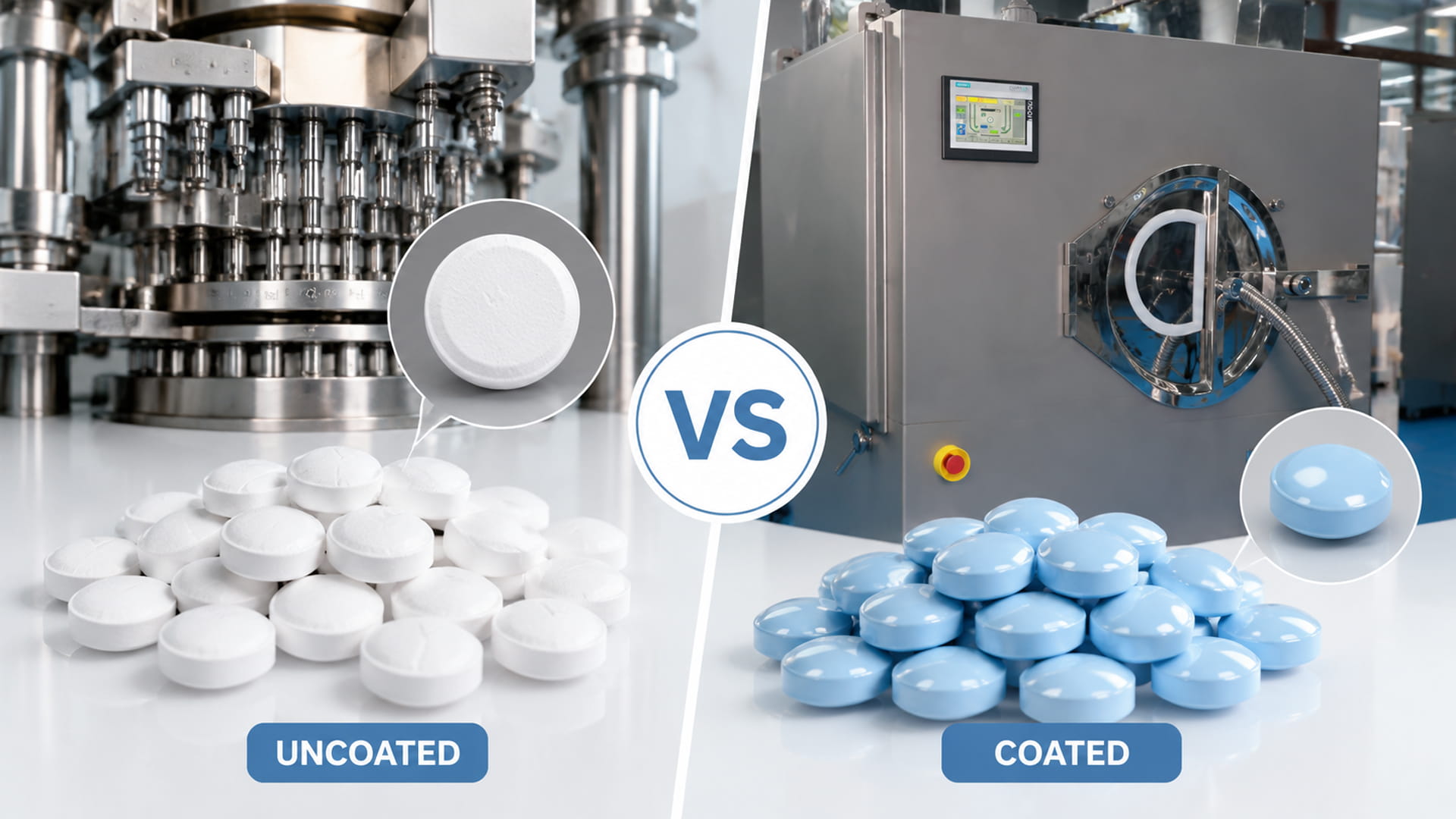
टैबलेट कोटिंग (फ़िल्म या चीनी का लेप चड़ा हुआ) कोर टैबलेट की ताकत के प्रति बहुत संवेदनशील है. कोटिंग के दौरान, गोलियाँ एक घूमते पैन में गिरती हैं और उन पर घोल छिड़कती हैं. यह टंबलिंग यांत्रिक तनाव और नमी को लागू करती है. यहां बताया गया है कि कठोरता और भुरभुरापन कैसे काम आता है:
एक बार गोलियों को दबाया और लेपित किया जाता है, वे चले जाते हैं पैकेजिंग लाइनें – छाले की मशीन, कार्टनर, या बोतल भरने वाली लाइनें. टैबलेट की ताकत यहां भी महत्वपूर्ण है:

कोटिंग और पैकेजिंग मांगों को पूरा करने वाली उच्च गुणवत्ता वाली टैबलेट प्राप्त करना, इन बातों का रखें ध्यान:
व्यवहार में, लक्ष्य एक गोली है यानी "हैंडलिंग से बचने के लिए पर्याप्त कठिन लेकिन इतना भी कठिन नहीं कि यह विघटन परीक्षणों में विफल हो जाए।". कई निर्माता संपीड़न बल का चार्ट बनाते हैं, कठोरता, और रुझानों को जल्दी पहचानने के लिए वास्तविक समय में स्थिरता (उदाहरण के लिए, कठोरता में अचानक बदलाव पाउडर फ़ीड या आर्द्रता में बदलाव का संकेत दे सकता है).
सारांश, कठोरता और भुरभुरापन एक ही सिक्के के दो पहलू हैं टेबलेट की गुणवत्ता के लिए. कठोरता, संपीड़न के तहत टैबलेट की मुख्य ताकत सुनिश्चित करती है, जबकि भुरभुरापन घर्षण के विरुद्ध सतह की मजबूती को मापता है. उचित रूप से संतुलित, वे गारंटी देते हैं कि गोलियाँ कोटिंग पैन और पैकेजिंग मशीनों के माध्यम से बिना छिले या टूटे चल जाती हैं. जो टैबलेट बहुत नरम हैं वे धूल और कोटिंग दोष उत्पन्न करेंगे, जबकि जो गोलियाँ बहुत कठोर होती हैं वे कोटिंग समाधान का विरोध कर सकती हैं या रोगी को खराब अनुभव दे सकती हैं.
फार्मा निर्माताओं और पैकेजिंग इंजीनियरों के लिए, दोनों परीक्षणों पर ध्यान देना महत्वपूर्ण है. अपनी गुणवत्ता जांच चौकियों में भुरभुरापन और कठोरता परीक्षण को एकीकृत करना सुनिश्चित करें, और आवश्यकतानुसार फॉर्मूलेशन/संपीड़न को समायोजित करें. ऐसा करने से, आप महंगी अस्वीकृतियों को कम कर देंगे और अपने सुचारू संचालन को सुनिश्चित करेंगे ब्लिस्टर पैकिंग लाइनें, कार्टनिंग मशीनें, या बोतलबंद लाइनें.
आपके टेबलेट उत्पादन और पैकेजिंग लाइन को अनुकूलित करने के लिए तैयार है? जिनलुपैकिंग की टीम के पास फार्मास्युटिकल कंप्रेशन और पैकेजिंग में दशकों का अनुभव है. चाहे आपको आवश्यकता हो हाई-स्पीड टैबलेट प्रेस, झाड़न निकालनेवाला, या एक कस्टम ब्लिस्टर पैकेजिंग समाधान, हम यह सुनिश्चित करने में मदद कर सकते हैं कि आपकी गोलियाँ प्रेस से रोगी तक बरकरार रहें. हमसे संपर्क करें इस बात पर चर्चा करने के लिए कि हमारी मशीनें और विशेषज्ञता आपके उत्पादन लक्ष्यों का समर्थन कैसे कर सकती हैं.
नहीं. कठोरता (तोड़ने वाला बल) एक ही लोड के तहत एक टैबलेट को तोड़ने के लिए आवश्यक बल को मापता है. बार-बार घर्षण के तहत टैबलेट के टिकाऊपन को मापता है, के रूप में व्यक्त किया गया % ड्रम परीक्षण में वजन घटाना. वे विभिन्न संपत्तियों का आकलन करते हैं.
हाँ. एक टैबलेट में उच्च तोड़ने वाली शक्ति हो सकती है (मुश्किल) लेकिन फिर भी किनारों पर चिप लगी रहती है अगर इसकी कण बॉन्डिंग खराब है. ऐसी गोली गिरने पर आसानी से टूट सकती है, उच्च भुरभुरापन प्रदान करता है. के साथ -साथ, मध्यम कठोरता वाला एक टैबलेट यदि आकार-मजबूत है तो भुरभुरापन पार कर सकता है. इस प्रकार दोनों परीक्षणों की आवश्यकता है.
सामान्य उद्योग मानक भुरभुरापन परीक्षण के बाद ≤1.0% वजन घटाना है. कई निर्माता साधारण टैबलेट के लिए विनिर्देशन 0.5-1% निर्धारित करते हैं. कुछ उत्पाद (उदाहरण के लिए:. बहुत बड़ी या असामान्य गोलियाँ) विशेष मानदंड हो सकते हैं, लेकिन 1% एक विशिष्ट दिशानिर्देश है.
कठोरता विघटन को महत्वपूर्ण रूप से प्रभावित कर सकती है. अत्यधिक कठोर गोली धीरे-धीरे विघटित हो सकती है, दवा जारी करने में देरी. विनियामक परीक्षणों से पता चला है कि गोलियाँ बहुत कठिन हैं (उच्च बलों पर संपीड़ित) विघटन विनिर्देश के बाहर गिर सकता है क्योंकि टैबलेट मैट्रिक्स बहुत तंग है. के साथ -साथ, एक बहुत नरम गोली जल्दी से विघटित हो सकती है लेकिन समय से पहले भी टूट सकती है. इष्टतम कठोरता बिना टूटे समय पर विघटन सुनिश्चित करती है.
सामान्य कारणों में अपर्याप्त बाइंडर शामिल है, अनुचित दानेदार नमी, अपर्याप्त संपीड़न, अतिरिक्त चिकनाई, और भंगुर सहायक पदार्थ. उदाहरण के लिए, बहुत कम बाइंडर सामग्री या अधिक सूखे दानों वाली गोलियाँ अधिक भुरभुरी होती हैं. एक सामान्य समाधान फॉर्मूलेशन को समायोजित करना है (उदाहरण के लिए:. अधिक प्रभावी बाइंडर) या गीले दानेदार बनाने और सुखाने की प्रक्रिया को अनुकूलित करें.
हमेशा नहीं. उच्च संपीड़न आम तौर पर कठोरता बढ़ाता है और शुरुआत में भुरभुरापन कम कर सकता है, लेकिन इसकी सीमाएं हैं. अत्यधिक बल से कैपिंग हो सकती है, लेमिनेशन या परिवर्तित विघटन. भी, यदि सूत्रीकरण त्रुटिपूर्ण है (उदाहरण के लिए:. ख़राब बंधन), केवल दबाव बढ़ाने से भुरभुरापन हल नहीं हो सकता. फॉर्मूलेशन और बल दोनों को एक साथ अनुकूलित करना सबसे अच्छा है.
क्योंकि वे विभिन्न यांत्रिक तनावों को संबोधित करते हैं. कठोरता यह सुनिश्चित करती है कि टैबलेट एक भी कुचलने वाले बल से बच सकता है (संपीड़न और काटने के लिए महत्वपूर्ण), जबकि भुरभुरापन यह सुनिश्चित करता है कि यह बार-बार की मार से बच सकता है (कोटिंग के लिए महत्वपूर्ण है, हैंडलिंग, और पैकेजिंग). केवल दोनों का मूल्यांकन करके ही निर्माता आश्वस्त हो सकते हैं कि टैबलेट संपूर्ण उत्पादन और वितरण श्रृंखला के माध्यम से अखंडता बनाए रखेंगे.
उपकरण डिज़ाइन महत्वपूर्ण है. उदाहरण के लिए, हाई-स्पीड कार्टनर टैबलेट को धीरे से धीमा करने के लिए सेंसर और कुशन वाले शूट का उपयोग करते हैं (प्रभाव पर टूट-फूट को रोकना). चिकने मोड़ वाले वैक्यूम कन्वेयर झटके को कम करते हैं. बॉटलिंग लाइनों में अक्सर लचीली ट्यूब और धीमी गति से संक्रमण होता है. अच्छी तरह से डिज़ाइन किए गए टैबलेट हैंडलिंग सिस्टम कंपन को कम करते हैं, चला जाता है, और घर्षण, सीधे टूट-फूट और धूल उत्पादन को कम करना.
संदर्भ:
1.टेबलेट कठोरता परीक्षण ——विकिपीडिया
2.मैं 4 क्यूबी अनुलग्नक 9 टेबलेट का भुरभुरापन – वैज्ञानिक दिशानिर्देश -- यूरोपीय दवाई एजेंसी
3.Q4B अनुलग्नक 9: टेबलेट भुरभुरापन सामान्य अध्याय -- हम. खाद्य एवं औषधि प्रशासन
4.टैबलेट के यांत्रिक गुणों पर स्थिरता की निर्भरता और बाइनरी मिश्रण के लिए एक पूर्वानुमानित दृष्टिकोण —— विशेषज्ञ@मिनेसोटा
5.टेबलेट के भुरभुरेपन और इन विट्रो विघटन पर नमी और कुचलने की शक्ति का प्रभाव —— विली ऑनलाइन लाइब्रेरी