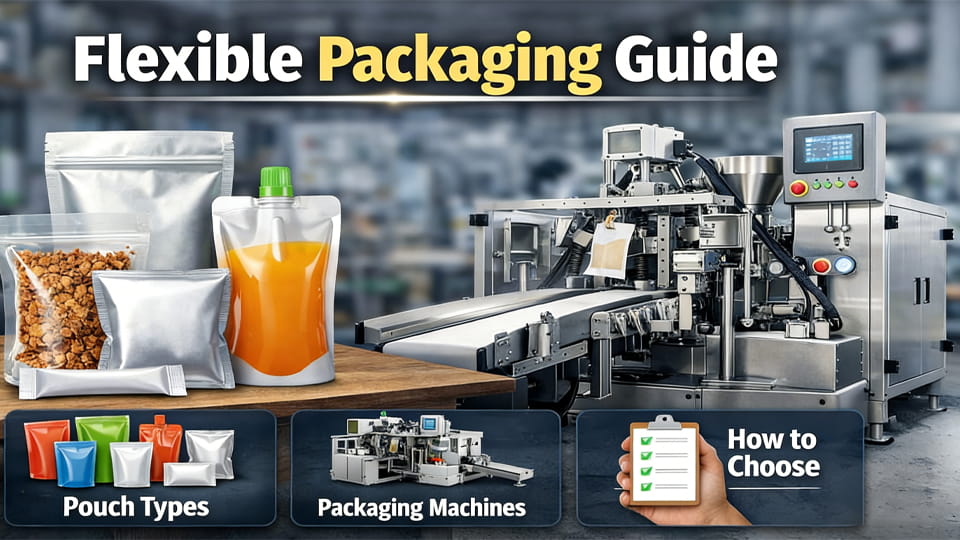

Emballer du sucre ne se limite pas à remplir un sac. Cela signifie protéger le produit de l’humidité et de la contamination, contrôle des portions, et garantissant une manipulation facile et un attrait en rayon. Emballage de sucre peut prendre plusieurs formes – sachets, paquets de bâtons, pochettes, boîtes, pots, ou big-bags – selon la forme du produit (granulé, brun, en poudre, en cubes, etc.) et l'utilisation finale (vente au détail, restauration, industriel). Dans ce guide, nous allons parcourir la clé types et matériaux d'emballage du sucre, expliquer comment sélectionner le format adapté à vos besoins, et décrire les machines couramment utilisées. Que vous soyez ingénieur achats, responsable des opérations, ou concepteur d'emballage, ces informations vous aideront à planifier une solution d'emballage du sucre qui équilibre les coûts, performance, et l'attrait du client.
L’emballage doit répondre aux défis particuliers du sucre. Un bon paquet de sucre a besoin d'un excellente barrière contre l'humidité et la force physique, afin qu'il ne se déchire pas et ne laisse pas entrer l'humidité pendant l'expédition et le stockage. Il doit également empêcher les fuites et la contamination du produit. (Par exemple, les fourmis sont connues pour être attirées par le sucre). En même temps, le style de l'emballage doit correspondre à la taille de la portion et au marché: des sachets de sucre de café en portion individuelle aux 50 Sacs en vrac de 1 kg pour usines alimentaires. En bref, « emballage de sucre » désigne tout récipient ou sac utilisé pour contenir du sucre de table., sucre à pâte, cassonade, jaggery (sucre de canne non raffiné), sucre de palme, ou édulcorants similaires.
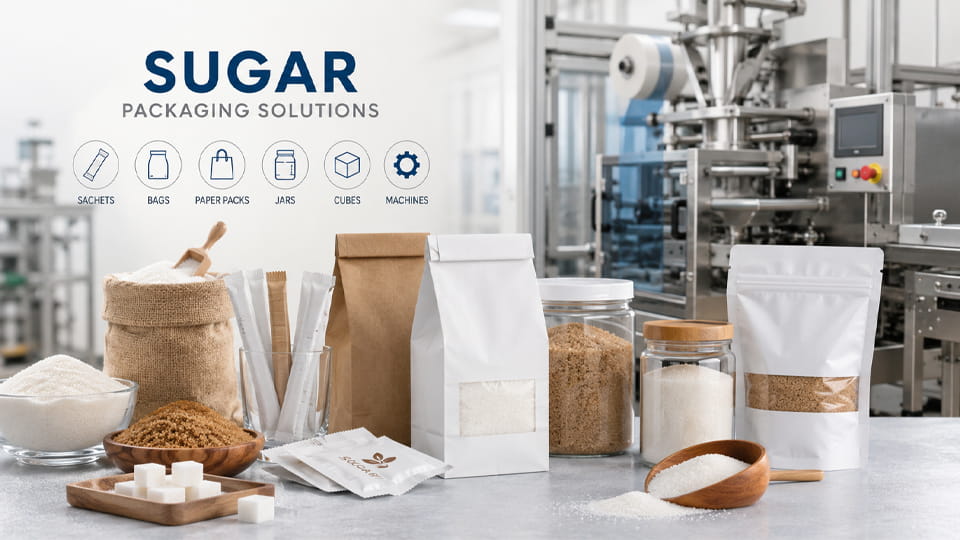
L'emballage du sucre fait référence à la façon dont le sucre est emballé ou mis en sac pour la vente et l'utilisation – des petits paquets à usage unique aux grands sacs en vrac.. Il couvre tous les formats d'emballage pour des produits comme le sucre blanc cristallisé., cassonade, en poudre (glaçage) sucre, sucre en poudre, sucre en morceaux, et même des édulcorants spéciaux comme la poudre de jaggery. Les objectifs sont communs: garder le sucre sec et fluide, contrôler la taille des portions, et protégez-le pendant le transport. Par exemple, les sachets de sucre en portions utilisés dans les cafés ou les compagnies aériennes sont conçus pour des raisons d'hygiène et de commodité (un sachet par tasse), alors que les sacs de sucre au détail (0.5–5 kg) doit prendre en charge le remplissage à grande vitesse et attirer les consommateurs dans les rayons des supermarchés.
En restauration et en milieu industriel, le sucre est souvent présenté en paquets plus gros (5–sacs de 50 kg), où l'accent est mis sur l'efficacité de l'empilage et la prévention de la détérioration. Dans tous les cas, l'emballage doit protéger le sucre de l'humidité (pour éviter l'agglutination), des parasites, et des dommages. Comme le note une source du secteur, un bon emballage de sucre possède d'excellentes propriétés de barrière et de protection physique, de sorte qu'il ne sera pas endommagé pendant le transport et ne laissera pas le produit s'échapper..
Voici un bref aperçu des raisons pour lesquelles l’emballage du sucre est important:
Dans les prochaines rubriques, nous allons décomposer les différents formes de produits à base de sucre, et associez-les aux styles d'emballage appropriés, matériels, et des machines.
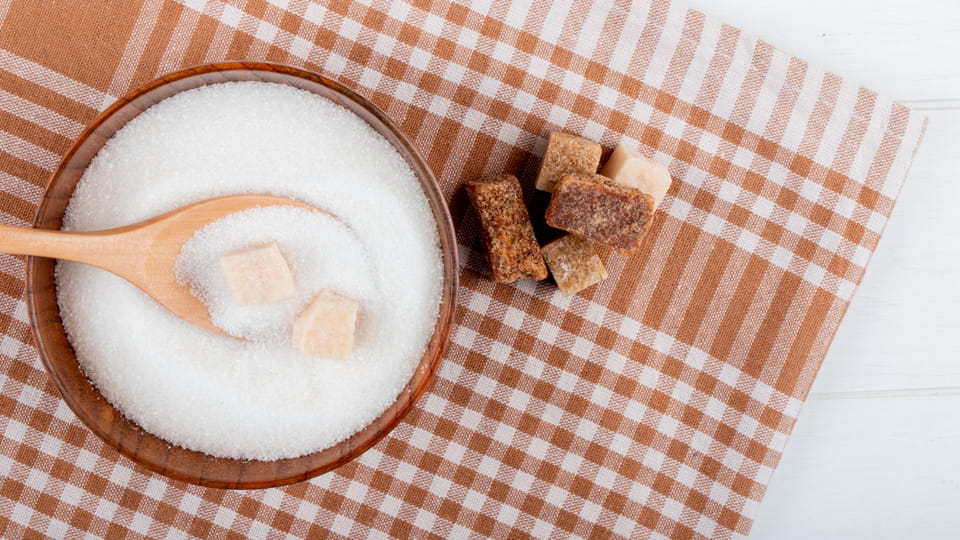
Le sucre se présente sous plusieurs formes physiques, chacun avec ses propres considérations d'emballage:
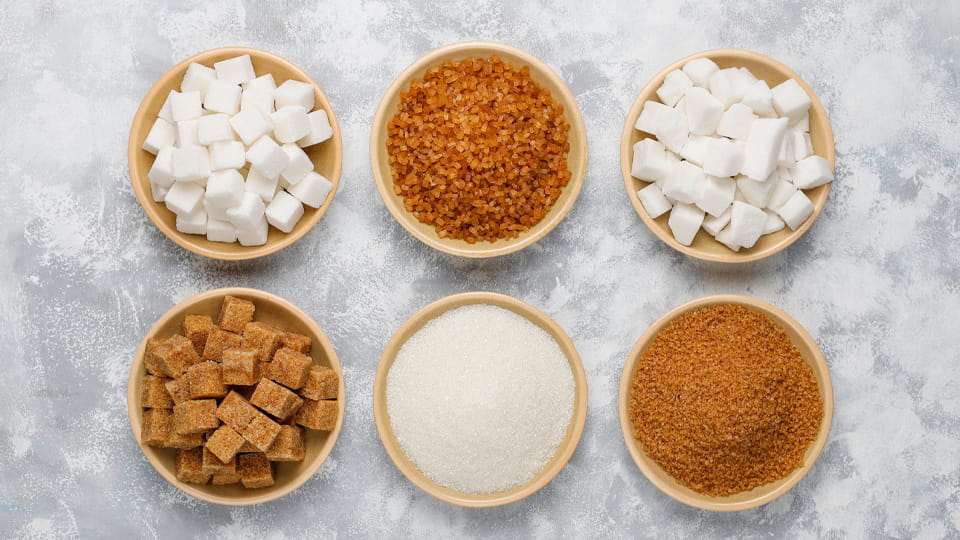
En résumé, différents types de sucre exigent différentes caractéristiques d'emballage: les sucres en poudre et roux ont particulièrement besoin de matériaux à haute barrière, le sucre cristallisé nécessite un contrôle précis du poids, et les cubes doivent être manipulés avec douceur et protégés contre l'écrasement.
Comment pouvez-vous réellement emballer le sucre? Voici les principaux formats que vous rencontrerez:
Les « paquets de sucre » et les « bâtonnets de café » tombent ici. Ce sont des petits, emballages en doses individuelles (généralement 3 à 10 g). Ils sont très populaires dans la restauration, restaurants, cafés, et les compagnies aériennes. Il existe deux variantes:
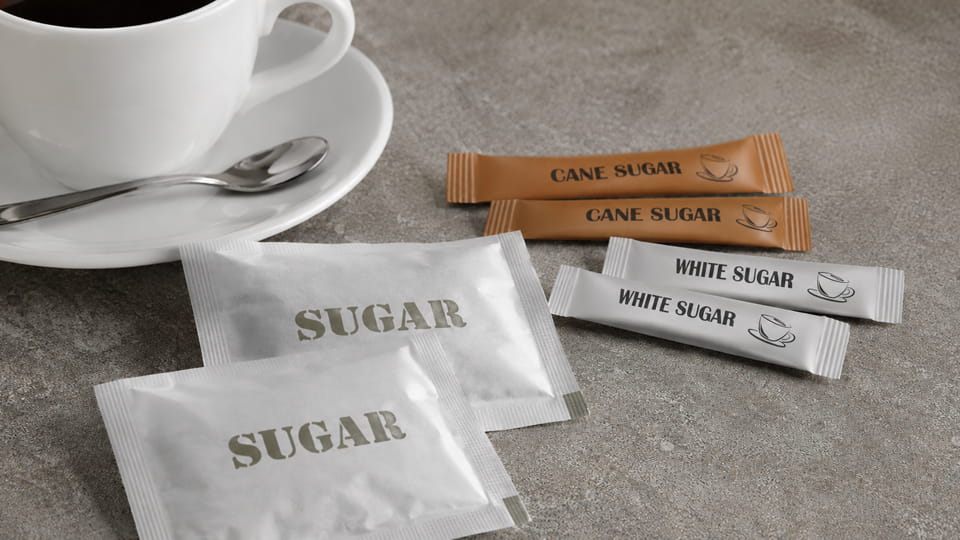 Chiffre: Sachets de sucre et sachets de bâtonnets en portion individuelle
Les sachets et les stick packs sont idéaux pour le contrôle des portions et l'hygiène.. Différences: Les sachets utilisent plus de matériau mais offrent plus de surface d'impression, tandis que les stick packs sont plus minces et plus économes en matériaux. Les machines de conditionnement en bâtonnets à plusieurs voies peuvent produire des centaines, voire plus d'un millier de sachets de sucre étroits par minute., ce qui les rend très efficaces pour les gros volumes.
« Sachets de sucre de consommation » cliquez ici. Lors de la vente de sucre dans les supermarchés ou les magasins en ligne, on voit souvent des pochettes plus grandes:
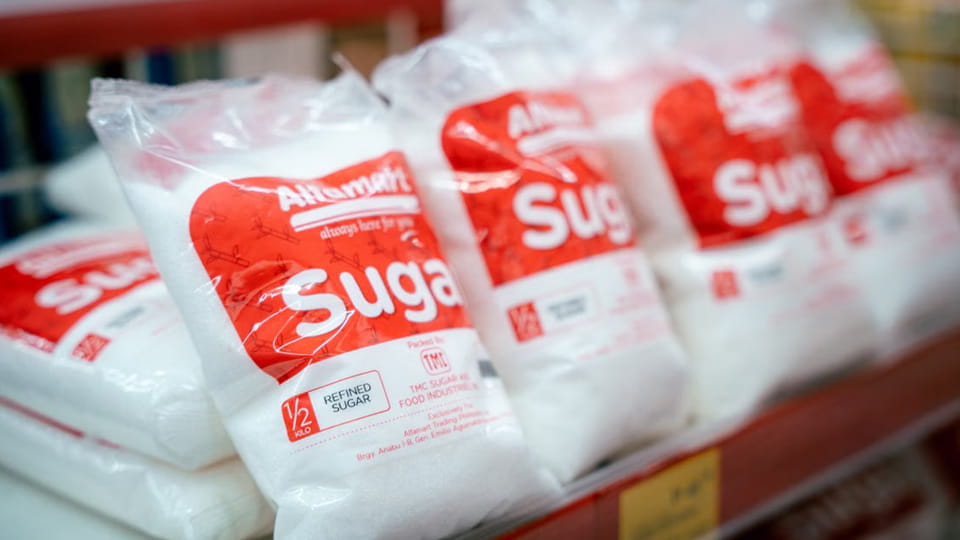
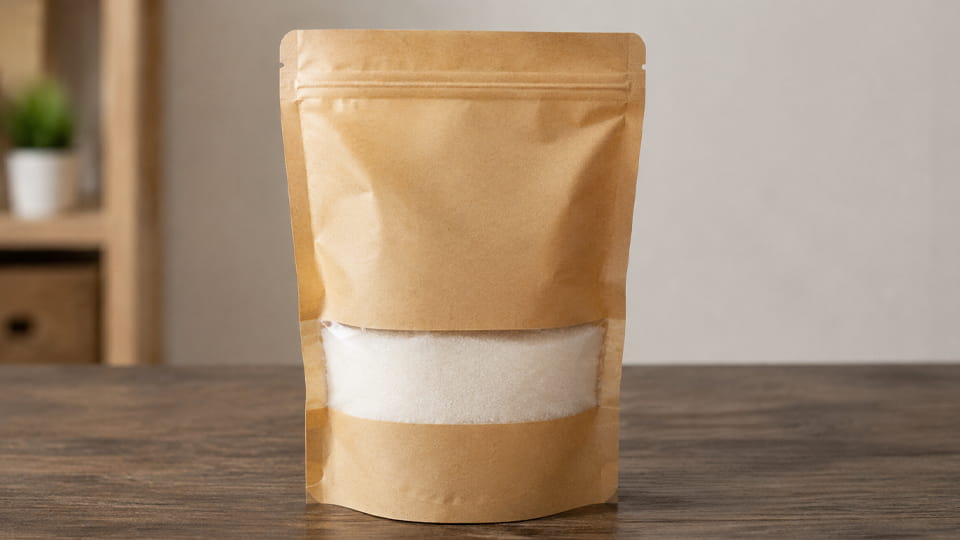
Pochettes stand-up (surtout avec un zip refermable) offrent une commodité et de bonnes propriétés de barrière. Selon les guides de l'industrie, doypacks offrir une qualité d'impression et des options d'affichage élevées (fenêtres, couleurs vives) qui peut renforcer l’attrait visuel d’un produit sucré. Les sacs à oreiller et à soufflet se concentrent davantage sur l’efficacité : ils sont faciles à remplir et à sceller à des vitesses élevées.
Le papier reste un choix courant pour le sucre, surtout le vrac et les cartons:
Papier (kraft ou laminé) est biodégradable et peu coûteux. Il est fréquemment utilisé lorsque les marques souhaitent une image respectueuse de l’environnement.. Le compromis: le papier ordinaire a une résistance à l’humidité inférieure à celle du plastique, sucre si haut de gamme (sucres particulièrement humides ou sujets aux grumeaux) peut utiliser un composite de papier laminé.
Pour certains produits sucrés, des conteneurs rigides sont utilisés:
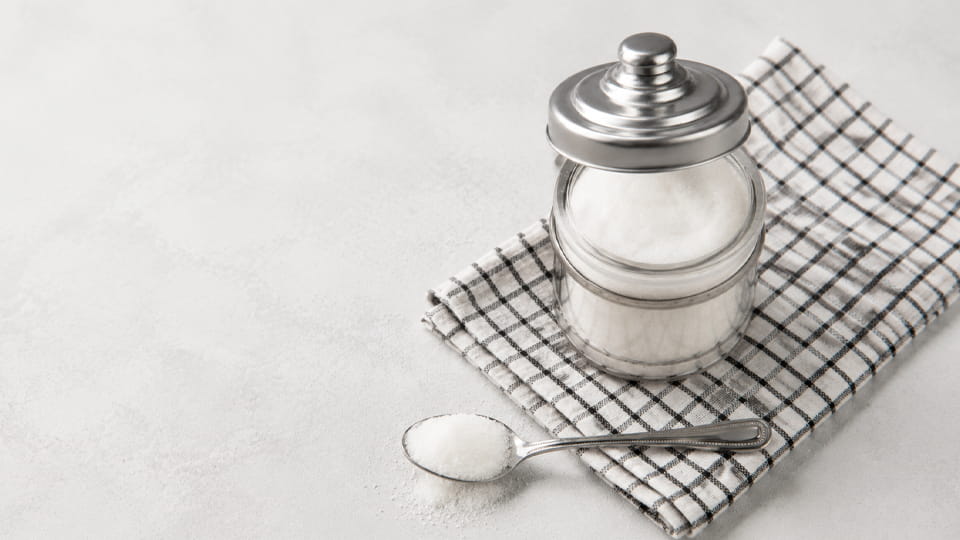
Utiliser un pot ou un bidon, c'est comme ajouter de la valeur (vue claire du produit, contenant réutilisable) à un coût plus élevé. Les machines de remplissage pour pots comprennent généralement des remplisseuses de gobelets et des stations de bouchage.
Pour les usines, chaînes de café, ou producteurs de produits alimentaires, le sucre est manipulé en grandes quantités:
L'emballage en vrac donne la priorité au débit et à la résistance. Les matériaux sont robustes (papier laminé en polyéthylène, etc.), et des lignes de remplissage de formulaires ou des peseuses robustes sont utilisées.
Choisir le bon matériau est aussi important que le style de l'emballage. Le sucre exige particulièrement une résistance à l’humidité pour rester fluide. Les matériaux courants comprennent:
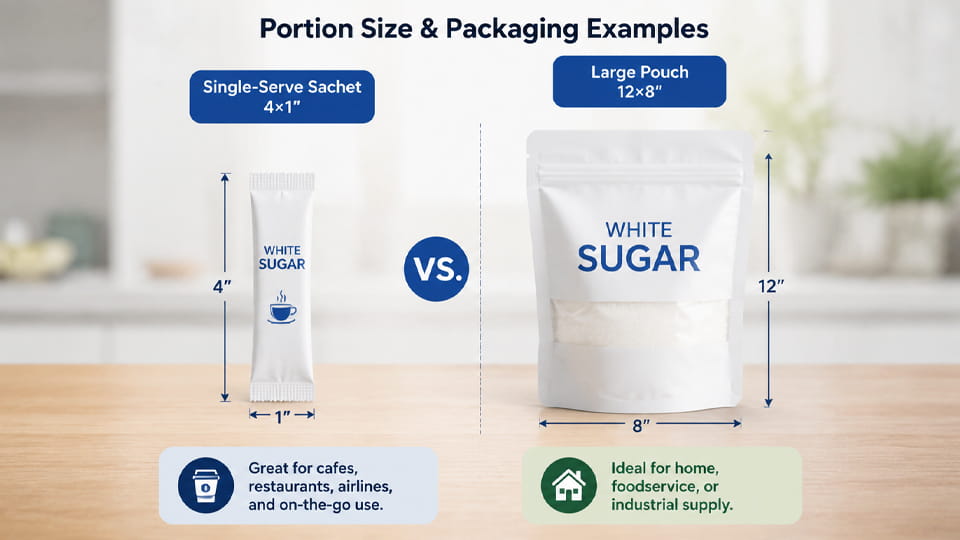
Chiffre: Exemples de portions et d'emballages. Un sachet de sucre en portion individuelle (4×1″, gauche) contre une pochette plus grande de 12×8″ (droite) illustre comment le format du pack évolue en fonction du cas d'utilisation. Les sachets individuels sont parfaits pour les cafés et les compagnies aériennes, tandis que les pochettes plus grandes conviennent aux fournitures domestiques ou industrielles..
Pour options durables, les fabricants explorent des films ou du carton biodégradables avec des revêtements anti-humidité. Par exemple, sacs en fibre de canne à sucre (bagasse) ou PLA sont en cours de développement, bien qu'ils doivent toujours répondre aux besoins d'étanchéité et de barrière du sucre. (La bagasse de canne à sucre peut même être transformée en plateaux ou en boîtes moulés., mais généralement le sucre sur l'étagère a toujours besoin d'une couche barrière contre l'humidité).
Point clé: Propriétés barrières (taux de transmission de la vapeur d'eau, taux de transmission de l'oxygène) sont critiques. Une mauvaise barrière peut entraîner une agglomération ou une détérioration. C'est pourquoi la plupart des emballages de sucre comprennent au moins une couche de plastique ou de papier d'aluminium..
La sélection du format optimal implique de considérer le produit, cas d'utilisation, et facteurs de production. Voici les principaux critères:
En pratique, le « bon format » est souvent un compromis. Par exemple, le service de café peut utiliser des bâtonnets en plastique (pour l'hygiène et le profil mince) même si un sachet en papier imprimé pourrait réduire l'utilisation du film, parce que le stick mince a l'air plus moderne et verse mieux.
Une fois le format choisi, la prochaine étape est la machinerie. Moderne lignes de conditionnement automatiser le formage, remplissage, et scellage. Les machines courantes pour le sucre comprennent:


[jl_youtube src= »https://www.youtube.com/embed/WmcZoucwAz4″]
Enfin, quelques conseils pour le choix de la machine:
Comme le note un expert de Jinlu, nos machines à sachets sticks ont Précision de ±0,02 g et commandes programmables pour répondre à des besoins de dosage stricts. De telles caractéristiques permettent de garantir que chaque sachet de sucre a exactement le bon poids et est correctement scellé..
En résumé, emballage de sucre implique d’équilibrer les besoins en produits (type de sucre, taille des portions) avec des considérations de marketing et de production. Les sachets et bâtonnets en portion individuelle servent aux restaurants et aux cafés; les sacs et pochettes flexibles servent les clients de détail; les pots et les cartons ajoutent un attrait premium; et les big-bags alimentent les lignes industrielles. La bonne combinaison de format, matériel, et la machine gardera votre sucre fluide, à l'abri de l'humidité, et sur la marque.
Si vous envisagez une ligne de conditionnement de sucre, commencez par décrire les formes de vos produits et vos marchés. Choisissez ensuite un format d'emballage (sachet, sac, etc.) et une matière qui protège le sucre et correspond à votre image de marque. Enfin, sélectionnez des machines qui répondent à vos besoins de vitesse et de précision. Les systèmes d'emballage automatisés modernes – des machines d'emballage de bâtonnets à plusieurs voies aux ensacheuses VFFS – peuvent traiter efficacement tout, des bâtonnets de sucre de 5 grammes jusqu'aux sacs de 50 kg..
Besoin d'aide avec le matériel? Contactez les experts JinLu qui conçoivent des solutions de conditionnement du sucre. Par exemple, une machine VFFS pour sachets ou stick-pack à plusieurs voies peut se former rapidement, remplir, et sceller des milliers de sachets de sucre par heure. Les ingénieurs peuvent aider à dimensionner la ligne (filler plus bagger plus cartoner) et assurez-vous que les matériaux d'emballage et les machines fonctionnent bien ensemble. En choisissant soigneusement les formats et les équipements d'emballage, tu vas adoucissez votre chaîne d'approvisionnement avec une douceur, ligne de conditionnement de sucre efficace.
L'emballage du sucre fait référence aux formats d'emballage, matériels, et systèmes de remplissage utilisés pour emballer des produits sucrés destinés à la vente au détail, restauration, et utilisation industrielle. Il comprend tout, des sachets de sucre en portion individuelle et des sachets de sucre au détail., paquets de papier, pots, et sacs à vrac. Un bon emballage du sucre doit protéger le produit de l'humidité, garder les poids de remplissage cohérents, soutenir le transport et le stockage, et correspondre à la vitesse de production de la ligne de conditionnement.
Différents produits sucrés nécessitent souvent des formats d'emballage différents en raison de leurs propriétés d'écoulement, tailles de conditionnement, et les usages du marché ne sont pas les mêmes. Les exemples courants incluent le sucre cristallisé, cassonade, sucre en poudre, sucre glace, sucre en cubes, jaggery, et poudre de jaggery.
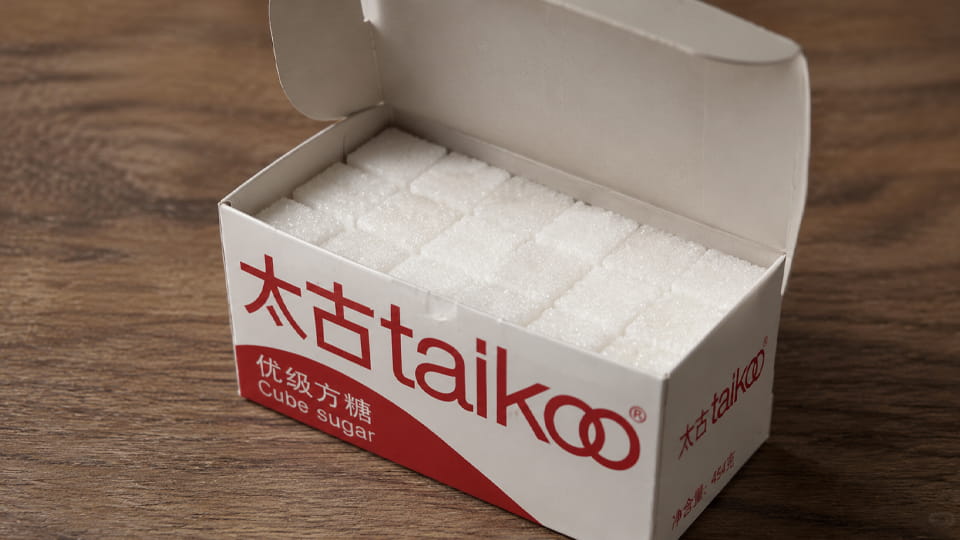
Par exemple, le sucre cristallisé est généralement conditionné en sachets, paquets de bâtons, sacs en papier, ou pochettes de vente au détail, tandis que le sucre en poudre peut nécessiter un meilleur contrôle de la poussière et une protection plus forte contre l'humidité.. Le sucre en cubes est souvent emballé dans des cartons, boîtes, pots, ou des paquets de cubes emballés.
Il n’existe pas de meilleure option pour chaque produit. Le bon emballage de sucre dépend de la forme du sucre, taille du paquet, marché cible, besoins en barrières, et vitesse de production.
• Les sachets et les sticks sont un excellent choix pour les portions individuelles de sucre..
• Les sacs et sachets en papier sont courants pour les paquets de sucre vendus au détail..
• Les bocaux et les boîtes conviennent parfaitement au sucre spécial ou au sucre en poudre..
• Les Big Bags sont généralement utilisés pour des applications industrielles et agroalimentaires..
En pratique, le meilleur format est celui qui équilibre la protection du produit, compatibilité des machines, coût d'emballage, et le confort du client.
Les deux sont des formats d’emballage flexibles en portion individuelle, mais ce ne sont pas exactement les mêmes. Un sachet de sucre est généralement un sachet plat scellé sur trois ou quatre côtés., tandis qu'un stick pack est un étroit, emballage en forme de tube scellé dans le sens de la longueur et aux deux extrémités. Les sachets sont souvent choisis pour les sachets de sucre traditionnels utilisés dans les hôtels, restaurants, et cafés. Les packs de sticks sont populaires lorsque les marques souhaitent une forme plus fine, nettoyant versant dans une tasse, et un look plus moderne. Les deux formats sont largement utilisés pour le sucre conditionné en petites portions..
Les matériaux d'emballage du sucre courants comprennent le papier, polyéthylène (PE), polypropylène (PP), films plastiques laminés, et structures en papier-stratifié. Le choix exact dépend du format d’emballage et de la sensibilité à l’humidité du produit.
Par exemple:
• Les sacs ou paquets en papier sont courants pour le sucre au détail.
• Les films laminés sont largement utilisés pour les sachets et les stick packs
• Des bocaux en plastique ou des récipients rigides peuvent être utilisés pour le sucre spécial ou le sucre en poudre.
• Les films multicouches sont souvent préférés lorsqu'une protection plus forte contre l'humidité est nécessaire pour les petits emballages ou le remplissage automatisé à grande vitesse.
Le sucre absorbe facilement l'humidité, et une fois que cela arrive, ça peut commencer à s'agglutiner, gâteau, ou perdre en fluidité. Cela crée des problèmes non seulement pour les consommateurs, mais aussi pour la ligne de conditionnement elle-même. Les problèmes liés à l'humidité peuvent affecter la précision du remplissage, qualité du joint, durée de conservation, et l'apparence du produit. C'est pourquoi les emballages de sucre nécessitent généralement un bon équilibre en termes de performances barrières., intégrité du joint, et des conditions de stockage adaptées, surtout pour le sucre en poudre, cassonade, et emballage de poudre de jaggery.
Oui, les emballages de sucre en papier sont largement utilisés, en particulier pour les paquets de sucre au détail et certains formats de restauration. Le papier fonctionne bien lorsque l’objectif est de contrôler les coûts, présentation en rayon familière, et une impression ou un marquage plus facile. Cependant, le papier seul ne suffit pas toujours pour chaque produit sucré. Si le produit est très sensible à l'humidité, ou si la ligne roule à grande vitesse, les fabricants peuvent préférer les structures en papier stratifié ou les emballages à base de film qui offrent de meilleures performances d'étanchéité et de barrière.
Le sucre en cubes est souvent emballé différemment du sucre granulé en vrac, car les cubes doivent rester intacts et présentables.. Les formats d'emballage courants incluent les paquets de cubes emballés dans du papier., cartons, boîtes pliantes, pots rigides, et petits conteneurs de vente au détail. La meilleure option dépend si le produit est destiné au service à table., vente au détail haut de gamme, hospitalité, ou utilisation en restauration en vrac. L'emballage du sucre en cubes doit protéger les cubes de la casse tout en permettant un emballage efficace et une distribution facile..
Une machine à emballer le sucre est une machine utilisée pour doser, remplir, formulaire, et sceller le sucre dans un format d'emballage choisi. En fonction du produit et de la taille du conditionnement, il peut être utilisé pour les sachets, paquets de bâtons, pochettes, sacs de vente au détail, ou sacs à vrac. Une machine de conditionnement de sucre typique peut inclure un système de dosage, section d'alimentation en film, section de formation de sacs, système d'étanchéité, et convoyeur de déchargement. La bonne configuration de la machine dépend du type de sucre, la sortie requise, la taille cible du paquet, et le matériau d'emballage utilisé.
La meilleure façon de choisir une machine de conditionnement de sucre est de commencer par cinq questions pratiques:
1.Quel type de sucre emballez-vous? Sucre en poudre, sucre en poudre, cassonade, sucre en cubes, jaggery, et la poudre de jaggery ne se comportent pas exactement de la même manière.
2.De quel format de pack avez-vous besoin? Sachet, paquet de bâtons, poche, sac en papier, pot, ou sac à vrac.
3.Quelle taille de pack allez-vous exécuter? Une machine pour 5 g de sucre est très différent d'un sachet de sucre 1 kg de sacs de vente au détail.
4.De quel rendement avez-vous besoin par minute ou par heure?
5.De quel niveau d'automatisation et de précision avez-vous besoin?
Une fois ces points clairs, il devient beaucoup plus facile d'adapter le projet à la bonne machine de conditionnement de sucre, machine d'emballage de sachets de sucre, machine à emballer des bâtonnets, ou ligne de remplissage de sacs.
Références:
1.Confiserie sucrée — Spécialistes pharmaceutiques
2.Prise en masse de cristaux de saccharose: Effet de la teneur en eau et de la taille des cristaux — Porte de recherche
3.Effets de la condensation capillaire sur la prise en masse du saccharose en vrac – ScienceDirect
4.Humidité et durée de conservation des confiseries sucrées – Bibliothèque nationale de médecine