
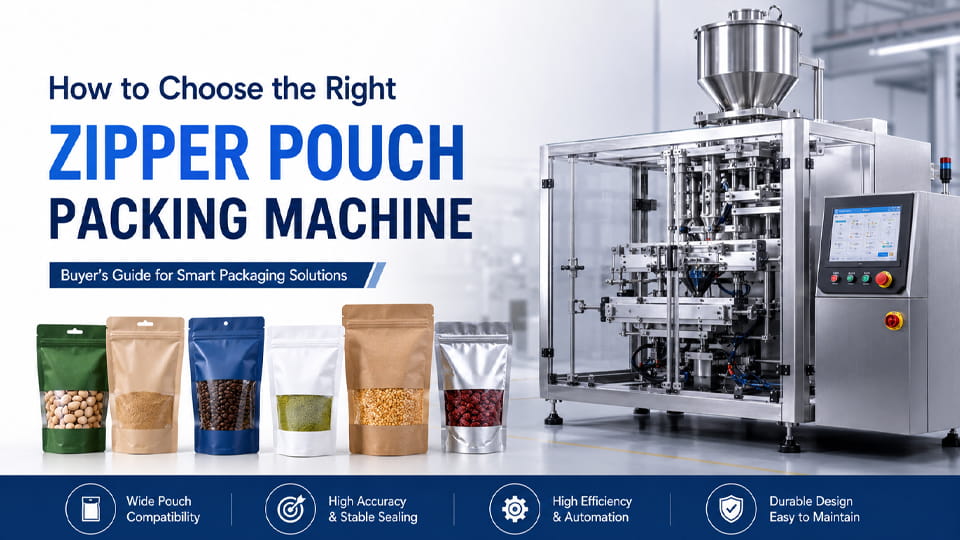
Choisir le bon machine d'emballage de pochettes à fermeture éclair est une décision cruciale pour tout fabricant de snacks, poudres, liquides ou produits pharmaceutiques. Un mauvais choix peut entraîner des temps d'arrêt, poids de remplissage incohérents, mauvaises étanchéités et gaspillage de produit. En revanche, la bonne machine améliore l'efficacité, qualité et rentabilité des produits. Ce guide explique ce que pochette zippée (pochette refermable) les machines sont, compare pochette préfabriquée contre Vff systèmes, et se promène dans le 7 facteurs clés à prendre en compte (type de produit, style pochette, vitesse, qualité d'étanchéité, matériels, nettoyage et accompagnement). Nous mettrons également en évidence les recommandations spécifiques au secteur et les pièges courants à éviter., se terminant par des conseils pratiques et un contact fournisseur (Emballage Jinlu) pour une solution personnalisée.
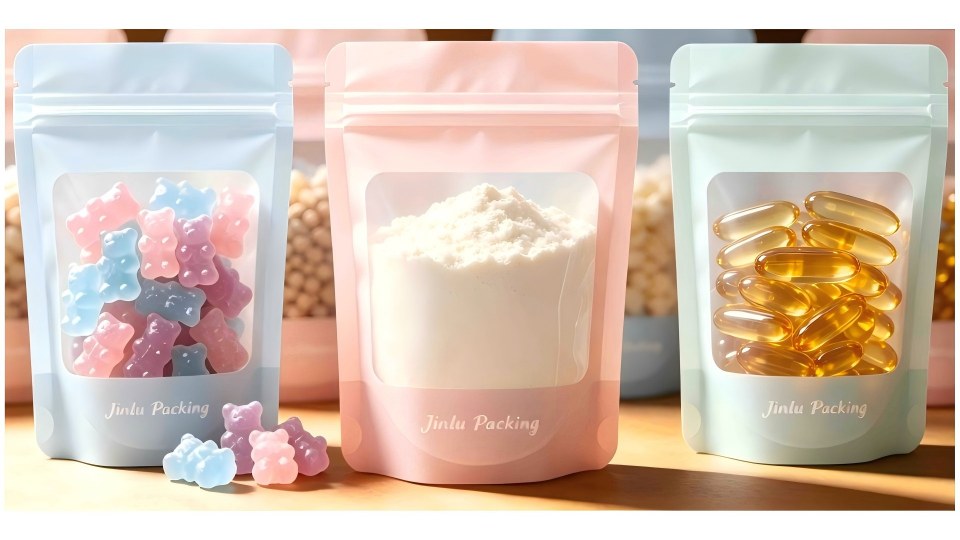
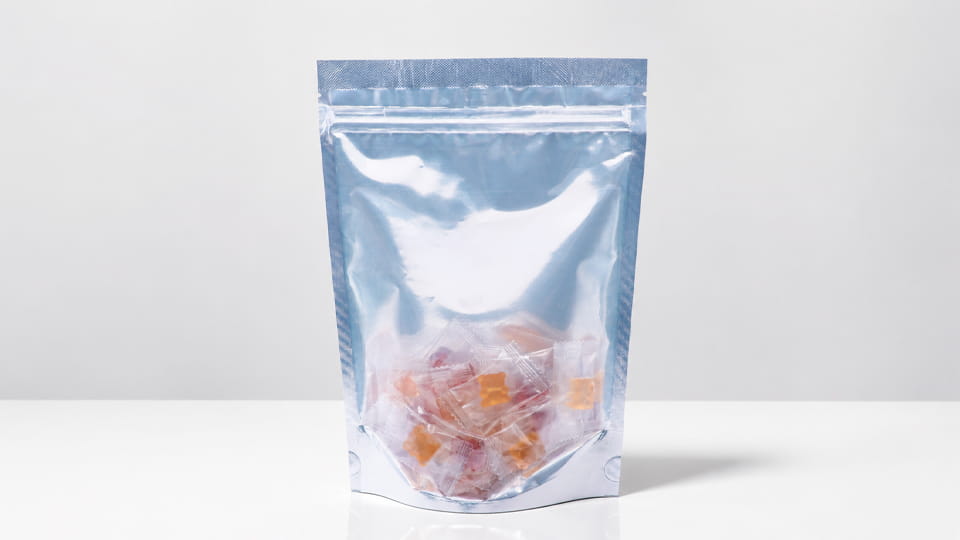
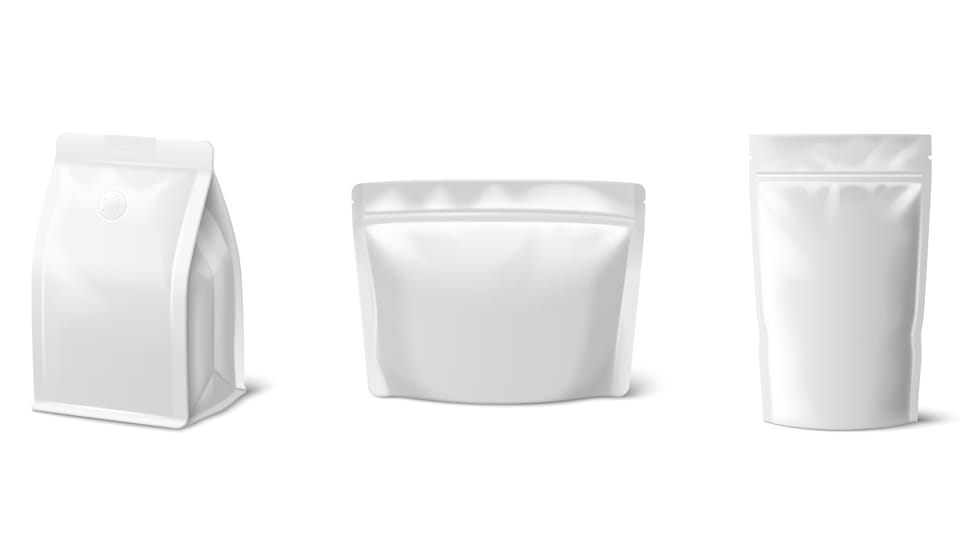
L'intégration d'images peut aider à illustrer ces points. Par exemple, Considérez l'image ci-dessous d'un sachet refermable debout prêt à être rempli.. Les machines à pochettes à fermeture éclair gèrent des produits comme celui-ci (café, granulés, collations) avec précision et rapidité.
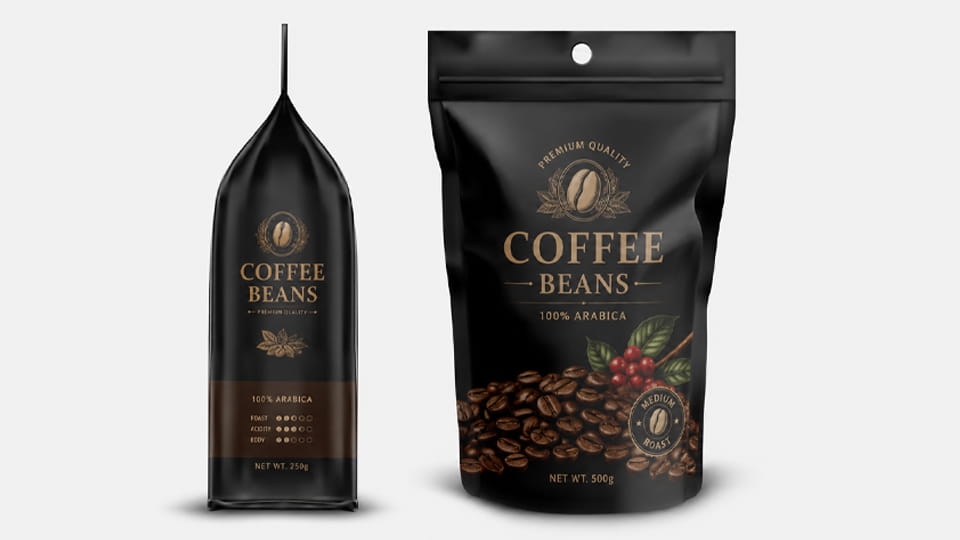
Chiffre: Exemple de pochette refermable debout (café en grains). Les machines d'emballage de sachets à fermeture éclair sélectionnent automatiquement, remplissez et scellez ces sacs préfabriqués pour la nourriture, pharmaceutique et autres industries.
UN machine d'emballage de pochettes à fermeture éclair (également appelé machine à sacs à fermeture éclair ou à pochettes à fermeture éclair) gère automatiquement préformé pochettes dotées d'une fermeture à glissière intégrée. Au lieu de former des sacs à partir de film (comme dans VFFS), ces machines récupèrent les sachets préfabriqués dans un magazine, ouvre-les (souvent avec des pinces à vide ou mécaniques), remplissez-les, aligner/fermer la fermeture éclair, thermosceller au-dessus et au-dessous de la fermeture éclair, puis déchargez le colis fini. En bref, il « choisit, ouvre, remplit, scelle et livre des sachets prêts à vendre.
Cette approche élimine le besoin de former des sachets à la volée, donnant un contrôle plus strict sur le remplissage et le scellage. C’est particulièrement utile pour les collants, produits délicats ou sensibles à l'humidité (comme les gels, poudres riches en graisses ou ingrédients hygroscopiques) où la stabilité du sac et une fermeture propre sont essentielles. Parce que la pochette est déjà fabriquée, tu reçois une prime, aspect prêt à être vendu avec des dimensions précises du sachet et une manipulation stable.
Les flux de travail typiques des machines à pochettes à fermeture éclair suivent ces étapes:
Pochette pour chargeur –> Récupération des pochettes –> Ouverture de la pochette (air ou pince) –> Remplissage du produit (poids, pompe, etc.) –> Fermeture à glissière & Thermoscellage –> Déchargement de la pochette terminée
Chaque étape est automatisée pour plus de rapidité et de cohérence. Par exemple, Les machines de Jinlu peuvent traiter jusqu'à 50 à 60 sacs par minute (avec une précision de dosage élevée ±0,5%), grâce aux peseuses associatives et aux systèmes de dosage de précision. Ils incluent également souvent des fonctionnalités telles que l'extraction des poussières ou le rinçage à l'azote pour les poudres sensibles à l'oxygène..
[jl_youtube src= »https://www.youtube.com/embed/w6SY05JS7S4″]
Applications courantes pour les machines à pochettes à fermeture éclair:
Comme le note Jinlupacking, ces machines remplissent tout, de épices et poudres de protéines pour sauces et aliments pour animaux de compagnie, en fermeture éclair préfabriquée ou pochettes debout.
Il existe deux architectures principales pour les machines d'emballage de sachets: Machines à sachets préfabriqués (rotatif ou linéaire) et Formulaire-Remplir-Sceller (FFS) machines capable de gérer les formats de sacs à fermeture éclair (généralement des unités de formage-remplissage-scellage verticales). En pratique, les véritables « machines à pochettes à fermeture éclair » font presque toujours référence à des systèmes de pochettes préfabriqués, car l'application d'une fermeture éclair sur un film en rouleau en ligne est complexe. Voici comment les deux se comparent:
Également appelés emballeurs de sachets préformés, ces machines utilisent des sacs préfabriqués avec des fermetures éclair déjà attachées. Ils entrent généralement:
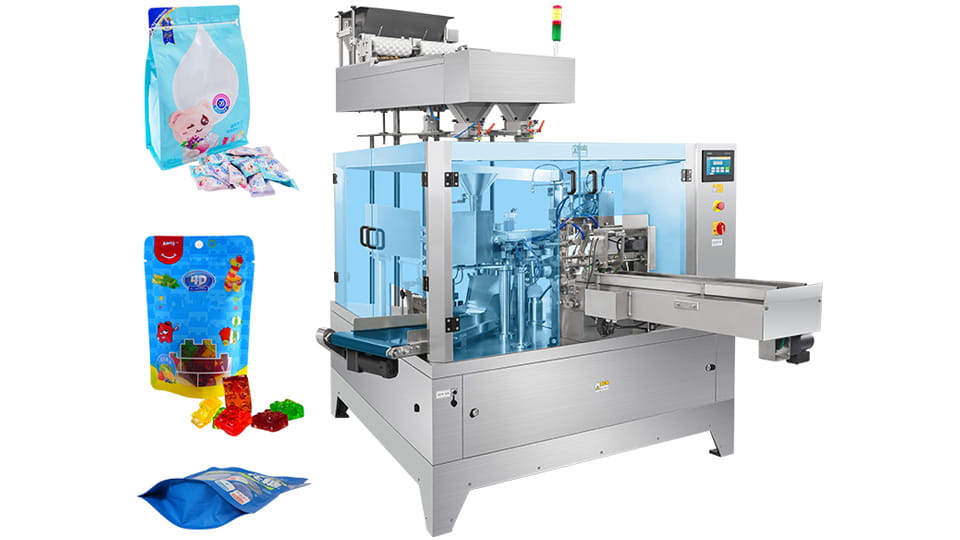
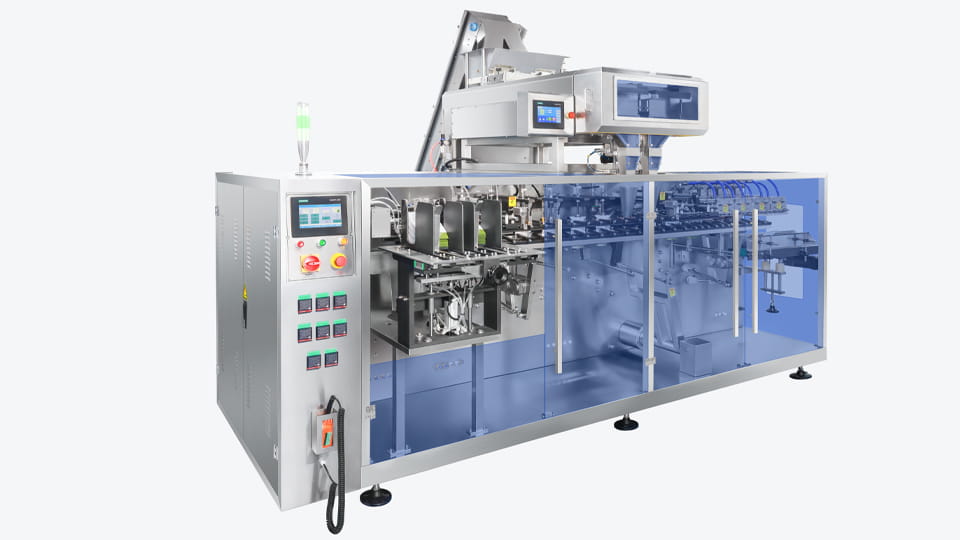
Avantages des machines préfabriquées: Débit rapide, apparence du package premium, écurie & étanchéité constante. Ils gèrent facilement les styles de pochettes complexes – pochettes debout, doypacks, sacs à fermeture éclair, pochettes à bec, etc.. – souvent avec des accessoires comme des applicateurs de bec ou des chasses de gaz. Parce que la pochette est préformée, les problèmes tels que la tension du film ou les erreurs de formation sont éliminés, minimiser les erreurs de scellage. Machines rotatives, en particulier, peut intégrer des systèmes tels que 8 à 14 stations de pesée sous vide pour un remplissage très précis.
Inconvénients: Coût matériel plus élevé (sacs préfabriqués vs film), plus grande surface au sol, et des machines complexes (ce qui peut entraîner un coût d'achat plus élevé). La machine doit être dimensionnée pour certaines dimensions de sachets et peut nécessiter un changement pour des tailles de sachets très différentes.. Le stockage des sachets préfabriqués et la gestion des stocks sont des considérations supplémentaires. Généralement idéal pour les tirages de volumes moyens à élevés où la qualité et la rapidité justifient les coûts.
Traditionnel Machines VFFS commencez par un rouleau de film, former une pochette, remplissez-le, puis scellez-le. Certains systèmes VFFS avancés sont conçus pour gérer les fermetures à glissière en incorporant un poste applicateur de fermeture à glissière., mais ceux-ci sont plus spécialisés. Le point clé est que VFFS forme le sac à la volée, offrant une flexibilité dans la taille du sachet et une réduction des déchets de film.
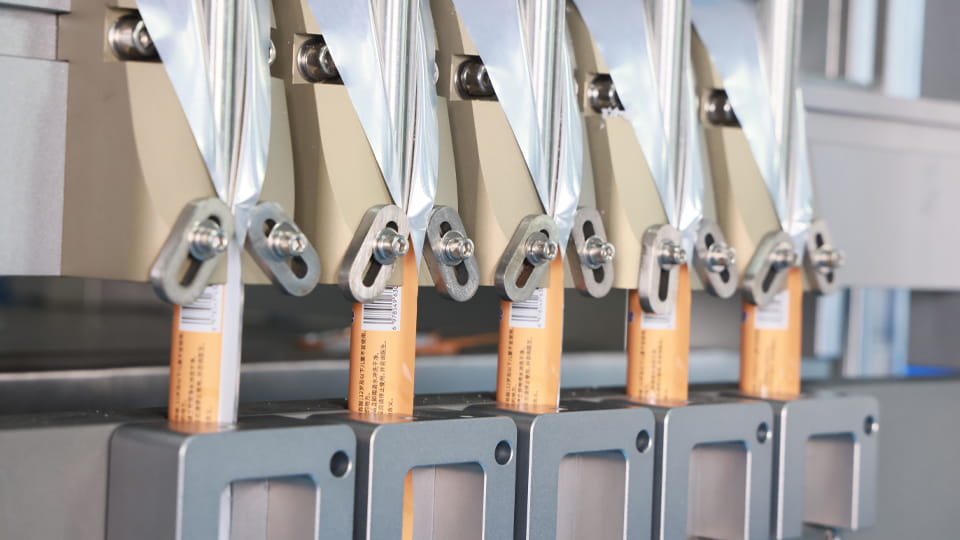
Avantages du FFS: Très haute efficacité matérielle (un minimum de rebuts), coût inférieur du matériau du sac, et une grande flexibilité (ajustements rapides pour la taille). Ces machines ont un encombrement réduit et peuvent fonctionner 24/7 de manière rentable.
Inconvénients: Plus complexe à régler (tension du film, mâchoires de scellage, etc.), et le scellage peut être moins fiable sur les produits collants ou hygroscopiques puisque le film bouge. L'application d'une fermeture éclair peut compliquer la mécanique. L'apparence de l'emballage peut être plus claire. FFS convient aux longues séries ou aux conceptions de pochettes plus simples; les systèmes prédéfinis ciblent une qualité et une rapidité supérieures.
Ci-dessous se trouve un tableau de comparaison résumer les principaux compromis:
| Fonctionnalité | Préfabriqué (Pochette à fermeture éclair) Machine | Vff (Formulaire-Remplir-Sceller) Machine |
| Fourniture de sacs | Utilise des pochettes préfabriquées à fermeture éclair/stand-up | Forme des sachets à la volée à partir d'un film en rouleau |
| Vitesse | Haut (par exemple. 30–60+ sacs/min) par voie | Haut (variable, souvent 30 à 100/min selon les voies et la taille) |
| Utilisation du matériau | Plus de matériel (préfabriqué, films laminés) | Très économe en matériaux (matériel en rouleau, moins de déchets) |
| Styles de pochettes | Large gamme: doypack, se lever, fermeture éclair, bec | Limité aux oreillers ou aux formes de base; ajout d'une fermeture éclair nécessaire |
| Apparence | Aspect haut de gamme, forme et graphismes cohérents | Bien, mais des sacs plus simples (plis/joints pincés) |
| Passage | Changement rapide pour le format pochette, mais j'ai besoin de sacs différents | Changements de taille rapides dans le logiciel, film à portée de main |
| Espace | Plus grand (comprend un chargeur de pochette, flush, Balance) | Encombrement réduit pour les opérations d'ensachage |
| Coût (dépenses d'investissement) | Plus haut (équipement spécialisé + inventaire des pochettes) | Coût de la machine inférieur mais utilisation de film plus élevée |
| Mieux pour | Produits collants/délicats, marques premium, plusieurs formats de pochettes | Des tirages à grand volume, changements de taille fréquents, sensible aux coûts |
| Accessoires | Peut inclure des peseuses multi-têtes, remplisseurs de becs, systèmes à gaz/vide | Généralement des charges (peseuse ou pompes) et les anciens; fermeture à glissière en option |
| Exemples | Vitamines en poudre dans des sacs zip-lock, collations protéinées, sauces en sachets à bec verseur | Packs de bâtons, sachets de sucre, collations en vrac dans des sacs-oreillers |
En pratique, les fabricants utilisent souvent des machines à fermeture éclair préfabriquées pour les suppléments en poudre, snacks et sauces où la présentation et l'intégrité du sceau sont cruciales, et réservez les VFFS pour des formulations plus simples ou des emballages individuels plus petits où le coût est la principale préoccupation.
Lors de la sélection d'une machine d'emballage de sachets à fermeture éclair, concentrez-vous sur vos besoins de production. Voici les sept facteurs les plus importants:
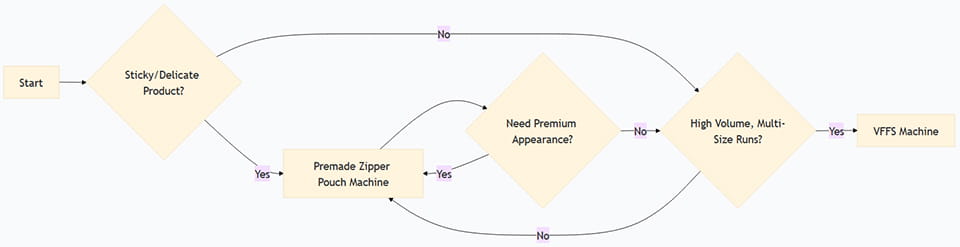
Ci-dessous se trouve un flux de décision exemple pour résumer la logique de sélection:
Différentes industries ont des exigences et des réglementations distinctes. Voici comment les machines à pochettes à fermeture éclair s'alignent généralement par secteur:
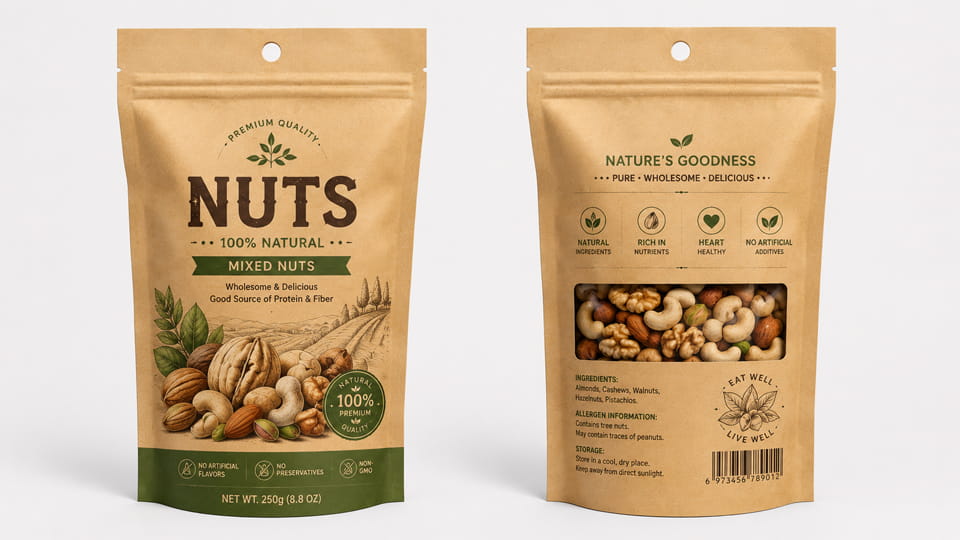
Exemple: Un fabricant de noix exploite une ligne de sachets rotatifs à fermeture éclair à 5 voies avec un débit total de 250 bpm, utilisant un alignement de la fermeture éclair guidé par la vision et un aimant intégré pour la détection des métaux.
Exemple: Un producteur de produits nutraceutiques utilise une machine à sachets préfabriqués avec stations CIP intégrées et rinçage N2 pour emballer de fines poudres d'herbes dans des sachets à fermeture éclair avec sécurité enfants..
Dans chaque cas, discuter de votre produit avec le fournisseur. Comme le souligne Jinlu Packing, Les solutions de sachets préfabriqués sont souvent choisies par les entreprises alimentaires/pharmaceutiques qui ont besoin d'une « fermeture propre », présentation stable, et la flexibilité nécessaire pour gérer différents styles de pochettes ».
En évaluant soigneusement chaque facteur et en évitant ces pièges, vous assurerez un achat en douceur. Une dernière étape utile: rédiger une liste de contrôle (spécifications du produit, capacité, matériels, budgets) et utilisez-le pour comparer les devis. Aussi, demandez des essais sur site ou des démonstrations vidéo avec votre produit actuel avant de finaliser.
La commodité refermable est en plein essor. Les consommateurs adorent les sachets à fermeture éclair pour les collations, café, nourriture pour bébés, friandises pour animaux de compagnie et plus encore. Les tendances du marché montrent une évolution constante de l'usage unique vers sachets refermables. Cette croissance est portée par la durabilité (moins de déchets que les cartons), matériaux améliorés (films barrières prolongeant la durée de conservation), et une marque haut de gamme (impression vibrante sur les pochettes).
Les analyses de l'industrie indiquent que les machines à sachets préfabriqués sont de plus en plus populaires car elles offrent de la flexibilité. (« multiplicité de tailles et de styles de sacs ») et facilité d'utilisation. En particulier, l'apparence et l'étanchéité de qualité rendent les machines préfabriquées idéales pour les produits haut de gamme. Par exemple, Les marques de gommes vitaminées ou de boissons protéinées choisissent souvent les sachets à fermeture éclair plutôt que les sachets à fermeture éclair. paquets de bâtons pour signaler la qualité.
Dans les lignes de conditionnement, préfabriqué vs FFS est un débat en cours. Le consensus: Utilisez des machines à pochettes à fermeture éclair prédéfinies lors de la présentation du produit, une manipulation douce ou des changements rapides sont des priorités; utilisez FFS pour un rendement et une efficacité maximum sur des produits uniformes. Les fabricants peuvent même utiliser des lignes hybrides (préfabriqué pour les SKU réguliers, FFS pour promotions ou petites séries) pour obtenir le meilleur des deux mondes.
Dans l'ensemble, attendez-vous à voir plus d'options d'automatisation et de vitesse élevée pour les machines à sachets à fermeture éclair. Des innovations comme le chargement entièrement robotisé des sachets, codage/impression intégré, et un assainissement amélioré (surtout post-Covid) deviennent la norme. Si vous prévoyez une nouvelle ligne ou une mise à niveau, envisager des machines dotées de fonctionnalités évolutives (Connectivité IoT, mises à jour du logiciel, capacité multivoie).
La sélection d'une machine d'emballage de sachets à fermeture éclair est une étape importante qui a un impact sur la qualité du produit et l'efficacité de la production.. En résumé:
Si vous êtes prêt à finaliser un choix ou souhaitez simplement un avis professionnel, contacter Jinlu Emballage. Jinlu est un fournisseur chinois de confiance de machines d'emballage pharmaceutique et alimentaire. (avec CE, Certifications cGMP). Nous pouvons vous recommander une solution personnalisée en fonction de votre type de pochette, produit et capacité. Demandez un devis ou une consultation technique pour vous assurer d'obtenir le système d'emballage en sachets zippés adapté à votre ligne..
Une large gamme. Les exemples courants incluent les aliments secs (collations, noix, café, épices), poudres (poudre de protéine, granulés pharmaceutiques), liquides et semi-liquides (sauces en sachets à bec verseur), aliments pour animaux de compagnie, détergents, et plus. Essentiellement, tout produit solide ou en poudre bénéficiant d'un sachet refermable peut être manipulé par une machine à sachets à fermeture éclair..
Une machine à sachets préfabriqués utilise des sacs à fermeture éclair préformés, donc il omet l'étape de formation du film. Cela donne une meilleure stabilité du joint et une meilleure apparence de l'emballage.. Une machine VFFS forme chaque sac à partir d'un film en rouleau avant de le remplir., ce qui est idéal pour minimiser les déchets et durer longtemps, productions uniformes. En bref, les machines préfabriquées excellent dans l'emballage haut de gamme et la flexibilité, tandis que VFFS excelle en termes de rentabilité pour les grandes séries.
Oui. La plupart des machines de sachets à fermeture éclair peuvent être configurées avec différents modules de remplissage. Les poudres utilisent des remplisseuses à vis ou des peseuses; les granulés/snacks utilisent des peseuses multi-têtes; liquides ou produits visqueux utiliser des pompes à piston ou des buses de pulvérisation. Certaines lignes prennent en charge le remplissage mixte sur une seule machine en ajoutant une deuxième remplisseuse. Assurez-vous que la machine que vous choisissez dispose des remplisseuses adaptées à vos types de produits..
Les vitesses typiques sont de l'ordre de 30 à 70 sacs par minute (par voie de machine). Les systèmes rotatifs haut de gamme peuvent atteindre jusqu'à environ 60 sacs/min, et les configurations à plusieurs voies multiplient ce débit. La vitesse exacte dépend de la taille du sachet, système de remplissage, et complexité du sac. En citant, les fournisseurs spécifient généralement une plage; précisez toujours si la vitesse indiquée est théorique ou testée avec votre produit.
Les coûts varient considérablement en fonction du niveau d'automatisation, vitesse, et options. Les petites pochettes semi-automatiques commencent à quelques milliers de dollars, tandis que les grands systèmes rotatifs avec balances, codeurs, et le flux de gaz peut être de dizaines, voire de centaines de milliers. Plutôt que le prix seul, considérer le retour sur investissement: les machines sont souvent rentabilisées en 6 à 18 mois grâce à des économies de main d'œuvre et à un débit plus élevé. Demander des devis complets incluant les frais d'expédition, installation, formation et soutien pour une comparaison de pommes avec des pommes.
Cela dépend du volume de production et du coût de la main d'œuvre, mais de nombreuses entreprises récupèrent l'investissement dans un délai de 6 à 18 mois. Les principales économies proviennent de vitesses d'emballage plus rapides, poids de remplissage constants, réduction des déchets, et réduction du travail. Assurez-vous de calculer les économies réalisées grâce à la réduction des cadeaux (meilleure précision de remplissage) et une qualité améliorée (moins de refus).
Juste les bons sachets et la bonne préparation. Fournissez des sacs à fermeture éclair préfabriqués de haute qualité à partir d'un convertisseur fiable (garantir l'intégrité de la fermeture éclair et la résistance du film). Tenir un inventaire des sachets dimensionnés pour la machine. Préparez également de l'air comprimé (≥0,6MPa) pour pièces pneumatiques, et une alimentation stable. Certaines conduites nécessitent également une pompe à vide ou une source d'azote si elles utilisent un transfert de fluide ou un rinçage.. Sinon, la configuration est similaire à celle de n'importe quelle machine d'emballage (nivellement, alignement du cadre, contrôles de sécurité).
Références:
1.Conditionnement & Substances en contact avec les aliments (FCS) -- NOUS. Administration des aliments et des médicaments
2.2025 Tendances mondiales de l'emballage ——PMMI
3.Méthode d'essai standard pour déterminer l'intégrité des scellés pour emballages flexibles par inspection visuelle ——ScienceDirect
4.Les fournisseurs d’emballages et les entreprises de grande consommation zippent de plus en plus les emballages flexibles —— PackagingDive
5.L'avenir de l'emballage flexible: Tendances, Avantages & Innovations ——PackagingDigest