
La maintenance des équipements pharmaceutiques ne consiste pas simplement à réparer une machine lorsqu'elle s'arrête. Un bon programme d’entretien maintient l’équipement propre, fiable, précis, et prêt pour la production tout en réduisant les temps d'arrêt imprévus et en évitant les risques liés à la qualité. Sous Bonnes pratiques de fabrication actuelles de la FDA, matériel utilisé pour fabriquer, processus, paquet, ou conserver les produits pharmaceutiques doivent être nettoyés et entretenus à des intervalles appropriés, étayé par des procédures et des dossiers écrits. Automatique, mécanique, et les équipements électroniques doivent également être régulièrement calibrés, inspecté, ou vérifié selon un programme écrit.
Pour une usine pharmaceutique, le but pratique est simple: savoir quelles machines comptent le plus, identifier les composants les plus susceptibles d'affecter la qualité ou la disponibilité du produit, les maintenir avant l'échec, documenter le travail, et continuer à améliorer le plan à partir de données opérationnelles réelles. De la même manière, le Guide de bonnes pratiques pour la maintenance de l’ISPE traite la maintenance comme un programme structuré de zone BPF plutôt que comme un ensemble de travaux de réparation isolés..
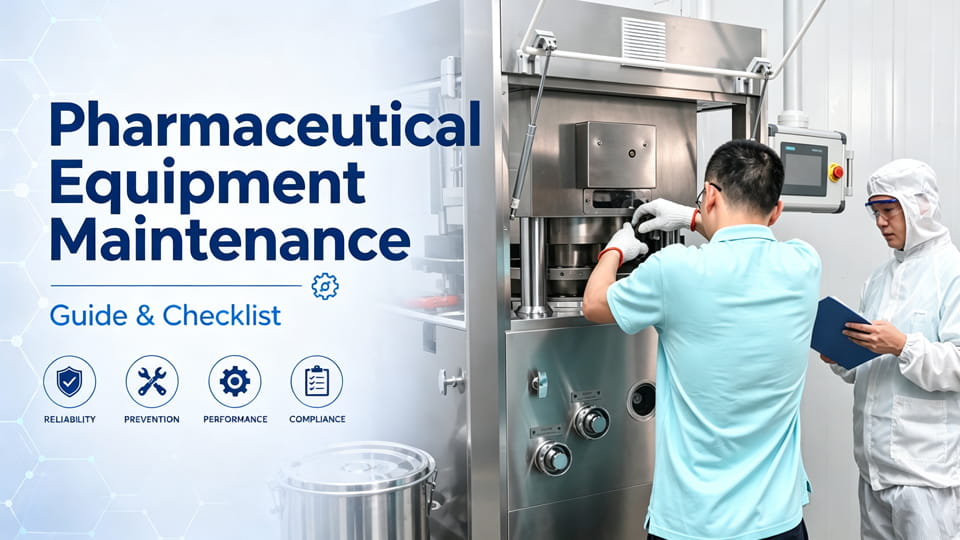
Ce guide explique comment construire ce système, avec une liste de contrôle pratique pour la maintenance des équipements pharmaceutiques, calendrier d'entretien, conseils spécifiques à la machine, et considérations BPF pour les presses à comprimés, charges de capsule, machines à cloques, machines à compter, et cartonneuses.
Entretien des équipements pharmaceutiques est l'inspection prévue, nettoyage, lubrification, ajustement, aide à l'étalonnage, réparation, et travaux de remplacement utilisés pour maintenir les machines de fabrication et d'emballage pharmaceutiques fonctionnant comme prévu.
Il couvre bien plus qu’un technicien de maintenance avec une boîte à outils. Un programme complet de maintenance pharmaceutique relie la production, ingénierie, assurance qualité, opérateurs, gestion des pièces détachées, documentation, et fournisseurs d'équipements.
Pourquoi est-ce important?
Il existe quatre approches de maintenance utiles:
| Type d'entretien | Déclenchement | Meilleure utilisation | Principale limite |
| Maintenance réactive | L'équipement est déjà en panne | Faible criticité, composants peu coûteux | Crée des temps d'arrêt imprévus et peut entraîner des dommages secondaires |
| Maintenance préventive | Temps, cycles, lots, ou heures d'ouverture | Pièces d'usure courantes, lubrification, inspections, entretien programmé | Peut remplacer les pièces plus tôt que nécessaire si les intervalles sont mal définis |
| Maintenance conditionnelle | La condition mesurée dépasse une limite définie | Roulements, moteurs, systèmes de vide, composants sensibles à la température | Nécessite des mesures fiables et des limites d’acceptation |
| Maintenance prédictive | Les tendances ou les modèles indiquent une détérioration croissante | Équipement critique pour lequel l’alerte précoce a une grande valeur | Nécessite suffisamment de données, surveillance de la discipline, et capacité technique |
Pour la plupart des fabricants pharmaceutiques, la meilleure réponse n'est pas de choisir une seule méthode. Il utilise la maintenance préventive comme base, maintenance réactive pour les éléments appropriés à faible risque, et les méthodes conditionnelles ou prédictives lorsque la criticité des équipements les justifie.
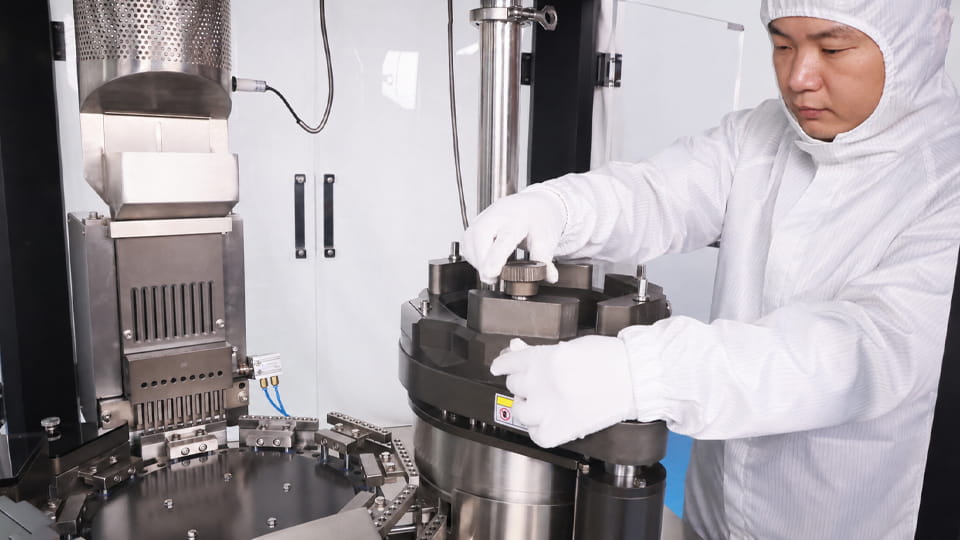
Un pratique programme de maintenance préventive dans l'industrie pharmaceutique commence par l'équipement, pas par une liste de contrôle générique téléchargée sur Internet.
Un flux de travail simple ressemble à ceci:
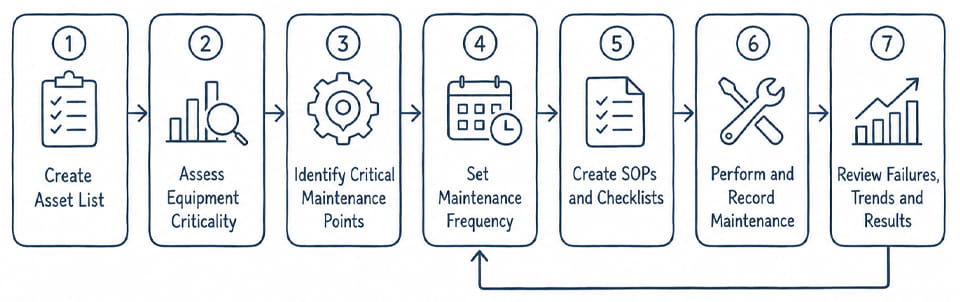
La partie importante est la dernière flèche. Un programme de maintenance pharmaceutique devrait s'améliorer à mesure que vous apprenez comment se comporte réellement l'équipement..
Le calendrier suivant est un modèle de départ, pas une fréquence réglementaire. Les intervalles réels doivent suivre les recommandations du fabricant de l’équipement et l’évaluation des risques de votre site., heures d'ouverture, matériels, historique d'entretien, et état validé. La FDA exige un programme de maintenance et l'UE GMP s'attend à ce que les équipements soient entretenus de manière appropriée et que les équipements de mesure et de contrôle pertinents soient vérifiés à des intervalles définis..
| Fréquence | Tâches recommandées de maintenance des équipements pharmaceutiques |
| Tous les jours / chaque quart de travail | Nettoyer les zones de contact avec les produits accessibles; enlever la poussière et les résidus; inspecter les fuites, bruit inhabituel, vibration, pièces détachées, gardes endommagés, alarmes anormales, problèmes d'air/vide, et usure évidente des outils; vérifier les dispositifs de sécurité avant l'utilisation |
| Hebdomadaire | Inspecter et nettoyer les capteurs, filtres, chaînes, ceintures, lignes de vide, raccords pneumatiques, mangeoires, rails de guidage, outillage, et points de dépoussiérage; lubrifier les points approuvés si nécessaire |
| Mensuel | Inspecter les roulements, cames, composants d'entraînement, moteurs, connexions électriques, scellés, boîtes de vitesses, alignement des outils, performances du vide, radiateurs, et pièces d'usure; consulter l'historique des alarmes et des réparations |
| Trimestriel | Effectuer une inspection mécanique et électrique plus approfondie; vérifier les paramètres et l'instrumentation critiques; inspecter les circuits de sécurité et les assemblages à forte usure; revoir les pannes récurrentes et la consommation de pièces détachées |
| Annuel | Effectuer une inspection complète ou une révision planifiée en fonction de l'état de la machine; remplacer les pièces à durée de vie limitée lorsque cela est justifié; vérifier l'état de l'étalonnage et les systèmes de sécurité; revoir le programme PM, historique d'entretien, documentation, et formation |
Pour le liste de contrôle quotidienne pour l'entretien des équipements pharmaceutiques, les opérateurs sont votre première ligne de défense. Demandez-leur de rechercher des changements: un nouveau bruit, plus de poudre autour d'un sceau, une réponse au vide plus lente, un moteur plus chaud, suivi de film instable, ou un taux de rejet accru. De petits changements apparaissent souvent avant une panne complète.
Le travail hebdomadaire doit se concentrer sur les composants qui accumulent de la poussière ou se desserrent progressivement, sabot, dessécher, ou porter. La maintenance mensuelle approfondit les systèmes d'entraînement, connexions électriques, alignement, scellés, outillage, et le déplacement d'assemblages.
Le travail trimestriel et annuel ne doit pas devenir un rituel où les techniciens se contentent de cocher des cases. Comparez l'état réel de la machine avec les inspections antérieures. Vérifier les défauts répétés. Regardez les composants remplacés. Demandez si la fréquence de maintenance est toujours correcte.
La lubrification mérite un soin particulier. Trop peu de lubrifiant augmente la friction; utiliser le mauvais lubrifiant ou l’appliquer là où une contamination est possible peut créer un autre problème. JinLu a un séparé Guide des lubrifiants pour équipements pharmaceutiques couvrant les considérations de sélection et de maintenance des lubrifiants pour les machines pharmaceutiques.
Les conseils génériques en matière d’entretien des équipements pharmaceutiques ne vont pas plus loin. La vraie valeur vient de savoir quoi inspecter sur chaque machine.
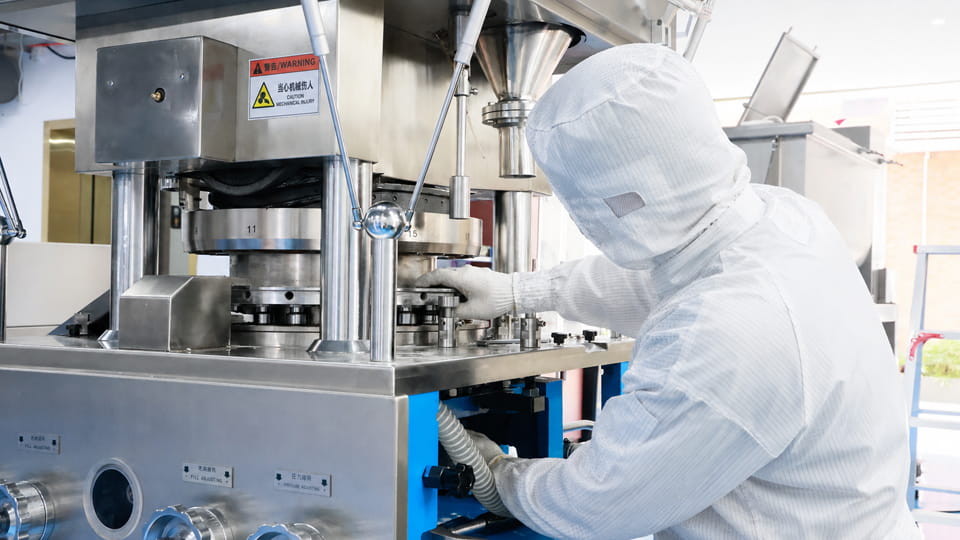
Entretien de la presse à comprimés. Focus sur les poinçons et les matrices, la tourelle, pistes de came supérieures et inférieures, rouleaux de compression, chargeur de force, système d'entraînement, points de lubrification, dépoussiérage, et protection de la sécurité. L'accumulation de poudre autour de la tourelle ou de l'outillage peut accélérer l'usure et contribuer aux défauts des comprimés., tandis qu'un outillage endommagé ou un mauvais alignement mérite une enquête immédiate. Les presses à comprimés JinLu utilisent des ensembles tels que des tourelles rotatives, gavages forcés, systèmes de vide, systèmes de compression, et protection contre les surcharges, intégrer ces points d'inspection logiques dans un programme de maintenance préventive d'une presse à comprimés. Voir celui de JinLu Gamme de presses à comprimés.
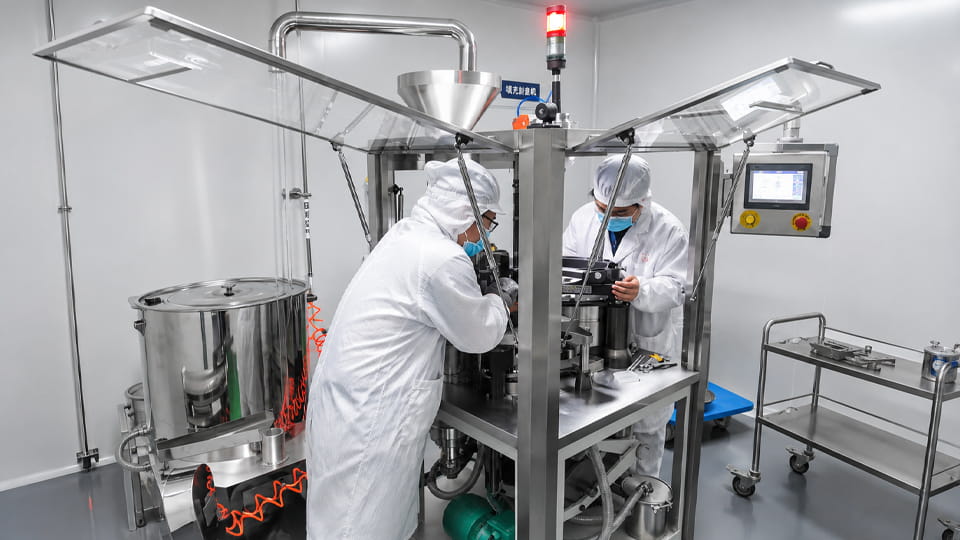
Entretien des machines de remplissage de gélules. Gardez le distributeur de capsules, système de séparation, cercle vide, composants de dosage, ensembles de bourrage ou de remplissage, poste de verrouillage, cames, et zones anti-poussière propres et correctement réglées. Surveillez particulièrement la poudre qui pénètre dans les espaces mécaniques, baisse des performances du vide, désalignement de la capsule, et bruit de came anormal. Les remplisseuses automatiques de capsules JinLu utilisent des ensembles de remplissage modulaires et, sur certains modèles, roulements sans huile destinés à réduire les besoins de maintenance. Pour un guide plus approfondi au niveau des composants, voir Comment entretenir une machine de remplissage automatique de capsules et le Gamme de machines de remplissage de gélules.
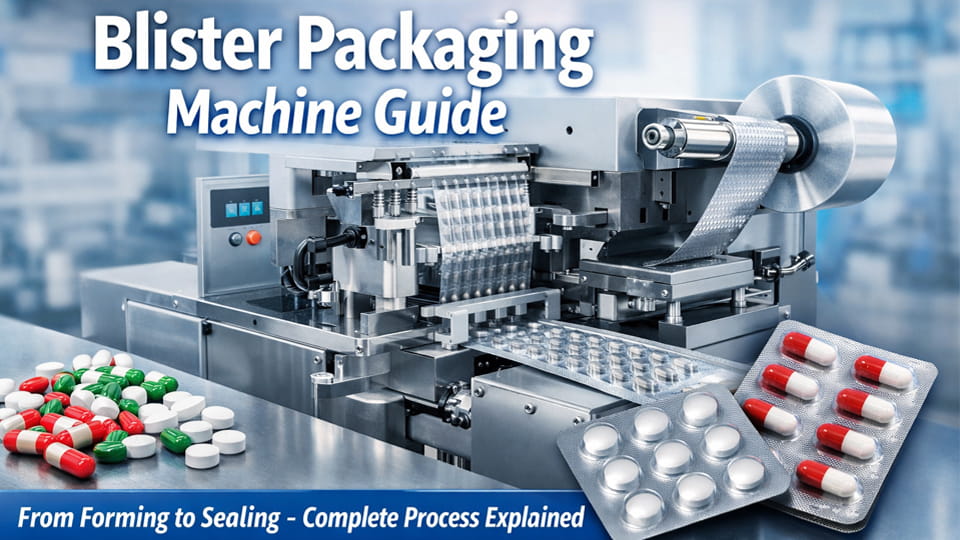
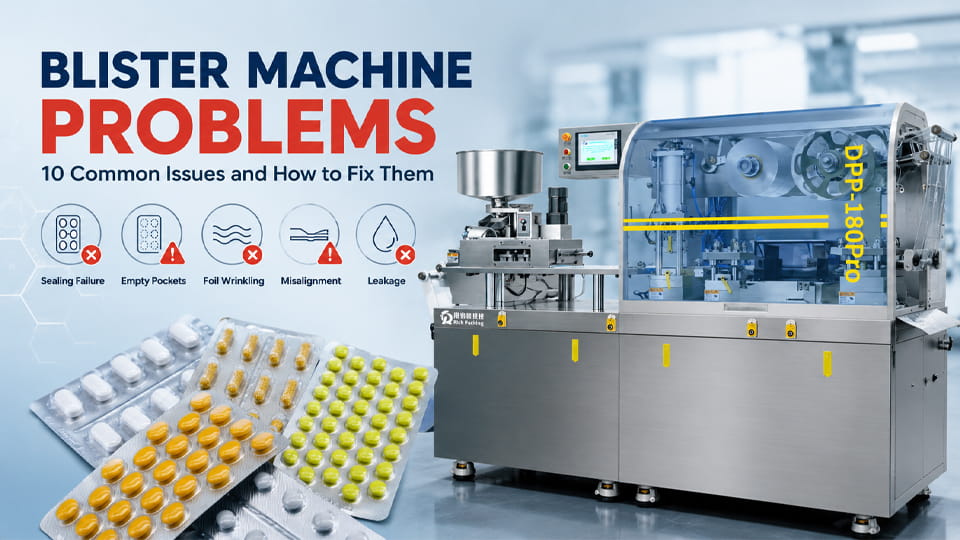
Entretien des machines à blisters. Inspecter les postes de formage et de scellage, radiateurs, plaques ou rouleaux de scellage, rouleaux de guidage, tension du film, mangeoires, outillage de coupe, refroidissement, capteurs, composants pneumatiques, et systèmes de vide. Poussière ou résidus sur les surfaces d'étanchéité, composants usés, mauvais alignement, et des conditions de traitement instables peuvent rapidement se manifester par des joints faibles ou des emballages mal formés.. Les blisters JinLu combinent le formage, alimentation, scellage de chaleur, traction, et fonctions de coupe, l'alignement entre les stations est donc particulièrement important. Voir le Gamme de machines d'emballage sous blister et celui de JinLu Guide des problèmes de la machine à blister.
Compteuses et encartonneuses. Sur compteurs de comprimés et de capsules, conserver les canaux de vibration, surfaces d'alimentation, capteurs photoélectriques ou de vision, zones de dépoussiérage, manipulation des bouteilles, systèmes de rejet, et composants pneumatiques propres et correctement positionnés. L'équipement de comptage de JinLu est conçu pour être intégré aux lignes d'embouteillage, tandis que son produit JL-16C utilise un module, conception fermée destinée à simplifier la maintenance et à limiter les problèmes de poussière. Sur un Encartonneuse, portez une attention particulière aux composants du ramassage sous vide, ventouses, magazines en carton, chaînes, guides, capteurs, systèmes de brochures, postes de formage, et détection produit/carton car plusieurs stations coordonnées doivent fonctionner en séquence.
Entretien, nettoyage, et l'étalonnage sont liés, mais ils ne sont pas interchangeables.
| Activité | Objectif principal | Exemple typique |
| Nettoyage | Enlever les résidus de produit, poussière, résidu de produit de nettoyage, et contamination | Nettoyage d'une station de dosage de capsules après un batch |
| Entretien | Préserver ou restaurer les performances mécaniques/électriques | Remplacement d'un roulement usé ou réglage d'un système d'entraînement |
| Étalonnage | Confirmer qu'un appareil de mesure ou de contrôle fonctionne avec une précision définie | Vérifier une température, pression, poids, ou mesure de force par rapport à une référence |
La FDA clarifie ces responsabilités. Section 211.67 nécessite des procédures écrites de nettoyage et d’entretien, y compris la responsabilité, horaires, méthodes et matériaux, démontage ou remontage si nécessaire, protection du matériel propre, contrôle de propreté avant utilisation, et des enregistrements. Section 211.68 ajoute un étalonnage de routine, inspection, ou vérification de l'automatique, mécanique, et équipements électroniques dans le cadre d'un programme écrit.
Une SOP orientée GMP peut donc utiliser cette liste de contrôle:
| Élément SOP | Que définir |
| Objectif et portée | Équipements et activités couverts |
| Responsabilité | Opérateur, entretien, ingénierie, Assurance qualité, ou des rôles d'entrepreneur |
| Fréquence | Temps, heure de fonctionnement, faire du vélo, lot, ou déclencheur basé sur des conditions |
| Sécurité et préparation | Isolement, verrouillage, état de nettoyage, EPI requis |
| Méthode d'entretien | Inspection, ajustement, remplacement, lubrification, outils, matériaux approuvés |
| Démontage/remontage | Séquence requise et vérifications avant redémarrage |
| Critères d'acceptation | Qu'est-ce qui constitue un état acceptable de la machine |
| Contrôles post-maintenance | Propreté, gardes, paramètres, essai, étalonnage ou requalification le cas échéant |
| Documentation | Date, technicien, travail effectué, pièces utilisées, résultats, écarts, approbations |
La position de l’UE est étroitement alignée. Chapitre BPF de l'UE 3 dit que les équipements de fabrication doivent être conçus, situé, et entretenu aux fins prévues; la réparation et l'entretien ne doivent pas créer de risque pour la qualité du produit; l'équipement doit être facile à nettoyer; les équipements de mesure et de contrôle doivent être calibrés et vérifiés à des intervalles définis avec des enregistrements; et l'équipement défectueux doit être retiré ou clairement identifié si possible.
Cela reste une question d’inspection active plutôt qu’une vieille exigence inscrite dans un livre de réglementation.. Lettres d'avertissement de la FDA émises en 2025 et 2026 ont continué à citer des entreprises pour des procédures de nettoyage et d'entretien inadéquates des équipements ou des pannes associées à 21 CFR 211.67.
L'une des erreurs de maintenance les plus courantes est tout faire fonctionner jusqu'à l'échec. D'autres incluent le fait de donner à chaque machine le même intervalle d'entretien, ignorer les petits changements de bruit ou de vibrations, utiliser le mauvais lubrifiant, sur-lubrification, reporter les contrôles des capteurs, tenir de mauvais registres, ne transportant aucune pièce de rechange critique, et redémarrage de la production sans une inspection post-maintenance appropriée.
La maintenance prédictive peut faire avancer le programme. Au lieu de demander, "Est-il temps de remplacer ce roulement?" tu demandes, "Le roulement se détériore-t-il réellement?" Les entrées utiles incluent les vibrations, température, pression, courant du moteur, historique des alarmes, tendances du vide, et données de processus existantes. Une étude de fabrication pharmaceutique utilisant une ligne de remplissage aseptique en activité a révélé que des changements à long terme dans les données de surveillance des processus pouvaient être liés à des défauts d'équipement et utilisés pour soutenir des interventions planifiées plus tôt..
L’avantage pratique n’est pas que chaque usine ait besoin de l’intelligence artificielle. C'est que les informations sur les tendances peuvent aider à faire passer la maintenance d'un calendrier fixe à des décisions fondées sur des données probantes..
Pour réduire les coûts de maintenance, commencer avec des fondamentaux ennuyeux: standardiser les pièces de rechange communes lorsque cela est possible, garder les pièces d'usure critiques disponibles, les opérateurs ferroviaires constatent une détérioration, suivre les bonnes pratiques de lubrification, documenter les échecs récurrents, et impliquer l'OEM lorsqu'un modèle n'est pas clair. JinLu, Par exemple, fournit de la documentation technique, entraînement, maintenance préventive et corrective, dépannage à distance, et sauvegarde des paramètres/logiciels dans le cadre de son offre de support.
Le coût de maintenance commence également à approvisionnement. FDA 21 CFR 211.63 exige spécifiquement que les équipements pharmaceutiques aient une conception appropriée, taille, et emplacement pour faciliter l'opération prévue, nettoyage, et maintenance. Lorsque l'on compare les fournisseurs de machines pharmaceutiques, rechercher des points de maintenance accessibles, démontage facile par contact produit, outillage modulaire, diagnostic de panne compréhensible, pièces d'usure facilement disponibles, bons manuels, assistance à distance, et des délais de livraison de pièces de rechange réalistes.
Posez une question simple au fournisseur avant d'acheter: « Montrez à notre équipe de maintenance comment nous accéderons, faire le ménage, inspecter, et remplacez les pièces qui s’usent le plus souvent. Une machine qui permet de gagner dix minutes à chaque changement ou qui facilite l'inspection peut avoir plus de valeur tout au long de sa durée de vie qu'une machine dont le prix d'achat est légèrement inférieur..
Dans la fabrication pharmaceutique, entretien = fiabilité + qualité + conformité. Bien Entretien des équipements pharmaceutiques il s’agit moins d’effectuer plus de maintenance que d’effectuer la bonne maintenance au bon moment. Choisir le bon équipement est la première étape; suivre un programme de maintenance structuré est tout aussi crucial. En effectuant des contrôles quotidiens, respecter les horaires, et documenter chaque action, tu évites les surprises, réduire les coûts, et assurer la sécurité des patients.
Et la cueillette de Jeinlu, nous concevons nos machines (presses à comprimés, charges de capsule, etc.) en gardant à l'esprit l'hygiène et la facilité d'entretien. Mais même la meilleure machine a besoin d’attention. Nous vous encourageons à appliquer les conseils de ce guide à votre propre équipement, et toujours reportez-vous au manuel de votre machine pour plus de détails.
Si vous avez des questions sur les programmes de maintenance ou avez besoin d'une assistance technique pour votre ligne, nos ingénieurs chez Jinlu sont prêts à vous aider. Un entretien adéquat assure le bon fonctionnement de votre ligne – et en fin de compte, maintient votre qualité élevée et vos coûts bas.
Prêt à améliorer la disponibilité de votre machine? Contactez l'équipe d'assistance de JinluPacking ou explorez notre gamme complète d'équipements d'emballage pharmaceutique pour voir comment nous concevons pour un nettoyage et un entretien faciles..
Il n’existe pas d’intervalle de maintenance unique qui fonctionne pour chaque machine pharmaceutique. La fréquence de maintenance doit être basée sur le fabricant de l'équipement’les recommandations, heures d'ouverture, charge de production, criticité des équipements, caractéristiques du produit, et historique d'entretien précédent. Les équipements à usage intensif ou critiques peuvent nécessiter des inspections quotidiennes ou hebdomadaires., tandis qu'une maintenance préventive plus approfondie peut être programmée mensuellement, trimestriel, ou annuellement.
La maintenance préventive est une maintenance planifiée effectuée avant la panne de l'équipement.. Cela comprend normalement une inspection, nettoyage, lubrification, ajustement, remplacement de pièces d'usure, contrôles de sécurité, et tests fonctionnels à intervalles définis. Un bon programme de maintenance préventive aide les fabricants pharmaceutiques à réduire les temps d'arrêt imprévus, maintenir des performances constantes de la machine, et identifier l'usure des composants avant qu'elle n'affecte la production ou la qualité du produit.
Une liste de contrôle de maintenance des équipements pharmaceutiques doit couvrir les pièces mécaniques, points de lubrification, systèmes d'entraînement, capteurs, composants électriques, systèmes pneumatiques et à vide, dispositifs de sécurité, outillage, scellés, filtres, et autres pièces d'usure. Il doit également enregistrer l'ID de l'équipement, date de contrôle, technicien, résultats, pièces remplacées, actions correctives, et la prochaine date de maintenance programmée.
Oui. Les BPF exigent que les équipements de fabrication pharmaceutique soient entretenus de manière à ce qu'un dysfonctionnement ou une contamination n'affecte pas la qualité du produit.. Sous FDA 21 CFR 211.67, les fabricants doivent établir et suivre des procédures écrites de nettoyage et d’entretien de l’équipement, y compris les responsabilités assignées, calendriers d'entretien, méthodes, inspections, et des enregistrements. L'intervalle exact de maintenance doit être défini en fonction de l'équipement et du processus plutôt que d'utiliser un programme universel..
La maintenance préventive est normalement effectuée selon une durée prédéfinie, heure de fonctionnement, faire du vélo, ou calendrier de production. La maintenance prédictive utilise les données sur l'état des équipements pour déterminer quand la maintenance est réellement nécessaire. Par exemple, vibration, température du moteur, pression du vide, courant électrique, ou les tendances d'alarme peuvent aider à identifier les problèmes en développement avant la panne. De nombreuses usines pharmaceutiques utilisent la maintenance préventive comme base et la maintenance prédictive pour les équipements critiques..
Les fabricants de produits pharmaceutiques doivent conserver des registres indiquant clairement quelle maintenance a été effectuée, quand il fut terminé, qui l'a exécuté, quels problèmes ont été trouvés, et quelles actions correctives ou remplacements de pièces étaient nécessaires. Les registres des principaux équipements peuvent également inclure des informations sur le nettoyage et l'utilisation., identification de l'équipement, références de lots, inspections, contrôles d'étalonnage, écarts, et activités de suivi. Les enregistrements doivent être traçables, chronologique, et facile à récupérer lors des inspections BPF.
Commencez par une liste complète des équipements et classez chaque machine en fonction de son impact sur la qualité du produit, sécurité, et production. Consultez ensuite le manuel de maintenance OEM, identifier les composants d’usure critiques, et définir des intervalles d'inspection ou de remplacement en fonction des heures de fonctionnement, intensité de production, historique des échecs, et le risque. Attribuer des responsabilités, créer des listes de contrôle spécifiques à l'équipement, documenter le travail terminé, et ajuster régulièrement le calendrier en utilisant les données de maintenance réelles.
Toutes les activités de maintenance ne nécessitent pas une requalification complète, mais les réparations ou modifications importantes doivent être évaluées pour leur impact sur les performances de l'équipement et l'état validé. Le remplacement d'une pièce d'usure de routine par un composant équivalent peut nécessiter uniquement des contrôles post-maintenance définis.. Modifications affectant les paramètres critiques, systèmes de contrôle, précision des mesures, logiciel, pièces en contact avec le produit, ou les paramètres de fonctionnement peuvent nécessiter un étalonnage, vérification, changer de contrôle, ou requalification partielle avant la reprise de la production.
L'approche la plus efficace consiste à combiner une maintenance préventive basée sur les risques avec une bonne inspection par l'opérateur et un accès rapide aux pièces de rechange critiques.. Les opérateurs doivent signaler un bruit anormal, vibration, température, fuite, perte de vide, défauts de capteur, ou augmenter les taux de rejet avant qu'ils ne se transforment en échecs majeurs. Les équipes de maintenance doivent également analyser les pannes répétées, conserver des historiques d'entretien précis, surveiller les composants critiques, et travailler avec le fabricant de l'équipement lorsque les problèmes récurrents ne peuvent être résolus en interne.
Les acheteurs doivent évaluer l'accessibilité de la maintenance avant de se concentrer uniquement sur la vitesse de la machine et le prix d'achat.. Recherchez un accès facile aux pièces d’usure, démontage rapide par contact produit, outillage modulaire, pièces de rechange standardisées, points de lubrification clairs, diagnostics API utiles, composants électriques et pneumatiques accessibles, et des procédures de nettoyage simples. Le fournisseur doit également fournir des manuels de maintenance, listes de pièces de rechange, entraînement, documentation technique, assistance à distance, et un service après-vente fiable.
Références:
1.Guide de bonnes pratiques: Maintenance 2nd Edition —— ISPE
2.Assurance qualité des produits pharmaceutiques: un recueil de lignes directrices et de documents connexes: volume 2: Bonnes pratiques de fabrication et inspection, 10l'éd —— OMS
3.21 CFR§ 211.182 Journal de nettoyage et d'utilisation de l'équipement —— eCFR
4.I Sujet Q 7 Bonnes pratiques de fabrication des ingrédients pharmaceutiques actifs —— Agence européenne des médicaments
5.Conseils sur les bonnes pratiques de fabrication et les bonnes pratiques de distribution: Questions et réponses —— Agence européenne des médicaments
6.Maintenance préventive ciblée des équipements pharmaceutiques —— Porte de recherche