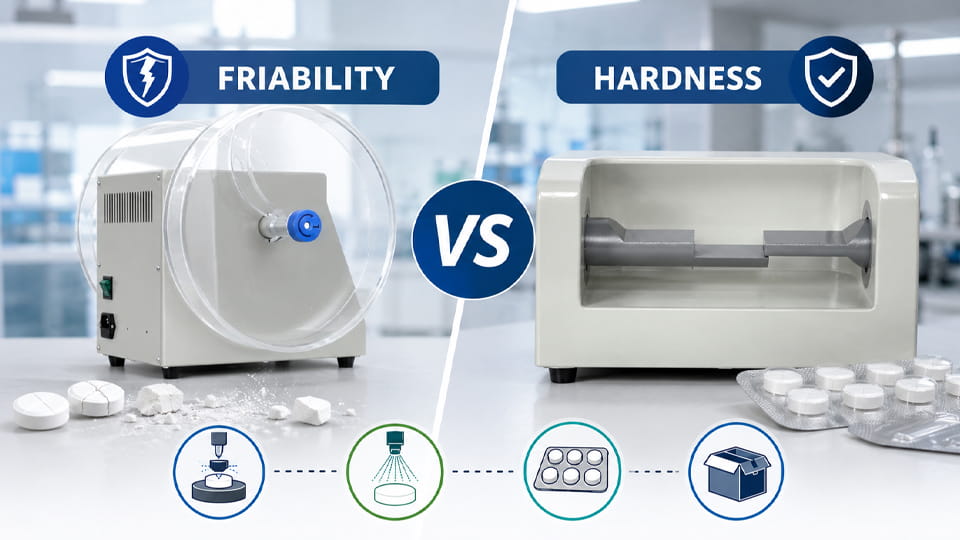
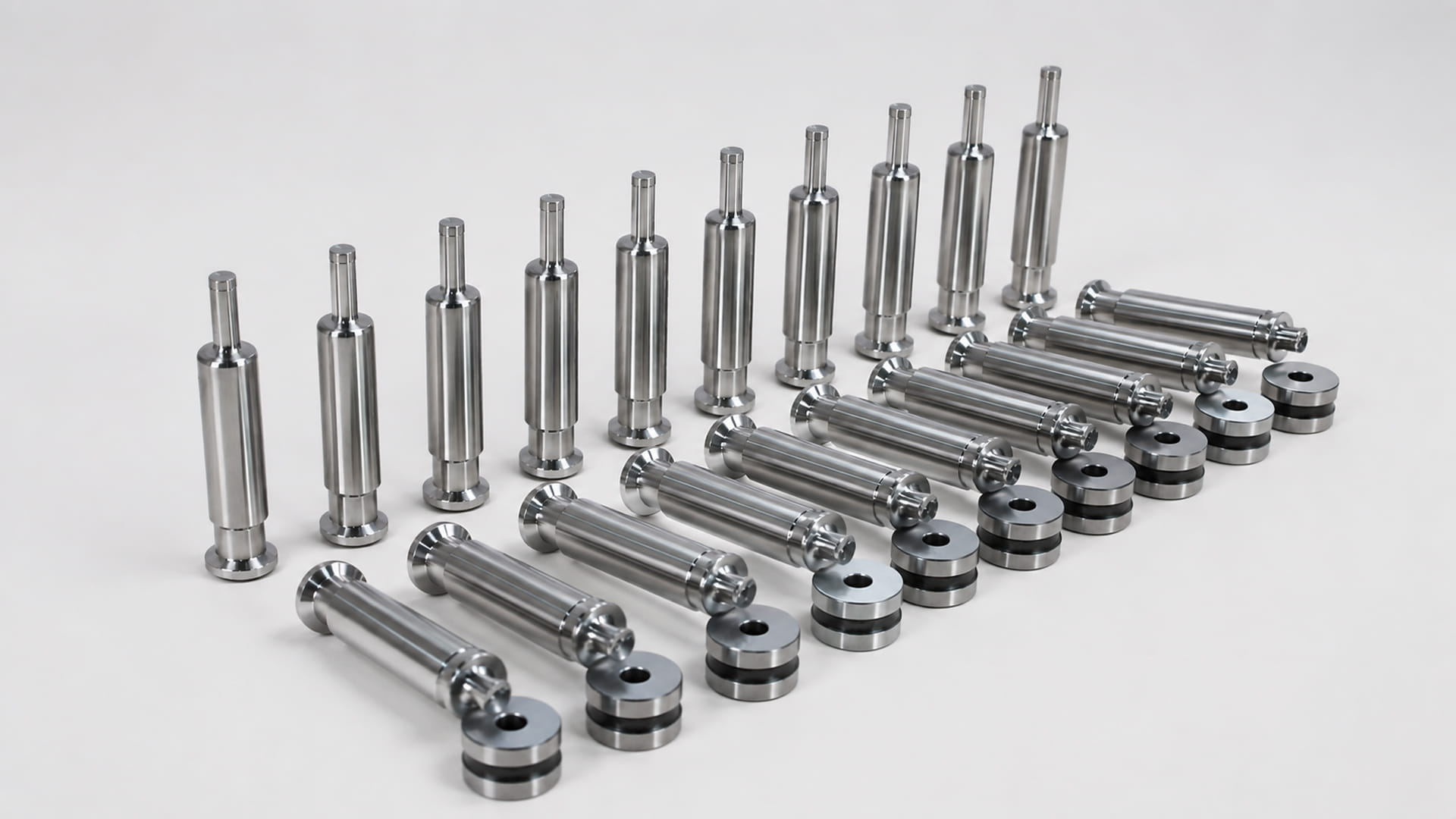
La poudre ou les granulés sont introduits dans une filière et comprimés par un poinçon supérieur et un poinçon inférieur dans un machine de compression de comprimés. Ensemble, ces poinçons et matrices forment la forme et le dosage final du comprimé. Chaque rotation de la tourelle de la presse comporte un poinçon au-dessus et un en dessous d'une matrice. Quand les coups s'enchaînent avec une haute pression, un comprimé est formé. En termes simples, L'outillage de presse à comprimés fait référence à l'ensemble de poinçons et de matrices qu'une poinçonneuse à comprimés utilise pour fabriquer des pilules..
Dans la fabrication de comprimés, poinçons et matrices – collectivement connu sous le nom outillage de presse à comprimés – déterminer chaque taille de la tablette, forme et qualité. Que vous appeliez cela une presse à tablette, machine à fabriquer des pilules, ou presse à comprimés rotative, l'outillage à l'intérieur effectue le travail de création de comprimés. Choisir la bonne norme d’outillage est crucial. Les normes les plus courantes sont Outillage B, Outillage D, et leurs variantes plus petites BB et DB. Chaque norme spécifie différents diamètres de corps de poinçon et de matrice, ce qui les rend adaptés à des tailles de tablettes et à des machines particulières. Ce guide détaille ce que B, D, Les outils BB et DB signifient, comment ils diffèrent, et comment choisir le meilleur outil pour votre machine de fabrication de comprimés.
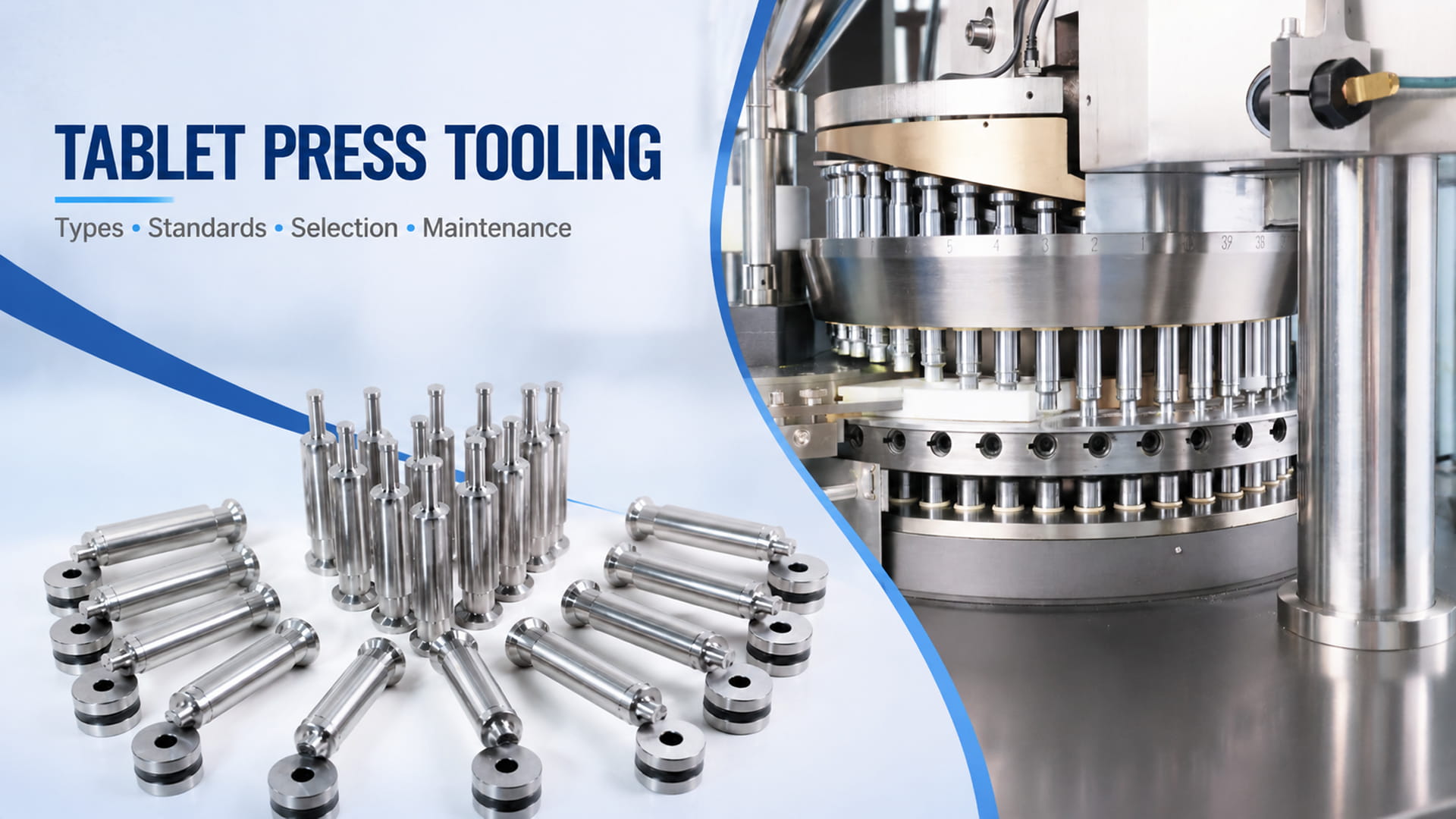
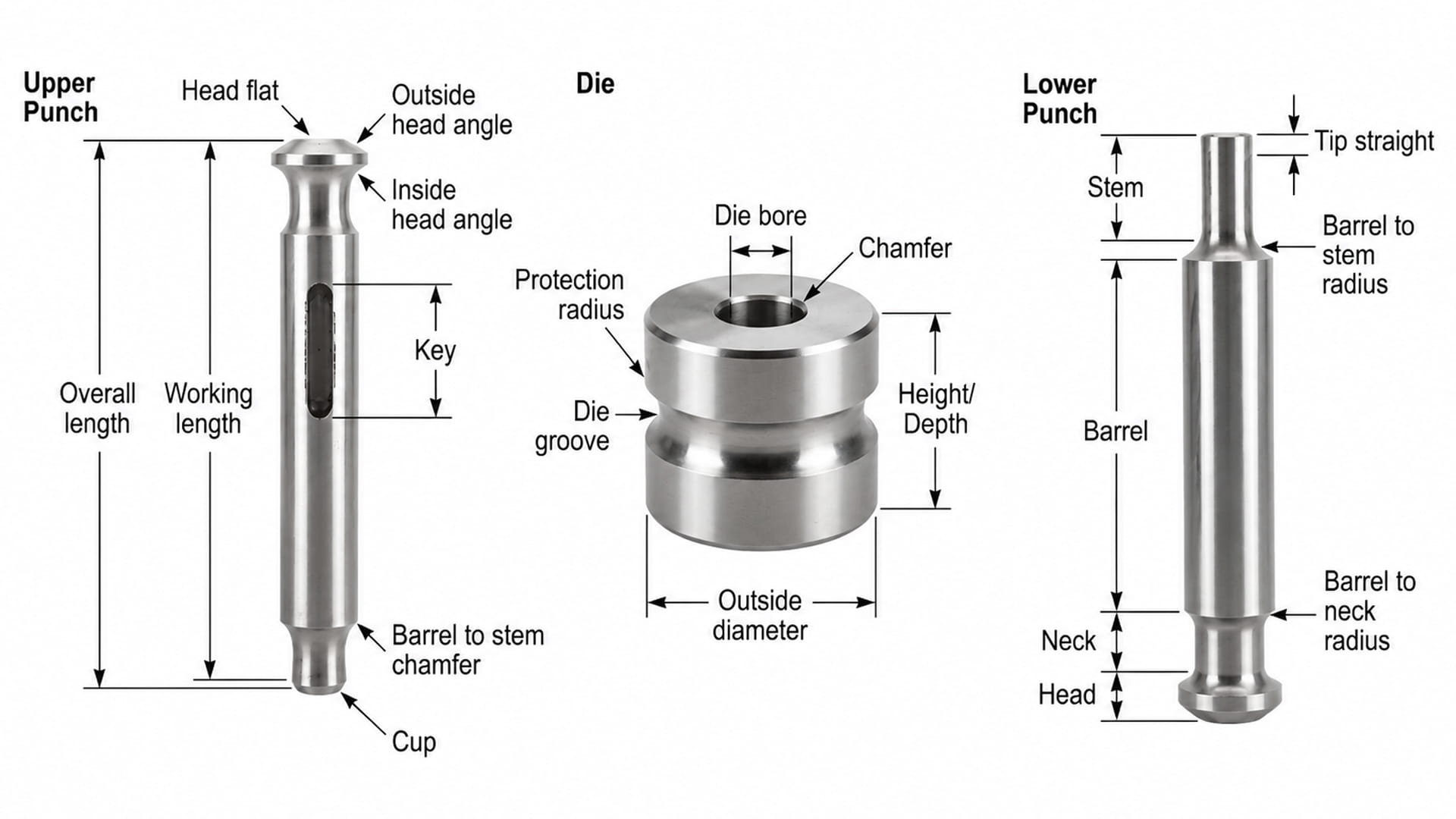
L'outillage sur une presse à comprimés fait référence au paires de poinçons et matrices qui façonnent et compriment la poudre en comprimés. La matrice est une cavité creuse (souvent rond) qui définit le diamètre et l’épaisseur du comprimé, pendant que je frappe (supérieur et inférieur) s'insérer dans la filière par le haut et par le bas pour comprimer la poudre. Essentiellement, l'outillage régit la géométrie de la tablette et doit être parfaitement adapté à la presse. Le bon outillage garantit un poids uniforme, épaisseur et impression sur la tablette. Outillage de haute qualité (fabriqué en aciers trempés comme le GCR-15) résiste également à l'usure et évite des problèmes comme le capsulage ou le laminage.
Il existe différentes normes internationales d'outillage. En Amérique du Nord, la norme AAP/TSM est courante, tandis que l'ISO 18084 (européen) la norme est utilisée à l’échelle mondiale. Dans le cadre de ces normes, l'outillage de presse à comprimés est classé par classes de taille: B, D, BB, et outils de base de données. Chaque classe a des diamètres fixes de canon de poinçon et de matrice (et les hauteurs), qui contrôlent à leur tour le diamètre maximum du comprimé. Par exemple, Emballage Jinlu note que tous les outils doivent correspondre aux dimensions de la tourelle et de la tablette – petit 6 à 8 mm comprimés à croquer utiliser l'outillage BB, Les tablettes standard de 12 à 13 mm utilisent l'outillage B., et les grandes tablettes de 25 mm et plus nécessitent un outillage D.
Différents produits de tablette nécessitent différentes configurations d'outils pour obtenir une qualité de tablette constante et des performances de production stables.. Dans une machine à compresser les comprimés, les types d'outils de presse à comprimés les plus courants incluent Outillage B, Outillage D, Outillage BB, et outils de base de données. Ces options d'outillage varient principalement en termes de taille de poinçon, dimensions de la matrice, capacité de compression, et applications tablettes adaptées. Comprendre les différences entre ces types d'outillage aide les fabricants de produits pharmaceutiques, ingénieurs de production, et les utilisateurs de machines sélectionnent la bonne configuration pour leur tablette.
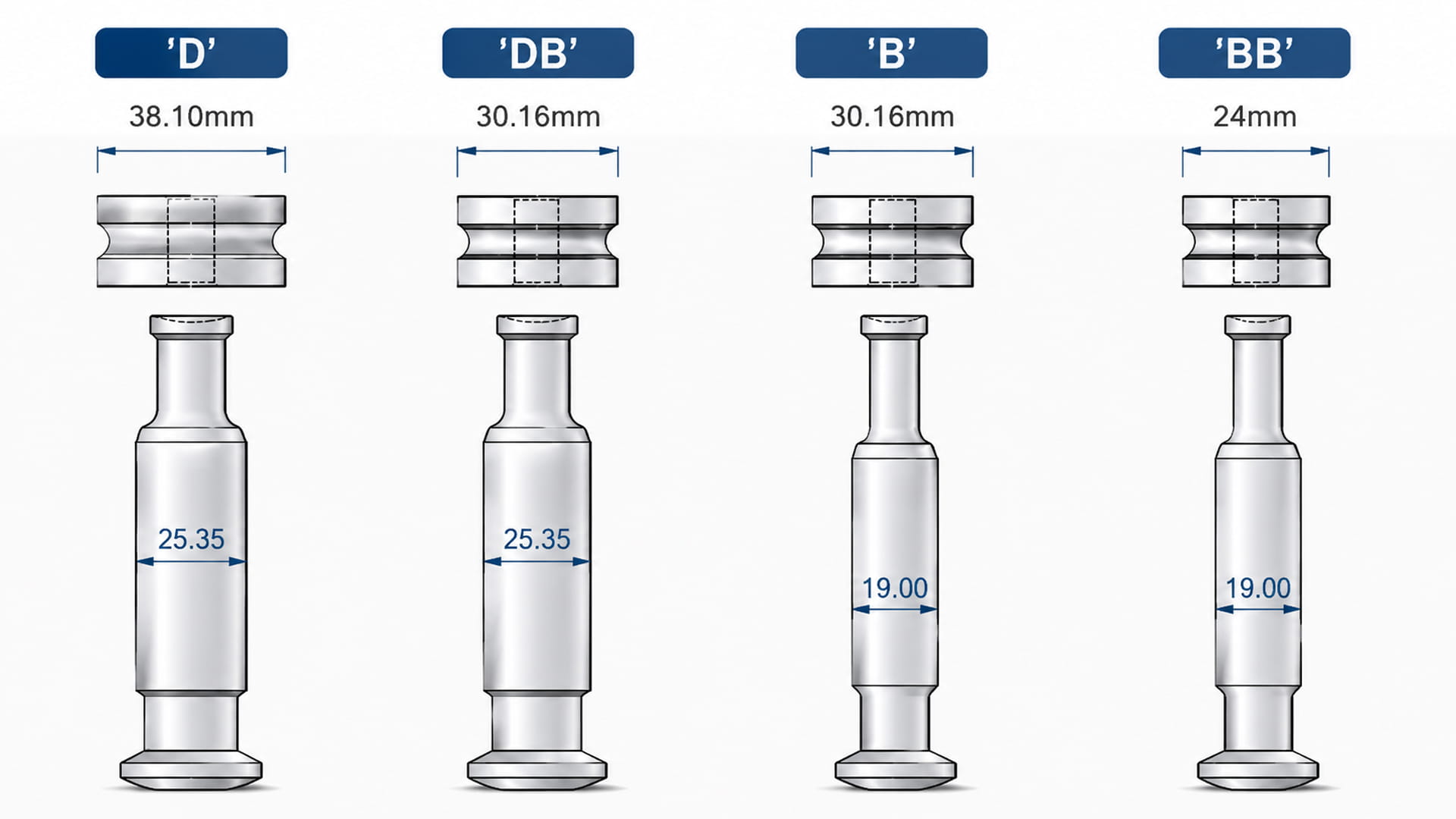
Dans l'industrie pharmaceutique, Outillage de type B est l'une des normes les plus courantes. L'outillage B utilise un 19.0 canon de poinçon mm et un 30.16 mm diamètre extérieur de la matrice (DE). Ses poinçons ont une saillie distinctive bride ou lèvre sur la tête, qui se verrouille dans la tourelle. Autrement dit, coups de poing B avoir un bord surélevé qu'une pince de verrouillage s'enclenche.
L'outillage B est très polyvalent. Il a un pointe de poinçon concave (en forme de coupe) et un dé rond, et il est compatible avec presque toutes les presses à tablettes modernes (Par exemple, beaucoup de médium- aux presses rotatives à grande vitesse de Fette, Il y a, Manesty, etc.. sont de type B). Cet outillage est utilisé pour les comprimés solides standards dans une large gamme de tailles (généralement environ 4 à 16 mm de diamètre, voire jusqu'à ~19 mm pour les formes). Les applications courantes incluent les comprimés ronds et ovales conventionnels comme les vitamines, suppléments, et comprimés pharmaceutiques où une taille et une dose modérées sont nécessaires.
L'outillage B est populaire car il est largement disponible et rentable pour la production en grand volume.. UN 30.16 La matrice mm peut produire des comprimés jusqu'à ~ 16–18 mm (cercle) ou un peu plus en forme. Par exemple, la plupart des lignes de fabrication de pilules de petite et moyenne taille utiliseront l'outillage B pour plus d'efficacité et de flexibilité.
Outillage de type D est conçu pour comprimés plus gros ou plus épais. Le canon du poinçon de l'outillage D est plus grand (25.35 mm diamètre) et le die OD est 38.10 mm. Contrairement à l'outillage B, un poinçon de type D a pas de jante ni de bride – c'est juste une tête à disque plat. Les poinçons se verrouillent dans la tourelle via un clé et dispositif de retenue système au lieu d'une bride de serrage.
L’outillage D est parfois appelé « outillage européen » (bien que ce soit également courant aux États-Unis). Il était historiquement standard sur les anciennes presses à comprimés robustes et est toujours utilisé pour les très gros comprimés ou la force de compression très élevée.. Par exemple, L'outillage D est populaire pour comprimés effervescents, comprimés vétérinaires, et comprimés pharmaceutiques à haute dose qui nécessitent un diamètre et une épaisseur plus grands. Les poinçons plats de l'outillage D conviennent aux tablettes qui peuvent avoir des conceptions complexes ou nécessiter un gaufrage fiable. (la face plate facilite le marquage).
En termes pratiques, une configuration d'outillage D (25.35 mm poinçon, 38.10 mm mourir) fabriquera des comprimés à partir d'environ 5 mm jusqu'à 25 mm diamètre. Il offre une zone de compression plus élevée et permet d'obtenir des comprimés très durs. Si votre exploitation utilise un grand presse à comprimés rotative pour les gros comprimés de vitamines ou les produits en couches, il utilise probablement l'outillage D. Souviens-toi: Les poinçons D n'ont pas de rebord, donc visuellement, ils ressemblent à un disque plat.
Outillage de type BB est essentiellement un version réduite de l'outillage B pour les très petites tablettes. L'outillage BB a également un 19.0 canon de poinçon mm (comme B) mais utilise un matrice plus petite de 24.00 mm DE. La principale différence est que l'outillage BB permet petits comprimés ou pastilles – pensez aux cartouches inférieures à 13 mm.
L'outillage BB est privilégié lorsque vous avez besoin d'un nombre élevé de stations ou de poinçons multi-pointes. Avec 24 mm meurt, vous pouvez installer plusieurs stations sur un 24- ou presse à 32 stations pour augmenter la production de petits comprimés. Sa petite taille ne compromet pas la précision: Les poinçons BB produisent des mini-comprimés très uniformes (Par exemple, pastilles contre la toux, menthes pour l'haleine, petits produits à croquer) où la précision du dosage est essentielle.
En résumé, Outillage BB = pilules de petit diamètre. C'est essentiellement pour presses compactes ou des modes à haut rendement où chaque tablette est petite. Le système d'outillage BB nécessite les mêmes normes de tourelle que l'outillage B. (même tête de poinçon et même rétention), donc BB frappe faire avoir la lèvre/bride comme les poinçons B. L'avantage est de pouvoir faire fonctionner une vieille presse à 16 stations dans une configuration à 24 stations en utilisant des outils plus petits..
Outillage de type DB est un système hybride combinant les fonctionnalités de D et B. Dans une configuration de base de données, le Le diamètre du canon du poinçon est 25.35 mm (pareil que D), mais le la DO est 30.16 mm (pareil que B). Autrement dit, il utilise une tête de poinçon de grand diamètre (comme D) avec un alésage de matrice plus petit (comme B).
Cette combinaison vous permet de produire des, comprimés à haute dose (plus grand comme D) tout en installant plus de stations que l'outillage full D (puisque les matrices sont plus petites). L'outillage DB apparaît souvent sur les presses conçues pour une production flexible: vous obtenez la capacité de compactage élevée d'un poinçon D avec une matrice de taille B. Par exemple, un ensemble de poinçons/matrices DB peut être utilisé pour les comprimés multivitaminés denses ou les grosses pilules vétérinaires pour lesquelles vous souhaitez une grande forme mais souhaitez également réutiliser une tourelle B en échangeant les poinçons.
Le poinçon d'un outil DB se verrouille comme un poinçon B (il a une bride sur la tête) mais sa taille est plus proche de D. C'est un choix spécialisé pour comprimés de taille moyenne à grande efficacité à l'esprit. Essentiellement, DB signifie « plus gros que B mais pas aussi gros que le D complet » – un compromis offrant un rendement élevé de comprimés de taille moyenne à grande.. Les tailles de tablettes typiques pour les outils DB sont d'environ 5 à 19 mm de diamètre..
Vous trouverez ci-dessous une comparaison rapide des dimensions typiques de chaque type d'outillage et des plages de tailles de tablettes., basé sur les normes de l'industrie:
| Type d'outillage | Ø du canon de poinçon | Ø de la matrice (DE) | Diamètre de la tablette | Utilisation courante |
| B | 19.00 mm | 30.16 mm | ~4 à 16 mm | Tablettes standards (pharmaceutique) |
| D | 25.35 mm | 38.10 mm | ~10-25 mm | Gros comprimés, effervescents |
| BB | 19.00 mm | 24.00 mm | ~4-13 mm | Petits comprimés, lignes à grande vitesse |
| Base de données | 25.35 mm | 30.16 mm | ~5-19 mm | Comprimés denses de petite taille |
Par exemple, JinluPacking note que l'outillage B fabrique généralement des comprimés de 3 à 16 mm, tandis que l'outillage D couvre 10 à 25 mm. L'outillage BB atteint un maximum d'environ 13 mm et le DB d'environ 19 mm.. La taille exacte dépend également de la forme du comprimé (rond, ovale, etc.).
Au-delà du A, B, Dénomination D, l'outillage doit respecter une norme pour s'adapter aux presses à comprimés. Il existe deux grandes familles de normes d'outillage:
Surtout, UE (ISO 18084) et les poinçons TSM ne sont pas interchangeables. Même si les diamètres extérieurs de la matrice sont les mêmes (par exemple. 38.10 mm pour D, 30.16 mm pour B), le les détails du poinçon diffèrent. Par exemple, Les têtes de poinçon TSM ont un angle légèrement différent sur les surfaces d'appui que celles ISO, et la fente pour clé est positionnée différemment. En pratique, un poinçon ISO/D ne s'adapte généralement pas correctement dans une presse de type TSM/US, et vice versa. Vérifiez toujours la documentation de votre presse pour voir si elle attend TSM ou ISO/UE outillage avant de commander des poinçons et des matrices.
En résumé: TSM = norme américaine/japonaise, UE = ISO 18084 métrique. Les deux garantissent la précision de la forme du comprimé, mais leurs têtes d'outillage sont incompatibles.
Lors de la sélection de l'outillage pour votre presse à pilules, considérer taille de la tablette, volume de production, et dureté du comprimé:
En pratique, de nombreux fabricants (y compris l'emballage JinLu) fournir des conseils. Par exemple, JinLu Presse à comprimés ZP-17D est évalué pour 100 kN en utilisant des poinçons GCR-15 standard, ils spécifient donc l'outillage par taille de tablette. Ils notent également que les deux outils taille et matériel matière: dur, les tablettes abrasives utilisent de l'acier plus dur ou des revêtements spéciaux (Étain, CrN) pour prolonger la durée de vie des outils.
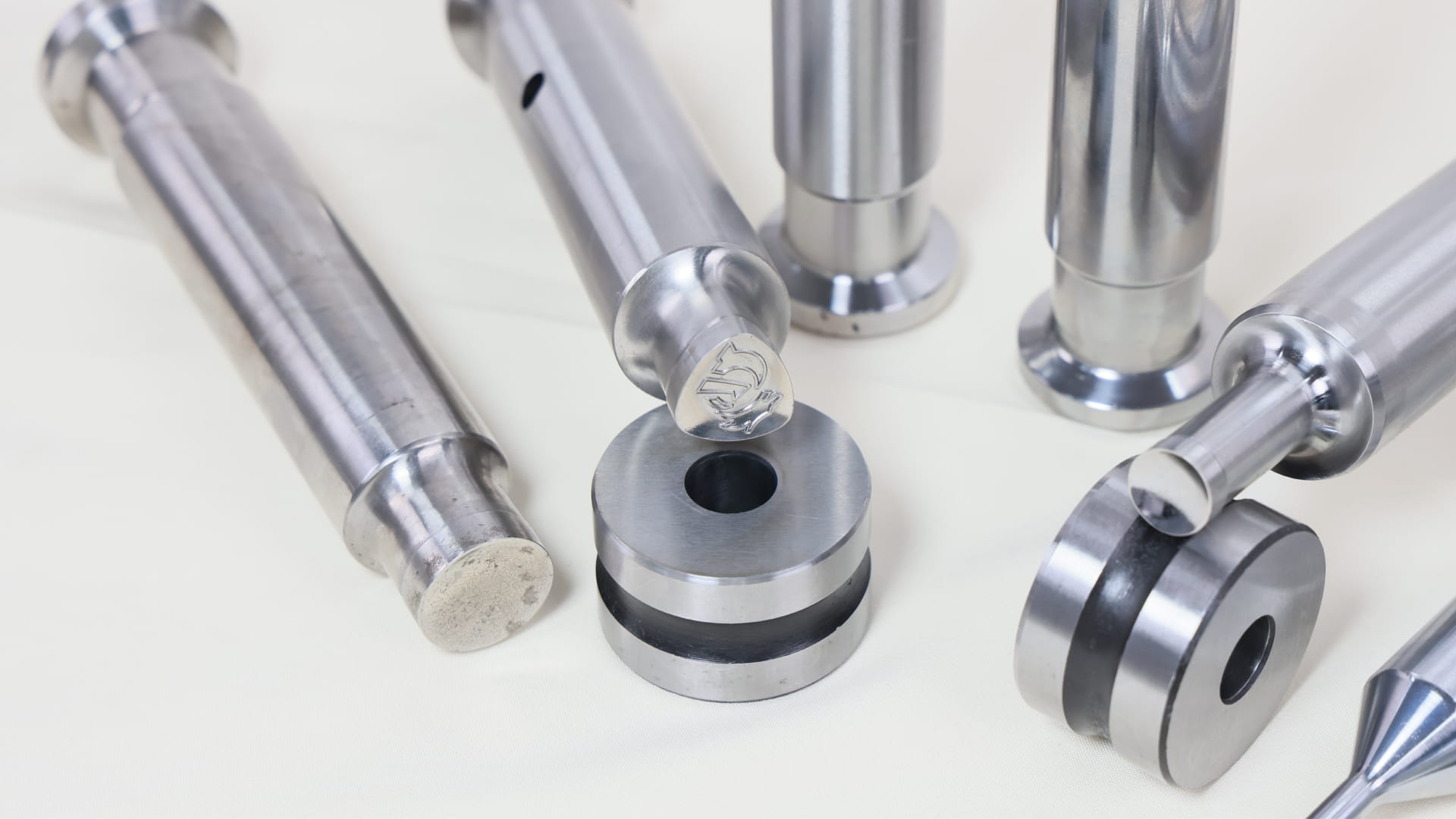
Un bon entretien prolonge considérablement la durée de vie de l'outil et qualité de la tablette. Les experts du secteur notent qu'environ 85% des problèmes de poinçonnage et de découpe proviennent d'un mauvais entretien et d'une mauvaise manipulation. Voici les meilleures pratiques pour garder votre outillage en parfait état:
En suivant ces étapes (faire le ménage, inspecter, réparer/polisser, mesure, lubrifier, magasin – souvent appelé le « processus de maintenance des outils en 7 étapes ») minimisera les temps d'arrêt. Comme l'a dit un ingénieur, « Un propre, un punch bien entretenu est beaucoup moins susceptible de produire des comprimés collants ou cassés. En pratique, le nettoyage est l'étape la plus critique: il élimine les vieux résidus de produits qui peuvent provoquer le collage, cueillette, ou contamination croisée.
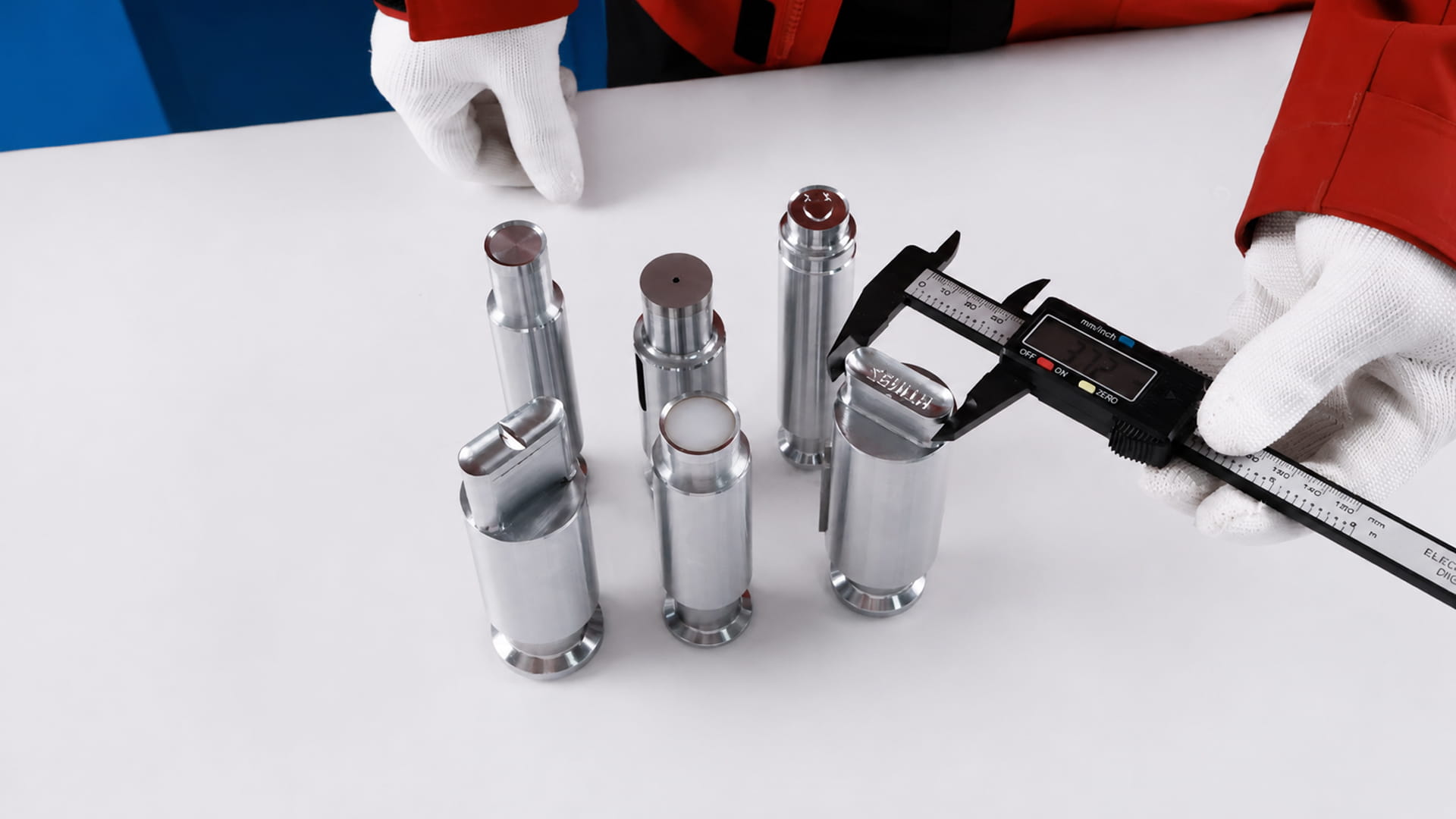
Hormis les dimensions, outillage matière et finition sont critiques. La plupart des poinçons pour presse à comprimés sont en acier au carbone de haute qualité (par exemple. GCR-15) avec dureté ~60 HRC, qui résiste à des forces de compression élevées. Pour les formulations humides ou acides (comme les herbes ou les effervescents), poinçons en acier inoxydable ou revêtus (Étain, CrN, Contenu téléchargeable) peut résister à la corrosion et au collage.
Assurez-vous toujours que l’outillage est fabriqué selon les spécifications. De nombreux fournisseurs suivent le manuel de spécifications des comprimés (TSM) ou normes ISO pour les tolérances. JinLu, Par exemple, Remarques : l'outillage BB est fabriqué selon les spécifications TSM/EU avec des documents d'inspection fournis sur demande. Un outillage de haute qualité permet d'éviter les défauts et de prolonger la durée de vie du poinçon.
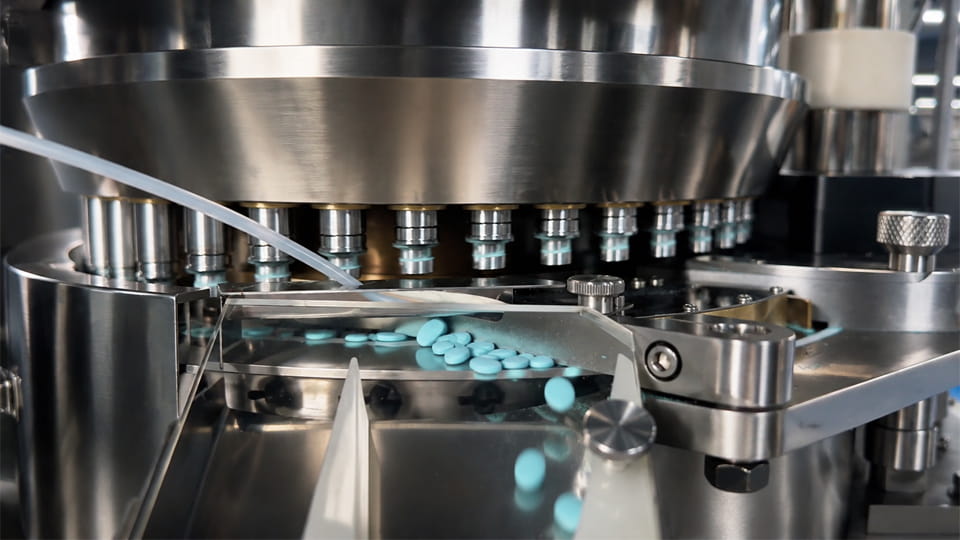
Chiffre: les presses et les outils à grande vitesse livrent rapidement de nombreux comprimés
Honorable fabricants de presses à comprimés et fournisseurs d'outillage peut vous aider à choisir la bonne norme. Par exemple, JinLu Packing aide souvent les clients à choisir entre B, D, Outillage BB ou DB en fonction du produit. Nous proposons des tests de formules gratuits et pouvons recommander des outils spécialisés (gravé, notation, etc.) pour votre presse. Lors de l’intégration d’une ligne de production complète, choisissez un fournisseur qui fournit à la fois des presses et des outillages, la compatibilité est donc garantie.
En outre, disposer d'un système d'outillage à changement rapide et d'un plan de maintenance minimise les temps d'arrêt. Recherchez des fonctionnalités telles que la suppression rapide des matrices, tourelle à dégagement rapide, et retrait du poinçon sans outil sur les nouvelles presses. Par exemple, L'accent mis par JinLu sur la conception GMP signifie que leurs machines sont dotées de tourelles à dégagement rapide et de pièces de contact faciles à nettoyer., aidant à garantir que l'outillage reste en parfait état.
Un outillage approprié pour la presse à comprimés est plus qu'un simple consommable : c'est un choix stratégique qui a un impact direct sur la qualité de votre produit et sur l'efficacité de votre fabrication.. En comprenant les différences entre B, D, BB, et outils de base de données et suivre les meilleures pratiques en matière de sélection et de maintenance, les fabricants de produits pharmaceutiques peuvent éviter des défauts et des temps d'arrêt coûteux. N'oubliez pas de correspondre à votre norme d'outillage (TSM contre ISO), choisissez la bonne taille pour votre tablette, et suivez une stricte routine de nettoyage/inspection. Le gain est des comprimés uniformes, moins de rejets, et une ligne de production plus fiable.
Si vous vous préparez à acheter une nouvelle machine de compression de tablettes ou à mettre à niveau vos outils, envisagez de contacter des OEM expérimentés. Jinlu Packing vous conseille sur le meilleur système d'outillage pour vos besoins, et peut fournir des poinçons et des matrices personnalisés pour garder vos tablettes conformes aux spécifications. Notre équipe est prête à vous aider à sélectionner l'ensemble d'outils parfait pour que vous tiriez le meilleur parti de votre presse à comprimés.. Contactez-nous pour des conseils d'experts ou un devis sur des outils et équipements de presse à comprimés de qualité.
L'outillage de presse à comprimés fait référence à l'ensemble de poinçons et de matrices utilisés dans une machine de compression de comprimés pour transformer de la poudre ou des granulés en comprimés.. L'outillage contrôle la taille de la tablette, forme, épaisseur, et l'apparence générale. Un ensemble d'outillage complet comprend généralement un poinçon supérieur, poinçon inférieur, et mourir, qui travaillent ensemble pendant le processus de compression.
Les types d'outillage de presse à comprimés les plus courants incluent l'outillage B., Outillage D, Outillage BB, et outils de base de données. Ces types d'outillage diffèrent principalement par la taille du poinçon, dimensions de la matrice, capacité de compression, et applications tablettes adaptées. Le bon choix dépend de la taille de la tablette, caractéristiques de la formulation, exigences de production, et les spécifications de votre machine de compression de comprimés.
La principale différence entre les outils B et les outils D réside dans leur taille et leur capacité de compression.. L'outillage B a une configuration de poinçonnage et de matrice plus petite et est couramment utilisé pour les comprimés de taille standard.. L'outillage D présente une conception plus grande, permettant une force de compression plus élevée et une production de comprimés plus importante. L'outillage D est souvent préféré pour les tablettes plus grandes, tandis que l'outillage B offre une plus grande flexibilité pour les comprimés pharmaceutiques courants.
L'outillage BB est une configuration d'outillage plus petite conçue pour produire des comprimés plus petits. Il est couramment utilisé pour les produits nécessitant des comprimés de taille compacte., comme certains comprimés pharmaceutiques, suppléments, et produits spécialisés. L'outillage BB peut être une option appropriée lorsque les fabricants ont besoin de tablettes plus petites avec des performances de production efficaces..
L'outillage DB est une configuration d'outillage qui combine les caractéristiques des systèmes d'outillage D et B.. Il utilise une configuration de matrice plus grande avec une conception de poinçon plus petite, offrant une flexibilité pour des tailles de comprimés spécifiques et des exigences de production. Les outils de base de données sont souvent sélectionnés lorsque les fabricants ont besoin d'un équilibre entre la capacité de taille de la tablette et l'efficacité des outils..
Pas toujours. Une presse à comprimés est conçue pour des spécifications d'outillage spécifiques, et la compatibilité dépend de la conception de la tourelle, dimensions du poinçon, taille de la matrice, et norme d'outillage. Par exemple, Les outils B et D ne peuvent pas simplement se remplacer sans confirmer la compatibilité de la machine.. Vérifiez toujours le modèle de presse à comprimés et les spécifications de l'outillage avant de changer d'outillage..
Les principales normes d'outillage de presse à comprimés incluent TSM (Manuel de spécifications de la tablette), UE (Norme européenne d'outillage), et normes d'outillage ISO. TSM est largement utilisé en Amérique du Nord, tandis que les normes UE et ISO sont couramment utilisées sur de nombreux marchés internationaux. Même si certaines dimensions peuvent sembler similaires, Les outils TSM et EU ne sont pas automatiquement interchangeables.
Le choix du bon outil de presse à comprimés dépend de plusieurs facteurs, y compris la taille de la tablette, forme, formulation, force de compression, volume de production, et modèle de presse à comprimés. Les fabricants devraient également tenir compte des normes d'outillage, sélection des matériaux, et durée de vie prévue de l'outil pour garantir une qualité stable des comprimés et une production efficace.
Les problèmes courants d'outillage de presse à comprimés incluent le collage, cueillette, bouchage des comprimés, poids inégal des comprimés, usure du poinçon, et mourir dégâts. Ces problèmes peuvent résulter d'un outillage usé, entretien incorrect, matériaux d'outillage inappropriés, ou paramètres de compression de la tablette incorrects. Une inspection régulière et une sélection correcte des outils peuvent contribuer à réduire les problèmes de production.
La durée de vie des outils de presse à comprimés dépend de facteurs tels que la formulation des comprimés., vitesse de production, force de compression, matériel d'outillage, revêtement, et les pratiques d'entretien. Avec un bon nettoyage, inspection, lubrification, et stockage, des poinçons et des matrices de haute qualité peuvent produire des millions de comprimés avant qu'un remplacement ne soit nécessaire.
Références:
1.Outils de presse pour tablettes — Poinçons et matrices —— ISO 18084:2011
2.Chapitre 32 – Développement, Optimisation, et mise à l'échelle des paramètres de processus: Compression de comprimés —— ScienceDirect
3.Les avantages de la standardisation des outils pour tablettes —— PharmaTech
4.Améliorer la maintenance et le stockage des outils de presse à comprimés —— PharmaTech
5.Influence de la géométrie du poinçon (diamètre tête plate) et type d'outillage ('B’ ou 'D') sur les propriétés physico-mécaniques des comprimés de formulation —— Bibliothèque nationale de médecine
6.Une mise à jour sur les progrès de la technologie des outils pour tablettes —— ScienceDirect