¿Qué es una controladora de peso y cómo funciona?? Guía completa para líneas de envasado farmacéutico
¿Qué es una controladora de peso y cómo funciona?? Guía completa para líneas de envasado farmacéutico
junio 26, 2026
No hay comentarios
A controladora de peso Es un dispositivo de pesaje en línea que se utiliza para verificar los pesos de los productos en una línea de producción.. Garantiza que cada paquete cumpla con su peso objetivo, rechazando automáticamente bajo- o unidades con sobrepeso. Esto es fundamental en operaciones farmacéuticas y de envasado para la precisión de la dosificación., Cumplimiento de GMP, y reducción de residuos. Las controladoras de peso constan de un transportador., una celda de carga de alta precisión, un controlador/HMI, y un mecanismo de rechazo. en farmaceutica líneas de embotellado, Las controladoras de peso generalmente se colocan inmediatamente después del contador de cápsulas o llenador de líquido y antes de la máquina taponadora., permitiendo que cada botella llena sea verificada antes de que ingrese a las etapas restantes de empaque. Los beneficios clave incluyen 100% inspección de peso, obsequios reducidos, y control de calidad automatizado. En esta guía, te explicamos qué es una controladora de peso, como funciona, sus componentes, tipos, beneficios, y cómo elegir uno para tu línea.
¿Qué es una controladora de peso??
A controladora de peso(o máquina controladora de peso) Es un sistema de pesaje automatizado colocado en una línea de producción para pesar cada artículo y garantizar que coincida con el peso objetivo.. En la práctica, 100% de los productos se pesan “sobre la marcha” al pasar por la báscula. Cualquier paquete con sobrepeso o bajo peso se marca o se retira, garantizar que solo los artículos correctamente llenados continúen en la línea. Estos dispositivos son comunes en el embalaje y la fabricación.: Por ejemplo, transportadores de control de peso Son ampliamente utilizados en el recuento de cápsulas., embotellado, Líneas de embalaje de blister y estuchado.. A diferencia de una báscula manual o de mesa, una controladora de peso opera en línea: Los productos permanecen en el transportador y se pesan dinámicamente en movimiento.. Esto permite una inspección muy rápida. (a menudo cientos de unidades por minuto) sin ralentizar la línea.
En resumen, una controladora de peso es esencialmente una cinta transportadora con electrónica de pesaje incorporada y clasificación automática. proporciona control de peso en tiempo real y elimina automáticamente cualquier producto demasiado pesado o demasiado ligero, Asegurar que solo los paquetes correctamente llenos continúen en la línea.. Este mecanismo es vital para proteger la consistencia y el cumplimiento del producto en industrias como la farmacéutica..
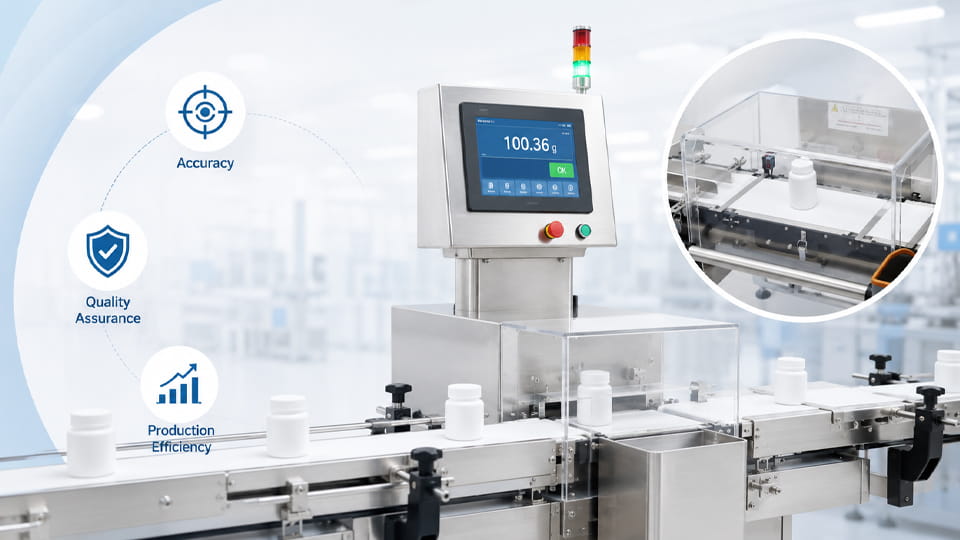
Máquina controladora de peso de alta precisión
¿Por qué son importantes las controladoras de peso en la fabricación farmacéutica??
Las básculas de control están crítico para la industria farmacéutica porque detectan errores de llenado y garantizan la precisión de la dosificación, proteger tanto la seguridad del paciente como el cumplimiento normativo.
Dosificación precisa y seguridad: En la fabricación de medicamentos, Incluso una pequeña desviación de peso puede significar que se ha omitido una dosis o que se ha extraído una dosis del ingrediente activo.. Las controladoras de peso garantizan que cada tableta, botella de cápsula, El vial o paquete contiene la cantidad correcta.. En la práctica, esto significa asegurar cada La unidad está dentro de estrictas tolerancias de peso.. Por ejemplo, si el frasco de una tableta no está lleno, la controladora de peso lo rechaza antes de enviarlo. Esto evita costosos incidentes de infradosis o sobredosis..
Cumplimiento normativo (cGMP/FDA): Organismos reguladores (FDA en los EE. UU., EMA/GMP en Europa, MHRA en el Reino Unido, etc.) exigir tolerancias de peso estrictas en los paquetes farmacéuticos. Una controladora de peso proporciona pruebas documentadas de que se pesó cada unidad y de que no hay peso insuficiente. (o sobrepeso) productos escaparon. Las controladoras de peso farmacéuticas modernas están diseñadas para cumplir con estos estándares con una construcción sanitaria de acero inoxidable y trazabilidad total.. Por ejemplo, Jinlu Packing destaca que nuestra controladora de peso ayuda a las empresas farmacéuticas a lograr un embalaje con “0 errores” y cumplir con los requisitos actuales de GMP/FDA..
Prevención de retiradas del mercado y desperdicio: Detectar errores de peso en línea reduce drásticamente el riesgo de retiradas de lotes. Las controladoras de peso garantizan el cumplimiento de los reguladores (MHRA, FDA, EMA) y “minimizar los riesgos asociados con la sobredosis, Errores de envasado y subdosificación.. Expulsan automáticamente cualquier unidad que no cumpla, evitando que sea enviado. Este rechazo automatizado (mediante brazos empujadores, chorros de aire, etc.) Mantiene la calidad sin ralentizar la producción.. Sucesivamente, Menos lotes defectuosos y menos desperdicio de productos. (evitando el sobrellenado) ahorro de costes medio. En breve, Las controladoras de peso protegen la reputación de la marca al garantizar que cada paquete cumpla con las afirmaciones de la etiqueta..
Monitoreo continuo de calidad: Porque cada artículo está controlado., los fabricantes obtienen 100% datos de peso. Este alto nivel de control de calidad (a diferencia del muestreo periódico) significa que las desviaciones del proceso o los problemas del equipo se detectan inmediatamente. Funciones de registro de datos (21 Parte CFR 11 cumplimiento, pistas de auditoría) También ayuda a satisfacer a los reguladores durante las auditorías..
En resumen, un producto farmaceutico controladora de peso es más que una escala: Es un punto crítico de control de calidad que garantiza la precisión de la dosificación., cumplimiento regulatorio, y seguridad del cliente en la producción de alta velocidad. Al detectar cualquier error de llenado en la línea, previene bajo- o productos sobrellenados por salir de fábrica.
¿Cómo funciona una controladora de peso??
Una controladora de peso funciona continuamente sobre un transportador.. Aquí está el flujo de trabajo típico:
Alimentación & Detección de productos: Los productos se alimentan al transportador.. Un sensor o fotocélula detecta la presencia de cada artículo y le indica al módulo de pesaje que se prepare..
Peso (Dinámica): A medida que el artículo viaja sobre la sección de pesaje, alta precisión celdas de carga (plataformas de sensores) capturar su peso en tiempo real. Estas células de carga convierten el peso del producto en una señal electrónica. La velocidad del transportador y los mecanismos de estabilización garantizan que el artículo esté estable cuando se pesa..
Comparación con el peso objetivo: la unidad de control (SOCIEDAD ANÓNIMA) compara instantáneamente el peso medido con los límites preestablecidos (un valor objetivo más/menos tolerancia). Estos límites generalmente se programan a través de la HMI de pantalla táctil.. Por ejemplo, si el objetivo de un frasco de tabletas es 150,0 g, el sistema puede marcar cualquier valor por debajo de 149,0 g o por encima de 151,0 g. Si el peso cae dentro el rango aceptable, el producto continúa en la línea.
Rechazo automático: Si un artículo es fuera de especificación (demasiado ligero o demasiado pesado), el sistema activa inmediatamente un mecanismo de rechazo. Los dispositivos de rechazo comunes incluyen:
A brazo de empuje que se balancea hacia abajo para desviar o expulsar botellas o cartones.
Un chorro de aire que expulsa objetos ligeros del cinturón.
A solapa desplegable (o placa abatible) que se abre debajo del transportador para dejar caer el artículo en un contenedor.
A transportador desviador que mueve el artículo malo a un carril separado.
Estos rechazos están totalmente automatizados y sincronizados con la señal del sensor., eliminar unidades defectuosas sin detener la línea.
Registro de datos & Comentario: Cada evento de peso y rechazo se registra para registros de calidad.. La controladora de peso también puede proporcionar información en tiempo real a los equipos anteriores.. Por ejemplo, Algunos sistemas pueden enviar una señal a una máquina llenadora para ajustar si los pesos tienden a ser pesados o livianos..
Todo este proceso, desde la detección hasta el pesaje y el rechazo, ocurre en una fracción de segundo para cada artículo.. El resultado es 100% inspección de peso en línea a plena velocidad de producción. Comprobar que las básculas funcionan dinamicamente sin interrumpir la producción, permitiendo a los fabricantes "monitorear el peso del producto sin interrumpir el flujo de producción".
Aquí hay un resumen del flujo de trabajo de la controladora de peso.:
Sensores y alimentación: Productos de alimentación del transportador; Los sensores activan el proceso de pesaje..
Peso: Las células de carga miden el peso de cada artículo en movimiento..
Comparación: La unidad de control compara el peso con los límites objetivo preestablecidos.
Rechazar: Los productos fuera de tolerancia se expulsan automáticamente (a través del empujador, chorro de aire, etc.).
Registro: Los datos de peso y los recuentos de rechazos se registran para el control de calidad..
Este ciclo automatizado, repetido para cada artículo, es lo que hace que las controladoras de peso sean indispensables en las líneas farmacéuticas modernas.
Componentes principales de una controladora de peso
Una pesadora de control automática típica consta de varias partes clave, a menudo construido en un marco modular (ver imágenes de ejemplo de Jinlu):
Cintas transportadoras: Generalmente tres secciones: alimentación, zona de pesaje, y alta. El modelo de Jinlu utiliza un transportador de tres partes para facilitar el mantenimiento.. La cinta alimenta los productos de manera suave y consistente debajo de las células de carga..
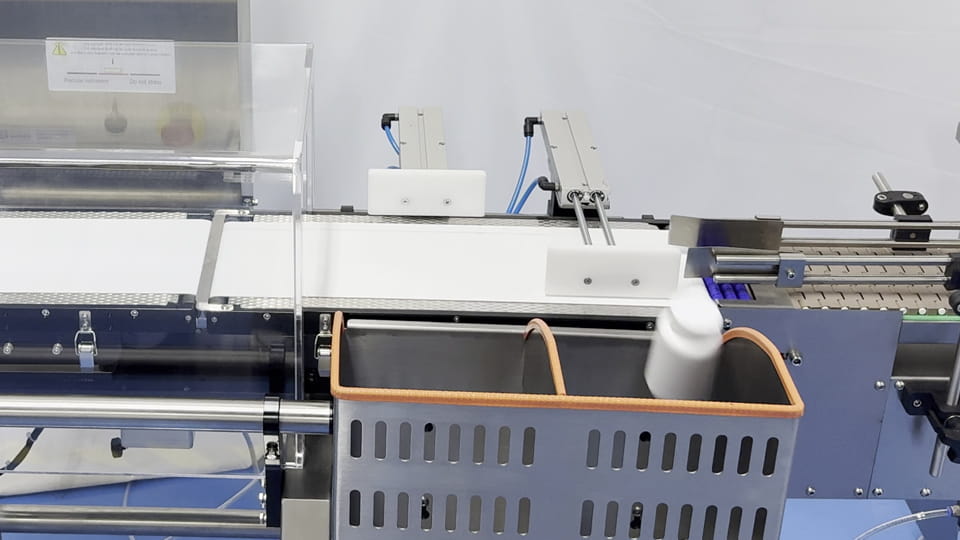
Células de carga (Sensores de pesaje): Sensores de alta precisión (Medidor de tensión o tipo EMFR) Están montados debajo de la sección de pesaje para medir el peso.. Cada vez que pasa un producto, Las células de carga convierten su peso en una señal eléctrica.. La controladora de peso de Jinlu utiliza una celda de carga de alta precisión para lograr una precisión de ±0,1 g.. Cifra: Sistema modular de cinta controladora de peso de Jinlu (secciones transportadoras a presión) simplifica el mantenimiento. Las células de carga están instaladas debajo del cinturón., y los productos son guiados a la sección de pesaje.
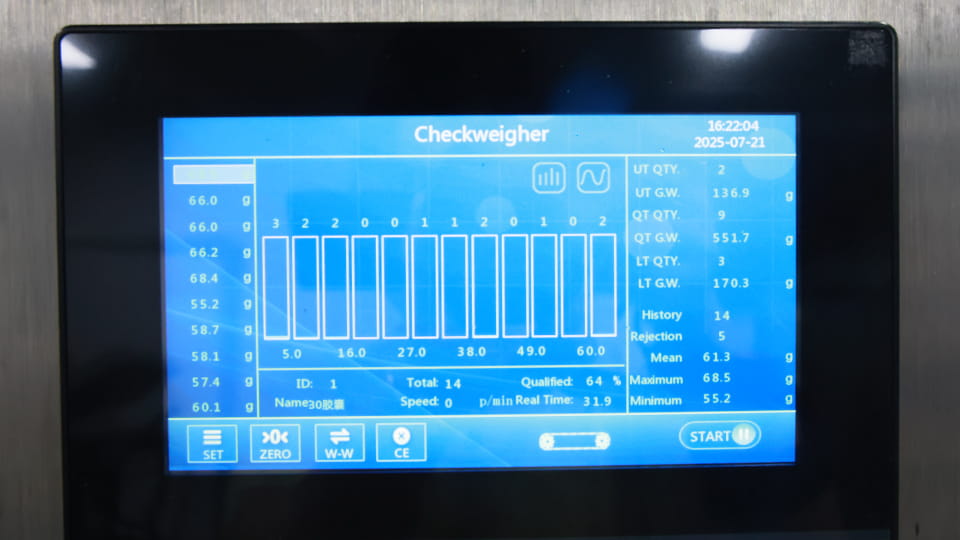
Unidad de control y HMI: Un PLC (controlador lógico programable) procesa los datos de peso. Una pantalla táctil HMI permite a los operadores establecer pesos objetivo, ver estadísticas, y ajustar la configuración. Controladora de peso de alta velocidad de Jinlu, Por ejemplo, Cuenta con una interfaz de pantalla táctil de 7 pulgadas.. La unidad de control contiene el firmware que aplica filtros digitales y compensación de velocidad para garantizar lecturas de peso precisas..
Mecanismo de rechazo: Los actuadores automatizados eliminan los productos defectuosos. Dependiendo del modelo y producto, Esta podría ser una varilla de empuje neumática., chorro de aire, trampilla abatible o sistema desviador. El dispositivo de rechazo se coloca inmediatamente después de la sección de pesaje..
Marco y cubiertas: Construcción higiénica de acero inoxidable (para cGMP) forma el marco. Muchas controladoras de peso incluyen una cubierta transparente sobre la sección de pesaje para protegerla de las corrientes de aire y el polvo., estabilizar la medición del peso. Por ejemplo, El diseño de Jinlu utiliza una cubierta de plexiglás “a prueba de viento y polvo” sobre el área de la celda de carga para evitar que el flujo de aire distorsione el peso..
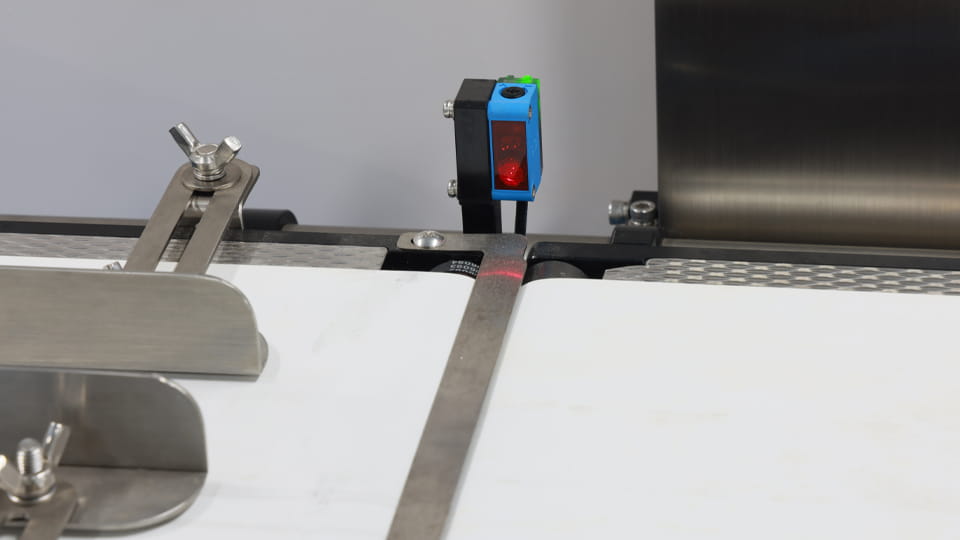
Sensores y Guías: Fotoojos o sensores láser detectan la presencia del producto. Los rieles o canales guía mantienen las botellas o cartones centrados en la cinta durante el pesaje..
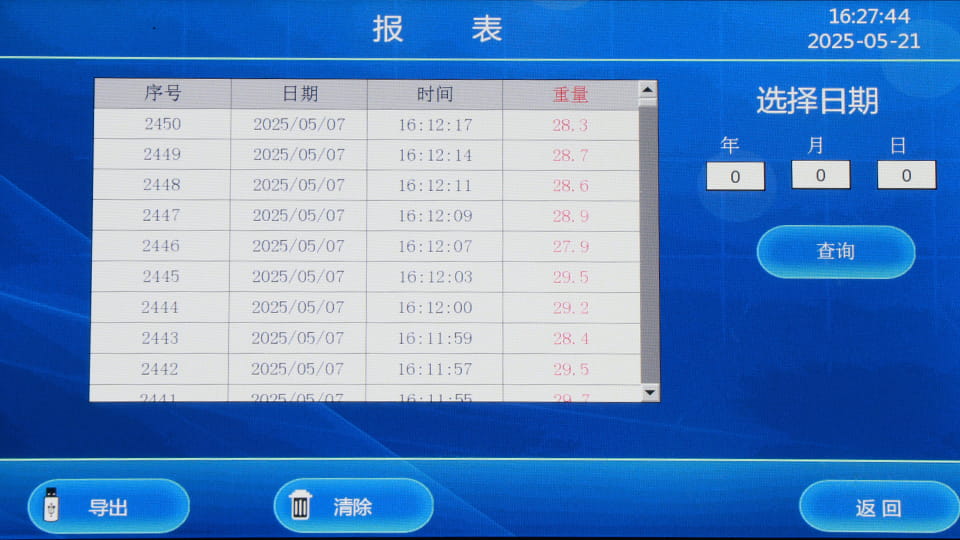
Módulo de datos/red: Las controladoras de peso modernas incluyen puertos de datos y redes para exportar registros a computadoras o sistemas de planta.. A menudo admiten grabación o conectividad con tarjeta USB/SD. (Ethernet/PROFINET) para la trazabilidad de los datos.
Cada componente trabaja en conjunto para garantizar una rápida, pesaje preciso. Las secciones del cinturón modular (con diseño a presión) Permite a los operadores retirar y limpiar rápidamente el transportador sin herramientas.. La construcción de acero inoxidable y una carcasa sellada hacen que la máquina sea fácil de lavar y cumpla con los requisitos de las salas blancas farmacéuticas..
Tipos de controladoras de peso
Las controladoras de peso vienen en varias configuraciones para adaptarse a diferentes necesidades de producción.:
Dinámica (En línea) controladora de peso: El tipo más común, instalado directamente en un transportador de producción. Pesa los productos en movimiento y expulsa los defectos sin detener la línea.. Ideal para embalaje continuo de alta velocidad (p.ej. líquidos embotellados, botellas de tabletas). La JL-CW de Jinlu es un ejemplo de controladora de peso en línea para líneas de conteo y encartonado..
Estático (Banco) controladora de peso: Una versión manual o de mesa utilizada para muestreo y control de calidad.. Los operadores colocan manualmente paquetes individuales en la báscula.. Estos son más lentos y no se utilizan para 100% inspección, pero bueno para controles de laboratorio o de resolución de problemas.
Controladora de peso de carriles múltiples de alta velocidad: Diseñado para líneas extremadamente rápidas, a menudo en máquinas contadoras farmacéuticas o en porciones de alimentos. Estos pueden tener múltiples carriles paralelos. (pistas) de transportadores de pesaje para manejar miles de artículos por minuto. Por ejemplo, Las líneas de tabletas y cápsulas pueden requerir controladoras de peso de múltiples vías capaces de pesar varios artículos simultáneamente..
Controladora de peso combinada/combi: Integran una controladora de peso con otro dispositivo de inspección (p.ej. Controladora de peso con detector de metales o rayos X.) en una estacion. Esto ahorra espacio y realiza un control de calidad dual en un solo paso..
Diseños especiales: Algunas controladoras de peso están personalizadas para productos con formas irregulares. (jeringas, viales) o para ambientes explosivos. Las controladoras de peso farmacéuticas suelen tener motores de lavado o controlados por VFD para un amplio rango de velocidades..
Cada tipo comparte el mismo principio de funcionamiento básico., pero usted elige según la velocidad de la línea de producción y el tipo de producto. Tabletas y cápsulas (dosis oral sólida) requieren rápido, básculas dinámicas resistentes a las vibraciones. Los líquidos o polvos pueden necesitar básculas con retroalimentación a los sistemas de llenado..
Beneficios de utilizar una controladora de peso en líneas de envasado
Implementar una controladora de peso en una línea de envasado genera múltiples beneficios:
100% Control de calidad: Se comprueba la precisión del peso de cada paquete.. Esto garantiza una calidad constante del producto y precisión en el etiquetado.. Incluso si falta una sola pastilla o paquete de polvo, será atrapado.
Cumplimiento normativo: Verificando automáticamente las tolerancias de peso, Las controladoras de peso ayudan a los fabricantes a cumplir los requisitos legales. (FDA, EMA, etc.). Proporcionan registros electrónicos fáciles de auditar de cada pesaje., crucial para la documentación de liberación de lotes.
Reducción de desperdicios y obsequios: Los paquetes sobrellenados desperdician producto y margen de beneficio. Los paquetes insuficientemente llenos corren el riesgo de ser retirados del mercado. Una controladora de peso minimiza ambos al controlar estrictamente el peso.. Como señala una fuente, Estos sistemas “impiden que productos inexactos lleguen a los consumidores”., garantizar el cumplimiento de la regulación de peso [y] reducción de residuos”. En la práctica, esto significa menos obsequios excesivos (ahorro en materias primas) y menos rellenos insuficientes desechados.
Mayor eficiencia: El pesaje automatizado es más rápido y fiable que el muestreo manual. Libera a los operadores para gestionar excepciones en lugar de pesar constantemente los artículos a mano.. Las controladoras de peso mantienen la velocidad de la línea e incluso pueden enviar correcciones (p.ej. ajuste la configuración del relleno si los pesos tienden a variar).
Mayor satisfacción del cliente: Coherente, El embalaje preciso significa que los clientes pueden confiar en el producto.. Evitando paquetes con peso insuficiente (y las quejas de los clientes que siguen) una empresa mantiene su reputación. También evita costosas retiradas del mercado.; La detección temprana de fallos evita que lotes enteros se estropeen..
Información basada en datos: Las controladoras de peso modernas recopilan datos de peso y producción. Esto se puede analizar para optimizar los procesos., monitorear tendencias, e identificar rápidamente problemas. Por ejemplo, si cada 500 botellas tiene un peso ligeramente inferior al normal, La ingeniería puede investigar las desviaciones periódicas del llenado.. Estos registros de datos respaldan la mejora continua.
En general, Un sistema de control de peso sirve como un potente punto de control de calidad.. Aumenta el rendimiento (reduciendo el desperdicio) y cumplimiento de salvaguardias. En competitivo fabricación farmacéutica, Estas ventajas se traducen directamente en ahorros de costos e integridad de la marca..
Cómo elegir la controladora de peso adecuada
Al seleccionar una controladora de peso para su línea de producción, considere los siguientes factores clave:
Tipo y tamaño del producto: Adapte la máquina a sus productos. Las tabletas o cápsulas suelen necesitar alta velocidad., escalas sensibles. Los líquidos o polvos pueden requerir controladoras de peso con sensores de nivel adjuntos.. Botellas sólidas vs.. bolsas flexibles vs.. Todas las ampollas tienen diferentes necesidades de manipulación.. Por ejemplo, Jinlu aconseja seleccionar un sistema coincidente con el producto (p.ej. multipista para tabletas vs.. con amortiguación de vibraciones para polvos).
Rango de peso y precisión: Asegúrese de que el rango y la resolución de la controladora de peso se adapten a su aplicación. El modelo estándar de Jinlu cubre de 5 a 1000 g con una precisión de 0,1 g. Si empaquetas artículos muy livianos (p.ej. <5 gramo), elegir una escala más sensible (celdas de carga electromagnéticas). si es pesado (varios kilos), se necesita una controladora de peso más resistente.
Velocidad de producción: Haga coincidir el rendimiento de la máquina con la velocidad de su línea. El modelo de Jinlu soporta hasta 100 PC/min. Si tu línea corre más rápido, Considere una controladora de peso de alta velocidad o de varios carriles.. Para líneas más lentas, los modelos de menor velocidad son suficientes.
Integración y Huella: Las controladoras de peso deben encajar perfectamente. Deben alinearse con el ancho y la altura de su transportador existente.. Muchos modelos (como el de Jinlu) Son modulares para encajar entre otras máquinas sin costosos cambios de diseño.. Considere también las necesidades eléctricas y de aire. (para neumática) conexiones. Asegúrese de que la instalación permita un fácil acceso para la limpieza y el mantenimiento..
Precisión y resolución: Las aplicaciones farmacéuticas a menudo necesitan tolerancias muy estrictas.. Elija una máquina con tecnología avanzada de células de carga (galga extensométrica o EMFR) y filtrado digital. Los modelos de alta gama pueden alcanzar ±0,01 go más con pesos pequeños.
Mecanismo de rechazo: Decida qué tipo de rechazo es mejor para su producto. Las botellas o cartones funcionan bien con brazos de empuje o solapas.; artículos livianos (tabletas, bolsas) A menudo utilizan chorros de aire.. Algunas líneas usan ambos. Asegúrese de que el producto rechazado elegido pueda retirar el producto de manera confiable sin causar atascos..
Cumplimiento de GMP: Busque una construcción de calidad farmacéutica. Las características incluyen acero inoxidable marco, diseño higiénico (sin grietas), y fácil limpieza. Considere también las características del software.: ¿El sistema soporta 21 Parte CFR 11 (inicios de sesión de usuario, pistas de auditoría)? ¿Puede generar informes CSV o PDF para registros por lotes??
Datos y conectividad: Si necesita integrar datos de peso en MES/ERP, Compruebe que la máquina sea compatible con Ethernet/IP., OPC-UA, u otros protocolos industriales. Las tarjetas USB o SD para realizar copias de seguridad de datos también pueden resultar útiles.
Soporte de proveedores: Elija un proveedor de confianza que pueda ayudarle con Documentación de validación IQ/OQ/PQ, calibración, y servicio. Embalaje de Jinlu, Por ejemplo, ofrece soporte IQ/OQ para sus controladoras de peso, junto con manuales detallados y una garantía.
Al considerar estos factores: características del producto, velocidad, exactitud, necesidades regulatorias, y compatibilidad de línea: puede seleccionar una controladora de peso que maximice el rendimiento para su aplicación específica. Por ejemplo, La controladora de peso JL-CW de Jinlu está optimizada para líneas de envasado y blister, con un tamaño reducido y una interfaz de pantalla táctil.
Controladoras de peso en la integración de líneas de embalaje
Una controladora de peso ofrece el mayor valor cuando se instala en el punto correcto de la línea de producción.. En envases de botellas farmacéuticas., la posición más común es inmediatamente después del contador de tabletas, contador de cápsulas, o máquina de llenado de líquidos. En esta etapa, El sistema puede verificar que cada botella contenga la cantidad correcta de producto antes de que los pasos de envasado adicionales agreguen costos y complejidad.. Las botellas que quedan fuera del rango de peso aceptable se rechazan automáticamente antes de llegar a la estación de taponado.. Esto ayuda a evitar que los productos defectuosos sigan avanzando en la línea y reduce el desperdicio innecesario..
Una línea de embotellado farmacéutica típica puede seguir esta secuencia: Clasificador de botellas → Contador de tabletas/cápsulas (o Relleno líquido) → Controladora de peso → Máquina para limitar → Sellador por inducción → Máquina etiquetadora → estuchadora. En algunas aplicaciones, Los fabricantes también pueden agregar un segundo sistema de control de peso cerca del final del proceso de embalaje para verificar la integridad de las cajas terminadas.. El punto de instalación ideal depende de lo que el fabricante quiera inspeccionar: precisión del llenado del producto., integridad de la botella, o verificación final del paquete.
Conclusión
Una controladora de peso es un componente indispensable de cualquier línea moderna de envasado farmacéutico.. Verificando automáticamente el peso de cada paquete, garantiza la precisión de la dosificación, Cumplimiento de GMP, y calidad del producto. Hemos cubierto cómo funcionan las controladoras de peso., por qué son vitales en la industria farmacéutica, sus partes principales, tipos, y como elegir el correcto. También comparamos las controladoras de peso con las básculas tradicionales y destacamos sus beneficios clave.: precisión mejorada, desperdicio reducido, rendimiento más rápido, y trazabilidad total.
Si está buscando agregar una controladora de peso o actualizar su línea, Embalaje de Jinlu ofrece alta precisión, Soluciones compatibles con cGMP. Controladora de peso JL-CW de Jinlu, por ejemplo, proporciona 0.1 gramo precisión de hasta 100 PC/min y es muy utilizado en botella, ampolla, y líneas de envasado en barra. Integrado con otras máquinas de Jinlu (descifrador, encimera, taponadora, etiquetadora, estuchador), Puede formar un sistema completamente automatizado. línea de envasado farmacéutico. Con características como una HMI de 7 pulgadas, marco de acero inoxidable, y sistemas de rechazo probados, ayuda a lograr un embalaje con “cero errores”.
Para más detalles o para discutir sus requisitos específicos, visita Jinlu Packing Producto controlador de peso página o contacta con nuestro equipo de ventas. Nuestros expertos pueden ayudar a diseñar una solución (incluyendo soporte IQ/OQ) para su línea de producción, garantizar un control de peso conforme y eficiente.
Preguntas frecuentes sobre la controladora de peso en Farmacéutica
¿Para qué se utiliza una controladora de peso??
Una controladora de peso se utiliza para verificar automáticamente el peso de los productos que se mueven a través de una línea de producción.. Ayuda a los fabricantes a identificar el peso insuficiente, sobrepeso, o productos incompletos y eliminarlos automáticamente de la línea. En envases farmacéuticos, una controladora de peso puede detectar botellas con recuento corto, contenedores sobrellenados, o componentes faltantes antes de que los productos lleguen al mercado.
¿Cómo funciona una controladora de peso??
Una controladora de peso utiliza una celda de carga y un transportador de pesaje para medir el peso del producto mientras éste se mueve.. El sistema compara el peso medido con los límites superior e inferior preestablecidos.. Si el peso cae fuera del rango aceptable, El mecanismo de rechazo automático retira el producto de la línea de producción..
¿Dónde se debe instalar una controladora de peso en una línea de envasado farmacéutico??
En la mayoría de las líneas de embotellado farmacéutico, la controladora de peso se instala inmediatamente después del contador de tabletas, contador de cápsulas, o máquina de llenado de líquidos. Esto permite a los fabricantes verificar la precisión del llenado antes de que las botellas procedan al taponado., caza de focas, etiquetado, y procesos de estuchado. La detección temprana ayuda a reducir los costos de desperdicio y retrabajo.
¿Puede una controladora de peso detectar pastillas o cápsulas faltantes??
Sí. Si la falta de una tableta o cápsula crea una diferencia de peso mensurable, el controlador de peso puede identificar la discrepancia y rechazar la botella afectada. Esta es una de las principales razones por las que los fabricantes farmacéuticos utilizan balanzas de control automáticas después del proceso de recuento..
¿Qué industrias utilizan comúnmente controladoras de peso??
Las controladoras de peso se utilizan ampliamente en la industria farmacéutica., comida y bebida, productos cosméticos, nutracéutico, químico, y industrias logísticas. Cualquier industria que requiera una verificación precisa del peso del producto y un control de calidad puede beneficiarse de un sistema de control de peso en línea..
¿Cuáles son los principales componentes de una controladora de peso??
Una controladora de peso típica consta de un transportador de alimentación, transportador de pesaje, celda de carga, sistema de control, interfaz del operador, y rechazar el dispositivo. Juntos, Estos componentes forman un sistema transportador de controlador de peso completo capaz de inspeccionar productos a altas velocidades de producción..
¿Por qué algunos productos son rechazados por una controladora de peso??
Los productos pueden ser rechazados por tener un peso inferior al normal., sobrepeso, componentes faltantes, o fuera del rango de tolerancia predefinido. En algunos casos, espaciado inadecuado del producto, vibración excesiva, o la configuración incorrecta de la máquina también puede causar falsos rechazos., Es por eso que la calibración y configuración adecuadas son importantes..
¿Se puede integrar una controladora de peso con otras máquinas de embalaje??
Sí. Las modernas básculas de control se pueden integrar con contadores de tabletas, rellenos líquidos, máquinas taponadoras, selladores por inducción, máquinas etiquetadoras, cartón, y sistemas de serialización. Esto crea una línea de envasado totalmente automatizada con control de calidad y seguimiento de la producción en tiempo real..
¿Cuáles son los beneficios de utilizar una báscula de control automática??
Un controlador de peso automático ayuda a mejorar la calidad del producto, reducir el desperdicio de productos, minimizar las quejas de los clientes, apoyar el cumplimiento normativo, y aumentar la eficiencia de la producción. También proporciona 100% inspección de peso, Asegurar que cada paquete cumpla con los estándares de calidad antes del envío..
¿Cómo elijo la controladora de peso adecuada para mi línea de producción??
Al seleccionar una controladora de peso, Considere factores como el rango de peso del producto., tamaño del paquete, velocidad de producción, precisión requerida, disposición del transportador, método de rechazo, y requisitos de integración. Para aplicaciones farmacéuticas, grabación de datos, soporte de validación, y también se debe evaluar el cumplimiento de las GMP.
Petty Fu, Fundador de Jinlupacking, trae 20 años de experiencia al sector de maquinaria farmacéutica. Bajo su liderazgo, Jinlu se ha convertido en un proveedor confiable que integra diseño, producción, y ventas. A Petty le apasiona compartir su profundo conocimiento de la industria para ayudar a los clientes a navegar las complejidades del empaque farmacéutico., garantizar que reciban no sólo equipos, sino una verdadera asociación de servicio integral adaptada a sus objetivos de producción..


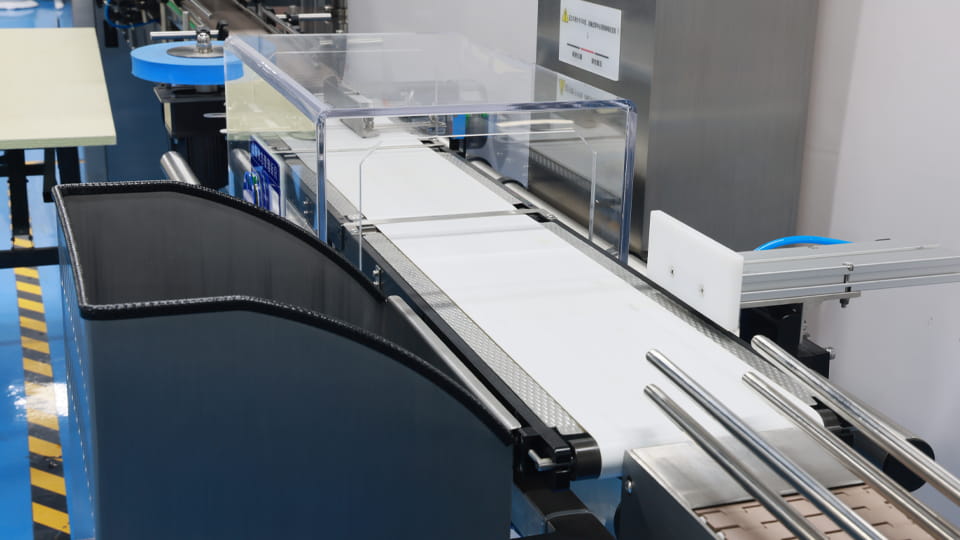
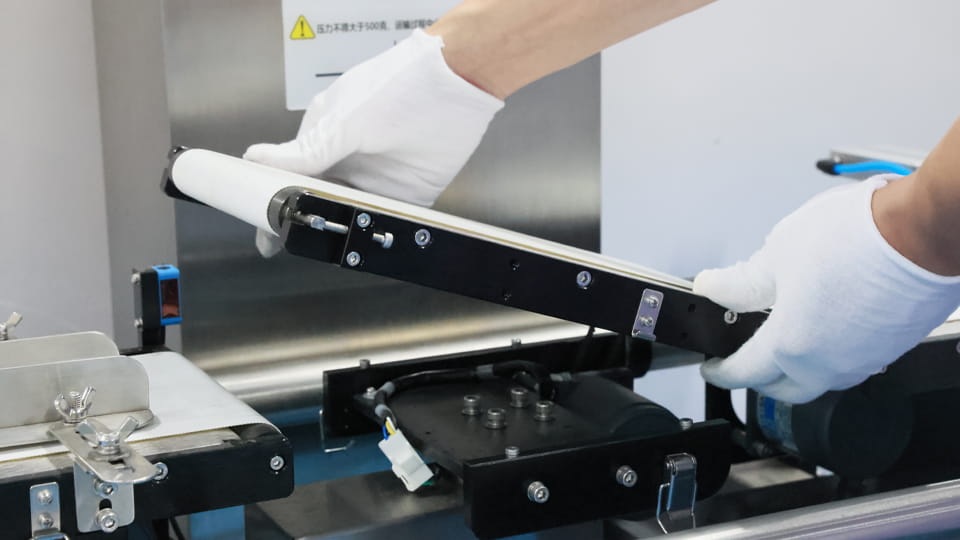 Cifra: Sistema modular de cinta controladora de peso de Jinlu (secciones transportadoras a presión) simplifica el mantenimiento. Las células de carga están instaladas debajo del cinturón., y los productos son guiados a la sección de pesaje.