
Seleccionando el derecho máquina empacadora de blister es una decisión crítica para los fabricantes farmacéuticos. Las tabletas y las cápsulas difieren en tamaño., forma, y sensibilidad, lo que significa que las máquinas que los envasan también deben diferir. Esta guía explica las diferencias clave entre las máquinas de blister de tabletas y las de blister de cápsulas., cubriendo todo, desde la geometría de la cavidad y los alimentadores hasta la velocidad de producción y el cumplimiento normativo.. Comparamos termoformado versus conformado en frío y sistemas de placa plana versus rotativos, describa los principales factores a considerar, y señalar los errores más comunes al elegir la máquina equivocada. Al final, comprenderá exactamente qué buscar, ya sea que necesite una línea de tabletas alimentadas con cepillo o una línea de cápsulas totalmente automatizada con alimentadores de orientación, para que pueda tomar una decisión de compra informada..
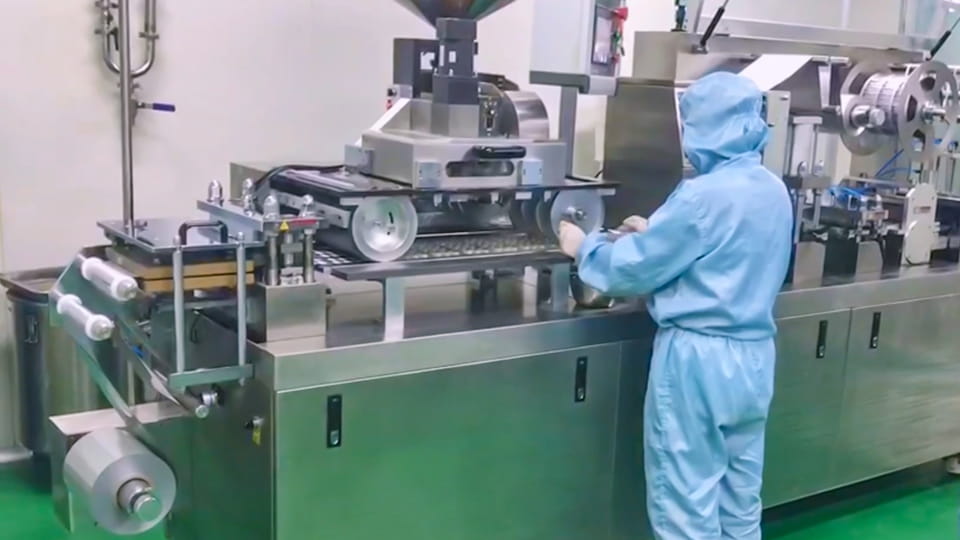
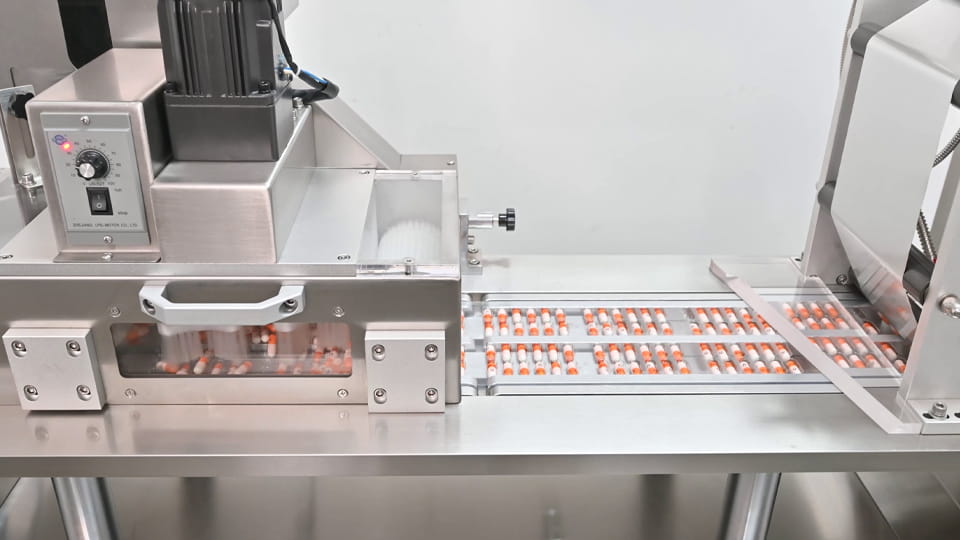
Cifra: Una moderna línea de envasado de blísteres de tabletas/cápsulas en una sala limpia GMP. Las máquinas blister automatizan el formado., relleno, caza de focas, y corte de film de PVC o aluminio para crear envases monodosis.
Las máquinas envasadoras de blister son equipos especializados que forman cavidades individuales. (ampollas) de una película de plástico o aluminio, llenarlos con producto, y luego sellarlos con papel de aluminio. Realizan cuatro pasos básicos:formación, relleno, caza de focas, y cortar—para producir ordenado, paquetes a prueba de manipulaciones. Estas máquinas son omnipresentes en la industria farmacéutica.: los encontrarás envasando tabletas, cápsulas, o incluso cigarrillos electrónicos y pequeños consumibles. Una máquina empacadora de blister de alta calidad garantiza la seguridad y vida útil del producto al sellar con precisión cada unidad., mientras cumple con los estrictos estándares GMP/FDA.
Las líneas de blísteres de tabletas y cápsulas comparten la misma arquitectura básica, pero los detalles difieren. el bolsillo (cavidad) La geometría de una tableta redonda es muy diferente de la de una tableta larga., cápsula de dos piezas, y el sistema de alimentación/orientación debe coincidir. Por ejemplo, una tableta redonda estándar de 10 mm solo necesita una superficie poco profunda, bolsillo circular, mientras un 0# (21.7 milímetros) La cápsula de gelatina dura requiere una profunda, cavidad ovalada alargada. Como resultado, una línea de blíster de cápsulas generalmente incluye un "alimentador de orientación" para alinear las cápsulas correctamente (cabeza a cola) antes de entrar a la estación de servicio. Las cápsulas pueden caer o invertirse., entonces un alimentador de giro de cápsulas Se utiliza a menudo para voltear cada cápsula a una posición uniforme.. Por el contrario, Las tabletas son más sencillas de alimentar con un alimentador de cepillo o placa vibratoria, Dado que la mayoría de las tabletas son simétricas y pueden introducirse aleatoriamente en bolsillos circulares..
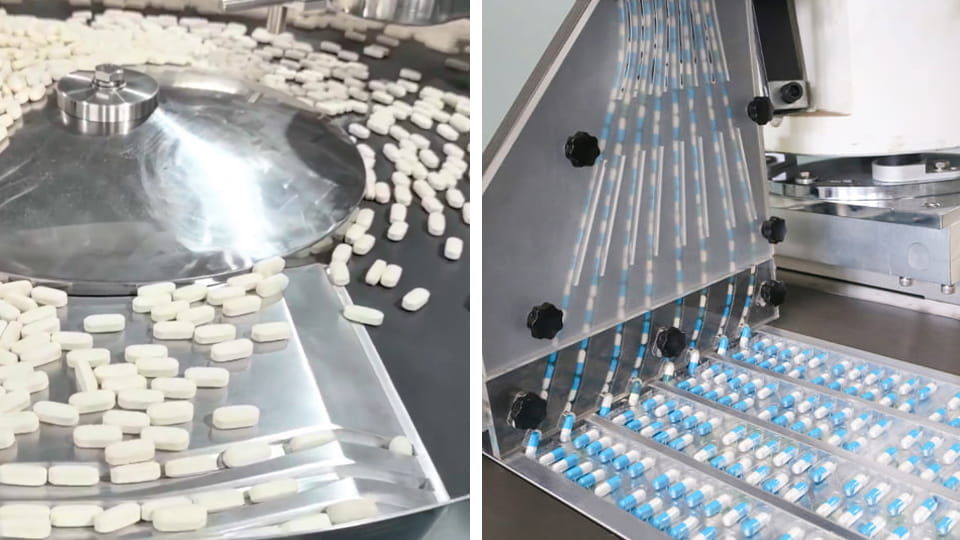
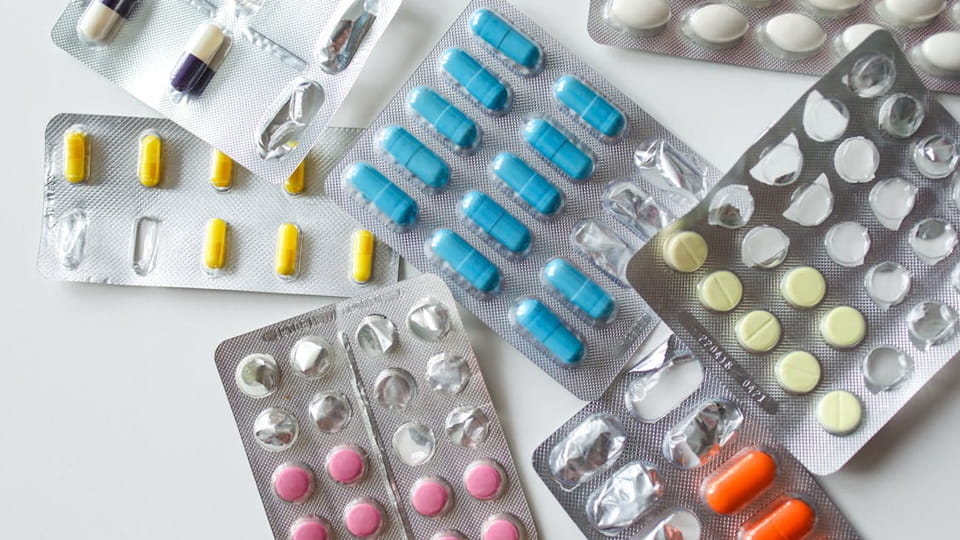
Cifra: Líneas de blister para cápsulas. Cavidades de la tableta (circular) vs cavidades de la cápsula (ovalado alargado) dictar diferentes diseños de alimentadores y condiciones de formación.
A máquina empacadora de blister Es un equipo farmacéutico que automatiza el envasado en dosis unitarias.. Forma cavidades (ampollas) en una red de plástico o aluminio, los llena de producto, luego los sella con papel de aluminio o papel. en farmacia, la película formadora es típicamente PVC/PVDC o aluminio (para forma fría), y la tapa es de papel de aluminio. La secuencia básica es: desenrollado de película → estación de formación → estación de llenado/alimentación → estación de sellado → punzonado/corte.
[jl_youtube src=»https://www.youtube.com/embed/hC-yo-ToX6s»]
Este proceso produce blisters sellados que son a prueba de manipulaciones, higiénico, y fácil de usar para los pacientes. Una buena máquina empacadora de blister garantiza una calidad constante de formado y sellado., a menudo integran sistemas de visión para detectar y rechazar bolsas vacías o unidades mal llenas.
Aunque las líneas de tabletas y cápsulas parecen similares a primera vista, su diferencias clave significa que no se pueden simplemente intercambiar productos en cualquier máquina sin realizar ajustes. Las tres principales diferencias de hardware son: forma de bolsillo (morir geometría), alimentador/orientación, y rechazar la lógica.
Hacerlos mal puede arruinar la producción: La forma incorrecta de la bolsa provoca fallos en el sellado o ampollas deformadas., y los errores de alimentación provocan desechos o recordar. Como señala Jinlupacking, ”geometría de herramientas, mecanismo de alimentación, y la lógica de rechazo son las que determinan si obtienes 98.5% eficiencia o 84% eficiencia en la primera semana de producción”.
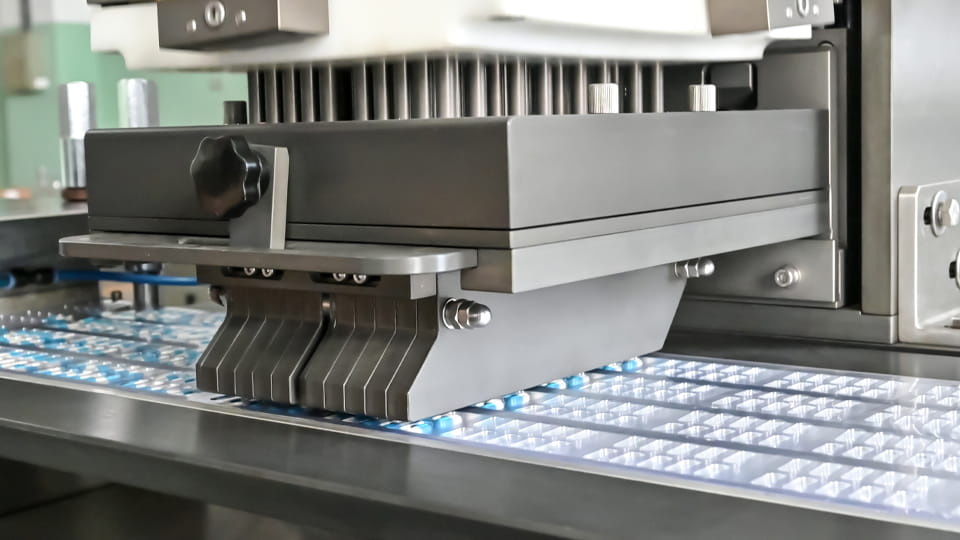
Para resumir en una referencia rápida, así es como es típico máquina de ampolla de tabletas se compara con un máquina de ampolla de cápsulas:
| Característica | Máquina de ampolla de tabletas | Máquina de ampolla de cápsulas |
| Forma de cavidad | Ovalado circular u poco profundo (fondo plano) | Ovalado alargado (sorteo más profundo) |
| Profundidad típica de la cavidad | ~4–8 mm | ~9–14 milímetros |
| Material de formación | PVC/PVDC o PET (para termoformado) | A menudo PVC/PVDC o aluminio (para termoformado o conformado en frío) |
| Temperatura de formación | ~120-140 °C (CLORURO DE POLIVINILO) | ~145-165 °C (CLORURO DE POLIVINILO; o sin calor para Alu-Alu en frío) |
| Sistema de alimentación | Alimentador de cepillo o placa vibratoria (no orientado) | Alimentador de orientación (rampa de gravedad, rieles guía, u orbital) |
| Orientación del producto | aleatorio (tabletas simétricas) | Fijo de cabeza a cola (Las cápsulas deben mirar de la misma manera.) |
| Lógica de visión/rechazo | Detectar tabletas vacías/rotas | Detectar falta, invertido, o cápsulas con carga cruzada |
| Eficiencia de velocidad | Normalmente más alto (relleno más simple) | Ligeramente más bajo (debido a los pasos de orientación) |
| Costo de cambio | Más bajo (moldes planos simples) | Más alto (moldes complejos para la forma de cápsula) |
| Manejo de riesgos | Bajo (las tabletas son robustas) | Más alto (Las cápsulas se pueden dividir o tapar por separado.) |
La conclusión clave: Máquinas de tabletas Utilice moldes planos simples y alimentadores estándar., mientras máquinas de cápsulas A menudo se añaden canales de orientación o alimentadores giratorios y moldes más profundos.. Muchas máquinas de alta gama. (como los modelos de Jinlu) están construidos para manejar ambos, pero requieren un cambio validado de herramienta/molde y, a veces, un cambio automático del alimentador para hacerlo. Si la máquina es verdaderamente de doble propósito, su sistema de alimentación debe soportar ambos modos (p.ej. un riel guía ajustable que se puede desactivar para tabletas).
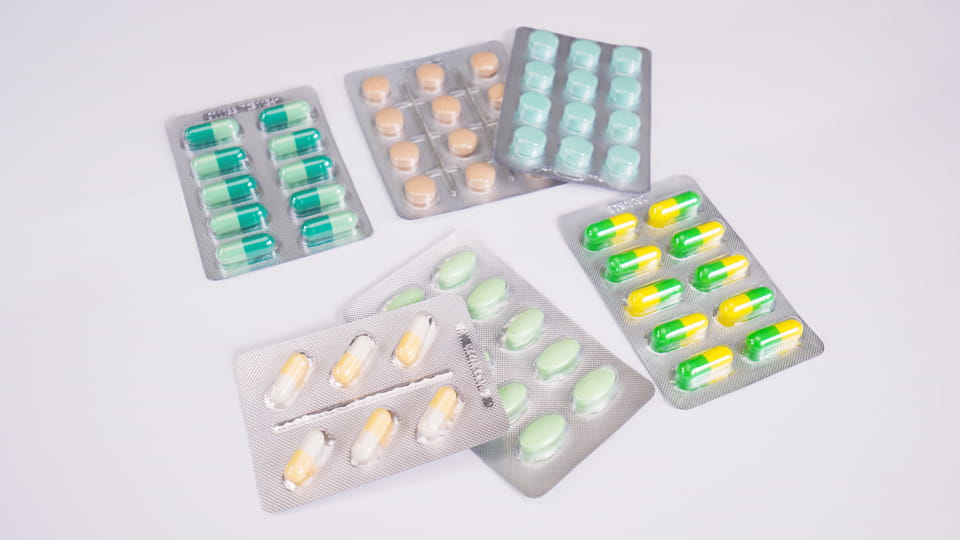
Al planificar su línea de envasado, considerar tecnología de formación (termoformado versus conformado en frío) y estilo de máquina (placa plana vs rotativa):
Cuándo usar cuál: Elegir termoformado si sus productos son estables a la humedad y necesita velocidad y visibilidad (p.ej. tabletas de venta libre, suplementos). Elegir forma fría (Alu-Alu) si sus medicamentos son sensibles al oxígeno/la humedad o requieren una vida útil muy larga. Algunas líneas utilizan enfoques híbridos (Película termoformada con tapa de aluminio o revestimiento de PVDC) para equilibrar el costo y la barrera.
Las máquinas blister también vienen en dos formatos mecánicos principales.:
Cuál elegir? Si produce muchos SKU diferentes o necesita embutición profunda (como Alu-Alu), a placa plana la máquina suele ser la mejor. Si ejecuta lotes muy grandes de un producto (p.ej. millones de blisters al mes), a giratorio La máquina vale la pena en términos de rendimiento.. Por ejemplo, de Jinlu DPP-180Pro es un modelo de placa plana (máx. ~4800 placas/hora) bueno para la flexibilidad, mientras el Modelo rotativo DPH-270Max puede golpear 11,200 ampollas/hora para producción masiva a alta velocidad.
| Característica | Máquina de placa plana | Máquina rotativa |
| Estilo de formación | Intermitente (prensas de placa en cada ciclo) | Continuo (tambor giratorio) |
| máx.. Velocidad | Moderado (decenas a ~100 cortes/min) | muy alto (a menudo 180+ cortes/min) |
| Mejor para | Lotes pequeños/medianos; dibujo profundo (Alu-Alu) paquetes | Paquetes de aluminio-PVC de gran volumen (producción en masa) |
| Costo del molde | Más bajo (los platos planos son más baratos) | Más alto (moldes cilíndricos de precisión) |
| Tiempo de cambio | Rápido (El intercambio de moldes es más sencillo.) | Más lento (la alineación y el reemplazo son complejos) |
| Huella por salida | Más grande (Se necesitan varias máquinas para obtener el mismo resultado.) | Más compacto (una máquina equivale a muchas placas planas) |
Al seleccionar una línea de envasado en blister, Concéntrese en estos siete factores para garantizar el mejor ajuste y evitar errores costosos en el futuro.:
Evaluando cuidadosamente cada factor, evitarás una trampa común: comprar una máquina más barata que se ajuste a las necesidades de hoy pero no cumpla con los requisitos del mañana (Por ejemplo, carecer de un alimentador para nuevos SKU de cápsulas o necesitar un reemplazo completo para velocidades más altas).
Elegir una máquina blister es una tarea compleja, decisión de alto riesgo. Los equipos de adquisiciones suelen cometer estos errores:
Aprendiendo de estos errores, puede priorizar el valor y el rendimiento a largo plazo en lugar de simplemente marcar las casillas de la hoja de especificaciones.
Si produce principalmente tabletas:
Si produce principalmente cápsulas:
Si haces ambas cosas:
No todas las máquinas empacadoras de blister son iguales. Quiere un proveedor que comprenda las necesidades farmacéuticas y ofrezca un soporte sólido. Embalaje de Jinlu, por ejemplo, reflejos:
Seleccionar un fabricante de confianza es casi tan importante como las especificaciones de la máquina.. Busque quienes publican documentos de validación., ofrecer formación, y tener un historial de instalaciones farmacéuticas.
Elegir la máquina envasadora de blister adecuada es una decisión estratégica. Al combinar cuidadosamente tipo de máquina a tu producto (tabletas versus cápsulas) y necesidades de producción, usted puede maximizar la eficiencia y la calidad. Recuerde considerar el diseño del alimentador, formato de máquina, compatibilidad de material, y cumplimiento normativo. Omitir estos detalles puede costarle tiempo de inactividad y productos desechados.. En cambio, seguir el enfoque de lista de verificación del comprador: define tus requisitos, verificar cada máquina contra ellas, y contrate a un proveedor de confianza (con sólidas garantías y soporte).
Elegir el derecho Máquina empacadora de blister No se trata sólo de equipos, sino de garantizar una producción estable., calidad del producto, y retorno de la inversión a largo plazo. Si está planeando actualizar su línea de empaque farmacéutico o aún compara opciones para tabletas versus cápsulas, ahora es el momento adecuado para actuar.
👉 Hable con nuestro equipo en Jinlu Packing hoy
👉 Obtenga una solución personalizada basada en su producto y capacidad
👉 Solicite presupuesto o consulta técnica, sin compromiso
Le ayudaremos a encontrar la máquina envasadora en blister adecuada para sus necesidades reales de producción, no solo especificaciones en papel..
Probablemente, pero depende del diseño de la máquina. Una máquina de blister verdaderamente de doble formato debe tener herramientas intercambiables. (juegos de moldes) y un sistema de alimentación capaz tanto de alimentación aleatoria de tabletas como de alimentación orientada de cápsulas.. En la práctica, esto significa costo extra (Herramientas de molde especiales y alimentador de orientación de cápsulas.). Si la producción mixta es ocasional, una sola máquina con kits de cambio puede funcionar, pero para cambios frecuentes, Las máquinas dedicadas podrían ser más prácticas..
Para medicamentos muy sensibles a la humedad o a la luz., forma fría (Alu-Alu) Se prefieren los blister. El laminado de aluminio completo proporciona una barrera casi impermeable., extendiendo la vida útil. Tenga en cuenta que la máquina debe soportar el conformado en frío. (alta presión, sin calor). Si se necesita velocidad y visibilidad, algunos usan paquetes híbridos (Cavidades termoformadas con revestimientos de aluminio o PVDC.) para protección intermedia.
Termoformado (PVC/PET) Funciona para la mayoría de las tabletas que no son extremadamente sensibles a la humedad.. Ofrece una producción rápida y clara., paquetes inspeccionables. Sin embargo, para comprimidos con granulación húmeda o contenido higroscópico, es posible que necesite una película recubierta de PVDC o cambiar a forma en frío. También, algunos materiales (como los retinoides) puede interactuar con el PVC, por lo que es aconsejable realizar pruebas de compatibilidad.
Las líneas de cápsulas suelen utilizar alimentadores de orientación.. Los tipos comunes incluyen alimentadores de riel guía., rampas de gravedad, o dispositivos para girar cápsulas. El objetivo es presentar cada cápsula con la cabeza primero en la cavidad.. Jinlu y otros ofrecen alimentadores orbitales o canales vibratorios para lograr esto.. Siempre verifique con el proveedor que sus alimentadores puedan manejar el tamaño y la forma de su cápsula..
• Optimizar la alimentación: Asegurar suave, alimentación sin atascos. Un alimentador bien diseñado con agitación u orientación adecuada reduce las paradas
• Velocidad versus estabilidad: Haga coincidir la velocidad de operación con las tolerancias del producto. Funcionar a una velocidad inferior a la máxima puede reducir los rechazos y el tiempo de inactividad.
• Reducción del cambio: Estandarizar los tamaños de las ampollas si es posible. Utilice sistemas de cambio rápido (como el cambio de molde de 15 minutos de Jinlu).
• Mantenimiento Preventivo: Mantenga el equipo calibrado (temperatura, presión) y limpio. Los sistemas de visión deben revisarse y limpiarse periódicamente..
• Capacitación del operador: Operadores cualificados que entienden los matices. (P.EJ., correcciones de alimentación, ajuste del molde) son invaluables.
• Integración de diseño: Agilizar el flujo de materiales. Los enlaces automatizados a prensas de tabletas y estuchadoras reducen el tiempo de inactividad.
• Monitoreo de datos: Utilice datos de PLC para detectar tendencias (sobrepasos de temperatura, rechazar picos) y corregirlos temprano.
Al abordar estos factores, Maximiza el rendimiento y el tiempo de actividad de su línea de blíster.
Referencias:
1.Blíster ——Wikipedia
2.Una guía completa sobre la máquina envasadora de blister —— tecnología-farmacéutica.com
3.Optimización del diseño de envases tipo blíster para productos farmacéuticos en forma sólida —— Ciencia Directa
4.Envases tipo blister farmacéuticos, segunda parte: Maquinaria y montaje —— Puerta de investigación
5.Detección de defectos en envases tipo blíster farmacéuticos basada en la coincidencia de plantillas de formas —— Puerta de investigación