
en el lenguaje cotidiano "droga" y "medicamento" a menudo se usan indistintamente. En la industria farmacéutica, sin embargo, Por lo general, implican diferentes etapas del ciclo de vida del producto.. A droga es generalmente la sustancia farmacológica activa (API) que proporciona efectos terapéuticos. A medicamento (a veces llamado un medicamento) es el producto terminado: el medicamento formulado y envasado para uso del paciente. Esta distinción afecta la forma en que se desarrollan los productos., fabricado, y empaquetado. En términos simples, cada medicina comienza con una droga (ingrediente activo), pero no todos los medicamentos terminan siendo medicamentos comercializables. Las diferencias en estos términos pueden influir forma de dosificación diseño, estado regulatorio, y elección de maquinaria de embalaje.
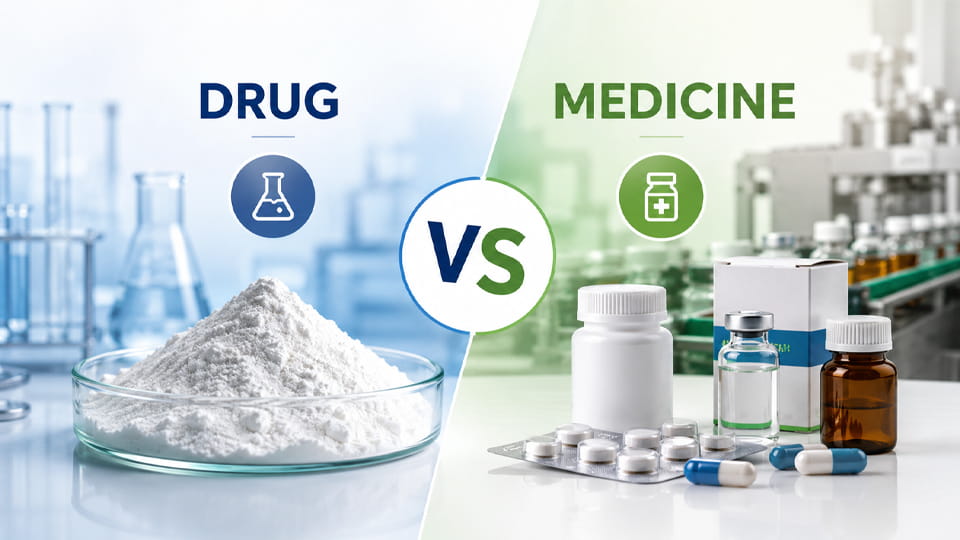
En términos farmacéuticos, a droga Es una sustancia química o biológica activa que se utiliza para diagnosticar., curar, mitigar, tratar, o prevenir enfermedades. La FDA define un medicamento en términos generales como "Una sustancia destinada al uso en el diagnóstico., curar, mitigación, tratamiento, o prevención de enfermedades”en humanos o animales. En la práctica, "droga" a menudo se refiere al ingrediente activo puro (API) sí mismo. Por ejemplo, El ibuprofeno o la amoxicilina en polvo se denominarían fármaco antes de convertirse en un tableta o cápsula.
Puntos clave sobre drogas en la fabricación farmacéutica:
En resumen, a droga es la sustancia terapéutica cruda o API: el "qué" que le da a un medicamento su efecto. Este término es común en el desarrollo y regulación de formulaciones..
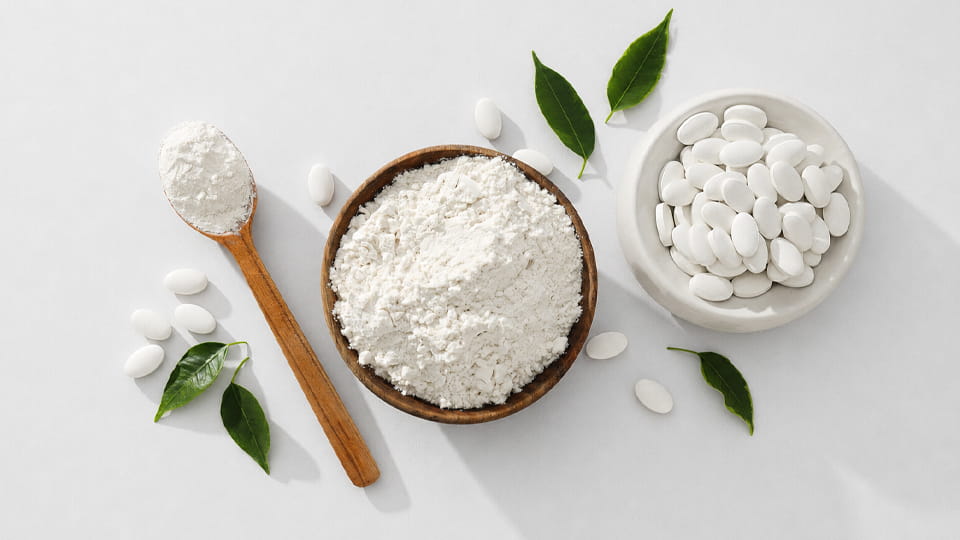
A medicamento (o medicamento) es un producto farmacéutico terminado destinado al uso del paciente. Contiene uno o más medicamentos. (API) más componentes inactivos (excipientes) y está empaquetado para una dispensación y uso seguros. En otras palabras, una vez que un medicamento se formula en una forma farmacéutica (tableta, cápsula, líquido, etc.) y etiquetado en un contenedor, se convierte en un medicamento listo para la venta.
En términos simples, a medicamento es el empaquetado, Producto listo para el paciente utilizado para diagnosticar o tratar una afección.. Incluye el fármaco como ingrediente estrella, pero también todas las demás cosas (excipientes, recipiente, etiqueta).
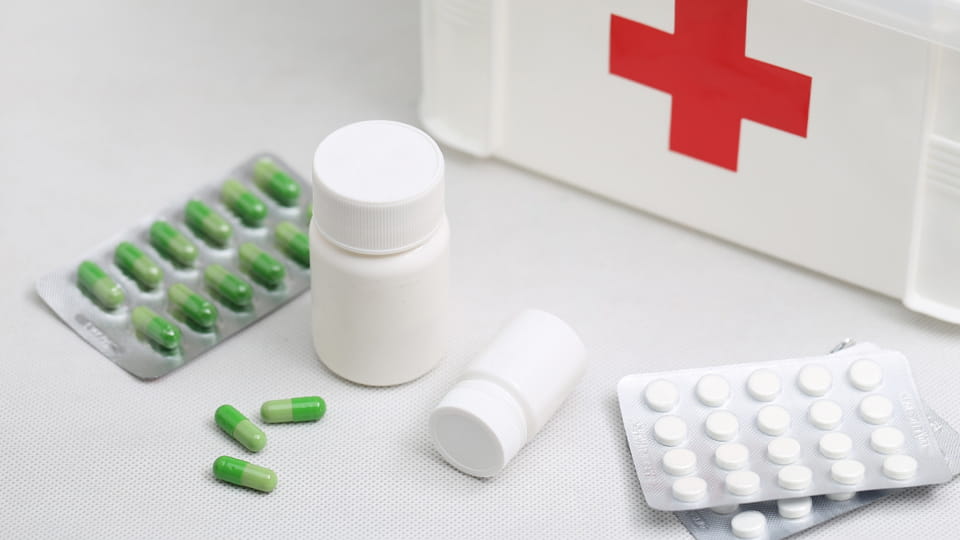
A continuación se muestra un resumen de los distinciones clave entre una droga y un medicamento. Las diferencias son sutiles en un lenguaje sencillo pero importantes en contextos regulatorios y de fabricación.:
| Aspecto | Droga | Medicamento (Producto medicinal) |
| Significado básico | Sustancia activa (API) con efecto terapéutico | Producto terminado que contiene el medicamento., listo para uso del paciente |
| Escenario | A menudo se refiere a un ingrediente en etapa inicial o a un compuesto de investigación. | Se refiere a la forma farmacéutica final una vez formulada y envasada. |
| Composición | El ingrediente activo puro (p.ej. aspirina en polvo) | Incluye API + excipientes, recipiente, etiqueta (p.ej. tableta de aspirina en blister) |
| Usar contexto | Fabricación, R&D, regulador (proceso de aprobación) | Uso clínico, prescribiendo, dispensando (en entornos de atención médica) |
| Regulación | La definición amplia de “medicamento” de la FDA incluye API | Productos terminados estrictamente regulados (Aprobaciones FDA/EMA, GMP) |
| Ejemplo | API de ibuprofeno, proteína insulina (sustancia a granel) | tabletas de ibuprofeno, inyecciones de insulina en viales |
En términos sencillos: A droga es la sustancia química/biológica activa con un efecto farmacológico. A medicamento es ese medicamento más formulación y empaque, destinado a un uso seguro por parte de los pacientes. Como lo expresó una fuente farmacéutica, “Todo medicamento comienza como una droga, pero no todas las drogas se convierten en medicinas”. Por ejemplo, La morfina pura es una sustancia farmacológica.; una vez formulado en dosis inyectables con solución salina y sellado en viales, se convierte en una medicina (un producto para aliviar el dolor).
El punto crucial es que medicamento implica un regulado, producto consumible, mientras droga puede significar sólo la sustancia activa bruta o una clase más amplia de compuestos. La tabla anterior resalta estas diferencias..
Para entender completamente “fármaco versus medicina”,"Ayuda a aclarar los términos relacionados que se utilizan a menudo en el sector farmacéutico.:
En pocas palabras: En la fabricación farmacéutica, “sustancia farmacológica” es la API, “producto farmacéutico” es la forma farmacéutica formulada (tabletas, cápsulas, inyección, etc.), y "medicamento" es lo que se llama el producto farmacéutico una vez que es un producto terapéutico listo para el mercado. Por ejemplo, La metformina es una sustancia farmacológica., una tableta de metformina de 500 mg es el medicamento, y esa tableta (en su embalaje) es el medicamento que toma el paciente.
Comprender estos términos es vital: una vez que conocemos la forma de dosificación de un producto farmacéutico, podemos seleccionar el correcto línea de embalaje para convertirlo en un medicamento estable.
Formulación & Desarrollo de formas farmacéuticas: un crudo sustancia farmacológica por sí solo no está preparado para el paciente. Debe formularse en una forma farmacéutica adecuada. (tableta, cápsula, jarabe, inyección, etc.) – esta es una parte importante del desarrollo manufacturero. Cada forma farmacéutica requiere excipientes y procesamiento específicos. (mezclando, granulación, esterilización) convertirse en un producto farmacéutico. Por ejemplo, Los API sensibles para productos biológicos inyectables necesitan procesamiento aséptico, mientras que un API estable para una pastilla pasa por el secado y la compresión de la tableta.
Aprobación regulatoria: Agencias como la FDA o la EMA revisan los datos sobre el fármaco. y el medicamento/producto farmacéutico. Evalúan la seguridad del API y la eficacia de la formulación final. El medicamento terminado debe cumplir estándares estrictos. (GMP, estabilidad, etiquetado). FDA CGMP Las reglas cubren explícitamente los procesos y equipos de envasado, entonces, ¿cómo se envasa un medicamento? (incluso más que una droga cruda) está altamente regulado.
Embalaje y etiquetado: La distinción dicta las necesidades de embalaje.. Una sustancia farmacológica suele tener un embalaje mínimo. (batería, viales para almacenamiento). una medicina, sin embargo, requiere embalaje primario que protege la dosis (p.ej. paquetes de ampollas, botellas, viales) y embalaje secundario (cajas de cartón) para información y trazabilidad. Por ejemplo, tabletas (producto terminado) Necesita blisters a prueba de humedad o sistemas de botella y cierre para garantizar la vida útil.. Un medicamento inyectable necesita viales o ampollas de vidrio esterilizados y precintos de seguridad.. Cada combinación de API y forma farmacéutica tiene una solución de embalaje correspondiente..
Selección de equipo: Si solo piensas en API, Podrías considerar reactores o mezcladores.. Pero una vez que una sustancia es un producto farmacéutico que necesita envasado, necesitas la línea de embalaje adecuada. Máquinas envasadoras de blister, máquinas de llenado de cápsula, rellenos líquidos, líneas de llenado de viales, máquinas estuchadoras – todos se vuelven relevantes. Reconocer que “medicina” significa que un producto envasado impulsa la adquisición de estas máquinas.
En breve, Comprender “fármaco versus medicamento” ayuda a los equipos del proyecto a saber cuando y como integrar el embalaje en el flujo de trabajo de producción. Garantiza que el producto farmacéutico no esté simplemente formulado, pero debidamente protegido y presentado al mercado.
El empaque es el último paso crítico que transforma un medicamento formulado en un medicamento que los pacientes pueden usar de manera segura.. En embalaje farmacéutico, embalaje primario está en contacto directo con la dosis (el producto farmacológico) y proporciona la primera barrera a la degradación. Por ejemplo, Las cápsulas y tabletas de gelatina dura a menudo entran en aluminio-plástico paquetes de ampollas, mientras los jarabes líquidos entran plástico (PET/HDPE) botellas. Los medicamentos inyectables se llenan viales o ampollas de vidrio estériles. Cada contenedor primario se elige por sus propiedades de inercia y barrera..
Una vez sellado el embalaje primario, embalaje secundario (cajas de cartón, etiquetas, folletos) proporciona información del paciente y datos por lotes. Por ejemplo, Los blisters o viales se agrupan en cajas de cartón de la marca con folletos de instrucciones., números de lote, y códigos de barras: cruciales para el cumplimiento y la seguridad del paciente.
En JinLuPacking, Nuestras máquinas automatizan estos pasos.. un automatico máquina empacadora de blister Puede sellar miles de tabletas en ampollas por hora.; a máquina de llenado de cápsulas dosifica el medicamento en cápsulas; a línea de llenado y taponado de botellas cuenta tabletas o llena jarabes en botellas; y un máquina estuchadora envuelve y empaqueta los productos terminados. Todas estas etapas – llenado, tapando, Envoltorio: asegúrese de que el medicamento final se dosifique con precisión., seguro, y listo para su distribución.
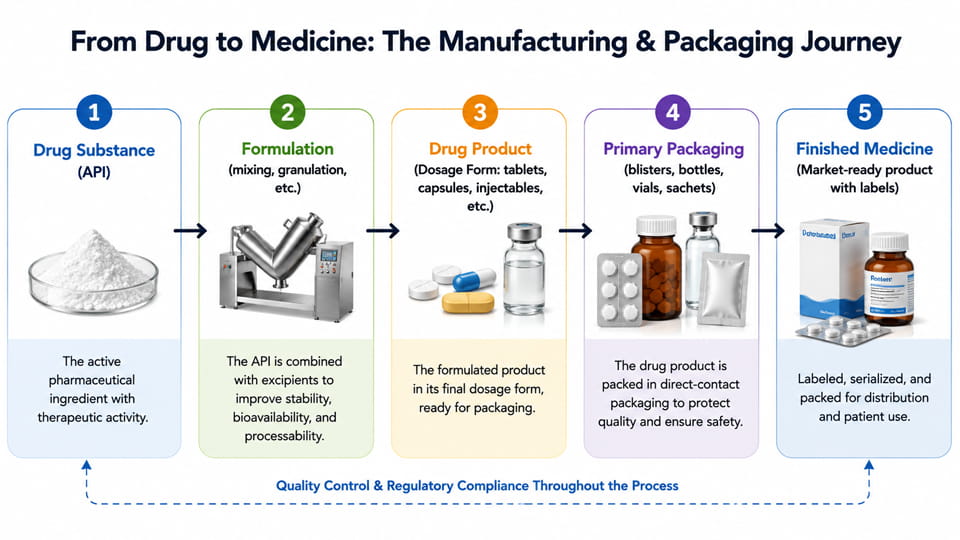
Cifra: Diagrama de flujo de medicamento → medicamento: el activo sustancia farmacológica (API) se formula en un producto farmacéutico (forma de dosificación específica). Luego pasa a embalaje primario (p.ej. blisters para tabletas, botellas para jarabes, viales de vidrio para inyectables). Finalmente, se convierte en un medicina terminada con embalaje secundario (cajas/etiquetas) para uso del paciente.
Diferentes formas de dosificación requieren diferentes soluciones de envasado. La siguiente tabla resume los emparejamientos típicos.:
| Forma de dosificación | Embalaje primario común | Ejemplo de equipo JinLu |
| Tabletas (Sólido Oral) | Paquetes de ampollas (Lámina de PVC/PVDC), o plastico botellas con tapones de rosca | Máquina empacadora de blister; Conteo de tabletas & Línea de embotellado |
| Cápsulas (Oral) | Paquetes de ampollas, o frascos similares a tabletas | Máquina automática de llenado de cápsulas; Máquina de ampolla |
| Líquido oral (Jarabes) | Plástico (PET/HDPE) botellas con tapas de seguridad para niños | Sistema de llenado y taponado de líquidos; Clasificador de botellas |
| Polvo / Bolsita | Envases en sobres monodosis (bolsas de papel de aluminio o laminadas) | Máquina empacadora de bolsitas/paquetes en barra; Línea de bolsas prefabricadas |
| Inyectables (Estéril) | Vaso viales, ampollas, o jeringas precargadas, más sellos de aluminio | Llenado de viales/ampollas & Línea de taponamiento; Sellador por inducción |
| Ungüentos/Cremas | tubos laminados (aluminio o plástico) | Máquina de llenado y sellado de tubos |
| Cápsulas de gelatina blanda | botellas (MASCOTA) o blisters | Máquina de ampolla de cápsulas de gelatina blanda; Línea de conteo |
La elección depende de factores como la estabilidad de la forma de dosis., esterilidad, y conveniencia del paciente. Por ejemplo, Las tabletas y cápsulas se utilizan a menudo. máquinas de ampolla o líneas de llenado de botellas, mientras que los líquidos necesitan enjuagadoras de botellas, relleno, y máquinas taponadoras. Inyectable Los medicamentos requieren sistemas de llenado estériles en condiciones de sala limpia.. Cada solución cuenta con el respaldo de maquinaria de envasado especializada para garantizar que el medicamento se convierta en un producto protegido., etiquetado medicamento que cumple Estándares GMP.
Para hacerlo concreto, Aquí hay algunos ejemplos que muestran cómo medicamentos específicos se convierten en medicamentos.:
Cada ejemplo muestra: Droga (API) → Formulación (tabletear, relleno, etc.) → Embalaje (ampolla, botella, frasco, bolsita) → Medicamento (producto final con etiqueta).
No necesariamente. Todo medicamento parte de una droga., pero no todas las drogas se convierten en medicinas. Muchos compuestos químicos o biológicos. (drogas) nunca llegar a los pacientes. Algunas drogas permanecen en R&D o solo se utilizan para investigación, y otros se utilizan fuera de entornos médicos (p.ej. drogas recreativas). Sólo cuando se formula un medicamento., probado, y aprobado se convierte en medicamento.
Como notas de respuesta a las preguntas frecuentes, “La aspirina es a la vez una droga y un medicamento.. Es una droga en su forma química. (ácido acetilsalicílico) y se convierte en un medicamento cuando se formula y se usa para tratar la fiebre., dolor, o inflamación”. La clave es el uso previsto y la presentación.: su uso como producto listo para el paciente lo convierte en un medicamento.
En resumen, solo aprobado, productos destinados al paciente son medicamentos. Comprender esto ayuda a los fabricantes y reguladores a distinguir entre sustancias experimentales y productos reales del mercado..
En resumen, "droga" generalmente se refiere al ingrediente activo o cualquier agente farmacéutico, mientras "medicamento" (medicamento) se refiere al terminado, producto listo para el paciente que contiene ese medicamento. Esta distinción es importante para la fabricación de productos farmacéuticos.: guía a R&D, estado regulatorio, y opciones de embalaje. Comprender estos términos ayuda a garantizar que avancemos una sustancia farmacológica a través de la formulación y embalaje adecuadamente para convertirse en un establo, medicina compatible.
Cuando desarrollando una nueva forma de dosificación, recordar: la línea de embalaje adecuada (empacador de blister, relleno de cápsulas, línea de botella, llenador de viales, estuchador, etc.) es esencial para protegiendo la medicina y cumplir con las GMP. Por ejemplo, Los fabricantes de tabletas confían en maquinas envasadoras de blister y líneas de conteo/llenado, mientras que los productos inyectables requieren Máquinas de llenado y taponado de viales/ampollas. y embalaje secundario seguro. JinLuEmbalaje ofrece una gama completa de maquinaria de envasado farmacéutico adaptado a cada forma farmacéutica, desde tableta & ampollas en la cápsula a embalaje de bolsitas y estuchado.
Listo para convertir su medicamento en un medicamento listo para el mercado? Explora nuestras soluciones: tableta & Máquinas envasadoras de blister de cápsulas para dosis sólidas., máquinas de llenado de cápsulas para polvo/cápsulas líquidas, bolsita & máquinas de bolsas prefabricadas para polvos, y estuchadoras para embalaje final. Nuestro equipo ayuda a proteger la calidad del producto., garantizar la seguridad del paciente, y agilice su línea de producción desde el medicamento hasta el medicamento terminado.
No exactamente. En una conversación informal se superponen., pero técnicamente un medicamento a menudo significa el ingrediente activo o cualquier sustancia farmacológica., Considerando que un medicamento es el producto terminado que se administra a los pacientes.. Se puede decir “cada medicamento contiene un fármaco, pero un medicamento por sí solo puede no ser un medicamento hasta que se formula”.
Son esencialmente el mismo concepto en la mayoría de los contextos farmacéuticos.. Un medicamento es la forma farmacéutica completa. (tableta, cápsula, inyección) listo para la venta. Un medicamento es como se llama el producto farmacéutico cuando se envasa para uso del paciente.. En la práctica, productos farmacéuticos aprobados (con etiquetado) son medicamentos.
una sustancia farmacológica (o API) es el ingrediente activo puro: el químico o biológico que tiene el efecto terapéutico. Un producto farmacéutico es la formulación final que contiene esa sustancia., más excipientes, en forma de dosificación (píldora, solución, etc.). Piensa en la sal y el salero.: la sal (sustancia farmacológica) es el ingrediente; la sal con antiaglomerante en una botella (producto farmacéutico) es el producto utilizable.
El embalaje es crucial para convertir un fármaco en medicamento.. Como señalan los recursos de JinLuPacking, embalaje farmacéutico (paquetes de ampollas, viales, botellas) Protege la estabilidad y la dosis del producto farmacéutico., y garantiza el cumplimiento de la normativa. El envasado y etiquetado adecuados transforman una sustancia farmacológica suelta en segura., medicina fácil de usar.
Sí. Un compuesto como el ibuprofeno o el paracetamol es una sustancia farmacológica.. Cuando se convierte en una tableta de venta libre con instrucciones, también es una medicina. Depende de la forma y el uso.. Como se señaló anteriormente, La aspirina es químicamente un medicamento, pero se llama medicamento una vez que está en tabletas para aliviar el dolor.. Lo mismo ocurre con muchos analgésicos., antibióticos, etc..
Los médicos suelen utilizar “droga” en el sentido neutro de cualquier agente farmacéutico.. En jerga clínica y derecho. (como la ley FDA), “droga” es el término oficial para una sustancia terapéutica. Cubre todo, desde jarabe para la tos hasta quimioterapia.. Mientras tanto, La “medicina” es más amigable para el paciente.. Entonces un médico podría recetarle ibuprofeno (droga) como analgésico (medicamento).
Referencias:
1.Glosario de términos de Drugs@FDA -- A NOSOTROS. Administración de Alimentos y Medicamentos
2.Clasificación de productos como medicamentos y dispositivos y cuestiones adicionales de clasificación de productos -- A NOSOTROS. Administración de Alimentos y Medicamentos
3.Glosario (términos p: producto farmaceutico, excipiente, material de partida) -- OMS
4.Glosario de Precalificación -- OMS
5.Formas de dosificación | FDA -- A NOSOTROS. Administración de Alimentos y Medicamentos
6.Q7A Guía de buenas prácticas de fabricación para ingredientes farmacéuticos activos -- A NOSOTROS. Administración de Alimentos y Medicamentos
