Was ist eine Kontrollwaage und wie funktioniert sie?? Vollständiger Leitfaden für pharmazeutische Verpackungslinien
Was ist eine Kontrollwaage und wie funktioniert sie?? Vollständiger Leitfaden für pharmazeutische Verpackungslinien
Juni 26, 2026
Keine Kommentare
A Kontrollwaage ist ein Inline-Wägegerät zur Überprüfung des Produktgewichts in einer Produktionslinie. Es stellt sicher, dass jedes Paket sein Zielgewicht erreicht, automatisch ablehnen unter- oder übergewichtige Einheiten. Dies ist in Pharma- und Verpackungsbetrieben für die Dosierungsgenauigkeit von entscheidender Bedeutung, GMP-Konformität, und Abfallreduzierung. Kontrollwaagen bestehen aus einem Förderband, eine hochpräzise Wägezelle, eine Steuerung/HMI, und einen Ablehnungsmechanismus. Im Pharmabereich Abfülllinien, Kontrollwaagen werden in der Regel unmittelbar nach dem Kapselzähler oder Flüssigkeitsfüller und vor der Verschließmaschine positioniert, So kann jede gefüllte Flasche überprüft werden, bevor sie in die weiteren Verpackungsstufen gelangt. Zu den wichtigsten Vorteilen gehören 100% Gewichtskontrolle, reduzierte Giveaways, und automatisierte Qualitätskontrolle. In diesem Ratgeber, Wir erklären, was eine Kontrollwaage ist, wie es funktioniert, seine Bestandteile, Typen, Vorteile, und wie Sie eines für Ihre Linie auswählen.
Was ist eine Kontrollwaage??
A Kontrollwaage(oder Kontrollwaage) ist ein automatisiertes Wiegesystem, das an einer Produktionslinie angebracht wird, um jeden Artikel zu wiegen und sicherzustellen, dass er einem Zielgewicht entspricht. In der Praxis, 100% der Produkte werden „on the fly“ gewogen, während sie die Waage passieren. Jedes Paket mit Unter- oder Übergewicht wird markiert oder entfernt, Es wird sichergestellt, dass nur richtig gefüllte Artikel weiterverarbeitet werden. Diese Geräte sind in der Verpackung und Fertigung weit verbreitet: Zum Beispiel, Kontrollwaagenförderer werden häufig zur Kapselzählung verwendet, Abfüllung, Blisterverpackungs- und Kartonierlinien. Im Gegensatz zu einer Hand- oder Tischwaage, Eine Kontrollwaage arbeitet inline: Produkte bleiben auf dem Förderband und werden während der Bewegung dynamisch gewogen. Dies ermöglicht eine sehr schnelle Inspektion (oft Hunderte von Einheiten pro Minute) ohne die Linie zu verlangsamen.
Zusammenfassend, Eine Kontrollwaage ist im Wesentlichen ein Förderband mit integrierter Wägeelektronik und automatischer Sortierung. Es bietet Gewichtskontrolle in Echtzeit und entfernt automatisch alle zu schweren oder zu leichten Produkte, Sicherstellen, dass nur korrekt befüllte Pakete weiterverarbeitet werden. Dieser Mechanismus ist für den Schutz der Produktkonsistenz und -konformität in Branchen wie der Pharmaindustrie von entscheidender Bedeutung.
Hochpräzise Kontrollwaage
Warum sind Kontrollwaagen in der pharmazeutischen Herstellung wichtig??
Kontrollwaagen sind entscheidend für die Pharmaindustrie weil sie Füllfehler erkennen und die Dosierungsgenauigkeit gewährleisten, Schutz sowohl der Patientensicherheit als auch der Einhaltung gesetzlicher Vorschriften.
Genaue Dosierung und Sicherheit: In der Arzneimittelherstellung, Schon eine kleine Gewichtsabweichung kann auf eine fehlende oder zusätzliche Wirkstoffdosis hinweisen. Kontrollwaagen sorgen für jede Tablette, Kapselflasche, Das Fläschchen oder die Packung enthält die richtige Menge. In der Praxis, das bedeutet Sicherstellen jede Das Gewicht der Einheit liegt innerhalb enger Gewichtstoleranzen. Zum Beispiel, wenn eine Tablettenflasche nicht ausreichend gefüllt ist, Die Kontrollwaage weist es zurück, bevor es versendet wird. Dies verhindert kostspielige Unter- oder Überdosierungsvorfälle.
Vorschriftenregulierung (cGMP/FDA): Aufsichtsbehörden (FDA in den USA, EMA/GMP in Europa, MHRA in Großbritannien, usw.) Wir schreiben strenge Gewichtstoleranzen für Arzneimittelverpackungen vor. Eine Kontrollwaage liefert den dokumentierten Nachweis, dass jede Einheit gewogen wurde und kein Untergewicht vorliegt (oder Übergewicht) Produkte entwichen. Moderne pharmazeutische Kontrollwaagen erfüllen diese Standards mit hygienischer Edelstahlkonstruktion und vollständiger Rückverfolgbarkeit. Zum Beispiel, Jinlu Packing betont, dass unsere Kontrollwaage Pharmaunternehmen dabei hilft, „0-Fehler“-Verpackungen zu erreichen und die aktuellen GMP/FDA-Anforderungen einzuhalten.
Rückrufe und Verschwendung verhindern: Gewichtsfehler erkennen im Einklang reduziert das Risiko drastisch Chargenrückrufe. Kontrollwaagen stellen die Einhaltung der Vorschriften sicher (MHRA, FDA, EMA) und „die mit einer Überdosierung verbundenen Risiken minimieren.“, Unterdosierung und Verpackungsfehler. Sie werfen automatisch jede nicht konforme Einheit aus, verhindern, dass es versendet wird. Diese automatisierte Ablehnung (über Schubarme, Luftdüsen, usw.) Hält die Qualität aufrecht, ohne die Produktion zu verlangsamen. Wiederum, weniger fehlerhafte Chargen und weniger Produktverluste (Vermeidung von Überfüllung) bedeuten Kosteneinsparungen. Zusamenfassend, Kontrollwaagen schützen den Ruf der Marke, indem sie sicherstellen, dass jede Packung den Angaben auf dem Etikett entspricht.
Kontinuierliche Qualitätsüberwachung: Denn jeder Artikel wird geprüft, Hersteller bekommen 100% Gewichtsdaten. Dieses hohe Maß an Qualitätskontrolle (im Gegensatz zur periodischen Probenahme) bedeutet, dass Prozessabweichungen oder Geräteprobleme sofort erkannt werden. Datenprotokollierungsfunktionen (21 CFR Teil 11 Einhaltung, Audit-Trails) Darüber hinaus tragen sie dazu bei, die Aufsichtsbehörden bei Audits zufrieden zu stellen.
Zusammenfassend, ein Arzneimittel Kontrollwaage ist mehr als eine Skala: Es ist ein entscheidender Qualitätskontrollpunkt, der die Dosierungsgenauigkeit gewährleistet, Vorschriftenregulierung, und Kundensicherheit in der Hochgeschwindigkeitsproduktion. Durch das Erkennen von Füllfehlern in der Zeile, es verhindert unter- oder überfüllte Produkte das Werk verlassen.
Wie funktioniert eine Kontrollwaage??
Eine Kontrollwaage arbeitet kontinuierlich auf einem Förderband. Hier ist der typische Arbeitsablauf:
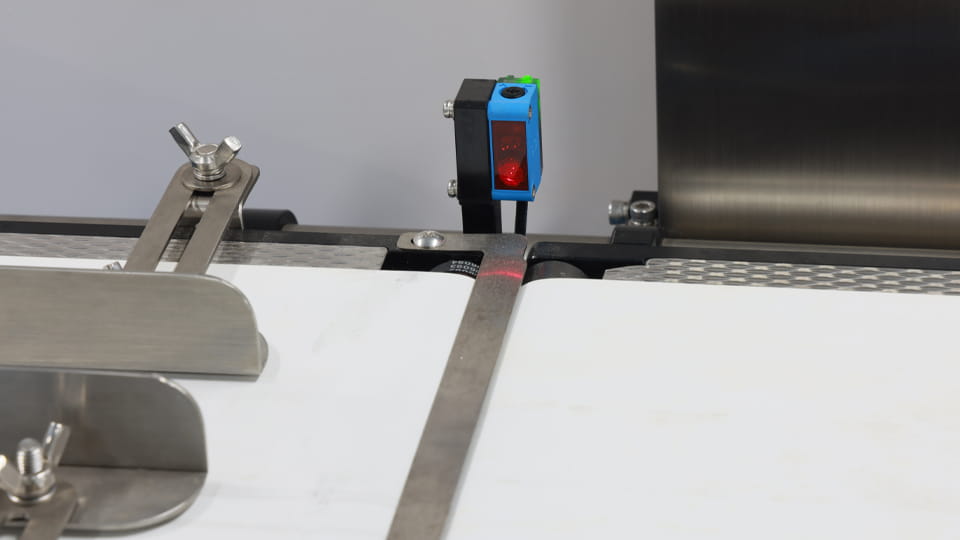
Einspeisung & Produkterkennung: Die Produkte werden dem Förderband zugeführt. Eine Lichtschranke oder ein Sensor erkennt die Anwesenheit jedes einzelnen Artikels und signalisiert dem Wägemodul die Vorbereitung.
Wiegen (Dynamisch): Während sich der Gegenstand über den Wiegebereich bewegt, hochpräzise Wägezellen (Sensorplattformen) Erfassen Sie sein Gewicht in Echtzeit. Diese Wägezellen wandeln das Gewicht des Produkts in ein elektronisches Signal um. Die Fördergeschwindigkeit und die Stabilisierungsmechanismen sorgen dafür, dass der Artikel beim Wiegen stabil bleibt.
Vergleich mit dem Zielgewicht: Die Steuereinheit (SPS) vergleicht das gemessene Gewicht sofort mit voreingestellten Grenzwerten (ein Zielwert plus/minus Toleranz). Diese Grenzwerte werden normalerweise über das Touchscreen-HMI programmiert. Zum Beispiel, wenn das Ziel einer Tablettenflasche 150,0 g beträgt, Das System meldet möglicherweise Werte unter 149,0 g oder über 151,0 g. Wenn das Gewicht sinkt innerhalb der akzeptable Bereich, das Produkt läuft weiter auf der Linie.
Automatische Ablehnung: Wenn ein Artikel ist außerhalb der Spezifikation (zu leicht oder zu schwer), Das System löst sofort einen Ablehnungsmechanismus aus. Zu den gängigen Auswurfgeräten gehören::
A Schubarm der nach unten schwenkt, um Flaschen oder Kartons umzuleiten oder auszuwerfen.
Ein Luftstrahl das leichte Gegenstände vom Band bläst.
A Klappe fallen lassen (oder Flip-Platte) die sich unter dem Förderband öffnet, um den Artikel in einen Behälter fallen zu lassen.
A Umlenkförderer Dadurch wird der fehlerhafte Artikel auf eine separate Spur verschoben.
Dieser Ausschuss erfolgt vollautomatisch und synchronisiert mit dem Sensorsignal, Entfernen fehlerhafter Einheiten, ohne die Linie anzuhalten.
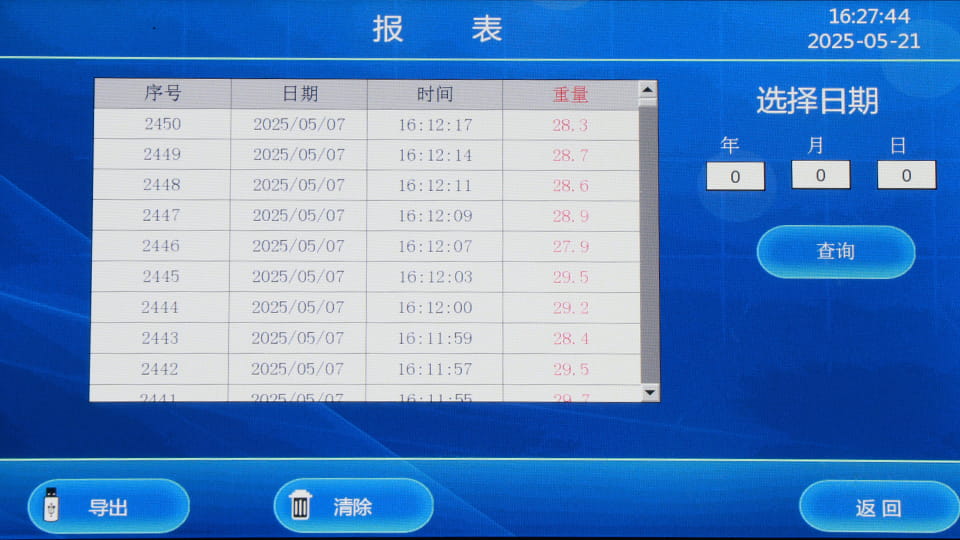
Datenprotokollierung & Rückmeldung: Zur Qualitätsaufzeichnung wird jedes Gewichts- und Ablehnungsereignis protokolliert. Die Kontrollwaage kann auch Echtzeit-Feedback an vorgelagerte Geräte geben. Zum Beispiel, Einige Systeme können ein Signal an eine Abfüllmaschine senden, um sich anzupassen, wenn die Gewichte eher schwer oder leicht sind.
Dieser gesamte Prozess – von der Erkennung über das Wiegen bis zur Ausschleusung – erfolgt für jeden Artikel im Bruchteil einer Sekunde. Das Ergebnis ist 100% Inline-Gewichtskontrolle bei voller Produktionsgeschwindigkeit. Überprüfen Sie, ob die Waagen funktionieren dynamisch ohne die Produktion zu unterbrechen, So können Hersteller „das Produktgewicht überwachen, ohne den Produktionsfluss zu stören“.
Hier finden Sie eine Zusammenfassung des Kontrollwaagen-Workflows:
Sensoren und Einspeisung: Förderer führt Produkte zu; Sensoren lösen den Wiegevorgang aus.
Wiegen: Wägezellen messen das Gewicht jedes bewegten Gegenstands.
Vergleich: Die Steuereinheit vergleicht das Gewicht mit den voreingestellten Zielgrenzen.
Ablehnen: Produkte, die außerhalb der Toleranz liegen, werden automatisch ausgeworfen (über Drücker, Luftstrahl, usw.).
Aufzeichnen: Zur Qualitätskontrolle werden Gewichtsdaten und Ausschusszahlen protokolliert.
Dieser automatisierte Zyklus, für jedes Element wiederholt, macht Kontrollwaagen in modernen Pharmalinien unverzichtbar.
Hauptkomponenten einer Kontrollwaage
Eine typische automatische Kontrollwaage besteht aus mehreren Hauptteilen, oft in einen modularen Rahmen eingebaut (siehe Jinlus Beispielbilder):
Förderbänder: Normalerweise drei Abschnitte – Einspeisung, Wiegezone, und Entlastung. Das Modell von Jinlu verwendet zur einfachen Wartung ein dreiteiliges Förderband. Das Band führt die Produkte gleichmäßig und gleichmäßig unter die Wägezellen.
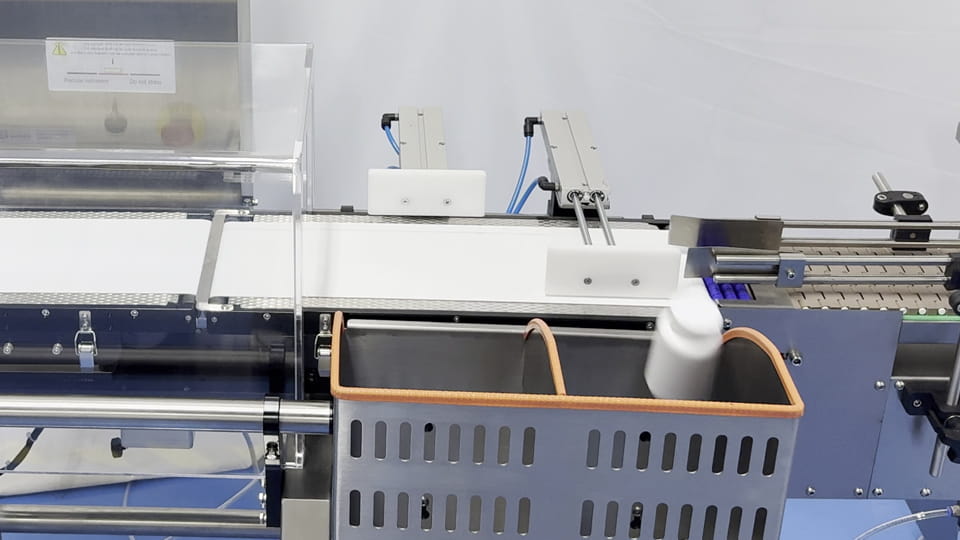
Wägezellen (Wägesensoren): Hochpräzise Sensoren (Dehnungsmessstreifen oder EMFR-Typ) Zur Gewichtsmessung sind unter der Wägeeinheit montierte Waagen angebracht. Jedes Mal, wenn ein Produkt vorbei ist, Die Wägezellen wandeln ihr Gewicht in ein elektrisches Signal um. Die Kontrollwaage von Jinlu verwendet eine hochpräzise Wägezelle, um eine Genauigkeit von ±0,1 g zu erreichen. Figur: Jinlus modulares Kontrollwaagen-Bandsystem (Aufsteckbare Förderabschnitte) vereinfacht die Wartung. Unter dem Band sind Wägezellen installiert, und die Produkte werden in den Wiegebereich geleitet.
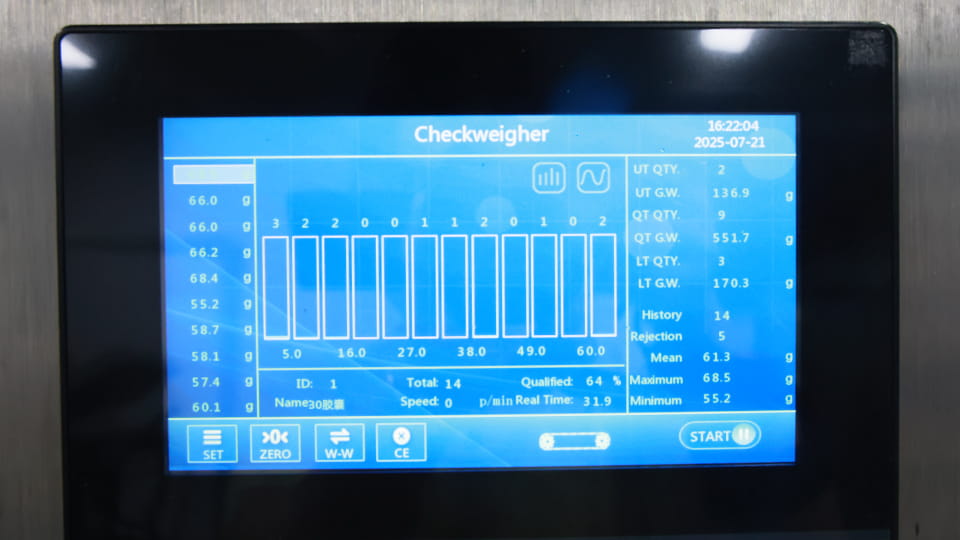
Steuereinheit und HMI: Eine SPS (speicherprogrammierbare Steuerung) verarbeitet die Gewichtsdaten. Über ein HMI-Touchscreen-Display können Bediener Zielgewichte festlegen, Statistiken ansehen, und Einstellungen anpassen. Jinlus Hochgeschwindigkeits-Kontrollwaage, Zum Beispiel, verfügt über eine 7-Zoll-Touchscreen-Oberfläche. Die Steuereinheit enthält die Firmware, die digitale Filter und Geschwindigkeitskompensation anwendet, um genaue Gewichtsmesswerte sicherzustellen.
Ablehnungsmechanismus: Automatisierte Aktoren entfernen fehlerhafte Produkte. Je nach Modell und Produkt, Dies könnte eine pneumatische Schubstange sein, Luftstrahl, Fallklappe oder Umlenksystem. Die Auswurfvorrichtung wird unmittelbar nach dem Wiegebereich positioniert.
Rahmen und Abdeckungen: Hygienische Edelstahlkonstruktion (für cGMP) bildet den Rahmen. Viele Kontrollwaagen verfügen über eine transparente Abdeckung über dem Wägebereich, um ihn vor Luftströmungen und Staub zu schützen, Stabilisierung der Gewichtsmessung. Zum Beispiel, Jinlus Design verwendet eine „wind- und staubdichte“ Plexiglasabdeckung über dem Wägezellenbereich, um zu verhindern, dass der Luftstrom das Gewicht verzerrt.
Sensoren und Führungen: Fotoaugen oder Lasersensoren erkennen die Produktanwesenheit. Führungsschienen oder Kanäle sorgen dafür, dass Flaschen oder Kartons beim Wiegen zentriert auf dem Band bleiben.
Daten-/Netzwerkmodul: Moderne Kontrollwaagen verfügen über Datenanschlüsse und Netzwerkfunktionen zum Exportieren von Protokollen an Computer oder Anlagensysteme. Sie unterstützen häufig die Aufzeichnung oder Konnektivität über USB/SD-Karte (Ethernet/PROFINET) für die Rückverfolgbarkeit von Daten.
Jede Komponente arbeitet zusammen, um eine schnelle Lieferung zu gewährleisten, Präzises Wiegen. Die modularen Bandabschnitte (mit Snap-on-Design) ermöglichen es dem Bediener, das Förderband schnell und ohne Werkzeug zu entfernen und zu reinigen. Die Edelstahlkonstruktion und das abgedichtete Gehäuse erleichtern die Reinigung der Maschine und erfüllen die Anforderungen pharmazeutischer Reinräume.
Arten von Kontrollwaagen
Kontrollwaagen gibt es in verschiedenen Konfigurationen, um unterschiedlichen Produktionsanforderungen gerecht zu werden:
Dynamisch (Im Einklang) Kontrollwaage: Der häufigste Typ, direkt auf einem Produktionsband installiert. Es wiegt Produkte in Bewegung und wirft Fehler aus, ohne die Linie anzuhalten. Ideal für die kontinuierliche Hochgeschwindigkeitsverpackung (z.B. Flüssigkeiten in Flaschen, Tablettenflaschen). Die JL-CW von Jinlu ist ein Beispiel für eine Inline-Kontrollwaage für Zähl- und Kartonierlinien.
Statisch (Bank) Kontrollwaage: Eine manuelle oder Tischversion zur Probenahme und Qualitätskontrolle. Bediener legen einzelne Pakete manuell auf die Waage. Diese sind langsamer und werden nicht verwendet 100% Inspektion, aber gut für Labor- oder Fehlerbehebungsprüfungen.
Hochgeschwindigkeits-Mehrspur-Kontrollwaage: Entwickelt für extrem schnelle Linien, häufig in pharmazeutischen Zählmaschinen oder der Portionierung von Lebensmitteln. Diese können über mehrere parallele Fahrspuren verfügen (Spuren) von Wiegebändern zur Handhabung von Tausenden von Artikeln pro Minute. Zum Beispiel, Für Tabletten- und Kapsellinien sind möglicherweise Mehrspur-Kontrollwaagen erforderlich, die mehrere Artikel gleichzeitig wiegen können.
Kombinations-/Kombi-Kontrollwaage: Diese integrieren eine Kontrollwaage mit einem anderen Inspektionsgerät (z.B. Kontrollwaage mit Metalldetektor oder Röntgengerät) in einer Station. Dies spart Platz und führt eine duale Qualitätskontrolle in einem Schritt durch.
Spezialdesigns: Einige Kontrollwaagen sind speziell für Produkte mit ungewöhnlicher Form konzipiert (Spritzen, Fläschchen) oder für explosionsgefährdete Umgebungen. Pharma-Kontrollwaagen verfügen häufig über Washdown- oder VFD-gesteuerte Motoren für einen weiten Geschwindigkeitsbereich.
Jeder Typ hat das gleiche grundlegende Funktionsprinzip, Sie wählen jedoch basierend auf der Geschwindigkeit der Produktionslinie und dem Produkttyp. Tabletten und Kapseln (feste orale Dosierung) erfordern schnell, vibrationsfeste dynamische Waagen. Für Flüssigkeiten oder Pulver sind möglicherweise Waagen mit Rückmeldung an Füllsysteme erforderlich.
Vorteile des Einsatzes einer Kontrollwaage in Verpackungslinien
Der Einsatz einer Kontrollwaage in einer Verpackungslinie bietet mehrere Vorteile:
100% Qualitätskontrolle: Jedes Paket wird auf Gewichtsgenauigkeit überprüft. Dies gewährleistet eine gleichbleibende Produktqualität und Etikettiergenauigkeit. Auch wenn eine einzelne Pille oder Pulverpackung fehlt, es wird gefangen.
Vorschriftenregulierung: Durch die automatische Überprüfung von Gewichtstoleranzen, Kontrollwaagen helfen Herstellern, gesetzliche Anforderungen zu erfüllen (FDA, EMA, usw.). Sie liefern revisionssichere elektronische Aufzeichnungen jeder Wägung, entscheidend für die Chargenfreigabedokumentation.
Weniger Abfall und Werbegeschenke: Überfüllte Verpackungen verschwenden Produkt und Gewinnspanne. Bei unzureichend gefüllten Paketen besteht die Gefahr von Rückrufen. Eine Kontrollwaage minimiert beides, indem sie das Gewicht streng kontrolliert. Wie eine Quelle feststellt, Diese Systeme „verhindern, dass falsche Produkte den Verbraucher erreichen.“, Sicherstellung der Einhaltung der Gewichtsvorschriften [Und] Abfallreduzierung“. In der Praxis, Dies bedeutet weniger Überfüllungsverluste (Einsparung von Rohstoffen) und weniger verschrottete Unterfüllungen.
Höhere Effizienz: Das automatische Wiegen ist schneller und zuverlässiger als die manuelle Probenahme. Es gibt den Bedienern die Möglichkeit, Ausnahmen zu verwalten, anstatt ständig Artikel von Hand zu wiegen. Kontrollwaagen halten die Liniengeschwindigkeit aufrecht und können sogar Korrekturen rückmelden (z.B. Passen Sie die Fülleinstellungen an, wenn die Gewichtsentwicklung abweicht).
Verbesserte Kundenzufriedenheit: Konsistent, Eine sorgfältige Verpackung bedeutet, dass Kunden dem Produkt vertrauen können. Durch die Vermeidung untergewichtiger Pakete (und die darauf folgenden Kundenbeschwerden) Ein Unternehmen wahrt seinen Ruf. Außerdem werden kostspielige Rückrufe vermieden; Das frühzeitige Erkennen von Fehlern verhindert, dass ganze Chargen fehlerhaft werden.
Datengesteuerte Erkenntnisse: Moderne Kontrollwaagen erfassen Gewichts- und Produktionsdaten. Dies kann analysiert werden, um Prozesse zu optimieren, Trends überwachen, und Probleme schnell identifizieren. Zum Beispiel, wenn jede 500. Flasche leicht untergewichtig ist, Die Technik kann periodische Füllungsdrifts untersuchen. Diese Datenprotokolle unterstützen die kontinuierliche Verbesserung.
Gesamt, Ein Kontrollwaagensystem dient als leistungsstarke Qualitätskontrollstelle. Es erhöht den Ertrag (durch die Reduzierung von Abfall) und stellt die Einhaltung sicher. Im Wettbewerb Pharmaherstellung, Diese Vorteile führen direkt zu Kosteneinsparungen und Markenintegrität.
So wählen Sie die richtige Kontrollwaage aus
Bei der Auswahl einer Kontrollwaage für Ihre Produktionslinie, Berücksichtigen Sie die folgenden Schlüsselfaktoren:
Produkttyp und -größe: Passen Sie die Maschine an Ihre Produkte an. Tabletten oder Kapseln benötigen in der Regel eine hohe Geschwindigkeit, empfindliche Waagen. Für Flüssigkeiten oder Pulver sind möglicherweise Kontrollwaagen mit zugehörigen Füllstandsensoren erforderlich. Feste Flaschen vs. flexible Taschen vs. Alle Blister haben unterschiedliche Anforderungen an die Handhabung. Zum Beispiel, Jinlu empfiehlt die Auswahl eines Systems auf das Produkt abgestimmt (z.B. Multitrack für Tablets vs. vibrationsgedämpft für Pulver).
Gewichtsbereich und Genauigkeit: Stellen Sie sicher, dass der Bereich und die Auflösung der Kontrollwaage zu Ihrer Anwendung passen. Das Standardmodell von Jinlu deckt 5–1000 g mit einer Genauigkeit von 0,1 g ab. Wenn Sie sehr leichte Gegenstände verpacken (z.B. <5 G), Wählen Sie eine empfindlichere Skala (elektromagnetische Wägezellen). Wenn schwer (mehrere kg), eine leistungsstärkere Kontrollwaage erforderlich ist.
Produktionsgeschwindigkeit: Passen Sie den Durchsatz der Maschine an die Geschwindigkeit Ihrer Linie an. Jinlus Modell kommt damit zurecht 100 PCs/min. Wenn Ihre Leitung schneller läuft, Erwägen Sie eine Hochgeschwindigkeits- oder Mehrspur-Kontrollwaage. Für langsamere Linien, Modelle mit niedrigerer Geschwindigkeit reichen aus.
Integration und Fußabdruck: Kontrollwaagen müssen nahtlos passen. Sie sollten mit der Breite und Höhe Ihres vorhandenen Förderers übereinstimmen. Viele Modelle (wie Jinlus) sind modular aufgebaut und können ohne kostspielige Layoutänderungen zwischen anderen Maschinen eingesetzt werden. Berücksichtigen Sie auch die erforderliche Strom- und Luftversorgung (für Pneumatik) Anschlüsse. Stellen Sie sicher, dass die Installation einen einfachen Zugang für Reinigung und Wartung ermöglicht.
Genauigkeit und Auflösung: Pharmazeutische Anwendungen erfordern oft sehr enge Toleranzen. Wählen Sie eine Maschine mit fortschrittlicher Wägezellentechnologie (Dehnungsmessstreifen oder EMFR) und digitale Filterung. High-End-Modelle können bei kleinen Gewichten ±0,01 g oder besser erreichen.
Ablehnungsmechanismus: Entscheiden Sie, welche Art von Ausschuss für Ihr Produkt am besten geeignet ist. Flaschen oder Kartons funktionieren gut mit Schubarmen oder Klappen; leichte Gegenstände (Tabletten, Taschen) Verwenden Sie häufig Luftdüsen. Einige Linien verwenden beides. Stellen Sie sicher, dass der gewählte Ausschuss das Produkt zuverlässig entfernen kann, ohne dass es zu Staus kommt.
GMP-Konformität: Achten Sie auf eine Konstruktion in Pharmaqualität. Zu den Funktionen gehören Edelstahl rahmen, Hygienisches Design (keine Spalten), und einfache Reinigung. Berücksichtigen Sie auch Softwarefunktionen: Unterstützt das System 21 CFR Teil 11 (Benutzeranmeldungen, Audit-Trails)? Kann es CSV- oder PDF-Berichte für Chargenprotokolle erstellen??
Daten und Konnektivität: Wenn Sie Gewichtsdaten in MES/ERP integrieren müssen, Überprüfen Sie, ob das Gerät Ethernet/IP unterstützt, OPC UA, oder andere Industrieprotokolle. Auch USB- oder SD-Karten zur Datensicherung können sinnvoll sein.
Anbieterunterstützung: Wählen Sie einen seriösen Lieferanten, der Ihnen weiterhelfen kann IQ/OQ/PQ-Validierungsdokumentation, Kalibrierung, und Service. Jinlu Packing, Zum Beispiel, bietet IQ/OQ-Unterstützung für seine Kontrollwaagen, zusammen mit detaillierten Handbüchern und einer Garantie.
Durch die Berücksichtigung dieser Faktoren – Produkteigenschaften, Geschwindigkeit, Genauigkeit, Regulierungsbedarf, und Linienkompatibilität – Sie können eine Kontrollwaage auswählen, die die Leistung für Ihre spezifische Anwendung maximiert. Zum Beispiel, Die JL-CW-Kontrollwaage von Jinlu ist für Flaschen- und Blisterlinien optimiert, mit geringem Platzbedarf und einer Touchscreen-Schnittstelle.
Kontrollwaagen in der Verpackungslinienintegration
Eine Kontrollwaage liefert den größten Nutzen, wenn sie an der richtigen Stelle in der Produktionslinie installiert wird. In pharmazeutischer Flaschenverpackung, Die häufigste Position ist direkt nach der Tablettentheke, Kapselzähler, oder Flüssigkeitsfüllmaschine. In diesem Stadium, Das System kann überprüfen, ob jede Flasche die richtige Produktmenge enthält, bevor zusätzliche Verpackungsschritte Kosten und Komplexität verursachen. Flaschen, die außerhalb des akzeptablen Gewichtsbereichs liegen, werden automatisch aussortiert, bevor sie die Verschließstation erreichen. Dies trägt dazu bei, dass fehlerhafte Produkte nicht weiter in die Produktionslinie gelangen und unnötiger Abfall reduziert wird.
Eine typische pharmazeutische Abfülllinie kann dieser Reihenfolge folgen: Flaschen -Unkrambler → Tabletten-/Kapselzähler (oder Flüssiger Füllstoff) → Kontrollwaage → Messmaschine → Induktionssiegelgerät → Etikettierungsmaschine → Kartonierer. In einigen Anwendungen, Hersteller können gegen Ende des Verpackungsprozesses auch ein zweites Kontrollwägesystem hinzufügen, um die Vollständigkeit der fertigen Kartons zu überprüfen. Der ideale Installationsort hängt davon ab, was der Hersteller prüfen möchte – die Füllgenauigkeit des Produkts, Vollständigkeit der Flasche, oder abschließende Paketüberprüfung.
Abschluss
Eine Kontrollwaage ist ein unverzichtbarer Bestandteil jeder modernen pharmazeutischen Verpackungslinie. Durch die automatische Überprüfung des Gewichts jedes Pakets, es gewährleistet die Dosierungsgenauigkeit, GMP-Konformität, und Produktqualität. Wir haben erläutert, wie Kontrollwaagen funktionieren, Warum sie in der Pharmaindustrie so wichtig sind, ihre Hauptteile, Typen, und wie man das Richtige auswählt. Wir haben Kontrollwaagen auch mit herkömmlichen Waagen verglichen und ihre wichtigsten Vorteile hervorgehoben: verbesserte Genauigkeit, weniger Abfall, schnellerer Durchsatz, und vollständige Rückverfolgbarkeit.
Wenn Sie eine Kontrollwaage hinzufügen oder Ihre Linie aufrüsten möchten, Jinlu Packing bietet höchste Präzision, cGMP-konforme Lösungen. Die JL-CW-Kontrollwaage von Jinlu, zum Beispiel, bietet 0.1 G Genauigkeit bei bis zu 100 PCs/min und wird häufig in Flaschen verwendet, Blase, und Stickverpackungslinien. Integriert in die anderen Maschinen von Jinlu (Entschlüsseler, Schalter, Verschließer, Label, Karton), Es kann eine vollständige Automatisierung bilden pharmazeutische Verpackungslinie. Mit Funktionen wie einem 7-Zoll-HMI, Rahmen aus Edelstahl, und bewährte Ausschusssysteme, Es trägt dazu bei, eine „Null-Fehler“-Verpackung zu erreichen.
Für weitere Details oder um Ihre spezifischen Anforderungen zu besprechen, Besuchen Sie Jinlu Packing’s Kontrollwaagenprodukt Seite bzw Kontaktieren Sie unser Vertriebsteam. Unsere Experten können Ihnen dabei helfen, eine maßgeschneiderte Lösung zu finden (inklusive IQ/OQ-Unterstützung) für Ihre Produktionslinie, Gewährleistung einer konformen und effizienten Kontrollwägung.
FAQs zur Kontrollwaage in Pharma
Wozu dient eine Kontrollwaage??
Eine Kontrollwaage dient zur automatischen Überprüfung des Gewichts von Produkten, die sich durch eine Produktionslinie bewegen. Es hilft Herstellern, Untergewicht zu erkennen, Übergewicht, oder unvollständige Produkte und entfernen diese automatisch aus der Linie. In pharmazeutischer Verpackung, Eine Kontrollwaage kann Mindermengen an Flaschen erkennen, überfüllte Behälter, oder fehlende Komponenten, bevor Produkte auf den Markt kommen.
Wie funktioniert eine Kontrollwaage??
Eine Kontrollwaage verwendet eine Wägezelle und ein Wiegeband, um das Produktgewicht zu messen, während sich das Produkt bewegt. Das System vergleicht das gemessene Gewicht mit voreingestellten Ober- und Untergrenzen. Wenn das Gewicht außerhalb des akzeptablen Bereichs liegt, Der automatische Auswurfmechanismus entfernt das Produkt aus der Produktionslinie.
Wo sollte eine Kontrollwaage in einer pharmazeutischen Verpackungslinie installiert werden??
In den meisten pharmazeutischen Abfülllinien, Die Kontrollwaage wird direkt nach dem Tablettenzähler installiert, Kapselzähler, oder Flüssigkeitsfüllmaschine. Dadurch können Hersteller die Füllgenauigkeit überprüfen, bevor die Flaschen verschlossen werden, Versiegelung, Beschriftung, und Kartonierprozesse. Eine frühzeitige Erkennung hilft, Ausschuss und Nacharbeitskosten zu reduzieren.
Kann eine Kontrollwaage fehlende Tabletten oder Kapseln erkennen??
Ja. Wenn eine Tablette oder Kapsel fehlt, entsteht ein messbarer Gewichtsunterschied, Die Kontrollwaage kann die Abweichung erkennen und die betroffene Flasche aussortieren. Dies ist einer der Hauptgründe, warum Pharmahersteller nach dem Zählvorgang automatische Kontrollwaagen einsetzen.
In welchen Branchen werden Kontrollwaagen häufig eingesetzt??
Kontrollwaagen werden häufig in der Pharmaindustrie eingesetzt, Essen und Trinken, Kosmetika, Nutrazeutisch, Chemikalie, und Logistikbranche. Jede Branche, die eine genaue Überprüfung des Produktgewichts und eine Qualitätskontrolle benötigt, kann von einem Inline-Kontrollwaagensystem profitieren.
Was sind die Hauptkomponenten einer Kontrollwaage??
Eine typische Kontrollwaage besteht aus einem Zuführband, Wiegeband, Wägezelle, Steuerungssystem, Bedienerschnittstelle, und Gerät ablehnen. Zusammen, Diese Komponenten bilden ein komplettes Kontrollwaagen-Fördersystem, das in der Lage ist, Produkte bei hohen Produktionsgeschwindigkeiten zu prüfen.
Warum werden manche Produkte von einer Kontrollwaage abgelehnt??
Produkte können aufgrund von Untergewicht abgelehnt werden, Übergewicht, fehlende Komponenten, oder außerhalb des vordefinierten Toleranzbereichs. In einigen Fällen, Falscher Produktabstand, übermäßige Vibration, Auch falsche Maschineneinstellungen können zu Fehlausschüssen führen, Aus diesem Grund sind eine ordnungsgemäße Kalibrierung und Einrichtung wichtig.
Kann eine Kontrollwaage in andere Verpackungsmaschinen integriert werden??
Ja. Moderne Kontrollwaagen können mit Tablet-Zählern integriert werden, flüssige Füllstoffe, Verschließmaschinen, Induktionsversiegelungsgeräte, Etikettiermaschinen, Kartonierer, und Serialisierungssysteme. Dadurch entsteht eine vollautomatische Verpackungslinie mit Echtzeit-Qualitätskontrolle und Produktionsüberwachung.
Welche Vorteile bietet der Einsatz einer automatischen Kontrollwaage??
Eine automatische Kontrollwaage trägt zur Verbesserung der Produktqualität bei, Reduzieren Sie Produktverluste, Kundenbeschwerden minimieren, Unterstützung der Einhaltung gesetzlicher Vorschriften, und die Produktionseffizienz steigern. Es bietet auch 100% Gewichtskontrolle, Sicherstellen, dass jedes Paket vor dem Versand den Qualitätsstandards entspricht.
Wie wähle ich die richtige Kontrollwaage für meine Produktionslinie aus??
Bei der Auswahl einer Kontrollwaage, Berücksichtigen Sie Faktoren wie den Produktgewichtsbereich, Packungsgröße, Produktionsgeschwindigkeit, erforderliche Genauigkeit, Förderbandlayout, Ablehnungsmethode, und Integrationsanforderungen. Für pharmazeutische Anwendungen, Datenaufzeichnung, Validierungsunterstützung, und die GMP-Konformität sollte ebenfalls bewertet werden.
Kleines Fu, Gründer von Jinlupacking, bringt vorbei 20 langjährige Erfahrung im pharmazeutischen Maschinenbau. Unter seiner Führung, Jinlu hat sich zu einem vertrauenswürdigen Lieferanten für integriertes Design entwickelt, Produktion, und Verkäufe. Petty teilt mit Leidenschaft sein umfassendes Branchenwissen, um Kunden bei der Bewältigung der Komplexität von Pharmaverpackungen zu unterstützen, Sicherstellen, dass sie nicht nur Ausrüstung erhalten, sondern eine echte, auf ihre Produktionsziele zugeschnittene Servicepartnerschaft aus einer Hand.

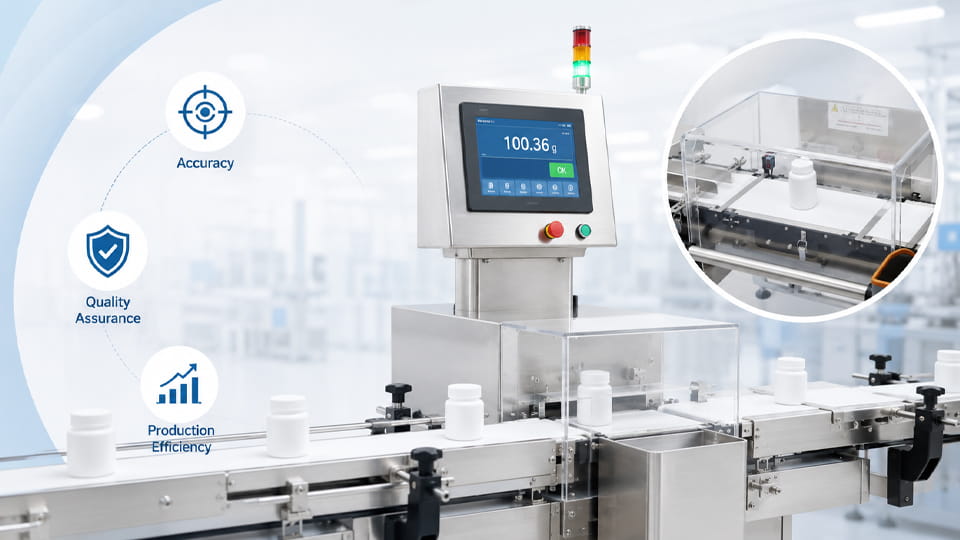

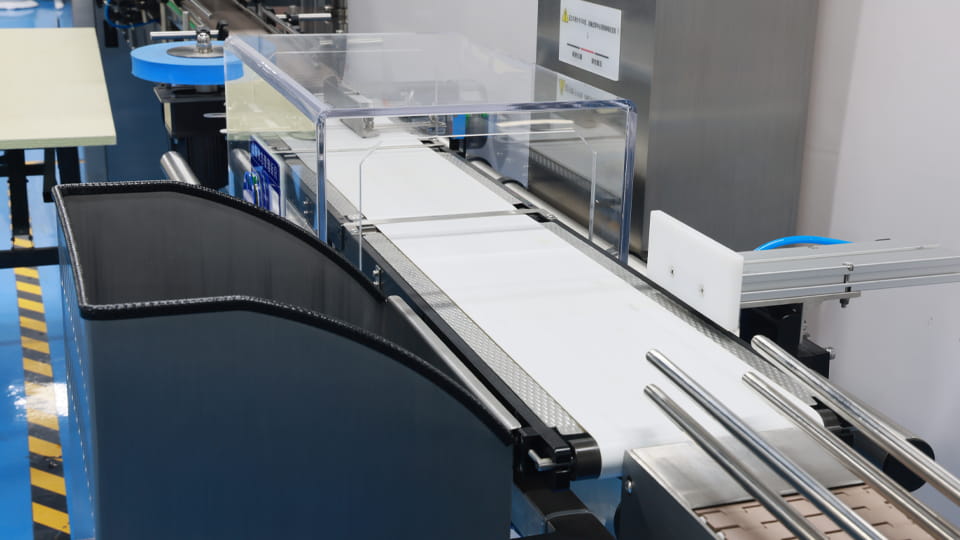
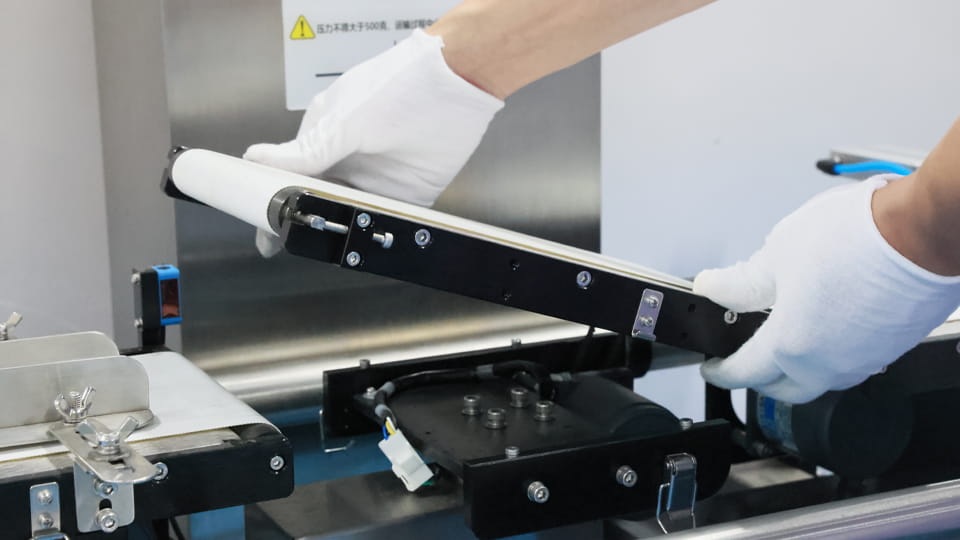 Figur: Jinlus modulares Kontrollwaagen-Bandsystem (Aufsteckbare Förderabschnitte) vereinfacht die Wartung. Unter dem Band sind Wägezellen installiert, und die Produkte werden in den Wiegebereich geleitet.