In vielen Verpackungsleitungen, Beutel, Beutel, oder kleine Beutel kommen aus vorgeschalteten Maschinen in einem zufälliges Durcheinander – sich überlappende Stapel, uneinheitlich ausgerichtet. Das manuelle Sortieren ist langsam und fehleranfällig. Die Arbeiter müssen jeden Beutel trennen und wenden, Das ist arbeitsintensiv und birgt das Risiko, Fehler zu zählen (Überschneidungen führen zu Fehlzählungen). Diese Inkonsistenz kann dann verhungern oder Marmelade nachgeschaltete Geräte wie Kartonier- oder Kartonverpackungsmaschinen. Darüber hinaus, Manuelle Handhabung erhöht das Kontaminationsrisiko – ein großes Problem bei Pharma- und Lebensmittelprodukten.
A Beutelsortiermaschine löst diese Schmerzpunkte. Es trennt sich automatisch, richtet sich aus, Sequenzen, und zählt zufällig angeordnete Beutel oder Beutel, bevor sie der nächsten Maschine zugeführt werden. Tatsächlich, Es verwandelt einen chaotischen Stapel Tüten in einen ordentlichen, Einzeldatei-Stream. Das Ergebnis ist glatt, kontinuierlicher Fluss in Kartonierer oder Sammelpacker, mit minimaler menschlicher Note.
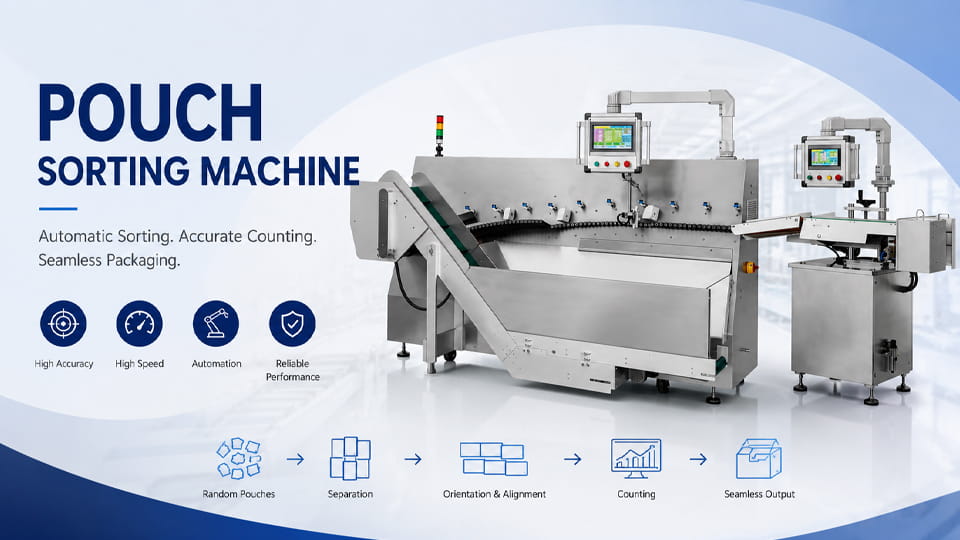
Figur: Das manuelle Sortieren von Beuteln ist arbeitsintensiv und fehleranfällig. Eine Automatik Beutelsortiermaschine erledigt diese Aufgabe schnell und präzise, Zufuhr von Beuteln gleichmäßig in die Verpackungslinie.
Was ist eine Beutelsortiermaschine??
A Beutelsortiermaschine (oder Beutelsortierer) ist eine automatisierte Industriemaschine, die für die Organisation von Kleinigkeiten konzipiert ist flexible Pakete – Beutel, Beutel, Stickpacks, oder kleine Taschen – die ungeordnet aus einer Abfüll- oder Verpackungsmaschine kommen. In einfachen Worten, es nimmt die Ausgabe von a Beutel- oder Beutelverpackungsmaschine Und Sequenzen die Artikel: Trennen Sie überlappende Beutel, sie einheitlich auszurichten, sie zählen, und sie der nächsten Stufe zuzuführen.
Anders ausgedrückt, Es handelt sich um einen speziellen Feeder/Organizer für die Verpackungslinie. Es erledigt Aufgaben, die sonst viele Bediener erfordern würden. Zum Beispiel, JinLus Sachet-Sortiermaschine „organisiert automatisch, orientiert, sortiert, und zählt“ ungeordnete Beutel (Pulver, flüssig, Tablette, Gelarten) bei Geschwindigkeiten von bis zu 100–420 Beuteln pro Minute. Diese Maschinen sind dafür gebaut 24/7 Produktion: Die meisten verwenden SPS-Touchscreens für eine einfache Bedienung und passen sich im Handumdrehen an verschiedene Beutelgrößen an.
Ein Beutelsortierer löst häufige Probleme: Es trennt vertauschte Beutel, entfernt Doubles (zwei zusammengeklebte Tüten), korrigiert die Ausrichtung, Und zählt jedes Stück genau. Die Ausgabe ist ein konsistenter Einzeldatei-Stream, den nachgeschaltete Maschinen verarbeiten können. In der Praxis, Dies bedeutet, dass die Kartons gleichmäßig gefüllt werden (Keine fehlenden Taschen), und manuelles Zählen und Zuführen entfällt. Es wird im Wesentlichen zu einem automatischen Puffer und Zuführer, der einen manuellen Sortiertisch ersetzt.
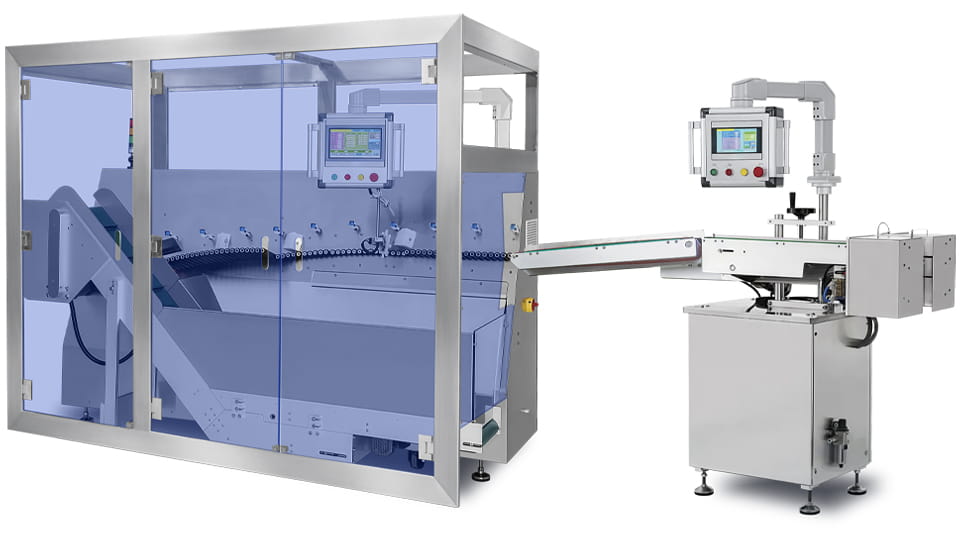
Wie funktioniert eine automatische Beutelsortiermaschine??
Eine moderne Beutelsortiermaschine arbeitet mehrstufig, vollautomatischer Prozess. Jeder Schritt wird durch ein Servosteuerungssystem und Hochgeschwindigkeitssensoren synchronisiert. Der Gesamtworkflow sieht so aus:
- Beutelfütterung (Laden): Die Beutel werden zunächst in einen Trichter oder einen Zuführbereich geladen, entweder manuell oder von einer vorgeschalteten Verpackungsmaschine. Der Trichter hat normalerweise ein großes Fassungsvermögen und ist zum einfachen Beladen flach. Zum Beispiel, Einige Sortierer sind höhenverstellbar, 300-Liter-Trichter, der die Beutel kontinuierlich in das System einspeist. Die Maschine verwendet a mehrstufiges synchronisiertes Fütterungssystem um Beutel aus dem Trichter zu entfernen, ohne dass sie verstopfen oder Taschen übrig bleiben.
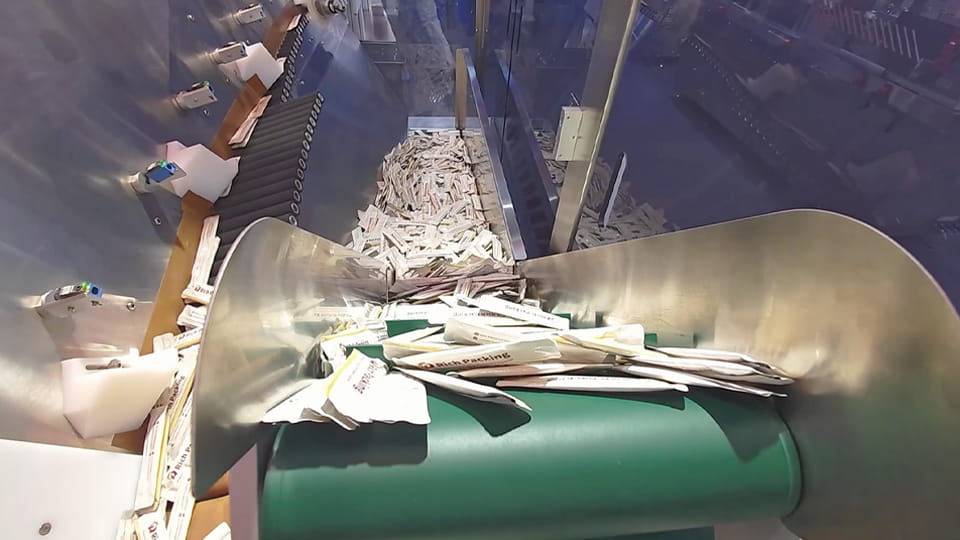
- Beuteltrennung: Während sich die Säcke aus dem Trichter bewegen, Sie kommen oft überlappend oder gestapelt heraus. Die Maschine Anti-Stacking-System trennt sie, so dass jeweils nur ein Beutel durchläuft. Dies verhindert Doppeleinzüge. Zum Beispiel, JinLus Design „stellt sicher, dass jeweils nur eine Tasche durchläuft.“, Fehler, die dadurch verursacht werden, dass zwei oder mehr Säcke gleichzeitig passieren, werden vollständig eliminiert.“. Die Trennung erfolgt in der Regel mit speziellen Rollen oder Förderbändern, die festsitzende Beutel vorsichtig auseinanderhebeln.
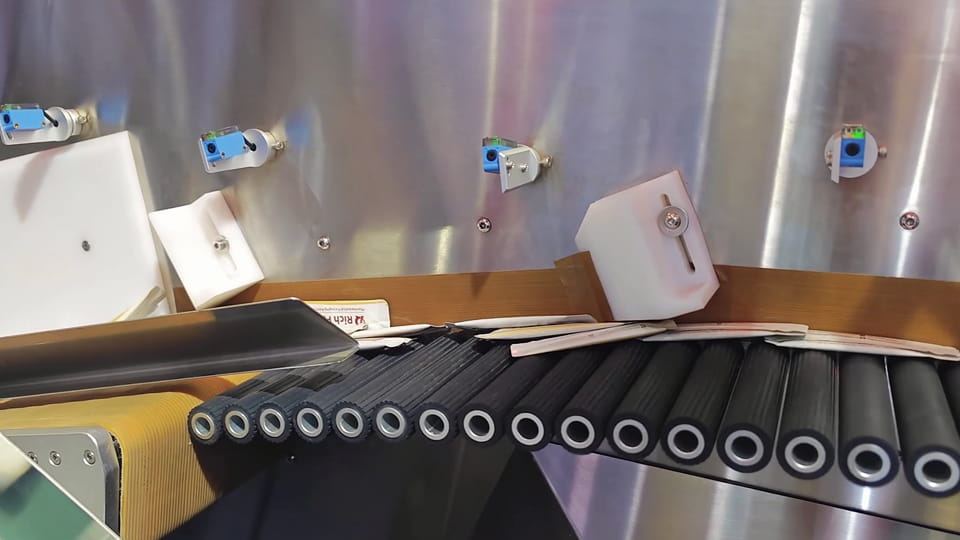
- Ausrichtung und Ausrichtung des Beutels: Nächste, die Maschine orientiert jeden Beutel in eine einheitliche Richtung (z.B. Alle Etikettenseiten nach oben oder alle Siegel auf einer Seite). Dies geschieht typischerweise mit servoangetriebenen Rollen oder Riemen. Hochpräzise Servomotoren drehen und positionieren jeden Beutel während des Transports. Staubdicht, Antistatische Rollen greifen den Beutel und richten ihn aus. Zum Beispiel, ein Design verwendet 11 Servo-Direktantriebsmotoren um Rollenbewegungen zu synchronisieren, so dass sich die Taschen „perfekt synchron bewegen“., ohne auszurutschen oder zu springen,„sie in Einklang zu halten. Das Ergebnis ist ein Strom von Beuteln, die alle in die gleiche Richtung zeigen.
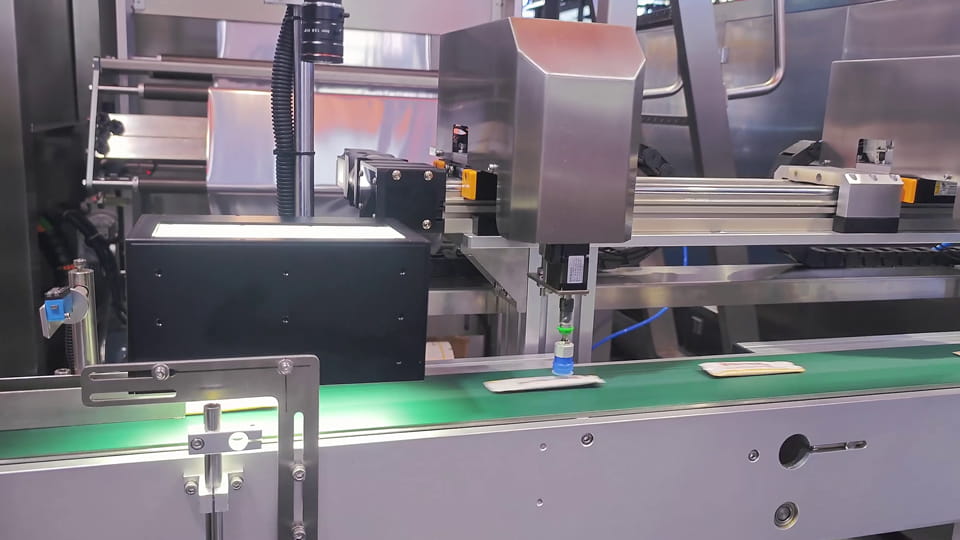
- Sensorerkennung: Während des gesamten Prozesses, Photoelektrische oder optische Sensoren überwachen jeden Beutel. Sensoren erkennen die Anwesenheit einer Tasche, Orientierung, und eventuelle Auffälligkeiten (wie eine streunende Überlappung oder ein abgewinkelter Vorschub). Wenn ein Beutel nicht richtig ausgerichtet ist oder verklemmt ist, Die Sensoren lösen sofort eine Reaktion aus. Diese Sensoren liefern Echtzeitdaten an das Steuerungssystem. In einer hochwertigen Maschine, Jede Position in der Linie verfügt über Sensoren, die dies gewährleisten Ohne toten Winkel Abdeckung. Die Rückkopplungsschleife hält den Sortierprozess fehlerfrei.
- Sortieren und Zählen: Einmal ausgerichtet, Die Beutel durchlaufen eine letzte Sortier- und Zählstation. Hier, Die Maschine sorgt dafür, dass die Beutel einzeln einem Austragsförderer oder einer Rutsche zugeführt werden. Es zählt jeden Beutel mit äußerster Genauigkeit – oft sogar übertreffend 99.97% Genauigkeit. Fortgeschrittene Systeme versehen die Zählung sogar mit einem Zeitstempel oder einem Barcode. Der Hochgeschwindigkeitszähler stellt sicher, dass die genaue Anzahl der Beutel bekannt ist, und kann bei Unstimmigkeiten einen Alarm auslösen. Diese Genauigkeit reduziert Fehlzählungsfehler im weiteren Verlauf erheblich.
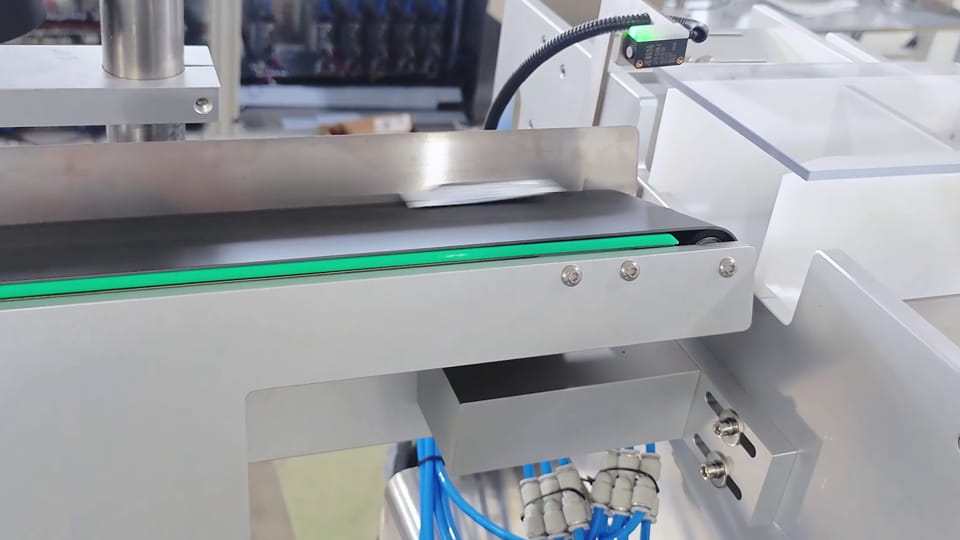
- Zurückweisung von Mängeln: Jeder Beutel, der immer noch falsch ausgerichtet ist, Wohnung (horizontal), oder defekt wird durch einen Ablehnungsmechanismus ausgeworfen. Zum Beispiel, wenn ein Beutel flach statt aufrecht liegt, Ein System zur „horizontalen Beutelzurückweisung“ sorgt dafür, dass es von der Linie abgelenkt wird. Ähnlich, Sensoren können zerrissene oder falsch gefüllte Beutel erkennen, Auslösen einer automatischen Ablehnung. Hier entlang, nur richtig ausgerichtet, Einzelbeutel gehen weiter. Der gesamte Prozess stellt sicher, dass keine verklemmten oder falsch sortierten Beutel in den Kartonierer oder die Kartonmaschine gelangen.
Jeder Schritt wird automatisch mit minimalem menschlichen Eingriff durchgeführt. Moderne Maschinen vereinen diese Schritte zu einem kompakten System. Zum Beispiel, eins Vollservo-Sortiermaschine ist auf einem einzigen Rahmen aufgebaut: Ein Trichter beschickt die Säcke, Servoriemen und Rollen richten sie aus, Mehrere Sensoren prüfen sie, und ein Förderband entlädt sie der Reihe nach – alles in einem kontinuierlichen Fluss.
[jl_youtube src=”https://www.youtube.com/embed/NxTAzsZIx-s”]
Hauptvorteile der Verwendung einer Beutelsortiermaschine
Die Implementierung einer automatischen Beutelsortiermaschine bringt unmittelbare Vorteile zu jeder Verpackungslinie. Zu den Hauptvorteilen gehören:
- Höhere Produktionseffizienz: Die Automatisierung beschleunigt das Sortieren erheblich. Ein Hochgeschwindigkeitsbeutelsortierer kann damit umgehen Hunderte Beutel pro Minute, weit über die menschlichen Fähigkeiten hinaus. Zum Beispiel, JinLus Sortierer läuft auf 420 Säcke/Min, und andere Modelle Griff 400 oder mehr. Dies kontinuierlich, Die schnelle Ausgabe sorgt dafür, dass Ihre nachgeschalteten Verpackungsmaschinen mit voller Geschwindigkeit versorgt werden. Das Ergebnis ist ein deutlich höherer Durchsatz pro Stunde. In der Praxis, Betriebe verzeichnen einen Anstieg der Produktionsraten und kürzere Durchlaufzeiten, wenn sie die manuelle Sortierung durch ein automatisches System ersetzen.
- Verbesserte Sortiergenauigkeit: Automatische Sortierer beseitigen die Fehler, die Menschen machen. Überlappungen und fehlende Gepäckstücke gibt es praktisch nicht mehr. High-End-Maschinen zeichnen sich durch Zählgenauigkeit aus 99.9% (Fehlerraten unten 0.009%). Spezielle Funktionen wie Anti-Stacking-Systeme und fotoelektrische Sensoren halten die Fehlerquote extrem niedrig. Dadurch entfällt der Doppeleinzug mehr, keine verpassten Zählungen, und sehr wenige Marmeladen. In einer automatisierten Linie, Jeder Beutel wird verfolgt und gezählt, Daher sind Ihre endgültigen verpackten Zählungen zuverlässig. Infolge, Verpacker vermeiden kostspielige Rückrufe oder Umpackarbeiten aufgrund von Fehlzählungen.
- Reduzierte Arbeitskosten: Durch das Ersetzen manueller Aufgaben, Diese Maschinen reduzieren den Personalbedarf. Mitarbeiter, die früher manuell sortierten und zählten, können neu eingesetzt werden. Zum Beispiel, Eine nutrazeutische Pflanze berichtete a 90% Rückgang der manuellen Sortierarbeit nach der Installation eines automatischen Sortierers. Zur Überwachung des Prozesses sind weniger Bediener erforderlich – oft nur ein Vorgesetzter für mehrere Maschinen. Im Laufe der Zeit ist dieser ROI erheblich: Sie sparen Löhne und reduzieren menschliche Ermüdung oder Fehler.
- Bessere Hygiene und Compliance: Die Minimierung des menschlichen Kontakts ist in der Pharma- und Lebensmittelbranche besonders wichtig. Beutelsortierer sind für saubere Umgebungen konzipiert: Kontaktteile sind in der Regel 304 oder 316 Edelstahl und die Oberflächen sind glatt und leicht abwaschbar. Zum Beispiel, Der Sortierer von JinLu verwendet 316L für den Produktkontakt und 304 für Struktur, treffen CGMP Standards. Das beiliegende Design (oft mit Sicherheitsglasfenstern) trägt auch zur Aufrechterhaltung einer hygienischen Barriere bei. Dank der leicht zu reinigenden Funktionen und der wenigen Ecken der Maschine können Sie die Maschine schnell desinfizieren. Dadurch wird das Kontaminationsrisiko im Vergleich zur manuellen Handhabung erheblich reduziert.
- Einfache Integration in Verpackungslinien: Eine Beutelsortiermaschine ist so konzipiert, dass sie in Ihre Linie passt. Es kann Beutel in verschiedenen Ausrichtungen entladen (Wohnung, aufrecht, oder gestapelt) passend zur nächsten Maschine. Zum Beispiel, Sie können die Auswurfhöhe oder den Auswurfwinkel anpassen, sodass die Beutel direkt in einen gelangen Kartoniermaschine, A Zählen/Stauförderer, oder ein Kofferpacker. Viele Maschinen werden mit standardisierten Förderbandhöhen oder Montagesätzen geliefert. In der Praxis, Sie können den Sortierer mit minimalen Layoutänderungen per Plug-and-Play in ein bestehendes System integrieren. Dadurch wird das Hinzufügen von Automatisierung vereinfacht: Verbinden Sie einfach den Auslass des Sortierers mit dem Einlassförderer Ihres Kartonierers. Das Ergebnis ist ein nahtloser, durchgängig automatisierte Linie von der Abfüllung bis zur Endverpackung.
Anwendungen von Beutelsortiermaschinen
Beutelsortierer finden branchenübergreifend breite Anwendung – Überall dort, wo kleine Beutel oder Beutel gezählt oder geordnet zugeführt werden müssen. Zu den wichtigsten Anwendungsbereichen gehören:
- Pharmazeutische Verpackung: Dies ist ein wichtiger Anwendungsfall. Pharmalinien verpacken oft Pulver, Granulat, oder Flüssigkeiten in Sachets und Beutel. Ein Beutelsortierer sorgt für jede Dosis (z.B. Medikamentenbeutel, Ergänzungspulver Pack) wird richtig gehandhabt. Es bietet die Präzision und Compliance, die für Medikamente erforderlich sind. Zum Beispiel, Solche Maschinen verarbeiten routinemäßig Medikamentenbeutel, Vitaminpakete, Orale Flüssigkeitsbeutel, und sogar kleine Folienblisterpackungen. Weil sie sich treffen GMP-Standards und genaues Zählen haben, Sie sind ideal für Apothekenlinien, bei denen Genauigkeit und Rückverfolgbarkeit von entscheidender Bedeutung sind. Viele Pharmahersteller verwenden Sortierer zur Beschickung von Kartonierern oder Blisterpacker ohne menschliches Zutun.
- Nutrazeutisch & Ergänzungsverpackung: Denken Sie an Vitamingetränkemischungen, Beutel mit Proteinpulver, Gesundheitsergänzungspakete, Probiotika, usw. Diese Produkte sind oft in Beutel oder Stickpack bilden. Beutelsortierer verarbeiten Produkte wie Beutel mit Proteinpulver, Vitamingetränkemischungen, und probiotische Packungen. Sie stellen sicher, dass jede Portion vor dem Verpacken gezählt und ausgerichtet wird. Nutraceutical-Linien schätzen den zusätzlichen Durchsatz, da die Nachfrage hoch sein kann. Ein Sortierer trägt dazu bei, die Produktqualität und -geschwindigkeit für Artikel wie Instant-Energiepulver oder Kollagenbeutel aufrechtzuerhalten.
- Essen & Getränkeverpackung: Beutelsortierer sind in Lebensmittellinien weit verbreitet. Zum Beispiel, sie sortieren Kaffee- oder Teestickpackungen, Zucker oder Gewürzbeutel, Instant-Getränkemischungen, Soßen- und Gewürzbeutel. Einige Snacklinien verwenden sie für einzelne Nuss- oder Gewürzbeutel, zu. Die schonende Handhabung des Sortierers (weiche Walzen und kontrollierte Vorschübe) Dadurch werden empfindliche Lebensmittelbeutel nicht beschädigt. In der Praxis, Linien mit Hochgeschwindigkeitsverpackung (z.B. Mehrbahnige Beutelfüller) Sie benötigen einen Sortierer, um den Output für die Karton-/Kartonverpackung zu sammeln. Durch Vorsortierung, Maschinen verhindern nachgelagerte Staus und sorgen für die exakte Zählung (z.B. 10 Teebeutel pro Packung) ist mit.
- Körperpflege und Haushaltschemikalien: Beutelsortierung ist nicht nur für Lebensmittel/Pharma gedacht. Dies gilt auch für Körperpflege- und Chemieprodukte. Zum Beispiel, Beutel mit kosmetischen Gesichtsmasken, Shampoo-/Conditioner-Probepakete, Waschmittelkapseln in Beuteln, oder Beutel mit flüssigem Mundwasser kann alles sortiert werden, inklusive täglicher Chemikalie (Mundwasser, Waschmittel) und Kosmetik (Gesichtsmasken, Lotionen) Beutel. Jede Branche, die Einwegpackungen verwendet – vom Lotionstester bis zur Mini-Waschmittelpackung – kann davon profitieren. Die Sortiermaschine sorgt für diese unterschiedlich geformten Beutel (Reißverschlusstaschen, Kissenpackungen, usw.) korrekt der nächsten Maschine zugeführt werden.
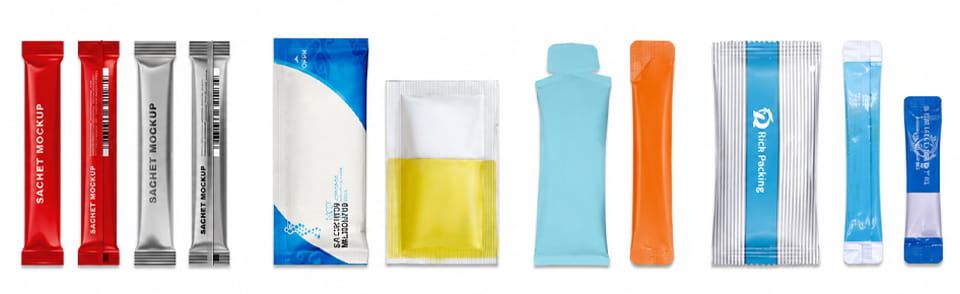
Die Beutelsortierer von Jinlupacking bedienen ein breites Branchenspektrum – von Snack- und Kaffeebeuteln bis hin zu Waschmittel- und Kosmetikbeuteln, Dies spiegelt die breite Anwendbarkeit der Beutelsortiertechnologie wider.
Zusammenfassend, wenn sich Ihr Produkt in einem kleinen Beutel befindet, Tasche, oder Beutel und Sie müssen sie zuverlässig zählen und füttern, Eine Beutelsortiermaschine ist eine mögliche Lösung. Seine Flexibilität deckt nahezu alle heute verwendeten Beutelformate ab.
So wählen Sie die richtige Beutelsortiermaschine aus
Die Auswahl des idealen Sortierers hängt von Ihren Produkt- und Linienanforderungen ab. Hier sind die wichtigsten Faktoren, die es zu berücksichtigen gilt:
- Beutelgröße: Überprüfen Sie die zulässige Länge und Breite der Maschine. Zum Beispiel, Der Sortierer von JinLu verarbeitet Beutel mit einer Länge von bis zu 185 mm und einer Breite von 110 mm. Wenn Ihre Beutel deutlich größer sind, Du brauchst ein anderes Modell. Berücksichtigen Sie auch die Form: Die meisten Sortierer können Kissenbeutel verarbeiten, Stickpacks, und rechteckige Beutel, aber sehr große oder ungewöhnliche Formen erfordern möglicherweise eine individuelle Anpassung.
- Erforderliche Produktionsgeschwindigkeit: Passen Sie die Geschwindigkeit des Sortierers an Ihre Linie an. Berechnen Sie, wie viele Beutel pro Minute (BPM) Sie benötigen basierend auf Ihren Abfüll- und Verpackungszielen. Sortierer gibt es in verschiedenen Ebenen: einige laufen etwa 100–150 BPM, während High-End-Modelle 300–400+ BPM erreichen. Erinnern, Eine höhere Geschwindigkeit hängt oft von einer kleineren Beutelgröße oder einem kleineren Produkttyp ab. Wenn Ihre Leitung ein hohes Volumen hat, Entscheiden Sie sich für einen Hochgeschwindigkeitssortierer; wenn Ihre Linie kleiner ist, Eine Einheit mit niedrigerer Geschwindigkeit kann ausreichen.
- Beutelmaterial: Betrachten Sie den Film oder das Material. Folie, Kunststofflaminat, und Papierbeutel verhalten sich anders. Folien und beschichtete Folien können rutschig oder anfällig für statische Aufladung sein. Überprüfen Sie, ob die Maschine dies hat antistatische Eigenschaften oder strukturierte Walzen (z.B. staubdicht, antistatische Rollen). Einige Sortierer verfügen über einen einstellbaren Rollendruck oder Oberflächenmaterialien für unterschiedliche Beuteltexturen. Wenn Ihre Beutel sehr leicht oder sehr steif sind, Erwähnen Sie dies bei der Auswahl, damit der Hersteller die Handhabungsmechanismen anpassen kann.
- Nachgeschaltete Ausrüstung: Überlegen Sie, was der Sortierer einspeisen soll. Handelt es sich um einen automatischen Kartonierer?? Ein Kofferpacker? Ein Zählförderer? Dies wirkt sich auf das Entladungsformat aus. Zum Beispiel, wenn Sie einen Kartonierer beschicken, der flache Beutel in einem Stapel erwartet, Der Sortierer sollte die Beutel flach ausgeben. Bei Beschickung eines Beutelzählbandes, Vielleicht möchten Sie, dass sie aufrecht stehen. Die meisten Maschinen ermöglichen die Konfiguration der Auswurfhöhe und -ausrichtung. Berücksichtigen Sie auch Verbindungspunkte (z.B. Förderhöhe und Steuerungskompatibilität).
- Hygiene- und Reinigungsanforderungen: Für pharmazeutische oder Lebensmittelzwecke, Überprüfen Sie die Konstruktion. Suchen 304/316 Edelstahl, geschlossene Motoren, und reinigungsfreundliche Designs. Der Sortierer sollte bei Bedarf Standards wie GMP oder CE erfüllen. Funktionen wie Schnellverschluss-Förderbänder, versiegelte Rollen, und CIP (Clean-in-Place) Kompatibilität kann wichtig sein. In der Regel, desto weniger Spalten, desto besser für die Reinigung. Wenn Ihre Branche Pharma ist, Bestehen Sie auf einem cGMP-konformen Aufbau.
Durch sorgfältige Abstimmung der Maschinenspezifikationen (Geschwindigkeit, Größenbereich, Materialtransport) zu Ihrem Produkt und Ihrer Linie, Sie werden das effektivste Modell finden. In der Praxis, Verkäufer werden Sie nach den Abmessungen Ihres Beutels fragen, gewünschten Durchsatz, und was als nächstes kommt – nutzen Sie diese Informationen, um den optimalen Sortierer zu erhalten.
Automatische Beutelsortiermaschine vs. manuelle Beutelsortierung
Die Wahl zwischen manueller und automatischer Sortierung ist im direkten Vergleich ein Kinderspiel:
| Besonderheit |
Manuelle Sortierung |
Automatische Beutelsortierung |
| Arbeitsbedarf |
Sehr hoch (mehrere Personen) |
Niedrig (ein Operator oder keiner) |
| Sortiergeschwindigkeit |
Beschränkt (Dutzende Beutel/Min) |
Sehr hoch (100–400+ Beutel/Min) |
| Zählgenauigkeit |
Betreiberabhängig (fehleranfällig) |
Automatisiert hochpräzise (99.9%+) |
| Kontinuierlicher Betrieb |
Schwierig (Ermüdung, bricht) |
24/7 Dauerbetrieb |
| Menschlicher Kontakt |
Direkt (Es besteht die Gefahr einer Kontamination) |
Minimal (geschlossene Maschine) |
| Integration |
Beschränkt (Übergabe erforderlich) |
Einfach (Direkter Förderbandausgang) |
In dieser Tabelle werden die wichtigsten Unterschiede hervorgehoben. Die manuelle Sortierung kann bei sehr geringen Mengen oder langsamen Linien funktionieren, Aber im Maßstab wird es schnell undurchführbar. Automatisierung beschleunigt nicht nur die Produktion, sondern sorgt auch für Konsistenz und Rückverfolgbarkeit. In fast jedem modernen Verpackungsbetrieb, Investition in einen automatischen Sortierer zahlt sich aus durch Steigerung der Leistung und Reduzierung von Fehlern.
Abschluss
A Beutelsortiermaschine ist ein wichtiges Automatisierungstool für jede Branche, die Produkte in kleine Beutel oder Beutel verpackt. Durch automatisches Organisieren, ausrichten, Zählen, und füttere deine Beutel, Es beseitigt manuelle Engpässe und erhöht den Produktionsdurchsatz. Sie erhalten einen schnelleren Betrieb (Hunderte Beutel pro Minute), nahezu perfekte Zählgenauigkeit, niedrigere Arbeitskosten, und bessere Hygiene – und das alles bei gleichzeitiger Vermeidung von Staus in nachgeschalteten Kartonierern oder Sammelpackern.
Wenn Sie eine hohe Qualität benötigen Automatische Beutelsortiermaschine für Pharmabeutel, Lebensmittelbeutel, Flüssigkeitsstäbchen oder andere kleine Beutel, Erwägen Sie die Lösungen von JinLu Packing. Wir bieten Maschinen an (wie das JL-PA-420) das hält bis zu 420 Beutel/min mit >99.97% Genauigkeit. Unsere Maschinen lassen sich nahtlos in Kartonier- und Zählgeräte integrieren. Unser Ingenieurteam kann ein Sortiersystem an Ihre Beutelgröße anpassen, Geschwindigkeit, und Verpackungslinienlayout.
Für maßgeschneiderte Automatisierung, Kontaktieren Sie uns um Ihre Anforderungen an die Beutelsortierung zu besprechen. JinLu Packing bietet Komplettlösungen für Beutel-/Beutelverpackungslinien, von der Sortierung bis zur Abfüllung, Kartonierung, und mehr. Lassen Sie unsere Experten das ideale Sortier- und Zuführsystem entwerfen, damit Sie konsistente Ergebnisse erzielen können, hohe Geschwindigkeit, vollautomatischer Betrieb auf Ihrer Linie.
FAQs zur Beutelsortiermaschine
Welche Arten von Beuteln kann eine Beutelsortiermaschine verarbeiten??
Moderne Beutelsortierer sind vielseitig einsetzbar. Sie können flache Beutel sortieren, Stickpacks, aufstehen (Doy) Beutel, Reißverschlusstaschen, Ausgussbeutel, und sogar unregelmäßig geformte Taschen. Zum Beispiel, Maschinen unterstützen häufig dreiseitig und vierseitig versiegelte Beutel, Ausgussbeutel, Standbeutel mit Reißverschluss, Stickpacks, und geformte Beutel. Wenn Ihre Beutel in den Größenbereich der Maschine fallen und flexibel sind, es sollte mit ihnen umgehen. Stellen Sie sicher, dass Sie dem Lieferanten jede ungewöhnliche Beutelform oder -dicke mitteilen.
Kann eine Beutelsortiermaschine Arzneimittelbeutel sortieren??
Absolut. Pharmazeutische Beutel (für Pulver, Granulat, oder Flüssigkeiten) sind eine Hauptanwendung. Diese Maschinen sind so gebaut, dass sie den Pharmastandards entsprechen (Edelstahl, cGMP-Konformität). Sie bieten die hohe Präzision und das hygienische Design, das für Medikamente erforderlich ist. In der Praxis, Viele Arzneimittelhersteller verwenden Beutelsortierer, um Dosispackungen ohne manuelle Eingriffe in Kartonierer einzuführen.
Was ist der Unterschied zwischen einer Beutelsortiermaschine und einer Beutelzählmaschine??
Eine Beutelsortiermaschine zählt nicht nur die zufällig angeordneten Beutel, sondern richtet sie auch aus und sortiert sie in eine Reihenfolge. Es kann chaotisch dauern, Überlappende Eingabe und Ausgabe ordentlich, bestellter Stream. Im Gegensatz, eine Beutelzählmaschine (oder Zählband) Normalerweise wird davon ausgegangen, dass die Beutel bereits in einer Linie ausgerichtet sind; Es zählt und sortiert sie einfach nach Gewicht oder durch fotoelektrische Sensoren, während sie vorbeikommen. Die Zählmaschine trennt oder richtet gemischte Beutel nicht aus. Wenn Sie also mit ungeordneten Eingaben umgehen müssen, ein Sortierer ist erforderlich; wenn Ihre Beutel bereits in Ordnung sind und Sie nur noch zählen müssen, Sie können eine Zählmaschine verwenden.
Kann die Maschine an eine Kartoniermaschine angeschlossen werden??
Ja. Tatsächlich, Beutelsortierer sind für die Beschickung nachgeschalteter Geräte wie automatische Kartonierer oder Sammelpacker konzipiert. Oftmals können Sie einen Förderer vom Sortierer direkt in den Einlauf eines Kartonierers einbauen. Viele Sortierer ermöglichen die Anpassung der Auswurfhöhe oder -ausrichtung (flach vs. aufrecht) passend zur nächsten Maschine. Durch diese nahtlose Übergabe entsteht beispielsweise eine durchgehende Linie, direkt von einem Beutelfüller → Beutelsortierer → automatischer Kartonierer, ohne manuelle Schritte dazwischen.
Wie schnell kann eine automatische Beutelsortiermaschine arbeiten??
Die Geschwindigkeiten variieren je nach Modell und Produktgröße. Typische Bereiche liegen zwischen ca 100 Packungen pro Minute (ppm) für kleine Maschinen bis 400+ ppm für High-End-Geräte. Zum Beispiel, Das Hochleistungsmodell von JinLu reicht bis zu 420 Säcke/Min. Ruidas Sortierer schlägt zu 400 Säcke/Min. Maschinen mit niedrigerer Geschwindigkeit (100–150 S./Min) gibt es für kleinere oder langsamere Leitungen. Die tatsächliche Geschwindigkeit hängt auch von der Beutelgröße und der Fließgeschwindigkeit ab. Stellen Sie sicher, dass Sie ein Modell wählen, das für die gewünschte Liniengeschwindigkeit oder darüber ausgelegt ist.
Welche Beutelgrößen kann die Maschine verarbeiten??
Jede Maschine hat einen bestimmten Größenbereich. Übliche Grenzwerte liegen bei einer Länge von 80–185 mm und einer Breite von 10–110 mm, Dies ist jedoch je nach Modell unterschiedlich. Zum Beispiel, Der Sortierer von JinLu verarbeitet bis zu 185 x 110 mm, und Keypack-Griffe mit einer Länge von 84–168 mm. Überprüfen Sie immer das Datenblatt des Herstellers. Wenn Ihr Beutel nahe am Maximum ist, Stellen Sie sicher, dass es zuverlässig funktioniert (oder erwägen Sie eine benutzerdefinierte Version).
Wie wähle ich die richtige Beutelsortiermaschine für meine Produktionslinie aus??
Weitere Informationen finden Sie oben in unserem Abschnitt „Wie Sie auswählen“.. Kurz: Definieren Sie Ihre Beutelmaße, Zielgeschwindigkeit (Beutel/Minute), und Materialart. Stellen Sie dann sicher, dass die Spezifikationen der Maschine diesen entsprechen oder diese übertreffen. Berücksichtigen Sie auch Ihre nachgeschaltete Ausrüstung – wenn Sie über einen Kartonierer oder ein Zählband verfügen, Stellen Sie sicher, dass sich der Sortierer darin integrieren lässt. Überprüfen Sie die Hygieneanforderungen (304SS für Pharmalinien) und Zertifizierungen, falls erforderlich. Der richtige Anbieter sollte Ihnen dabei helfen, ein Modell an Ihre Bedürfnisse anzupassen. (Zum Beispiel, Sie fragen möglicherweise nach den Maßen Ihres Beutels, Produktionsrate, und nachgeschaltetem Getriebe, um einen geeigneten Sortierer zu empfehlen.)
Referenzen:
1.Sortieren von Gegenständen auf einem laufenden Förderband. Teil 1: eine Technik zur Erkennung und Klassifizierung von Objekten —— ScienceDirect
2.Entwickelte ein automatisiertes Design-Sortiersystem nach Außenkanten des Objekts —— WILEY Online-Bibliothek
3.Entwurf und Implementierung einer visionsbasierten Sortiermaschine mit intermittierender Zuführung durch einen Manipulator —— ResearchGate
4.Ein System zur Erkennung und Sortierung von Lebensmittelverpackungen basierend auf Structured Light und Deep Learning —— arxiv.org
5.Design des Medikamentenbeutel-Sortiersystems basierend auf maschinellem Sehen und Parallelroboter —— qikan.cmes.org