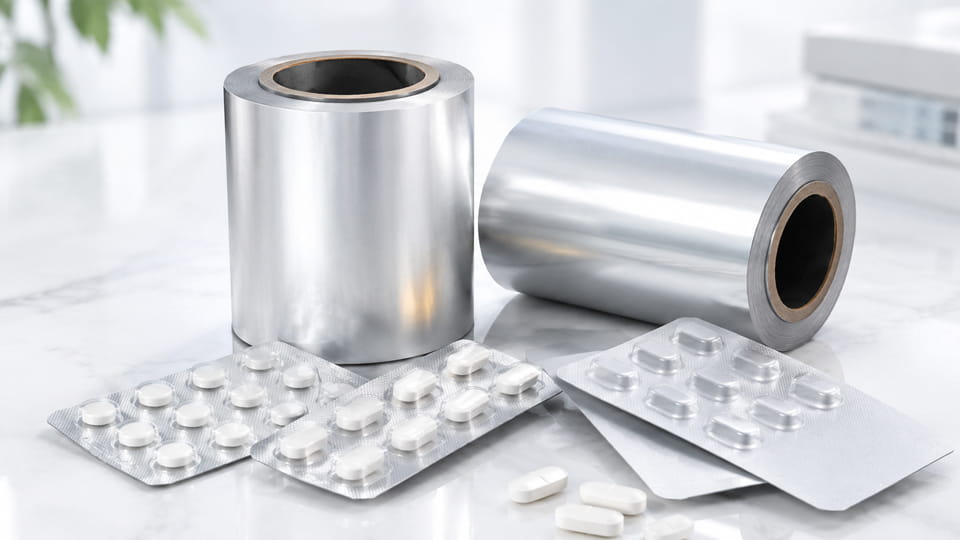

Einführung: Die meisten automatischen Blisterverpackungsmaschinenmodelle sind standardmäßig mit einem Bürstenzuführungssystem ausgestattet. Fehlende Kapseln in Blisterverpackungen sind jedoch ein häufiges und kostspieliges Problem für Hersteller von Verpackungen für Arzneimittel und Nahrungsergänzungsmittel. Startups wundern sich: Was ist eine Blisterverpackung?? Es ist der automatisierte Herstellungsprozess, der Aluminium-PVC erzeugt, Aluminium-Aluminiumverpackungen für Produktionslinien für Blisterverpackungen für Medikamente und Nahrungsergänzungsmittel.

Eine Blisterpackung mit fehlenden Kapseln ist ein defektes Produkt. Es hat bereits Aluminiumfolie verbraucht, Aluminiumfolie, Kunststofffolie und andere Verbrauchsmaterialien, ohne Restwert. Außerdem ist eine manuelle Sortierung erforderlich, um fehlerhafte Artikel auszusortieren, Dies erhöht die Arbeitsbelastung Ihres Produktionsteams.
So vermeiden Sie fehlende Materialien, und wie man defekte Blisterpackungen mit leeren Hohlräumen aussortiert, ist für viele Fabriken zu einem großen Problem geworden. In diesem Artikel werden die Grundursachen und umsetzbare Lösungen zur Stabilisierung Ihres Blisterverpackungsprozesses aufgeschlüsselt.
Das Zuführsystem ist die häufigste Ursache für Probleme mit fehlenden Kapseln bei der Herstellung von Blisterverpackungen. Wir decken sowohl Standardkorrekturen für die Bürstenzuführung als auch das Upgrade der Grundursache für langfristige Stabilität ab, mit maßgeschneiderten Lösungen für Kapselblisterverpackungslinien.
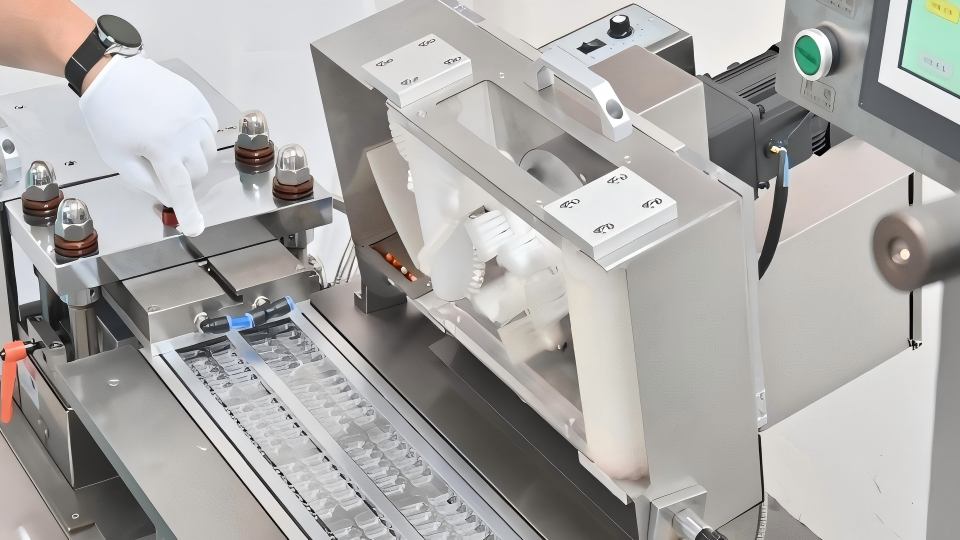
Falsche Höhe von Bürste und Reinigungswalze
Wenn die Bürste oder Reinigungswalze zu niedrig eingestellt ist, Die Borsten fegen Kapseln, die bereits in die Blasenhöhlen gefallen sind, direkt weg. Dies führt zu massenhaft leeren Hohlräumen in den Blisterpackungskapseln, ein großes Problem für die Herstellung von Blisterverpackungen für Medikamente und Nahrungsergänzungsmittel. Wenn zu hoch eingestellt, Das System kann das Material nicht schichtweise begrenzen. Die Kapseln stapeln sich und werden zusammengedrückt. Dies führt nicht nur leicht zu Staus und Unterbrechungen der Materialzufuhr, aber es kann sogar passieren, dass Kapseln platzen, Dies führt dazu, dass in der Folgeproduktion ständig Kapseln fehlen.
Lösung: Verstellen Sie die Handräder für die Bürsten- und Reinigungswalzenhöhe leicht. Lassen Sie einen kleinen Spalt, der etwas größer als der Kapselkörper ist. Hier entlang, Das System kratzt lediglich überschüssiges Material auf der Blisteroberfläche ab, und berührt die Kapseln in den Hohlräumen nicht.
Falsche Bürstenrotationsgeschwindigkeit
Wenn die Bürstengeschwindigkeit nicht synchron mit der Beschleunigung der Hauptmaschine erhöht wird, Überschüssige Kapseln können nicht rechtzeitig umgeleitet werden, Daher wird die Aluminium-Kunststoffplatte verschwendet. Sie stapeln sich am Einlauf, Dies führt zu Staus und übersprungenen Kavitäten. Wenn die Geschwindigkeit zu hoch ist, Dadurch werden die Kapseln bewegt, sodass sie hüpfen und sich verschieben, sodass sie nicht genau in die Blasenlöcher fallen können.
Lösung: Passen Sie die Drehzahl der Bürste synchron an die Arbeitsgeschwindigkeit der Maschine an. Erhöhen Sie die Geschwindigkeit moderat für eine Hochgeschwindigkeitsproduktion, und senken Sie ihn für eine Produktion mit niedriger Geschwindigkeit. Halten Sie die Materialzufuhr stabil und gleichmäßig.
Zu viel Material im Trichter
Kapseln sind lange Artikel mit unterschiedlicher Breite und Länge. Wenn der Trichter voll ist, Kapseln drücken gegeneinander, liegen Sie flach oder drehen Sie sich seitwärts. Sie bleiben leicht im Zufuhrkanal hängen, Dies führt zu Fütterungsunterbrechungen und ständig fehlenden Kapseln in den Aluminium-Kunststoff-Blisterpackungen.
Lösung: Kontrollieren Sie den Materialstand im Trichter. Halten Sie den Materialstand dazwischen 1/4 Und 1/3 der Behälterkapazität im täglichen Betrieb. Dadurch werden Blockaden durch das Zusammendrücken der Kapsel reduziert, und sorgt für eine gleichmäßige und stabile Fütterung.
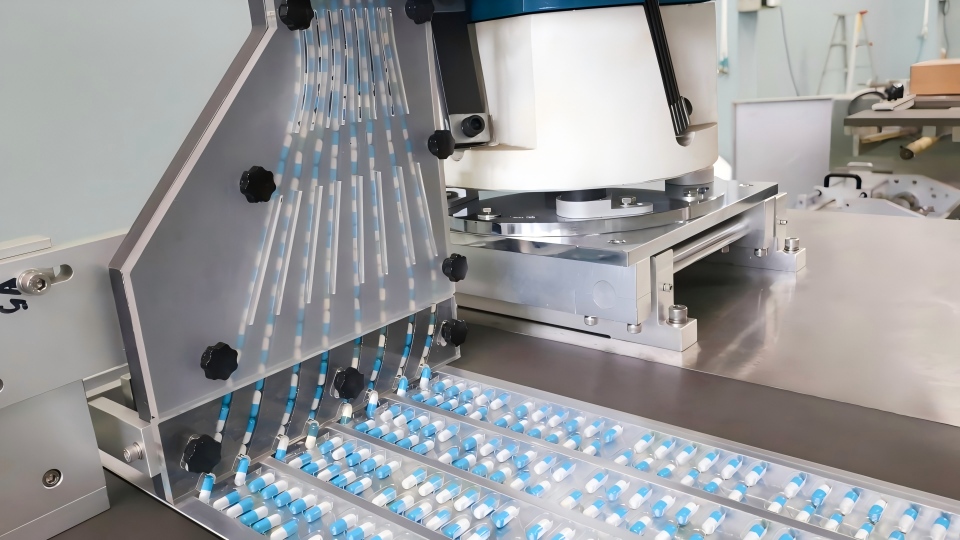
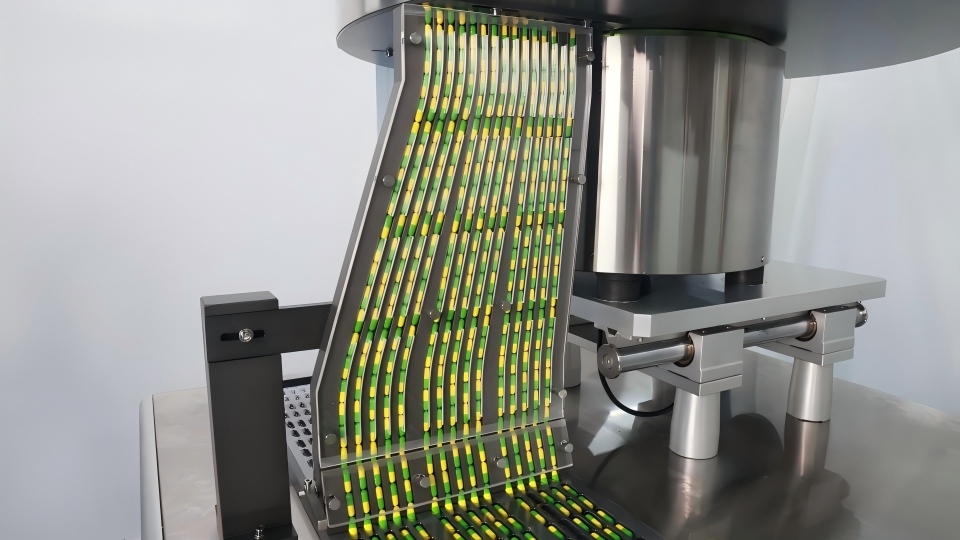
Um Probleme mit fehlenden Kapseln an der Quelle zu beseitigen, Sie können auf ein Zuführsystem mit Wasserfallführungsschienen umrüsten, eine der innovativsten Verpackungslösungen speziell für Hartkapseln.
Bei Jinlu Packing Machinery, Der komplette Satz Führungsschienen für die Zuführung wird eins zu eins individuell an die Außenabmessungen der Kapsel angepasst. Jede unabhängige Spur entspricht genau einer einzelnen Kavität in der Blisterverpackung. Die Materialien rutschen schichtweise entlang der Schienen nach unten, mit einer konsistenten Haltung während des gesamten Prozesses. Kein seitliches Umkippen, Stapeln, Es kommt zu Sprüngen oder Verschiebungen. Die Fütterungsgenauigkeit erreicht 99.97%.
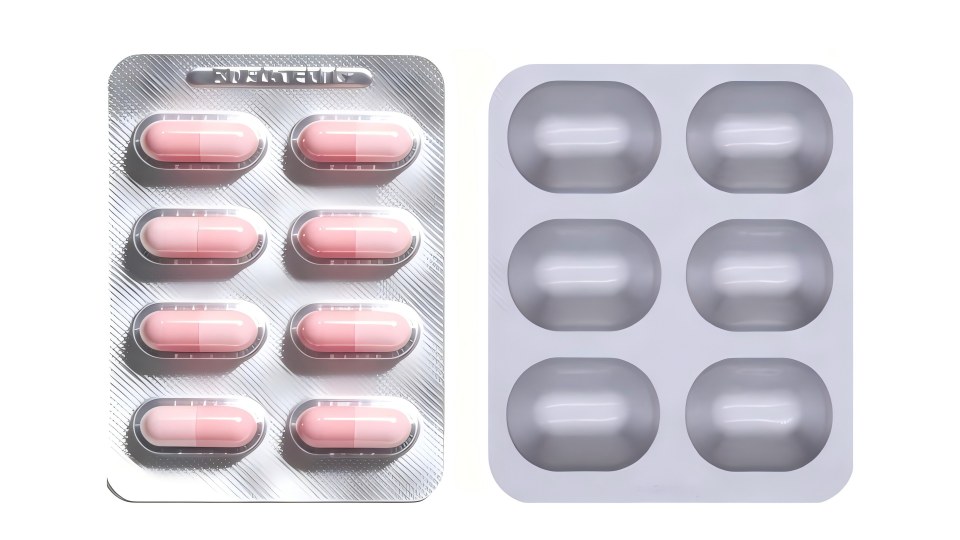
Dieses System macht eine wiederholte Anpassung der Bürstenhöhe überflüssig, Drehzahl oder Materialfüllstand im Trichter. Es sorgt auch bei langfristiger Massenproduktion für eine stabile Zufuhr, Damit ist es die bevorzugte Langzeitlösung zur Lösung leerer Hohlräume und fehlender Kapseln bei der Produktion von Kapselblisterpackungen.
Auch mit einem gut abgestimmten Fütterungssystem, Probleme mit der Kapselqualität können zu fehlenden Materialien in Blisterpackungen führen.
Wenn einige Kapseln aufgrund von Temperatur- oder Feuchtigkeitsschwankungen weich werden oder schmelzen, sie verformen sich und verkleben. Dadurch kommt es zu Materialanhaftungen und -staus, und die Kapseln können nicht in die Blisterlöcher gelangen.
Nicht richtig polierte Kapseln enthalten überschüssiges Pulver. Sie verkleben und verstopfen den Zufuhrkanal, Materiallieferung stoppen.
Lösung für Kapselkörperprobleme: Für die Aufbereitung der fertigen Kapseln direkt nach der Kapselfüllung empfehlen wir den Einsatz einer Polier- und Sortiermaschine. Die Polier- und Sortiermaschine nutzt Druckluft zum Polieren der Kapseln. Es entfernt überschüssiges Pulver von der Kapseloberfläche, und sortiert beschädigte oder ausgesonderte defekte Kapseln aus. Mit diesem Prozess, Ihre Kapseln werden gleichmäßiger, und lässt sich leichter in die Blasenhohlräume einführen. Diese einfache Vorbehandlung ist eine der praktischsten Verpackungslösungen, um nachgelagerte Zuführfehler bei Blisterpackungen für Kapseln und Blisterpackungen für Pillen zu reduzieren.
Mechanische Fehlausrichtungen und Synchronisierungsfehler zwischen dem Zuführsystem und der Folienzuführung sind eine weitere häufige Ursache für leere Blisterverpackungskavitäten.
Symptom: Die PVC-Folien bildenden Hohlräume und der Futterauslass sind vorne und hinten falsch ausgerichtet. Kapseln fallen in die Lücken zwischen den Hohlräumen, Dies führt zu leeren Hohlräumen in der Blisterpackung.
Lösung: Gehen Sie zur Maschinen-HMI, und Feinabstimmung der Offset-Parameter des Filmvorschubservos. Überprüfen Sie jeden Zuführkanal einzeln, um sicherzustellen, dass er mit der entsprechenden Blistermulde übereinstimmt. Überprüfen Sie regelmäßig, ob die Antriebswelle und die Antriebskette durchrutschen. Verriegeln Sie die Positionierungsbegrenzungsteile, um eine genaue Positionierung der PVC-Folienzufuhr zu gewährleisten.
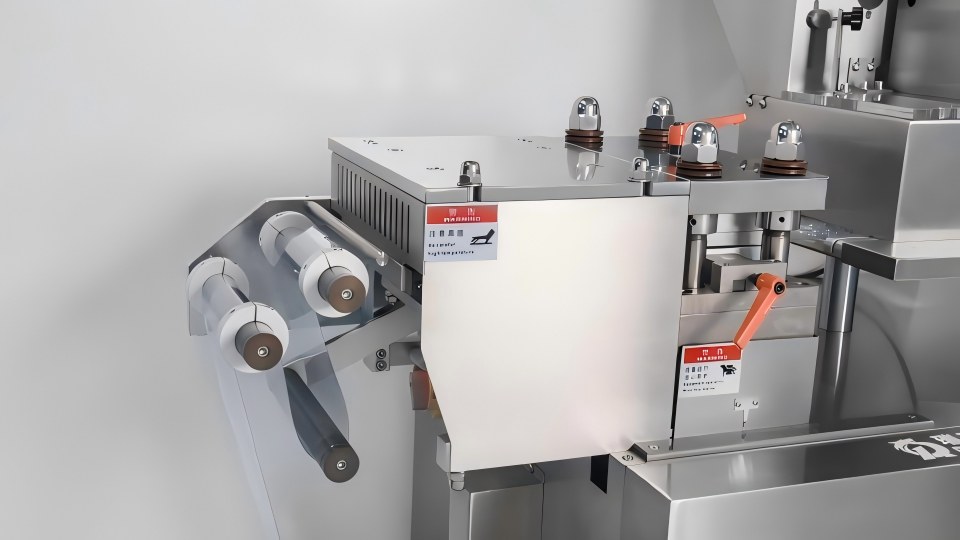
Symptom: Die Geschwindigkeit des Kapselvorschubs kann nicht mit der Geschwindigkeit des Filmvorschubs mithalten, Dies führt zu regelmäßigen und fehlenden Kapseln.
Lösung: Verringern Sie die Geschwindigkeit der Hauptmaschinenlinie ordnungsgemäß, und gleichzeitig die Vorschubvibrationsleistung leicht erhöhen. Für eine langfristige Hochgeschwindigkeits-Massenproduktion, Wir empfehlen die Umrüstung auf das Zuführsystem mit Wasserfall-Führungsschienen, um die Zuführeffizienz zu verbessern und sich an die Hochgeschwindigkeitsproduktion anzupassen.
Symptom: Kapseln haben eine lange Fallstrecke. Bevor sie vollständig in die Hohlräume fallen, Die Maschine tritt vor, um den Film zuzuführen, Dadurch entstehen leere Hohlräume.
Lösung: Erweitern Sie den Parameter Vorschubverzögerung im Maschinenprogramm. Lassen Sie genügend Pufferzeit, damit die Kapseln fallen können. Beginnen Sie mit der Filmzufuhr erst, nachdem sich die Kapseln vollständig in den Hohlräumen abgesetzt haben.
Abgenutzte oder nicht passende Hardware kann direkt dazu führen, dass Kapseln bei der Herstellung von Blisterverpackungen weggeschwemmt oder falsch ausgerichtet werden.
Symptom: Die Hälfte der Kapsel bleibt an der oberen Öffnung des Hohlraums hängen. Durch die anschließende Bürstenreinigung wird es direkt weggefegt, Dies führt dazu, dass nach dem Verschließen ein leerer Hohlraum entsteht.
Lösung: Ersetzen Sie die Formform durch eine tiefere Spezifikation. Stellen Sie sicher, dass die gesamte Kapsel vollständig in den Hohlraum eindringt. Für bestehende Formen, Überprüfen Sie die Formheiz- und Luftdruckparameter, und die Umformtiefe moderat erhöhen. Die Blistermaschinen der DPP-Serie von Jinlu verfügen über eine ausziehbare Schlitzstruktur. Der Werkzeugwechsel dauert nur 15 Minuten, Ausfallzeiten werden erheblich reduziert.
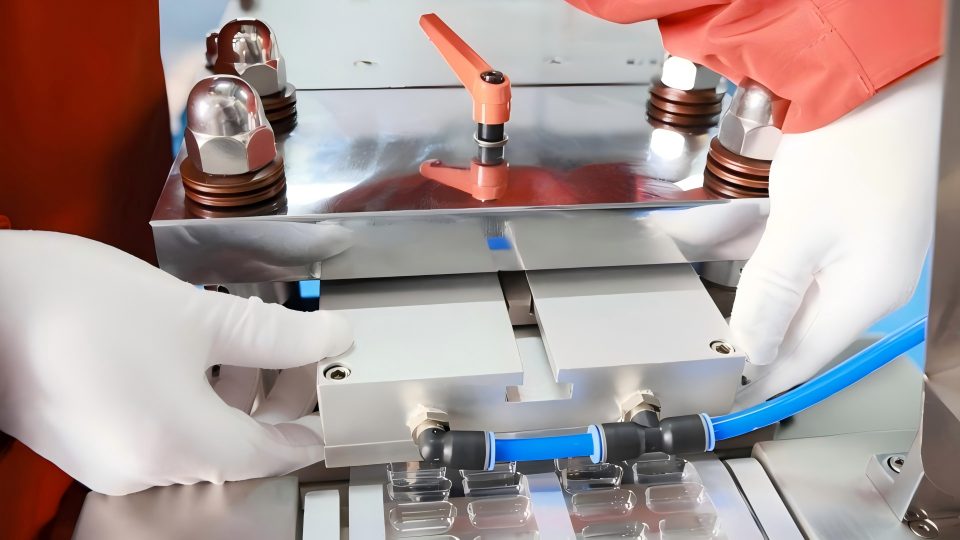
Symptom: Durch die verformte Führungsplatte verschiebt sich die Fallbahn der Kapsel, Daher kann es nicht mit dem Blisterloch ausgerichtet werden.
Lösung: Überprüfen Sie regelmäßig die Ebenheit des Führungsblechs. Ersetzen Sie es bei Verschleiß oder Verformung sofort durch ein brandneues. Dadurch wird ein gerader und präziser Fallweg der Kapseln gewährleistet.
Auch wenn der Fütterungsprozess reibungslos verläuft, Ausgefallene Inspektionssysteme können dazu führen, dass defekte Blisterpackungen mit fehlenden Kapseln in fertige Produkte einfließen.
Symptom: Die fotoelektrische Linse ist mit Pulver bedeckt, oder die Einbaulage des Sensors ist versetzt. Das System kann keine leeren Kavitäten erkennen, und fehlerhafte Produkte werden nicht zurückgewiesen.
Lösung: Wischen Sie die Linse des fotoelektrischen Sensors regelmäßig vor und während jeder Produktionsschicht ab. Installieren Sie eine staubdichte Schutzhülle. Kalibrieren Sie die fotoelektrischen Erkennungspunkte neu, um sie mit dem Erkennungsbereich der Blasenhöhle auszurichten.
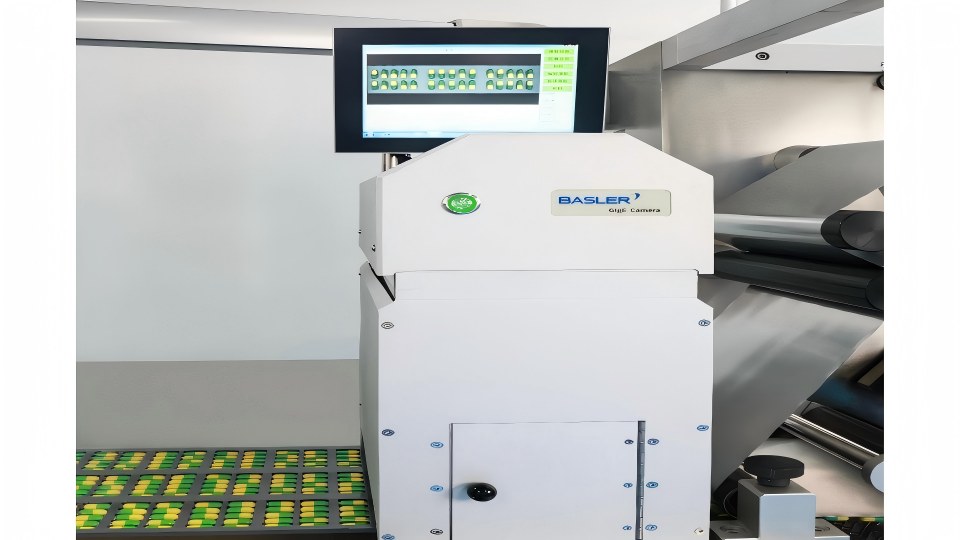
Für kleine oder dunkel gefärbte Kapseln, Sie können auf ein visuelles Inspektionssystem aufrüsten. Unser visuelles Inspektionssystem hat eine Genauigkeit von 99.97%, der Blisterpackungen mit fehlenden Kapseln effektiv abfangen kann. Dieses Upgrade der Materialinspektion ist für die Aufrechterhaltung der GMP-Konformität von entscheidender Bedeutung, insbesondere für Blisterverpackungen für Medikamente und hochpräzise Pharmaverpackungslösungen.
Aus tatsächlichen Produktionsszenarien, Die überwiegende Mehrheit der fehlenden Kapseldefekte in Blisterverpackungen ist auf fünf Hauptprobleme zurückzuführen: falsche Einstellung des Bürstenzuführsystems, Pulveranhaftung und Verformung von Kapseln, Nicht synchronisierte Indexierung des Filmvorschubs, Nicht übereinstimmende Formhohlraumspezifikationen, und fehlerhafte Erkennungssensoren.
Für kurzfristige Lösungen, Durch feine Parameteranpassungen können Sie das Problem schnell beheben, Hardware-Austausch, und Sensorreinigung und -kalibrierung. Für eine langfristige Massenproduktion, Wir empfehlen die Umrüstung auf die Wasserfall-Gleis-Fütterungsstruktur. Kombinieren Sie es mit einem Vorprozess zum Polieren und Sortieren der Kapseln, und ein hochpräzises visuelles Inspektionssystem. Dadurch entsteht ein vollständiges Regelsystem mit geschlossenem Regelkreis: Verhinderung fehlender Kapseln an der Quelle, und das Abfangen fehlerhafter Produkte durch eine vollständige Inspektion im Back-End.
Diese Pharmaverpackungslösungen und automatisierten Verpackungslösungen lösen effektiv die Kernprobleme der Pharmahersteller: hoher Verbrauchsmüll, hohe manuelle Ablehnungsarbeitsbelastung, und nicht konforme Endproduktqualität. Sie helfen Ihnen auch dabei, GMP-Produktionsstandards einzuhalten, und vermeiden Sie vollständig das Risiko, dass fehlerhafte Blisterverpackungen mit fehlenden Kapseln in die Endprodukte gelangen.