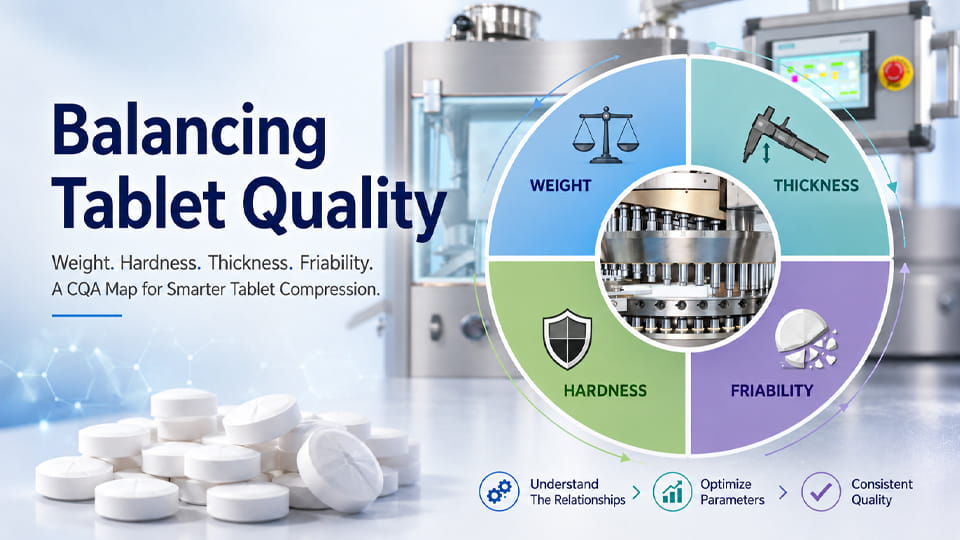
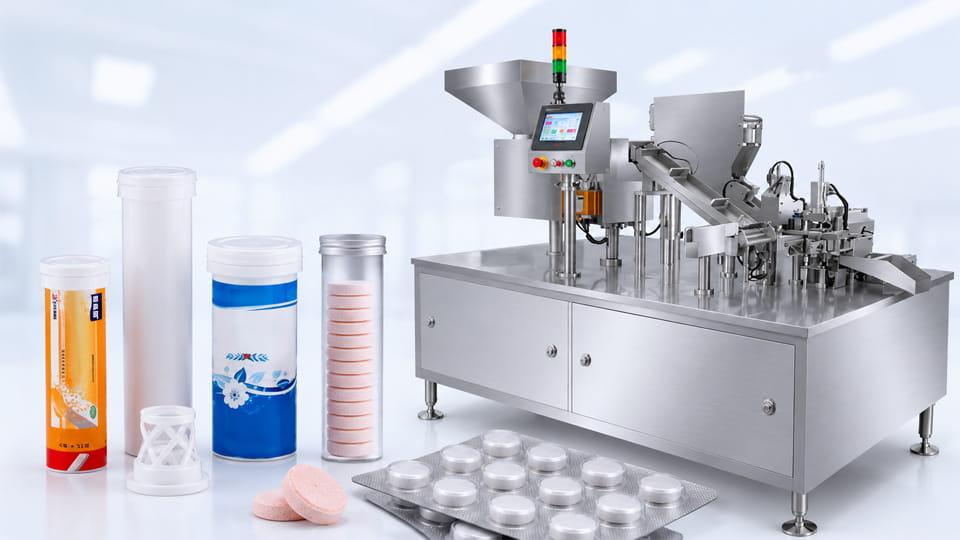
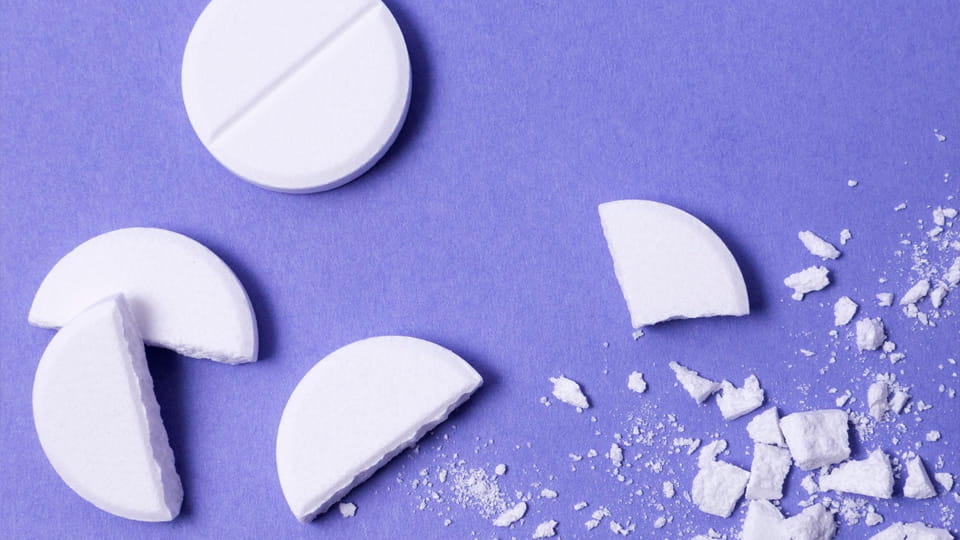
In Tablettenherstellung, Härte Und Bröckeligkeit sind zwei wichtige Qualitätsmaßstäbe. Härte (Bruchkraft) sagt uns, wie viel Druck eine Tablette aushalten kann, bevor sie zerbricht. Die Bröckeligkeit misst, wie leicht die Oberfläche einer Tablette beim Sturz oder bei der Handhabung absplittert oder erodiert. Mit anderen Worten, Härteprüfungen innere Stärke, während die Bröckeligkeit überprüft wird Oberflächenbeständigkeit. Beide Eigenschaften wirken sich auf die Weiterverarbeitung aus – von der Komprimierung der Tabletten über die Beschichtung bis hin zur endgültigen Verpackung. In diesem Artikel wird erläutert, warum Bröckeligkeit vs. Härte wichtig sind, wie jeder getestet wird, und wie sie die Tablet-Komprimierung beeinflussen, Beschichtung, und Verpackungsqualität in realen Produktionslinien.
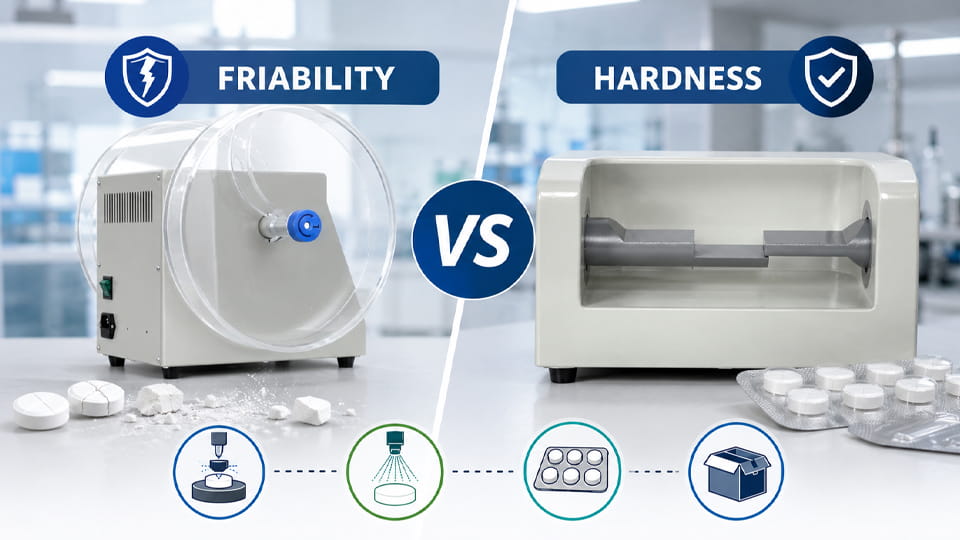
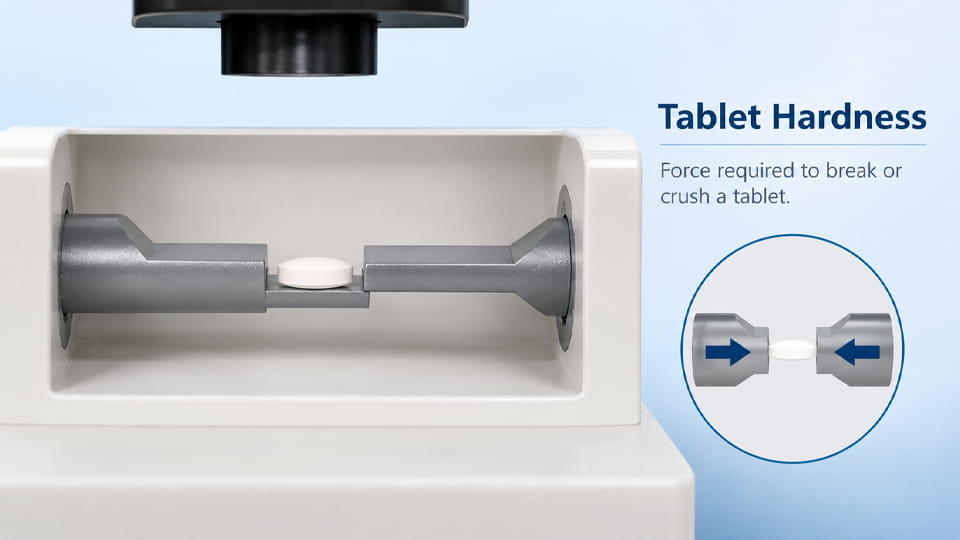
Tablettenhärte (technisch gesehen „Tablettenbruchkraft“) ist die Kraft, die erforderlich ist, um eine Tablette durch Kompression zu zerbrechen. In der Praxis, Die Härte wird gemessen, indem man die Tablette zwischen zwei Ambosse oder Platten legt und so viel Kraft ausübt, bis sie zerbricht. Moderne Härteprüfgeräte (manuell oder digital) Messen Sie die Spitzenkraft in Kilogramm oder Newton. Die Bruchkraft der Tablette ist entscheidend für Qualitätskontrolle: Ein Tablet muss stark genug sein, um der Handhabung standzuhalten, Verpackung, und Versand ohne Bruch. Die USA. und europäische Arzneibücher legen standardisierte Methoden für die Härte fest (Bruchkraft) Testen. Einige Branchenliteratur bevorzugen den Begriff „Bruchkraft“ über „Härte,„Da in der Materialwissenschaft „Härte“ typischerweise Widerstand gegen Oberflächeneindrücke bedeutet, wohingegen beim Tablettentest die Druckfestigkeit gemessen wird.
Die Tablettenhärte wird durch Formulierungs- und Prozessparameter beeinflusst. Höher Kompressionskraft Ergibt im Allgemeinen härtere Tabletten, während Formulierungsfaktoren wie Bindemittel und Gleitmittel auch die Härte beeinflussen. Zum Beispiel, Erhöhung eines Bindemittels (z.B. PVP oder HPMC) erhöht normalerweise die Tablettenstärke, wohingegen zu viel Schmiermittel (Magnesiumstearat) kann die Bindung zwischen den Teilchen schwächen. Die Größe des Tablets, Form, und Porosität spielen ebenfalls eine Rolle: Dickere oder dichtere Tabletten erfordern oft mehr Kraft zum Brechen.
Zu niedrige Härte (Unterkompression) bewirkt, dass Tabletten Riss, zerbröckeln oder splittern leicht. Zu hohe Härte, Jedoch, kann Nachteile haben: sehr harte Tabletten können langsam zerfallen oder lösen sich zu langsam im Körper auf. Auch ein zu hartes Tablet kann es sein für Patienten schwierig zu schlucken. Daher, Das Tablet-Design muss mechanische Festigkeit und Leistung in Einklang bringen. In der Praxis, Hersteller legen einen Akzeptanzbereich fest (z.B. 4–10kg oder so) für Bruchkraft während der Produktion.
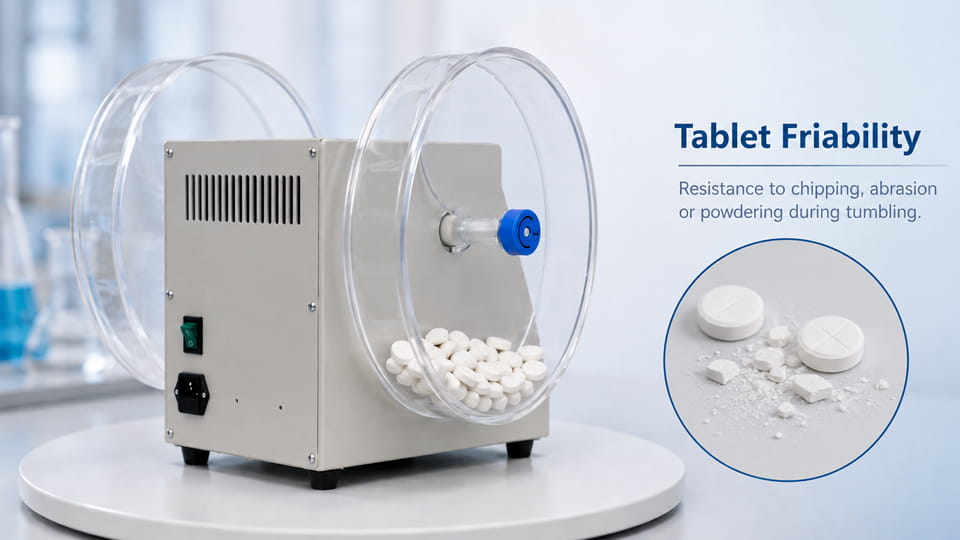
Die Bröckeligkeit einer Tablette ist ein Maß dafür, wie leicht eine Tablette zerbröckelt oder an Masse verliert, wenn sie mechanischer Belastung ausgesetzt wird, wie Stürze oder Stöße. Prüfung der Brüchigkeit Dabei werden entstaubte Tabletten in eine rotierende Trommel gegeben (Roche bröckelig), typischerweise bei 25 U/min, und sie zu unterwerfen 100 Revolutionen. Bei jeder Umdrehung werden die Tabletten umgedreht und in einer festen Höhe fallen gelassen, um die Belastung während der Handhabung und des Transports zu simulieren. Nach dem Test, Tabletten werden gesammelt, und loser Staub wird entfernt. Die Tabletten werden vorher und nachher gewogen, um den Prozentsatz des Gewichtsverlusts zu bestimmen, was berichtet wird als Bröckeligkeit. Zum Beispiel, Die USP <1216> und Ph.Eur. Monographien beschreiben dieses Verfahren.
Je geringer die Bröckeligkeit, desto widerstandsfähiger ist das Tablet gegen Abrieb oder Splittern. Eine akzeptable Brüchigkeitsgrenze ist konventionell ≤1,0 % Gewichtsverlust. Tabletten, die mehr als diesen Schwellenwert verlieren, oder die während des Tests sichtbar reißen oder brechen, das Kriterium der Bröckeligkeit nicht erfüllen. Die Bröckeligkeit von Tabletten wird speziell angesprochen Haltbarkeit nach der Kompression – Es simuliert die physikalische Belastung, der Tabletten in Dragierpfannen ausgesetzt sind, Förderer, Flaschenfüller, Blasenlinien, und Verpackung. Eine hohe Bröckeligkeit äußert sich in Absplitterungen an den Tablettenrändern, sichtbare Risse, oder übermäßiger Staub. Bröckeligkeit ist somit ein Qualitätsmerkmal, das eng mit der Robustheit der Verpackung und Handhabung verbunden ist.
Diese Tests klingen ähnlich, untersuchen jedoch unterschiedliche Belastungen. In einfachen Worten:
Stellen Sie sich zwei Tabletten vor: einer getestet bei 20 kP (Kiloponds) der Quetschkraft (sehr schwer) und einer bei 5 kP (weich). Man könnte meinen, das 20 Das kP-Tablet ist unzerstörbar, aber wenn seine Kanten spröde sind, In einer Bröckeligkeitstrommel könnte es immer noch 2–3 % Masse verlieren – das Doppelte des akzeptablen Grenzwerts. In der Praxis, ein Tablet kann sein „extrem hart – es erfordert erhebliche Kraft zum Zerdrücken – und dennoch überraschend spröde.“. Das zeigt, warum beide Tests sind nötig. Die folgende Tabelle fasst den Unterschied zusammen:
Zusamenfassend: Härte widersteht zerquetschen, während die Bröckeligkeit Widerstand leistet Abplatzen. Ein robustes Tablet-Design gleicht beides aus: es muss die Presse und Maschinen ohne Staubbildung überstehen, löst sich aber dennoch richtig auf.
| Parameter | Tablettenhärte (Brechende Kraft) | Bröckeligkeit der Tablette |
|---|---|---|
| Was es misst | Widerstand gegen eine einzelne ausgeübte Kraft (Kompression oder Spannung) Bruch verursachen | Beständigkeit gegen wiederholten Abrieb, Auswirkungen, und Abplatzen (Gewichtsverlust beim Trommeln) |
| Typischer Stresstyp | Einmalige große Druck- oder Dreipunkt-Biegebelastung bis zum Versagen | Mehrere Stürze/Stürze (normalerweise 100 Rotationen) Simulation von Handhabungsstößen |
| Hauptzweck | Bewerten Sie die Bruchfestigkeit des Tablets (Robustheit der Formulierung unter Druck) | Bewerten Sie die Haltbarkeit während des Transports, Beschichtung, und Verpackung |
| Testausgabe | Bruchkraftwert (z.B. in Newton oder kp) | Prozentualer Gewichtsverlust nach dem Test (und Sichtprüfung auf Beschädigungen) |
| Link zur Qualität | Legt Komprimierungsparameter fest; stellt sicher, dass Tabletten unter Gewalteinwirkung nicht zerbrechen | Legt die Einstellungen der Verpackungslinie fest; Stellt sicher, dass die Tabletten die Beschichtung/den Transport überstehen |
| Ersetzbar durch anderen Test? | NEIN. Unterschiedlicher Stress; benötigt eine eigene Messung. | NEIN. Unterschiedliche Testbegründung; kann den Härtetest nicht ersetzen. |
Die obige Tabelle verdeutlicht dies Härte und Bröckeligkeit messen verschiedene Aspekte. Härte (Bruchkraft) ist ein einmaliger Stresstest, wohingegen bei den Brüchigkeitstests wiederholte Schocks auf niedrigem Niveau durchgeführt wurden. Wichtig, ein Tablet kann sein hart und doch zerbrechlich oder umgekehrt. Zum Beispiel, Eine Tablette mit hoher Bruchkraft kann dennoch brechen den Bröckeligkeitstest nicht bestehen wenn die Kanten leicht abplatzen oder die innere Verklebung ungleichmäßig ist. Zusamenfassend, Härte und Bröckeligkeit hängen zusammen, sind aber nicht austauschbar – beide müssen bewertet werden.
Tablettenhärteprüfer üben eine kontrollierte Kraft auf eine einzelne Tablette aus, bis diese zerbricht. In einem typischen Tester, zwei flache Ambosse (Teller) Fassen Sie das Tablet an – eines stationär, einer bewegt sich. Der Tester zeichnet die Kraft beim Bruch auf. Manuelle Tester (Frühlingsbasiert wie Monsanto) und moderne digitale Tester (mit Wägezellen und elektronischen Anzeigen) sind üblich. Elektronische Tester liefern präzise, Wiederholbare Messungen und messen Durchmesser und Dicke oft gleichzeitig. Beim Testen, Faktoren wie Tablet-Ausrichtung (für flache Tabletten) oder Sonderausstattungen (für ungewöhnliche Formen) werden sorgfältig kontrolliert, um konsistente Ergebnisse zu gewährleisten. Die gemessene Bruchkraft fließt in die Qualitätskontrolle ein: Chargen werden nur akzeptiert, wenn die Härte innerhalb des definierten Bereichs für diese Formulierung liegt.
A bröckelig oder der Bröckeligkeitstester wirft eine Probe von Tabletten in eine transparente Trommel, um die Handhabung zu simulieren. Wichtige Schritte (pro USP/Ph.Eur.) Sind: 1. Entstauben und wiegen Sie eine Tablettenprobe (z.B. 6.5 g oder 10 Tabletten). 2. Legen Sie die Tabletten in eine rotierende Trommel mit einer Hebelasche im Inneren. 3. Mit 25 U/min drehen 100 Revolutionen (4 Minuten). 4. Tabletten entfernen, losen Staub entfernen, nachwiegen. 5. Berechnen % Gewichtsverlust: .
Wenn Jedes Tablet ist gesprungen oder zerbrochen nach dem Sturz, Der Batch schlägt sofort fehl. Ansonsten, wenn totaler Gewichtsverlust >1%, Der Test wird dreifach wiederholt und ein Mittelwert verwendet. In der Praxis, vorbeiziehende Tabletten weisen minimale Absplitterungen oder Staub auf. Die Ergebnisse zur Bröckeligkeit leiten Entscheidungen vor dem Beschichten und Verpacken: Ein hoher Verlust führt zu einer Neuformulierung oder Prozessänderung.
Testmethoden gehen von unbeschichteten Tabletten aus. Auch Dragees können getestet werden, Sie weisen jedoch allein aufgrund der Schale häufig eine geringere Bröckeligkeit auf. Umgekehrt, Brausetabletten oder hochporöse Tabletten erfordern möglicherweise eine spezielle Feuchtigkeitskontrolle während des Tests. Form und Größe des Tablets beeinflussen das Taumelverhalten; für unregelmäßige Formen, Die Trommelbasis kann um ca. 10° geneigt werden, um eine zufällige Bewegung zu gewährleisten. In allen Fällen, Kompendialstandards (USP, Ph.Eur.) Apparatur und Verfahren spezifizieren. Die moderne Laborpraxis überprüft auch die Kalibrierung von Härte- und Bröckeligkeitstestern und führt regelmäßig eine Qualitätskontrolle mit Standard-Referenztabletten durch.
Beide Eigenschaften hängen von der Formulierung und Verarbeitung ab. Zu den Schlüsselfaktoren zählen die Art/Konzentration des Bindemittels, Kompressionskraft, und Tablettenform. Zum Beispiel:
Weil so viele Variablen wichtig sind, Hersteller geben Zielbereiche statt Einzelwerte vor. Es gibt keine universelle „perfekte“ Härte; es kommt auf das Produkt an Darreichungsform, Verwendungszweck, und Verpackung. Ein kaubares Vitamin und ein filmbeschichtet Schmerzmittel können sehr unterschiedliche optimale Härtegrade aufweisen, auch wenn sie das gleiche Gewicht haben.
Die Pressstufe der Tablettenpresse bestimmt maßgeblich die Härte. In der Praxis:

Zusamenfassend, Die Optimierung von Kompressionsparametern und -formulierungen ist unerlässlich. Wie im Leitfaden zur Fehlerbehebung von JinluPacking vermerkt, „Wenn Tabletten zu weich sind, sie können abplatzen, brechen, oder eine hohe Bröckeligkeit aufweisen. Wenn zu hart, Sie können einer Beschichtung widerstehen oder sich langsam auflösen.“. Durch Abstimmung der Kompressionskraft und des Bindemittelgehalts, Hersteller können Tabletten anstreben, die den Prozessbelastungen standhalten, ohne die Härte zu überschreiten.
Tafelbeschichtung (Film bzw Zuckerbeschichtung) reagiert sehr empfindlich auf die Stärke des Kerntabletts. Beim Beschichten, Tabletten in einer rotierenden Pfanne taumeln lassen und Lösung darauf sprühen. Durch dieses Taumeln entsteht mechanischer Stress und Feuchtigkeit. Hier erfahren Sie, wie Härte und Bröckeligkeit ins Spiel kommen:
Sobald die Tabletten gepresst und beschichtet sind, sie ziehen um Verpackungsleitungen – Blasenmaschinen, Kartonierer, oder Flaschenabfülllinien. Auch hier ist die Tablettenstärke entscheidend:

Um Tabletten von höchster Qualität zu erhalten, die den Anforderungen an Beschichtung und Verpackung gerecht werden, Beachten Sie diese Punkte:
In der Praxis, Das Ziel ist ein Tablet „hart genug, um die Handhabung zu überstehen, aber nicht so hart, dass es die Auflösungstests nicht besteht.“. Viele Hersteller ermitteln die Kompressionskraft, Härte, und Bröckeligkeit in Echtzeit, um Trends frühzeitig zu erkennen (Zum Beispiel, Eine plötzliche Abweichung der Härte kann auf eine Änderung der Pulverzufuhr oder der Luftfeuchtigkeit hinweisen).
Zusammenfassend, Härte und Brüchigkeit sind zwei Seiten derselben Medaille für Tablet-Qualität. Die Härte gewährleistet die Kernfestigkeit eines Tablets unter Druck, während die Bröckeligkeit die Widerstandsfähigkeit der Oberfläche gegenüber Abrieb misst. Richtig ausbalanciert, Sie garantieren, dass Tabletten durch Dragierpfannen und Verpackungsmaschinen gelangen, ohne abzusplittern oder zu zerbrechen. Zu weiche Tabletten verursachen Staub und Beschichtungsfehler, Zu harte Tabletten hingegen können Beschichtungslösungen widerstehen oder zu einer schlechten Patientenerfahrung führen.
Für Pharmahersteller und Verpackungsingenieure, Die Beachtung beider Tests ist von entscheidender Bedeutung. Achten Sie darauf, Bröckeligkeits- und Härteprüfungen in Ihre Qualitätskontrollpunkte zu integrieren, und passen Sie die Formulierung/Komprimierung nach Bedarf an. Auf diese Weise, Sie minimieren kostspielige Ausschussarbeiten und sorgen für einen reibungslosen Betrieb Ihrer Anlage Blisterverpackungslinien, Kartoniermaschinen, oder Abfülllinien.
Bereit zur Optimierung Ihrer Tablettenproduktions- und Verpackungslinie? Das Team von JinluPacking verfügt über jahrzehntelange Erfahrung in der pharmazeutischen Komprimierung und Verpackung. Ob Sie ein benötigen Hochgeschwindigkeits-Tablettenpresse, Entstauber, oder eine individuelle Blisterverpackungslösung, Wir können Ihnen dabei helfen, sicherzustellen, dass Ihre Tabletten vom Druck bis zum Patienten intakt bleiben. Kontaktieren Sie uns um zu besprechen, wie unsere Maschinen und unser Fachwissen Ihre Produktionsziele unterstützen können.
NEIN. Härte (Bruchkraft) misst die Kraft, die erforderlich ist, um eine Tablette unter einer einzigen Belastung zu zerbrechen. Die Brüchigkeit misst die Haltbarkeit der Tablette bei wiederholtem Abrieb, ausgedrückt als % Gewichtsverlust im Trommeltest. Sie bewerten unterschiedliche Eigenschaften.
Ja. Eine Tablette kann eine hohe Bruchkraft haben (hart) bei schlechter Partikelbindung aber dennoch an den Rändern abplatzen. Ein solches Tablet könnte beim Sturz leicht zerbrechen, ergibt eine hohe Bröckeligkeit. Umgekehrt, Eine Tablette mit mäßiger Härte könnte die Bröckeligkeit überstehen, wenn sie formstabil ist. Daher sind beide Tests erforderlich.
Der gängige Industriestandard liegt bei einem Gewichtsverlust von ≤ 1,0 % nach dem Bröckeligkeitstest. Viele Hersteller geben für gewöhnliche Tablets 0,5–1 % als Vorgabe an. Einige Produkte (z.B. sehr große oder ungewöhnliche Tabletten) können spezielle Kriterien haben, Aber 1% ist eine typische Richtlinie.
Die Härte kann die Auflösung maßgeblich beeinflussen. Eine zu harte Tablette kann langsam zerfallen, Verzögerung der Arzneimittelfreisetzung. Behördliche Tests haben gezeigt, dass Tabletten sehr hart sind (mit hohen Kräften zusammengedrückt) kann außerhalb der Auflösungsspezifikation liegen, weil die Tablettenmatrix zu eng ist. Umgekehrt, Eine sehr weiche Tablette kann zwar schnell zerfallen, aber auch vorzeitig zerfallen. Die optimale Härte gewährleistet einen rechtzeitigen Zerfall ohne Bruch.
Häufige Ursachen sind unzureichendes Bindemittel, falsche Granulierungsfeuchtigkeit, unzureichende Kompression, überschüssiges Schmiermittel, und spröde Hilfsstoffe. Zum Beispiel, Tabletten mit zu wenig Bindemittel oder übergetrocknetem Granulat neigen dazu, bröckeliger zu sein. Eine typische Lösung besteht darin, die Formulierung anzupassen (z.B. wirksameres Bindemittel) oder den Nassgranulierungs- und Trocknungsprozess optimieren.
Nicht immer. Eine höhere Kompression erhöht im Allgemeinen die Härte und kann zunächst die Bröckeligkeit verringern, aber es hat Grenzen. Übermäßige Krafteinwirkung kann zum Verschließen führen, Laminierung oder veränderte Auflösung. Auch, wenn die Formulierung fehlerhaft ist (z.B. schlechte Bindung), Einfaches Erhöhen des Drucks löst die Bröckeligkeit möglicherweise nicht. Es ist am besten, sowohl die Formulierung als auch die Kraft gemeinsam zu optimieren.
Denn sie adressieren unterschiedliche mechanische Belastungen. Die Härte stellt sicher, dass die Tablette einer einzigen Quetschkraft standhält (wichtig zum Komprimieren und Schneiden), während die Bröckeligkeit dafür sorgt, dass es wiederholten Stößen standhält (wichtig für die Beschichtung, Handhabung, und Verpackung). Nur wenn beides bewertet wird, können Hersteller sicher sein, dass die Integrität der Tablets über die gesamte Produktions- und Lieferkette hinweg erhalten bleibt.
Das Gerätedesign ist von entscheidender Bedeutung. Zum Beispiel, Hochgeschwindigkeitskartonierer verwenden Sensoren und gepolsterte Rutschen, um die Tabletten sanft zu verlangsamen (verhindert Bruch beim Aufprall). Vakuumförderer mit sanften Biegungen reduzieren Stöße. Abfülllinien verfügen häufig über flexible Schläuche und langsame Übergänge. Gut konzipierte Tablet-Handhabungssysteme reduzieren Vibrationen, Tropfen, und Reibung, Bruch und Staubentwicklung werden direkt reduziert.
Referenzen:
1.Prüfung der Tablettenhärte —— Wikipedia
2.ICH 4 QB-Anhang 9 Bröckeligkeit der Tablette – Wissenschaftlicher Leitfaden —— Europäische Arzneimittel-Agentur
3.Q4B Anhang 9: Allgemeines Kapitel zur Zerbrechlichkeit von Tabletten -- UNS. Lebensmittel- und Arzneimittelbehörde
4.Abhängigkeit der Bröckeligkeit von den mechanischen Eigenschaften der Tablette und ein Vorhersageansatz für binäre Mischungen —— Experten@Minnesota
5.Einfluss von Feuchtigkeit und Druckfestigkeit auf die Bröckeligkeit der Tablette und die In-vitro-Auflösung —— Wiley Online-Bibliothek