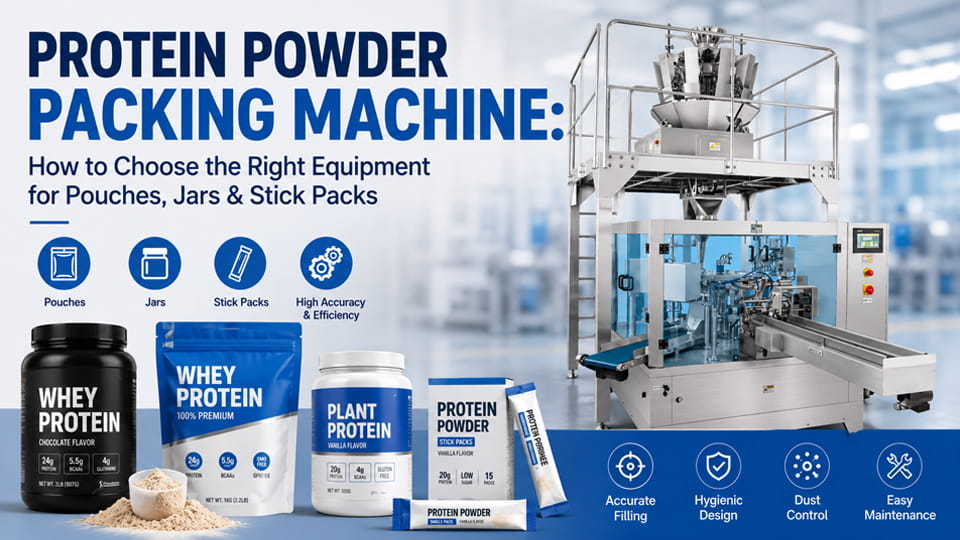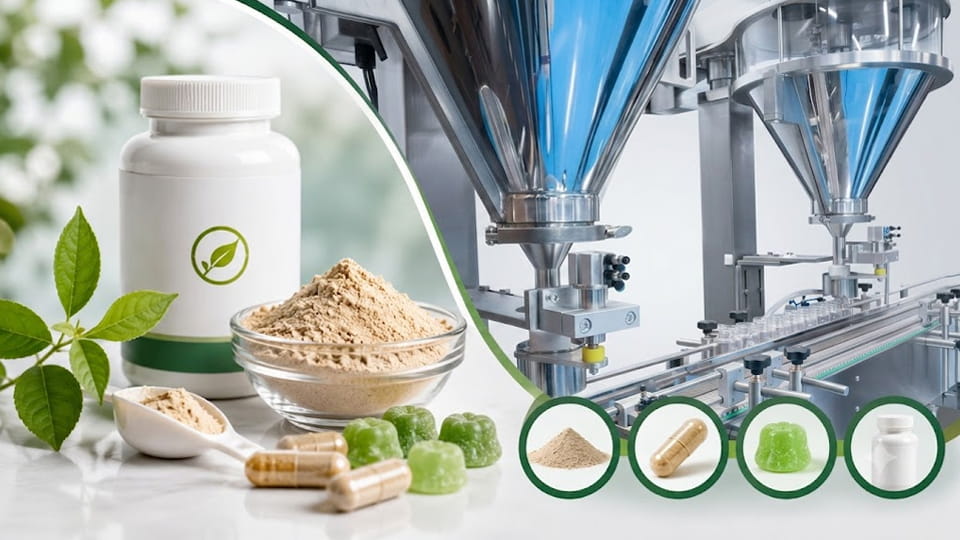

Die weltweite Nachfrage nach Kräuterergänzung Die Anzahl der Produkte wächst weiter, da immer mehr Verbraucher nach natürlichen Möglichkeiten zur Unterstützung ihrer Gesundheit und ihres Wohlbefindens suchen. Von Kapseln und Tabletten bis hin zu Pulvern und Gummibärchen, Pflanzliche Nahrungsergänzungsmittel sind mittlerweile in Apotheken erhältlich, Supermärkte, und Online-Shops auf der ganzen Welt. Wenn der Markt wächst, Hersteller stehen vor steigenden Erwartungen an eine gleichbleibende Qualität, effiziente Produktion, und zuverlässige Verpackung, die empfindliche pflanzliche Inhaltsstoffe schützt. Gute Herstellungspraktiken und angemessene Verpackungskontrollen sind ebenfalls unerlässlich, um die Produktqualität und -konformität während des gesamten Produktionsprozesses sicherzustellen.
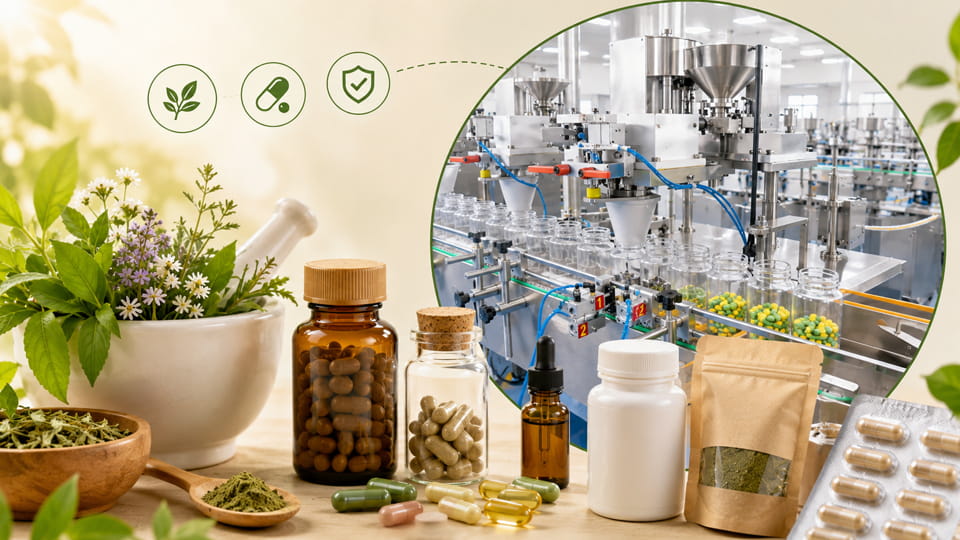
Egal, ob Sie eine neue Produktionslinie für pflanzliche Nahrungsergänzungsmittel planen oder bestehende Anlagen aufrüsten, Das Verständnis des Herstellungsprozesses ist der erste Schritt, um bessere Entscheidungen zu treffen. In diesem Ratgeber, Wir werden die gängigsten Arten pflanzlicher Nahrungsergänzungsmittel durchgehen, wie sie hergestellt werden, die beteiligte Ausrüstung, und die Verpackungslösungen, die Herstellern helfen, ihre Effizienz zu steigern, Produktqualität, und Haltbarkeit.
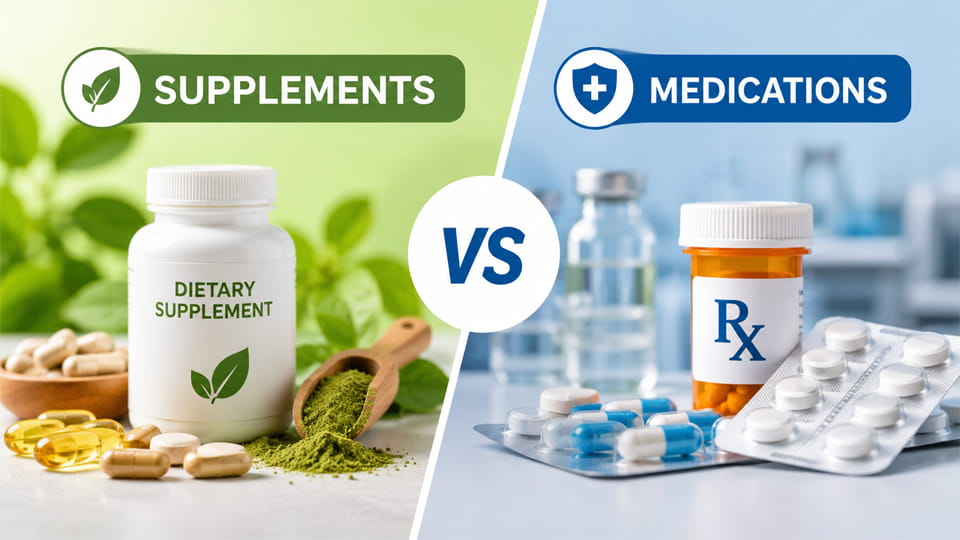
Kräuterzusätze (auch genannt botanische Ergänzungen) sind eine Kategorie von Nahrungsergänzungsmittel aus pflanzlichen Materialien hergestellt (Wurzeln, Blätter, Blumen, Samen, oder Auszüge) soll die Gesundheit unterstützen. Im Gegensatz zu synthetischen Vitaminen, Kräuterzusätze werden aus natürlichen Quellen gewonnen. Sie nutzen oft traditionelle pflanzliche Arzneimittel (z.B. Ingwer, Ginkgo, Echinacea) und umfassen konzentrierte Extrakte oder Pulver. In regulatorischer Hinsicht, Kräuterzusätze werden klassifiziert als Nahrungsergänzungsmittel, keine Drogen. Unter U.S. Laut Gesetz müssen sie die gekennzeichneten Inhaltsstoffe enthalten und Verunreinigungen vermeiden (Pestizide, Schwermetalle). Typische Formen sind Kapseln, Tabletten, Kapseln, Pulver, Flüssigkeiten (Tinkturen), Tees und Gummibärchen.
Pflanzliche Nahrungsergänzungsmittel zielen darauf ab, die Ernährung mit pflanzlichen Nähr- oder Wirkstoffen zu „ergänzen“., oft zur Unterstützung des Immunsystems, Verdauung, Stressabbau, oder Energie. Zum Beispiel, Zutaten wie Holunder, Echinacea und Vitamin C sind beliebt für die Immunität, während Ashwagandha und grüner Tee zur Stresslinderung und zum Stoffwechsel eingesetzt werden. Verbraucher bevorzugen zunehmend pflanzliche Nahrungsergänzungsmittel wegen ihrer natürlichen Herkunft und Clean Labels. Der weltweite Markt für pflanzliche Nahrungsergänzungsmittel war im Begriff $45.9 Milliarden in 2025 und wird voraussichtlich jährlich um ca. 8 % wachsen 2034, getrieben durch die Nachfrage nach pflanzlicher Gesundheitsvorsorge.

Pflanzliche Nahrungsergänzungsmittel werden in vielen Darreichungsformen hergestellt. Jede Form hat Vorteile, Daher treffen die Hersteller ihre Entscheidungen je nach Produkt und Markt. Zu den gängigen Formaten gehören::


Pflanzliche Nahrungsergänzungsmittel gibt es in vielen Formen: Hartkapseln, Kapseln, Tabletten und Pulver verwenden alle pflanzliche Inhaltsstoffe. Die Wahl der richtigen Form hängt vom Kräuterextrakt ab, Dosierungsbedarf, und Verbraucherpräferenzen.
| Ergänzungsformular | Typische pflanzliche Zutaten | Hauptvorteile | Gemeinsame Verpackung | Empfohlene Fertigungsausrüstung |
|---|---|---|---|---|
| Kapseln | Ashwagandha, Kurkuma, Ginseng | Leicht zu schlucken, genaue Dosierung, schützt empfindliche Puder | Flaschen, Blasenpackungen | Kapselfüllmaschine, Flaschenabfülllinie, Blasenverpackungsmaschine |
| Tabletten | Spirulina, Knoblauch, Mariendistel | Kostengünstig, Lange Haltbarkeit, Geeignet für die Massenproduktion | Flaschen, Blasenpackungen | Tablettenpressmaschine, Tablet -Beschichtungsmaschine, Flaschenverpackungslinie |
| Pulver | Matcha, Moringa, Weizengras | Flexible Portionsgrößen, Ideal für Getränkemischungen und Proteinmischungen | Standbodenbeutel, Stickpacks, Gläser | Pulvermischer, Schneckenfüllmaschine, Vorgefertigte Beutelverpackungsmaschine |
| Kapseln | Knoblauchöl, Leinsamenöl, Nachtkerzenöl | Geeignet für ölbasierte Extrakte, einfach zu konsumieren | Flaschen, Blasenpackungen | Softgel-Produktionslinie, Flaschenfüllmaschine |
| Gummibärchen | Holunder, Apfelessig, Kurkuma | Angenehmer Geschmack, beliebt bei Kindern und Erwachsenen | Flaschen, Beutel | Gummibärchen-Zählmaschine, Flaschenabfülllinie, Vorgefertigte Beutelverpackungsmaschine |
| Flüssige Extrakte | Echinacea, Ginkgo Biloba, Baldrianwurzel | Schnelle Absorption, Praktisch für eine individuelle Dosierung | Glasflaschen, Tropfflaschen | Flüssigkeitsfüllmaschine, Messmaschine, Etikettierungsmaschine |
| Kräuterteebeutel | Kamille, Pfefferminze, Hibiskus | Traditionelle Konsummethode, einfache Zubereitung | Beutel, Kartons | Teebeutel-Verpackungsmaschine, Kartoniermaschine |
Hersteller können ein bestimmtes Format aus Gründen der Bioverfügbarkeit oder der Attraktivität für den Verbraucher ins Visier nehmen. Zum Beispiel, Einen erheblichen Marktanteil haben pflanzliche Nahrungsergänzungsmittel auf Kapselbasis (um 39%) denn sie schützen Wirkstoffe und lösen sich schnell im Körper auf. Pulver (in Gläsern oder Stickpacks) Protein- oder grüne Superfood-Mischungen erfreuen sich immer größerer Beliebtheit, während Tabletten weiterhin ein Grundnahrungsmittel für Vitamine und Standard-Kräuterextrakte sind. Letztlich, Die Fertigungsausrüstung (Kapselfüller, Tablettenpressen, Beuteltaschen, usw.) muss zur gewählten Form und Produktionsmenge passen.
Die Hersteller konzentrieren sich auf Kräuter mit starker Verbrauchernachfrage und wissenschaftlicher Unterstützung. Zu den wichtigsten Pflanzenstoffen in Nahrungsergänzungsmitteln gehören::
Der folgende Vergleich bietet einen schnellen Überblick über einige der am häufigsten verwendeten pflanzlichen Nahrungsergänzungsmittel in der heutigen Nutraceutical-Industrie:
| Kräuterergänzung | Gemeinsamer Gesundheitszweck* | Gängige Darreichungsformen | Typische Verpackung | Herstellungshinweise |
|---|---|---|---|---|
| Kurkuma (Curcumin) | Gelenk- und Entzündungsunterstützung | Kapseln, Tabletten, Pulver | HDPE-Flaschen, Blasenpackungen, Stand-up-Beutel | Oftmals standardisierter Curcumin-Extrakt mit Fließmitteln |
| Ashwagandha | Stress- und Schlafunterstützung | Kapseln, Gummis, Pulver | Plastikflaschen, Stickpacks | Wird üblicherweise als standardisierter Wurzelextrakt hergestellt |
| Ginseng | Energie- und kognitive Unterstützung | Kapseln, Kapseln, flüssige Extrakte | Bernsteinflaschen, Blasenpackungen | Beim Befüllen ist die Feuchtigkeitskontrolle wichtig |
| Echinacea | Unterstützung der Immungesundheit | Tabletten, Kapseln, Tinkturen | Flaschen, Tropfflaschen aus Glas | Wird häufig als Trockenextrakt oder Flüssigextrakt hergestellt |
| Mariendistel | Unterstützung der Lebergesundheit | Kapseln, Kapseln | HDPE-Flaschen, Blasenpackungen | In der Regel ist ein standardisierter Silymaringehalt erforderlich |
| Knoblauch | Unterstützung der Herzgesundheit | Kapseln, Tabletten | Blasenpackungen, Flaschen | Oft werden Geruchskontrolle und Beschichtung in Betracht gezogen |
| Ingwer | Verdauungsunterstützung | Kapseln, Pulver, Teebeutel | Beutel, Beutel, Flaschen | Die Fließfähigkeit des Pulvers beeinflusst die Füllgenauigkeit |
| Ginkgo Biloba | Gedächtnis- und Kreislaufunterstützung | Tabletten, Kapseln | Flaschen, Blasenpackungen | Oft auf Flavonoidgehalt standardisiert |
| Grüntee-Extrakt | Antioxidative Unterstützung | Kapseln, Tabletten | Flaschen, Blasenpackungen | Hitze- und Feuchtigkeitsschutz verbessern die Stabilität |
| Holunder | Immununterstützung | Gummibärchen, Sirupe, Kapseln | PET-Flaschen, Glasflaschen | Gummibärchen erfordern spezielle Zähl- und Abfüllgeräte |
Trends in 2025 Heben Sie Nahrungsergänzungsmittel hervor, die für die Gesundheit des Immunsystems entwickelt wurden (Holunder, Echinacea, Zink), Frauengesundheit, und kognitives Wohlbefinden. Zum Beispiel, Britische Verbraucher verwenden zunehmend Kurkuma, Ashwagandha, Moringa und Holunder für Immunität und Stress. Die Beschaffung und Formulierung von Inhaltsstoffen erfordert eine Qualitätskontrolle: Jedes Kraut muss auf aktive Wirksamkeit und Abwesenheit von Verunreinigungen getestet werden (Pestizide, Schwermetalle) gemäß GMP-Standards.

Die Herstellung pflanzlicher Nahrungsergänzungsmittel erfolgt in einem mehrstufigen Prozess, Kombination von pharmazeutischen Standardtechniken mit besonderer Sorgfalt für pflanzliche Inhaltsstoffe. Der allgemeine Ablauf ist: Beschaffung roher Kräuter → Reinigen → Trocknen/Mahlen → Mischen → Dosierungsbildung (Kapseln/Tabletten) → Verpackung. Zu den wichtigsten Schritten gehören::
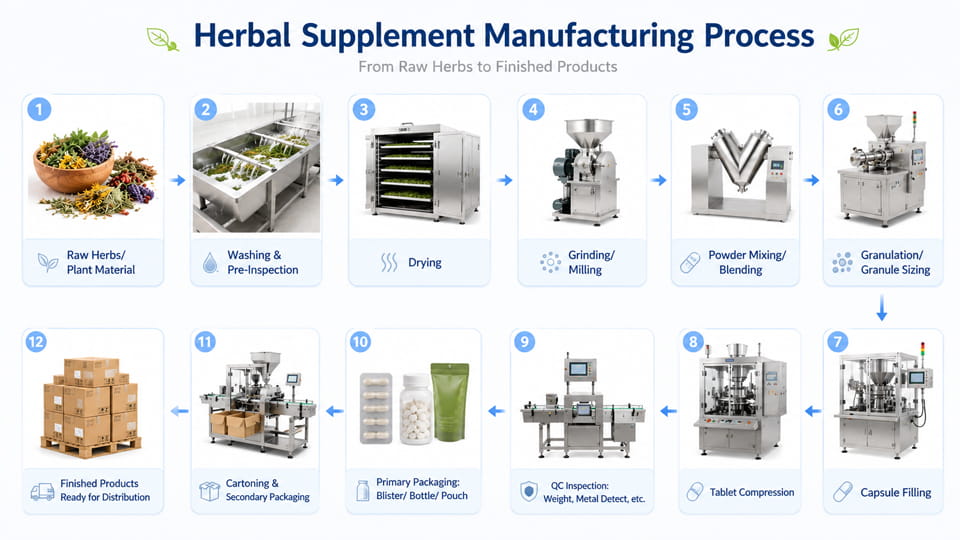
Während der gesamten Fertigung, Bedingungen (Temperatur, Luftfeuchtigkeit) werden streng kontrolliert. Viele Pflanzenstoffe sind feuchtigkeitsempfindlich, Daher kann die gesamte Linie in einem reinen Raum mit kontrollierter Luftfeuchtigkeit laufen. Hochbarriereverpackung (Blisterpackungen aus Aluminiumfolie, HDPE mit Trockenmittel) wird ausgewählt, um die Haltbarkeit zu bewahren.
Eine erfolgreiche Nahrungsergänzungsmittelproduktion hängt von Zuverlässigkeit ab Verarbeitungs- und Verpackungsmaschinen. Hier finden Sie eine Übersicht über die wichtigsten Geräte – insbesondere die von Jinlu angebotenen – mit ihren Rollen:

Figur: Jinlus Hochgeschwindigkeits-Kapselfüllmaschine (Modell NJP-1500D, 90K cps/h). Solche automatischen Füller richten leere Kapseln aus, Meter Kräuterpulver, Stampfen Sie die Füllung, und montieren Sie jede gefüllte Kapsel mit einer Genauigkeit von ±3 %.
 Figur: HZP-26D-40D Rotary Tablet Press Machine. Tablettenpressen pressen Kräutergranulate zu Tabletten mit exaktem Gewicht und Härtegrad. Die Druckmaschinen von Jinlu können mehr ausgeben 260,000 Tabletten/Stunde bei gleichzeitiger Gewährleistung der Gleichmäßigkeit.
Figur:Vorgefertigte Beutelverpackungsmaschine. Solche Maschinen (wie Jinlus GD-Serie) kann automatisch geöffnet werden, füllen, und verschließen Sie Standboden- oder Reißverschlussbeutel mit Pulvern, Granulat oder Tabletten, Erzielung sehr präziser Füllgewichte.
Zu den weiteren wichtigen Geräten gehören Flaschenwaschmaschinen (zum Starten leerer Flaschen), Etikettierer, Und Metalldetektoren. Die Maschinen von Jinlu sind so konzipiert, dass sie globale Zertifizierungen erfüllen (Ce, CGMP, FDA) und kann individuell angepasst werden (z.B. mit Vakuumzuführung für schwierige Pulver, Kombinationswaagen für Mischungen).
Die Wahl der richtigen Primärverpackung hat Einfluss auf die Stabilität, Benutzererfahrung, und Compliance. Nachfolgend vergleichen wir gängige Verpackungsformate für Nahrungsergänzungsmittel:
| Format | Am besten für | Vorteile | Herausforderungen/Überlegungen |
| Flaschen (HDPE, HAUSTIER) | Kapseln, Tabletten, Kapseln, Gummibärchen | Starke Feuchtigkeits-/Sauerstoffbarriere; einfach zu beschriften; kindersichere Verschlüsse verfügbar; bekanntes Format | Sperrig für den Versand; oft undurchsichtig (weniger recycelbar); erfordern CR-Kappen mit gemischten Materialien |
| Blasenpackungen (Alu/PVC) | Tabletten, Kapseln, Caplets | Einheitsdosisschutz (jede Pille versiegelt); ausgezeichnete Barriere (Folie); manipulationssicher; bequeme Dosierung | Teurer pro Einheit; begrenzte Formen/Größen; Folien-/PVC-Recycling ist schwierig |
| Stick-Packs | Pulver (Einzelportion), Tees | Vorab abgemessene tragbare Dosis; minimaler Rest; schlankes Profil | Einwegmüll; erfordern Laminate (Recycling-Herausforderungen); kleines Volumen pro Packung |
| Beutel | Granulat, Sprudelabletten, Pulver | Einzelportionspackungen, oft wasserlöslich; niedrige Kosten | Begrenzte Feuchtigkeitsbarriere; anfällig für Pannen; Einwegmüll |
| Standbodenbeutel (wiederverschließbar) | Pulver, Granulat, Gummibärchen, Multipacks | Leicht, platzsparend; Laminate mit hoher Barrierewirkung; wiederverschließbare Reißverschlüsse; anpassbare Formen | Oft transparent (leichtes Risiko); Für feuchtigkeitsempfindliche Inhalte ist ein Trockenmittel erforderlich; Reißverschluss erhöht die Kosten |
| Gläser / Dosen (Glas/Aluminium) | Gummibärchen, Pulver, Premium-Produkte | Hervorragende Recyclingfähigkeit (Glas/Aluminium); hohe Barriere; wiederverwendbar; Premium-Look | Schwerer (Versandkosten); zerbrechlich (Glas); Standardmäßig nicht kindersicher, es sei denn, es wurden Deckelmechanismen hinzugefügt |
| Sekundärkartons | Kapseln/Tabletten in Flaschen oder Blisterpackungen | Ermöglicht Großverpackungen; Fügt Barriere für mehrere Produkte hinzu; bietet Beschriftungsfläche | Erhöht Kosten und Material; Kartonbarriere ist schlechter als Kunststoff (Möglicherweise sind Einlagen für Feuchtigkeit erforderlich) |
Für pflanzliche Nahrungsergänzungsmittel, Feuchtigkeits- und Sauerstoffkontrolle sind entscheidende Verpackungsfunktionen. Zum Beispiel, Hochbarriere-Blisterfolien oder mehrschichtige Beutel können hygroskopische Kräuter schützen. Kindersicher (CR) Schließungen sind oft gesetzlich vorgeschrieben (vor allem für Vitamine). Nachhaltige Optionen (PCR-Kunststoffe, recycelbare Materialien, kompostierbare Beutel) sind wachsende Trends, müssen aber dennoch den Sicherheits- und Haltbarkeitsanforderungen genügen.
Verpackungsmaschinen (Flaschenfüller, Blasenlinien, Beutelpacker) muss auf das gewählte Format und die Ausgabe abgestimmt sein. Automatisierte Systeme (wie Jinlus Beutelpacker Modell GD oder Blistermaschinen der PJ-Serie) Bewältigen Sie hohe Geschwindigkeiten mit gleichmäßiger Abdichtung, was für die Pharmaindustrie unerlässlich ist GMP-Konformität.
Auch mit guter Ausrüstung, Die Produktion von Nahrungsergänzungsmitteln kann Probleme bereiten. Hier finden Sie häufig auftretende Probleme und Abhilfemaßnahmen:
In allen Fällen, Vorbeugende Wartung und erfahrene Bediener sind der Schlüssel. Automatisierte Fehlerbehebung (Stationen ablehnen, Alarm) hilft, Probleme frühzeitig zu erkennen. Zum Beispiel, Die Maschinen von Jinlu verfügen über eine „intelligente Aussortierung“, um falsch gefüllte Beutel auszuwerfen.
Die Auswahl der Verpackungsausrüstung ist eine strategische Entscheidung. Zu den zu berücksichtigenden Faktoren gehören::
Zusammenfassend, Wählen Sie Maschinen, die für Ihre gewünschte Leistung und Compliance-Anforderungen ausgelegt sind. Der richtige Ausrüstung sorgt für gleichmäßige Füllungen/Versiegelungen, maximiert den Ertrag, und vermeidet kostspielige Rückrufe.
Der globale Wandel hin zu natürlicher Gesundheit hat pflanzliche Nahrungsergänzungsmittel zu einem wichtigen Industriezweig gemacht, Es erfordert aber auch eine strenge Herstellung auf pharmazeutischem Niveau. Von der sorgfältigen Prüfung roher Pflanzenstoffe bis hin zur automatisierten Kapselbefüllung und manipulationssicheren Verpackung, Jeder Schritt muss auf Konsistenz optimiert werden, Einhaltung, und Qualität. Fortschritte in der Ausrüstung (wie Hochgeschwindigkeits-Kapselfüller, Präzisions-Blisterlinien, und flexible Beutelmaschinen) ermöglichen es Nutraceutical-Unternehmen, effizient zu expandieren und gleichzeitig enge Toleranzen einzuhalten.
Zusammenfassend, Herstellung von pflanzlichen Nahrungsergänzungsmitteln ist ein komplexer Tanz aus traditionellem botanischem Know-how und moderner Technik. Durch Befolgen der GMP-Richtlinien, mit den richtigen Maschinen, und den Trends immer einen Schritt voraus zu sein (wie nachhaltige Verpackung und personalisierte Formulierungen), Hersteller können sicher liefern, wirksame pflanzliche Produkte. Für Unternehmen, die ihre Produktlinien erweitern oder modernisieren möchten, Jinlu Packing bietet ein integriertes Sortiment an Kapselfüllern an, Tablettenpressen, Blasenmaschinen, Beutelpacker und mehr – alle für die Nutrazeutika-Produktion konzipiert. Kontaktieren Sie uns Erfahren Sie, wie unsere Geräte Ihnen dabei helfen können, Ihr Kräuterergänzungsmittel mit Qualität und Effizienz aus dem Kräutergarten in die Regale zu bringen.
Ein Kräuterergänzungsmittel ist ein Nahrungsergänzungsmittel aus Kräutern, botanische extrakte, oder andere pflanzliche Zutaten. Diese Produkte sind üblicherweise als Kapseln erhältlich, Tabletten, Pulver, Gummis, Tees, oder flüssige Extrakte und sollen die Ernährung ergänzen und nicht herkömmliche Lebensmittel ersetzen. Je nach Markt, Pflanzliche Nahrungsergänzungsmittel gelten als Nahrungsergänzungsmittel und nicht als Arzneimittel.
In den USA, Nahrungsergänzungsmittel (einschließlich Kräuter) fallen unter das DSHEA-Gesetz der FDA. Hersteller müssen die cGMP-Regeln der FDA befolgen (21 CFR 111) Identität zu gewährleisten, Reinheit, und Kontaminationen zu vermeiden. Dies bedeutet eine gründliche Prüfung der Rohkräuter und In-Prozess-Kontrollen. In Europa und anderswo, ähnlich gute Herstellungsstandards (EU-GMP, WHO-Richtlinien) gelten für Nutraceuticals.
Es gibt sie in vielen Formen: Kapseln, Tabletten, Pulver, Flüssigkeiten/Tinkturen, Gummis, Stickpacks, Tees, usw. Die Wahl hängt von den botanischen Eigenschaften und den Vorlieben des Verbrauchers ab. Zum Beispiel, Kleine bittere Kräuter könnten in Kapseln enthalten sein, während ein entspannender Tee als Teebeutel verkauft wird.
Der Herstellungsprozess umfasst normalerweise mehrere Schlüsselschritte:
• Auswahl an rohen Kräutern
• Reinigen und Trocknen
• Schleifen oder Fräsen
• Pulvermischung
• Granulierung (falls erforderlich)
• Kapselfüllung oder Tablettenkomprimierung
• Qualitätsprüfung
• Primärverpackung
• Kartonierung und Sekundärverpackung
Moderne Hersteller automatisieren diese Prozesse häufig, um die Konsistenz zu verbessern, Produktivität, und Produktqualität.
Zumindest, Hersteller benötigen Mischgeräte, ein Kapselfüller oder eine Tablettenpresse (je nach Dosierung), und eine Verpackungslinie. Zu den Schlüsselmaschinen gehören: Kapselfüllmaschine, Drehetablette Presse, Blasenverpackungsmaschine, Flaschenzähl-/Abfülllinie, Beutel-/Stickpackmaschine, und Beutelverpackungsmaschine. Zum Beispiel, Jinlu Packing bietet Kapselfüller und Beutelpacker speziell für Nutrazeutika an.
Die meisten Hersteller verwenden feuchtigkeitsbeständige Verpackungsmaterialien wie Blisterverpackungen, HDPE-Flaschen mit Induktionsversiegelung, Aluminiumfolienlaminate, oder Hochbarrierebeutel. Kontrollierte Produktionsumgebungen, Trockenmittel, geeignete Dichtungssysteme, und routinemäßige Qualitätskontrollen tragen auch dazu bei, pflanzliche Nahrungsergänzungsmittel während der Lagerung und des Transports zu schützen.
Die beste Verpackung hängt von der Produktart und ihrer Feuchtigkeitsempfindlichkeit ab, Sauerstoff, und Licht.
Zu den gängigen Verpackungsoptionen gehören::
• Flaschen für Kapseln und Tabletten
• Blisterpackungen für Einzeldosisschutz
• Standbodenbeutel für Pulver
• Stickpacks und Sachets für Einzelportionen
• Glasflaschen für flüssige Extrakte
Die Wahl einer geeigneten Barriereverpackung trägt dazu bei, die Produktqualität aufrechtzuerhalten und die Haltbarkeit zu verlängern.
Pflanzliche Nahrungsergänzungsmittel gelten als Nahrungsergänzungsmittel und können ohne Rezept verkauft werden, Der Schwerpunkt liegt auf der Ernährungsunterstützung. Pflanzliche Arzneimittel (wie ayurvedische oder traditionelle chinesische Medizin) werden oft als Arzneimittel oder Medizinprodukte reguliert, mit Behauptungen zur Behandlung von Krankheiten. Nahrungsergänzungsmittel können das allgemeine Wohlbefinden fördern (z.B. „unterstützt die Immunität“) kann aber nicht behaupten, Krankheiten zu heilen.
Referenzen:
1.Leitfäden zu Nahrungsergänzungsmitteln & Regulatorische Informationen—— UNS. Lebensmittel- und Arzneimittelbehörde
2.Nahrungsergänzungsmittel —— UNS. Lebensmittel- und Arzneimittelbehörde
3.Pflanzliche Nahrungsergänzungsmittel —— UNS. Landwirtschaftsministerium
4.Entwicklung sicherer und wirksamer pflanzlicher Nahrungsergänzungsmittel —— Nationalbibliothek für Medizin
5.Qualitätssicherung und Sicherheit pflanzlicher Nahrungsergänzungsmittel —— Nationalbibliothek für Medizin
6.Nahrungsergänzungsmittel und pflanzliche Nahrungsergänzungsmittel —— NCCIH