
Auf den ersten Blick, Nahrungsergänzungsmittel und Medikamente können sehr ähnlich aussehen. Beide können als verkauft werden Tabletten, Kapseln, Pulver, Gummis, oder Flüssigkeiten, und beide verwenden oft vergleichbare Herstellungs- und Verpackungsprozesse. Jedoch, Damit enden die Ähnlichkeiten weitgehend.
Beim Vergleich von Nahrungsergänzungsmitteln und Medikamenten, Die größten Unterschiede liegen im Verwendungszweck, regulatorische Anforderungen, Qualitätsstandards, und Compliance-Verpflichtungen. Nahrungsergänzungsmittel sollen die Ernährung ergänzen und die allgemeine Gesundheit unterstützen, während Medikamente dienen der Diagnose, behandeln, verhindern, oder Krankheiten behandeln. Aufgrund dieser unterschiedlichen Zwecke, Hersteller müssen unterschiedliche Regeln für die Formulierung befolgen, Produktion, Validierung, Beschriftung, und Verpackung.
Für Hersteller von Nahrungsergänzungsmitteln und Arzneimitteln, Das Verständnis dieser Unterschiede ist bei der Auswahl der Produktionsausrüstung von entscheidender Bedeutung, Gestaltung von Verpackungslinien, und Sicherstellung der Einhaltung gesetzlicher Vorschriften. In diesem Ratgeber, Wir untersuchen die wichtigsten Unterschiede zwischen Nahrungsergänzungsmitteln und Medikamenten und was sie für moderne Produktions- und Verpackungsabläufe bedeuten.
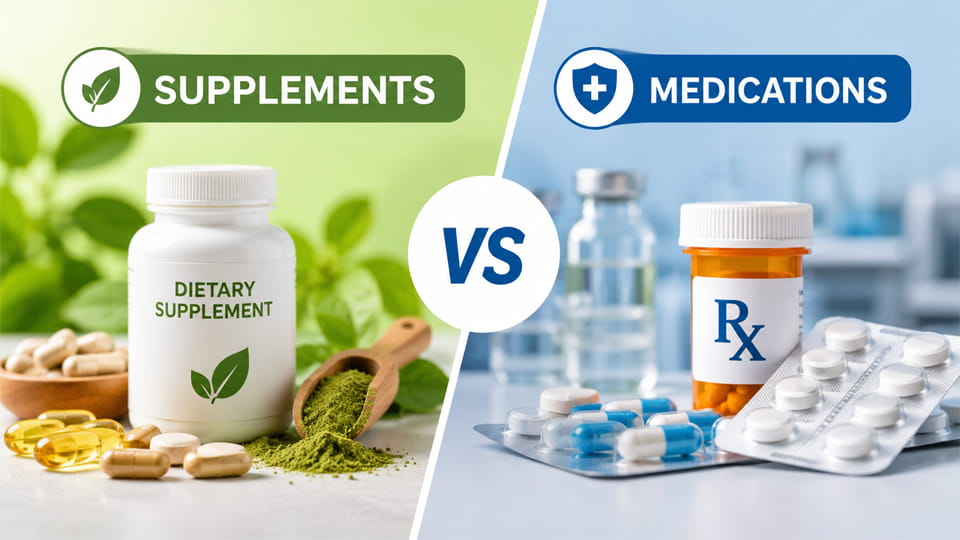
Nahrungsergänzungsmittel (auch genannt Nutrazeutika oder Nahrungsergänzungsmittel) sind Produkte, die oral eingenommen werden, um den Nährwert zu erhöhen. Nach US-amerikanischem Recht (DSHEA 1994), Ein Nahrungsergänzungsmittel muss einen oder mehrere „Nahrungsbestandteile“ wie Vitamine enthalten, Mineralien, Kräuter, Aminosäuren oder andere Pflanzenstoffe, beabsichtigt ergänzen die Diät. Beispiele hierfür sind Multivitamintabletten, Fischölkapseln, Kräuterextrakte, oder Proteinpulver. In der EU, der Begriff Nahrungsergänzungsmittel verwendet wird: sie sind „konzentrierte Quellen von Nährstoffen oder anderen Substanzen“ in dosierter Form (Kapseln, Pulver, Flüssigkeiten, usw.). Nahrungsergänzungsmittel können Nährstoffe liefern, die in der Ernährung fehlen, oder die allgemeine Gesundheit unterstützen, aber sie sind es nicht berechtigt, die Behandlung oder Vorbeugung von Krankheiten in Anspruch zu nehmen. Etiketten tragen normalerweise ein Ergänzungsfakten Panel und Haftungsausschluss (z.B. „Nicht zur Diagnose gedacht, behandeln, Heilung, oder jede Krankheit verhindern“). Das EU-Recht harmonisiert die zulässigen Vitamine/Mineralien in Nahrungsergänzungsmitteln (Richtlinie 2002/46/EG) und erfordert eine Risikobewertung neuartiger Inhaltsstoffe durch die EFSA.
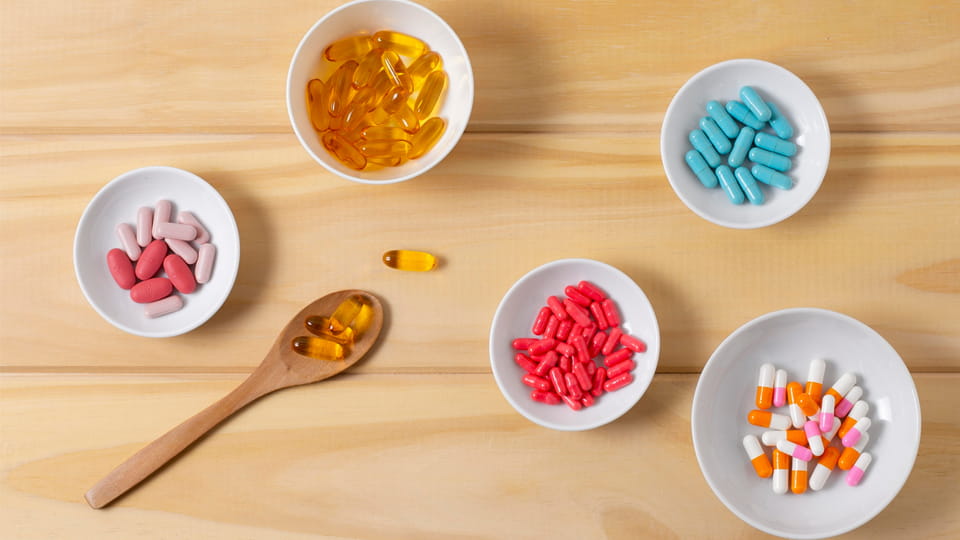
Wichtige Punkte für Nahrungsergänzungsmittel: kein Rezept erforderlich; als Lebensmittel geregelt; Auf der Etikettierung müssen die Zutaten und die empfohlene Verwendung aufgeführt sein; Hersteller müssen folgen Die cGMP-Regeln der FDA für die Ernährung (21 CFR111) Identität zu gewährleisten, Reinheit, und Stärke der Produkte. Die FDA tut es nicht Überprüfen Sie Nahrungsergänzungsmittel vor dem Verkauf auf Sicherheit oder Wirksamkeit, Die Verantwortung liegt also beim Hersteller (Wer muss die FDA über alle schwerwiegenden unerwünschten Ereignisse informieren?, siehe unten).
Medikamente (Drogen) Dazu gehören verschreibungspflichtige und rezeptfreie Medikamente (OTC) Medikamente zur Behandlung, Heilung, menschliche Krankheiten lindern oder verhindern. Die FDA definiert a Arzneimittel wie jede Substanz, die zur Verwendung in der Diagnose bestimmt ist, Heilung, Milderung, Behandlung, oder Vorbeugung von Krankheiten, oder die Körperstruktur/-funktion beeinflussen. Hierzu zählen sowohl Marken- als auch Generika, Biologika, und bestimmte OTC-Heilmittel (Schmerzmittel, Antazida, Hustensäfte, usw.). Im Gegensatz dazu, Nahrungsergänzungsmittel schließen ausdrücklich Substanzen aus, die zur Behandlung von Krankheiten vermarktet werden.
Medikamente müssen strenge regulatorische Standards erfüllen. In den USA, Für neue Medikamente ist ein Antrag auf ein neues Medikament erforderlich (NDA) oder abgekürzte NDA (für Generika), gestützt durch klinische Studiendaten, die Sicherheit und Wirksamkeit belegen. Das Zentrum für Arzneimittelbewertung und -forschung der FDA (CDR) überwacht etwa 11.000 vermarktete Arzneimittel, durchsetzen Aktuelle gute Herstellungspraktiken (CGMP) für Arzneimittel (21 CFR210–211) um eine gleichbleibende Qualität zu gewährleisten. In der EU, Arzneimittel müssen von der EMA oder nationalen Behörden zugelassen sein, und Hersteller müssen EU-GMP einhalten (wie von der EMA koordiniert) um eine hohe Qualität und Übereinstimmung mit dem genehmigten Dossier sicherzustellen. Arzneimittelverpackungen erfordern typischerweise Merkmale wie manipulationssichere Siegel, kindersichere Behälter (Gesetz zur Verhütung von Giften), Serialisierte Nachverfolgung (DSCSA, EU FMD), und umfangreiche Beschriftung (NDC-Codes, Anweisungen, Ablauf) die strenger sind als Nahrungsergänzungsmittel.
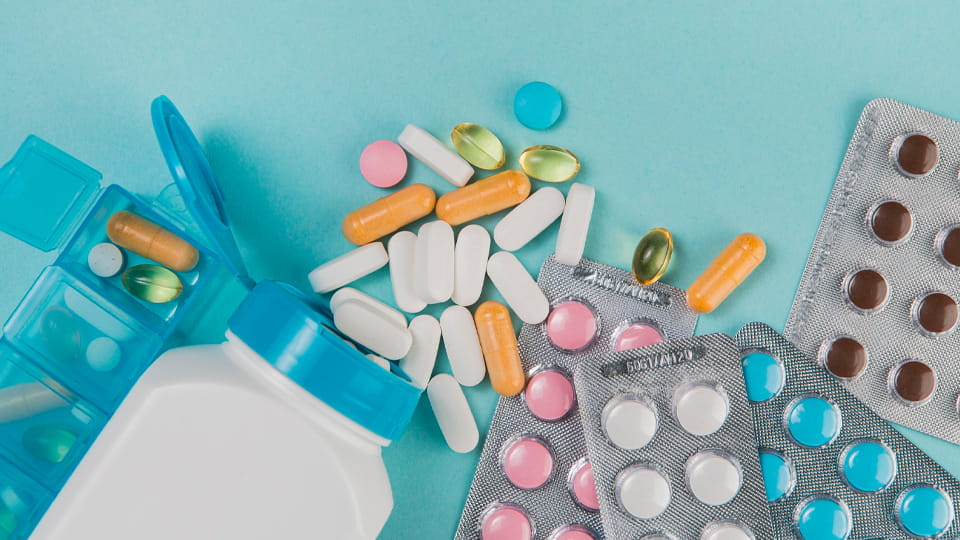
Wichtige Punkte für Medikamente: Vor der Vermarktung ist eine FDA/EMA-Genehmigung erforderlich; klinische Studien und technische Dossiers; strikte cGMP-Konformität; geregelte Kennzeichnung (Drogenfakten); und sowohl Rx- als auch viele OTC-Arzneimittel erfordern strenge Sicherheits-/Qualitätskontrollen.
Der Hauptunterschied besteht darin Absicht. Medikamente dienen speziell der Diagnose, behandeln, oder Krankheiten heilen. Ergänzungen sollen dazu dienen die Ernährung ergänzen. Daher:
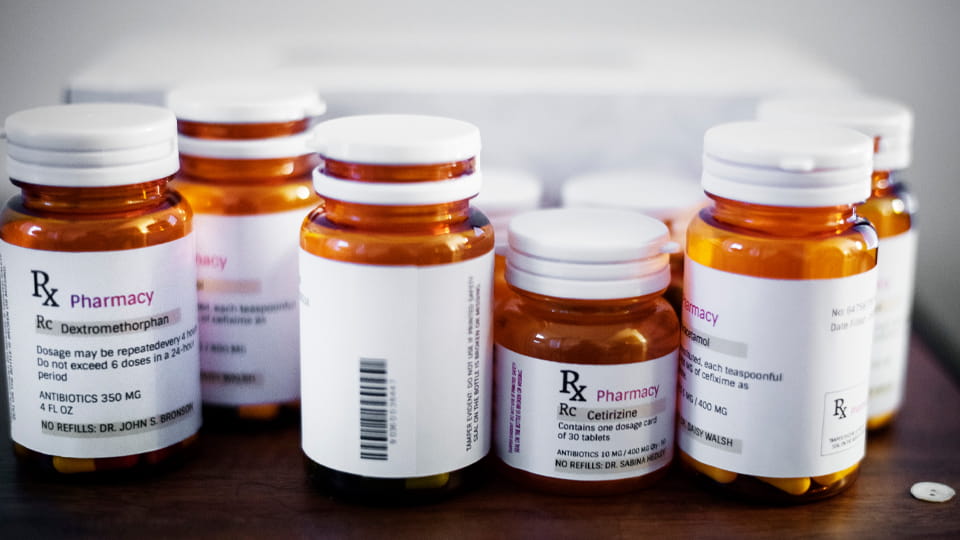
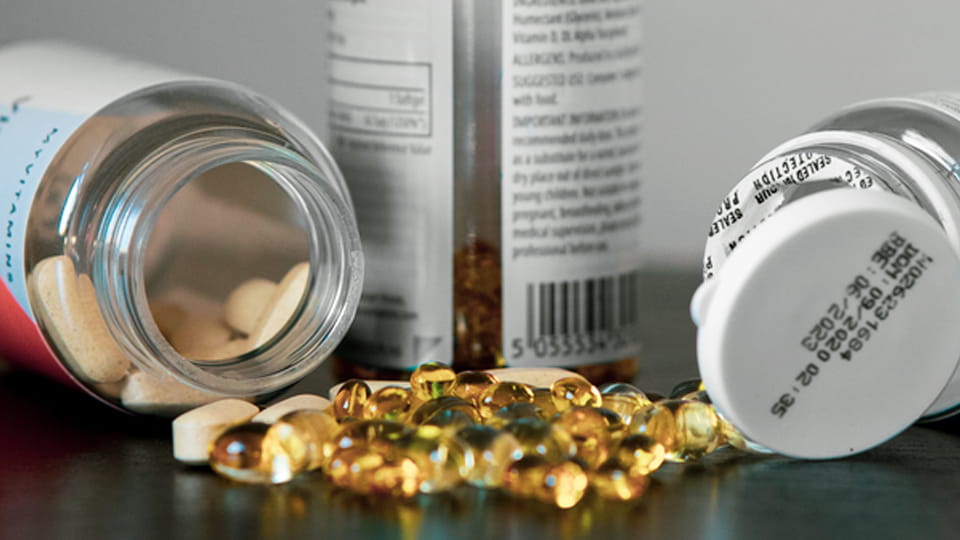
Viele Darreichungsformen überschneiden sich zwischen Nahrungsergänzungsmitteln und Medikamenten. Beides kann sein:
Aus gerätetechnischer Sicht, Die Maschinen sind sehr ähnlich. A GMP-konform Zähl-/Fülllinie Das Gerät, das 50-ml-Vitaminflaschen verarbeitet, kann oft auch Arzneimittelflaschen ähnlicher Größe füllen (vielleicht mit geringfügigen Anpassungen). Blisterlinien für feste Dosen eignen sich für alle Pillen. Rotierende Tablettenpressen oder Kapselfüller auf der stromaufwärtigen Seite erzeugen die Darreichungsformen; flussabwärts, Die Linien weichen bis zur Kennzeichnung/Inspektion geringfügig voneinander ab. Die Hauptunterschiede bei Maschinen ergeben sich aus dem Produktionsmaßstab und den regulatorischen Merkmalen (z.B. anspruchsvollere Inspektionskameras an einer Pharmalinie).
Bei der Auswahl der Ausrüstung, Konzentrieren Sie sich auf das Produkt Format, Volumen, und Compliance -Bedürfnisse:
Tische Im Folgenden sind die wichtigsten Unterschiede zusammengefasst und Ausrüstungsempfehlungen für die einzelnen Produkttypen aufgeführt.
| Attribut | Nahrungsergänzungsmittel | Medikamente (Drogen) |
| Definition/Verwendung | Nährstoffe/Kräuter zur Ergänzung der Ernährung | Krankheiten behandeln/diagnostizieren/verhindern |
| Genehmigung erforderlich | Keine Vorabgenehmigung der FDA (DSHEA) | FDA/EMA-Zulassung (NDA/SIE/BLA) |
| Klinische Tests | Keine obligatorischen klinischen Studien | Strenge Tests zur Sicherheit/Wirksamkeit |
| GMP-Regime | Nahrungs-GMP (21 CFR111) | Pharma-GMP (21 CFR210–211, EU-GMP) |
| Beschriftung | Ergänzungsfakten; Haftungsausschluss „nicht zur Behandlung“. | Drogenfakten; enthält Hinweise, Dosierung, Nebenwirkungen |
| Ansprüche | Nur Struktur-/Funktionsansprüche | Spezifische therapeutische Angaben zulässig |
| Verpackungskontrolle | Standard-Lebensmittelqualität; Bei Bedarf Kinderkappen | Obligatorische manipulationssichere/kindersichere Verschlüsse; Serialisierung |
| Qualitätsprüfung | Chargenprüfung durch den Hersteller (Identität, Reinheit) | Umfassende Qualitätskontrolle (Potenz, Auflösung, Stabilität) |
| Beispielprodukte | Vitamine, Mineralien, Kräuter, Aminosäuren | Aspirin, Antibiotika, Hormone, OTC-Analgetika |
| Produktform | Typische Verpackungsformate | Empfohlene Maschinen |
| Tabletten | Flaschen (zählen & Kappe); Blisterkarten | Tablettenpresse; Beschichter; Zählmaschine; Flaschenfüller & Capper; Blistermaschine; Kartonierer |
| Kapseln | Flaschen (mit Trockenmittel); Blisterkarten | Kapselfüllmaschine; Zählmaschine; Flaschenfüller & Capper; Blistermaschine; Kartonierer |
| Pulver/Granulat | Beutel/Stickpackungen; Standbodenbeutel; Gläser (Wannen) | Mischer/Granulatoren; Sachet/Stick-Packer; Vorgefertigter Beutelfüller; Pulverbehälterfüller; Versiegelung; Kartonierer |
| Flüssigkeiten | Flaschen (Pipette oder Kappe); Ampullen | Flüssigkeitsabfülllinie; Messmaschine (Bei Bedarf kindersicher); Etikettierer; Kartonierer |
| Gummis/Kaubonbons | Blasenpackungen; Flaschen | Gummieinleger; Blisterverpackungsmaschine; Zählmaschine; Flaschenfüller; Kartonierer |
In jeder Zelle sind sowohl Nahrungsergänzungsmittel- als auch Arzneimittellinien aufgeführt: Die gleiche Maschine kann oft mit geringfügigen Anpassungen beides bewältigen. Zum Beispiel, Jinlu Blisterverpackungsmaschinen kann Vitamine verpacken, Pillen oder Gummipräparate genauso wie pharmazeutische Tabletten.
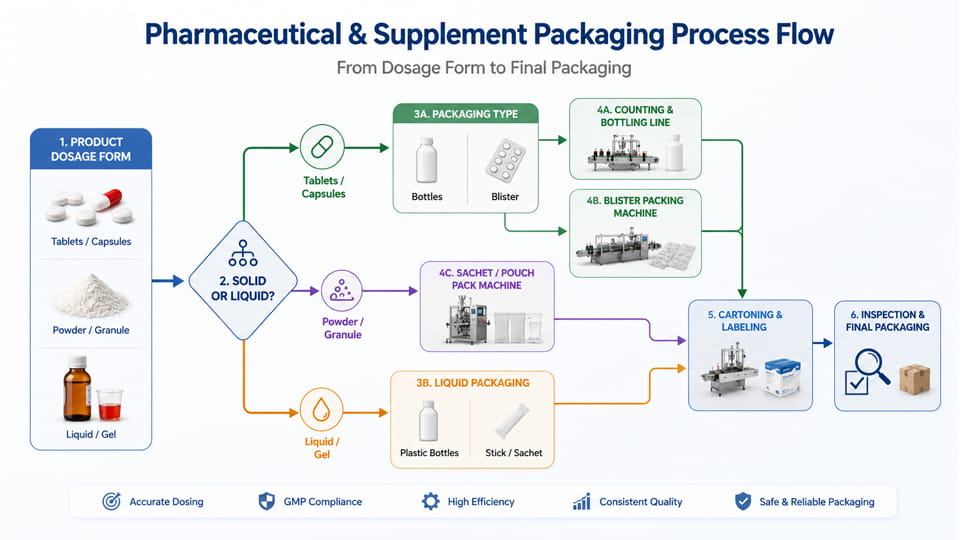
Meerjungfrau-Diagramm: Das obige Flussdiagramm veranschaulicht einen vereinfachten Entscheidungsprozess. Beginnen Sie mit dem Produktformular (solide Tablette, Kapsel, Pulver, usw.), Verwenden Sie die entsprechende Produktionsausrüstung (drücken, Stange, Mischer), Dann wählen Sie eine Verpackungslinie. Flaschen, Blasen, Beutel, und Kartons sind die häufigsten Endpunkte.
Beide Branchen können ähnliche Einheitsoperationen verwenden (Mischen von Pulvern, Granulation, Tablet-Komprimierung, Kapselfüllung). Jedoch, bestimmte Schritte weichen voneinander ab:
Trotz dieser Unterschiede, Jinlus Fachwissen im Bereich Pharmaverpackung bedeutet, dass seine Ausrüstung mit minimalen Änderungen für Nahrungsergänzungsmittel geeignet ist. Zum Beispiel, Unsere Kapselzählmaschine listet „pharmazeutische und medizinische Verwendung“ auf, Zählen Sie Tablets, Kapseln, Pillen, usw., 2-40mm, Ausgabe 100 Flaschen/Stunde, Genauigkeit >99.98%”. Dieselbe Maschine kann zählen Gummivitamine oder Nahrungsergänzungsmittel für Haustiere so einfach wie Pillen.
Eine typische Tabletten-/Kapselflaschenlinie für Nahrungsergänzungsmittel könnte Folgendes umfassen:: Flaschenentschlüsseler → Tabletten-/Kapselzähler → Kappenplatzierer/Drehmomentgeber → Induktionsfolienversiegeler → Etikettierer → Tintenstrahlkodierer → Förderband. Für Medikamente, Die Leitung könnte sehr ähnlich sein, aber von einer Laminar-Flow-Haube umgeben sein (für sterile/nicht kontaminierte Umgebungen) und wird über ein Vision-System verfügen, um Etiketten und Manipulationsnachweise zu überprüfen. Die Zähllinie von Jinlu kann für eine vollständige Integration in Verschließ- und Etikettiergeräte integriert werden schlüsselfertige Lösung.

Für die Hochgeschwindigkeitsproduktion von Arzneimitteln, eine Blistermaschine (z.B. JL DPP-270Max) Formt und versiegelt Blisterfolien, die direkt einem Kartonierer zugeführt werden. Der Kartonierer nimmt jede Blisterkarte und steckt sie in einen bedruckten Karton, Anschließend wird der Karton verschlossen und manchmal versiegelt. Dieser gesamte Fluss kann mehrere tausend Einheiten pro Stunde ablaufen. Hersteller von Nahrungsergänzungsmitteln verwenden häufig ähnliche Linien für Artikel wie Brausetabletten oder Vitamine, die in Blisterpackungen verpackt sind. Die Maschinen sind weitgehend gleich (Unsere Blisterverpackungsmaschinen können die Produktivität beim Verpacken von Tabletten verbessern, Kapseln…), Die Reinraum- und Inspektionsfunktionen können jedoch so skaliert werden, dass sie den GMP entsprechen.
[jl_youtube src=”https://www.youtube.com/embed/1Bb_J6rluac”]
Das Verständnis der Unterschiede zwischen Nahrungsergänzungsmitteln und Medikamenten ist für Anlagenplaner und Produktionsleiter in der Gesundheitsproduktbranche von entscheidender Bedeutung. Während die aktiven Verarbeitungsmaschinen (Tablettenpressen, Kapselfüller, Blasen, Zeilen zählen, usw.) wird weitgehend geteilt, Die regulatorischen Anforderungen sind unterschiedlich: Nahrungsergänzungsmittel unterliegen den Lebensmittel-/Ernährungsvorschriften und basieren auf der vom Hersteller kontrollierten Sicherheit, wohingegen Medikamente validierte Prozesse und behördliche Genehmigungen erfordern. Bei der Auswahl der Verpackungsausrüstung, Käufer sollten Maschinen an die Produktform und die gesetzlichen Anforderungen anpassen: sicherstellen GMP-Konformität, ordnungsgemäße Materialhandhabung, und etwaige Besonderheiten (kindersicher, manipulationssicher, Serialisierung) für Medikamente erforderlich. Ein kompetenter Ausrüstungspartner kann für jeden Fall maßgeschneiderte Lösungen finden.
Durch die sorgfältige Abstimmung des Produkttyps auf die Ausrüstung – unter Verwendung von Ressourcen wie Jinlu Packing's Kapselfüllmaschinen, Tablettenpressen, Blisterverpacker, Zähllinien, Sachet-/Beutelfüller, und Kartonierer – Hersteller können effiziente Linien bauen, die sowohl der Marktnachfrage als auch den gesetzlichen Standards gerecht werden. Diese Synergie aus Prozess-Know-how und dem richtigen Maschinenpark sorgt für Sicherheit, konforme Produktion, egal ob Sie Nahrungsergänzungsmittel oder Medikamente herstellen.
Nahrungsergänzungsmittel sollen die Ernährung ergänzen und die allgemeine Gesundheit unterstützen, während Medikamente zur Diagnose dienen, behandeln, verhindern, oder Krankheiten behandeln. Aufgrund dieser unterschiedlichen Zwecke, Medikamente unterliegen einer strengeren behördlichen Zulassung, Testen, und Compliance-Anforderungen als Ergänzungen.
NEIN. In den meisten Gerichtsbarkeiten, einschließlich der Vereinigten Staaten, Nahrungsergänzungsmittel unterliegen anderen Regelungen als Medikamente. Nahrungsergänzungsmittel fallen im Allgemeinen unter die lebensmittelrechtlichen Vorschriften, wohingegen Medikamente als Arzneimittel reguliert sind und bestimmte Sicherheits- und Wirksamkeitsanforderungen erfüllen müssen, bevor sie auf den Markt kommen.
Oft ja, mit Anpassungen. Wenn eine Linie nach cGMP aufgebaut ist (rostfrei, leicht zu reinigen, usw.), Es kann beide Produkttypen ausführen. Möglicherweise müssen Sie Formen oder Einstellungen ändern. Die größte Vorsichtsmaßnahme ist regulatorischer Natur: Stellen Sie sicher, dass Nahrungsergänzungsmittel entsprechend gekennzeichnet sind, und wenn auf ein Medikament umgestiegen wird, Validieren Sie alle Sterilisations-/Reinigungsschritte. Jinlus Maschinen sind zum Beispiel vielseitig einsetzbar, Ein Zählfüller soll ideal für „fast alle Formen von Tabletten und Kapseln“ sein..
Allgemein, Nein – das Vergiftungsschutz-Verpackungsgesetz (PPPA) umfasst Arzneimittel und bestimmte gefährliche Stoffe. Einige Ergänzungen (z.B. Eisentabletten, die für Kinder giftig sein können) kann unter PPPA fallen. Für die meisten Vitamin- und Kräuterpillen ist gesetzlich keine kindersichere Verschlusskappe vorgeschrieben, aber viele Hersteller nutzen sie als Sicherheits- und Marketingmaßnahme. Es ist eine bewährte Vorgehensweise, den Erwartungen der Verbraucher zu folgen.
Beide haben GMP, aber ergänzendes GMP (21 CFR111) ist eine Teilmenge von Pharma-GMP (21 CFR210/211). Zum Beispiel, Nahrungsergänzungsmittel erfordern eine Identitätsprüfung der Inhaltsstoffe und einige Prüfungen auf Verunreinigungen, Sie schreiben jedoch keine klinische Validierung von Prozessen vor. Jedoch, Alles GMP bedeutet, dass Sie die Dinge sauber halten müssen, Produktionsdaten erfassen, und testen Sie Produkte, um die Angaben auf dem Etikett sicherzustellen. Wenn die FDA eine Ergänzungslinie prüft, Sie werden die ordnungsgemäße Reinigung überprüfen, dokumentierte Verfahren, und Testergebnisse genau wie in einer Arzneimittelfabrik. Für Arzneimittel, Die FDA erwartet weitere Schichten: validierte Methoden, Stabilitätsstudien, strengere Umweltkontrollen, usw.
Es ist immer noch wichtig. Während Nahrungsergänzungsmittelhersteller keinen Bericht bei der FDA einreichen, Sie müssen immer noch beweisen, dass ihr Produkt das ist, was sie sagen. Das bedeutet Ausrüstung (wie eine Tablettenpresse oder Blistermaschine) sollte qualifiziert sein (IR/WH/PQ) um sicherzustellen, dass stets die richtige Dosierungsform hergestellt wird. Zumindest, USP- oder Unternehmensstandards würden Wäge- und Inhaltstests erfordern. Gute moderne Qualitätspraktiken (MQP) in Nahrungsergänzungsmitteln spiegelt sich zunehmend die Pharmaindustrie wider, insbesondere für Exportmärkte. Sie, Zum Beispiel, erwähnt die Einhaltung von „cGMP, Ce, FDA, und EMA“ für seine Beutelmaschinen, Dies weist darauf hin, dass sie Maschinen entwerfen, die diese Anforderungen erfüllen.
Zu den Schlüsselfaktoren gehören: Maschinengeschwindigkeit vs. erwartetes Volumen, Flexibilität (Kann es verschiedene Flaschenformen oder Blistertypen verarbeiten??), einfache Reinigung (rostfreie Teile, CIP), und Automatisierungsfunktionen (wie Servosteuerungen, HMI, und Inspektion). Denken Sie auch an Kundendienst und Ersatzteile. Jinlu hebt eine 7-Tage-Lieferung und eine 3-Jahres-Garantie auf seine Maschinen hervor, Dies spiegelt die starke After-Sales-Unterstützung wider. Käufer sollten auch nach der Integration fragen (z.B. Kann die Zählmaschine problemlos mit einem vorhandenen Kartonierer synchronisiert werden??). Endlich, Einhaltung: Stellen Sie sicher, dass die Maschine bei Bedarf Verpackungen in „pharmazeutischer Qualität“ produzieren kann, auch für Nahrungsergänzungsmittel. Die Verpackungslinien von Jinlu erfüllen die CE- und FDA-bezogenen Standards, und sie legen Wert auf die Verwendung von Markenkomponenten (wie Omron, Siemens) für Zuverlässigkeit.
Referenzen:
1.Fragen und Antworten zu Nahrungsergänzungsmitteln — UNS. Lebensmittel- und Arzneimittelbehörde
2.Aktuelle gute Herstellungspraktiken (CGMPs) für Lebensmittel und Nahrungsergänzungsmittel — UNS. Lebensmittel- und Arzneimittelbehörde
3.Nahrungsergänzungsmittel und pflanzliche Nahrungsergänzungsmittel — NCCIH
4.Compliance-Leitfaden für kleine Unternehmen: Aktuelle gute Herstellungspraxis in der Fertigung, Verpackung, Beschriftung, oder Holdingbetriebe für Nahrungsergänzungsmittel – UNS. Lebensmittel- und Arzneimittelbehörde
5.Nahrungsergänzungsmittel: Was Sie wissen müssen — Nationale Gesundheitsinstitute
6.Qualitätsrichtlinien: Herstellung — Europäische Arzneimittel-Agentur