Tabletten-Darreichungsformen gibt es in zwei Grundtypen: beschichtet Und unbeschichtet. Ein unbeschichtete Tablette ist eine einfache komprimierte Pille ohne zusätzliche Hülle – nur die komprimierten Inhaltsstoffe (aktives Medikament Plus Hilfsstoffe). A beschichtete Tablette, im Gegensatz, verfügt über eine dünne Außenschicht oder Schale, die nach der Kompression aufgetragen wird. Bei dieser Beschichtung kann es sich um einen Polymerfilm handeln (filmbeschichtet), Schale auf Zuckerbasis (mit Zucker überzogen), magensaftresistente Schicht, oder eine andere Funktionsfolie. Die Beschichtung erfüllt Funktionen, die über das Aussehen hinausgehen – sie kann das Medikament schützen, Maskengeschmack, Kontrollfreigabe, oder die Schluckfähigkeit verbessern.
Zum Beispiel, Figur 1 zeigt, wie eine Filmbeschichtungsmaschine einen gleichmäßigen Polymerfilm auf Tabletten aufträgt, glatt schaffen, glänzende Pillen. Diese Beschichtung kann das Schlucken erleichtern und den Tablettenkern vor Feuchtigkeit und Luft schützen. Im Gegensatz, Einfache, unbeschichtete Tabletten sind matt, oft kreidig, und anfälliger für die Umwelt.
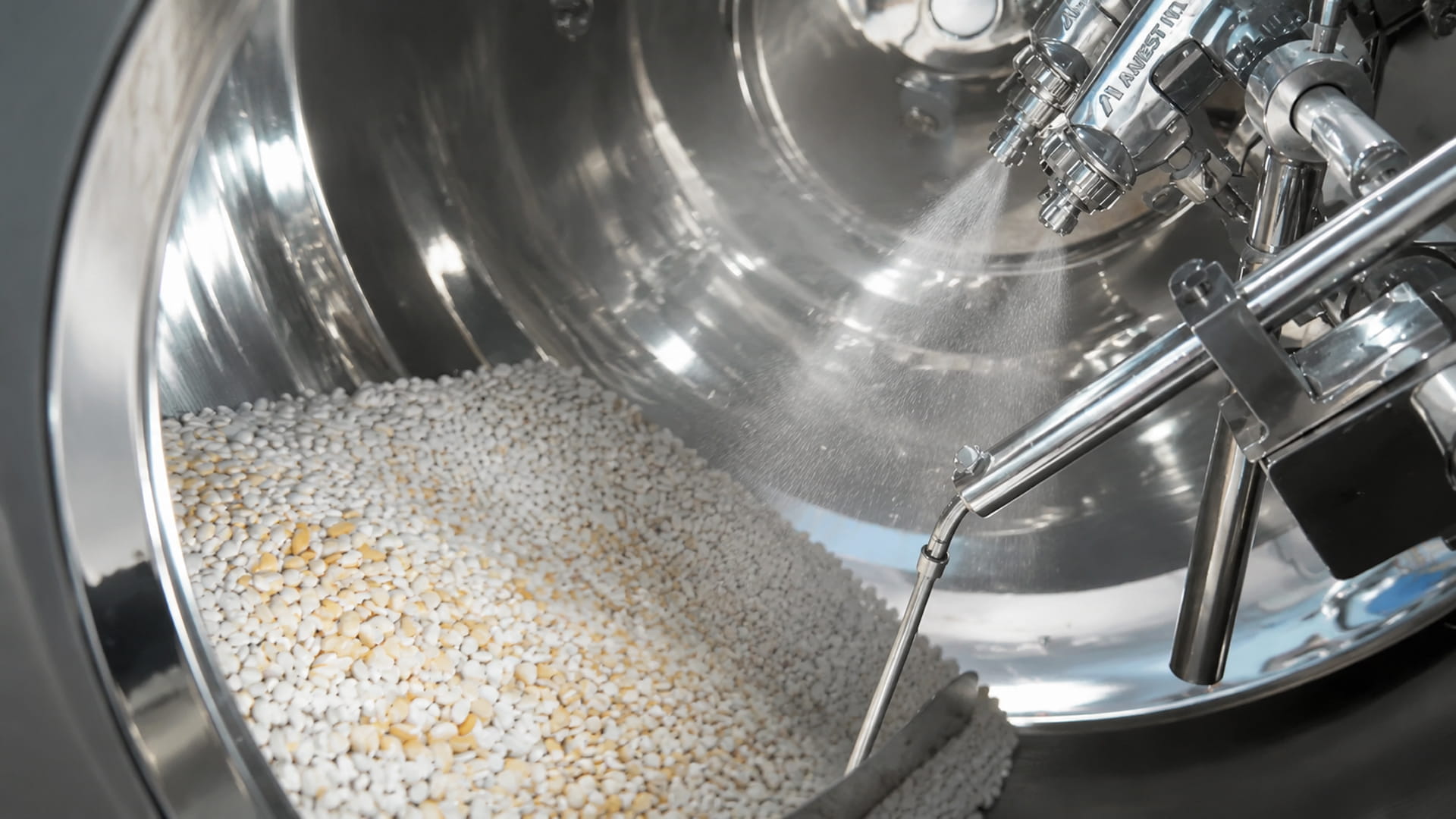
Figur 1. Eine Hochgeschwindigkeits-Tablettenbeschichtungsmaschine, die einen Filmüberzug aufträgt. Die Beschichtung sorgt für einen zusätzlichen Schutz, Tragen Sie eine gleichmäßige Schicht auf jede Tablette auf, Verbesserung des Aussehens und der Stabilität.
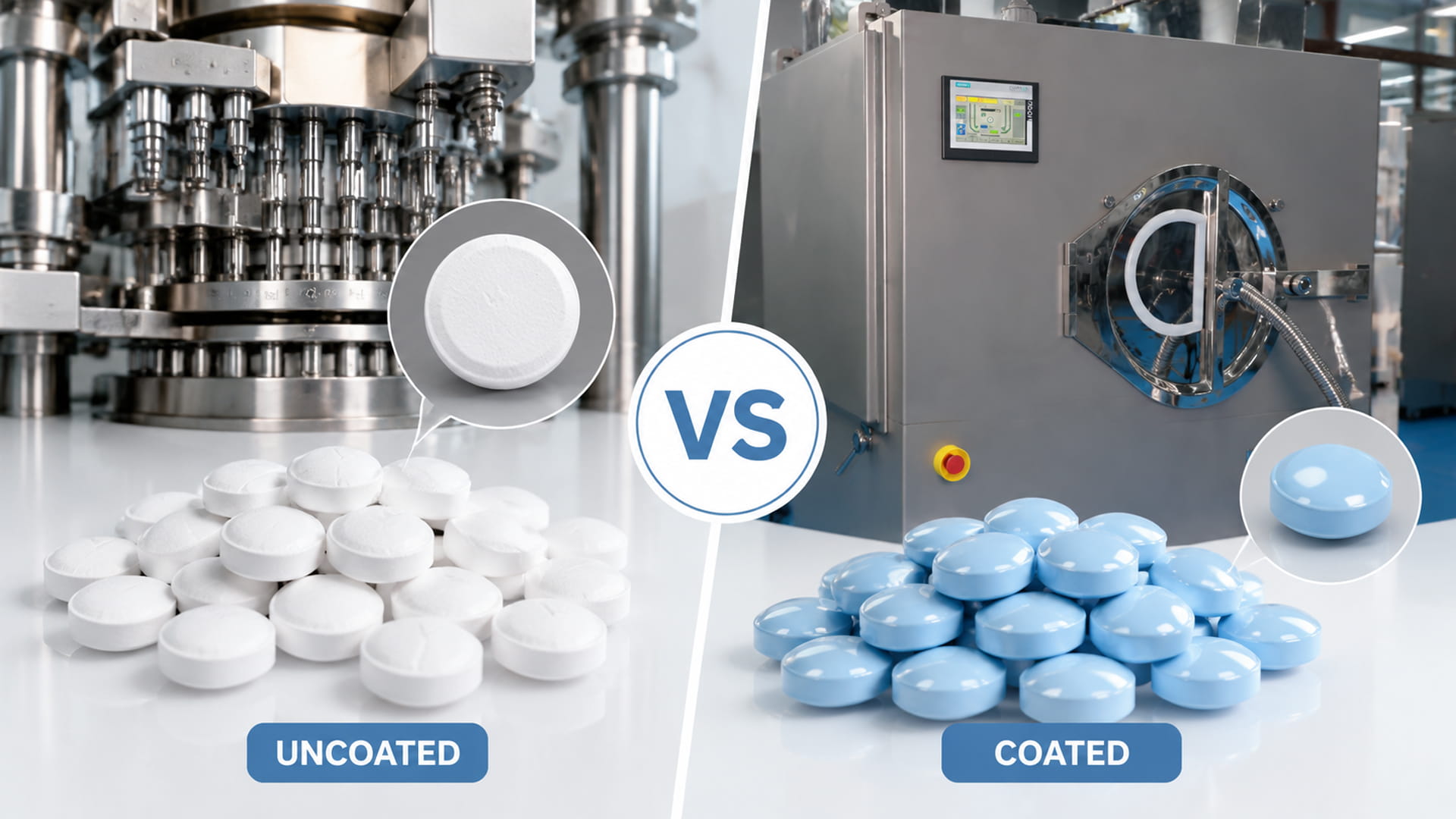
Zum Beispiel, A Filmtablette hat einen dünnen Polymerfilm (normalerweise Hydroxypropylmethylcellulose oder ähnliches) das macht die Pille nicht dicker. A Drageetablette hat eine dicke, süße Sirupschale – aufwändiger in der Herstellung und viel schwerer. Ein magensaftresistente Tablette verwendet pH-empfindliche Polymere, sodass es den Magen passiert und sich im Darm auflöst. Jede Beschichtungsart hat ihre eigenen Vor- und Nachteile (siehe Tabelle unten).
| Beschichtungstyp | Beschreibung | Hauptverwendungen |
| Unbeschichtet | Keine Beschichtung; Tablettenkern freigelegt | Schnelle Veröffentlichung, kostensensibel, stabile Medikamente |
| Filmüberzug | Dünner Polymerfilm (z.B. HPMC) | Geschmacksmaskierung, Feuchtigkeits-/Lichtschutz, leichtes Schlucken, Branding |
| Zuckermantel | Dicke Zuckersirupschichten | Starke Geschmacksmaskierung, glatte, glänzende Oberfläche, häufig in der Pädiatrie |
| Magensaftresistenter Mantel | pH-empfindliche Polymere (Eudragit) | Magen oder Medikament schützen; verzögerte Darmfreisetzung |
| Andere | Spezialisierte/kontrollierte Freisetzung | Anhaltende Veröffentlichung, gezielte Lieferung, usw. |
Tisch 1. Vergleich von unbeschichteten vs. beschichteten Tabletten und gängigen Beschichtungsarten.
Beim Beschichten geht es nicht nur um das Aussehen – es ist ein Funktionsschritt in der Tablettenherstellung. Pharma-Ingenieure fragen, „Funktioniert das Tablet auch ohne Beschichtung??„Wenn ja, Eine unbeschichtete Tablette ist einfacher und billiger. Aber Beschichtungen kommen immer dann zum Einsatz, wenn ein technischer Nutzen besteht. Zu den Hauptgründen für das Überziehen von Tabletten gehören::
Zusamenfassend, Die Beschichtung erhöht die Funktionalität. Es geschieht nicht willkürlich, aber wann immer es schmeckt, Stabilität, oder Freigabekontrollangelegenheiten. Wie ein Branchenführer feststellt, „Eine Beschichtung wird nur dann eingeführt, wenn sie einen klaren funktionellen Nutzen bringt“.
Beschichtete Tabletten vereinen Langlebigkeit und Benutzerfreundlichkeit. Zu den wichtigsten Vorteilen gehören:
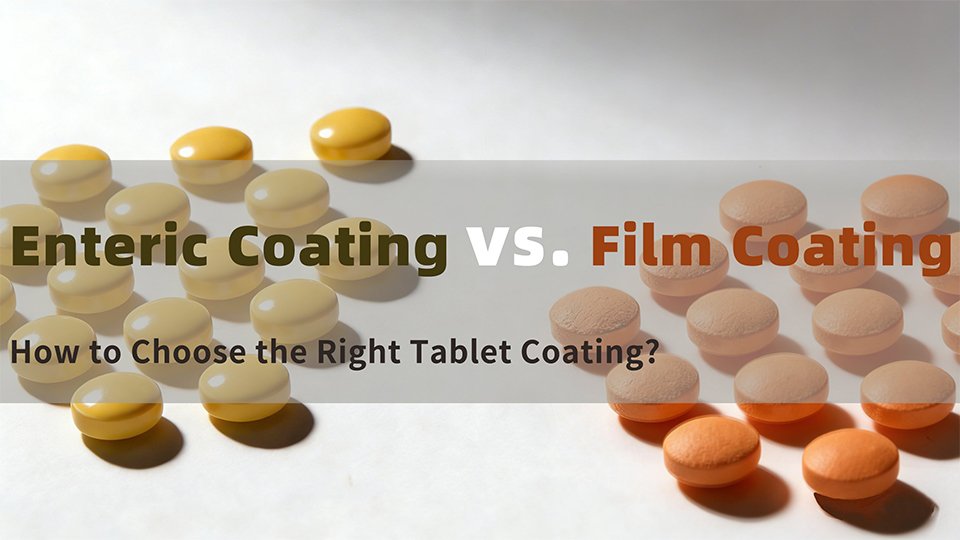
Figur 2 vergleicht eine unbeschichtete mit einer filmbeschichteten Tablette. Die beschichtete Tablette (Rechts) hat eindeutig eine glatte, glänzende Außenseite, die jeden Abdruck oder jede Rauheit im Kern verdeckt.
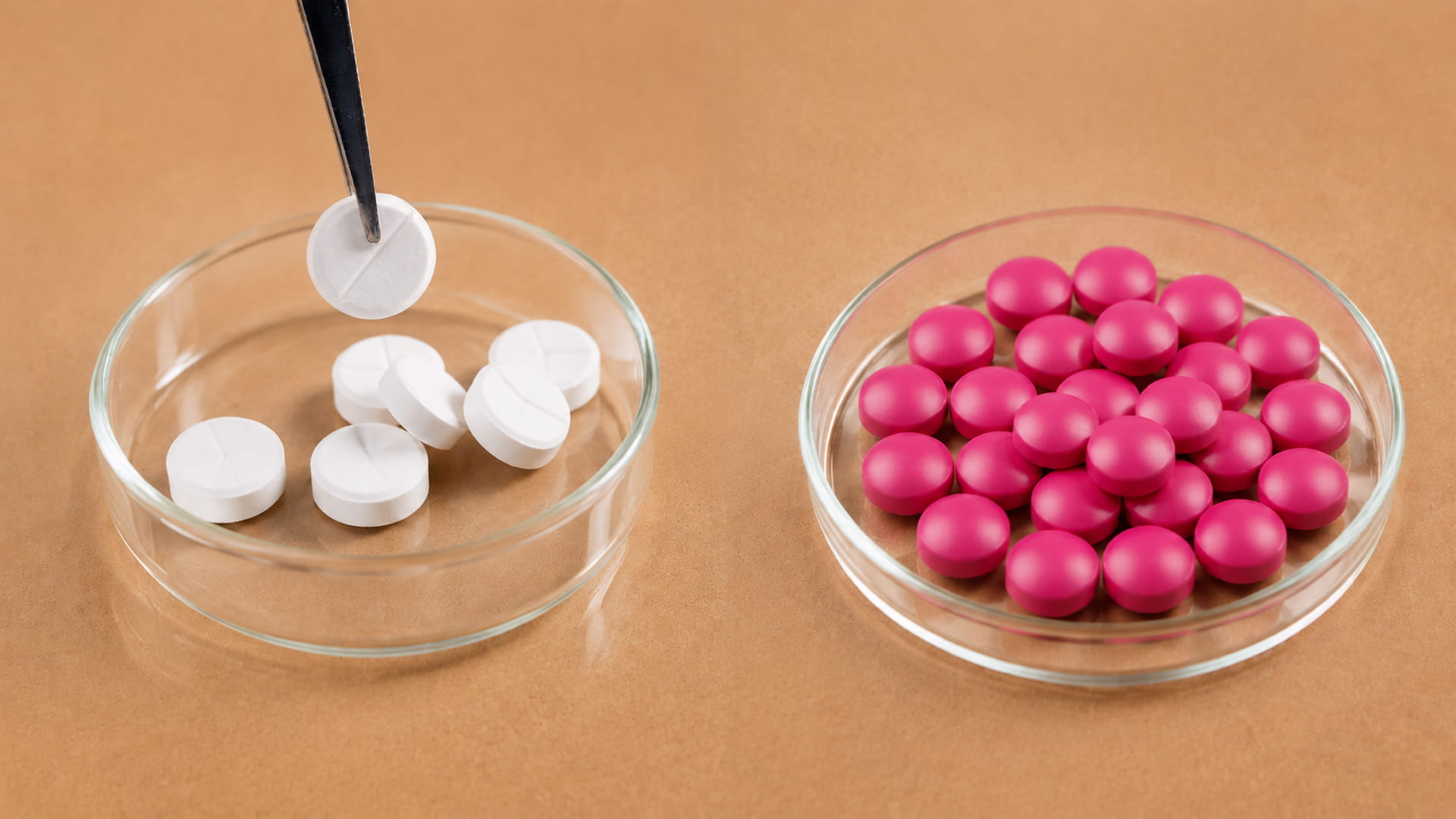
Figur 2. Unbeschichtet (links) vs. filmbeschichtet (Rechts) Tabletten. Die Filmtablette hat eine glatte Oberfläche, einheitliches Finish, das die Farbe und Textur des Kerns verdeckt. Solche Beschichtungen verbessern die Schluckbarkeit und schützen das Medikament im Inneren.
Die Vorteile von Beschichtungen sind leicht erklärt: Dragees sehen oft „besser aus“., länger halten, und leichter runtergehen“ als einfache Pillen. Diese Vorteile führen dazu, dass durch die Beschichtung zusätzliche Schritte und Kosten entstehen, Es kann spätere Probleme reduzieren (Schaden, Beschwerden, vorzeitiges Ablaufen). Ein CMO für Nahrungsergänzungsmittel stellt fest, dass „überzogene Tabletten zwar zusätzliche Materialien enthalten“., Arbeit und Zeit, Durch die Beschichtung kann die Zahl der Ausschusschargen verringert werden, Kundenbeschwerden, und Qualitätsprobleme nach dem Inverkehrbringen“. Auf Dauer, Überzogene Tabletten sparen oft über den gesamten Produktlebenszyklus hinweg Geld.
Natürlich, Einfache Tablets haben immer noch ihre Berechtigung. Unbeschichtete Tabletten bieten Einfachheit und Kosteneffizienz:
Einfach gesagt, eine unbeschichtete Tablette ist „einfach und günstig herzustellen“. Es ist ein guter Ausgangspunkt für Machbarkeitsstudien. Der Apotheker-Blog weist außerdem darauf hin, dass unbeschichtete Tabletten günstiger und weniger aufwändig in der Herstellung seien, und sie lösen sich schneller auf und geben das Arzneimittel schneller frei.
Jedoch, Diese Gewinne gehen mit Kompromissen einher: Eine unbeschichtete Tablette „macht den Arzneimittelkern anfällig“ für Umweltschäden, und könnte für Patienten weniger akzeptabel sein. Daher wägen die Hersteller diese Faktoren ab: wenn keine Beschichtung erforderlich ist, Sie werden es wahrscheinlich überspringen.
Beschichtungen sind keine Einheitslösung. Die Industrie verwendet mehrere wichtige Beschichtungsarten, jeweils mit spezifischen Einsatzmöglichkeiten und Vorteile:
Filmtabletten vs. zuckerbeschichtete Tabletten: Zusamenfassend, Filmbeschichtungen sind dünn, dauerhaft, und für die Hochgeschwindigkeitsproduktion geeignet. Sie haben Zuckerbeschichtungen weitgehend ersetzt, da sie kaum Masse hinzufügen und sich schnell auftragen lassen. Jedoch, Zuckerüberzüge sorgen immer noch für eine hervorragende Geschmacksmaskierung und ein klassisches Aussehen, Daher kommen sie in Produkten wie kaubaren Vitaminen vor, bei denen der Geschmack entscheidend ist.
Filmbeschichtete vs. magensaftresistente Tabletten: Der Hauptunterschied ist der Veröffentlichungsort. Ein Filmüberzug mit sofortiger Freisetzung löst sich im Magen auf und verbessert oft nur die Schluckbarkeit oder Stabilität. Eine magensaftresistente Beschichtung Verzögerungen Auflösung bis zum pH-Wert im Darm. Zum Beispiel, Ein Medikament gegen Sodbrennen könnte eine magensaftresistente Hülle verwenden, um den Magen zu schonen, wohingegen ein tägliches Vitamin eine normale Filmschicht benötigen könnte..
Wie beschichten Hersteller eigentlich Tabletten?? Es handelt sich um einen sorgfältig kontrollierten Sprüh- und Trockenvorgang. Die grundlegenden Schritte sind:
In der modernen Tablet-Produktion werden Geräte wie verwendet Rotationstablette (zum Formen von Kernen) Und Hochgeschwindigkeitsbeschichtungsmaschinen (zum Aufbringen von Folien oder Zuckerschalen). Eine Tablettenpresse kann Hunderttausende gleichförmige Kerne pro Stunde herstellen. Dann trägt eine spezielle Beschichtungsmaschine – im Grunde eine Edelstahltrommel mit Sprühdüsen und präzisem Luftstrom – die Beschichtungslösung auf die sich bewegenden Tabletten auf.
Jeder dieser Schritte muss streng kontrolliert werden. Zu viel Sprühnebel oder zu heiße Luft können die Ursache sein Mängel wie „Orangenhaut“-Textur oder abblätternder Film. Deshalb fortschrittliche Beschichtungsmaschinen (wie die von JinluPacking) verfügen über automatische SPS-Steuerungen, Präzise Sprühdüsen, und sogar Echtzeitüberwachung zur Anpassung von Parametern. Am Ende, Präzision ist der Schlüssel: Für eine gleichbleibende Leistung muss jedes Tablet die richtige Beschichtungsdicke haben.
[jl_youtube src=”https://www.youtube.com/embed/LFJJ-cEpfCk”]
Beim Übergang von der Laborentwicklung zur kommerziellen Tablettenproduktion, Die Wahl der richtigen Tablettenbeschichtungsmaschine wird zu einer entscheidenden Entscheidung. Produktionsleiter bewerten Geräte normalerweise anhand der Gleichmäßigkeit der Beschichtung, Kapazität, Automatisierungsgrad, Reinigungsanforderungen, und Wartungskosten. Zu den gebräuchlichsten Tablettenbeschichtungsgeräten gehören::

Figur 3. Jinlus industrielle Hochgeschwindigkeits-Tablettenbeschichtungsmaschine. Während die Beschichtungslösung aufgesprüht und getrocknet wird, fallen die Tabletten hinein. Merkmale wie Prallrührwerke und Materialzirkulationssysteme sorgen für eine gleichmäßige Abdeckung und eine effiziente Beschichtung.
Zu den wichtigsten Merkmalen, auf die Sie bei einem Beschichter achten sollten, gehören::
Die Investition in hochwertige Ausrüstung zahlt sich aus: Ein guter Beschichter erreicht eine hohe Gleichmäßigkeit der Beschichtung, minimale Mängel, und kann mit höheren Geschwindigkeiten laufen. Dies reduziert Produktionszeit und Arbeitsaufwand. Wie ein Blog bemerkt, Die moderne Folienbeschichtung „ist schneller und gleichmäßiger als je zuvor,” dank automatisierter Steuerungen und verbesserter Maschinen.
Zusammenfassend, Hier sind die Hauptunterschiede zwischen beschichteten und unbeschichteten Tabletten:
Tisch 2 (unten) hebt diese Unterschiede hervor. Beachten Sie, dass beschichtet nicht grundsätzlich „besser“ ist – es ist besser wenn eine Beschichtung erforderlich ist. Wie eine FAQ beantwortet: „Sind beschichtete Tabletten immer besser als unbeschichtete?? Nein – Dragees werden aus funktionellen Gründen eingesetzt, wie Geschmacksmaskierung oder -schutz. Wenn eine Formulierung stabil und schmackhaft ist, Unbeschichtete Tabletten werden aus Einfachheits- und Kostengründen oft bevorzugt.“.
| Besonderheit | Unbeschichtete Tabletten | Beschichtete Tabletten |
| Oberfläche | Matt, sichtbares Pulver/Granulat | Glatt, glänzender oder farbiger Film |
| Geschmack/Geruch | Bitter oder unangenehm kann sich bemerkbar machen | Die Beschichtung überdeckt unangenehme Geschmäcker/Gerüche |
| Leichtes Schlucken | Oft schwieriger, besonders große | Leichter durch die glatte Oberfläche |
| Schutz (Feuchtigkeit/Licht) | Erfordert eine starke Verpackung | Folie sorgt für zusätzliche Barriere, verbessert die Stabilität |
| Drogenstabilität | Anfälliger für Feuchtigkeit, Hitze | Bessere Stabilität und Haltbarkeit |
| Verarbeitungskomplexität | Einfacherer Prozess, weniger Schritte | Zusätzlicher Beschichtungsschritt erforderlich |
| Zeit/Kosten | Niedrigere Herstellungskosten | Höhere Vorabkosten, aber möglicherweise niedrigere Lebenszykluskosten |
| Kontrolle der Kontrolle | Nur sofortige Veröffentlichung | Kann eine verzögerte oder kontrollierte Freigabe ermöglichen (magensaftresistent, nachhaltig) |
| Branding/Erscheinungsbild | Beschränkt (einfarbig) | Kann bunt sein, zum Branding bedruckt |
Tisch 2. Beschichtete vs. unbeschichtete Tabletten: ein Vergleich der wichtigsten Funktionen.
In der Praxis, Formulierer und Hersteller entscheiden auf der Grundlage der Produktanforderungen. Einige allgemeine Richtlinien:
Manchmal hängt die Entscheidung von der Verpackung ab: Dragees gelingen im Allgemeinen besser in Flaschen oder Gläsern, da sie weniger Staub abgeben. In Blasenpackungen, Beide Formen funktionieren, aber die Beschichtung könnte eine einfachere Verpackung ermöglichen. Vertragshersteller (CMOs) frage oft: „Können wir dieses Tablet unbeschichtet machen??” und fügen Sie nur bei Bedarf einen Beschichtungsschritt hinzu.
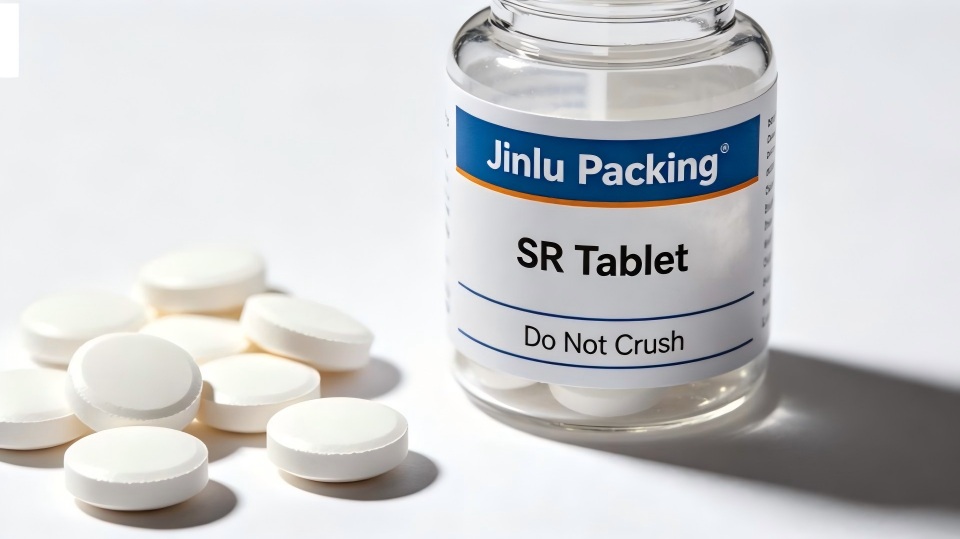
Eine häufige Frage ist, ob eine beschichtete Tablette in zwei Hälften gebrochen oder gemahlen werden kann. Allgemein, NEIN: Das Teilen oder Zerkleinern einer überzogenen Tablette macht den Zweck der Hülle zunichte. Eine Polymerbeschichtung soll die Freisetzung kontrollieren oder das Arzneimittel schützen. Beim Zerkleinern kommt die Droge auf einmal zum Vorschein, Dies kann die Absorption beeinträchtigen oder Reizungen verursachen. Beschichtete Tabletten (insbesondere magensaftresistente oder mit verlängerter Wirkstofffreisetzung) sollte intakt bleiben. Wenn eine geringere Dosis erforderlich ist, Überprüfen Sie, ob die Tablette eine Bruchkerbe hat (Bei einigen Tabletten mit sofortiger Wirkstofffreisetzung ist dies der Fall) oder fragen Sie einen Apotheker. Wie es in einer Expertenmeinung heißt: „Normalerweise nicht – das Zerkleinern kann die Schutzschicht zerstören und die Arzneimittelfreisetzung beeinträchtigen. Fragen Sie immer zuerst einen Apotheker..
Am Ende, beschichtete vs. unbeschichtete Tabletten ist ein Kompromiss zwischen Einfachheit und Funktionalität. Unbeschichtete Tabletten sind günstiger und schneller herzustellen, aber lassen Sie den Drogenkern offen. Überzogene Tabletten erhöhen die Komplexität und die Kosten, aber klare Vorteile liefern: bessere Stabilität, Geschmacksmaskierung, Schluckbarkeit, und Markendifferenzierung. In der modernen Pharmaproduktion, die meisten Pillen für den täglichen Gebrauch (Vitamine, OTC Meds, Nutrazeutika) sind folienbeschichtet, weil sie die richtige Balance zwischen Schutz und Effizienz bieten.
Jedoch, wann immer es die Formulierung zulässt, Aus Kostengründen bevorzugen Unternehmen möglicherweise unbeschichtete Tabletten. Der Schlüssel liegt darin Passen Sie den Tablettentyp an die Bedürfnisse des Arzneimittels an. Wenn Ihr Produkt eine Geschmacksmaskierung oder kontrollierte Freisetzung erfordert, Eine Beschichtung ist oft unerlässlich. Wenn nicht, Eine einfache Tablette kann ausreichen.
Bei Fragen zur Tablettenbeschichtung oder zur Erkundung der Ausstattungsoptionen, erreichen! Unser Team bei JinLuPacking ist auf Tablettenpressen spezialisiert, Beschichtungsmaschinen, und komplette Tablettenproduktionslinien. Ob Sie eine Hochgeschwindigkeitsbeschichtungsanlage für Folien benötigen, Zucker, oder enterische Anwendungen, oder Ratschläge zur Optimierung Ihrer Tablettenformulierung, Wir sind hier, um zu helfen. Kontaktieren Sie uns für ein Angebot oder weitere Informationen, Und sorgen wir dafür, dass Ihre Tablets das richtige Finish und die richtige Leistung erhalten.
Überzogene Tabletten haben eine zusätzliche Schicht (Film, Zucker oder funktionelles Polymer) auf den komprimierten Kern aufgetragen, Bei unbeschichteten Tabletten handelt es sich hingegen um einfach gepresste Pillen ohne äußere Schicht. Die Beschichtung dient funktionalen Zwecken: es kann den Geschmack überdecken, Schützen Sie die API vor Feuchtigkeit/Licht, und Kontrollfreigabe. Unbeschichtete Tabletten lösen sich sofort auf und sind günstiger in der Herstellung, aber sie setzen die Droge der Umwelt aus und schmecken oft bitter.
Zur Verbesserung der Stabilität sind die Tabletten beschichtet, Patientenakzeptanz, und Leistung. Eine Beschichtung schützt vor Feuchtigkeit- oder lichtempfindliche APIs, maskiert unangenehme Aromen, und erleichtert das Schlucken der Tablette. Spezialbeschichtungen (wie magensaftresistente Filme) kann die Freisetzung bis zum Darm verzögern, verhindert Magenreizungen. Zusamenfassend, Die Beschichtung verbessert das Aussehen und die Haltbarkeit des Tablets, und kann eine kontrollierte Arzneimittelabgabe und eine bessere Patientencompliance ermöglichen.
Beides ist nicht generell „besser“ – es kommt auf die Anwendung an. Dragees bieten den Vorteil des Schutzes und der Attraktivität für den Patienten, aber sie kosten mehr und erfordern eine zusätzliche Verarbeitung. Unbeschichtete Tabletten sind einfacher, Schneller, und günstiger in der Herstellung, und sie setzen das Medikament schnell frei. Für einen Stall, Arzneimittel mit sofortiger Wirkstofffreisetzung, bei dem die Kosten im Vordergrund stehen, unbeschichtet könnte ideal sein. Für ein bitteres oder feuchtigkeitsempfindliches Medikament, bei dem Geschmacksmaskierung und Stabilität im Vordergrund stehen, beschichtet ist die bessere Wahl.
Die drei wichtigsten Tablettenbeschichtungsmethoden sind:
• Filmbeschichtung: Dünne Polymerschicht (normalerweise auf Wasserbasis) durch Sprühen aufgetragen; heute am häufigsten. Bietet Feuchtigkeitsschutz und Branding bei minimaler Gewichtszunahme.
• Zuckerüberzug: Dicke Zuckerhülle, aufgebaut aus mehreren Sirupschichten; Gibt ein glänzendes Finish und die Masken schmecken gut, fügt jedoch mehr Volumen hinzu und erfordert eine langwierige Verarbeitung.
• Magensaftresistente Beschichtung: Ein pH-empfindlicher Film, der der Magensäure widersteht und sich im Darm auflöst. Dabei handelt es sich technisch gesehen um eine Art Folienbeschichtung mit speziellen Polymeren, Wird bei säurelabilen Arzneimitteln oder zur Vermeidung von Magenreizungen eingesetzt.
Filmtabletten profitieren von den meisten wichtigen Vorteilen der Beschichtung durch eine dünnere Hülle. Ein guter wässriger Filmüberzug schützt das Arzneimittel (Feuchtigkeits-/Lichtbarriere), maskieren Geschmack und Geruch, und die Ästhetik verbessern, ohne die Tablet-Größe wesentlich zu vergrößern. Filmbeschichtungen trocknen in modernen Beschichtungsanlagen schnell, sorgt für einen hohen Durchsatz. Sie können auch für bestimmte Freisetzungsprofile formuliert werden (magensaftresistent oder nachhaltig) nach Wahl des Polymers.
Allgemein, Ja. Unbeschichtete Tabletten zerfallen und lösen sich normalerweise schneller auf, da keine Barriereschicht vorhanden ist. Der API wird sofort Magenflüssigkeiten ausgesetzt, was zu einem schnelleren Wirkungseintritt führt. Im Gegensatz, selbst ein Filmüberzug mit sofortiger Freisetzung führt zu einer leichten Verzögerung (da sich die Schicht erst auflösen muss). Jedoch, Der Unterschied kann je nach Zusammensetzung und Dicke der Beschichtung gering sein.
Zu den gängigen Beschichtungsgeräten gehören::
• Perforierte Pfannenbeschichter (Hochgeschwindigkeitsbeschichter): Industriestandardmaschinen mit rotierenden Lochtrommeln. Durch die Trommel strömt erwärmte Luft, Ermöglicht eine hohe Trocknungseffizienz und eine gleichmäßige Beschichtung.
• Wirbelschichtbeschichter: Tabletten werden an einem Luftstrom aufgehängt und von unten oder oben besprüht. Gut für Pellets oder kleine Tabletten mit sehr gleichmäßigen dünnen Schichten.
• Traditionelle Beschichtungspfannen: Große offene Pfannen, die hauptsächlich zum Überziehen mit Zucker verwendet werden (arbeitsintensiv und in der modernen Pharmaindustrie größtenteils veraltet).
Jeder Maschinentyp wird basierend auf der Losgröße ausgewählt, Tablettengröße/-form, und Beschichtungsmaterial. Zur großflächigen Filmbeschichtung, perforierte Pfannen (wie Jinlus Tablettenbeschichtungsmaschine) sind am häufigsten.
Eine Beschichtung kann die Wirkstofffreisetzung verzögern oder verändern. Eine magensaftresistente Hülle verhindert die Freisetzung von Magensäure, Der Wirkstoff wird also erst im Darm freigesetzt. Weitere Spezialbeschichtungen (Filme mit Langzeitveröffentlichung) enthalten Polymere, die das Eindringen von Flüssigkeiten verlangsamen, die Freisetzung über Stunden ausdehnen. Auch nicht funktionsfähige Filmbeschichtungen (zur sofortigen Veröffentlichung) kann die Freisetzung im Vergleich zu einem unbeschichteten Kern etwas verlangsamen, denn die Barriere muss sich erst auflösen. Daher, Beschichtungen bieten ein Werkzeug zur genauen Abstimmung, wo und wie schnell der Wirkstoff abgegeben wird.
Filmbeschichtungen sind vielseitig und effizient. Sie schützen das Arzneimittel und verbessern Geschmack/Aussehen bei minimaler Verarbeitungszeit. Moderne wässrige Filmbeschichtungen trocknen schnell, Dies ist für die Hochdurchsatzfertigung unerlässlich. Sie ermöglichen auch das Hinzufügen von Farben und Kennungen, Unterstützung der Markendifferenzierung. Denn sie können für unterschiedliche Release-Profile ausgelegt werden, Filmbeschichtungen sind ein Arbeitspferd für Pharmaunternehmen, die bei ihren Tabletten sowohl Qualität als auch Leistung bieten möchten.
Unternehmen bewerten mehrere Faktoren. Wenn das Medikament instabil ist, bitter, oder braucht Magenschutz (enterale Freisetzung), Sie entscheiden sich für Dragees. Wenn die Formulierung bereits stabil ist, Geschmack ist akzeptabel, und die Minimierung der Kosten hat Priorität, sie gehen mit unbeschichtet. Wie ein Branchenführer zusammenfasst: Verwenden Sie Dragees, wenn Sie eine Geschmacksmaskierung benötigen,„“Schutz vor Feuchtigkeit, Licht oder Oxidation,” oder „kontrollierte/verzögerte Freisetzung“; Wählen Sie unbeschichtet, wenn Ihre Formel stabil ist und kein zusätzlicher Schutz erforderlich ist. Im Wesentlichen, Die Entscheidung wird von den Produktanforderungen bestimmt (API-Chemie, Zielfreigabe, Marketingbedürfnisse) versus Produktionsüberlegungen (kosten, Verfügbarkeit der Ausrüstung).
Referenzen:
1.Pharmazeutische Anwendung der Tablettenfilmbeschichtung —— Nationalbibliothek für Medizin
2.Tablettenbeschichtung —— Universität für Chemieingenieurwesen Michigan
3.Tablettenbeschichtung: Prozesssystemtechnik für die pharmazeutische Herstellung —— ScienceDirect
4.Pharmazeutische Beschichtung und ihre unterschiedlichen Ansätze, eine Rezension —— Nationalbibliothek für Medizin
5.Ein umfassender Überblick über die pharmazeutische Filmbeschichtung: Vergangenheit, Gegenwärtig, und Zukunft —— Nationalbibliothek für Medizin
6.Pharmazeutische Anwendung der Tablettenfilmbeschichtung —— MDPI
7.Fortschritte in der Tablet-Herstellungstechnologie: Kapitel 10 – Technologien für beschichtete Tabletten —— ScienceDirect