
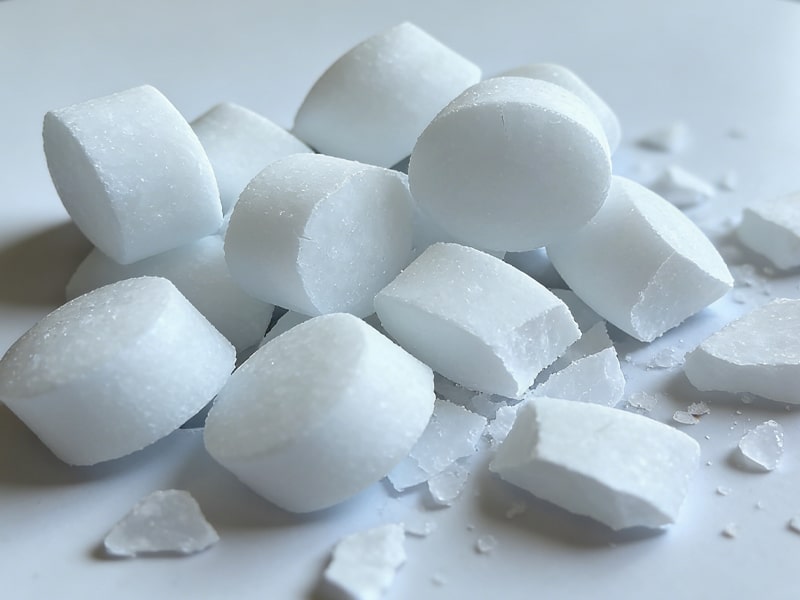
Salt tablets (compact sodium chloride) are a simple yet powerful product in many industries. These hard salt pills are basically blocks of highly purified table salt, pressed into uniform sizes. Because they dissolve slowly and evenly, they’re ideal for uses like water softening, sanitizing equipment, or even as electrolyte supplements in athletic and medical settings. According to industry sources, tablet salt is a highly purified NaCl commonly used in industrial, commercial and household applications. In this guide, we’ll explain what a salt tablet is, how it’s made, and why it’s so useful in fields from pharmaceuticals to water treatment.
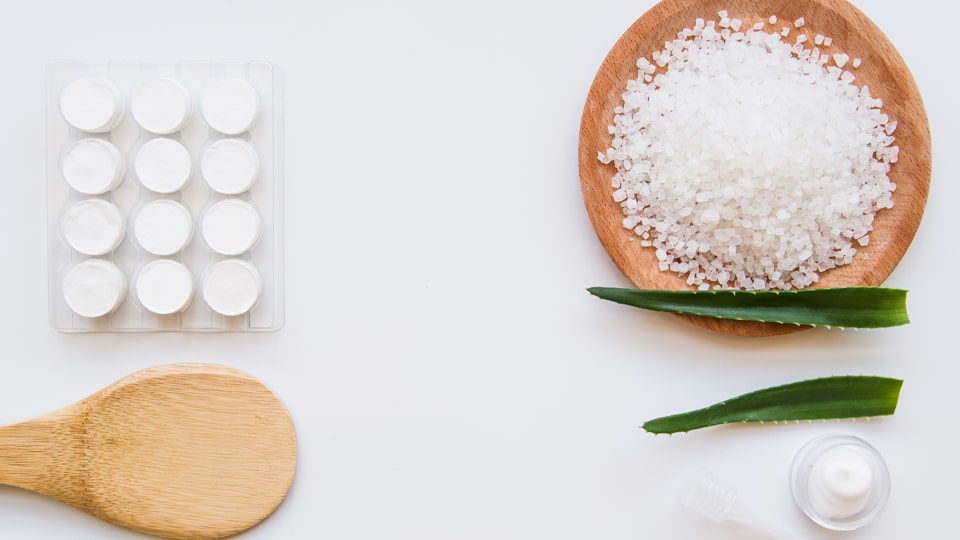
When we talk about a salt tablet, we are generally referring to a highly purified, compressed form of sodium chloride (NaCl). But for a manufacturer, it’s much more than just “table salt.” To produce a high-quality salt pill or industrial tablet, you have to start with a raw material that meets very specific criteria.
For most industrial and pharmaceutical applications, purity is non-negotiable. High-quality salt tablets typically boast a purity level of over 99% sodium chloride. This isn’t just a vanity metric. If you are producing tablets for a water softening system, any impurities like calcium, magnesium, or sulfates can actually interfere with the ion-exchange process, leading to the very scaling issues you were trying to solve in the first place.
In the pharmaceutical sector, the requirements are even more stringent. Tablets intended for saline solution production or as a medical salt supplement must adhere to the international pharmacopoeias (such as USP or Ph. Eur.), which mandate nearly total absence of heavy metals like lead and arsenic.
| Property | Standard Industrial Requirement | Pharmaceutical Grade (USP/Ph. Eur.) |
| Sodium Chloride (NaCl) | ≥ 99.0% |
≥ 99.9% |
| Moisture Content | < 0.5% |
< 0.1% |
| Insoluble Matter | < 0.05% |
Trace levels only |
| Sulfates (SO4) | < 0.2% |
< 0.01% |
| Calcium/Magnesium | < 0.1% |
Virtually absent |
Salt crystals are naturally hard and square-edged. From a mechanical perspective, this means they are incredibly abrasive. When these crystals are forced into a die and compressed under tens of kilonewtons of force, they act like tiny pieces of sandpaper against your tooling. This is why standard tablet presses—those designed for soft pharmaceutical powders—often fail within weeks when switched to salt production.
Furthermore, salt is hygroscopic. It loves water. In high-humidity environments, salt granules will absorb moisture from the air, causing them to clump before they even reach the press. This leads to inconsistent die filling, which in turn leads to weight variation in your sodium chloride tabs.
A perfect salt tablet must be a contradiction. It needs to be hard enough to survive being tossed into a 25kg bag and shipped halfway across the world without turning into dust, yet it must dissolve completely and uniformly when it hits the water. This is achieved through precise control of the compression force. If you press too hard, you create a “glassy” tablet that takes hours to dissolve; if you don’t press hard enough, the tablet is “friable” and will crumble during handling.
Producing high-quality salt in tablets is a journey that starts deep underground or in the sea and ends with a high-speed rotary press. Let’s break down the workflow into its critical stages.
The raw material for your salt supplement or industrial tablet comes from one of two sources: rock salt mining or solar evaporation of seawater. However, this raw salt is full of impurities. The first step is purification, which usually involves a process called “vacuum evaporation.” The salt is dissolved into a brine, treated with chemicals to precipitate out impurities (like calcium and magnesium), and then evaporated under vacuum to produce ultra-pure crystals. This process, often called Pure Dried Vacuum (PDV) salt, is the gold standard for high-end salt tablets.
Once the salt is purified, it must be dried. Any residual moisture will cause the salt to stick to the punch faces during compression—a defect known as “picking”. After drying, the salt is screened to ensure a uniform particle size distribution. Why does this matter? Because if you have a mix of big crystals and tiny dust, they will segregate in your hopper. This means the first thousand tablets will be heavy and the next thousand will be light.
Sometimes, raw salt crystals don’t flow well into the tablet press. In these cases, we use “dry granulation” or “slugging.” The salt is first compressed into large, rough “slugs” and then milled back down into granules. This improves the density and flowability of the material, making it much easier to compress into final sodium chloride tabs.
This is where the magic happens. The salt granules enter the rotary tablet press. In a modern machine, like the ones we build at Jinlu Packing, the process is highly automated.
[jl_youtube src=”https://www.youtube.com/embed/JiVtuXsCwoM”]
I have seen many manufacturers try to run salt on a standard pharmaceutical press. It usually goes something like this: the machine runs great for three days, starts making a grinding noise on day four, and is completely seized by the end of the week. Salt is a machine killer if you aren’t prepared for it.
When salt dust meets the lubricating oil in your machine’s mechanical compartment, it creates a corrosive paste that eats through cams and rollers. A specialized salt tablet press machine must have a “sealed” design. At Jinlu Packing, we use a fully enclosed peripheral housing and a separate mechanical area to ensure that salt dust never reaches the sensitive drive components.
Because salt is so abrasive, the turret and die table—the heart of the machine—must be made of specialized materials. We often use GCR15 or hardened stainless steel with anti-corrosion coatings. Furthermore, the punches and dies themselves need high-performance coatings.
| Coating Type | Benefits for Salt Tableting | Recommended Application |
| Chromium Nitride (CrN) | Excellent corrosion resistance and high toughness |
Standard industrial salt tablets. |
| Titanium Nitride (TiN) | Increases hardness and reduces wear |
High-speed production runs. |
| DLC (Diamond-Like Carbon) | Extremely low friction; prevents sticking |
Salt with high moisture or additives. |
| Tungsten Carbide | Maximum abrasion resistance |
Heavy-duty salt blocks or very hard tabs. |
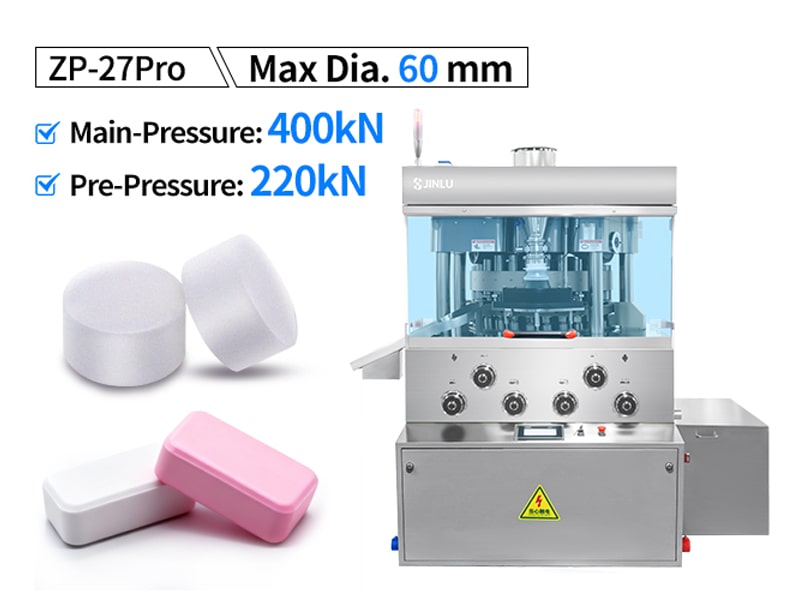
Salt requires a lot of force to bond. While a typical vitamin tablet might need 20-40kN of force, a high-density salt tablet often requires 100kN or more. Specialized machines like our ZP-27Pro are built for this, featuring heavy-duty pre-pressure and main pressure rollers that can handle continuous high-load operations without overheating or vibrating.
Salt tablets are used in a surprising variety of places. Their high purity and solid form make them convenient for controlled dosing. Here are some key applications:
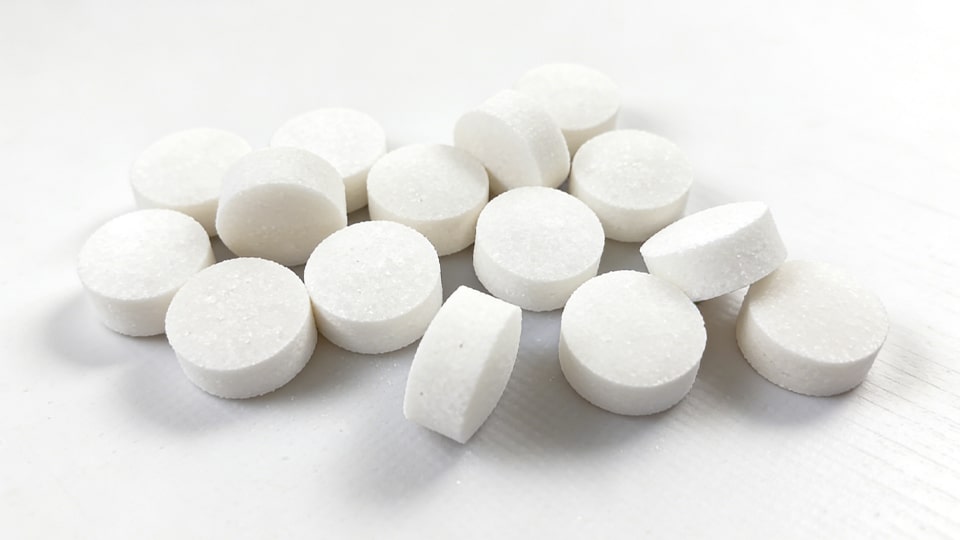
Why use tablets instead of loose salt? Tablets offer several advantages:
In summary, the tablet form turns ordinary salt into a high-precision product. Consistent size, high purity, and low dust all contribute to more reliable system performance.
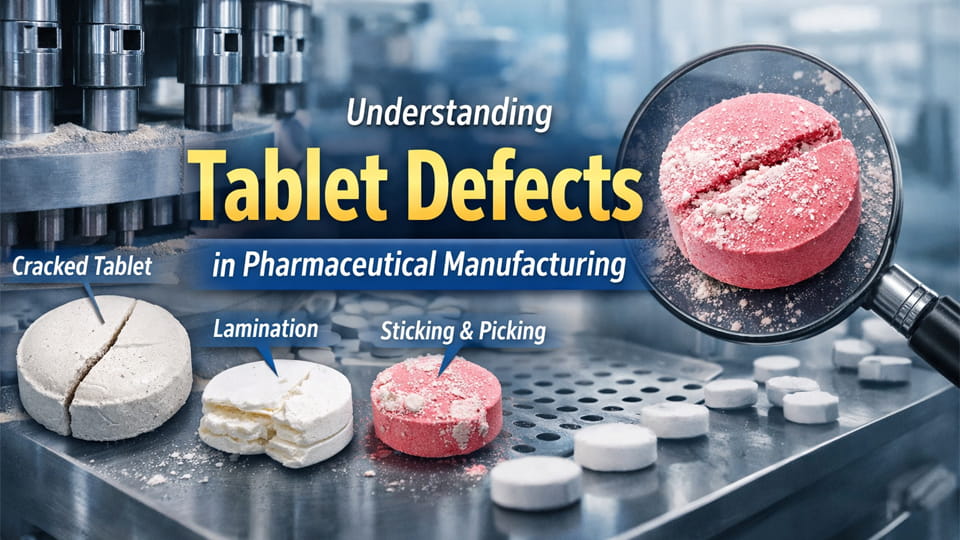
Even with a great machine, things can go wrong. If you are seeing defects in your sodium chloride tabs, here is how to fix them.
Capping and Lamination:This is when the tablet splits like a sandwich. It’s usually caused by air trapped inside the salt powder.
Sticking and Picking:If you see little “craters” on the surface of your tablet, the salt is sticking to the punch.
Weight Variation:If your tablets aren’t all the same weight, your dosing is off.
Producing salt tablets requires specialized equipment, especially tablet presses. Jinlu Packing, for example, offers rotary tablet press machines designed for salt and chemical tablets. These presses have features to handle salt’s special properties: corrosion-resistant alloy turrets and feed frames, sealed lubrication systems, and precise powder feeders. They can press tablets of varying diameters (from a few millimeters up to 60 mm blocks) and even multi-layer designs. Some models produce tens of thousands to nearly a million tablets per hour. The press components use hardened steel and protective coatings to resist corrosion and wear from salt. These design features help ensure each tablet has uniform hardness and size.
The table below illustrates two common types of rotary presses and their capabilities. (Each press can be customized; for example, Jinlu offers different turret configurations and free molds for various shapes and sizes with each machine.)
| Press Type | Ordinary Rotary Press (Small-to-Medium Tablets) | Large-Tablet Press |
|---|---|---|
| Application | High-speed production of small-to-medium tablets | Production of very large tablets (e.g. detergent) |
| Output (per hour) | 40,000 – 950,000 tablets | 21,000 – 45,600 tablets |
| Max Tablet Diameter | ~25 mm | Up to 60 mm |
| Industries | Pharma, chemicals, electronics, food processing | Specialty chemicals, home care, detergents |
As a manufacturer of tablet press machine, we have spent decades engineering solutions specifically for the “problem children” of the pharmaceutical world—like salt.
Our machines aren’t just generic presses. We offer:
Imagine the variety of places salt tablets work: In a laundromat, a salt tank refills automatically, protecting washers from hard water. In a spa pool, a salt pellet dissolves slowly to generate chlorine that keeps the water clean. In a chemical plant, conveyor belts carry trays of fresh salt tablets from the press to the packaging line. A farmer might drop a salt tablet into a pig trough as a controlled electrolyte boost. In a hospital pharmacy, a technician might dissolve a pure salt tablet to compound an IV bag. All these scenarios use the same basic thing: pure, compacted NaCl designed for reliable dosing.
Here’s a quick summary of industries and uses:
| Industry / Use | Example Application |
|---|---|
| Water Treatment | Water softener resin regeneration, pool sanitization |
| Household Appliances | Dishwasher salt, washing machine softeners |
| Chemical & Pharmaceutical | Chlor-alkali production, medical saline |
| Food Processing | Canning/brining, curing meats |
| Agriculture / Animal Feed | Livestock salt licks, feed supplements |
| Medical / Health | IV fluids, nasal rinses, sports electrolyte tablets |
When selecting or producing salt tablets, consider the salt grade (e.g. industrial vs. food vs. pharmaceutical) and tablet specs (hardness, size). For critical uses like IV saline, use USP or pharmaceutical-grade sodium chloride. For general water treatment, industrial-grade is acceptable. Buyers often request analysis certificates (moisture, insolubles, etc.) to verify quality. On the equipment side, choosing a reliable tablet press is key. A well-designed press (like Jinlu’s) ensures consistent tablet quality batch after batch.
In practice, a tablet manufacturer may tweak the formulation slightly: for example, adding anticaking agents or blending sea salt with rock salt to adjust trace minerals. The tablet press can handle small additives easily. Manufacturers typically perform QC tests on each batch (measuring tablet weight, hardness, dissolution time) to ensure every tablet meets the required standards.
Salt tablets turn a basic compound (sodium chloride) into a versatile industrial product. By compressing salt into tablets, manufacturers gain precision and convenience. From softening municipal water to formulating medical IV fluids, these tablets play a subtle but vital role. For international pharmaceutical and supplement producers, understanding salt tablets means knowing how to produce or source a reliable raw material that keeps processes efficient and consistent. Modern tablet press machinery (like Jinlu’s) combines quality engineering with simple chemistry to deliver high-quality salt tablets that meet stringent demands across industries.
A salt tablet is a highly purified form of sodium chloride (NaCl) compressed into a solid, uniform tablet. It’s designed to dissolve in water slowly and consistently for controlled dosing in industrial, water treatment, and other applications.
This solid form makes it easier to handle and dose compared with loose salt.
Salt tablets are primarily made of sodium chloride (NaCl). In industry applications, tablets typically exceed 99% purity to ensure consistent performance and minimal impurities, making them suitable for sensitive systems like water softeners and pharmaceutical-grade solutions.
Salt tablets are a processed form of salt with very high purity and uniform size, engineered for controlled dissolution. Regular table salt or rock salt may contain impurities or inconsistent granule sizes, making them less suitable for technical applications like water softening or manufacturing processes.
Salt tablets are widely used across industries such as water treatment (softening and resin regeneration), household appliances (dishwashers and washing machines), chemical manufacturing, food processing, pharmaceuticals (e.g., saline solutions), and agriculture for livestock nutrition.
Salt tablets are made by purifying raw salt (from seawater or rock salt), drying it, then compressing the salt powder into tablets using a tablet press machine. These machines control fill weight, pressure, and tablet shape to ensure consistent hardness and dissolution properties.
Salt tablet specifications vary, but industrial and water-softening tablets typically contain 99.5% to 99.9% NaCl with minimal moisture and insoluble materials. Tablet sizes commonly range around 20–25 mm in diameter for standard applications.
Salt tablets are engineered to dissolve at a controlled rate to produce a consistent brine solution, which is essential for processes like water softener regeneration where stable salt concentration is key to performance.
In some cases, purified sodium tablets (sometimes called “salt pills”) are used as dietary sodium supplements in medical or athletic settings to help maintain electrolyte balance. However, this use is separate from industrial salt tablets and should be guided by medical advice.
Yes. Excessive sodium intake can affect blood pressure and fluid balance, so when used as supplements in health contexts, it’s important to follow recommended guidance, especially for individuals with hypertension or kidney conditions.
Salt tablets offer precise dosing, convenient handling with low dust, predictable dissolution rates, and minimal contamination, which helps improve system efficiency in water treatment and reduces maintenance needs in equipment like boilers or dishwashers.
References:
1.Sodium chloride – Wikipedia
2.TECHNOLOGIES FOR THE PRODUCTION OF PHARMACEUTICAL GRADE SODIUM CHLORIDE – ResearchGate PDF
3.Salt Tablets Product Specification (DUBI CHEM)
4.Technical Data Sheet – Vacuum Salt Tablets (EN 973 Standard)