
Melting gummy bears unlocks creative possibilities for candy makers. For example, melted gummies can be poured into fun molds (shaped like bears, stars, hearts, snakes, etc.) to cast custom candy sculptures, or cooked into a fruit-flavored syrup to sweeten drinks and desserts. You can even stir melted gummy candy into fudge, candy bars or baked treats for chewy fruit flavor, blending smoothly in a candy cooker or fudge machine. In short, melting gummy bears lets you repurpose store-bought candy into new creations, feeding the DIY spirit of confectioners. Melting also helps commercial producers: melted or cut-up gummy “rework” can be mixed into fresh batches (usually only ~10–20%) to avoid waste.
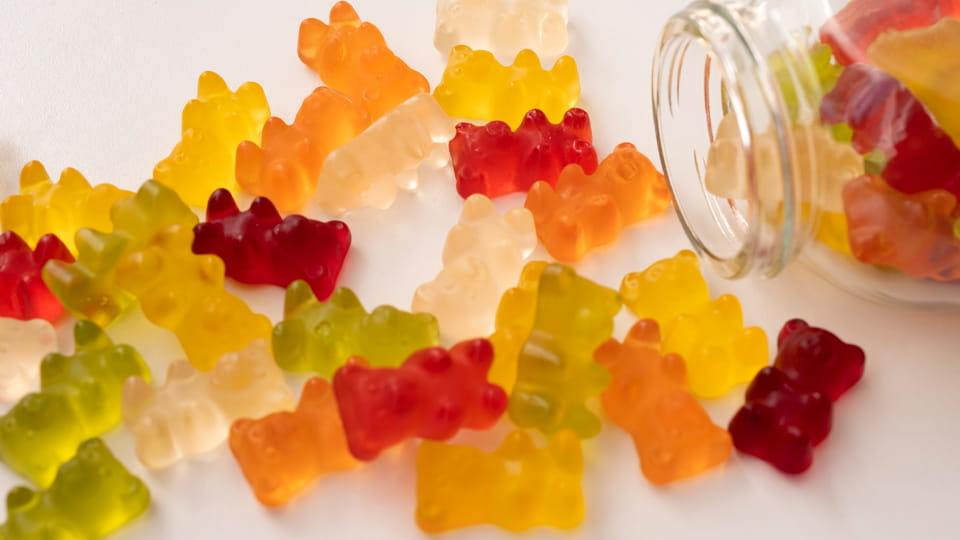
Industry buyers, engineers and candy enthusiasts melt gummy bears for many reasons. Here are some examples:
In all cases, the key is gentle, controlled heating so you melt the gelatin without burning the sugar. Careful melting preserves the gummy’s flavor and texture.
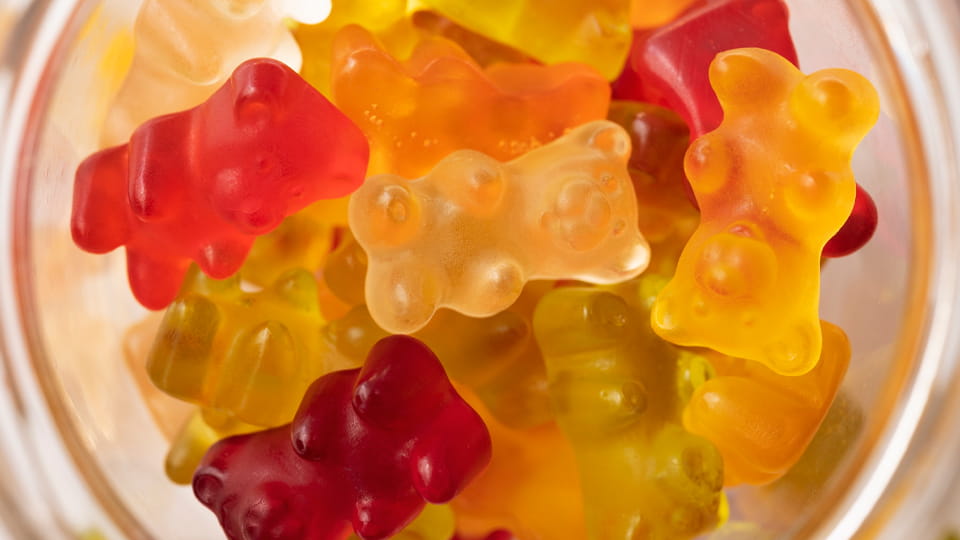
Several techniques work for melting gummy bears. Which method to use depends on your batch size and equipment. Always melt on low heat, and stir frequently to distribute the heat evenly. Below are common methods:
To summarize common methods:
| Method | Advantages | Disadvantages |
|---|---|---|
| Double Boiler (steam) | Gentle, even heat; no burning | Slower; requires more prep (bowl/pot setup) |
| Microwave (low power) | Fast; convenient for small amounts | Uneven heating; high risk of burning sugar |
| Direct Stove | Quick | Easily scorches sugar; uneven heat |
| Industrial Jacketed Tank | Precise control for large batches | Requires special equipment; for factory scale |
Table: Comparison of common gummy bear melting methods (pros and cons)
Regardless of method, the essence is the same: use low heat, constant stirring, and patience. Start slow – it’s better to take a bit longer than to overheat and burn the sugar. Overheating gummies can cause a hard caramel or a bitter taste, ruining the candy.
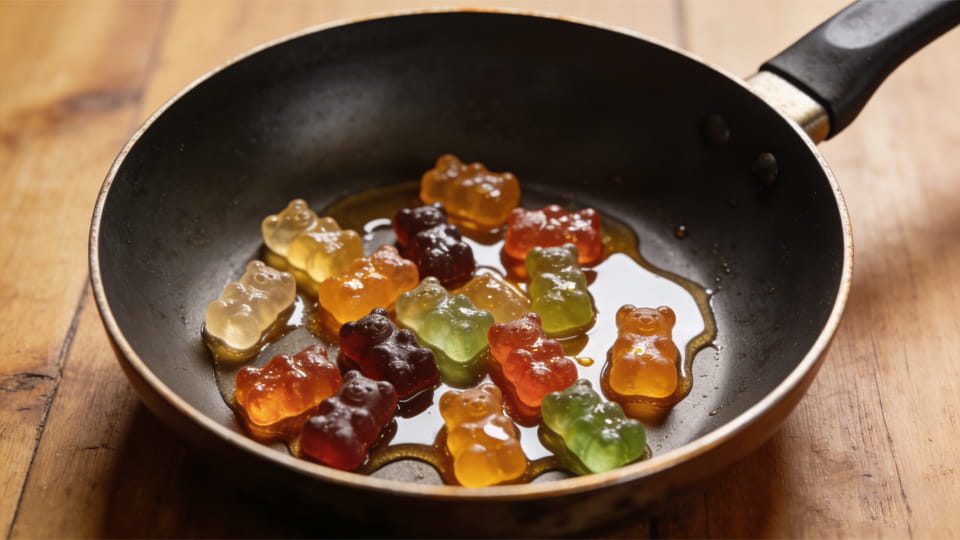
Using the right tools makes melting gummy bears easier and safer. Here are some recommendations:
Safety is critical: never leave melting candy unattended, and keep flammable items away from heat. As one guide warns, melted gummy syrup can easily scald – it’s smart to have a bowl of cold water nearby in case of a burn. Working carefully will ensure a smooth, safe melting process.
In a candy factory or large-scale gummy production line, melting finished gummy candies (often called “rework”) is handled by specialized machines. The goal is to recover scrap in a controlled way rather than burn it. Key features of industrial gummy melters include:
For producers, there’s also a practical “10% rule” for rework: don’t make 100% of a batch from melted old gummies. Instead, dissolve a portion (typically 10–20%) of scrap into fresh gummy base. This ratio maintains consistent color, texture and shelf-life in the final candy. (If you rework 100% old gummy mass, the result tends to be too rubbery and discolored.)
In summary, industrial gummy rework relies on precise temperature control and mixing. As one packaging equipment expert puts it: “In the candy business, precision is what separates a sticky mess from a premium product.” With jacketed tanks, scrapers, and monitoring, large-scale producers melt and reuse gummy candies safely.
After melting and molding, gummy candies usually enter automated packaging lines. Specialized machines count, fill, and pack each candy efficiently. For example, gummy counting machines use cameras and conveyors to sort and count pieces one by one. Because gummies are sticky, old methods had to weigh by batch. New vision-based counters untangle and count gummies with ~99.99% accuracy. These machines have bulk hoppers and elevators to feed gummies up to the counting head, allowing fast filling of bottles or pouches.
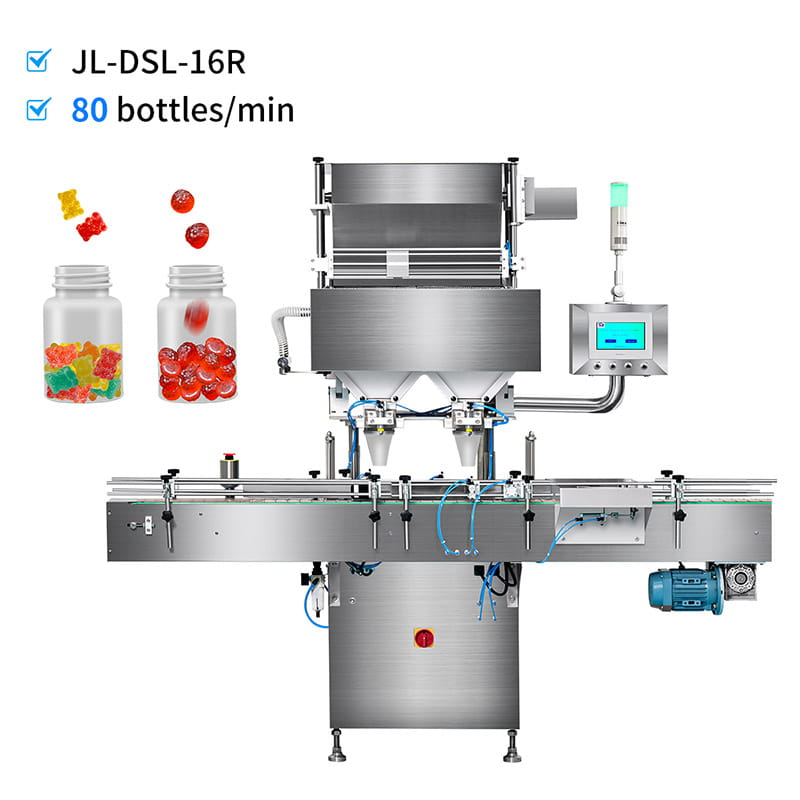
In a typical gummy packaging line, after counting: dual-lane conveyors and vibratory feeders direct the candies into bottles or bags. Automated fillers then dispense the counted gummies into containers. Finally, sealers or cappers close and label the packages. This automation greatly speeds up production and ensures each package has the exact gummy count, which is important for consistency and compliance.
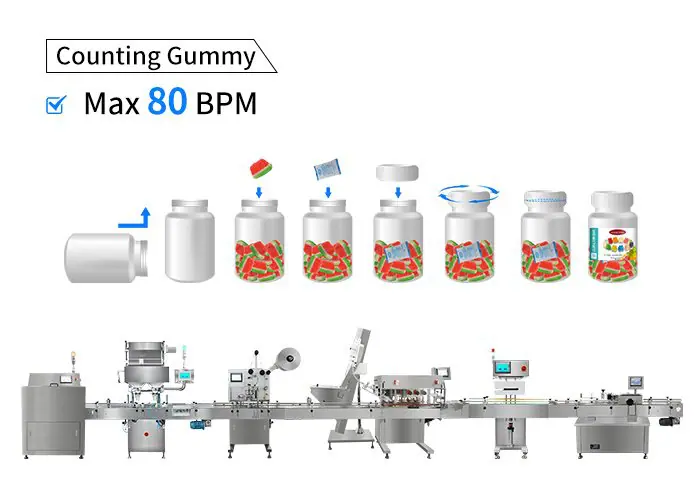
Specialized gummy packaging equipment makes the process fast and accurate. Modern machines can handle sugar-coated or oil-coated gummies (even vitamin and so on) without jams. They save labor and reduce waste by preventing manual counting errors.
Even sticky gummy candies can be processed: this counting machine uses cleated wheels and cameras to separate and identify each piece.
Once counted, the candies move to filling stations. For speed, dual lanes let two bottles fill side-by-side. Clear bottle cams and feeders ensure the right number of gummies go into each jar. Automated lines like this optimize gummy bear packaging while maintaining hygiene and consistency.
From a handful at home to thousands in a plant, the principle of melting remains gentle, even heat. At home you might melt gummy bears in minutes, but in industry you have jacketed kettles and continuous machines to handle the scale. In both cases, the goal is the same: melt safely, stir well, and reuse the candy without waste.
Finally, sealed jars of gummy candy leave the line ready for shelves. Whether as gummy bears, gummies in jars, or gummy vitamins, proper melting and packaging ensure quality. High-speed gummy packaging lines help manufacturers produce consistent candy products efficiently.
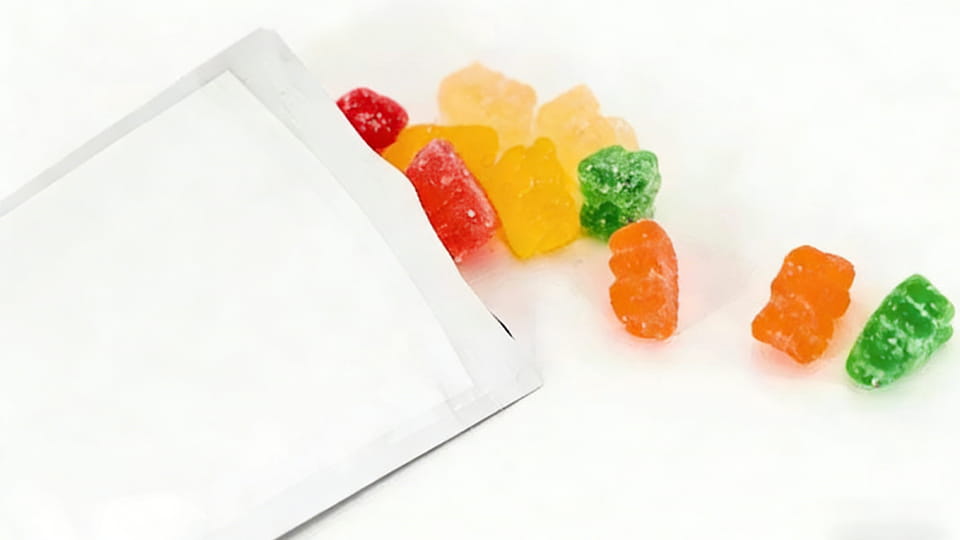
Whether you’re melting a handful of bears at home or reworking tons in a factory, the golden rule is: control the heat and avoid overheating. Use gentle methods (like a double boiler or jacketed cooker) and keep stirring. Add extra liquid if needed for flow, but do it carefully. Remember the 10% rule for rework, and don’t expect to melt pectin-based gummies back to firm candy.
By following these tips, you’ll get smooth, even gummy syrup every time, ready to pour or pump into molds. And when it comes to packaging, using the right gummy-specific machines ensures your product gets counted, filled, and sealed quickly without sacrificing accuracy.
If you need guidance on equipment, we’ve got you covered. Our Jinlu Packing team specializes in gummy candy production lines. We offer everything from precise gummy melting cookers to high-speed gummy counting & packaging machines. For help choosing the right solution or a detailed quote, just contact us. Let’s make your gummy production smooth, efficient, and sticky-free!
Gummy bears start melting at relatively low temperatures because they are made with gelatin. Most gelatin-based gummy candies begin to soften and melt at around 30–35°C (86–95°F), which is close to human body temperature. This is why gummy candy melts easily in the mouth but stays solid at normal room temperature.
The safest method is to melt gummy bears using low and controlled heat. Common methods include:
• Double boiler (steam heating)
• Microwave with short heating intervals
• Low-temperature saucepan melting
These methods help prevent burning the sugar or damaging the gelatin structure.
Yes. Gummy bears can be melted in a microwave-safe bowl. Heat them in 10–30 second intervals, stirring each time. This prevents overheating and ensures the candy melts evenly.
In industrial candy production, gummy bears are sometimes melted to reuse scrap candy or rework material. The melted gummy syrup can be blended with fresh ingredients and then molded again, helping reduce material waste and production cost.
Yes. Once melted, gummy candy becomes a syrup-like liquid that can be poured into molds. After cooling, it solidifies again due to gelatin’s thermoreversible properties, meaning it melts with heat and sets again when cooled.
Heating gummy candy too quickly can burn the sugar or damage the gelatin network. When gelatin is exposed to excessively high temperatures for long periods, its structure breaks down and the candy may lose its proper texture.
Generally, adding water is not recommended. Water can dilute the sugar concentration and change the gummy texture. In industrial production, controlled syrup or sugar solutions are used instead of plain water.
Industrial producers usually use jacketed melting tanks or heated mixers. These machines provide:
• Precise temperature control
• Continuous mixing
• Uniform heating
This ensures the gummy base melts evenly without burning.
After melting and reformulating, the gummy mixture can be:
• Deposited into molds to form new gummies
• Used for new candy formulations
• Sent to automated gummy packaging lines
Modern factories use Gummy Counting Machines and automated Gummy Packaging Machines to fill bottles or bags. These systems count each gummy accurately and improve packaging efficiency for pharmaceutical gummies, vitamin gummies, and gummy candy products.
References:
1. Gelling Agents for Confectionery: Gelatin, Agar, and Pectin Compared — Chemtradeasia.
2.Gelatin Standards and Industrial Applications in Confectionery — alibaba.com.
3.Confectionery gels: Gelling behavior and gel properties of gelatin in concentrated sugar solutions — ResearchGate.
4.Natural Ingredients-Based Gummy Bear Composition Designed According to Texture Analysis — MDPI.
5.Red Beet Extract Powder, Gelatin and Sucrose Interactions in Gummy Candies — National Library of Medicine.