
Effervescent tablets are simply drinkable pills that fizz and dissolve when dropped into water. In practice, they feel like adding a fizzy vitamin or pain-relief tablet to a glass – you stir it, watch the bubbles, and drink the solution. These tablets were originally developed in the 1950s and have seen a renaissance in popularity as consumers seek convenient, fast-acting supplements and medications. For example, high-dose Vitamin C often comes as an effervescent tablet, so you can enjoy a tangy vitamin drink instead of swallowing large pills. Because effervescent tablets dissolve completely, the active ingredients are already in solution before you drink them. This means rapid absorption and often a faster onset of action compared to swallowing a solid tablet. And let’s be honest – for many people sipping a flavored, fizzy drink is simply more enjoyable than gulping a dry tablet.

An effervescent tablet works by a simple acid-base reaction. In every tablet there’s a blend of an edible acid and a carbonate (alkali) salt. Common acids are citric acid or tartaric acid, and common bases are sodium bicarbonate (baking soda) or sodium carbonate. The active ingredient (for example, Vitamin C, aspirin, or a mineral supplement) is mixed in with these effervescent agents. When water is added, the acid and carbonate react vigorously, releasing carbon dioxide gas (CO₂) and dissolving the tablet in the water. The result is a fizzy, effervescent drink that contains the dissolved medicine or nutrient.
The tablet also contains excipients to bind it together, sweeteners for taste, and flavorings to make the drink pleasant. Unlike regular pills, effervescent formulas avoid any water-insoluble binders (such as magnesium stearate), because those would leave residue and ruin the clarity of the drink. Typical binders in effervescent tablets are water-soluble polymers like polyethylene glycol (PEG) or PVP, and lubricants are chosen for solubility (e.g. sodium benzoate). Fruit flavors, citric or berry notes, and sweeteners (sucrose, aspartame, etc.) are added to mask any bitter taste from the active ingredients.
| Ingredient Type | Examples | Role in Tablet |
| Organic Acid | Citric acid, tartaric acid | Reacts with carbonate to release CO₂; adds sour flavor to drink. |
| Alkali Salt | Sodium bicarbonate, sodium carbonate | Reacts with acid to produce fizz; also provides sodium ion. |
| Active Ingredient | Vitamin C (ascorbic acid), drugs, supplements | The medicine or nutrient delivered (dissolves fully in water). |
| Binder | PEG 4000, PVP, sorbitol | Holds the tablet together during compression; must dissolve cleanly. |
| Lubricant | Sodium benzoate, PEG, adipic acid | Prevents sticking in the tablet press; must be water-soluble. |
| Sweetener/Flavor | Sucrose, sucralose, natural fruit flavors | Improves taste and mouthfeel of the fizzy drink. |
| Anti-caking (optional) | Silicon dioxide, magnesium carbonate | Keeps powders free-flowing during manufacture (also moisture scavenger). |
| Packaging | Sealed tube or blister pack with desiccant | Protects tablets from moisture and air after production. |

Making effervescent tablets is more complex than making ordinary pills, because moisture must be kept absolutely minimal at every step. Even tiny humidity can trigger the acid-base reaction prematurely. For this reason, production often takes place in a dry, humidity-controlled room (typically 10–25% relative humidity at cool temperatures). Raw powders are handled in closed systems: for example, material might be loaded into mills or blenders using sealed IBC (intermediate bulk container) docks under dry air. All equipment and vessels are carefully dried, and dry nitrogen or filtered air is used to keep moisture out. These special precautions set effervescent production apart from standard tablet lines.
The key manufacturing steps are as follows:
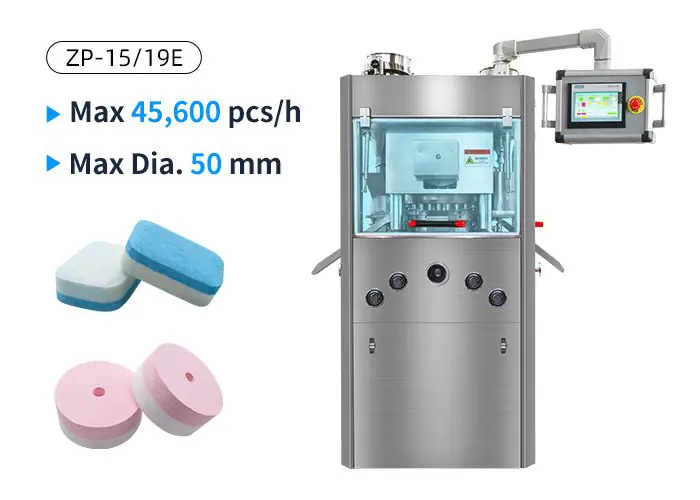
Each step uses specialized machinery: for example, after blending the powders, a tablet press machine (also called a tablet compression machine) compresses the tablet, and then a tablet packing machine like a tube filler or strip packer completes the process. Packaging machinery often has safety covers and integration to maintain hygiene and dryness. In short, effervescent tablet production requires tighter controls than standard tablets, but with the right equipment and environment it can be done at scale.
Effervescent tablets offer several benefits that explain their popularity in supplements and pharmaceuticals:

Of course, effervescent tablets also have drawbacks that manufacturers and users must consider:
Despite these challenges, proper engineering and quality control overcome them. Many successful products (vitamins, antacids, pain relievers, cold remedies) are sold as effervescent tablets.

Effervescent tablets serve a wide range of markets. They’re common in pharmaceuticals (e.g. Alka-Seltzer antacid/pain reliever), nutraceuticals/supplements (vitamins, minerals, hydration salts), and even some food & beverage areas (e.g. cocktail flavor tablets, though that’s niche). In recent years, the global market for effervescent products has grown rapidly. One industry report valued the global effervescent tablet market at about US$5.3 billion in 2022, with projections to exceed $8.7 billion by 2030. This growth is driven by consumer demand for convenience, portability, and ready-mix supplements.
Major active ingredients in this market include Vitamin C and B vitamins (for immunity and energy), calcium and magnesium (for bone health), zinc and electrolytes (for immunity and hydration), and even botanical extracts for various health benefits. For pharmaceutical manufacturers and packaging engineers, this means rising demand for effervescent-capable equipment: namely tablet presses built for large tablets, fluid-bed granulators or roller compactors for moisture-sensitive granulation, and specialized tube filling or blister packing machines that can handle effervescent lines. Companies like Jinlu Packaging specialize in supplying such equipment – for instance, high-throughput effervescent tube filling lines that count, seal, and label tablets into aluminum tubes, or strip-pack systems that enclose each tablet in a dry, air-tight blister.
Overall, effervescent tablets combine interesting pharmaceutical science with appealing consumer benefits. By understanding the chemistry, process, and market trends outlined above, manufacturers and buyers in the industry can make informed choices about using this dynamic dosage form.
An effervescent tablet is a solid dosage form that dissolves in water, creating a fizzy solution containing the active ingredient. The fizzing comes from a chemical reaction between an edible acid and a carbonate salt when water is added.
Effervescent tablets react with water through an acid-base reaction (typically between citric acid and sodium bicarbonate), releasing carbon dioxide gas and causing the fizzing effect.
They are commonly used for vitamins (e.g., Vitamin C), mineral supplements, pain relievers, and medications that benefit from faster dissolution and absorption.
Yes. Because the active ingredients are already dissolved in water before ingestion, effervescent tablets are typically absorbed faster than conventional tablets, leading to quicker onset of effect.
They usually contain an effervescent acid (like citric acid), a carbonate base (like sodium bicarbonate), the active ingredient (such as Vitamin C), binders, sweeteners, and flavoring agents.
They are easy to swallow, can improve absorption, mask unpleasant tastes, increase liquid intake, and are often preferred by people who have difficulty swallowing pills.
Yes. Effervescent tablets must be kept in moisture-proof, airtight packaging as they are highly sensitive to humidity and can react prematurely if exposed to moisture.
Taking them daily depends on the active ingredient and individual health needs; always follow product instructions or consult a health professional, especially for high-dose vitamins or medications.
Not always. Individuals with high blood pressure, kidney issues, or on sodium-restricted diets should use caution due to high sodium content in many effervescents. Pregnant women and children should consult a physician before use.
Swallowing an effervescent tablet without dissolving it first can cause discomfort, excessive gas, and irritation since the fizzing reaction can occur in the throat or stomach. This practice is not recommended. (Inferred from general effervescent principles)
References:
1. Wikipedia – Effervescent tablet
2.ScienceDirect – Effervescent Tablet (Pharmaceutics / Remington Chapter)
3.Pharmapproach – Manufacture of Effervescent Tablets
4.Journal – Concept, Manufacturing and Characterization of Effervescent Tablets

