
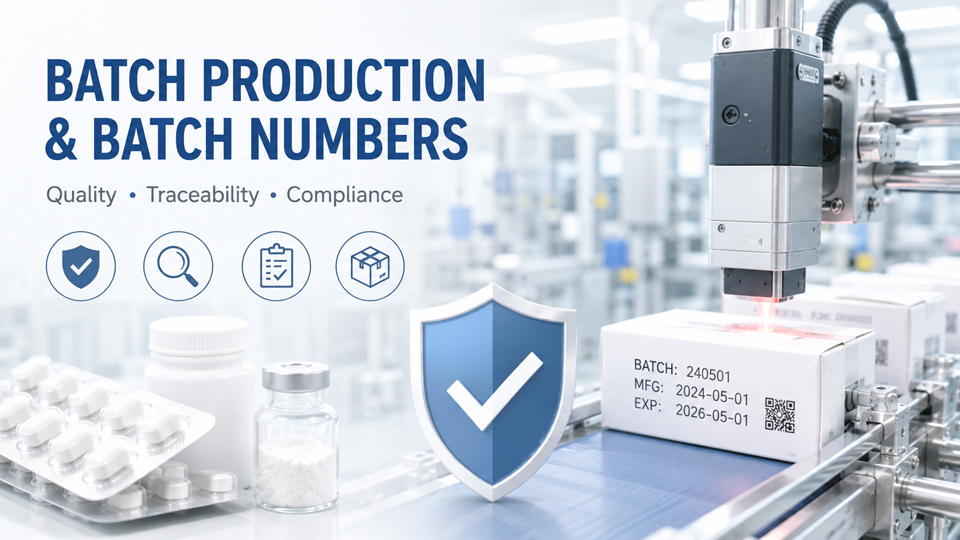
في التصنيع الصيدلاني, إنتاج دفعة تظل الطريقة القياسية لصنع الأدوية. يتم تخصيص كمية فريدة لكل دفعة - كمية محددة يتم إنتاجها في عملية تشغيل واحدة رقم الدفعة. هذا الرقم حاسم ل إمكانية التتبع, ضبط الجودة, و الامتثال لممارسات التصنيع الجيدة/إدارة الغذاء والدواء. عن طريق ربط المنتجات مرة أخرى بسجلات الدُفعات الخاصة بها, يمكن للمصنعين التحقيق بسرعة في المشكلات, عزل العيوب, وإجراء عمليات سحب مستهدفة إذا لزم الأمر. حديث خطوط التغليف (تقرحات, تعبئة, التغليف بالكرتون, وضع العلامات) دمج أنظمة الترميز والفحص التي تقوم بطباعة أرقام الدُفعات والتحقق منها على كل وحدة. تشرح هذه المقالة تعريف إنتاج الدُفعات وأرقام الدُفعات, لماذا هم مهمون في فارما, وكيف آلات التعبئة والتغليف (طابعات الترميز, ملصقات, أنظمة الرؤية, إلخ.) ضمان تتبع الدفعة بدقة. نحن نغطي أيضًا أفضل الممارسات والأسئلة الشائعة لمساعدة مديري المشتريات/الإنتاج ومهندسي التعبئة والتغليف على فهم كيفية الاستفادة من ترقيم الدُفعات جودة, الامتثال والكفاءة.
في صناعة الأدوية, أ “حزمة” يشير عادةً إلى كمية محددة من المنتج الذي تم تصنيعه خلال دورة إنتاج واحدة - بناءً على نفس تعليمات الإنتاج - والتي تمتلك خصائص جودة موحدة. وفقا للولايات المتحدة. تعريف ادارة الاغذية والعقاقير, أ “حزمة” هي كمية محددة من مادة دوائية سائبة أو مادة على شكل جرعات تهدف إلى الحصول على جودة موحدة.
إنتاج الدفعة يعني صنع ضبط الكمية من المنتج دفعة واحدة, ثم بدء تشغيل جديد للدفعة التالية. يتضمن ذلك معالجة المواد الخام من خلال كل خطوة إنتاج (خلط, تحبيب, ضغط, إلخ.) ل دفعة واحدة, استكمال جميع الخطوات, ثم تنظيف المعدات قبل بدء الدفعة التالية. إنه مختلف عن التصنيع المستمر, حيث الخط لا يتوقف أبدا. في معالجة الدفعات التقليدية, "يجب أن تنتهي الدفعة الحالية قبل معالجة الدفعة اللاحقة".
يعد تشغيل الدُفعات أمرًا شائعًا بشكل خاص في تصنيع المستحضرات الصيدلانية نظرًا لأن العديد من التركيبات تتطلب ضوابط صارمة وعمليات تنظيف عرضية بين الدفعات. تنتج كل دفعة أ عدد محدد من الوحدات - يقول 100,000 أقراص أو 50,000 كبسولات. من خلال القيام بذلك, يمكن للشركات تصميم الإنتاج حسب الطلب واحتياجات الجودة. على سبيل المثال, إذا تغيرت صيغة الجهاز اللوحي أو كانت مختلفة مكبس الجهاز اللوحي هناك حاجة, تبدأ الدفعة الجديدة طازجة في ظل ظروف خاضعة للرقابة. يساعد هذا النهج التدريجي في الحفاظ على تناسق.
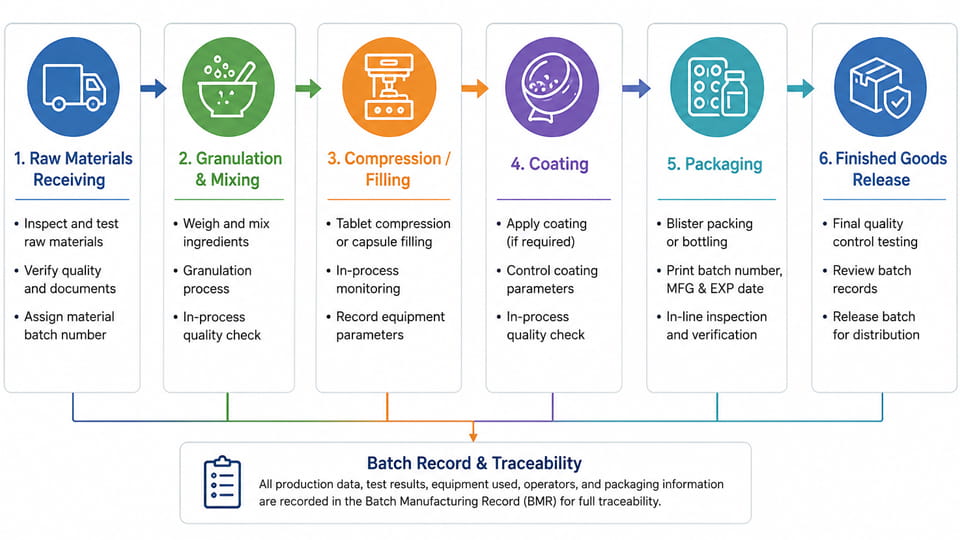
شكل: تبسيط تدفق الإنتاج دفعة واحدة في تصنيع الأدوية.
في الممارسة العملية, بعد ملء الكبسولة أو ضغط القرص, الخط يتوقف في كثير من الأحيان, يتم تنظيفه, وتبدأ الدفعة التالية. وهذا هو حجر الزاوية في برنامج الرصد العالمي, لأنه يمنع التلوث المتبادل ويتيح فحص كل دفعة على حدة. إذا حدث خطأ ما (لنفترض أن الاختبار المعملي فشل), يتم عزل تلك الدفعة فقط. كما يلاحظ أحد مصادر الصناعة, "باستخدام الإنتاج دفعة واحدة, يمكن لشركات الأدوية إنتاج كميات محددة من المنتج ومن ثم تعديل أولوياتها وفقًا للطلب المتغير..
أ رقم الدفعة (يُطلق عليه أحيانًا رقمًا كبيرًا) هو رمز فريد يُعطى لمجموعة واحدة من المنتج. إنه مختوم أو مطبوع على كل وحدة (أو الحزمة الخاصة به) من تلك الدفعة. بعبارات بسيطة, يربط رقم الدُفعة كل قرص أو قارورة بعملية الإنتاج الدقيقة. وفقا للخبراء, "رقم الدفعة هو معرف فريد مخصص لمجموعة من المنتجات التي تم تصنيعها معًا تحت نفس الظروف". دليل صناعة آخر يلخص ذلك: الدفعة هي الكمية المنتجة في عملية واحدة, ويحدد رقم الدفعة هذا التشغيل.
كيف يبدو رقم الدفعة? لا يوجد تنسيق عالمي واحد، فالشركات تنشئ برامجها البرمجية الخاصة. غالبًا ما يتضمن رقم الدُفعة مجموعة من تاريخ, رمز الخط أو النبات, وتسلسل. على سبيل المثال: B12345678-AB, حيث قد يكون "B" رمز منتج أو فئة, الأرقام هي معرف دفعة تسلسلية, و"AB" يمكن أن يشير إلى النبات أو الخط. على نفس المنوال, رقم مثل TAB240501-001 يمكن أن ينهار كـ "TAB" (رمز المنتج للكمبيوتر اللوحي), "240501" (يمكن 1, 2024), و"001" (حزمة 1 من اليوم). مثال آخر: CAP250318A03 قد يعني كبسولات (كاب), التاريخ 25 مارس 18, السطر أ, حزمة 03. المفتاح هو الاتساق: كل جزء من الكود له معنى.
بغض النظر عن الشكل, يتم تسجيل رقم الدفعة في جميع سجلات الإنتاج. إنه "موثقة بشكل متسق ومنهجي - من الإنتاج إلى التخزين". عادة ما يتم طباعتها على كل من العبوة الأولية (مثل زجاجة حبوب منع الحمل) وعلى العبوة الثانوية (مثل الكرتون أو الصندوق). باختصار, رقم الدفعة هو الرابط بين المنتج الموجود على الرف وتاريخ تصنيعه.
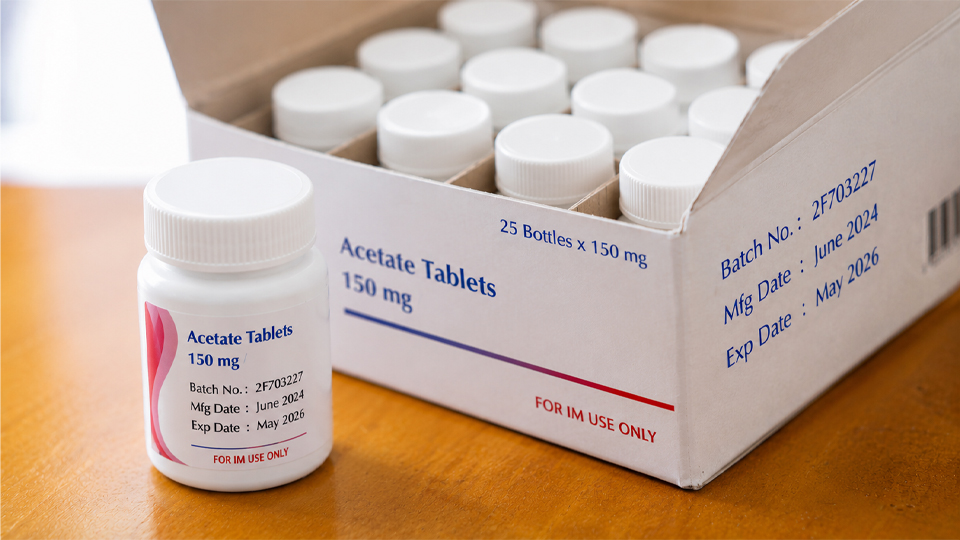
قد يبدو الحصول على رقم الدُفعة مجرد ملصق إضافي, لكنها في الواقع أ متطلبات برنامج الرصد العالمي وأداة الجودة الحاسمة. يفرض المنظمون في جميع أنحاء العالم ترقيم دُفعات المنتجات الصيدلانية. على سبيل المثال, قواعد CGMP الخاصة بإدارة الغذاء والدواء الأمريكية (21 CFR 211.130) تتطلب صراحةً أن تحمل ملصقات الأدوية كمية كبيرة أو تتحكم في رقم ذلك "يسمح بتحديد تاريخ التصنيع ومراقبة الدفعة". بعبارة أخرى, يجب أن يكون لكل دواء يُباع في الولايات المتحدة دفعة واحدة (كثير) رقم عليه حتى يمكن تتبع تاريخه الكامل. بصورة مماثلة, توضح إرشادات الاتحاد الأوروبي وPIC/S GMP أنه يجب تحديد كل دفعة وتسجيلها بشكل فريد لضمان جودة المنتج وسلامة المرضى.
لماذا هو مهم جدا؟? يمكننا تجميع الأسباب في إمكانية التتبع, امتثال, جودة, يتذكر, والتحقيقات:
أرقام الدُفعات هي نقاط ارتكاز للتتبع. يقومون بإنشاء رابط مباشر بين المنتج النهائي وكل ما تم تصنيعه. مع رقم الدفعة, يمكنك الإجابة "ما هي المواد الخام, مشغلي, آلات, وذهبت نتائج الاختبار إلى هذه الدفعة?". على سبيل المثال, إذا تم وضع علامة على دفعة الدواء BN12345, تعرف فرق الجودة بالضبط أرقام مجموعات المكونات التي تم استخدامها (يقول, واجهة برمجة التطبيقات الكثير و سواغ الكثير), ما هي الصحافة اللوحية التي تم استخدامها, المشغلين الذين كانوا في الخدمة, وحتى نتائج الفحوصات الجارية واختبارات مراقبة الجودة النهائية. “بتخدم أرقام المطابقة غرضًا أساسيًا واحدًا: إمكانية التتبع”. إنها تتيح لك تحديد المشكلات والتحقق من كل خطوة من البداية إلى النهاية. باختصار, يشبه كل رقم دفعة مسار التنقل التفصيلي في عملية التصنيع.
ممارسات التصنيع الجيدة الصيدلانية (ممارسات التصنيع الجيدة) أنظمة يتطلب هذا التتبع. تتوقع الوكالات أن يتم تسجيل تاريخ كل دفعة. على سبيل المثال, في الاتحاد الأوروبي GMP س&أ, لاحظ المفتشون أنه يجب ربط دفعات المنتجات السائبة والنهائية بشكل يمكن تتبعه (في كثير من الأحيان باستخدام رموز الدفعة ذات الصلة). يحذرون من أن وجود أرقام دُفعات غير مرتبطة بكميات كبيرة مقابل أرقام دُفعات غير ذات صلة. الحزم النهائية هي "غير مرغوب فيه" لأنه يمكن أن يربك جهود الاستدعاء. على مستوى أعلى, تنص إرشادات PIC/S على أنه يجب على الشركات الاحتفاظ بها سجلات التوزيع لكل دفعة بحيث يمكن استدعاء أي دفعة بسرعة إذا لزم الأمر. على نفس المنوال, أنا س7أ (لواجهات برمجة التطبيقات) يقول "يجب أن يكون هناك نظام يمكن من خلاله تحديد توزيع كل دفعة... بسهولة للسماح باستدعائها". بعبارة أخرى, تتوقع الجهات التنظيمية أن تكون أرقام الدُفعات مرتبطة بنظام سجل GMP بأكمله: سجلات تصنيع الدفعات, سجلات التعبئة والتغليف, سجلات التوزيع, إلخ. بدون أرقام الدفعة, تلبية هذه المتطلبات سيكون مستحيلا.
وجود رقم الدفعة يجعل مراقبة الجودة منهجية. يتم اختبار كل دفعة على أساس مزاياها الخاصة: فحص, الحل, نقاء, العقم وما إلى ذلك. إذا فشل الاختبار, يمكن للمختبر التعرف بسرعة على الدفعة من خلال رقمها وإزالة جميع الوحدات التي تحمل هذا الرمز. كما يشير أحد الأدلة, "إذا تم اكتشاف مشكلة في الجودة, ويمكن عزل الدفعة المتأثرة وتحليلها بسرعة لتحديد السبب الجذري وحله.. في الممارسة العملية, وهذا يعني أن النتائج غير المتسقة أو دون المستوى تؤثر على دفعة واحدة فقط, وليس الإنتاج بأكمله. يربط رقم الدُفعة نتيجة الاختبار الفاشلة بمواد الدُفعة الفعلية. ويضمن هذا النهج اتخاذ الإجراءات التصحيحية (مثل إعادة المعالجة أو الرفض) تنطبق فقط عند الحاجة, وعدم دفعات جيدة أخرى عن طريق الخطأ.
أرقام الدفعة لا غنى عنها في حالة الاستدعاء. إذا ظهرت مخاوف تتعلق بالسلامة - على سبيل المثال, شوائب تم العثور عليها في الاختبارات المعملية أو أحداث سلبية أبلغ عنها المرضى - تحتاج الشركة إلى تحديد المنتجات المتأثرة بالضبط. لأن كل صندوق أو زجاجة يتم شحنها تحتوي على رمز الدفعة الفريد هذا, يمكن أن يستهدف الاستدعاء تلك الوحدات فقط. تنص إرشادات PIC/S على ضرورة الاحتفاظ بسجلات التوزيع لكل دفعة ""لتسهيل الاستذكار"". ويردد خبراء الصناعة هذا الأمر: "إن تتبع الدفعة أمر ضروري لفعالية استدعاء المنتج". تحذر اتجاهات GMP من عدم وجود أرقام دُفعات فريدة, الاستدعاء يصبح كابوسا. إذا كان منتجان مختلفان يشتركان في رقم الدفعة, قد تضطر إلى سحب المزيد من السوق أكثر من اللازم, المخاطرة بإيذاء المريض أو التداعيات القانونية. مع الترميز الدفعي المناسب, يتم سحب الدفعة الإشكالية فقط, توفير الوقت, التكلفة والقلق. "بدلاً من سحب جميع المنتجات, يجب سحب الدفعات المتأثرة فقط " في استدعاء مستهدف.
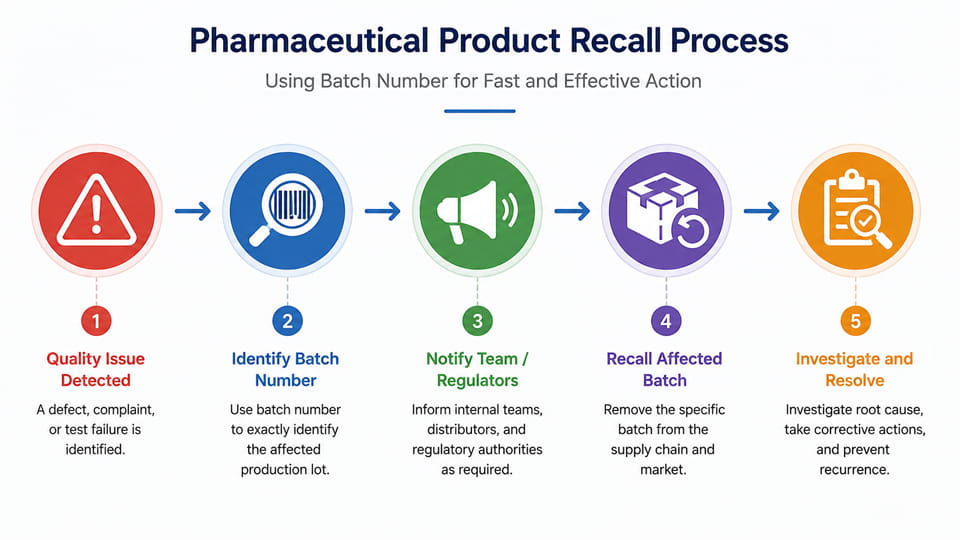
شكل: عملية استدعاء مبسطة للمنتج باستخدام أرقام الدُفعات.
عندما تسوء الأمور - سواء كانت شكوى من العميل, انحراف, أو اختبار فاشل - أرقام الدُفعات تجعل التحقيقات واضحة. يمكن لفرق الجودة تتبع جميع جوانب تلك الدفعة. إنهم يعرفون بالضبط من التعامل معها, متى و أين تم صنعه, و ما هي المواد تم استخدامها. "من صنع منتجًا, عندما تم تصنيعها, حيث تم تصنيعها, ما هي الآلات والمواد الخام التي تم استخدامها". هذه المعلومات تعني أنه ليس عليك التخمين. على سبيل المثال, إذا أ صلابة الجهاز اللوحي فشل الاختبار, يمكن لمسؤول ضمان الجودة التحقق مما إذا كانت هذه الدفعة المعينة تحتوي على رطوبة تحبيب مختلفة أو سرعة ضغط مختلفة. بعبارة أخرى, تعمل أرقام الدُفعات على القضاء على النقاط العمياء وتسريع تحليل السبب الجذري.
في ملخص, أرقام الدفعة مطلوبة من قبل المنظمين (ادارة الاغذية والعقاقير, إما/الموافقة المسبقة عن علم/S, من) لأنهم يضمنون التتبع والتحكم الكامل من كل دفعة مصنعة. إنهم يدعمون بشكل مباشر الامتثال لـ GMP, ضمان الجودة, وآمنة, استدعاءات فعالة. في الحقيقة, في الصناعات الخاضعة للتنظيم مثل الأدوية, ترقيم الدُفعات ليس اختياريًا - إنه مطلب قانوني. إذا لم تتمكن الشركة المصنعة من تتبع الخلل في مجموعتها, ويمكن للجهات التنظيمية فرض عقوبات، وقد تصبح عمليات سحب المنتجات واسعة النطاق بشكل كارثي.
في العديد من الصناعات, الشروط رقم الدفعة و رقم الكثير غالبا ما تستخدم بالتبادل. في المستحضرات الصيدلانية, "رقم الدفعة" أكثر شيوعًا (مرتبطة بـ GMP وسجل الدفعة), لكن المفهوم مشابه. والفرق الرئيسي هو النطاق:
| رقم الدفعة | رقم القطعة | |
| تعريف | يتعرف أ تشغيل إنتاج واحد للمنتج تحت مجموعة واحدة من الشروط. | غالبًا ما يشير إلى مجموعة أكبر قد تتضمن دفعات متعددة تتقاسم نفس الوصفة أو الإطار الزمني. |
| استخدام الصناعة | القياسية في المستحضرات الصيدلانية (والبيولوجية) لإنتاج دفعة واختبار الإصدار. | شائع في الغذاء, مستحضرات التجميل, إلخ.; تستخدم في بعض الأحيان في الصيدلة, ولكن يمكن أن تغطي دفعات متعددة. |
| إمكانية التتبع | مرتبطة بالتاريخ التفصيلي لدفعة واحدة (مواد, معدات, السجلات). | يربط معًا عدة دفعات, عادة للتجميع في أخذ العينات أو ضمان الجودة, بدلاً من التتبع التفصيلي. |
| مثال | حزمة #001 للتشغيل في يناير 1, 2024 من قرص المضاد الحيوي (تشغيل واحد). | كثير 202401 قد تشمل دفعة #001 و #002 من نفس أقراص المضادات الحيوية التي تم تصنيعها في يناير 2024. |
أ رقم الدفعة يشير عادة إلى عملية تصنيع محددة, في حين أ رقم الكثير قد تشمل عمليات تشغيل متعددة تم إجراؤها في ظل ظروف مماثلة. في الممارسة العملية, بعض الشركات تستخدمها بشكل مترادف. ولكن بشروط GMP الصارمة, كل حزمة له سجله ورقمه الخاص. العديد من الوثائق التنظيمية (مثل FDA وPIC/S) الرجوع في الواقع إلى رقم الدفعة أو الدفعة معاً, الاعتراف بأنهما متماثلان وظيفيًا لأغراض التتبع.
قد يبدو رقم الدُفعة كمجموعة بسيطة من الحروف والأرقام, ولكن خلفه يوجد نظام تحديد هوية مصمم بعناية. تضع كل شركة أدوية قواعد الترقيم الخاصة بها من خلال إجراءات التشغيل القياسية الداخلية (SOPS), ضمان عدم حصول أي دفعتين من الإنتاج على نفس المعرف على الإطلاق.
عادةً ما يجمع رقم الدُفعة النموذجي بين عدة أجزاء من معلومات التصنيع. على سبيل المثال:
تاب-240501-001
بدلًا من أن تكون شخصيات عشوائية, كل قسم يحمل معنى محددا. “فاتورة غير مدفوعة” قد يمثل منتجًا لوحيًا, “240501” يشير إلى تاريخ التصنيع, بينما “001” يحدد دفعة الإنتاج الأولى المكتملة في ذلك اليوم.
تقوم بعض الشركات المصنعة أيضًا بتضمين معرفات إضافية مثل خطوط الإنتاج, ورش العمل, أو التحولات. الشركة المصنعة للكبسولة, على سبيل المثال, قد تولد رقم دفعة مثل كاب-250318-ب02, أين “ب” يشير إلى خط الإنتاج B و “02” يمثل الدفعة الثانية التي تم إنتاجها خلال هذا التحول.
ويختلف الشكل الدقيق من شركة إلى أخرى, لكن كل نظام فعال لترقيم الدُفعات يتبع ثلاثة مبادئ أساسية:
تسمح هذه المبادئ للمصنعين باسترجاع تاريخ الإنتاج الكامل لأي منتج في غضون دقائق, وهو بالضبط ما يتوقعه المفتشون التنظيميون أثناء عمليات تدقيق ممارسات التصنيع الجيدة.
يجب توثيق عملية التصنيع بأكملها لكل دفعة في ملف سجل إنتاج الدفعة (إعادة هندسة العمليات), يشار إليها أيضًا باسم أ سجل تصنيع الدفعة (معدل الأيض الأساسي). تعمل هذه السجلات بمثابة مذكرات الإنتاج لكل دفعة, ما يثبت أن المنتج تم تصنيعه طبقاً للصيغة المعتمدة, تعليمات التصنيع, ومتطلبات GMP. بموجب لوائح إدارة الغذاء والدواء, يجب إعداد سجل الإنتاج والمراقبة لكل دفعة من المنتجات الدوائية، ويتضمن معلومات كاملة عن الإنتاج والمراقبة.
يتضمن BPR النموذجي:
ال رقم الدفعة يظهر في جميع أنحاء BPR بالكامل ويعمل كمعرف رئيسي يربط جميع سجلات التصنيع معًا. بمجرد الانتهاء من الإنتاج, يجب مراجعة إعادة هيكلة الأعمال والموافقة عليها من قبل ضمان الجودة (ضمان الجودة) القسم قبل أن يتم إصدار الدفعة. خلال عمليات التفتيش GMP, تتحقق السلطات التنظيمية بعناية من أن المعلومات المسجلة في BPR تتطابق مع رقم الدفعة المطبوع على المنتج النهائي. يسمح نظام تسجيل الدُفعات الشامل للمصنعين باسترداد سجلات الإنتاج بسرعة, نتائج المختبر, وتوزيع المعلومات كلما تحقيق الجودة, شكوى العملاء, أو استدعاء المنتج يحدث, مما يجعلها واحدة من الركائز الأساسية لإدارة الجودة الصيدلانية الحديثة.
يتم عادةً دمج خطوط تعبئة الأدوية الحديثة مع أنظمة الترميز والفحص الأوتوماتيكية التي يمكنها ذلك طباعة أرقام الدُفعات والتحقق منها تلقائيًا طوال عملية التعبئة والتغليف. اعتمادا على شكل العبوة, تطبق أنواع مختلفة من المعدات معلومات الدفعة بطرق مختلفة:
تدمج حلول التعبئة والتغليف الصيدلانية الجاهزة من Jinlu Packaging الترميز, تقتيش, والأتمتة في خط إنتاج واحد. على سبيل المثال, يمكن لخط تعبئة الفقاعة طباعة فريدة تلقائيًا رقم الدفعة ورمز الاستجابة السريعة على كل عبوة نفطة بينما يتحقق نظام فحص الرؤية المضمن على الفور من جودة الطباعة ودقتها. يؤدي هذا التحقق الآلي إلى تقليل الأخطاء البشرية بشكل كبير مع تحسين إمكانية تتبع المنتج وسلامة البيانات.
في ملخص, مجموعة واسعة من معدات التعبئة والتغليف الصيدلانية - بما في ذلك يضغط الكمبيوتر اللوحي, كبسولة ملء آلات, آلات التعبئة نفطة, خطوط تعبئة الزجاجات, آلات وضع العلامات, و آلات الكرتون- يمكن دمجها مع أنظمة التشفير النافثة للحبر أو الليزر لطباعة أرقام الدُفعات ومعلومات التتبع الأخرى على العبوات الأولية أو الثانوية. من خلال أتمتة إدارة رقم الدفعة, يمكن لمصنعي الأدوية تحسين كفاءة الإنتاج, تعزيز إمكانية تتبع المنتج, والتأكد من الامتثال لمتطلبات GMP العالمية.
في ملخص, يعد إنتاج الدُفعات وترقيم الدُفعات بمثابة العمود الفقري للأمان, تصنيع الأدوية المتوافقة. فهي تسمح للشركات بإنتاج الأدوية بثقة، مع العلم أنها تستطيع دائمًا تعقب أي مشكلة وعزلها. يضمن إنتاج الدفعات جودة موحدة ومراقبة منفصلة, بينما توفر أرقام الدُفعات مرساة التتبع. معاً, أنها تستوفي قواعد GMP وتحمي سلامة المرضى. أما البديل ــ الإنتاج دون دفعات أو أرقام واضحة ــ فهو أمر لا يمكن تصوره تقريبا في بيئة منظمة.
للأدوية, إن الاستثمار في آلات التعبئة والتغليف القادرة هو أيضًا استثمار في إمكانية التتبع. المبرمجون في Jinlu Packing, آلات وضع العلامات, تم تصميم ماكينات التعبئة والتغليف وأنظمة الفحص مع وضع ممارسات التصنيع الجيدة (GMP) في الاعتبار - مما يضمن أن كل وحدة تحمل معلومات الدفعة الصحيحة. للتأكد من أن الدفعة القادمة الخاصة بك آمنة, متوافقة وموثقة بالكامل, يعتبر حلول جاهزة التي تدمج الترميز الدفعي والتتبع التلقائي.
على استعداد لتحسين إمكانية التتبع الخاصة بك? استكشف مجموعة Jinlu Packing الكاملة ماكينات تعبئة الأدوية - بدءًا من برامج ترميز الدفعات وملصقات الملصقات وحتى شركات تعبئة الكرتون والفحص البصري - المصممة للطباعة, يؤكد, وتسجيل أرقام الدفعة الخاصة بك لا تشوبه شائبة. اتصل بجينلو لمناقشة كيفية إنشاء خط تعبئة يبقي كل دفعة في المسار الصحيح.
رقم الدفعة (أو رقم القطعة) هو رمز فريد يُعطى لعملية إنتاج واحدة للدواء. ويحدد جميع الوحدات التي تم تجميعها معًا في ظل نفس الظروف. يربط الكود هذا المنتج بسجلات التصنيع الخاصة به (مكونات, عملية, الاختبارات). في الأساس, إنها بطاقة تعريف لمجموعة من الأدوية.
أرقام الدفعة تسمح بالتتبع. في حالة ظهور أي مشكلة تتعلق بالجودة أو مخاوف تتعلق بالسلامة, يمكن للشركات والجهات التنظيمية تتبع هذه الدفعة بسرعة من خلال كل خطوة - المواد الخام, معدات, مشغلي, نتائج الاختبار, توزيع, إلخ. وهذا مطلوب بموجب قواعد GMP ويجعل من الممكن استدعاء الدفعة المتأثرة فقط بدلاً من كل شيء.
في المستحضرات الصيدلانية, غالبًا ما يتم استخدامها بالتبادل, ولكن في بعض الأحيان مع فارق بسيط. يشير رقم الدُفعة عادةً إلى عملية تصنيع محددة. يمكن أن يشير رقم الدفعة أحيانًا إلى مجموعة من الدُفعات التي تم إنتاجها في ظل ظروف مماثلة. يعاملها العديد من الشركات المصنعة كمرادفات, ولكن المفتاح هو الاتساق في الوثائق الخاصة بك.
الإنتاج بالدفعة يعني إنتاج كمية محدودة من المنتج في عملية تشغيل واحدة. تمر كل دفعة بعملية التصنيع الكاملة, ثم اكتمال قبل البدء في اليوم التالي. إنها الطريقة التقليدية للأجهزة اللوحية, كبسولات, إلخ. يتم تصنيعها – خطوة بخطوة – على عكس عملية التدفق المستمر.
تقوم الشركات بإنشاء أرقام الدُفعات باستخدام تنسيق محدد. تتضمن العناصر المشتركة تاريخًا (على سبيل المثال, YYMMDD), رمز المنتج أو النبات, التحول أو معرف الخط, و رقم متسلسل. على سبيل المثال, "TAB240501-001" قد يعني أقراص من 2024-05-01, حزمة 001. يضيف البعض رسائل لمزيد من المعلومات. يختلف التنسيق الدقيق, ولكن يتم تعريفه في نظام الجودة واستخدامه باستمرار.
اعتمادا على مخطط شركتك, يمكن لرقم الدُفعة تشفير أشياء مثل تاريخ الإنتاج, رمز المنتج, خط المعدات, التحول والتسلسل. الهدف هو جعل الدفعة قابلة للتعريف بشكل فريد. على سبيل المثال, يشرح Yaveon ذلك في رمز مثل B12345678-AB, يمكن أن يشير الحرف "B" إلى نوع المنتج, "12345678" الدفعة المحددة, و"AB" الموقع أو الخط.
تعني إمكانية التتبع أنه يمكنك متابعة رحلة المنتج خلال مرحلة التصنيع. إنه أمر حيوي لسلامة المرضى والامتثال التنظيمي. إذا ظهرت مشكلة تتعلق بسلامة الدواء, يجب أن تعرف الدفعات التي قد تتأثر. تتيح لك إمكانية التتبع الإجابة, “ما هي الدفعات التي استخدمت تلك المواد الخام؟?"و" أي الوحدات ذهبت إلى أي أسواق "?" بدونها, لم تتمكن الشركات من إجراء عمليات سحب أو تحقيقات دقيقة. يفرض المنظمون إمكانية التتبع في ممارسات التصنيع الجيدة لهذا السبب بالضبط.
إذا اكتشف عيباً أو تلوثاً في الدواء, تستخدم الشركة سجلات الدُفعات لمعرفة وحدات المنتج المتأثرة. يقومون بإخطار المنظمين, ثم اطلب من تجار الجملة والصيدليات إعادة أرقام الدُفعات المتأثرة أو عزلها. بسبب أرقام الدفعة, يتم سحب الدفعة السيئة فقط. ولهذا السبب نحتفظ بسجلات التوزيع "لكل دفعة...لتسهيل الاستدعاء". بعد إزالة المنتج, يقوم ضمان الجودة بالتحقيق في السبب الجذري لمنع تكراره.
معدل الأيض الأساسي (ويسمى أيضًا سجل إنتاج الدُفعات) هو السجل التفصيلي لكل ما تم إنجازه في تصنيع الدفعة. ويتضمن اسم المنتج, رقم الدفعة, الصيغ, المعدات المستخدمة, أسماء المشغلين, الطوابع الزمنية, وجميع نتائج الاختبار. يتطلب GMP أن يقوم BMR بإدراج "اسم المنتج ورقم الدفعة". إن BMR هو في الأساس "شهادة ميلاد" الدفعة.
يوفر الإنتاج المجمع مرونة للمصانع متعددة المنتجات وتوثيقًا أبسط لكل عملية تشغيل. من الأسهل التحقق من صحة العمليات وتأهيلها خطوة بخطوة. إذا تم العثور على مشكلة في وقت متأخر في دفعة واحدة, يمكن إلغاء الدفعة بأكملها دون التأثير على المنتجات الأخرى. يتمتع التصنيع المستمر بفوائد تتعلق بالكفاءة ولكنه غالبًا ما يتطلب استثمارات ضخمة وضوابط صارمة. لا تزال العديد من شركات الأدوية تعتمد على الوضع الدفعي, خاصة بالنسبة للأدوية الصغيرة أو المتخصصة.
مراجع:
1.إنتاج دفعة\رقم القطعة—— ويكيبيديا
2.أسئلة وأجوبة حول متطلبات ممارسات التصنيع الجيدة الحالية - السجلات والتقارير -- نحن. إدارة الغذاء والدواء
3.21 CFR § 211.188 – دفعة الإنتاج وسجلات المراقبة. —— معهد المعلومات القانونية
4.السؤال السابع أ: إرشادات ممارسات التصنيع الجيدة للمكونات الصيدلانية الفعالة -- نحن. إدارة الغذاء والدواء