إذا كنت قد تساءلت يومًا ما الذي يجعل الدواء يعمل بالفعل, الجواب هو عادة واجهة برمجة التطبيقات (العنصر الصيدلاني النشط). سواء كان جهازًا لوحيًا, كبسولة, حقن, أو شراب, API هو المكون المسؤول عن إنتاج التأثير العلاجي المقصود. بعبارات بسيطة, إنه جزء الدواء الذي يعالج المرض, يخفف الأعراض, أو يحقق النتيجة الطبية المطلوبة, في حين أن المكونات الأخرى - المعروفة باسم السواغات - تدعم بشكل أساسي التركيب والتوصيل. لمصنعي الأدوية, فرق المشتريات, ومديري الإنتاج, يعد فهم واجهات برمجة التطبيقات أمرًا ضروريًا لأنها تؤثر بشكل مباشر على جودة المنتج, الامتثال التنظيمي, عمليات التصنيع, وسلامة المرضى في نهاية المطاف.
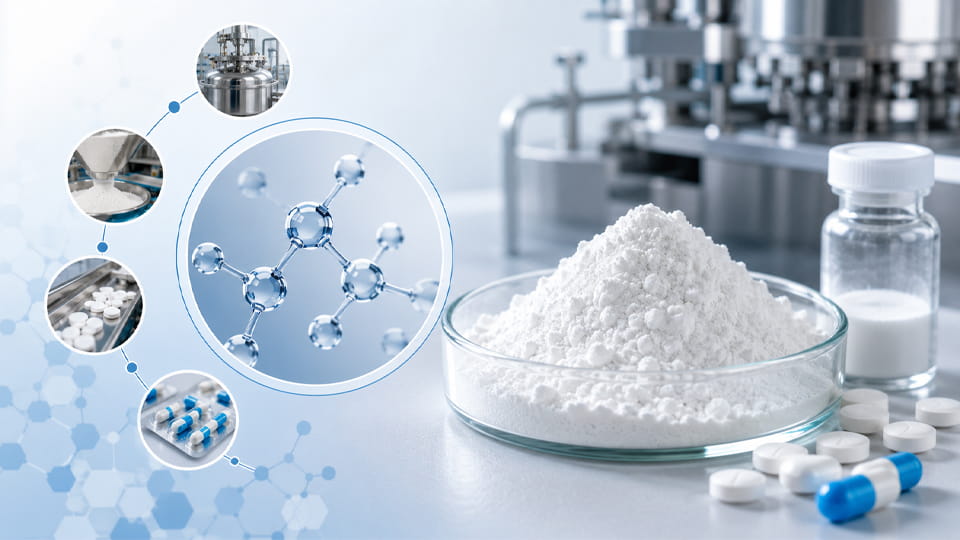
ماذا يعني API في المستحضرات الصيدلانية?
ان واجهة برمجة التطبيقات هو العنصر الصيدلاني النشط - ال مادة دوائية فعالة في دواء يوفر تأثيره العلاجي. بعبارات بسيطة, إنها المادة الكيميائية (أو البيولوجية) المكون الذي يقوم بهذا العمل (على سبيل المثال. خفض الحمى, قتل البكتيريا, تخفيف الألم). على سبيل المثال, في قرص من عقار الاسيتامينوفين, أسِيتامينُوفين في حد ذاته هو API; المكونات الأخرى (المجلدات, الحشو, الطلاءات) نكون سواغ. الولايات المتحدة. يحدد المعهد الوطني للسرطان واجهة برمجة التطبيقات (API). باعتباره "المكون الرئيسي في الدواء الذي يسبب التأثير المطلوب للدواء".
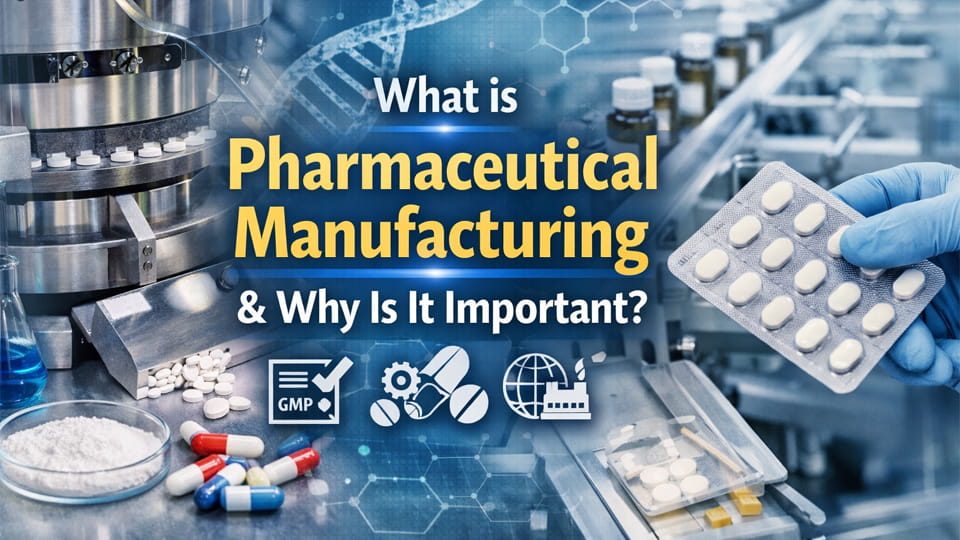
في الممارسة العملية, يبدأ تصنيع الأدوية بواحدة أو أكثر من واجهات برمجة التطبيقات (APIs) و يحولهم إلى المنتج النهائي (قرص, كبسولة, سائل, إلخ.) تحت ضوابط الجودة الصارمة. كما يلاحظ أحد المصادر, تصنيع الأدوية "يعني في الأساس تحويل المكونات الصيدلانية الفعالة (واجهات برمجة التطبيقات) والسواغات في أشكال جرعات (مثل الأجهزة اللوحية, كبسولات, السوائل, أو الحقن) من خلال عمليات الوحدة المختلفة (طحن, تحبيب, ضغط, طلاء, تعبئة, إلخ.)". يجب أن تكون كل خطوة دقيقة: يطالب المنظمون بأن تحتوي كل دفعة على "المكونات والقوة التي تدعي أنها تمتلكها". باختصار, بدون واجهات برمجة التطبيقات, لن يكون هناك دواء – هم العمود الفقري لتركيب الدواء.
تعريف العنصر الصيدلاني النشط (واجهة برمجة التطبيقات)
- واجهة برمجة التطبيقات (وتسمى أيضا مادة مخدرة أو العنصر النشط دوائيا) يكون المكون الموجود في الدواء والذي يجعله فعالا. على سبيل المثال, أموكسيسيلين هو API في حبوب المضادات الحيوية (فهو يقتل البكتيريا).
- غاية: توفر واجهات برمجة التطبيقات تأثير علاجي. بدون واجهة برمجة التطبيقات, "الدواء" سيكون مجرد مسحوق أو سائل خامل.
- عرض تنظيمي: تعتبر إدارة الغذاء والدواء الأمريكية (FDA) والوكالة الأوروبية للأدوية (EMA) أن واجهات برمجة التطبيقات (API) جزء من ينظم CGMP المبادئ التوجيهية مثل أنا س7 ضمان تصنيع واجهات برمجة التطبيقات وفقًا لمعايير الجودة الصارمة.
غالبًا ما تكون واجهات برمجة التطبيقات عبارة عن مساحيق أو مركزات عالية النقاء; ثم يتم خلطها مع السواغات وتشكيلها على شكل أقراص, كبسولات, أو أشكال جرعات أخرى (انظر أدناه). النقطة الأساسية هي أن واجهات برمجة التطبيقات (APIs) هي الأدوية النشطة, في حين أن كل شيء آخر في التركيبة يساعد ببساطة على توصيل الدواء بأمان وفعالية.
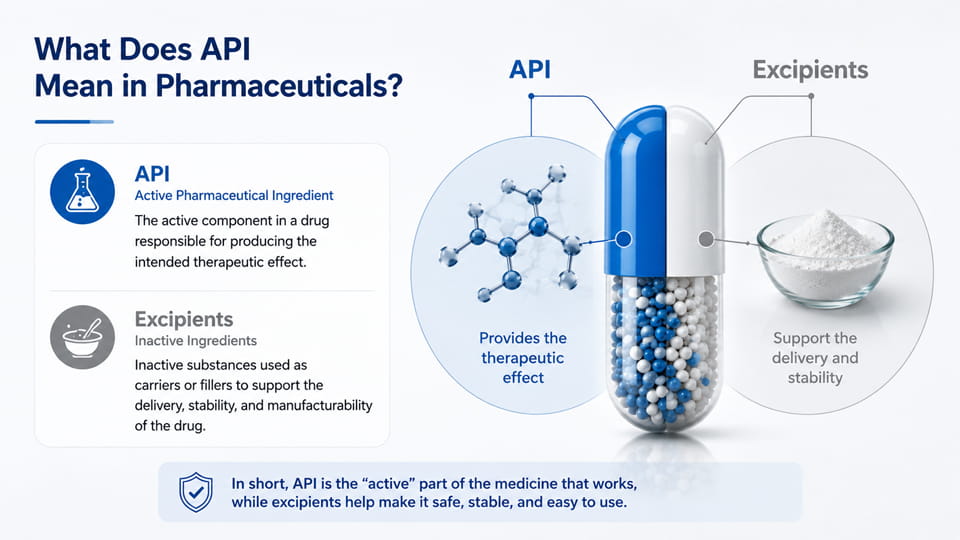
واجهة برمجة التطبيقات مقابل. سواغ: ما هو الفرق?
| ميزة |
واجهة برمجة التطبيقات (العنصر النشط) |
سواغ (العنصر غير النشط) |
| الدور/الوظيفة |
يوفر تأثير علاجي (دواء فعال) |
بمثابة الناقل, الموثق, عصا, مثبت, إلخ., لواجهة برمجة التطبيقات |
| النشاط الدوائي |
نعم – نشط بيولوجيا. |
لا - خامل دوائيا. |
| الكمية النموذجية |
عادة كمية صغيرة (ملغ أو ميكروغرام). |
عمومًا حجم كبير من الصياغة. |
| أمثلة |
الباراسيتامول (أسِيتامينُوفين), أموكسيسيلين, أتورفاستاتين, إلخ. |
اللاكتوز, السليلوز الجريزوفولفين, ستيرات المغنيسيوم, إلخ. |
| أهمية |
أمر بالغ الأهمية لفعالية; يحدد وظيفة الدواء. |
يضمن ثبات حبوب منع الحمل, قابلية التصنيع, والتوافر البيولوجي. |
بعبارة أخرى, واجهات برمجة التطبيقات (APIs) هي الأجزاء "النشيطة"., بينما السواغات هي الأجزاء "الداعمة".. كما يوضح أحد مصادر الصناعة: "إن واجهات برمجة التطبيقات هي أدوية سائبة نشطة صيدلانياً وتولد التأثير الدوائي المطلوب, في حين أن السواغات عبارة عن مواد غير نشطة دوائيًا تُستخدم عمومًا كحامل لـ API".
- واجهات برمجة التطبيقات: نشيط, قوية, وتتطلب عادةً معالجة دقيقة. غالبًا ما تمثل نسبة قليلة فقط من وزن الجهاز اللوحي, ولكن بدونها لا يفعل الدواء شيئا.
- سواغ: غير نشط, في كثير من الأحيان مساحيق / سوائل صالحة للأكل أو خاملة. يضيفون الجزء الأكبر, امتصاص المساعدات, تحسين الاستقرار, وجعل التصنيع ممكنا. على سبيل المثال, مسحوق اللاكتوز هو حشو شائع; البوفيدون هو الموثق; ستيرات المغنيسيوم هو مادة تشحيم; إطلاق التحكم في الطلاءات المختلفة.
كلاهما مطلوب: واجهات برمجة التطبيقات للتأثير, سواغات لتقديم هذا التأثير في مكان آمن, شكل جرعة مستقرة. فهم الفرق هو المفتاح في تصنيع الأدوية.
أنواع واجهات برمجة التطبيقات الصيدلانية
تأتي واجهات برمجة التطبيقات فئتين واسعتين: جزيء صغير (اصطناعية) المخدرات والبيولوجية.
- واجهات برمجة التطبيقات الاصطناعية (جزيئات صغيرة): هذه مواد كيميائية منخفضة الوزن الجزيئي يتم تصنيعها بواسطة التوليف الكيميائي. وتشمل الحبوب الكلاسيكية مثل أسبرين, الباراسيتامول. يمكن أن يكون التوليف خطيًا (ردود الفعل وعاء واحد) أو متعدد الخطوات. واجهات برمجة التطبيقات الاصطناعية عادة ما تكون مساحيق بلورية (بعض استرطابي) التي تتطلب تفاعلات كيميائية دقيقة وتنقية. وتندرج معظم الأدوية الجنيسة والعديد من الأدوية الرائجة ضمن هذه الفئة. على سبيل المثال, مضادات الهيستامين السيتريزين وأدوية ضغط الدم اللوسارتان هي واجهات برمجة التطبيقات الاصطناعية ذات الجزيئات الصغيرة. غالبًا ما يسمح إنتاجها بالرقابة الصارمة على النقاء والاتساق.
- واجهات برمجة التطبيقات الطبيعية (المصادر المشتقة / البيولوجية): يتم استخراج بعض واجهات برمجة التطبيقات من مصادر طبيعية. وهذا يشمل المركبات المشتقة من النباتات (على سبيل المثال. الديجوكسين من قفاز الثعلب) أو الفيتامينات الناتجة عن التخمير (على سبيل المثال. فيتامين ج عن طريق التخمر الميكروبي). التخمير (باستخدام البكتيريا أو الخميرة) يمكن أن تنتج مركبات مثل المضادات الحيوية (البنسلين) أو الستاتينات المخفضة للكوليسترول. يمكن أن تحتوي واجهات برمجة التطبيقات الطبيعية على مزيد من التباين (بسبب المواد المصدر) وغالبًا ما تتطلب تنقية إضافية. وعادة ما تكون أقل شيوعًا في الأدوية الحديثة التي تركز على المواد الاصطناعية, ولكنها تنمو في المغذيات والأدوية "النباتية"..
- واجهات برمجة التطبيقات الخاصة بالتكنولوجيا الحيوية/البيولوجية: هذه كبيرة, جزيئات معقدة تنتجها العمليات البيولوجية (زراعة الخلايا أو الحمض النووي المؤتلف). وهي تشمل الأجسام المضادة وحيدة النسيلة (مابس), البروتينات العلاجية, اللقاحات, و البدائل الحيوية. على سبيل المثال, تراستوزوماب (هيرسبتين) و الأنسولين هي واجهات برمجة التطبيقات الخاصة بالتكنولوجيا الحيوية. وعادة ما يتم إنتاجها بواسطة خلايا معدلة وراثيا (على سبيل المثال. البكتيريا, خميرة, أو خلايا الثدييات) ثم يتم حصادها وتنقيتها. تتطلب البيولوجيا تخميرًا معقمًا وتنقية معقدة. بينما ينصب تركيزنا في الغالب على واجهات برمجة التطبيقات ذات الجزيئات الصغيرة, الاتجاه السائد في الصناعة هو أن الأدوية البيولوجية تمثل الآن حصة متزايدة من الأدوية الجديدة.
طريقة مفيدة للتذكر: جزيئات صغيرة يتم تصنيعها كيميائيا وعادة ما تكون حبوبا; بيولوجيا جزيء كبير تأتي من أنظمة حية وغالبًا ما تكون قابلة للحقن. كل نوع له مسار التصنيع والتنظيم الخاص به, لكن كلاهما عبارة عن "واجهات برمجة التطبيقات" طالما أنها العنصر النشط في الدواء النهائي.
كيف يتم تصنيع واجهات برمجة التطبيقات (APIs).?
إنتاج API معقد, عملية متعددة الخطوات تتضمن كيمياء أو بيولوجيا دقيقة. مبسطة مخطط انسيابي لتصنيع API النموذجي (لواجهات برمجة التطبيقات الاصطناعية ذات الجزيئات الصغيرة) هو مبين أدناه:
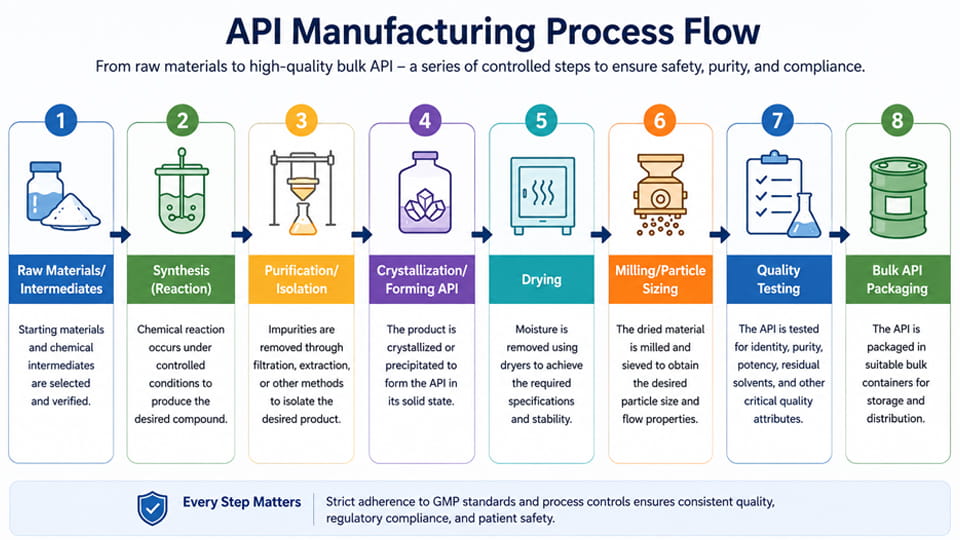
- المواد الخام/الوسيطة: تبدأ العملية بكتل البناء الكيميائية الخام (غالبًا ما تكون الكواشف المتاحة تجاريًا أو المواد الوسيطة التي تم تصنيعها مسبقًا). يجب أن تستخدم كل خطوة كيميائية مكونات عالية الجودة لتجنب الشوائب.
- توليف (رد فعل): يقوم الكيميائيون بإجراء تفاعل كيميائي واحد أو أكثر (مفاعلات دفعة أو مفاعلات التدفق) لبناء جزيء API. قد يتضمن هذا خطوات متعددة (على سبيل المثال, إضافة مجموعات وظيفية, حلقات النموذج). ظروف رد الفعل (مذيب, درجة حرارة, المحفزات) يتم التحكم فيها بإحكام. لواجهات برمجة التطبيقات الخاصة بالتكنولوجيا الحيوية, يتم استبدال هذه الخطوة بالتخمر البيولوجي/ زراعة الخلايا لإنتاج الجزيء.
- تنقية / العزلة: بعد كل خطوة رد فعل, تتم تنقية الخليط لإزالة المنتجات الثانوية غير المرغوب فيها. وتشمل التقنيات استخراج السائل السائل, الترشيح, اللوني, بلورة, إلخ. الهدف هو عزل الوسيط أو API في شكل نقي.
- التبلور/التشكيل API: غالبًا ما تتم بلورة واجهة برمجة التطبيقات (API) النهائية من أحد الحلول. يؤدي هذا إلى إنشاء بلورات صلبة من API ذات أشكال متعددة ونقاء محدد. التبلور يحسن النقاء (الشوائب تبقى في الحل) ويعطي خصائص فيزيائية جيدة.
- تجفيف: يتم تجفيف البلورات الرطبة (على سبيل المثال. في مجفف) لإزالة المذيب تماما. يجب أن يفي المذيب المتبقي بالحدود التنظيمية.
- الطحن/تحجيم الجسيمات: قد يتم طحن API المجفف أو غربلته لتحقيق حجم الجسيمات المطلوب. يؤثر حجم الجسيمات على كيفية خلط API وحله في المنتج الدوائي النهائي.
- اختبار الجودة: في كل خطوة رئيسية (واجهة برمجة التطبيقات النهائية بشكل خاص), يتم اختبار المادة للتأكد من هويتها, نقاء, فعالية, والمذيبات المتبقية. الأساليب التحليلية (HPLC, التحليل الطيفي, إلخ.) التأكد من مطابقته للمواصفات.
- التعبئة والتغليف API السائبة: يتم تعبئة مسحوق API النهائي في ظروف خاضعة للرقابة (خامل في كثير من الأحيان) حاويات لحمايته من الرطوبة, ضوء, والتلوث. يتم تصنيفها وتخزينها لكل متطلبات برنامج الرصد العالمي.
يجب أن تتبع كل خطوة CGMP (ممارسات التصنيع الجيدة الحالية) قواعد. على سبيل المثال, أنا س7 (ومنظمة الصحة العالمية GMP) تقديم إرشادات خاصة بواجهات برمجة التطبيقات. كما تلاحظ منظمة الصحة العالمية, "يجب أن تزداد صرامة GMP في تصنيع API مع استمرار العملية من خطوات API المبكرة إلى الخطوات النهائية, طهارة, والتعبئة والتغليف". في الممارسة العملية، هذا يعني توثيقًا صارمًا, التحقق من صحة تنظيف المعدات, الموظفين المؤهلين, والضوابط في العملية.
تكنولوجيا تحليل العمليات (بات) ويتم استخدام الأتمتة بشكل متزايد لمراقبة ردود الفعل في الوقت الحقيقي. الصناعة تتجه أيضا نحو التصنيع المستمر حيث تتدفق المواد الخام بشكل مستمر من خلال خطوات التفاعل والتنقية بدلاً من التشغيل على دفعات. العمليات المستمرة يمكن أن تحسن الكفاءة والاتساق, على الرغم من أن إنتاج الدُفعات لا يزال شائعًا.
في ملخص: تصنيع API هو خط إنتاج يتم التحكم فيه بشكل كبير, من المواد الكيميائية الخام أو مزارع الخلايا وصولاً إلى العنصر النشط النهائي, مع بوابات الجودة الصارمة في كل مرحلة. والنتيجة هي واجهة برمجة تطبيقات مجمعة وآمنة, قوية, وجاهزة للتحول إلى دواء.
مراقبة جودة API ومتطلبات GMP
الجودة أمر بالغ الأهمية في إنتاج API. الوكالات التنظيمية (ادارة الاغذية والعقاقير, ema, إلخ.) تتطلب أن تتبع الشركات المصنعة لواجهة برمجة التطبيقات (API) صرامة ممارسات التصنيع الجيدة (GMP) للتأكد من أن كل دفعة تلبي معايير الجودة. لواجهات برمجة التطبيقات, ICH Q7 هو دليل توجيهي رئيسي يحدد ممارسات التصنيع الجيدة الخاصة بالمكونات النشطة. وتشمل بعض الجوانب الحاسمة:
- الوثائق & تصديق: يجب أن تكون جميع العمليات موثقة جيدًا. خطوات حاسمة (مثل التبلور النهائي) تم التحقق من صحتها لإظهار أنها تنتج واجهة برمجة التطبيقات (API) بجودة مقبولة بشكل موثوق. يجب أن تكون المرافق والمعدات مؤهلة.
- اختبار النقاء والهوية: يتم اختبار كل دفعة من API للتحقق من صحتها هوية (إنها المادة الكيميائية الصحيحة), نقاء (خالية من الشوائب أو المنتجات الثانوية غير المرغوب فيها), و فعالية (التركيز الصحيح للجزيئات النشطة). على سبيل المثال, تُستخدم اختبارات HPLC أو قياس الطيف للكشف عن الشوائب حتى ولو كانت ضئيلة. أي تلوث يمكن أن يكون ضارا في منتج دوائي.
- التحكم في الشوائب: يضع المصنعون حدودًا مقبولة لبعض الشوائب (المعادن الثقيلة, المذيبات المتبقية, المواد الأولية غير المتفاعلة). إذا تجاوزت المستويات الحدود, يتم رفض الدفعة أو إعادة معالجتها.
- اختبار الاستقرار: يجب أن تظل واجهات برمجة التطبيقات (APIs) مستقرة أثناء التخزين. دراسات الاستقرار (على سبيل المثال. تسارع الشيخوخة) تأكد من أن واجهة برمجة التطبيقات (API) لن تتدهور أو تفقد فعاليتها بمرور الوقت. التغليف (انظر القسم التالي) يعكس هذا أيضًا.
- إمكانية التتبع: يجب أن تكون المواد الخام وكل خطوة من خطوات العملية قابلة للتتبع. إذا ظهرت أي مشكلة في الدواء النهائي, يجب على الشركات المصنعة تتبع سجلات الإنتاج.
- الامتثال لـ cGMP: تقوم الوكالات بشكل متكرر بفحص مصانع API. كما يلخص أحد المصادر: تهدف إرشادات GMP إلى التأكد من أن كل دواء يحتوي على "المكونات والقوة التي يدعي أنه يمتلكها". وهذا يعني أنه يجب على منتجي واجهة برمجة التطبيقات (API) إثبات أن واجهة برمجة التطبيقات (API) الخاصة بهم متسقة في كل دفعة.
- الإيداعات التنظيمية: يقدم مصنعو واجهة برمجة التطبيقات (API) بيانات حول عملياتهم (كيمياء, تصنيع, الضوابط – قسم CMC في التطبيقات الدوائية) إلى السلطات. أي تغيير في العملية (على سبيل المثال. نجاسة جديدة) قد يتطلب إعادة الموافقة.
منظمة الصحة العالمية (من) ويؤكد التوجيه على ذلك تزداد الصرامة نحو الخطوات النهائية. قد يكون لدى الوسطاء المبكرين ضوابط أقل, ولكن بمجرد تحديد مادة البداية لواجهة برمجة التطبيقات (API). (النقطة التي يتم تطبيق GMP منها), الخطوات اللاحقة (بلورة, التطهير النهائي) يتم الاحتفاظ بها وفقًا لأعلى المعايير.
باختصار, مراقبة جودة واجهة برمجة التطبيقات (API) شاملة: "يعد ضمان الجودة جانبًا مهمًا في تصنيع واجهة برمجة التطبيقات" ويغطي GMP كل شيء "بدءًا من مصادر المواد الخام وحتى اختبار المنتج النهائي". وهذا يضمن أن API النهائي سيكون آمنًا وفعالًا عند تحويله إلى دواء.
واجهة برمجة التطبيقات مقابل. المنتج الصيدلاني النهائي (FPP)
من المهم التمييز بين واجهة برمجة التطبيقات من شكل الجرعة النهائية (النهائي, دواء جاهز للمريض).
- واجهة برمجة التطبيقات (العنصر النشط / مادة دوائية): المادة الكيميائية أو البيولوجية النشطة النقية, عادة في شكل مسحوق أو محلول. لقد خضع لجميع خطوات التصنيع حتى اختبار النقاء. إنها لا يُعطى عادةً للمرضى بمفرده (إلا في شكل IV), بل يتم دمجها مع السواغات ومعالجتها بشكل أكبر.
- المنتج الصيدلاني النهائي (FPP, أو نموذج الجرعة النهائية): هذا هو الدواء الأخير على الرف – الأقراص, كبسولات, شراب, الحقن, إلخ. أنه يحتوي على API زائد جميع السواغات المطلوبة, تعبئتها للإدارة.
يقرر حزب الجبهة الشعبية كيفية تسليم واجهة برمجة التطبيقات (API) عمليًا. وفقا للتعاريف التنظيمية, شكل الجرعة النهائي هو "النهائي"., منتج دوائي مصنع بالكامل ويحتوي على المادة الدوائية وجميع السواغات المطلوبة, وتتم معالجتها في تنسيق تسليم محدد, مثل الكمبيوتر اللوحي, كبسولة, حقن, إلخ.".
الاختلافات الرئيسية:
- استمارة: عادة ما يكون API عبارة عن مسحوق خام أو حبيبات; FPP هو جهاز لوحي, كبسولة, سائل, إلخ.
- يستخدم: يتم التعامل مع واجهات برمجة التطبيقات في التصنيع; يتم استخدام FPPs من قبل مقدمي الرعاية الصحية والمرضى.
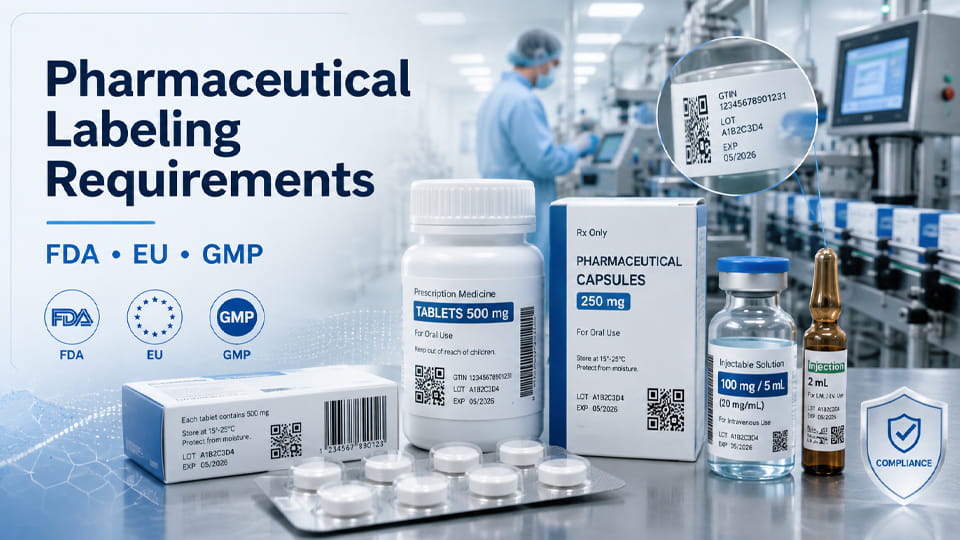
- وضع العلامات: يجب أن تحمل FPPs العلامات الكاملة (جرعة, تعليمات, انتهاء الصلاحية, إلخ.); تحتوي حاويات API على ملصقات فنية للاستخدام في التصنيع.
- أنظمة: تتطلب FPPs إثباتًا للسلامة/الفعالية لدى المرضى; يجب أن تستوفي واجهات برمجة التطبيقات مواصفات النقاء/الفعالية. يجب أن يكون كلاهما متوافقًا مع cGMP, لكن FPP يواجه أيضًا عقبات تنظيمية إضافية (التجارب السريرية, موافقة التسويق).
| منصة |
تعريف/مثال |
| واجهة برمجة التطبيقات (مادة دوائية) |
المركب الدوائي النشط في حد ذاته (على سبيل المثال. مسحوق الجنتاميسين). |
| المنتج الدوائي النهائي |
شكل الدواء (على سبيل المثال. حقن الجنتاميسين) تحتوي على API بالإضافة إلى السواغات. |
هكذا, واجهة برمجة التطبيقات هي العامل الطبي الأساسي, في حين أن المنتج النهائي هو كيفية صياغة هذا العامل وتعبئته للاستخدام. يضمن التصنيع الجيد أن "المنتج الدوائي النهائي يحتوي على API الصحيح بالقوة المناسبة". معدات التعبئة والتغليف مثل يضغط الكمبيوتر اللوحي أو حشو كبسولة ثم قم بتحويل مزيج API-سواغ إلى FPPs, والتي تكون مختومة في عبوات نفطة, زجاجات, أو حاويات أخرى.
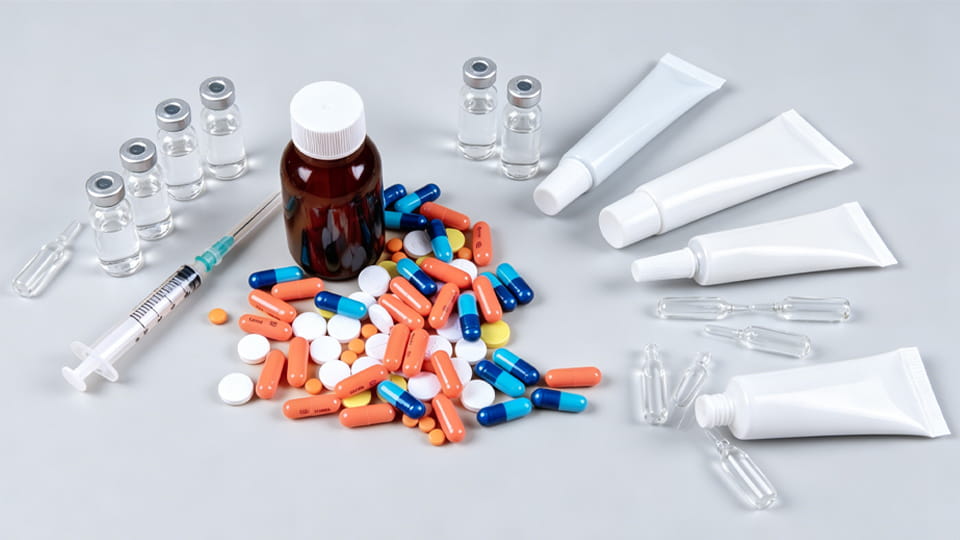
التحديات في تصنيع API
يواجه منتجو API العديد من التحديات الصناعية:
- الامتثال التنظيمي: يجب أن تستوفي واجهات برمجة التطبيقات قواعد GMP (على سبيل المثال. أنا س7, إرشادات إدارة الغذاء والدواء الأمريكية/EMA). قد تكون مواكبة اللوائح المتطورة في جميع أنحاء العالم أمرًا معقدًا. يمكن أن يؤدي عدم الامتثال إلى وقف الإنتاج أو يؤدي إلى فرض غرامات.
- ضبط الجودة: يعد الحفاظ على دفعة متسقة من الجودة بعد الدفعة أمرًا صعبًا. يمكن للاختلافات الصغيرة في المواد الخام أو ظروف التفاعل أن تخلق شوائب. هناك حاجة إلى اختبارات تحليلية قوية في كل خطوة.
- تكاليف إنتاج عالية: بناء وتشغيل مرافق GMP (غرف الأبحاث, المفاعلات, معالجة النفايات) مكلفة. وتشمل التكاليف استثمار رأس المال, الموظفين المدربين, والمعدات المتخصصة (على سبيل المثال. مرشحات لواجهات برمجة التطبيقات المعقمة). يعد خفض التكاليف مع الحفاظ على الجودة بمثابة صراع مستمر.
- مخاطر سلسلة التوريد: تعتمد العديد من واجهات برمجة التطبيقات (API) على الموردين في بلدان محددة (على سبيل المثال. المواد الخام من آسيا). القضايا الجيوسياسية, يمكن للكوارث الطبيعية أو الأوبئة أن تعطل الإمدادات. شهدت السنوات الأخيرة نقصًا في المواد الأولية الرئيسية, فرض قرارات مصادر عاجلة.
- HPAPIs (واجهات برمجة التطبيقات عالية الفعالية): مجموعة فرعية متزايدة من واجهات برمجة التطبيقات (على سبيل المثال. أدوية الأورام, الهرمونات) قوية للغاية. يمكن أن تكون سامة عند تناول جرعات منخفضة جدًا, تشكل مخاطر صحية على العمال. يتطلب تصنيع HPAPIs الاحتواء المتخصص: عوازل مغلقة, العادم المفلتر, بدلات واقية, إلخ. كما يلاحظ أحد مراجعة الصناعة, تمثل HPAPIs "تحديات في التعامل وتتطلب استثمارات كبيرة في الاحتواء المتخصص" لحماية الموظفين والبيئة. في الحقيقة, تقوم العديد من الشركات الآن ببناء مصانع HPAPI مخصصة بتكلفة "بالملايين تتجاوز مرافق GMP النموذجية". هناك حاجة إلى معدات مثل المفاعلات الآلية المضمنة والمطاحن المتخصصة.
- اللوائح البيئية: يمكن أن يؤدي إنتاج API إلى توليد نفايات خطرة واستخدام المذيبات. القوانين البيئية الأكثر صرامة تدفع الشركات المصنعة إلى اعتماد "الكيمياء الخضراء" (إعادة تدوير المذيبات, العمليات الحفزية) أو الاستثمار في معالجة النفايات, إضافة التعقيد والتكلفة.
- المنافسة في السوق: يؤدي انتهاء صلاحية براءات الاختراع إلى منافسة عامة, مما أدى إلى انخفاض أسعار API. لذلك يجب أن يتمتع صانعو واجهة برمجة التطبيقات (API) بالكفاءة ليظلوا مربحين. على العكس, تطوير جديد تعتبر واجهات برمجة التطبيقات للأدوية المبتكرة محفوفة بالمخاطر ومكلفة.
- تكلفة المواد الخام: أسعار متقلبة (على سبيل المثال. للكواشف الكيميائية أو الكواشف التكنولوجيا الحيوية) يمكن الضغط على الهوامش.
تعني هذه التحديات أن الشركات المصنعة لواجهة برمجة التطبيقات (API) تحتاج إلى الاستثمار بشكل مستمر في تحسين العمليات, امتثال, والمرونة. كما ينصح أحد المصادر, يعد تنفيذ أنظمة جودة قوية ومواكبة اللوائح من الاستراتيجيات الرئيسية. في ملخص: الحفاظ على الجودة العالية تحت ضغط التكلفة, وضمان السلامة (خاصة بالنسبة لـ HPAPIs), هي العقبات الرئيسية في إنتاج API الحديثة.
لماذا يعتبر التغليف مهمًا للأدوية المعتمدة على واجهة برمجة التطبيقات (API).
بعد أن يتم تصنيع واجهة برمجة التطبيقات (API) وصياغتها في دواء, التعبئة والتغليف يصبح أمرًا بالغ الأهمية لحماية جودة هذا المنتج وضمان سلامة المرضى. التغليف الوظيفي يحمي الدواء (وواجهة برمجة التطبيقات الخاصة به) من العوامل البيئية ويضمن تسليم الجرعة الصحيحة. وتشمل اعتبارات التعبئة والتغليف الرئيسية:
- حماية الاستقرار: العديد من واجهات برمجة التطبيقات (والمنتجات الدوائية النهائية) حساسة ل رُطُوبَة, الأكسجين, ضوء, ودرجة الحرارة. على سبيل المثال, يمكن أن تتسبب الرطوبة في تحلل واجهات برمجة التطبيقات (APIs) أو إذابة الأجهزة اللوحية قبل الأوان. لمكافحة هذا, غالبًا ما تستخدم العبوات الفقاعية أفلامًا عالية الحاجز. حزم نفطة توفير حماية جرعة الوحدة: كل قرص/كبسولة مغلقة في جيبها الخاص, حمايته من الرطوبة والتلوث. زجاجة (قارورة) التعبئة والتغليف الاستخدامات المجففات وزجاجات غير شفافة أو كهرمانية لمنع الرطوبة والضوء. باختصار, تحافظ الحاوية والمواد المناسبة على فعالية API حتى الاستخدام.
- منع التلوث: مختوم, العبث البديهي يضمن بقاء الدواء معقمًا أو غير ملوث. لواجهات برمجة التطبيقات القابلة للحقن, يتم استخدام قوارير معقمة. حتى بالنسبة للحبوب, يجب إغلاق البثور والزجاجات لمنع العبث بها.
- الجرعات الدقيقة: يمكن تطبيق البثور وحزم الجرعات جرعات الوحدة (قرص واحد لكل تجويف). غالبًا ما تحتوي الزجاجات على أغطية مقاومة للطفل (المتطلبات التنظيمية). آلات تعبئة/تغطية دقيقة (مثل خطوط تعبئة الزجاجات الخاصة بشركة Jinlu) يضمن العد الصحيح والإغلاق الآمن. يمكن أن تؤدي الحبوب الخاطئة أو القبعات السائبة إلى الأسفل- أو الجرعة الزائدة.
- امتثال & معلومة: توفر العبوة العلامات ومعلومات المريض (تعليمات, تاريخ انتهاء الصلاحية). تطبق آلات وضع العلامات ملصقات دقيقة بسرعة. تساعد العلامات الواضحة المرضى على تناول الأدوية بشكل صحيح.
- الامتثال التنظيمي: يتم تنظيم التعبئة والتغليف نفسها (مواد من الدرجة الصيدلانية, معايير النظافة). معدات للتقرحات, تعبئة, وضع العلامات, ويجب أن تتوافق العبوات الكرتونية مع تصميم النظافة GMP وأن يتم التحقق من صحتها. على سبيل المثال, يجب أن تقوم آلة تعبئة الفقاعة عالية السرعة بإغلاق الأفلام بشكل موثوق دون تسرب.
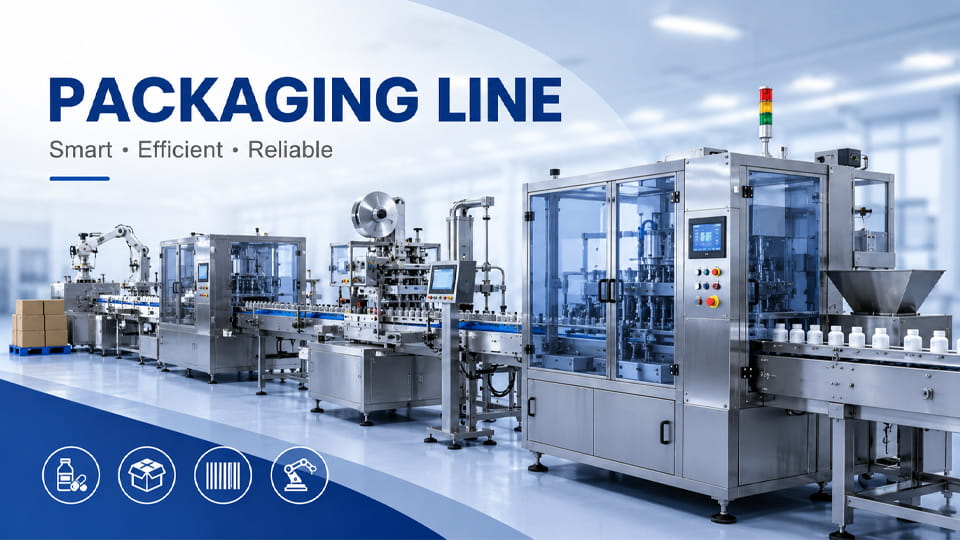
في الممارسة العملية, ماكينات تعبئة الأدوية روابط مباشرة إلى واجهات برمجة التطبيقات. على سبيل المثال:
- آلات التعبئة نفطة (مثل جينلو [دي بي بي-180 برو]) استمارة, يملأ, وختم الأقراص أو الكبسولات في بثور. كل نفطة تحمي API من الرطوبة/الهواء.
- خطوط تعبئة وتغطية الزجاجات (مثل خط تعبئة الزجاجات JL-16C) أتمتة تعبئة الأقراص في زجاجات, إدخال أكياس المجففة, السد وختم لهم. تعمل هذه على حماية API من الرطوبة وتأمين الجرعة.
- ماكينات صناعة الكرتون (صانع الكرتون جينلو) ثم قم بتعبئة البثور أو الزجاجات في صناديق تحمل علامات. تضيف الكراتين حاجزًا إضافيًا, تحتوي على تعليمات مطبوعة, وجرعات جماعية لسهولة التعامل معها.
- آلات وضع العلامات (مثل ملصق JL-TBJ-120) ضع ملصقات متوافقة على الزجاجات أو علب الكرتون, توفير هوية المخدرات وإمكانية التتبع.
من خلال دمج هذه الأنظمة, تضمن مصانع الأدوية أن API (العنصر النشط) يصل إلى المريض تماما كما هو مقصود. التعبئة والتغليف الصيدلانية الوظيفية (بثور, زجاجات, إغلاقات واضحة العبث) يعد أمرًا "حاسمًا" لحماية المنتجات من الرطوبة, الأكسجين, الضوء ولسلامة المرضى.
لشركات مثل التعبئة جينلو, وهذا يعني تقديم حلول تعبئة كاملة تتوافق مع احتياجات واجهات برمجة التطبيقات: على سبيل المثال, عبوات الفقاعات وخطوط العد محسنة للأقراص الحساسة للرطوبة, أو علب كرتونية مصممة للتعامل مع زجاجات الشراب أو القوارير. باختصار, آلات التعبئة والتغليف هي الحلقة الأخيرة في السلسلة الذي يحافظ على استقرار واجهات برمجة التطبيقات (APIs) وفعاليتها حتى نقطة الاستخدام.
خاتمة
ال واجهة برمجة التطبيقات (العنصر الصيدلاني النشط) هو المكون الأساسي الذي يعطي الدواء تأثيره العلاجي. من التصنيع ومراقبة الجودة إلى الامتثال التنظيمي والتعبئة النهائية, تعد حماية سلامة واجهة برمجة التطبيقات أمرًا ضروريًا لضمان سلامة المنتج, فعالية, والاتساق في جميع أنحاء سلسلة التوريد الصيدلانية.
كما أصبحت المنتجات الصيدلانية أكثر تقدما, تلعب معدات التعبئة والتغليف الموثوقة دورًا متزايد الأهمية في حماية الأدوية المعتمدة على API. سواء كنت تقوم بتغليف الأقراص, كبسولات, مساحيق, أو حبيبات, يساعد حل التغليف المناسب في الحفاظ على جودة المنتج مع تحسين كفاءة الإنتاج والامتثال.
أبحث عن معدات التعبئة والتغليف الصيدلانية موثوقة? توفر Jinlu Packing آلات تعبئة الفقاعة, خطوط العد, أنظمة تعبئة الزجاجات, آلات الكرتون, وكاملة حلول التعبئة والتغليف الجاهزة مصممة لتلبية احتياجات شركات تصنيع الأدوية الحديثة. اتصل بفريقنا لمناقشة مشروع التعبئة والتغليف الخاص بك المقبل.
الأسئلة الشائعة حول API في المستحضرات الصيدلانية
ماذا يعني API في المستحضرات الصيدلانية?
API تعني المكونات الصيدلانية النشطة. إنها المادة الدوائية الفعالة في الدواء الذي يقدم تأثيره العلاجي. على سبيل المثال, إن API الموجود في أقراص الأنفلونزا هو المركب الذي يحارب الفيروس أو يخفف الأعراض.
هل API هو نفس الدواء?
API هو جوهر الدواء, ولكنه في حد ذاته ليس الشكل النهائي للدواء. الدواء النهائي (حبة, كبسولة, حقن) ويسمى المنتج النهائي أو شكل الجرعة النهائية. يجب صياغة API مع السواغات (المكونات غير النشطة) ومعالجتها في جرعة قبل أن تصبح الدواء الفعلي الذي يتناوله المرضى.
ما هو الفرق بين API والسواغ?
APIs هي مواد فعالة تسبب التأثير الدوائي المطلوب. السواغات هي مكونات غير نشطة لا تؤثر على المرض ولكنها تساعد في تركيب الدواء (إضافة السائبة, استقرار, امتصاص المساعدات, إلخ.). باختصار: واجهات برمجة التطبيقات لها نشاط علاجي; سواغات لا.
كيف يتم تصنيع واجهات برمجة التطبيقات (APIs).?
يتضمن تصنيع API عمومًا التوليف الكيميائي (أو التخمير البيولوجي), تليها التطهير, بلورة, تجفيف, والطحن. يتم التحكم في كل خطوة بإحكام لضمان النقاء والفعالية. تتبع هذه العملية ممارسات التصنيع الجيدة (GMP). التدفق المبسط هو: المواد الخام → (كيميائية أو بيولوجية) التوليف ← التنقية ← التبلور ← التجفيف ← الطحن ← اختبار الجودة ← التغليف (كما هو موضح أعلاه).
لماذا تعتبر جودة API مهمة?
تعد جودة API أمرًا بالغ الأهمية لأنها تؤثر بشكل مباشر على سلامة الدواء وفعاليته. يمكن أن تسبب واجهات برمجة التطبيقات (APIs) غير النقية أو المتدهورة تأثيرات ضارة أو تقلل من فعاليتها. يتطلب المنظمون اختبارات جودة صارمة لواجهات برمجة التطبيقات (هوية, نقاء, فعالية) بموجب إرشادات GMP. تساعد واجهات برمجة التطبيقات عالية الجودة على منع سحب الأدوية والتأكد من أن كل جرعة تعمل على النحو المنشود.
ما هي أمثلة واجهات برمجة التطبيقات?
تتضمن أمثلة واجهات برمجة التطبيقات المواد الدوائية الشائعة مثل الباراسيتامول (أسِيتامينُوفين), ايبوبروفين, أموكسيسيلين, أتورفاستاتين, والميتفورمين. في علم الأحياء, ومن الأمثلة على ذلك الأنسولين, هيرسبتين (تراستوزوماب), الأجسام المضادة وحيدة النسيلة, واللقاحات. في الأساس, عادةً ما يكون اسم API هو اسم الدواء العام.
ما هي متطلبات GMP لتصنيع API?
GMP لواجهات برمجة التطبيقات (على سبيل المثال. أنا س7) يتطلب مرافق مؤهلة, العمليات التي تم التحقق من صحتها, الموظفين المدربين, والاختبار الشامل. يجب على الشركات المصنعة التحكم في التلوث المتبادل, توثيق جميع الخطوات, واختبار كل دفعة للنقاء والفعالية. وتشير منظمة الصحة العالمية إلى أن صرامة برنامج الرصد العالمي تتجه نحو خطوات واجهة برمجة التطبيقات النهائية, ضمان أن كل دفعة تلبي معايير الهوية والجودة.
لماذا يعتبر التغليف الدوائي مهمًا لواجهات برمجة التطبيقات?
التغليف المناسب يحمي واجهات برمجة التطبيقات في الدواء النهائي من العوامل البيئية. على سبيل المثال, العبوات الفقاعية وأنظمة الزجاجات تحافظ على الرطوبة والأكسجين بعيدًا, الحفاظ على استقرار API. معدات التعبئة والتغليف (آلات نفطة, الحشو, قبعات, ملصقات, عمال التعبئة والتغليف) يضمن تناول الدواء المحتوي على API بدقة, مختوم, والمسمى, الحفاظ على السلامة والامتثال.
ما هي HPAPIs وما أهميتها؟?
HPAPIs (واجهات برمجة التطبيقات عالية الفعالية) هي مركبات نشطة للغاية (في كثير من الأحيان السرطان أو الأدوية الهرمونية) والتي تكون سامة عند تناول جرعات منخفضة جدًا. أنها تتطلب معدات معالجة خاصة (العوازل, أنظمة مغلقة) لحماية العمال. الطلب على HPAPIs آخذ في الارتفاع مع العلاجات المستهدفة, لذا يتعين على الشركات المصنعة أن تستثمر في الاحتواء والخبرة.
كيف ترتبط واجهات برمجة التطبيقات (APIs) بأشكال الجرعات النهائية?
يتم دمج API مع السواغات ومعالجتها لتكوين الشكل النهائي للدواء. على سبيل المثال, يتم تصنيع الجهاز اللوحي عن طريق مزج API مع الحشو وضغطه. يقوم المنتج النهائي بعد ذلك بتسليم API للمريض بطريقة مريحة. ماكينات التعبئة والتغليف (من التعبئة إلى وضع العلامات) يربط إنتاج API بالدواء الجاهز للمستهلك.
مراجع:
1.Q7 إرشادات ممارسات التصنيع الجيدة للمكونات الصيدلانية الفعالة إرشادات للصناعة — نحن. إدارة الغذاء والدواء
2.إرشادات الجودة: المادة الفعالة — وكالة الأدوية الأوروبية
3.المكونات الصيدلانية الفعالة — من
4.TRS 957 – الملحق 2: ممارسات التصنيع الجيدة لمنظمة الصحة العالمية للمكونات الصيدلانية الفعالة (المواد المخدرات السائبة) - من