
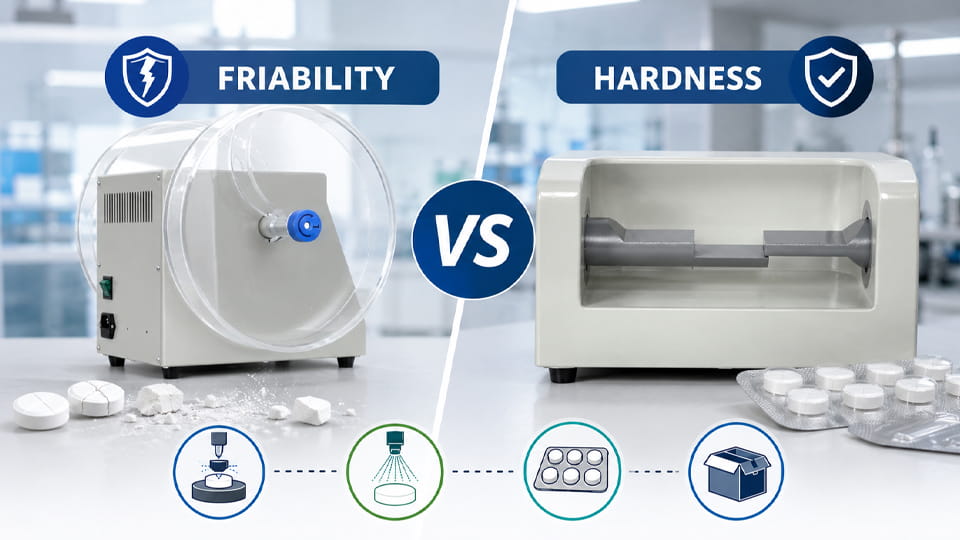
في تصنيع التابلت, صلابة و القابلية للتفتيت هما مقاييس الجودة الرئيسية. صلابة (قوة الكسر) يخبرنا بمقدار الضغط الذي يمكن أن يتحمله الجهاز اللوحي قبل أن ينكسر. تقيس القابلية للتفتيت مدى سهولة تشقق سطح الجهاز اللوحي أو تآكله عند سقوطه أو التعامل معه. بعبارة أخرى, الشيكات صلابة القوة الداخلية, في حين الشيكات الهشاشة متانة السطح. تؤثر كلتا الخاصيتين على المعالجة النهائية - بدءًا من كيفية ضغط الأقراص وحتى كيفية تغليفها وتعبئتها أخيرًا. توضح هذه المقالة سبب أهمية القابلية للتفتيت مقابل الصلابة, كيف يتم اختبار كل منهما, وكيف تؤثر على ضغط الأجهزة اللوحية, طلاء, وجودة التعبئة والتغليف في خطوط الإنتاج الحقيقية.
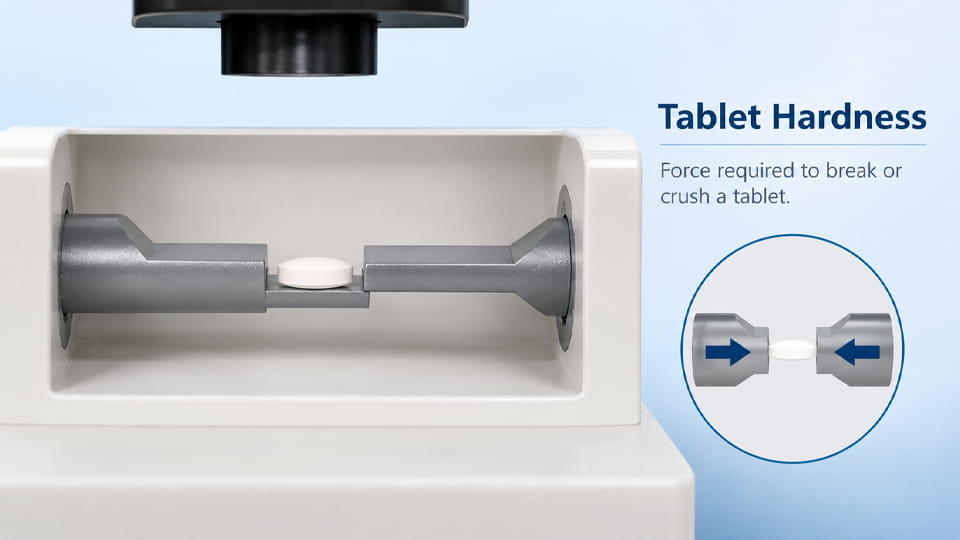
صلابة الجهاز اللوحي (من الناحية الفنية "قوة كسر الجهاز اللوحي") هي القوة اللازمة لكسر القرص عن طريق الضغط. في الممارسة العملية, يتم قياس الصلابة عن طريق وضع القرص بين سندانين أو لوحين وتطبيق القوة حتى ينكسر. أجهزة اختبار الصلابة الحديثة (يدوي أو رقمي) قياس القوة القصوى بالكيلوجرام أو النيوتن. قوة كسر الجهاز اللوحي أمر بالغ الأهمية ل ضبط الجودة: يجب أن يكون الجهاز اللوحي قويًا بما يكفي لتحمل التعامل معه, التعبئة والتغليف, والشحن دون كسر. الولايات المتحدة. وتحدد دساتير الأدوية الأوروبية طرقًا موحدة للصلابة (قوة الكسر) الاختبار. بعض الأدبيات الصناعية تفضل هذا المصطلح "قوة الكسر" على "الصلابة".,"نظرًا لأن كلمة "الصلابة" في علم المواد تعني عادةً مقاومة المسافة البادئة على السطح, بينما يقيس اختبار الأجهزة اللوحية قوة الضغط.
تتأثر صلابة القرص بمعلمات الصياغة والعملية. أعلى قوة الضغط ينتج عمومًا أقراصًا أكثر صلابة, بينما تؤثر عوامل الصياغة مثل المادة الرابطة ومواد التشحيم أيضًا على الصلابة. على سبيل المثال, زيادة الموثق (على سبيل المثال. حماية الأصناف النباتية أو HPMC) عادة ما يزيد من قوة الجهاز اللوحي, في حين أن الكثير من مواد التشحيم (ستيرات المغنيسيوم) يمكن أن يضعف الترابط بين الجسيمات. حجم الجهاز اللوحي, شكل, والمسامية تلعب أيضًا أدوارًا: غالبًا ما تتطلب الأقراص السميكة أو الأكثر كثافة قوة أكبر للكسر.
صلابة منخفضة جدًا (تحت الضغط) يسبب أقراص ل كسر, تنهار أو رقاقة بسهولة. صلابة عالية جدًا, لكن, يمكن أن يكون لها سلبيات: قد تكون أقراص صلبة جدًا تتفكك ببطء أو تذوب ببطء شديد في الجسم. يمكن أن يكون الجهاز اللوحي شديد الصلابة أيضًا من الصعب على المرضى ابتلاعها. هكذا, يجب أن يوازن تصميم الجهاز اللوحي بين القوة الميكانيكية والأداء. في الممارسة العملية, تحدد الشركات المصنعة نطاق القبول (على سبيل المثال. 4-10 كجم أو نحو ذلك) لكسر القوة أثناء الإنتاج.
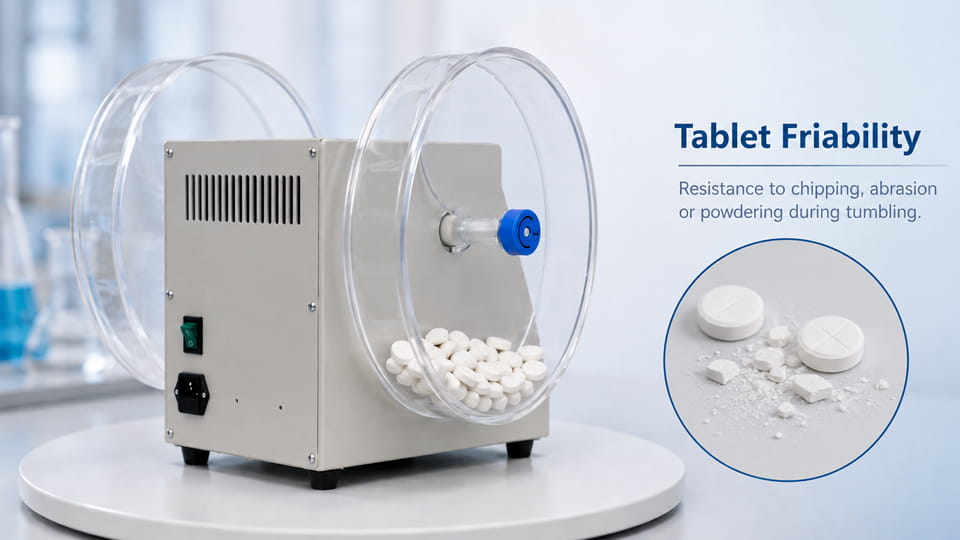
قابلية تفتيت القرص هي مقياس لمدى سهولة تفتت القرص أو فقدان كتلته عند تعرضه لضغط ميكانيكي, مثل التعثر أو التأثير. اختبار القابلية للتفتيت يتضمن وضع أقراص منزوعة الغبار في أسطوانة دوارة (روش قابلة للتفتيت), عادة عند 25 دورة في الدقيقة, وإخضاعهم لها 100 الثورات. تقوم كل ثورة بقلب الأقراص وإسقاطها على ارتفاع ثابت لمحاكاة الضغط أثناء المناولة والنقل. بعد الاختبار, يتم جمع الأقراص, ويتم إزالة أي غبار سائب. يتم وزن الأقراص قبل وبعد تحديد نسبة فقدان الوزن, الذي يقال بأنه القابلية للتفتيت. على سبيل المثال, ال جامعة جنوب المحيط الهادئ <1216> ودكتوراه. يورو. تصف الدراسات هذا الإجراء.
كلما انخفضت القابلية للتفتيت, كلما زادت مقاومة الجهاز اللوحي للتآكل أو التقطيع. حد قابلية التفتيت مقبول بشكل تقليدي .01.0% فقدان الوزن. الأجهزة اللوحية التي تفقد أكثر من هذا الحد, أو التي تتشقق أو تنكسر بشكل واضح أثناء الاختبار, فشل في معيار التفتيت. يعالج تفتيت الجهاز اللوحي على وجه التحديد متانة ما بعد الضغط – يحاكي أقراص الضغط الجسدي التي تواجهها في طلاء المقالي, الناقلات, حشو الزجاجة, خطوط نفطة, والتعبئة. تظهر القابلية العالية للتفتيت على شكل رقائق على حواف الجهاز اللوحي, الشقوق المرئية, أو الغبار الزائد. وبالتالي فإن القابلية للتفتيت هي سمة جودة ترتبط ارتباطًا وثيقًا بمتانة التغليف والتعامل.
تبدو هذه الاختبارات متشابهة ولكنها تستكشف ضغوطًا مختلفة. بعبارات بسيطة:
تخيل قرصين: تم اختباره في 20 كيلوP (كيلوبوندس) من قوة السحق (صعب جدا) وواحد عند 5 كيلوP (ناعم). قد تعتقد أن 20 قرص kP غير قابل للتدمير, ولكن إذا كانت حوافها هشة, ولا يزال من الممكن أن تفقد كتلتها 2-3% في أسطوانة قابلة للتفتيت - وهو ضعف الحد المقبول. في الممارسة العملية, يمكن أن يكون الجهاز اللوحي "صعبة للغاية - وتتطلب قوة كبيرة لسحقها - ولكنها هشة بشكل مدهش.". وهذا يوضح السبب كلاهما هناك حاجة إلى اختبارات. ويلخص الجدول أدناه الفرق:
باختصار: صلابة تقاوم سحق, بينما يقاوم الهشاشة التقطيع. يوازن تصميم الجهاز اللوحي القوي بين الاثنين: يجب أن يتحمل الضغط والآلات دون غبار, ومع ذلك لا يزال يذوب بشكل صحيح.
| المعلمة | صلابة الجهاز اللوحي (قوة الكسر) | قابلية تفتيت الجهاز اللوحي |
|---|---|---|
| ما يقيسه | المقاومة لقوة تطبيقية واحدة (الضغط أو التوتر) تسبب الكسر | مقاومة التآكل المتكرر, تأثير, والتقطيع (فقدان الوزن عندما هبط) |
| نوع الإجهاد النموذجي | حمل ضغط كبير أو حمل انثناء ثلاثي النقاط لمرة واحدة حتى الفشل | تعثرات / سقوطات متعددة (عادة 100 التناوب) محاكاة التعامل مع الصدمات |
| الغرض الرئيسي | تقييم قوة كسر الجهاز اللوحي (قوة الصياغة تحت الضغط) | تقييم المتانة أثناء النقل, طلاء, والتعبئة |
| مخرجات الاختبار | كسر قيمة القوة (على سبيل المثال. في نيوتن أو kp) | نسبة فقدان الوزن بعد الاختبار (والفحص البصري للضرر) |
| رابط الجودة | يضبط معلمات الضغط; يضمن عدم تشقق الأجهزة اللوحية تحت القوة | يضبط إعدادات خط التعبئة والتغليف; يضمن بقاء الأجهزة اللوحية على قيد الحياة أثناء الطلاء/النقل |
| يمكن استبداله باختبار آخر? | لا. ضغوط مختلفة; يحتاج إلى قياس خاص به. | لا. مبررات اختبار مختلفة; لا يمكن أن يحل محل اختبار الصلابة. |
والجدول أعلاه يسلط الضوء على ذلك تقيس الصلابة والهشاشة جوانب مختلفة. صلابة (قوة الكسر) هو اختبار الإجهاد لمرة واحدة, في حين كررت اختبارات القابلية للتفتيت الصدمات ذات المستوى المنخفض. الأهم من ذلك, يمكن أن يكون الجهاز اللوحي صعبة ولكنها هشة أو العكس. على سبيل المثال, قد لا يزال من الممكن استخدام قرص ذو قوة كسر عالية فشل في اختبار القابلية للتفتيت إذا كانت حوافها تتشقق بسهولة أو إذا كان الترابط الداخلي غير متساوٍ. باختصار, إن الصلابة والقابلية للتفتيت مرتبطان ولكنهما غير قابلين للتبديل - ويجب تقييم كليهما.
يطبق اختبار صلابة القرص قوة خاضعة للتحكم على قرص واحد حتى ينكسر. في اختبار نموذجي, اثنين من السندان المسطحة (لوحة) أمسك الكمبيوتر اللوحي - واحد ثابت, واحد يتحرك. يسجل المختبر القوة عند الاستراحة. اختبارات يدوية (الربيع مثل مونسانتو) والاختبارات الرقمية الحديثة (مع خلايا الحمل والقراءات الإلكترونية) شائعة. توفر الاختبارات الإلكترونية دقة, قياسات قابلة للتكرار وغالبًا ما تقيس القطر والسمك في وقت واحد. أثناء الاختبار, عوامل مثل اتجاه الجهاز اللوحي (للأقراص ذات الوجه المسطح) أو تركيبات خاصة (لأشكال غير عادية) يتم التحكم فيها بعناية لضمان نتائج متسقة. تبلغ قوة الكسر المقاسة مراقبة الجودة: يتم قبول الدفعات فقط إذا كانت الصلابة تقع ضمن النطاق المحدد لتلك التركيبة.
أ هش أو يقوم جهاز اختبار قابلية التفتيت بوضع عينة من الأقراص في أسطوانة شفافة لمحاكاة عملية المناولة. الخطوات الرئيسية (لكل USP/Ph.Eur.) نكون: 1. إزالة الغبار ووزن عينة الكمبيوتر اللوحي (على سبيل المثال. 6.5 ز أو 10 أقراص). 2. ضع الأقراص في أسطوانة دوارة مع وجود لسان رفع بداخلها. 3. تدوير بسرعة 25 دورة في الدقيقة ل 100 الثورات (4 دقائق). 4. قم بإزالة الأجهزة اللوحية, إزالة الغبار السائب, إعادة وزنها. 5. احسب % فقدان الوزن: .
لو أي قرص متصدع أو مكسور بعد تعثر, تفشل الدفعة على الفور. خلاف ذلك, إذا كان فقدان الوزن الكلي >1%, يتم تكرار الاختبار في ثلاث نسخ ويتم استخدام المتوسط. في الممارسة العملية, تظهر الأقراص المارة الحد الأدنى من الرقائق أو الغبار. نتائج القابلية للتفتيت توجه القرارات قبل الطلاء والتعبئة: الخسارة العالية تطالب بإعادة الصياغة أو تغيير العملية.
تفترض طرق الاختبار أقراصًا غير مغلفة. يمكن أيضًا اختبار الأقراص المغلفة, لكنها غالبًا ما تكون أقل قابلية للتفتيت بسبب القشرة. على العكس, قد تتطلب الأقراص الفوارة أو شديدة المسامية تحكمًا خاصًا في الرطوبة أثناء الاختبار. شكل وحجم التابلت تؤثر على السلوك المتقلب; للأشكال غير المنتظمة, يمكن إمالة قاعدة الأسطوانة ~ 10 درجات لضمان حركة عشوائية. في جميع الحالات, معايير مجمعة (جامعة جنوب المحيط الهادئ, دكتوراه يورو.) تحديد الجهاز والإجراءات. تقوم الممارسات المعملية الحديثة أيضًا بفحص معايرة أجهزة اختبار الصلابة والقابلية للتفتيت وتشغيل مراقبة الجودة باستخدام الأجهزة اللوحية المرجعية القياسية بانتظام.
تعتمد كلا الخاصيتين على الصياغة والمعالجة. وتشمل العوامل الرئيسية نوع/تركيز الموثق, قوة الضغط, وشكل التابلت. على سبيل المثال:
لأن الكثير من المتغيرات مهمة, تحدد الشركات المصنعة النطاقات المستهدفة بدلاً من القيم الفردية. هنالك لا توجد صلابة عالمية "مثالية".; ذلك يعتمد على المنتج شكل جرعة, الاستخدام المقصود, والتعبئة. فيتامين قابل للمضغ و أ مغلفة بالفيلم قد يكون لمسكنات الألم مستويات صلابة مثالية مختلفة جدًا, حتى لو كانوا يزنون نفس الشيء.
تحدد مرحلة الضغط على مكبس الأقراص الصلابة إلى حد كبير. في الممارسة العملية:

باختصار, يعد تحسين معلمات الضغط والتركيبات أمرًا ضروريًا. كما يشير دليل استكشاف الأخطاء وإصلاحها الخاص بـ JinluPacking, "إذا كانت الأقراص ناعمة جدًا, قد يرققون, استراحة, أو تظهر قابلية عالية للتفتيت. إذا كان من الصعب جدا, قد يقاومون الطلاء أو يذوبون ببطء.. عن طريق ضبط قوة الضغط ومحتوى الموثق, يمكن للمصنعين استهداف الأجهزة اللوحية التي تتحمل ضغوط العملية دون تجاوز الصلابة.
طلاء الكمبيوتر اللوحي (فيلم أو طلاء السكر) حساس جدًا لقوة الجهاز اللوحي الأساسي. أثناء الطلاء, تُوضع الأقراص في وعاء دوار ويُرش المحلول عليها. يطبق هذا الهبوط الضغط الميكانيكي والرطوبة. وإليك كيفية تأثير الصلابة والقابلية للتفتيت:
بمجرد ضغط الأقراص وتغليفها, ينتقلون إلى خطوط التغليف - آلات نفطة, عمال التعبئة والتغليف, أو خطوط تعبئة الزجاجات. تعد قوة الجهاز اللوحي أمرًا بالغ الأهمية هنا أيضًا:

لتحقيق أقراص عالية الجودة تلبي متطلبات الطلاء والتعبئة والتغليف, ضع هذه النقاط في الاعتبار:
في الممارسة العملية, الهدف هو الكمبيوتر اللوحي "صعب بما فيه الكفاية للبقاء على قيد الحياة عند التعامل معه ولكن ليس من الصعب أن يفشل في اختبارات الذوبان.". العديد من الشركات المصنعة ترسم قوة الضغط, صلابة, والقابلية للتفتيت في الوقت الفعلي لاكتشاف الاتجاهات مبكرًا (على سبيل المثال, قد يشير الانجراف المفاجئ في الصلابة إلى حدوث تغيير في تغذية المسحوق أو الرطوبة).
في ملخص, الصلابة والهشاشة وجهان لعملة واحدة لجودة الجهاز اللوحي. تضمن الصلابة القوة الأساسية للجهاز اللوحي تحت الضغط, بينما تقيس القابلية للتفتيت متانة السطح ضد التآكل. متوازن بشكل صحيح, فهي تضمن مرور الأقراص عبر أواني الطلاء وآلات التعبئة والتغليف دون تقطيع أو كسر. الأجهزة اللوحية شديدة النعومة ستتسبب في حدوث غبار وعيوب في الطلاء, في حين أن الأقراص الصلبة جدًا يمكن أن تقاوم حلول الطلاء أو تؤدي إلى تجربة سيئة للمريض.
لمصنعي الأدوية ومهندسي التعبئة والتغليف, يعد الاهتمام بكلا الاختبارين أمرًا بالغ الأهمية. تأكد من دمج اختبار القابلية للتفتيت والصلابة في نقاط فحص الجودة الخاصة بك, وضبط الصياغة/الضغط حسب الحاجة. من خلال القيام بذلك, ستقلل من حالات الرفض المكلفة وتضمن التشغيل السلس لجهازك خطوط التعبئة نفطة, آلات الكرتون, أو خطوط تعبئة.
جاهز لتحسين خط إنتاج وتعبئة الأجهزة اللوحية? يتمتع فريق JinluPacking بعقود من الخبرة في مجال ضغط وتعبئة الأدوية. سواء كنت في حاجة الى الصحافة اللوحية عالية السرعة, مزيل الغبار, أو حل تغليف نفطة مخصص, يمكننا المساعدة في ضمان بقاء الأجهزة اللوحية الخاصة بك سليمة من الضغط إلى المريض. اتصل بنا لمناقشة كيف يمكن لآلاتنا وخبراتنا أن تدعم أهداف الإنتاج الخاصة بك.
لا. صلابة (قوة الكسر) يقيس القوة اللازمة لكسر قرص تحت حمل واحد. تقيس قابلية التفتيت متانة الجهاز اللوحي في ظل التآكل المتكرر, أعرب كما % فقدان الوزن في اختبار الطبل. يقومون بتقييم خصائص مختلفة.
نعم. قد يكون للجهاز اللوحي قوة كسر عالية (صعب) ولكن لا تزال تتشقق عند الحواف إذا كان ترابط الجسيمات ضعيفًا. يمكن لمثل هذا الجهاز اللوحي أن ينكسر بسهولة عند سقوطه, تسفر عن قابلية عالية للتفتيت. على العكس, يمكن للقرص ذو الصلابة المعتدلة أن يجتاز الهشاشة إذا كان قوي الشكل. وبالتالي هناك حاجة إلى كلا الاختبارين.
معيار الصناعة الشائع هو .01.0% فقدان الوزن بعد اختبار القابلية للتفتيت. تحدد العديد من الشركات المصنعة نسبة 0.5-1% كمواصفات للأقراص العادية. بعض المنتجات (على سبيل المثال. أقراص كبيرة جدًا أو غير عادية) قد يكون لها معايير خاصة, لكن 1% هو المبدأ التوجيهي النموذجي.
يمكن أن تؤثر الصلابة بشكل كبير على الذوبان. قد يتفكك الجهاز اللوحي شديد الصلابة ببطء, تأخير إطلاق الدواء. أظهرت الاختبارات التنظيمية أن الأقراص شديدة الصلابة (مضغوطة بقوى عالية) يمكن أن يقع خارج مواصفات الذوبان لأن مصفوفة الجهاز اللوحي ضيقة جدًا. على العكس, قد يتفكك القرص الناعم جدًا بسرعة ولكنه قد ينكسر قبل الأوان. تضمن الصلابة المثالية التفكك في الوقت المناسب دون الكسر.
تشمل الأسباب الشائعة عدم كفاية الموثق, رطوبة التحبيب غير لائق, ضغط غير كاف, مواد التشحيم الزائدة, والسواغات الهشة. على سبيل المثال, تميل الأقراص التي تحتوي على كمية قليلة جدًا من المواد الرابطة أو الحبيبات شديدة الجفاف إلى أن تكون أكثر قابلية للتفتيت. الحل النموذجي هو تعديل الصياغة (على سبيل المثال. رابط أكثر فعالية) أو تحسين عملية التحبيب والتجفيف الرطب.
ليس دائما. يزيد الضغط العالي بشكل عام من الصلابة ويمكن أن يقلل من القابلية للتفتيت في البداية, ولكن لها حدود. القوة المفرطة قد تؤدي إلى السد, التصفيح أو الذوبان المتغير. أيضًا, إذا كانت الصيغة معيبة (على سبيل المثال. ربط ضعيف), إن مجرد زيادة الضغط قد لا يحل مشكلة القابلية للتفتيت. من الأفضل تحسين الصياغة والقوة معًا.
لأنها تعالج الضغوط الميكانيكية المختلفة. تضمن الصلابة أن الجهاز اللوحي يمكنه تحمل قوة سحق واحدة (مهم للضغط والقطع), بينما تضمن القابلية للتفتيت قدرتها على النجاة من الضربات المتكررة (مهم للطلاء, التعامل مع, والتعبئة). فقط من خلال تقييم كليهما يمكن للمصنعين أن يكونوا واثقين من أن الأجهزة اللوحية ستحافظ على النزاهة خلال سلسلة الإنتاج والتسليم بأكملها.
تصميم المعدات أمر بالغ الأهمية. على سبيل المثال, تستخدم ماكينات التغليف الكرتوني عالية السرعة أجهزة استشعار ومزالق مبطنة لإبطاء الأقراص بلطف (منع الكسر عند التأثير). تعمل الناقلات الفراغية ذات الانحناءات الناعمة على تقليل الصدمات. غالبًا ما تحتوي خطوط التعبئة على أنابيب مرنة وانتقالات بطيئة. تعمل أنظمة التعامل مع الأجهزة اللوحية المصممة جيدًا على تقليل الاهتزاز, قطرات, والاحتكاك, خفض الكسر وتوليد الغبار مباشرة.
مراجع:
1.اختبار صلابة الجهاز اللوحي —— ويكيبيديا
2.أنا 4 ملحق QB 9 تفتيت الجهاز اللوحي – التوجيه العلمي —— وكالة الأدوية الأوروبية
3.ملحق Q4B 9: الفصل العام لقابلية تفتيت الأجهزة اللوحية -- نحن. إدارة الغذاء والدواء
4.الاعتماد على القابلية للتفتيت على الخواص الميكانيكية للقرص والنهج التنبؤي للمخاليط الثنائية —— الخبراء @ مينيسوتا
5.تأثير الرطوبة وقوة السحق على قابلية تفتيت الأقراص والذوبان في المختبر —— مكتبة وايلي على الإنترنت