

Viên nang chứa đầy chất lỏng (còn được gọi là viên nang cứng chứa đầy chất lỏng hoặc LFHC) về cơ bản là viên nang vỏ cứng hai mảnh (gelatin hoặc HPMC) đã được làm đầy với công thức gốc dầu hoặc chất lỏng. Sau khi điền, nắp và thân được bịt kín – thường bằng một dải gelatin mỏng – để tránh rò rỉ. Nói cách khác, LFHC là một dạng lai: vỏ viên nang rắn chứa một lượng chất lỏng bên trong. Ngược lại, viên nang mềm được thực hiện trong một bước như một đơn, vỏ một mảnh linh hoạt đã chứa đầy chất lỏng hoặc bán rắn. Viên nang mềm sử dụng gelatin dẻo (bằng glyxerin hoặc sorbitol) để làm mềm, màng bịt kín. Chúng thường được sử dụng cho các thành phần nhiều dầu hoặc dễ hòa tan – ví dụ:, dầu cá hoặc vitamin tan trong chất béo (D, E, K) hầu như luôn có dạng viên nang mềm.
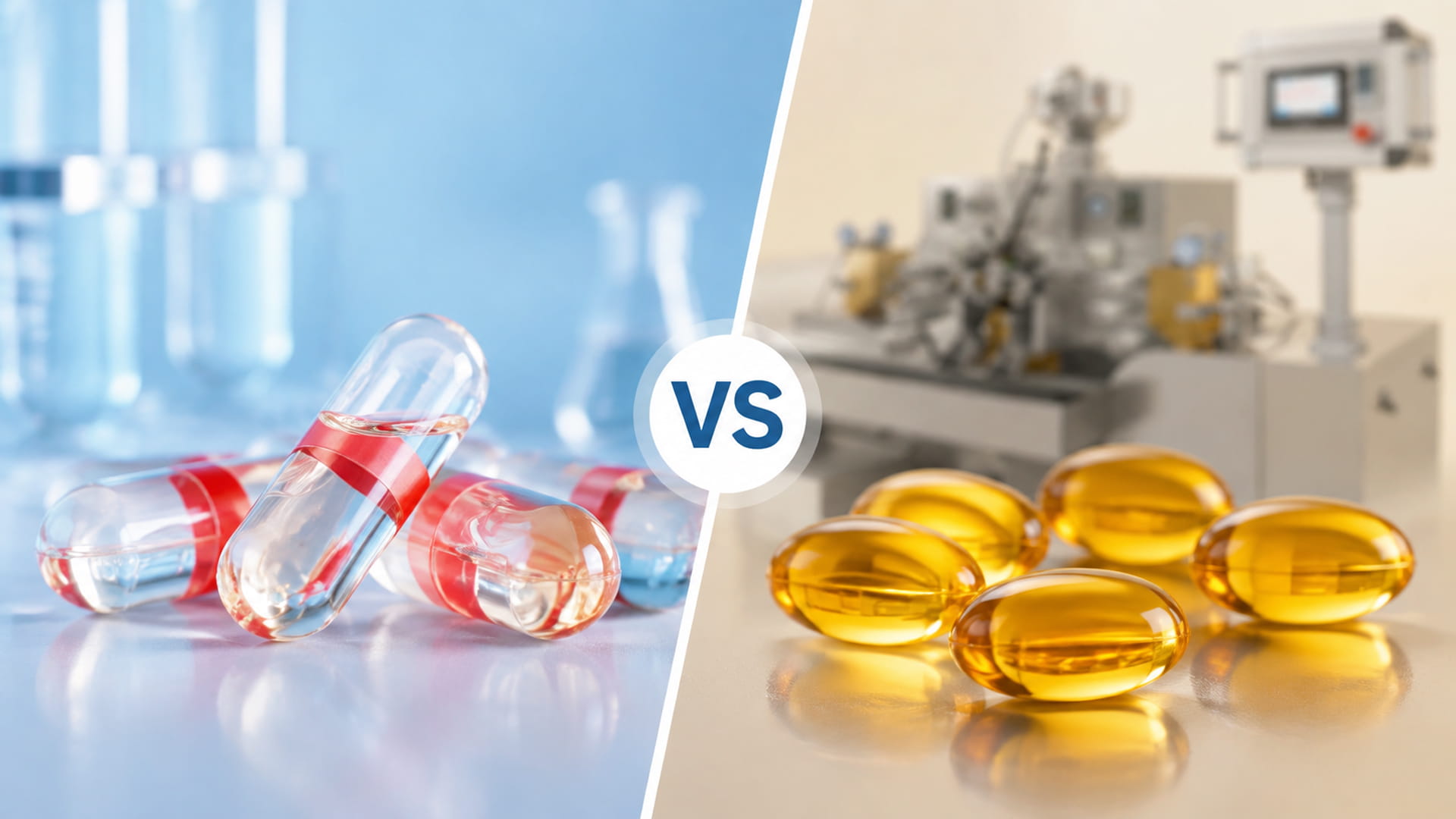
Về mặt thực tế, cả hai dạng đều có thể cung cấp thuốc dạng lỏng hoặc chất bổ sung, nhưng của họ thiết kế và sản xuất khác biệt đáng kể. Sự khác biệt chính bao gồm cấu trúc viên nang, vật liệu vỏ, điền tương thích, và các bước sản xuất. Hiểu được những điều này giúp các nhà sản xuất dược phẩm lựa chọn được dạng phù hợp cho sản phẩm của mình. Dưới đây chúng tôi chia nhỏ sự khác biệt và lợi ích chính của từng.
Viên nang cứng chứa đầy chất lỏng (LFHC) là tiêu chuẩn vỏ viên nang hai mảnh (nắp và thân) chứa đầy công thức dạng lỏng hoặc gốc dầu sau khi vỏ được tạo ra. Vỏ có thể được làm từ gelatin hoặc HPMC từ thực vật (cho viên nang chay). Đang sản xuất, một lượng chất lỏng chính xác (thường là dung dịch dầu, hỗn hợp huyền phù hoặc tự nhũ hóa) được tiêm vào thân viên nang mở, sau đó đậy nắp lại và đậy kín. Phương pháp niêm phong đặc biệt đảm bảo không có gì rò rỉ (Ví dụ, dán một dải gelatin mỏng quanh khớp, được gọi là "niêm phong ban nhạc").
Cách tiếp cận hai phần này cho phép LFHC kết hợp lợi ích của chất lỏng và viên nang. Bạn nhận được chất lỏng hòa tan giải phóng nhanh và có sinh khả dụng cao, với sự dễ dàng nuốt và che giấu hương vị mà viên nang mang lại. Vỏ LFHC được sản xuất sẵn, vì vậy không cần phải nấu chảy các tấm gelatin tốn kém trong quá trình đổ đầy. Ví dụ, Máy làm đầy viên nang lỏng NJY-300C của JinLuPacking tự động đổ chất lỏng vào các vỏ cứng cỡ # 00–#4 và dán chúng lại thành một dây chuyền nhanh chóng.
Nhân vật: Viên nang cứng chứa đầy chất lỏng (mỗi cái có một dải màu bịt kín khớp nắp-thân). Những viên nang hai mảnh này chứa dầu hoặc chất lỏng bên trong vỏ gelatin/HPMC rắn.
Viên nang mềm (thường chỉ được gọi là viên nang mềm) là một miếng, viên nang bọc gel chứa chất lỏng hoặc bán rắn. Chúng được chế tạo trên máy đóng gói khuôn quay tạo thành, lấp đầy, và niêm phong từng viên nang chỉ trong một bước. Trong máy, hai dải gelatin dẻo (gelatin trộn với glycerin hoặc sorbitol) được đúc và ép lại với nhau trong khi một dòng chất lỏng đã đo được bơm vào giữa chúng. Mỗi viên nang được cắt và niêm phong đồng thời bằng khuôn gia nhiệt. Kết quả là mượt mà, hình bầu dục, viên nang kín được sử dụng phổ biến để bổ sung dầu (hãy nghĩ đến viên vitamin E hoặc omega-3).
Softgels lý tưởng cho các loại dầu và chất lỏng nhạy cảm. Bởi vì toàn bộ viên nang được niêm phong kín khi nó được hình thành, không cần bước niêm phong riêng biệt. Điều này làm cho chúng có khả năng bảo vệ rất cao trước oxy và độ ẩm.. Nhiều dầu cá, vitamin D/K, và các sản phẩm dầu thực vật sử dụng viên nang mềm vì sự tiện lợi và ổn định khi sử dụng. Trong thực tế, các cuộc khảo sát cho thấy chất bổ sung Omega-3 và vitamin tan trong chất béo thường được cung cấp dưới dạng viên nang mềm.
Nhân vật: Viên nang mềm màu hổ phách trên một muỗng cà phê bên cạnh chai thuốc (phổ biến cho dầu cá hoặc vitamin D).
| Tính năng | Viên nang chứa đầy chất lỏng (LFHC) | Viên nang mềm |
| Kết cấu | hai mảnh (nắp & thân hình) | Viên nang kín một mảnh |
| Chất liệu vỏ | Gelatin hoặc HPMC (lựa chọn ăn chay) | Gelatin dẻo hóa (Gelatin + chất làm dẻo) |
| Phương pháp sản xuất | Điền rồi đóng dấu (trên viên nang + băng nhóm) | Đóng gói khuôn quay (điền-đóng dấu) |
| Chi phí thiết bị | Thấp hơn (chất độn viên nang tiêu chuẩn) | Cao hơn (dòng softgel chuyên dụng) |
| Tỉ lệ (MOQ) | Mức tối thiểu thấp (phù hợp với lô nhỏ) | Thường yêu cầu âm lượng cao hơn |
| Tùy chọn ăn chay | Đúng (Vỏ HPMC có sẵn) | Giới hạn (bây giờ là một số lựa chọn về tinh bột/rau) |
| Niêm phong | Niêm phong cơ khí (dải / hợp nhất) | Con dấu tích hợp (được đóng kín bằng khuôn) |
| Rủi ro rò rỉ | Thấp (một khi được niêm phong đúng cách) | Rất thấp (không có đường may để rò rỉ) |
| Tính linh hoạt sản xuất | Cao (có thể trộn bột hoặc viên với chất lỏng) | Trung bình (chỉ có chất lỏng/bột nhão lấp đầy) |
| Mở rộng quy mô | Dễ (sử dụng máy viên nang tiêu chuẩn) | Phức tạp hơn (sấy chuyên dụng, vân vân.) |
Cả hai dạng đều cung cấp hoạt chất dạng lỏng hoặc gốc dầu và có thể mang lại sinh khả dụng cao bằng cách tạo ra thuốc hòa tan trong lipid. Tuy nhiên, LFHC sử dụng các dòng đơn giản hơn (vỏ được làm sẵn) trong khi viên nang mềm yêu cầu các bước nấu và sấy khô đối với dải gelatin.
Bài học chính: Máy làm viên nang mềm hình thức, đổ đầy, và cắt trong một bước (cần sấy khô), trong khi dây chuyền LFHC lấp đầy các vỏ làm sẵn và bịt kín chúng (bỏ qua giai đoạn bảo dưỡng kéo dài). Như một ghi chú hướng dẫn ngành, “Gel mềm chữa khỏi sau 2-4 ngày sử dụng. LFHC không có bước xử lý… tổn thất hàng loạt do lỗi nạp sẽ cao hơn đối với viên nang mềm”.
Viên nang chứa đầy chất lỏng mang lại một số lợi thế về sản xuất và sản phẩm:
Những ưu điểm này làm cho LFHC trở nên hấp dẫn ở cả thị trường dược phẩm và dinh dưỡng.
Softgels cũng có những lợi ích mạnh mẽ khiến chúng trở nên phổ biến trong nhiều chất bổ sung:
Các ngành sử dụng viên nang mềm bao gồm dược phẩm (thuốc gốc dầu), dinh dưỡng (thực phẩm bổ sung), Mỹ phẩm (dầu làm đẹp dinh dưỡng), và thậm chí cả các sản phẩm thú y. Ví dụ, viên nang mềm thuần chay hoặc halal làm từ tinh bột/gellan đang gia tăng.
| Nguyên liệu / Đổ đầy | Viên nang chứa đầy chất lỏng | Viên nang mềm |
| Dầu cá / Omega-3 | ✓ Phù hợp | ✓ Phù hợp |
| CBD hoặc dầu cần sa | ✓ Phù hợp | ✓ Phù hợp |
| tinh bột nghệ (Chiết xuất nghệ) | ✓ Phù hợp | ✓ Phù hợp |
| Vitamin D (dầu) | ✓ Phù hợp | ✓ Phù hợp |
| Chiết xuất chất lỏng thảo dược | ✓ Phù hợp | ✓ Phù hợp |
| Probiotic | ✓ (nếu lơ lửng trong dầu) | KHÔNG (độ ẩm giết chết vi khuẩn) |
| API nhạy cảm với độ ẩm | ✓ (đặc biệt là trong viên nang HPMC) | ✗ (vỏ độ ẩm cao) |
Cả hai loại viên nang đều xử lý tốt các hoạt chất tan trong dầu. Dầu dinh dưỡng thông thường (dầu cá, vitamin D, chiết xuất thảo dược, CBD, vân vân.) được cung cấp hiệu quả bởi LFHC hoặc viên nang mềm.
Đáng chú ý, thành phần khô hoặc nhạy cảm với độ ẩm tốt hơn trong viên nang cứng chứa đầy chất lỏng. Ví dụ, chế phẩm sinh học hoặc API nhạy cảm với nước là không thực tế trong viên nang mềm. Ngược lại, Viên nang cứng HPMC có thể chứa hỗn dịch probiotic không chứa nước hoặc các công thức rất khô, vì HPMC có độ ẩm và độ thấm khí thấp. Vỏ softgel chứa khoảng 30% tính thấm nước và oxy cao hơn, có thể làm suy giảm các thành phần như vậy.
Tóm lại, sử dụng LFHC khi tính linh hoạt và sản xuất khối lượng thấp quan trọng; chọn viên nang mềm để có quy mô và mức độ hấp dẫn cao cấp.
Từ quan điểm của một nhà sản xuất, quyết định thường phụ thuộc vào quy mô, sự đầu tư, và mục tiêu chiến lược:
Bảng dưới đây tóm tắt lựa chọn theo kịch bản:
| Loại công ty / Tình huống | Định dạng được đề xuất |
| Khởi nghiệp nhỏ hoặc R&Dự án D | Viên nang chứa đầy chất lỏng (moq thấp, linh hoạt) |
| Dòng bổ sung thích hợp, <10k đơn vị | Viên nang chứa đầy chất lỏng |
| Nhà sản xuất hợp đồng (tính linh hoạt) | Viên nang chứa đầy chất lỏng |
| Nhà sản xuất dược phẩm lớn | Viên nang mềm (thông lượng cao, nhất quán) |
| Khối lượng lớn omega-3 hoặc vitamin | Viên nang mềm |
| Sản phẩm cần viên nang thuần chay | Viên nang chứa đầy chất lỏng (Vỏ HPMC) |
Nhân vật: Cận cảnh máy rót viên nang lỏng phân phối chất lỏng thành viên nang.
JinLuPacking sản xuất đầy đủ các thiết bị viên nang. Ví dụ, của chúng tôi NJY-300C chất làm đầy viên nang lỏng dòng xử lý chất lỏng đầy, và chúng tôi cũng cung cấp máy làm viên nang gel mềm cho sản xuất một bước. Những máy này đáp ứng tiêu chuẩn cGMP dùng trong dược phẩm và dinh dưỡng.
Cuối cùng, cả hai đều chứa đầy chất lỏng viên nang cứng Và viên nang mềm được thành lập tốt, dạng bào chế hiệu quả. Softgels vượt trội trong việc cung cấp dầu và hoạt chất hòa tan trong dầu với khả năng hòa tan nhanh, gói chống giả mạo. Viên nang cứng chứa đầy chất lỏng mang lại sự linh hoạt, R nhanh hơn&Chia tỷ lệ D, và sự đơn giản trong sản xuất. Bằng cách hiểu sự khác biệt của họ, lợi ích và yêu cầu sản xuất, nhà sản xuất có thể chọn loại viên nang phù hợp nhất với nhu cầu kinh doanh và hóa học của sản phẩm.
Nếu bạn đang thiết kế một công thức mới hoặc nâng cấp dây chuyền sản xuất của mình, xem xét cẩn thận cả hai lựa chọn. Sẵn sàng tối ưu hóa việc sản xuất viên nang của bạn? Jinlu Packaging cung cấp thiết bị hàng đầu trong ngành cho cả hai định dạng (Ví dụ, NJP-1000C của chúng tôi có thể lấp đầy tới 60,000 viên nang cứng mỗi giờ) và có thể tư vấn giải pháp tốt nhất cho sản phẩm của bạn. Liên hệ với chúng tôi để thảo luận về dự án của bạn, yêu cầu báo giá, hoặc tìm hiểu thêm về viên nang lỏng và viên nang mềm của chúng tôi Dòng đóng gói.
Đúng. Chất làm đầy viên nang chuyên dụng (giống như máy làm viên nang lỏng của JinLuPacking) có thể tiêm dầu hoặc chất lỏng vào viên nang cứng rỗng, sau đó được niêm phong (ví dụ. bằng cách buộc dây) nên chúng giữ chất lỏng một cách an toàn. Điều này tạo ra một “viên nang cứng chứa đầy chất lỏng”.
Cả hai đều không “tốt hơn” – chúng phục vụ các nhu cầu khác nhau. LFHC thắng về chi phí, tốc độ, và tính linh hoạt (đặc biệt đối với các lô nhỏ), trong khi viên nang mềm có lớp niêm phong liền mạch và hình dạng quen thuộc để bổ sung dầu. Sự lựa chọn tốt nhất phụ thuộc vào vật liệu làm đầy của bạn, Khối lượng sản xuất, và thị trường.
LFHC được niêm phong đúng cách sẽ không bị rò rỉ. Sau khi điền, mối nối thân nắp được bịt kín bằng cách dán keo gelatin hoặc HPMC (hoặc sử dụng niêm phong nhiệt hạch). Khi thực hiện đúng, các viên nang giữ chặt chất lỏng trong quá trình sấy khô, kho, và sử dụng. Dây chuyền chất lượng kiểm tra và đánh bóng từng lô để đảm bảo tính toàn vẹn.
Cả hai đều có thể mang lại sinh khả dụng tuyệt vời cho các hoạt chất gốc dầu. Công thức điền (loại dầu, chất nhũ hóa) thường quyết định sự hấp thụ, không phải loại vỏ. Viên nang mềm hòa tan nhanh chóng (~10–20 phút), trong khi viên nang vỏ cứng (LFHC) hòa tan chậm hơn một chút (30–60 phút). Trong thực tế, các chất lấp đầy được thiết kế tốt ở cả hai dạng đều có thể đạt được hiệu quả tương tự.
Đúng. Vỏ HPMC từ thực vật được sử dụng rộng rãi cho viên nang chứa chất lỏng. Độ ẩm thấp và cấu trúc chắc chắn của HPMC cho phép chất lỏng có dầu bên trong. Trong thực tế, sử dụng vỏ HPMC là một cách để cung cấp viên nang chay ở dạng lỏng, mà viên nang mềm gelatin tiêu chuẩn không thể cung cấp.
Các công ty viện dẫn lý do như chi phí sản xuất thấp hơn, thời gian thực hiện ngắn hơn, và tính linh hoạt của công thức. Ví dụ, một chữ R&Nhóm D có thể nhanh chóng điều chỉnh liều lượng hoặc kết hợp các thành phần trong LFHC mà không cần trang bị lại. Cũng, VFHC cho phép mở rộng dòng sản phẩm một cách dễ dàng (vì cùng một viên nang có thể chứa đầy các chất lỏng khác nhau).
Nói chung là, Đúng. Sản xuất softgel đòi hỏi thiết bị đắt tiền (nồi gelatin, khuôn quay, máy sấy) và lao động nhiều hơn trong nhiều ngày. LFHC sử dụng chất độn đơn giản hơn và ít năng lượng hơn. Các báo cáo của ngành lưu ý rằng LFHC có chi phí sản xuất trên mỗi đơn vị thấp hơn 15–35% so với viên nang mềm. Tuy nhiên, với khối lượng rất cao, viên nang mềm vẫn có thể tiết kiệm chi phí.
Thành phần chất lỏng được làm đầy bằng máy làm viên nang lỏng (thường là một phần đính kèm hoặc biến thể của chất làm đầy viên nang tiêu chuẩn). Ví dụ, Dòng máy NJY của JinLuPacking sử dụng máy bơm chính xác (piston gốm hoặc máy bơm siêu nhỏ) để đo dầu vào viên nang. Những máy này có thể đạt tốc độ cao (vài nghìn mũ mỗi giờ) với độ chính xác tốt hơn ± 1%.
Chủ yếu là không chứa nước, chất làm đầy gốc dầu hoặc dung môi. Các ví dụ phổ biến: dầu cá, dầu vitamin E, vitamin lỏng, chiết xuất dầu thực vật, nhũ tương, và một số hệ thống phân phối thuốc tự nhũ hóa nhất định. Chất độn phải có thể bơm được và thường không bị ăn mòn. Tránh dùng chất lỏng gốc nước (chúng có thể làm suy yếu hải cẩu). Độ nhớt của chất làm đầy phải được kiểm soát để tránh bắn tung tóe hoặc nhỏ giọt trong quá trình đổ đầy.
Đúng. Nhiều máy viên nang có thể chuyển đổi: bằng cách hoán đổi hệ thống định lượng, họ có thể đổ đầy bột/hạt hoặc chất lỏng. Trong thực tế, đĩa định lượng bột của viên nang tiêu chuẩn được thay thế bằng hệ thống bơm và đầu nạp chất lỏng. Tính linh hoạt này có nghĩa là một dây chuyền duy nhất có thể chuyển đổi giữa sản xuất bột và LFHC.
Tài liệu tham khảo:
1.Viên nang gelatin cứng chứa đầy chất lỏng và kín —— Taylor & Thánh Phanxicô trực tuyến
2.Viên nang gelatin mềm (Viên nang mềm) —— Khoa họcTrực tiếp
3.Ảnh hưởng của nhiệt độ đến đặc tính ruy băng trong sản xuất viên nang gelatin mềm —— Thư viện Y khoa Quốc gia
4.Đánh giá toàn diện về viên nang gelatin mềm: Sản xuất công nghiệp, Tiến bộ công nghệ, và quan điểm pháp lý —— Tạp chí GIAO HÀNG THUỐC & ĐIỀU TRỊ
5.Viên nang gelatin cứng chứa đầy chất lỏng —— Tạp chí GIAO HÀNG THUỐC & ĐIỀU TRỊ
6.Xác định lượng nước tối ưu trong khối chứa chất lỏng cho viên nang gelatin cứng bằng phương pháp phân tích kết cấu và thiết kế thực nghiệm —— Thư viện Y khoa Quốc gia