
Satın alma ilaç makineleri sadece hız ile ilgili değil, kesinlik, otomasyon, ve makine boyutu. Ekipman fabrikanıza ulaşmadan önce, Ayrıca sitenin bunu destekleyip desteklemediğini de bilmeniz gerekir..
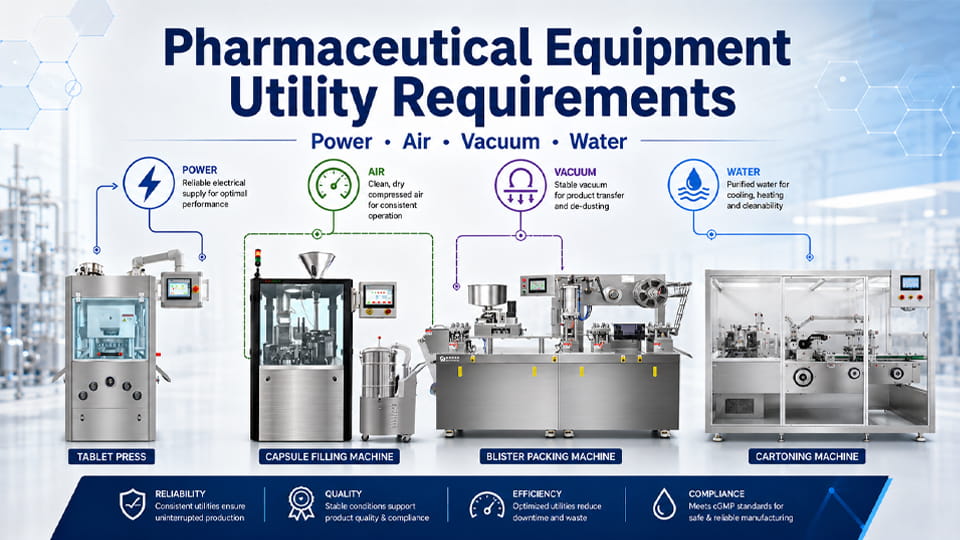
Bu, kontrol etmek anlamına gelir farmasötik ekipman kullanım gereksinimleri: elektrik gücü, basınçlı hava, boş, su, soğutma, egzoz, ve buhar veya nitrojen gibi prosese özel hizmetler.
Bir makine mekanik olarak mükemmel olabilir ve voltaj yanlışsa yine de nominal performansına ulaşamayabilir., Maksimum üretim sırasında hava basıncı düşer, vakum kapasitesi yetersiz, veya soğutma suyu çok sıcak. Tedarik için, mühendislik, ve üretim ekipleri, Hizmet planlaması kurulum sırasında değil, satın alma siparişinden önce başlamalıdır.
Temel Çıkarımlar
Farmasötik ekipman kullanım gereksinimleri, bir makinenin tasarlandığı şekilde çalışması için ihtiyaç duyduğu saha hizmetleridir. Elektrik gücü neredeyse evrenseldir. Makineye ve prosese bağlı olarak, ayrıca basınçlı havaya da ihtiyacınız olabilir, boş, soğutma suyu, proses suyu, egzoz, buhar, azot, drenaj, veya kontrollü çevre koşulları. Tam liste ekipmana bağlıdır, işlem, seçenekler, ve kullanım amacı.
Her yardımcı program otomatik olarak bir kritik fayda GMP anlamında. Anahtar soru, faydanın ürün kalitesini etkileyip etkilemeyeceğidir., süreç performansı, veya kontaminasyon riski.
FDA S7 Steam gibi yardımcı programları tanımlar, gaz, basınçlı hava, ısıtma, havalandırma, Ürün kalitesini etkileyebilecekleri durumlarda nitelikli olması ve uygun şekilde izlenmesi gereken sistemler olarak klima ve iklimlendirme. Aynı zamanda havalandırmayı da ele alıyor, filtreleme, egzoz, toz, nem, sıcaklık, basınç kontrolü, ve suya uygunluk.
DSÖ rehberliği aynı kullanım amacı ilkesini takip etmektedir: HVAC gibi yardımcı programlar, su, azot, ve basınçlı hava kullanım amacına uygun olmalı, ürün kalitesini olumsuz etkilememeli ve kirlilik kaynağı haline gelmemelidir..
Alıcılar için, pratik nokta basit: Makine gereksinimleri ve tesis kullanım kapasitesi kurulumdan önce eşleşmelidir.
Yardımcı programlar ekipman performansını ve ürün kalitesini doğrudan etkiler. Fayda uyumsuzlukları sıklıkla satın alma nedeniyle meydana gelir., üretme, mühendislik, ve doğrulama ekipleri projenin farklı bölümlerine odaklanır. . FDA'nın GMP rehberliği (S7A) açıkça şunu belirtiyor “Ürün kalitesini etkileyebilecek tüm yardımcı programlar (Örn., buhar, gaz, basınçlı hava, ısıtma, havalandırma, ve klima) nitelikli olmalı ve uygun şekilde izlenmelidir”. Başka bir deyişle, basınçlı hava veya su kaynağınız arızalanırsa, makineyi durdurabilir ve hatta ürünü kirletebilir. Örneğin, yetersiz basınçlı hava filtrelemesi, kapsüllere veya kabarcıklı paketlere yağ veya mikrop bulaştırabilir. Aynı şekilde, çok düşük voltaj veya tıkalı hava hattı, motorların ve valflerin düşük performans göstermesine neden olabilir.
Erken hizmet onayı, üç maliyetli sonucun önlenmesine yardımcı olur:
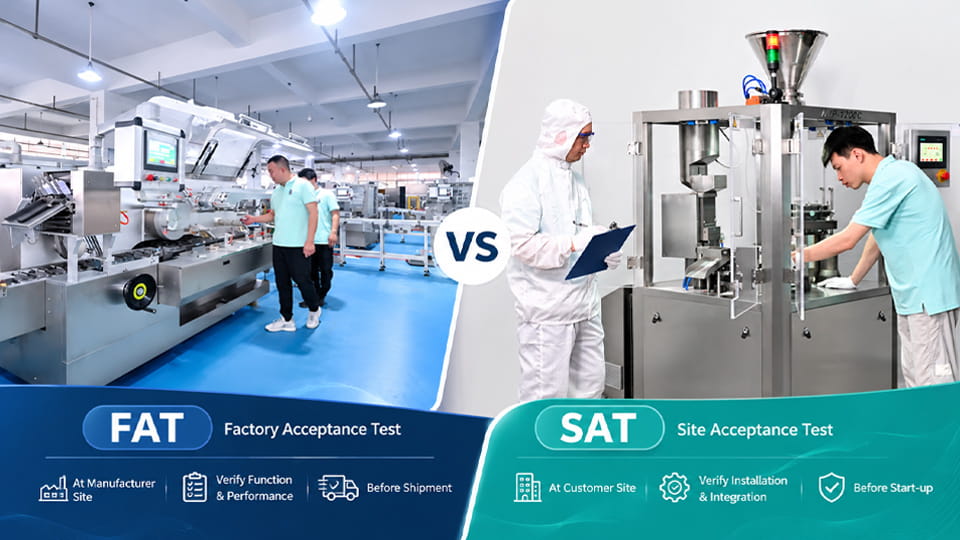
Bu aynı zamanda hizmet planlamasının ekipman yaşam döngüsünde birçok alıcının beklediğinden çok daha erken bir zamanda yer almasının nedenidir.. Kurulum sırasında (SAT/IQ), kamu hizmetleri ana odak noktasıdır. Jinlu Paketleme ekipmanı kurulumu kontrol listesi açıkça doğruluyor “yardımcı programlar (güç voltajı, pnömatik basınç, su, vesaire.)” makinenin spesifikasyonlarına aykırı. Saha Kabul Testinde (DOYGUNLUK), mühendisler yapacak gerçek voltajı ölç, hava basıncı/akış, su sıcaklığı, vesaire. makine tarafından belirlenen aralıklarda kaldıklarını doğrulamak için tesis tedarikinden. Kısacası, Yardımcı programların ekipman özellikleriyle eşleştirilmesi sürprizlerden kaçınmak için hayati öneme sahiptir: makine tam hızda çalışamaz veya bozulabilir, söylemek, bitki havası sadece 3 gerekli olanın yerine çubuk 6 çubuk, veya motor yanlış voltajdaysa.
Şununla başla: ilaç ekipmanı güç gereksinimleri son veri sayfasında belirtilmiştir; başka bir modelden kopyalanmış bir teknik özellik değildir.
Voltajı onaylayın, Bekar- veya üç fazlı besleme, sıklık, kurulu/nominal güç, maksimum talep, ana bağlantı, ve yardımcılar için ayrı bir tedarik. İhracat ekipmanı genellikle farklı pazarlar için yapılandırılabilir. Örneğin, JinLu'nun NJP-2600D kapsül dolgu listeleri 220/380 V, 50/60 Hz özelleştirilebilir güç ve 8.0 kW toplam güç; DPP-260R kabarcıklı makine listeleri 380/220/110 V, 50/60 Hz ve 5.5 kW. Bu örnekler, alıcıların neden hiçbir zaman tek bir "standart farmasötik voltaj" varsaymaması gerektiğini gösteriyor.
Ayrıca ayrı normal çalışma tüketiminden kurulu güç. Kurulu veya nominal güç, elektrik altyapısı planlaması için faydalıdır, ancak gerçek talep ısıtıcılar arttıkça değişir, motorlar, vakum pompaları, konveyörler, ve isteğe bağlı modül döngüsü. Sor farmasötik ekipman tedarikçisi mümkün olduğunda maksimum/pik talep ve beklenen çalışma yükü için. Son kablo, kırıcı, koruma, topraklama, ve izolasyon tasarımı, hedef ülkenin elektrik kurallarına ve projenin nitelikli elektrik tasarımına uygun olmalıdır..
Önemli Noktalar:
Pnömatik silindirler, vanalar, kıskaçlar, cihazları reddet, temizleme fonksiyonları, ve ürün taşıma mekanizmalarının tümü basınçlı havaya bağlı olabilir.
Farmasötik ekipmanın ne kadar basınçlı havaya ihtiyacı vardır??
Evrensel bir ilaç makinesi hava gereksinimi yoktur. Hem çalışma basıncını (genellikle bar veya MPa cinsinden belirtilir) hem de tüketimi NL/dak cinsinden belirtin, L/dak, Nm³/saat, veya açıkça tanımlanmış başka bir referans koşulu. İki makine aynı basıncı ancak çok farklı akışı gerektirebilir, bu nedenle kompresörün yalnızca basınca göre boyutlandırılması güvenilir değildir.
Hava kalite basınç ve miktardan ayrı olarak önemlidir. ISO 8573-1:2010 basınçlı havanın saflığını parçacıklara göre sınıflandırır, su, ve yağ; ağustos ayı itibariyle 2026, bir revizyon geliştirilme aşamasındayken bu baskı yayınlanmış olarak kalır. ISO yapar Olumsuz Her farmasötik uygulama için bir evrensel saflık sınıfı belirleyin, bu nedenle gerekli sınıf kullanım amacına ve kontaminasyon riskine göre belirlenmelidir.
Filtrelemeyi belirtin, izin verilen parçacıklar, toplam yağ, nem, Ve basınç çiğlenme noktası (KAP) ilgili olduğu yerde. PDP, sistem basıncında nemin yoğunlaşacağı sıcaklığı tanımlar; Daha düşük bir PDP, daha kuru basınçlı hava anlamına gelir. Açıkta kalan ürünü veya kritik yüzeyleri etkileyebilecek hava için, Kullanım noktası kalite gerekliliklerini ve doğrulamayı belirleyin. FDA denetim kılavuzu, özellikle ilgili farmasötik operasyonlarda basınçlı hava sistemlerinin ve kullanım noktası partikül filtrelemesinin gözden geçirilmesini tartışmaktadır..
Olmalı mı yağsız? Bazen, ancak “yağsız kompresör” ölçülebilir bir hava kalitesi spesifikasyonunun yerini almamalıdır. Kullanım noktasında kabul edilebilir yağı tanımlayın, ürünle temas riskini değerlendirin, ve uygun kurutma kullanın, filtreleme, izleme, ve yeterlilik. Amaç, yalnızca bir kompresör etiketi değil, kontrollü hava dağıtımıdır.
Önemli Noktalar:
A ilaç vakum sistemi destekleyebilir kapsül ayırma, vakum destekli toz dozajı, kabarcık veya malzeme taşıma, emme pikap, ürün transferi, veya toz giderme. JinLu'nun NJP-2600D kapsül dolum makinası, Örneğin, kapsül kapağı/gövde ayrımı için bir vakum pompası kullanır.
Her zaman iki parametre isteyin:
Vakum seviyesi size basıncın ne kadar düşük olduğunu söyler, veya ne kadar diferansiyel basınç, süreç gerektirir. Vakum akışı/pompalama hızı sistemin zamanla ne kadar gazı çıkarabileceğini söyler. Pompa üreticileri bu nedenle bunları ayrı olarak yayınlarlar; Onlar, Örneğin, hem m³/saat cinsinden pompalama hızını hem de vakum ekipmanı için ulaşılabilir basıncı belirtir.
Yerleşik pompa basittir ve bir makineyi nispeten bağımsız tutar. Merkezi bir sistem pompa sayısını azaltabilir ve bakımı merkezileştirebilir, ancak boru kayıpları, eşzamanlı talep, kirlenme ayrımı, ve başarısızlık sonuçları değerlendirilmelidir. Makine tedarikçisinden yalnızca pompanın etiketindeki değerleri değil, makine bağlantısında gerekli vakumu isteyin.
Önemli Noktalar:
Farmasötik ekipman hangi suya ihtiyaç duyar??
Su kalitesi suyun ne yaptığına bağlıdır. Kapalı devre soğutma suyu, içme suyu, Arıtılmış Su, ve WFI birbirinin yerine geçebilecek özellikler değildir. Suyun ürünle mi yoksa ürünle temas eden yüzeylerle mi temas ettiğini belirleyin, temizlemeyi veya işlemeyi destekler, veya yalnızca ısıyı giderir; daha sonra uygun kaliteyi atayın, sıcaklık, basınç, akış, ve izleme gereksinimleri.
DSÖ, uygun farmasötik su sınıfının aşağıdakilere göre seçilmesi gerektiğini belirtmektedir: amaçlanan uygulama, ürün, ve üretim aşaması; WFI, her farmasötik makineden ziyade belirli yüksek riskli kullanımlarla ilişkilidir. FDA Q7 benzer şekilde proses suyunun amaçlanan kullanıma uygun olmasını gerektirir.
Bu özellikle aşağıdakiler için önemlidir: farmasötik ekipman su gereksinimleri. Makine soğutma suyu, bir ısı eşanjörü veya soğutma plakası içerisinde kolayca dolaşabilir ve ürüne asla temas etmeyebilir. FDA Q7 yine de ısıtma sıvılarının ve soğutucuların ürünle olumsuz şekilde temas etmemesi veya ürünü etkilememesi için kontrol edilmesini gerektirir.
Soğutma/soğutucu, buhar, ve egzoz
A kabarcık paketleyici, kaplama sistemi, veya diğer ısı üreten ekipmanlar, tasarıma bağlı olarak soğutma suyuna veya harici bir soğutucuya ihtiyaç duyabilir. Bir soğutucu seçmeden önce, gerekli giriş sıcaklığının elde edilmesi, akış, basınç, ısı reddetme yükü, su/glikol uyumluluğu, ve bağlantı boyutu. Sadece makinenin elektrik kW'ına göre boyutlandırmayınız..
Buhar her paketleme makinesi için standart bir yardımcı program değildir. Özellikle ısıtmada alakalı hale gelir, temizlik, sterilizasyon, kaplama, veya proses sistemleri. Buhar ürün kalitesini ne zaman etkileyebilir?, FDA ve ISPE bunu uygun kontrol gerektiren bir yardımcı program olarak ele alıyor.
Nihayet, unutma toz emme ve egzoz. Tablet sıkıştırma, kapsül dolgusu, granülasyon, ve toz işleme, yerel ekstraksiyon veya muhafaza gerektiren toz yükleri oluşturabilir. FDA Q7 yeterli havalandırma çağrısında bulunuyor, filtreleme, ve uygun olduğu yerde egzoz, toz ve çapraz bulaşma riskinin kontrolü dahil.
Önemli Noktalar:
Dört ana yardımcı programın ötesinde, bu ortak hizmetleri göz önünde bulundurun:
Aşağıdaki matris bir planlama aracıdır, bir makine spesifikasyonu değil. “Ortak” sık karşılaşılan anlamına gelir; “Modele bağlı” son konfigürasyon anlamına gelir, ürün, veya süreç karar verir.
| Teçhizat | Güç | Basınçlı Hava | Vakum | su / Soğutucu | Egzoz / Toz |
| Tablet pres | Gerekli | Yaygın | Modele bağlı | Genellikle sınırlıdır | Yaygın |
| Kapsül dolum makinesi | Gerekli | Yaygın | Yaygın | Genellikle sınırlıdır | Yaygın |
| Blister paketleme makinesi | Gerekli | Yaygın | Modele bağlı | Modele bağlı | Modele bağlı |
| Tablet/kapsül sayacı | Gerekli | Modele bağlı | Genellikle sınırlıdır | Genellikle hayır | Modele bağlı |
| Kartonlama makinesi | Gerekli | Yaygın | Modele bağlı | Genellikle hayır | Genellikle sınırlıdır |
| Kaplama makinesi | Gerekli | Yaygın | Modele bağlı | Ortak/sürece bağlı | Yaygın |
| Granülatör / akışkan yataklı sistem | Gerekli | Yaygın | Sürece bağlı | Sürece bağlı | Yaygın |
Üretici verileri tek bir sektör numarası yerine varyasyonu destekliyor: JinLu, özelleştirilebilir elektrik malzemelerini ürün yelpazesinde listeliyor kapsül dolum makineleri Ve kabarcıklı paketleme makineleri, ve bir tablet presi için 6 bar basınçlı hava ve bir kapsül doldurucu için özel akış değerleri yayınlıyor.
Tedarikçiye dönük yararlı bir örnek yardımcı program spesifikasyonu şöyle görünebilir:
| Yardımcı Program | Açıklayıcı Gereksinim | Alıcının Neyi Doğrulaması Gerekir? |
| Güç | 380 V, 50 Hz, 3-faz | Yerel tedarik, tolerans, koruma |
| Kurulu güç | 8 kW | Pik talep ve yardımcı maddeler |
| Basınçlı hava | 6 makine girişindeki çubuk | Pik üretim sırasındaki basınç |
| Hava tüketimi | 200 NL/dak | Normal ve maksimum akış |
| Hava kalitesi | ISO 8573-1 sınıf: URS tarafından TBD | Parçacıklar, su/PDP, yağ |
| Vakum | −60 kPa(G), 80 m³/saat | Gerekli seviye Ve akış |
| Soğutma suyu | 15–20°C, 5 L/dak | Isı yükü, basınç, dönüş sıcaklığı |
| Egzoz | 500 m³/saat | Statik basınç ve filtreleme |
| Bağlantılar | Tanımlanacak tedarikçi | Boyut, taraf, yükseklik, uydurma |
Bunlar kasıtlı olarak açıklayıcı değerlerdir, herhangi bir JinLu veya üçüncü taraf modelinin spesifikasyonları değil. Nihai rakamlar seçilen makinenin onaylı kullanım sayfasından gelmelidir. Gerçek üretici sayfaları değerlerin ne kadar değişebileceğini gösterir.
Yeni bir hat için, Her isim plakası değerini körü körüne eklemeyin ve yalnızca bir makine için boyutlandırma yapmayın.
Her bir yardımcı program için, bir yükleme programı oluştur:
Tasarım talebi ≈ Σ (ekipman talebi × beklenen eşzamanlı kullanım faktörü) + haklı rezerv
Bir makinenin sürekli olarak bu yükte çalışabileceği tedarikçinin maksimum çalışma tüketimini kullanın. Aralıklı kullanıcıları ayrı ayrı tanımlayın. Daha sonra en kötü güvenilir üretim senaryosunu test edin; örneğin, kabarcık makinesi, karton, tezgah, ve pnömatik ayırma cihazlarının tümü başka bir hat başlarken çalışıyor.
Kurulumdan önce, Sahadaki tüm yardımcı programların ekipmanın teknik özellikleriyle eşleştiğini doğrulayın. Bir kontrol listesi şunları içerebilir::
Örnek: Göndermeden önce, bir tedarikçi, "Hava: 6.0 çubuk, 200 NL/dak; Vakum: –60 kPa; Güç: 380VAC 3 fazlı, 10 kilovat.” Devreleri ve boruları kurmak için bunu kullanın. Kurulum sırasında IQ, bu özellikleri karşıladığını doğrulamak için her bir kaynağı ölçün.
Kapsamlı bir URS açıkça listelenmelidir gerekli tüm yardımcı programlar ve koşullar. “Yardımcı Programlar ve Çevre” bölümü altında, kesin değerleri belirtin (örneğin. “Basınçlı hava: 6.0 çubuk ±0,2, 100 NL/dak, ISO 8573‑1 Sınıfı 1.0. Elektrik: 400 V, 3-F, 50 Hz, 15 kilovat.”). Düzenleyici rehberlik (AB GMP Eki 15) Tasarım Kalifikasyonu sırasında URS gereksinimlerinin doğrulanmasını gerektirir. Pratikte, URS/sözleşme çizimlerinde açık hizmet spesifikasyonlarının yer alması, hem alıcıyı hem de satıcıyı ihtiyaçlar üzerinde önceden anlaşmaya zorlar. Aynı zamanda yapar IR/WH/PQ basit test – her yardımcı program bağlantısı bir URS öğesine kadar takip edilebilir.
Sipariş vermeden önce daima fayda listesini satıcınızla teyit edin. Tedarikçiler şunları sağlamalıdır: Yardımcı Program Gereksinim Sayfası veya her makine için veri plakası. Bunları bir başlangıç toplantısında inceleyin veya satın alma siparişine ekleyin. Örneğin, Tedarikçiden, Satıcı Verilerine yardımcı program özelliklerini eklemesini talep edin (FAT'ın bir parçası olarak). SAT sırasında, her bağlantıyı fiziksel olarak doğrulayın: sitenin voltajını ölç, basınç, ve tedarikçinin spesifikasyonlarına aykırı akış. Belgelenmiş oturum kapatmayı sürdürün (genellikle IQ raporunun bir parçası olarak) "Yardımcı hizmetlerin bağlantılı ve spesifikasyonlara uygun olması" - bu bir GMP beklentisidir (IQ genellikle güç kontrollerini içerir, pnömatik, su bağlantıları).
Herhangi bir şey eşleşmiyorsa (örneğin. site sadece var 200 V ama makinenin ihtiyacı var 400 V), sorunu hemen çözün – ya bir transformatör sağlayın ya da tedarikçinin makineyi yeniden yapılandırmasını sağlayın. Hatırlamak, Yardımcı program uyumsuzluğu sorunlarını üretim başlamadan önce düzeltmek, sonra düzeltmekten daha kolaydır.
Özetle, Dikkatli kullanım planlaması doğru makineyi seçmek kadar önemlidir. Bir ekipman hattı yalnızca aşağıdaki koşullar sağlandığı takdirde amaçlanan hızda ve kalitede çalışabilir: güç, hava, boş, ve su doğru özelliklerde mevcuttur. Bu kılavuzun tablolarını kullanın, İhtiyaçlarınızı tahmin etmek ve bunları URS'ye eklemek için kontrol listeleri ve formüller. Sizinle çalışın ekipman satıcısı (Jinlu Ambalaj gibi) Her bir hizmet gereksinimini belgelemek ve yerinde doğrulamak.
Hizmet planlamasını basitleştirmeye hazır? Jinlu Packaging'in uzmanları tüm ürünlerimiz için güç ve şebeke bağlantıları konusunda tavsiyelerde bulunabilir. ilaç paketleme makineleri. Jinlu'nun ürün sayfalarını ziyaret edin; örneğin Kapsül Dolum Makinası, Tablet Pres Makinası, Blister Ambalaj Makinası, Sayma makinesi, Kartonlama Makinası, Poşet paketleme makinesi veya Önceden yapılmış torba paketleme makinesi – yardımcı program özellikleri ve iletişim bilgileri için. Daha fazla yardım için, iletişime geç ekibimizle Sorunsuz bir kurulum ve uyumlu çalışma için tesisinizin hizmete hazır olmasını sağlamak.
Temel bilgiler elektrik gücüdür, basınçlı hava, boş, ve su/soğutma. Birçok paketleme hattı aynı zamanda temiz buhar kullanır (sterilizatörler için), inert gaz (Yastık paketleri için N₂), ve toz emme. Düzenleyici kılavuzlar (örneğin. FDA Q7A) Steam'i açıkça çağırın, gaz (hava/nitrojen), HVAC, vesaire. Nitelikli olması gereken kamu hizmetleri olarak.
Ekipmanların çoğu 3 fazlı endüstriyel güçtür. Genellikle 380–400 VAC (50 Hz) veya 480 VAC (60 Hz) nötr veya topraklı. Bazı küçük üniteler tek fazlı 220–240 VAC ile çalışabilir. Tam voltajı ve fazı doğrulamak önemlidir (Jinlu makineleri sıklıkla destekler 380/220/110 VAC 50/60 Hz). Ayrıca makinenin çalışıp çalışmadığını kontrol edin. 50 Hz vs 60 Hz veya her ikisini de kabul edebilirse (olabildiğince çok).
Makineye ve ünite sayısına bağlıdır. Tek bir kabarcıklı veya kartonlama makinesinin 50–200 NL/dak civarında olması gerekebilir (~5–6 barda). Bir kapsül doldurucu veya sayma makinesi 30–100 NL/dak. kullanabilir. Basınç genellikle ~5–6 bardır (0.5–0,6 MPa). Akış için her makinenin özelliklerini kontrol edin (genellikle NL/dak veya SCFM cinsinden verilir) ve basınç. Hattınız için bunları toplayın (çeşitlilik faktörünü hatırla). Yoğun talebi karşılamak için tesisin kompresör sistemine her zaman biraz ekstra hacim sağlayın.
Farmasötik standartlar yağsız olmayı gerektirir, kuru hava. Tipik olarak ISO 8573-1 Sınıf 2 (veya daha iyisi) ilaç alanlarındaki hava için tavsiye edilir. Bu esasen şu anlama gelir 0 yağ (Sınıf 0 sertifikasyon), suyun çiğlenme noktası ≤–40 °C, ve sıkı parçacık filtreleri (örneğin. 0.01 uM). Bunları URS'nizde belirtin. Örneğin: “Basınçlı hava: 6.0 çubuk, 99.995% yağsız, çiğ noktası –40 °C, 0.01 Kullanım noktasında µm filtre" net bir gerekliliktir.
Genellikle hayır, Sterilize edilmiş bir süreç olmadığı sürece. Durulama veya soğutma için, normal içme suyu kabul edilebilir. FDA kılavuzu, minimum proses suyunun WHO'nun içme suyu standartlarını karşılaması gerektiğini söylüyor (içme suyu) standartlar. Yalnızca ekipmanın enjekte edilebilir ürünle doğrudan ilgili olması veya bundan temiz buhar üretilmesi durumunda daha yüksek kaliteli PW veya WFI kullanın.. URS'de her zaman netleştirin: “Su temini: içilebilir (NSF onaylı) soğutma için; ürünle su teması yok.
“Yardımcı Programlar ve Çevre” konusuna bir bölüm ayırın ve tam sayıları listeleyin. Örneğin: “Elektrik: 400 VAC, 3F, 50 Hz, 15 kW. Hava: 6.0 çubuk ±0,2, 100 NL/dak. Vakum: –70 kPa (karın kasları). su: 30 psi, 20 L/dak.” Jinlu URS kılavuzu, yardımcı programların (Gerilim, hava basıncı/akış, soğutma suyu, boş, vesaire.) belirtilmeli. Tedarikçinin bunları FAT/SAT'ta garanti edebilmesi için bu gereksinimleri satın alma siparişine ekleyin.
Sonuçta alıcı/tesis, sahadaki hizmetlerin spesifikasyonlara uygun olmasını sağlamalıdır, ancak tedarikçi neyin gerekli olduğunu belgelemelidir. FAT sırasında, satıcı yardımcı programları simüle edebilir; ancak SAT/IQ sizin (kullanıcı) gerçek malzemelerle onaylayın. GMP, kamu hizmetleri için belgelenmiş IQ testleri gerektirir. Pratikte, bakım/mühendislik ekipleri sahayı hazırlıyor, ve QA veya mühendislik, kurulum gününde yardımcı programları doğrulayacaktır.
Herhangi bir uyumsuzluk bir “uygunsuzluktur”. Örneğin, site gücü yanlışsa, paneli değiştirmek için bir elektrikçiye ihtiyacınız olacak (veya tedarikçinin transformatörleri değiştirmesi). Hava basıncı düşükse, bir güçlendiriciye veya regülatöre ihtiyacınız olabilir. Makineyi bu koşullarda çalıştırmayın; çalışmayabilir veya ekipmana zarar verebilir. Sorunu düzeltin veya tedarikçinin tasarımı ayarlamasını sağlayın. İdeal olarak, bu tür sorunlar SAT'ta yakalanır ve devreye alınmadan önce çözülür.
Evet. Vakumlu veya pnömatik sistemlerde gıdaya uygun yağlar kullanın; Tüm yağlayıcıların farmasötik kullanıma uygun olduğundan emin olun. Yardımcı hatları açıkça etiketleyin (Boru etiketlemesi hataların önlenmesine yardımcı olur). Acil durum durdurmaları sağlayın ve temiz odada elektrik kesintilerinin erişilebilir olmasını sağlayın. Borularda ölü noktaları önleyin (durgun bölge yok). Ayrıca, hizmet kalitesi kontrollerinin GMP'nin bir parçası olduğunu unutmayın;. FDA müfettişleri basınçlı hava sertifikanıza ve su testlerinize bakacak.
Referanslar:
1.İyi Uygulama Kılavuzu: Kritik Yardımcı Programlar GMP Uyumluluğu —— ispe
2.Kritik Yardımcı Programlar —— ispe
3.Aktif Farmasötik İçerikler için Q7A İyi Üretim Uygulamaları Rehberi —— BİZ. Gıda ve İlaç İdaresi
4.Temiz odalar ve ilgili kontrollü ortamlar —— ISO 14644-1:2015