

แคปซูลบรรจุของเหลว (เรียกอีกอย่างว่าแคปซูลแข็งที่เต็มไปด้วยของเหลวหรือ LFHC) โดยพื้นฐานแล้ว แคปซูลเปลือกแข็งสองชิ้น (เจลาตินหรือ HPMC) ที่เติมด้วยสูตรน้ำมันหรือของเหลว. หลังจากเติมแล้ว, ฝาครอบและตัวเครื่องถูกปิดผนึก โดยมักจะมีแถบเจลาตินบางๆ เพื่อป้องกันการรั่วไหล. กล่าวอีกนัยหนึ่ง, LFHCs เป็นรูปแบบลูกผสม: เปลือกแคปซูลแข็งที่มีปริมาณของเหลวอยู่ข้างใน. ในทางตรงกันข้าม, แคปซูลซอฟเจล ถูกสร้างขึ้นในขั้นตอนเดียวเช่น เดี่ยว, เปลือกชิ้นเดียวที่มีความยืดหยุ่น ที่เติมของเหลวหรือกึ่งแข็งไว้แล้ว. ซอฟเจลใช้เจลาตินพลาสติก (ด้วยกลีเซอรีนหรือซอร์บิทอล) เพื่อให้นุ่ม, เมมเบรนที่ปิดผนึกได้. โดยทั่วไปจะใช้กับส่วนผสมที่มีความมันมากหรือละลายน้ำได้ เป็นต้น, น้ำมันปลาหรือวิตามินที่ละลายในไขมัน (ดี, อี, K) มักจะมาในรูปแบบซอฟเจลเสมอ.
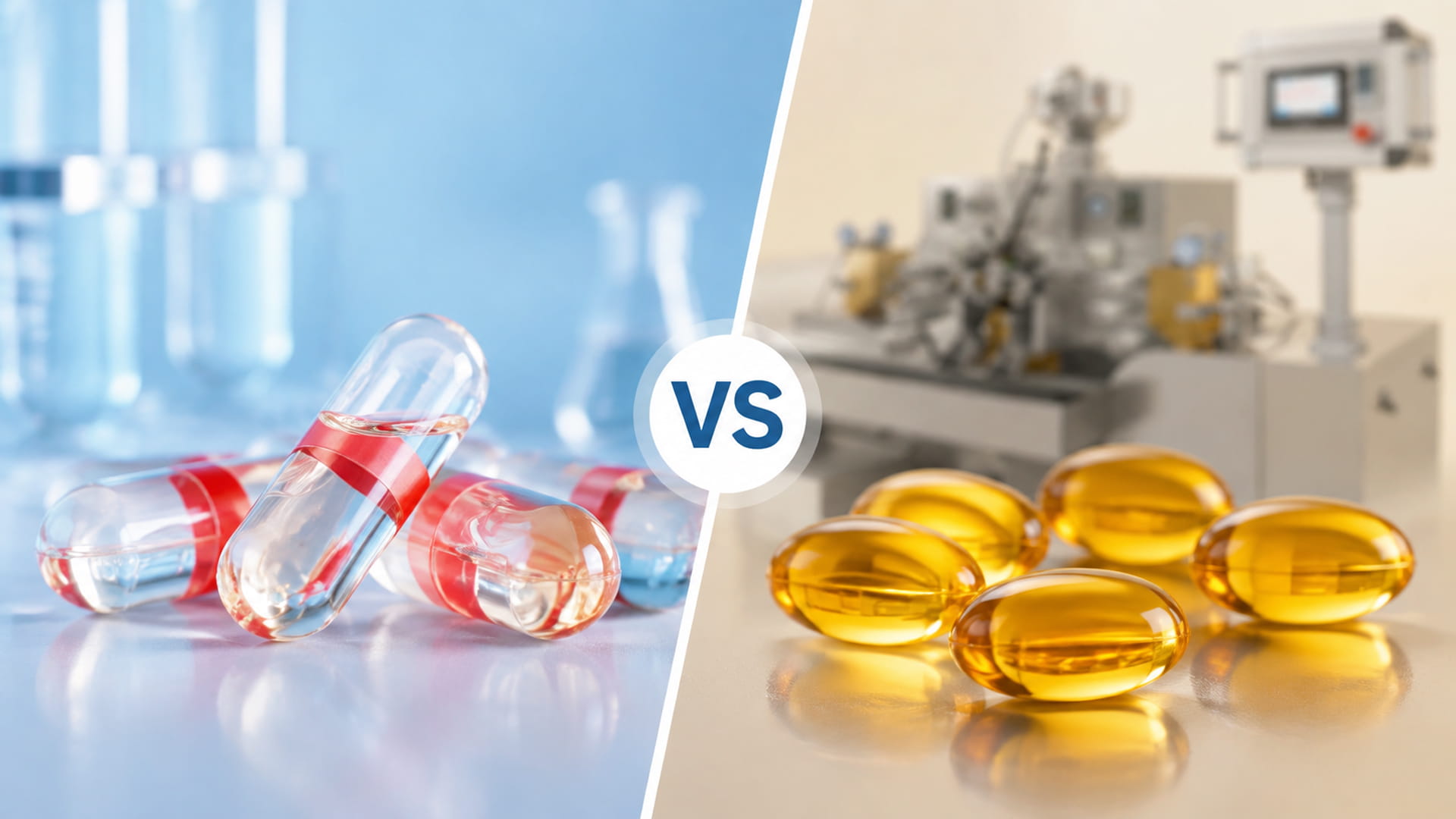
ในแง่การปฏิบัติ, ทั้งสองรูปแบบสามารถส่งยาน้ำหรืออาหารเสริมได้, แต่เป็นของพวกเขา การออกแบบและการผลิต แตกต่างกันอย่างมีนัยสำคัญ. ความแตกต่างที่สำคัญ ได้แก่ โครงสร้างแคปซูล, วัสดุเปลือก, การเติมที่เข้ากันได้, และขั้นตอนการผลิต. การทำความเข้าใจสิ่งเหล่านี้ช่วยให้ผู้ผลิตยาเลือกแบบฟอร์มที่เหมาะสมสำหรับผลิตภัณฑ์ของตนได้. ด้านล่างนี้เราจะแจกแจงความแตกต่างหลักและคุณประโยชน์ของแต่ละข้อ.
แคปซูลแข็งที่บรรจุของเหลว (LFHC) เป็นมาตรฐาน เปลือกแคปซูลสองชิ้น (หมวกและร่างกาย) เติมด้วยสูตรของเหลวหรือน้ำมันหลังจากทำเปลือกหอยแล้ว. เปลือกสามารถทำจากเจลาตินหรือ HPMC จากพืช (สำหรับแคปซูลมังสวิรัติ). ในการผลิต, ปริมาณของเหลวที่แม่นยำ (มักเป็นสารละลายน้ำมัน, สารแขวนลอยหรือสารผสมในตัวเอง) ถูกฉีดเข้าไปในตัวแคปซูลแบบเปิด, จากนั้นปิดฝาด้านบนและปิดผนึก. วิธีการปิดผนึกแบบพิเศษช่วยให้มั่นใจได้ว่าไม่มีการรั่วไหล (ตัวอย่างเช่น, ใช้แถบเจลาตินบาง ๆ รอบข้อต่อ, เรียกว่า “การปิดผนึกวงดนตรี”).
วิธีการแบบสองชิ้นนี้ทำให้ LFHC สามารถรวมคุณประโยชน์ของของเหลวและแคปซูลเข้าด้วยกันได้. คุณจะได้รับของเหลวที่ละลายออกอย่างรวดเร็วและมีการดูดซึมสูง, ด้วยการกลืนและกลบรสชาติที่แคปซูลนำเสนอได้ง่าย. เปลือก LFHC ได้รับการผลิตไว้ล่วงหน้า, ดังนั้นจึงไม่จำเป็นต้องละลายแผ่นเจลาตินที่มีราคาแพงในระหว่างการเติม. ตัวอย่างเช่น, เครื่องเติมแคปซูลเหลว NJY-300C ของ JinLuPacking จะเติมของเหลวเป็นเปลือกแข็งขนาด #00–#4 โดยอัตโนมัติ และปิดผนึกด้วยแถบในเส้นเดียวที่รวดเร็ว.
รูป: แคปซูลแข็งที่บรรจุของเหลว (แต่ละอันมีแถบสีปิดผนึกข้อต่อหมวก-ตัว). แคปซูลสองชิ้นนี้เก็บน้ำมันหรือของเหลวไว้ในเปลือกเจลาติน/HPMC ที่เป็นของแข็ง.
แคปซูลซอฟเจล (มักจะโทรมาเฉยๆ ซอฟเจล) เป็น ชิ้นเดียว, แคปซูลเคลือบเจลที่บรรจุของเหลวหรือกึ่งแข็ง. พวกมันถูกสร้างขึ้นบนเครื่องห่อหุ้มแบบโรตารี่ที่ขึ้นรูป, เติม, และปิดผนึกแต่ละแคปซูลในขั้นตอนเดียว. ในตัวเครื่อง, เจลาตินพลาสติกสองริบบิ้น (เจลาตินผสมกับกลีเซอรีนหรือซอร์บิทอล) ถูกหล่อและอัดเข้าด้วยกันในขณะที่มีการฉีดของเหลวตามมิเตอร์เข้าไประหว่างกัน. แต่ละแคปซูลจะถูกตัดและปิดผนึกพร้อมกันด้วยแม่พิมพ์ที่ให้ความร้อน. ผลที่ได้คือเรียบเนียน, วงรี, แคปซูลสุญญากาศนิยมนำมาใช้เป็นอาหารเสริมประเภทน้ำมัน (นึกถึงวิตามินอีหรือยาเม็ดโอเมก้า 3).
ซอฟเจลเหมาะสำหรับน้ำมันและของเหลวที่ละเอียดอ่อน. เนื่องจากแคปซูลทั้งหมดถูกปิดผนึกอย่างแน่นหนาเมื่อสร้างขึ้น, ไม่จำเป็นต้องมีขั้นตอนการปิดผนึกแยกต่างหาก. ทำให้สามารถป้องกันออกซิเจนและความชื้นได้ดีมาก. น้ำมันปลาหลายชนิด, วิตามินดี/เค, และผลิตภัณฑ์น้ำมันจากพืชใช้ซอฟเจลเพื่อความสะดวกและความเสถียรในการเก็บรักษา. ในความเป็นจริง, การสำรวจพบว่าอาหารเสริมโอเมก้า 3 และวิตามินที่ละลายในไขมันมักจัดส่งในรูปแบบซอฟเจล.
รูป: แคปซูลซอฟเจลสีเหลืองอำพันบนช้อนชาข้างขวดยา (ทั่วไปสำหรับน้ำมันปลาหรือวิตามินดี).
| คุณสมบัติ | แคปซูลบรรจุของเหลว (LFHC) | ซอฟท์เจล |
| โครงสร้าง | สองชิ้น (หมวก & ร่างกาย) | แคปซูลปิดผนึกชิ้นเดียว |
| วัสดุเปลือก | เจลาตินหรือ HPMC (ตัวเลือกมังสวิรัติ) | เจลาตินพลาสติก (เจลาติน + กระด้างไนล) |
| วิธีการผลิต | เติมแล้วปิดผนึก (บนตัวเติมแคปซูล + แก๊งค์) | การห่อหุ้มแม่พิมพ์แบบหมุน (แบบฟอร์มกรอกประทับตรา) |
| ค่าอุปกรณ์ | ต่ำกว่า (ฟิลเลอร์แคปซูลมาตรฐาน) | สูงกว่า (เส้นซอฟเจลเฉพาะ) |
| มาตราส่วน (ขั้นต่ำ) | ขั้นต่ำต่ำ (เหมาะกับชุดเล็กๆ) | โดยปกติแล้วจะต้องใช้ปริมาณที่สูงกว่า |
| ตัวเลือกมังสวิรัติ | ใช่ (มีกระสุน HPMC) | จำกัด (ตอนนี้มีตัวเลือกแป้ง/ผักอยู่บ้าง) |
| การปิดผนึก | การปิดผนึกทางกล (แถบ/ฟิวชั่น) | ซีลในตัว (ปิดผนึกอย่างแน่นหนาด้วยแม่พิมพ์) |
| ความเสี่ยงจากการรั่วไหล | ต่ำ (เมื่อปิดผนึกอย่างถูกต้องแล้ว) | ต่ำมาก (ไม่มีตะเข็บรั่ว) |
| ความยืดหยุ่นในการผลิต | สูง (สามารถผสมผงหรือเม็ดกับของเหลวได้) | ปานกลาง (เติมเฉพาะของเหลว/ครีมเท่านั้น) |
| ขยายขนาด | ง่าย (ใช้เครื่องแคปซูลมาตรฐาน) | ซับซ้อนมากขึ้น (การอบแห้งแบบพิเศษ, ฯลฯ) |
ทั้งสองรูปแบบให้สารออกฤทธิ์ที่เป็นของเหลวหรือเป็นน้ำมัน และสามารถให้การดูดซึมได้สูงโดยการนำเสนอยาที่ละลายในไขมัน. อย่างไรก็ตาม, LFHC ใช้เส้นที่เรียบง่ายกว่า (เปลือกหอยถูกทำไว้ล่วงหน้า) ในขณะที่ซอฟเจลต้องมีขั้นตอนการปรุงและทำให้แห้งสำหรับริบบิ้นเจลาติน.
ประเด็นสำคัญ: เครื่องซอฟเจล รูปร่าง, เติม, และตัดได้ในขั้นตอนเดียว (จำเป็นต้องทำให้แห้ง), ในขณะที่เส้น LFHC เติมเปลือกหอยที่ทำไว้ล่วงหน้าและปิดผนึกไว้ (ข้ามขั้นตอนการบ่มที่ยาวนาน). ตามบันทึกคู่มืออุตสาหกรรมฉบับหนึ่ง, “ซอฟเจลจะรักษาได้ 2–4 วันหลังเติม. LFHC ไม่มีขั้นตอนการบ่ม… การสูญเสียแบทช์จากการเติมล้มเหลวจะสูงกว่าสำหรับซอฟต์เจล”.
แคปซูลบรรจุของเหลวมีข้อได้เปรียบด้านการผลิตและผลิตภัณฑ์หลายประการ:
ข้อได้เปรียบเหล่านี้ทำให้ LFHC มีความน่าสนใจทั้งในตลาดเภสัชกรรมและโภชนเภสัช.
ซอฟเจลยังมีประโยชน์อย่างมากซึ่งทำให้เป็นที่นิยมสำหรับอาหารเสริมหลายชนิด:
อุตสาหกรรมที่ใช้ซอฟเจล ได้แก่ ยา (ยาที่ใช้น้ำมัน), โภชนเภสัช (ผลิตภัณฑ์เสริมอาหาร), เครื่องสำอาง (น้ำมันเสริมความงามทางโภชนาการ), และแม้แต่ผลิตภัณฑ์สัตวแพทย์. เช่น, ซอฟต์เจลวีแกนหรือฮาลาลที่ทำจากแป้ง/เจลแลนกำลังได้รับความนิยมเพิ่มขึ้น.
| วัตถุดิบ / เติม | แคปซูลบรรจุของเหลว | ซอฟเจลแคปซูล |
| น้ำมันปลา / โอเมก้า-3 | ✓ เหมาะสม | ✓ เหมาะสม |
| CBD หรือน้ำมันกัญชา | ✓ เหมาะสม | ✓ เหมาะสม |
| เคอร์คูมิน (สารสกัดจากขมิ้น) | ✓ เหมาะสม | ✓ เหมาะสม |
| วิตามินดี (น้ำมัน) | ✓ เหมาะสม | ✓ เหมาะสม |
| สารสกัดน้ำสมุนไพร | ✓ เหมาะสม | ✓ เหมาะสม |
| โปรไบโอติก | ✓ (หากแขวนลอยอยู่ในน้ำมัน) | เลขที่ (ความชื้นฆ่าเชื้อแบคทีเรีย) |
| API ที่ไวต่อความชื้น | ✓ (โดยเฉพาะในแคปซูล HPMC) | ✗ (เปลือกมีความชื้นสูง) |
แคปซูลทั้งสองประเภทจัดการกับสารออกฤทธิ์ที่ละลายในน้ำมันได้ดี. น้ำมันโภชนเภสัชทั่วไป (น้ำมันปลา, วิตามินดี, สารสกัดสมุนไพร, ย่านศูนย์กลางธุรกิจ, ฯลฯ) ถูกส่งอย่างมีประสิทธิภาพโดย LFHC หรือซอฟเจล.
สะดุดตา, ส่วนผสมที่แห้งหรือไวต่อความชื้น จะดีกว่าในแคปซูลแข็งที่เติมของเหลว. ตัวอย่างเช่น, โปรไบโอติกหรือ API ที่ไวต่อน้ำไม่สามารถทำได้ในซอฟเจล. ในทางตรงกันข้าม, แคปซูลแข็งของ HPMC สามารถกักเก็บโปรไบโอติกแบบไม่มีน้ำหรือสูตรที่แห้งมากได้, เนื่องจาก HPMC มีความชื้นและการซึมผ่านของก๊าซต่ำ. เปลือกซอฟเจลมีประมาณ 30% น้ำและการซึมผ่านของออกซิเจนที่สูงขึ้น, ซึ่งสามารถย่อยสลายส่วนผสมดังกล่าวได้.
ในระยะสั้น, ใช้ LFHC เมื่อความยืดหยุ่นและการผลิตในปริมาณน้อยมีความสำคัญ; เลือกซอฟเจลสำหรับขนาดและชั้นวางระดับพรีเมียม.
จากมุมมองของผู้ผลิต, การตัดสินใจมักขึ้นอยู่กับขนาด, การลงทุน, และเป้าหมายเชิงกลยุทธ์:
ตารางด้านล่างสรุปตัวเลือกตามสถานการณ์:
| ประเภทบริษัท / สถานการณ์ | รูปแบบที่แนะนำ |
| สตาร์ทอัพขนาดเล็ก หรือ R&โครงการดี | แคปซูลบรรจุของเหลว (ขั้นต่ำต่ำ, ยืดหยุ่นได้) |
| สายเสริมเฉพาะกลุ่ม, <10k หน่วย | แคปซูลบรรจุของเหลว |
| รับจ้างผลิต (ความยืดหยุ่น) | แคปซูลบรรจุของเหลว |
| ผู้ผลิตยารายใหญ่ | ซอฟท์เจล (ปริมาณงานสูง, สม่ำเสมอ) |
| โอเมก้า 3 หรือวิตามินในปริมาณสูง | ซอฟท์เจล |
| สินค้าที่ต้องการวีแกนแคปซูล | แคปซูลบรรจุของเหลว (กระสุน HPMC) |
รูป: ภาพระยะใกล้ของเครื่องบรรจุแคปซูลเหลวที่จ่ายของเหลวลงในแคปซูล.
JinLuPacking ผลิตอุปกรณ์แคปซูลครบวงจร. ตัวอย่างเช่น, ของเรา นิวเจอร์ซีย์-300ซี ฟิลเลอร์แคปซูลเหลว สายจับเติมของเหลว, และเรายังให้บริการอีกด้วย เครื่องแคปซูลซอฟเจล เพื่อการผลิตในขั้นตอนเดียว. เครื่องจักรเหล่านี้ตรงตามมาตรฐาน cGMP สำหรับการใช้งานทางเภสัชกรรมและโภชนเภสัช.
ในที่สุด, ทั้งแบบเติมของเหลว แคปซูลแข็ง และ ซอฟเจล เป็นที่ยอมรับอย่างดี, รูปแบบยาที่มีประสิทธิภาพ. ซอฟเจลเป็นเลิศในการส่งน้ำมันและสารออกฤทธิ์ที่ละลายในน้ำมันด้วยการละลายอย่างรวดเร็ว, แพคเกจที่เห็นได้ชัดเจน. แคปซูลแข็งที่เติมของเหลวให้ความยืดหยุ่น, เร็วขึ้น ร&สเกล D, และความเรียบง่ายในการผลิต. ด้วยการเข้าใจความแตกต่างของพวกเขา, ประโยชน์และข้อกำหนดการผลิต, ผู้ผลิตสามารถเลือกประเภทแคปซูลที่เหมาะกับเคมีของผลิตภัณฑ์และความต้องการทางธุรกิจของตนได้ดีที่สุด.
หากคุณกำลังออกแบบสูตรใหม่หรืออัพเกรดสายการผลิตของคุณ, พิจารณาทั้งสองตัวเลือกอย่างรอบคอบ. พร้อมเพิ่มประสิทธิภาพการผลิตแคปซูลของคุณ? Jinlu Packing นำเสนออุปกรณ์ชั้นนำของอุตสาหกรรมสำหรับทั้งสองรูปแบบ (ตัวอย่างเช่น, NJP-1000C ของเราสามารถเติมได้ถึง 60,000 แคปซูลแข็งต่อชั่วโมง) และสามารถให้คำแนะนำทางออกที่ดีที่สุดสำหรับผลิตภัณฑ์ของคุณได้. ติดต่อเรา เพื่อหารือเกี่ยวกับโครงการของคุณ, ขอใบเสนอราคา, หรือเรียนรู้เพิ่มเติมเกี่ยวกับแคปซูลเหลวและซอฟเจลของเรา สายการบรรจุ.
ใช่. ฟิลเลอร์แคปซูลเฉพาะทาง (เช่นเครื่องบรรจุแคปซูลเหลวของ JinLuPacking) สามารถฉีดน้ำมันหรือของเหลวลงในแคปซูลแข็งเปล่าได้, ซึ่งถูกปิดผนึกไว้แล้ว (E.G. โดยการรัด) ดังนั้นพวกเขาจึงเก็บของเหลวไว้อย่างแน่นหนา. สิ่งนี้จะสร้าง "แคปซูลแข็งที่เต็มไปด้วยของเหลว"
ไม่มีทั้งสองอย่าง "ดีกว่า" ในระดับสากล - พวกมันตอบสนองความต้องการที่แตกต่างกัน. LFHCs ชนะด้วยต้นทุน, ความเร็ว, และความยืดหยุ่น (โดยเฉพาะอย่างยิ่งสำหรับชุดเล็ก), ในขณะที่ซอฟเจลให้การปิดผนึกที่ไร้รอยต่อและรูปแบบที่คุ้นเคยสำหรับผลิตภัณฑ์เสริมอาหาร. ทางเลือกที่ดีที่สุดขึ้นอยู่กับวัสดุในการเติมของคุณ, ปริมาณการผลิต, และตลาด.
LFHC ที่ปิดผนึกอย่างเหมาะสมจะไม่รั่วไหล. หลังจากเติมแล้ว, ข้อต่อหมวกและลำตัวถูกปิดผนึกอย่างแน่นหนาโดยใช้เจลาตินหรือแถบ HPMC (หรือใช้ฟิวชั่นซีล). เมื่อทำถูกต้องแล้ว, แคปซูลจะยึดของเหลวไว้แน่นระหว่างการอบแห้ง, พื้นที่จัดเก็บ, และใช้. สายการผลิตคุณภาพจะทดสอบและขัดเกลาแต่ละชุดเพื่อให้มั่นใจในความสมบูรณ์.
ทั้งสองชนิดสามารถให้การดูดซึมที่ดีเยี่ยมสำหรับสารออกฤทธิ์ที่เป็นน้ำมัน. สูตรเติม (ประเภทน้ำมัน, อิมัลซิไฟเออร์) มักจะกำหนดการดูดซึม, ไม่ใช่ประเภทเปลือก. ซอฟท์เจลละลายเร็ว (~10–20 นาที), ในขณะที่แคปซูลเปลือกแข็ง (แอลเอฟเอชซี) ละลายช้าลงเล็กน้อย (30–60 นาที). ในทางปฏิบัติ, การเติมที่ออกแบบมาอย่างดีในรูปแบบใดรูปแบบหนึ่งสามารถบรรลุประสิทธิภาพที่คล้ายคลึงกัน.
ใช่. เปลือก HPMC จากพืชถูกนำมาใช้กันอย่างแพร่หลายสำหรับแคปซูลบรรจุของเหลว. ความชื้นต่ำและโครงสร้างที่แข็งแกร่งของ HPMC ช่วยให้ของเหลวมันอยู่ข้างใน. ในความเป็นจริง, การใช้เปลือก HPMC เป็นวิธีหนึ่งในการเสนอแคปซูลมังสวิรัติในรูปของเหลว, ซึ่งซอฟเจลเจลาตินมาตรฐานไม่สามารถให้ได้.
บริษัทต่างๆ อ้างถึงเหตุผลต่างๆ เช่น ต้นทุนการผลิตที่ลดลง, เวลานำสั้นลง, และความยืดหยุ่นของการกำหนดสูตร. ตัวอย่างเช่น, อาร์&ทีม D สามารถปรับขนาดยาหรือรวมส่วนผสมใน LFHC ได้อย่างรวดเร็วโดยไม่ต้องดัดแปลง. อีกด้วย, VFHC ช่วยให้ขยายสายผลิตภัณฑ์ได้อย่างง่ายดาย (เนื่องจากแคปซูลเดียวกันสามารถเติมของเหลวต่างกันได้).
โดยทั่วไป, ใช่. การผลิตซอฟเจลต้องใช้อุปกรณ์ราคาแพง (หม้อหุงเจลาติน, โรตารี่ตาย, เครื่องอบผ้า) และแรงงานเพิ่มมากขึ้นในช่วงหลายวัน. LFHC ใช้สารตัวเติมที่ง่ายกว่าและพลังงานน้อยกว่า. รายงานอุตสาหกรรมระบุว่า LFHC มีต้นทุนการผลิตต่อหน่วยน้อยกว่าซอฟต์เจลถึง 15–35%. อย่างไรก็ตาม, ในปริมาณที่สูงมาก ซอฟต์เจลยังคงคุ้มค่า.
เติมส่วนผสมที่เป็นของเหลวโดยใช้เครื่องบรรจุแคปซูลเหลว (มักเป็นสิ่งที่แนบมาหรือรูปแบบต่างๆ ของฟิลเลอร์แคปซูลมาตรฐาน). ตัวอย่างเช่น, เครื่องจักรซีรีส์ NJY ของ JinLuPacking ใช้ปั๊มที่มีความแม่นยำ (ลูกสูบเซรามิกหรือไมโครปั๊ม) เพื่อสูบน้ำมันลงในแคปซูล. เครื่องจักรเหล่านี้สามารถเข้าถึงความเร็วสูงได้ (หลายพันแคปต่อชั่วโมง) ด้วยความแม่นยำมากกว่า ±1%.
ส่วนใหญ่ไม่มีน้ำ, การเติมน้ำมันหรือตัวทำละลาย. ตัวอย่างทั่วไป: น้ำมันปลา, น้ำมันวิตามินอี, วิตามินเหลว, สารสกัดจากน้ำมันสมุนไพร, อิมัลชัน, และระบบนำส่งยาแบบอิมัลชันในตัวบางระบบ. การเติมจะต้องสามารถสูบได้และโดยทั่วไปไม่กัดกร่อน. หลีกเลี่ยงของเหลวที่ใช้น้ำ (พวกมันสามารถทำให้ผนึกอ่อนแอลงได้). ควรควบคุมความหนืดของสารเติมเพื่อป้องกันการกระเด็นหรือหยดระหว่างการเติม.
ใช่. เครื่องแคปซูลหลายเครื่องสามารถปรับเปลี่ยนได้: โดยการเปลี่ยนระบบจ่ายยา, พวกเขาสามารถเติมผง/เม็ดหรือของเหลวได้. ในทางปฏิบัติ, แผ่นจ่ายสารชนิดผงของตัวเติมแคปซูลมาตรฐานจะถูกแทนที่ด้วยหัวเติมของเหลวและระบบปั๊ม. ความสามารถรอบด้านนี้หมายความว่าบรรทัดเดียวสามารถสลับระหว่างการผลิตแบบผงและ LFHC.
อ้างอิง:
1.แคปซูลเจลาตินแข็งที่บรรจุของเหลวและปิดผนึก —— เทย์เลอร์ & ฟรานซิสออนไลน์
2.แคปซูลเจลาตินอ่อน (ซอฟท์เจล) —— วิทยาศาสตร์โดยตรง
3.ผลกระทบของอุณหภูมิต่อคุณลักษณะริบบิ้นในการผลิตแคปซูลเจลาตินแบบนิ่ม —— หอสมุดแห่งชาติแพทยศาสตร์
4.รีวิวที่ครอบคลุมเกี่ยวกับแคปซูลซอฟเจลาติน: การผลิตภาคอุตสาหกรรม, ความก้าวหน้าทางเทคโนโลยี, และมุมมองด้านกฎระเบียบ —— วารสารการจัดส่งยา & การบำบัด
5.ฮาร์ดเจลาตินแคปซูลเติมของเหลว —— วารสารการจัดส่งยา & การบำบัด
6.การหาปริมาณน้ำที่เหมาะสมที่สุดในมวลที่เติมของเหลวสำหรับแคปซูลเจลาตินแข็งโดยการวิเคราะห์เนื้อสัมผัสและการออกแบบการทดลอง —— หอสมุดแห่งชาติแพทยศาสตร์