
На повседневном языке "лекарство" и "лекарство" часто используются взаимозаменяемо. В фармацевтической промышленности, однако, они обычно подразумевают разные этапы жизненного цикла продукта. А лекарство обычно является активным фармакологическим веществом (API) что обеспечивает терапевтический эффект. А лекарство (иногда называемый лекарственный препарат) это готовый продукт – препарат, разработанный и упакованный для использования пациентами.. Это различие влияет на то, как разрабатываются продукты., изготовленный, и упакованный. Проще говоря, любое лекарство начинается с лекарства (активный ингредиент), но не каждое лекарство становится товарным лекарством. Различия в этих терминах могут влиять лекарственная форма дизайн, нормативный статус, и выбор упаковочного оборудования.
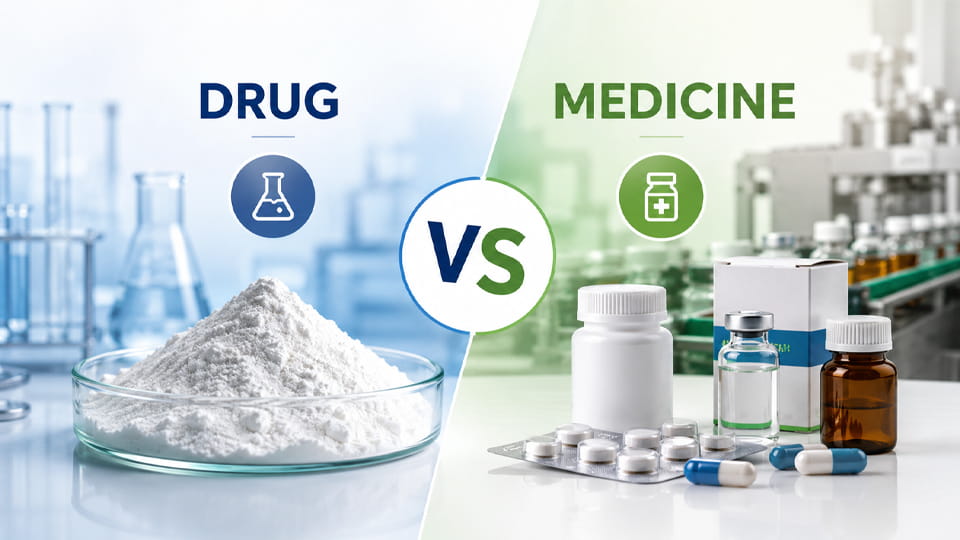
В фармацевтическом плане, а лекарство активное химическое или биологическое вещество, используемое для диагностики, излечивать, смягчать, обращаться, или предотвратить заболевание. FDA определяет лекарство в широком смысле как «Вещество, предназначенное для использования в диагностике, излечивать, смягчение последствий, уход, или профилактика заболеваний» у людей или животных. На практике, "лекарство" часто относится к чистому активному ингредиенту (API) сам. Например, ибупрофен или амоксициллин в виде порошка будут называться лекарственным веществом до того, как его превратят в лекарственное средство. таблетка или капсула.
Ключевые моменты о наркотики в фармацевтическом производстве:
В итоге, а лекарство это необработанное терапевтическое вещество или АФИ – «что», которое придает лекарству эффект. Этот термин часто используется при разработке и регулировании рецептур..
А лекарство (или лекарственный препарат) это готовый фармацевтический продукт предназначен для использования пациентами. Содержит одно или несколько лекарств. (API) плюс неактивные компоненты (вспомогательные вещества) и упакован для безопасного дозирования и использования.. Другими словами, после того, как лекарственное средство переведено в лекарственную форму (планшет, капсула, жидкость, и т. д.) и маркированы в контейнере, оно становится лекарством, готовым к продаже.
Проще говоря, а лекарство это упакованный, готовый к использованию продукт, используемый для диагностики или лечения заболевания. Он включает препарат в качестве главного ингредиента., но и все остальное (вспомогательные вещества, контейнер, этикетка).
Ниже приводится краткое изложение ключевые различия между лекарством и лекарством. Различия незаметны на простом языке, но важны в производственном и нормативном контексте.:
| Аспект | Лекарство | Лекарство (Лекарственный продукт) |
| Основное значение | Активное вещество (API) с терапевтическим эффектом | Готовый продукт, содержащий препарат, готов к использованию пациентом |
| Этап | Часто относится к ингредиенту на ранней стадии или исследовательскому соединению. | Относится к конечной лекарственной форме после ее приготовления и упаковки. |
| Композиция | Чистый активный ингредиент (например. аспирин порошок) | Включает API + вспомогательные вещества, контейнер, этикетка (например. таблетка аспирина в блистере) |
| Использовать контекст | Производство, Р&Д, нормативный (процесс утверждения) | Клиническое использование, прописывание, выдача (в медицинских учреждениях) |
| Регулирование | Широкое определение «лекарства» FDA включает API. | Строго регламентированная готовая продукция (Одобрения FDA/EMA, GMP) |
| Пример | Ибупрофен API, белок инсулина (сыпучее вещество) | Ибупрофен таблетки, инъекции инсулина во флаконах |
Проще говоря: А лекарство активное химическое/биологическое вещество с фармакологическим действием. А лекарство это препарат плюс рецептура и упаковка, предназначен для безопасного использования пациентами. Как выразился один из фармацевтических источников, «Каждое лекарство начинается с лекарства», но не каждое лекарство становится лекарством». Например, чистый морфин является наркотическим веществом; после составления доз для инъекций с физиологическим раствором и запечатывания во флаконах, это становится лекарством (обезболивающее средство).
Важнейшим моментом является то, что лекарство подразумевает регулируемый, расходный продукт, тогда как лекарство может означать только необработанное активное вещество или более широкий класс соединений.. В таблице выше показаны эти различия..
Чтобы полностью понять «лекарства против медицины»,» это помогает прояснить связанные термины, часто используемые в фармацевтике.:
Итог: В фармацевтическом производстве, «лекарственное вещество» это API, «лекарственный препарат» представляет собой разработанную лекарственную форму (таблетки, капсулы, инъекция, и т. д.), и "лекарство" это то, что вы называете лекарственным препаратом, когда он становится готовым к продаже терапевтическим продуктом.. Например, метформин – лекарственное вещество, Таблетка метформина 500 мг является лекарственным препаратом., и этот планшет (в своей упаковке) лекарство, которое принимает пациент.
Понимание этих терминов жизненно важно: как только мы узнаем лекарственную форму лекарственного препарата, мы можем выбрать правильный упаковочная линия превратить его в стабильное лекарство.
Формулировка & Разработка лекарственных форм: сырой лекарственное вещество сам по себе не готов к лечению пациентов. Его необходимо приготовить в подходящей лекарственной форме. (планшет, капсула, сироп, инъекция, и т. д.) – это основная часть развития производства. Каждая лекарственная форма требует определенных вспомогательных веществ и обработки. (смешивание, грануляция, стерилизация) стать лекарственный препарат. Например, чувствительные АФИ для инъекционных биологических препаратов требуют асептической обработки, тогда как стабильный API для таблетки проходит сушку и сжатие таблетки..
Нормативное одобрение: Такие агентства, как FDA или EMA, проверяют данные о лекарственном веществе. и лекарственный препарат/лекарство. Они оценивают безопасность API и эффективность окончательного состава.. Готовое лекарство должно соответствовать строгим стандартам. (GMP, стабильность, маркировка). FDA CGMP правила четко охватывают процессы упаковки и оборудование – как упаковывать лекарство (даже больше, чем сырой наркотик) строго регулируется.
Упаковка и маркировка: Это различие определяет потребности в упаковке.. Лекарственное вещество обычно имеет минимальную упаковку. (барабаны, флаконы для хранения). Лекарство, однако, требует первичная упаковка который защищает дозировку (например. Блистерные пакеты, бутылки, флаконы) и вторичная упаковка (коробки) для информации и отслеживания. Например, таблетки (готовый продукт) необходимы влагонепроницаемые блистерные упаковки или системы бутылок и укупорочных средств для обеспечения срока годности. Для инъекционных лекарств необходимы стерильные стеклянные флаконы или ампулы с защитой от вскрытия.. Для каждой комбинации API и лекарственной формы имеется подходящее упаковочное решение..
Выбор оборудования: Если вы думаете только об API, вы могли бы рассмотреть реакторы или миксеры. Но однажды вещество является лекарственным препаратом, нуждающимся в упаковке., вам нужна правильная упаковочная линия. Блистерные упаковочные машины, Капсульные машины для заполнения, жидкие наполнители, линии наполнения флаконов, Картонические машины - все становится актуальным. Признание «лекарства» означает упакованный продукт, что побуждает к закупке этих машин..
Суммируя, понимание «лекарств против медицины» помогает проектным командам знать когда и как интегрировать упаковку в производственный процесс. Это гарантирует, что лекарственный препарат не просто разработан, но должным образом защищены и представлены на рынке.
Упаковка — это последний важный шаг, который превращает готовый лекарственный препарат в лекарство, которое пациенты могут безопасно использовать.. В фармацевтическая упаковка, первичная упаковка находится в прямом контакте с дозировкой (лекарственный препарат) и обеспечивает первый барьер на пути деградации. Например, твердые желатиновые капсулы и таблетки часто попадают в алюминий-пластик Блистерные пакеты, в то время как жидкие сиропы идут в пластик (ПЭТ/ПЭВП) бутылки. Инъекционные препараты заполняют стерильные стеклянные флаконы или ампулы. Каждый первичный контейнер выбирается с учетом его инертности и барьерных свойств..
После запечатывания первичной упаковки, вторичная упаковка (коробки, этикетки, листовки) предоставляет информацию о пациенте и данные партии. Например, блистеры или флаконы группируются в фирменные картонные коробки с инструкцией по применению., номера партий, и штрих-коды – имеют решающее значение для соблюдения требований и безопасности пациентов.
В JinLuPacking, наши машины автоматизируют эти шаги. Автоматический блистерная упаковочная машина может запечатывать тысячи таблеток в блистеры в час; а капсульная начинка дозирует препарат в капсулы; а линия розлива и укупорки бутылок считает таблетки или разливает сиропы по бутылочкам; и картонажная машина упаковывает и упаковывает готовую продукцию. Все эти этапы – наполнение, укупорка, упаковка – убедитесь, что готовое лекарство точно дозировано, безопасный, и готов к распространению.
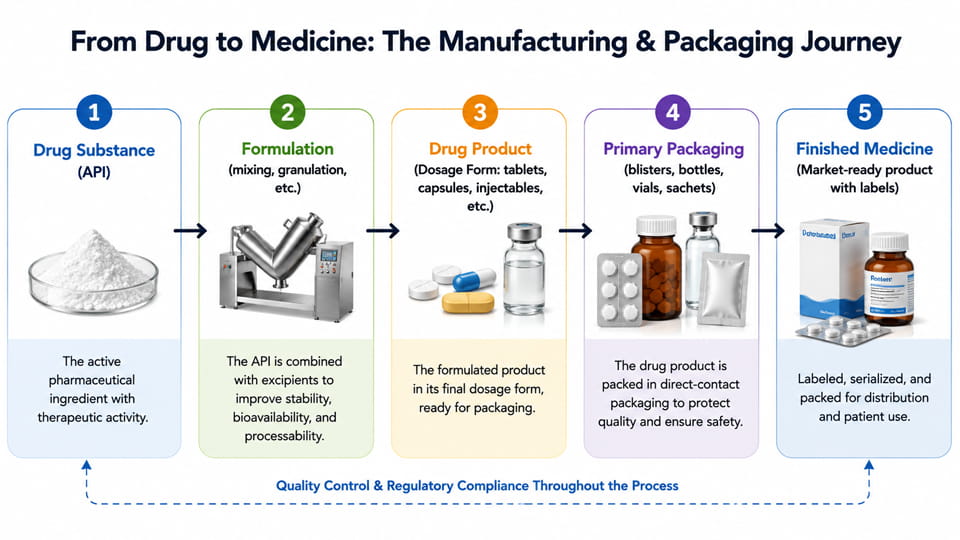
Фигура: Блок-схема препарата → Медицина: Активный лекарственное вещество (API) формулируется в виде лекарственный препарат (конкретная лекарственная форма). Затем оно переходит в первичная упаковка (например. блистеры для таблеток, бутылки для сиропов, стеклянные флаконы для инъекций). Окончательно, это становится готовое лекарство со вторичной упаковкой (коробки/этикетки) для использования пациентами.
Разные лекарственные формы требуют разных упаковочных решений.. В таблице ниже приведены типичные пары.:
| Лекарственная форма | Общая первичная упаковка | Пример JinLuEquipment |
| Таблетки (Твердый оральный) | Блистерные пакеты (Пленка ПВХ/ПВДХ), или пластик бутылки с винтовыми крышками | Блистерная упаковочная машина; Счет планшетов & Линия розлива |
| Капсулы (Оральный) | Блистерные пакеты, или флаконы, похожие на таблетки | Автоматическая машина для наполнения капсул; Блистерная машина |
| Пероральная жидкость (Сиропы) | Пластик (ПЭТ/ПЭВП) бутылки с безопасными для детей крышками | Система наполнения и укупорки жидкостей; Расшифровщик бутылок |
| Пудра / Саше | Пакеты-саше на одну дозу (пакеты из фольги или ламината) | Упаковочная машина для пакетов-саше/стиков; Линия готовых пакетов |
| Инъекции (Стерильный) | Стекло флаконы, ампулы, или предварительно заполненные шприцы, плюс фольгированные уплотнители | Наполнение флаконов/ампул & Стопорная линия; Индукционный герметик |
| Мази/Кремы | Ламинированные трубы (алюминий или пластик) | Машина для наполнения и запечатывания туб |
| Мягкие капсулы | Бутылки (ДОМАШНИЙ ПИТОМЕЦ) или блистерные упаковки | Блистерная машина для капсул Softgel; Счетная линия |
Выбор зависит от таких факторов, как стабильность лекарственной формы., бесплодие, и удобство пациента. Например, таблетки и капсулы часто используют блистерные машины или линии розлива бутылок, в то время как жидкости нуждаются ополаскиватели бутылок, наполнение, и укупорочные машины. Инъекционный лекарства требуют стерильных систем розлива в условиях чистых помещений.. Каждое решение поддерживается специализированным упаковочным оборудованием, обеспечивающим защиту лекарственного препарата., помеченный лекарство который встречает стандарты GMP.
Чтобы сделать это конкретным, вот несколько примеров, показывающих, как конкретные лекарства превращаются в лекарства:
В каждом примере показано: Лекарство (API) → Формулировка (таблетирование, наполнение, и т. д.) → Упаковка (волдырь, бутылка, флакон, пакетик) → Лекарство (конечный продукт с этикеткой).
Не обязательно. Любое лекарство начинается с лекарства, но не каждое лекарство становится лекарством. Многие химические или биологические соединения (наркотики) никогда не доходить до пациентов. Некоторые препараты остаются в R&D или используются только для исследований, и другие используются вне медицинских учреждений. (например. рекреационные наркотики). Только при изготовлении препарата, проверено, и одобрено, станет ли оно лекарством.
Как отмечается в одном из ответов на часто задаваемые вопросы, «Аспирин – это и лекарство, и лекарство». Это наркотик в своей химической форме. (ацетилсалициловая кислота) и становится лекарством, когда его формулируют и используют для лечения лихорадки., боль, или воспаление». Ключевым моментом является предполагаемое использование и презентация.: использование в качестве готового для пациента продукта делает его лекарством.
В итоге, только одобрено, продукты, предназначенные для пациентов лекарства. Понимание этого помогает производителям и регулирующим органам различать экспериментальные вещества и реальные рыночные продукты..
В итоге, "лекарство" обычно относится к активному ингредиенту или любому фармацевтическому агенту, пока "лекарство" (лекарственный препарат) относится к готовому, готовый к использованию продукт, содержащий этот препарат. Это различие важно для фармацевтического производства.: оно ведет Р&Д, нормативный статус, и выбор упаковки. Понимание этих терминов помогает нам обеспечить продвижение лекарственного вещества через процесс приготовления и упаковка правильно, чтобы стать стабильным, совместимое лекарство.
Когда разработка новой лекарственной формы, помнить: правильная упаковочная линия (блистерный упаковщик, капсульный наполнитель, линия бутылок, наполнитель флаконов, картон, и т. д.) необходим для защита лекарства и соответствие GMP. Например, производители планшетов полагаются на Блистерные упаковочные машины и подсчет/заполнение строк, в то время как инъекционные препараты требуют машины для наполнения и укупорки флаконов/ампул и надежная вторичная упаковка. ДжинЛуУпаковка предлагает полный спектр фармацевтическое упаковочное оборудование индивидуально для каждой лекарственной формы – от планшет & образование волдырей на капсулах к упаковка-саше и картонирование.
Готовы превратить ваш препарат в лекарство, готовое к выходу на рынок? Ознакомьтесь с нашими решениями: планшет & Машины для упаковки в блистерные капсулы для твердых доз, машины для наполнения капсул порошком/жидкие капсулы, пакетик & готовые машины для изготовления пакетов для порошков, и картонажные машины для окончательной упаковки. Наше оборудование помогает защитить качество продукции, обеспечить безопасность пациента, и оптимизируйте свою производственную линию от лекарства до готового лекарства.
Не совсем. В обычном разговоре они пересекаются, но технически лекарство часто означает активный ингредиент или любое фармакологическое вещество., тогда как лекарство - это готовый продукт, который дают пациентам. Можно сказать: «В каждом лекарстве есть лекарство»., но лекарство само по себе не может быть лекарством, пока оно не будет сформулировано»..
По сути, это одна и та же концепция в большинстве фармацевтических контекстов.. Лекарственный препарат – это готовая лекарственная форма. (планшет, капсула, инъекция) готов к продаже. Лекарство – это то, как называется лекарственный препарат, когда он упакован для использования пациентами.. На практике, разрешенные лекарственные препараты (с маркировкой) лекарства.
Лекарственное вещество (или API) чистый активный ингредиент – химическое или биологическое вещество, оказывающее терапевтический эффект. Лекарственный продукт – это конечный препарат, содержащий это вещество., плюс вспомогательные вещества, в лекарственной форме (таблетка, решение, и т. д.). Подумайте о соли и солонке: соль (лекарственное вещество) это ингредиент; соль с антислеживателем в бутылке (лекарственный препарат) это полезный продукт.
Упаковка имеет решающее значение для превращения лекарства в лекарство. Как отмечается в ресурсах JinLuPacking, фармацевтическая упаковка (Блистерные пакеты, флаконы, бутылки) защищает стабильность и дозировку лекарственного препарата, и обеспечивает соблюдение правил. Правильная упаковка и маркировка превращают рассыпчатую лекарственную субстанцию в безопасную., удобное лекарство.
Да. Такое соединение, как ибупрофен или ацетаминофен, является лекарственным веществом.. Когда из него сделают безрецептурную таблетку с инструкциями, это тоже лекарство. Это зависит от формы и использования. Как отмечалось выше, аспирин с химической точки зрения является лекарством, но его называют лекарством, если он находится в таблетках для облегчения боли.. То же самое со многими обезболивающими., антибиотики, и т. д..
Врачи часто используют слово «лекарство» в нейтральном смысле любого фармацевтического средства.. На клиническом жаргоне и в праве (как Закон FDA), «лекарство» — официальный термин для терапевтического вещества.. Он охватывает все: от сиропа от кашля до химиотерапии.. Тем временем, «Медицина» более дружелюбна к пациентам. Поэтому врач может прописать ибупрофен (лекарство) как обезболивающее (лекарство).
Ссылки:
1.Глоссарий терминов Drugs@FDA -- НАС. Управление по контролю за продуктами и лекарствами
2.Классификация продуктов как лекарственные средства и устройства и дополнительные вопросы классификации продуктов -- НАС. Управление по контролю за продуктами и лекарствами
3.Глоссарий (P термины: фармацевтический продукт, наполнитель, исходный материал) -- ВОЗ
4.Глоссарий предварительной квалификации -- ВОЗ
5.Лекарственные формы | FDA -- НАС. Управление по контролю за продуктами и лекарствами
6.Q7A Руководство по надлежащей производственной практике для активных фармацевтических ингредиентов -- НАС. Управление по контролю за продуктами и лекарствами
