
Если вы когда-нибудь задумывались, что на самом деле заставляет лекарство работать, ответ обычно такой API (Активный фармацевтический ингредиент). Будь то планшет, капсула, инъекция, или сироп, API — это компонент, ответственный за достижение запланированного терапевтического эффекта.. Проще говоря, это часть лекарства, которое лечит болезнь, облегчает симптомы, или обеспечивает желаемый медицинский результат, в то время как другие ингредиенты, известные как вспомогательные вещества, в основном поддерживают рецептуру и доставку. Для фармацевтических производителей, группы закупок, и руководители производства, понимание API имеет важное значение, поскольку они напрямую влияют на качество продукта., Соответствие нормативным требованиям, производственные процессы, и, в конечном итоге, безопасность пациентов.
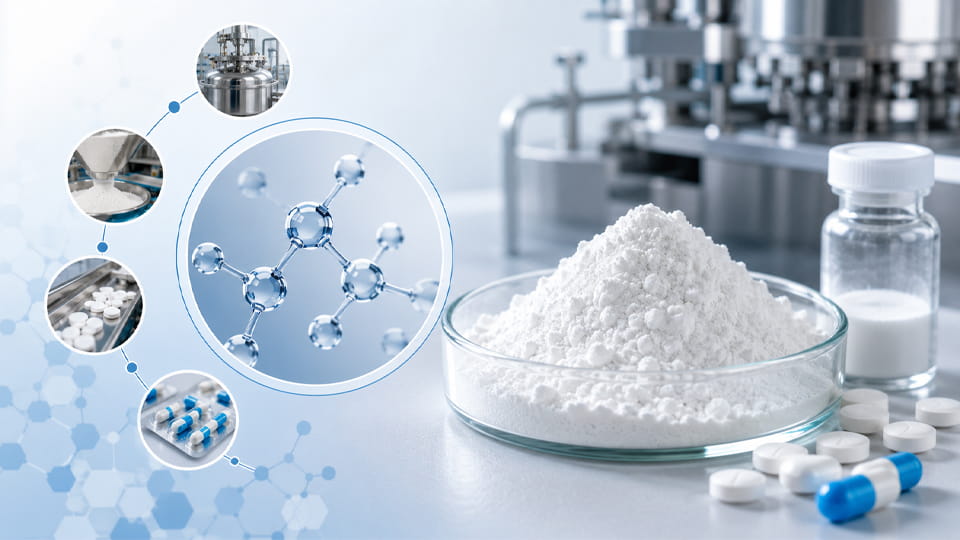
Ан API это Активный фармацевтический ингредиент - активное лекарственное вещество в лекарственном средстве, оказывающем терапевтический эффект. Проще говоря, это химия (или биологический) компонент, который выполняет работу (например. снижение температуры, убийство бактерий, облегчение боли). Например, в таблетке ацетаминофена, ацетаминофен сам по себе является API; другие ингредиенты (связующие, наполнители, покрытия) являются вспомогательные вещества. США. Национальный институт рака определяет API как «основной ингредиент лекарства, вызывающий желаемый эффект лекарства».
На практике, Производство лекарств начинается с одного или нескольких API и превращает их в конечный продукт (планшет, капсула, жидкость, и т. д.) под строгим контролем качества. Как отмечает один из источников, фармацевтическое производство по сути «означает преобразование активных фармацевтических ингредиентов (API) и вспомогательные вещества в лекарственные формы (как таблетки, капсулы, жидкости, или инъекции) посредством различных операций подразделения (фрезерование, грануляция, сжатие, покрытие, наполнение, и т. д.)». Каждый шаг должен быть точным: регулирующие органы требуют, чтобы каждая партия «имела те ингредиенты и силу, о которых она заявляет».. Суммируя, без API, не было бы лекарств – они основа лекарственного препарата.
API часто представляют собой порошки или концентраты высокой чистоты.; затем их смешивают с наполнителями и формуют в таблетки., капсулы, или другие лекарственные формы (см. ниже). Ключевым моментом является то, что АФИ — активные препараты, тогда как все остальное в составе просто помогает безопасно и эффективно доставлять лекарство..
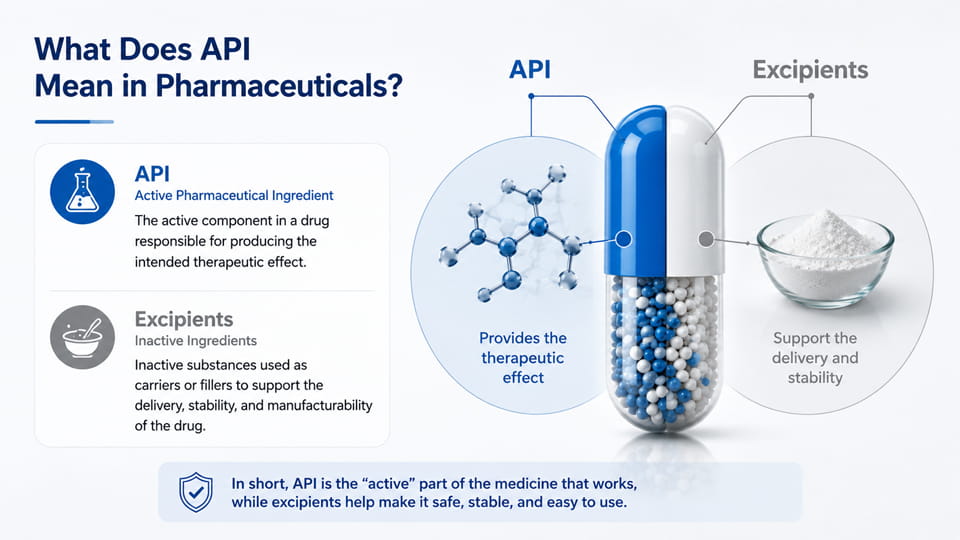
| Особенность | API (Активный ингредиент) | Наполнитель (Неактивный ингредиент) |
| Роль/Функция | Обеспечивает терапевтический эффект (активное лекарство) | Служит носителем, связующее, наполнитель, стабилизатор, и т. д., для API |
| Фармакологическая активность | Да – биологически активный. | Нет – фармакологически инертен. |
| Типичное количество | Обычно небольшое количество (мг или мкг). | В целом масса формулировки. |
| Примеры | Парацетамол (ацетаминофен), амоксициллин, аторвастатин, и т. д.. | Лактоза, микрокристаллическая целлюлоза, стеарат магния, и т. д.. |
| Важность | Решающее значение для эффективности; определяет функцию препарата. | Обеспечивает стабильность таблеток, технологичность, и биодоступность. |
Другими словами, API — это «активные» части, тогда как вспомогательные вещества являются «вспомогательными» частями. Как объясняет один из отраслевых источников: «АФИ — это нерасфасованные лекарственные средства, которые фармацевтически активны и вызывают желаемый фармакологический эффект., тогда как вспомогательные вещества представляют собой фармакологически неактивные вещества, которые обычно используются в качестве носителя АФИ»..
Оба необходимы: API для эффекта, вспомогательные вещества для обеспечения этого эффекта в безопасном, стабильная лекарственная форма. Понимание разницы является ключевым моментом в фармацевтическом производстве..
API приходят две широкие категории: низкомолекулярный (синтетический) лекарства и биологические препараты.
Полезный способ запомнить: Малые молекулы химически синтезируются и обычно представляют собой таблетки; Крупномолекулярные биологические препараты происходят из живых систем и часто являются инъекционными. Каждый тип имеет свой собственный путь производства и регулирования., но оба являются «АФИ», если они являются активным ингредиентом конечного препарата..
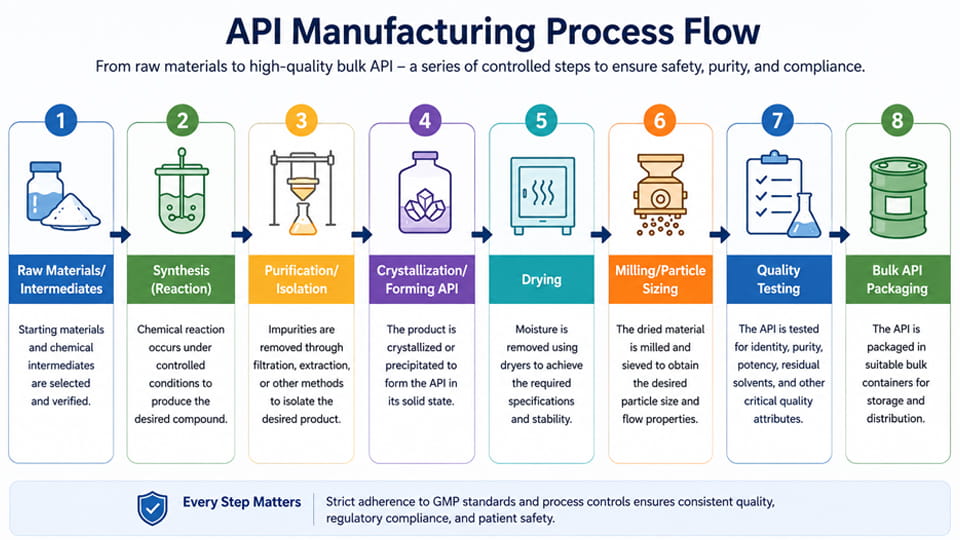
Производство API представляет собой сложный, многоэтапный процесс, включающий тщательную химию или биологию. Упрощенный блок-схема типичного производства API (для синтетических низкомолекулярных АФИ) показано ниже:
Каждый шаг должен следовать CGMP (действующая надлежащая производственная практика) правила. Например, я Q7 (и GMP ВОЗ) предоставить рекомендации, специфичные для API. Как отмечает ВОЗ, «Строгость GMP при производстве API должна возрастать по мере перехода процесса от ранних этапов API к заключительным этапам., очищение, и упаковка». На практике это означает строгую документацию., валидированная очистка оборудования, квалифицированный персонал, и внутрипроцессный контроль.
Процессно-аналитическая технология (ПАТ) и автоматизация все чаще используются для мониторинга реакций в режиме реального времени.. Отрасль также движется в сторону непрерывное производство где сырье непрерывно проходит через этапы реакции и очистки, а не периодически.. Непрерывные процессы могут повысить эффективность и последовательность, хотя серийное производство остается распространенным явлением.
В итоге: Производство API — это строго контролируемая производственная линия., от сырья или клеточных культур до готового активного ингредиента, со строгим контролем качества на каждом этапе. Результатом является массовый API, который безопасен., мощный, и готовы к использованию в лекарственном средстве.
Качество имеет первостепенное значение в производстве API. Регулирующие органы (FDA, ЕМА, и т. д.) требуют, чтобы производители API строго соблюдали Надлежащая производственная практика (GMP) чтобы гарантировать соответствие каждой партии стандартам качества. Для API, ICH Q7 — это ключевое руководство, в котором описываются правила GMP, специфичные для активных ингредиентов.. Некоторые критические аспекты включают в себя:
Всемирная организация здравоохранения (ВОЗ) руководство подчеркивает, что строгость возрастает ближе к заключительным шагам. Ранние промежуточные люди могут иметь меньше контроля, но как только исходный материал API определен (точка, с которой применяется GMP), последующие шаги (кристаллизация, окончательная очистка) проводятся по самым высоким стандартам.
Суммируя, Контроль качества API является комплексным: «Обеспечение качества является важнейшим аспектом производства API» GMP охватывает все «от поиска сырья до испытаний конечного продукта».. Это гарантирует, что конечный API будет безопасным и эффективным при превращении в лекарство..
Важно различать API из готовая лекарственная форма (финал, лекарство, готовое для пациентов).
ФПП определяет как API реализуется на практике. Согласно нормативным определениям, готовая лекарственная форма является «окончательным, полностью произведенный лекарственный препарат, содержащий лекарственное вещество и все необходимые вспомогательные вещества., и обрабатывается в определенном формате доставки, например планшет, капсула, инъекция, и т. д.".
Ключевые различия:
| Этап | Определение/Пример |
| API (Лекарственное вещество) | Активное лекарственное соединение само по себе (например. гентамицин порошок). |
| Готовый лекарственный препарат | Форма лекарства (например. инъекция гентамицина) содержащий API плюс вспомогательные вещества. |
Таким образом, API – это основное лекарственное средство, в то время как готовый продукт — это то, как этот агент сформулирован и упакован для использования.. Хорошее производство гарантирует, что «готовый лекарственный препарат содержит правильный АФИ в нужной дозировке».. Упаковочное оборудование, такое как Пережи для планшетов или капсульные наполнители затем конвертируйте смеси АФИ и вспомогательные вещества в FPP., которые запечатаны в блистерах, бутылки, или другие контейнеры.
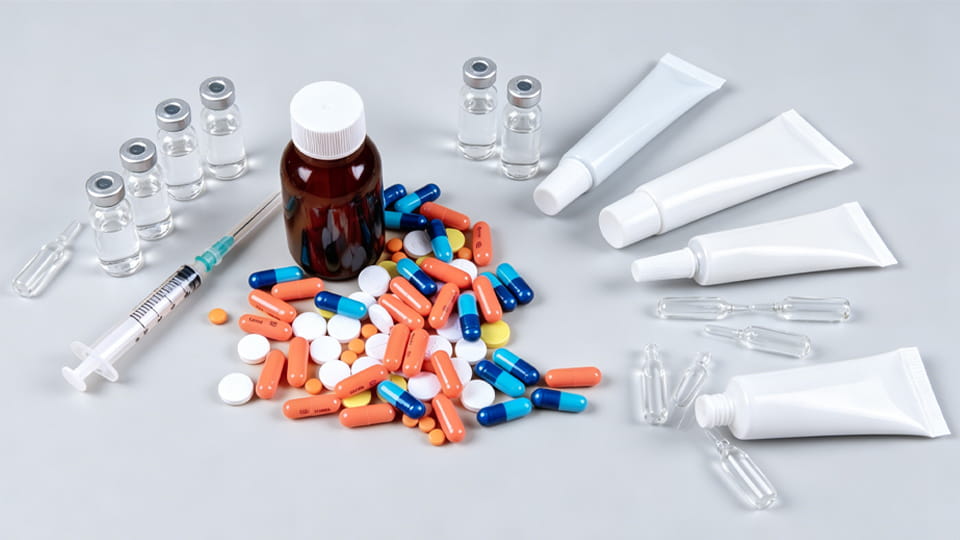
Производители API сталкиваются с рядом отраслевых проблем:
Эти проблемы означают, что производителям API необходимо постоянно инвестировать в оптимизацию процессов., согласие, и устойчивость. Как сообщает один источник, внедрение надежных систем качества и соблюдение нормативных требований являются ключевыми стратегиями.. В итоге: поддержание высокого качества в условиях ценового давления, и обеспечение безопасности (особенно для HPAPI), являются основными препятствиями в современном производстве API.
После того, как API изготовлен и превращен в лекарство, упаковка становится решающим фактором для защиты качества продукта и обеспечения безопасности пациентов.. Функциональная упаковка защищает лекарство (и его API) от факторов окружающей среды и обеспечивает доставку правильной дозы. Ключевые аспекты упаковки включают в себя:
На практике, фармацевтическое упаковочное оборудование ссылки непосредственно на API. Например:
Интегрируя эти системы, фармацевтические заводы гарантируют, что API (активный ингредиент) достигает пациента именно так, как предполагалось. Функциональная фармацевтическая упаковка (волдыри, бутылки, замки с защитой от несанкционированного доступа) имеет решающее значение для защиты продуктов от влаги, кислород, легкий и для безопасности пациентов.
Для таких компаний, как Джинлу Упаковка, это означает предложение комплексных упаковочных решений, соответствующих потребностям API.: НАПРИМЕР., блистерные упаковщики и линии подсчета, оптимизированные для чувствительных к влаге таблеток, или картонные машины, предназначенные для работы с бутылками с сиропами или флаконами.. Суммируя, упаковочное оборудование является последним звеном в цепи что обеспечивает стабильность и эффективность API до момента использования..
The API (Активный фармацевтический ингредиент) является основным компонентом, придающим лекарству терапевтический эффект.. От производства и контроля качества до соблюдения нормативных требований и окончательной упаковки, защита целостности API необходима для обеспечения безопасности продукта., эффективность, и последовательность во всей цепочке фармацевтических поставок.
Поскольку фармацевтические продукты становятся более совершенными, надежное упаковочное оборудование играет все более важную роль в обеспечении безопасности лекарственных средств на основе API. Упаковываете ли вы таблетки, капсулы, порошки, или гранулы, правильное упаковочное решение помогает поддерживать качество продукции, одновременно повышая эффективность производства и соблюдение требований.
Ищем надежное фармацевтическое упаковочное оборудование? Jinlu Packing предлагает блистерные упаковочные машины, подсчет линии, системы наполнения бутылок, Картонические машины, и полный упаковочные решения под ключ адаптировано к потребностям современных фармацевтических производителей. Свяжитесь с нашей командой чтобы обсудить ваш следующий упаковочный проект.
API означает активный фармацевтический ингредиент.. Это активное лекарственное вещество, оказывающее терапевтический эффект.. Например, АФИ в таблетке от гриппа будет соединением, которое борется с вирусом или облегчает симптомы..
API — это основа препарата, но само по себе это не окончательная лекарственная форма. Последний препарат (таблетка, капсула, инъекция) называется готовым продуктом или готовой лекарственной формой.. API должен быть составлен с вспомогательными веществами. (неактивные ингредиенты) и перерабатывается в дозировку, прежде чем она станет настоящим лекарством, которое принимают пациенты.
АФИ – это активные вещества, вызывающие желаемый фармакологический эффект.. Вспомогательные вещества — это неактивные ингредиенты, которые не влияют на заболевание, но помогают создать лекарственный препарат. (добавить объем, стабилизировать, освоение помощи, и т. д.). Суммируя: АФИ обладают терапевтической активностью; вспомогательные вещества не.
Производство API обычно включает химический синтез. (или биологическое брожение), с последующей очисткой, кристаллизация, сушка, и фрезерование. Каждый шаг строго контролируется для обеспечения чистоты и эффективности.. Этот процесс соответствует надлежащей производственной практике. (GMP). Упрощенный поток: Сырье → (Химический или биологический) Синтез → Очистка → Кристаллизация → Сушка → Измельчение → Проверка качества → Упаковка (как показано выше).
Качество API имеет решающее значение, поскольку оно напрямую влияет на безопасность и эффективность препарата.. Загрязненные или разложившиеся API могут вызывать побочные эффекты или снижать эффективность.. Регуляторы требуют строгого тестирования качества API (личность, чистота, потенция) согласно рекомендациям GMP. Высококачественные API помогают предотвратить отзыв лекарств и гарантировать, что каждая доза действует по назначению..
Примеры API включают распространенные лекарственные вещества, такие как парацетамол. (ацетаминофен), ибупрофен, амоксициллин, аторвастатин, и метформин. В биологических препаратах, примеры: инсулин, Герцептин (трастузумаб), моноклональные антитела, и вакцины. По сути, название API обычно представляет собой название непатентованного препарата..
GMP для API (например. я Q7) требует квалифицированного оборудования, проверенные процессы, обученный персонал, и комплексное тестирование. Производители должны контролировать перекрестное загрязнение, документируйте все шаги, и проверяйте каждую партию на чистоту и эффективность. ВОЗ отмечает, что строгость GMP усиливается к заключительным этапам API., обеспечение соответствия каждой партии стандартам идентичности и качества.
Надлежащая упаковка защищает АФИ в конечном препарате от факторов окружающей среды.. Например, Блистерные упаковки и бутылочные системы защищают от влаги и кислорода., сохранение стабильности API. Упаковочное оборудование (блистерные машины, наполнители, кепки, этикетировщики, картотеры) обеспечивает точную дозировку препарата, содержащего API, запечатанный, и помечены, поддержание безопасности и соблюдения требований.
HPAPI (Мощные API) являются чрезвычайно активными соединениями (часто рак или гормональные препараты) которые токсичны в очень малых дозах. Они требуют специального технологического оборудования. (изоляторы, закрытые системы) защитить работников. Спрос на HPAPI растет благодаря таргетной терапии, поэтому производители должны инвестировать в сдерживание и экспертизу.
API объединяется с вспомогательными веществами и обрабатывается для получения конечной лекарственной формы.. Например, таблетка изготавливается путем смешивания API с наполнителями и ее сжатия. Готовый продукт затем доставляет API пациенту удобным способом.. Упаковочный механизм (от наполнения до маркировки) соединяет производство АФИ с готовым к использованию лекарством.
Ссылки:
1.Q7 Руководство по надлежащей производственной практике для активных фармацевтических ингредиентов. Руководство для промышленности. — НАС. Управление по контролю за продуктами и лекарствами
2.Рекомендации по качеству: действующее вещество — Европейское агентство лекарственных средств
3.Активные фармацевтические ингредиенты — ВОЗ
4.ТРС 957 – Приложение 2: Надлежащая практика ВОЗ по производству активных фармацевтических ингредиентов (сыпучие лекарственные вещества) – ВОЗ