

А линия упаковки бутылок — это комплексная автоматизированная система, которая превращает пустые бутылки в маркированные, упакованная продукция. Для производителей фармацевтических препаратов и нутрицевтиков, эти линии повышают пропускную способность, сократить затраты на рабочую силу, и обеспечить GMP-совместимый выход. В этом руководстве объясняется, что такое линия по упаковке бутылок., как это работает, и задействованные ключевые машины. Мы охватываем различные типы линий (планшет, жидкость, нутрицевтика, и т. д.), перечислить основные преимущества автоматизации, и дадим практические советы по выбору правильной лески. Хотите ли вы Готовое решение для упаковки бутылок под ключ или сравниваете руководство и. автоматический, эта статья о вас рассказала.
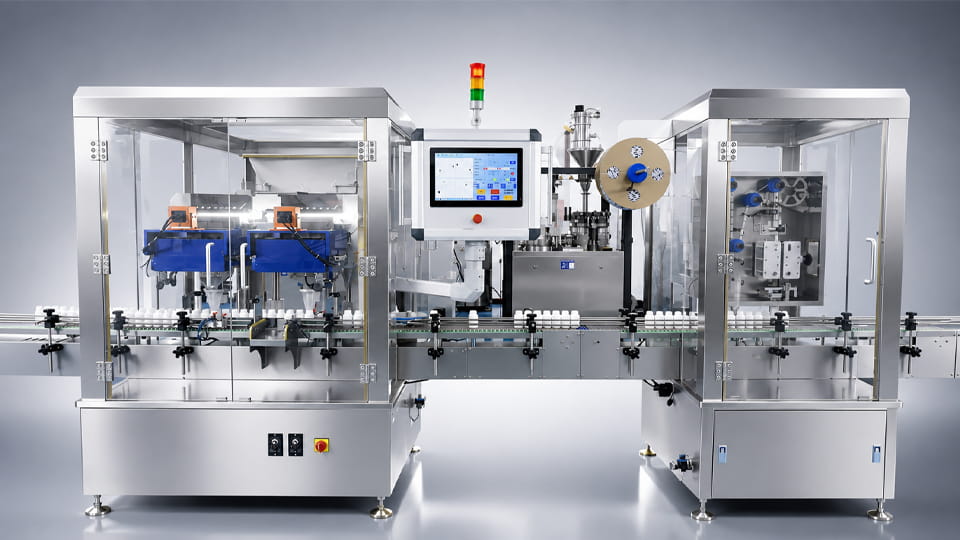
Фигура:Типичная линия по упаковке фармацевтических бутылок.
Линия упаковки бутылок – это ряд машин и конвейеров которые автоматически перерабатывают пустые бутылки в готовые, упакованные продукты. В фармацевтических препаратах, это означает, что нужно брать пустые таблетки или бутылки с жидкостью и выполнять такие действия, как подсчет/наполнение., укупорка, индукционная герметизация (запечатывание фольгой), маркировка, и окончательная картонная упаковка. На практике, линия «полностью автоматизирует весь процесс, от разборки бутылок до подсчета, вставка осушителей, укупорка, запечатывание алюминиевой фольги, и маркировка».
Другими словами, вместо того, чтобы вручную собирать бутылки и наполнять их одну за другой, автоматизированный линия упаковки бутылок подает бутылочки через каждую станцию последовательно. Типичная линия начинается с расшифровщика бутылок (который ориентирует бутылки на конвейере вертикально), затем проходит через заполнение/подсчет, вата или влагопоглотитель (если необходимо), укупорка, индукционная герметизация, маркировка, и, наконец, картонирование. Эти машины работают синхронно под управлением ПЛК., формирование линии «под ключ», которая может работать непрерывно. Например, Один поставщик оборудования отмечает, что линия подсчета-наполнения «может быть соединена с расшифровщиком бутылок»., Высыпанная вставка, загрязняющая машина, машина для запечатывания алюминиевой фольги и этикетировочная машина», охватывает все основные этапы.
The сами бутылки может быть пластиковым (ДОМАШНИЙ ПИТОМЕЦ, ПНД), стекло, или другие материалы (янтарное стекло для светочувствительных продуктов, и т. д.). Линия обычно рассчитана на обработку бутылок различных размеров. (например. 30–диаметр 150 мм, 40–300 мм высота) и типы крышек (винтовые крышки, защелкивающиеся колпачки, замки с защитой от детей). Все детали, контактирующие с продуктом, изготовлены из нержавеющей стали класса GMP и соответствуют санитарным нормам. (гладкие поверхности, никаких мертвых ног) соответствовать нормативным стандартам. Многие машины оснащены датчиками и конвейерами для контроля качества. (например. проверка уровня заполнения, крутящий момент крышки, наличие этикеток) и поддержка сериализации (печать штрих-кода/QR-кода) для отслеживания.
Суммируя, а линия упаковки фармацевтических бутылок является интегрированным, проверенная система, которая выполняет все операции: от кормления из пустых бутылочек до окончательной упаковки в картонные коробки, обеспечение высокой скорости, точность, и соответствие.
Рабочий процесс линии упаковки бутылок включает в себя последовательность этапов подготовки, наполнять, тюлень, и упаковать бутылки. На блок-схеме ниже показана общая последовательность шагов.:
Фигура: Рабочий процесс типичной линии по упаковке бутылок.
На практике, не на всех линиях есть все станции. Например, линия для нечувствительных к влаге твердых материалов может не включать хлопчатобумажную вставку, в то время как в жидкостной линии не будет использоваться счетчик таблеток. Вот краткое изложение каждого шага:
Каждая из этих станций связана конвейерами и управляется центральной системой ПЛК/ЧМИ.. Вся линия обычно устанавливается в чистом помещении., построен для CGMP стандарты: рамы из нержавеющей стали (СУС304/316Л), Трубки, одобренные FDA, промывочные двигатели, и гладкие сварные швы. ПЛК автоматизация (Сименс, Panasonic, Омрон, и т. д.) синхронизирует скорость и работу всех машин.
[jl_youtube src=”https://www.youtube.com/embed/tSrCmYZ-OQ0″]
Вот ключевые машины вы найдете на типичной линии по упаковке бутылок (с краткими характеристиками или преимуществами):
Подает и направляет пустые бутылки на конвейер. Высококачественный расшифровщик доставляет 50–120 бутылок/мин, работа с круглыми пластиковыми или ПЭТ-бутылками. Он использует вибрационные питатели и направляющие для поворота бутылок в вертикальное положение.. Современные расшифровщики полностью закрыты. (без пыли, CGMP) и оснащен системой управления PLC Siemens и оптическими/пневматическими датчиками., чтобы бутылки приходили правильно ориентированными (100% точность) без ручной загрузки. Быстрая смена деталей позволяет одному оператору менять размеры бутылок за считанные минуты..
Для твердых доз, а автоматическая счетная машина (также называется счетчик таблеток/капсул или наполнитель) бросает точное количество таблеток в каждую бутылку. В них используются высокоскоростные оптические датчики или счетные головки.. Счетчики ДжинЛу, например, ручка 3–40 мм твердых частиц, достижение выхода до 100 бутылок/час с >99.98% точность. (Версии с несколькими головками и несколькими полосами могут увеличить пропускную способность.) Они органично интегрируются: «От сортировки бутылок до маркировки… линию розлива бутылок можно подключить к расшифровщику бутылок, Высыпанная вставка, загрязняющая машина, [и] Этикетировочная машина». Суммируя, счетчик гарантирует, что в каждой бутылке будет правильное количество таблеток.
Для сиропов, инъекции, или другие жидкости, а автоматический наполнитель жидкости выдает каждую дозу. Жидкие наполнители Jinlu используют насос с сервоприводом и погружное сопло дизайн, что позволяет избежать пены и обратного стекания. Они бегут на 20–80 бутылок в минуту с точностью ±0,2 г, и адаптироваться к объемам бутылок от нескольких мл до литров. Заправочная станция часто оборудуется индексным столом или многосопловым коллектором для увеличения скорости.. Критически, эти машины управляются ПЛК/ЧМИ для точного контроля потока и наполнения на основе рецептов..
После заполнения, укупорщик ставит и закрепляет крышки. Хороший загрязняющая машина будет обрабатывать разные стили шапок (винтовые крышки, защелкивающиеся колпачки, устойчивый к детям, и т. д.) использование специальных головок. Он автоматически сортирует, кормит, и надевает колпачки с правильным моментом затяжки.. Укупорочные машины с сервоприводом Jinlu (например. модель XG-120) адаптироваться к разнообразным бутылкам и крышкам и достигать 120 бутылок/мин. Особенности включают регулировку крутящего момента в реальном времени. (с помощью маховика или серводвигателя) и проверка наличия шапки. Если колпачок смещен или отсутствует, система отклонит эту бутылку, обеспечение 100% совместимый вывод.
Также называется герметик из алюминиевой фольги. На этой станции под крышку накладывается термосвариваемый вкладыш из фольги для создания герметичного уплотнения.. Типичный индукционный герметик может обрабатывать до 120 бутылок/мин. Он запускает бутылки на конвейере под высокочастотной катушкой., кратковременный нагрев и приклеивание фольги. Этот шаг обеспечивает доказательства несанкционированного доступа и предотвращает утечки.. Современные упаковщики имеют двухрежимные головки для адаптации к бутылкам разного диаметра и встроенные вентиляторы охлаждения для непрерывной работы..
Нанесение печатных этикеток на бутылки.. Высокоскоростной роторный этикетировщики (как сериал ДжинЛу TBJ) может маркировать до 120 бутылок/мин с точностью ±1 мм. Они включают в себя разделитель бутылок чтобы равномерно расположить бутылки и умная система обнаружения чтобы идеально выровнять каждую этикетку. Многорежимные этикетировочные машины могут обрабатывать переднюю упаковку, обтекание, и многосторонняя маркировка. Встроенные кодирующие головки часто устанавливаются рядом с этикетировочными машинами для пакетной печати.. После маркировки, системы технического зрения могут проверять штрих-коды и текст на предмет соответствия требованиям сериализации..
После маркировки бутылок, группы бутылок (с инструкциями или листовками при необходимости) автоматически помещаются в коробки. Картонирующие машины можно возвести и закрыть до 400–450 коробок в минуту. В линиях бутылок, горизонтальный (боковая загрузка) картонщики - обычное дело. После формирования картонных коробок, упаковщики в коробки или укладчики на поддоны могут дополнительно упаковывать продукцию в пакеты. Эти конечные машины дополняют систему и часто имеют собственный ПЛК для синхронизации с вышестоящим оборудованием..
Каждая из этих машин является примером оборудование для упаковки бутылок. При соединении на конвейерах с центральным управлением ПЛК, они образуют высокоавтоматизированную линию упаковки бутылок.
Линии упаковки бутылок обычно классифицируются по основной тип продукта и приложение. Ниже приведен пример распространенных типов линий.:
| Тип линии | Продукт/Приложение |
| Линия по производству бутылок для таблеток/капсул | Пероральные твердые вещества: таблетки, капсулы, порошки (фармацевтика & добавки) |
| Линия для бутылок с жидкостью | Жидкости: сиропы, сиропы, тоники, инъекции (фармацевтика & нутрицевтика) |
| Витамин & Нутрицевтическая линия | Диетические добавки, Витамины, травяные таблетки (пищевые/здоровые добавки) |
| Линия косметических бутылок | Личная гигиена: кремы, лосьоны, сыворотки, масла (косметика) |
| Линия по производству химических бутылок | Промышленная/бытовая химия, реагенты (химикаты) |
| Предварительно заполненный шприц/болт | Специализированный фармацевтический стерильный розлив (инъекции) |
Эти линии имеют схожую архитектуру, но используют разные машины для розлива/укупорки, подходящие для конкретного продукта.. Например, а линия по производству бутылочек для таблеток использует счетные машины для таблеток, в то время как линия сиропа использует жидкостные насосы. Линии нутрицевтиков часто включают функции для деликатных продуктов. (мягкие капсулы, липкие витамины), тогда как косметические линии могут интегрировать термоусадочная оболочка или высокоскоростные капперы. В каждом случае, линия может быть настроена (типы сопел, конвейеры) в зависимости от формы бутылки и технологических потребностей.
Инвестиции в полностью автоматизированную линию упаковки бутылок имеют множество преимуществ по сравнению с ручной упаковкой.. Ключевые преимущества включают в себя:
В итоге, автоматические линии упаковки бутылок обеспечивают масштабируемость и контроль. С правильными машинами, производители достигают более высоких скоростей, меньшая рабочая сила, и более высокое качество продукции одновременно. Как отмечает один эксперт по упаковке, эти системы позволяют компаниям «обрабатывать большие объемы продукции за короткое время», сокращая при этом количество ошибок..
Линии упаковки бутылок необходимы во многих отраслях.:
Любая отрасль, которая разливает свою продукцию в бутылки, может получить выгоду от автоматизированной линии.. Даже нишевые продукты (таблетки пчелиного воска, КБД масло) используйте индивидуальные строки. Руководящий принцип заключается в том, могут ли высокая производительность и контроль качества улучшить производство – во всех этих отраслях., автоматические линии розлива бутылок играют ключевую роль.
Выбор идеальной линии упаковки бутылок зависит от нескольких факторов.. Вот что следует учитывать:
В итоге, укажите свой типы бутылок, форма продукта, целевые показатели вывода, и бюджет. Затем обратитесь к проверенному производителю для настройки индивидуальной линии.. Они должны предоставить подробную планировку, электрические требования, и ожидаемое время выполнения. (Стандартные полуавтоматические машины могут быть доставлены через несколько недель; На создание и тестирование полностью интегрированной линии часто уходит 2–4 месяца.) Всегда проверяйте производительность оборудования с помощью выборочных испытаний перед окончательным завершением..
| Ручная упаковка | Автоматическая упаковочная линия |
| Медленный (часто <20 БПМ) | Высокоскоростной (50–120 ударов в минуту или более) |
| Трудоемкий (много операторов) | Минимальный труд (один техник) |
| Переменная точность (человеческая ошибка) | Высокая точность (>99.9% точность) |
| Неравномерное качество (непоследовательное заполнение) | Стабильный вывод (повторяемое качество) |
| Более низкая начальная стоимость (но высокие операционные расходы) | Более высокие капвложения (но ниже OPEX) |
| Требуется минимальная интеграция оборудования | Интеграция под ключ (все-в-одном) |
| Трудно быстро масштабировать | Легко масштабируется путем добавления дорожек/модулей. |
Стол: Сравнение ручной упаковки и. автоматическая линия упаковки бутылок.
Как показывает таблица, автоматизация обеспечивает гораздо более высокую пропускную способность и согласованность. Это также облегчает отслеживание (штрихкодирование каждой бутылки) и часто может окупить себя через несколько лет за счет повышения эффективности.
Современный линия упаковки бутылок является основой эффективной фармацевтической (и нутрицевтики) Производство. За счет автоматизации заполнения, укупорка, уплотнение, и маркировка, эти линии максимизируют производительность, обеспечивая при этом качество и соответствие нормативным требованиям.. При выборе линии, согласуйте дизайн с типом вашего продукта (планшет против. жидкость), потребности в пропускной способности, и стандарты качества (GMP, сериализация, и т. д.). Ищите надежного поставщика, такого как Jinlu Packing, который предлагает комплексные решения и надежную поддержку..
В итоге: автоматизированная линия упаковки бутылок превращает пустые бутылки в готовые картонные коробки за одну бесперебойную операцию. Он может обрабатывать большие объемы (часто сотни в минуту) с исключительной точностью. Для руководителей предприятий и инженеров, преимущества – более высокая пропускная способность, меньшая рабочая сила, лучшая консистенция – прозрачны.
Готовы автоматизировать вашу упаковку? Свяжитесь с отделом продаж Jinlu Packing обсудить индивидуальную линию бутылок для вашей продукции. Предлагаем проектирование под ключ, ввод в эксплуатацию на месте, и гарантия 3 года. С 30 лет в производстве фармацевтического оборудования, Jinlu может помочь вам выбрать правильную скорость., формат, и уровень автоматизации – гарантия того, что ваша новая линия обеспечит быструю окупаемость инвестиций. Посещать www.jinlupacking.com или запросите ценовое предложение, чтобы начать.
Линия упаковки бутылок – это комплексная система машин, автоматизирующая упаковку бутилированной продукции.. Обычно он включает в себя расшифровщик бутылок., заправочная или счетная станция, каппер, герметик, маркировка машина, и часто картонщик. Вместе на этих этапах пустые бутылки превращаются в готовые., упакованные товары.
Автоматизированная линия следует установленному рабочему процессу: пустые бутылочки подаются вертикально (расшифрованный), потом перешел на наполнитель (для жидкостей) или счетная машина (для таблеток/капсул). Следующий, любые дополнительные предметы (хлопок или влагопоглотители) добавлены. Затем бутылки закрывают крышками., индукционная герметизация, и помечены. Окончательно, группы бутылок упакованы в картонные коробки.. Каждая машина синхронизируется с помощью ПЛК.. Современные линии могут даже корректироваться в режиме реального времени. (например. корректировка веса наполнения) поддерживать качество.
Это зависит от модели и формата.. Типичная скорость составляет 50–120 бутылок в минуту на полосу.. Например, Линия подсчета таблеток Jinlu работает со скоростью ~ 70 ударов в минуту., и многие машины для укупорки/маркировки обрабатывают 120 БПМ. Многополосные линии могут увеличить производительность (6-полосная стойка, например, мог бы сделать в 6 раз больше скорости по одной полосе движения). Для жидкостей, скорость около 20–80 ударов в минуту является обычным явлением.. Всегда проверяйте спецификацию поставщика, чтобы узнать точные расценки для выбранных вами конфигураций..
Ключевые компоненты:: расшифровщик бутылок, Машина для наполнения/счета, Вкладчики хлопка/осушителя, Автоматическая укупорочная машина, Индукционный герметик, Этикетировочная машина, Инспекционная станция, и картонирование/упаковщик коробок. Каждый из них поставляется OEM-производителем и устанавливается на общую раму конвейера.. На некоторых линиях также может быть установлен встроенный принтер для кодов партий и сортировщик бракованных изделий.. Точный состав зависит от того, твердый у вас продукт или жидкий., тип вашей бутылки, и потребности в упаковке.
Да, Линии бутылок могут работать как с таблетками, так и с капсулами., поскольку оба являются счетными твердыми телами. Линия будет включать наполнитель для подсчета таблеток/капсул., который обычно работает для любой небольшой твердой формы (капсулы, липкие конфеты, и т. д.) указанного размерного ряда. Переключение между таблетками и капсулами обычно заключается в настройке счетной головки и параметров.. Многие производители проектируют свои счетные машины так, чтобы они могли работать и с тем, и с другим, просто меняя рецепты.. Таким образом, на одной линии могут работать разные SKU. (например. таблетка витаминов за один прием, капсула в следующем) с минимальным временем переналадки.
Да – все машины на линии упаковки фармацевтических бутылок построены в соответствии со стандартами cGMP.. Они изготовлены из нержавеющей стали фармацевтического класса. (СС316Л), с санитарным исполнением (нет щелей, легкая очистка). Системы управления поддерживают FDA 21 CFR Part 11 (электронные записи) и обычно поставляются с подтверждающей документацией. Например, поставщики прямо заявляют, что их линии бутылок «соответствуют надлежащей производственной практике». (GMP) и правила FDA».. При выборе оборудования, ищите маркировку CE, Сертификаты ИСО, и подтвердите, что поставщик предоставляет протоколы IQ/OQ для соответствия нормативным требованиям..
Цены сильно различаются в зависимости от скорости и конфигурации.. Простая полуавтоматическая установка для подсчета и ограничения может стоить несколько тысяч долларов США., тогда как полностью интегрированная высокоскоростная линия может стоить десятки или даже сотни тысяч долларов.. Факторы включают количество станций. (например. дополнительная этикетировочная головка увеличивает стоимость), нестандартные инструменты, и дополнительные сведения о соблюдении требований (например. системы технического зрения). Всегда запрашивайте расценки для ваших точных требований. Не забудьте учитывать общую стоимость владения: немного более дорогая высококачественная линия часто со временем экономит деньги за счет сокращения отходов и времени простоев..
Линии по производству бутылок «под ключ» сложны. После изготовления и испытаний на заводе., установка на месте обычно занимает 2–7 дней на каждый модуль машины (в зависимости от подготовки сайта, коммунальные услуги, и обучение). Небольшие линии могут быть запущены через пару недель., в то время как для крупных многомашинных линий может потребоваться 4–6 недель на месте (включая проверку IQ/OQ). Механическую установку должен выполнить ваш поставщик., электрическое подключение, и начальная квалификация. Запланируйте дополнительное время для обучения операторов и проверки процессов..
Абсолютно. Ведущие производители (как Джинлу) специализируемся на индивидуальных решениях и решениях «под ключ». Вы можете настроить практически каждый аспект: длина конвейера, расстояние между машинами, язык ПЛК, цвет живописи, материалы деталей (например. СС304 против СС316), и даже интегрировать дополнения для конкретного клиента (металлоискатели, RFID-аппликаторы, и т. д.). Поскольку пространство и рабочий процесс каждого завода различаются, макеты адаптированы под. Если вам нужно модульное расширение (например. добавление второй заливочной головки позже) или уникальное обращение с продуктом (хрупкие продукты, специальные колпачки), обсуди это заранее. OEM-производитель обычно предлагает трехмерную планировку завода и моделирование перед сборкой..
Да – многие поставщики предлагают интегрированные линии «под ключ»., это означает, что они поставляют полностью спроектированную систему, готовую к работе.. Проект «под ключ» включает в себя проектирование, Производство, тестирование, перевозки, установка, и финальная квалификация. Это идеальный вариант, если вы хотите, чтобы за всю линию отвечал один поставщик.. По данным отраслевых справочников, линия по производству бутылок «под ключ» работает «поэтапно» от обработки бутылок до укупорки и маркировки. Такие компании, как Jinlu, будут работать с вами над макетом, а затем предоставят единую контрактную цену на всю линию.. Это упрощает проверку и поддержку, поскольку одна команда знает всю систему..
Ссылки:
1.Системы укупорки контейнеров для упаковки лекарственных и биологических препаратов для человека -- НАС. Управление по контролю за продуктами и лекарствами
2.Руководство по передовой практике: Упаковка, Маркировка, & Складские помещения —— ispe.org
3.ЧАСТЬ 211 — ТЕКУЩАЯ НАДЛЕЖАЩАЯ ПРАКТИКА ПРОИЗВОДСТВА ГОТОВЫХ ФАРМАЦЕВТИЧЕСКИХ СРЕДСТВ —— ecfr.gov
4.Ресурсы по маркировке картонных коробок и контейнеров -- НАС. Управление по контролю за продуктами и лекарствами
5.Руководство по упаковке фармацевтической продукции -- ВОЗ