
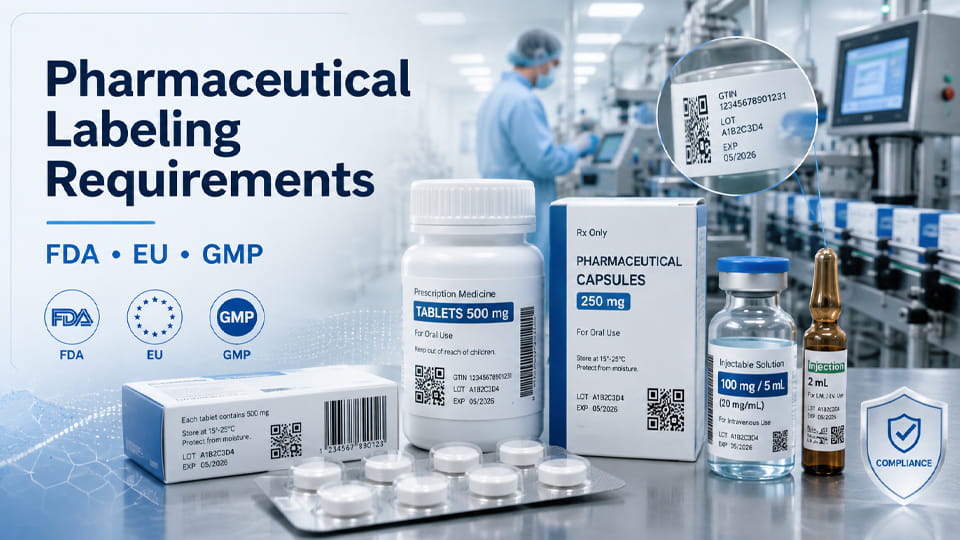
Requisitos de rotulagem farmacêutica definir as informações que devem constar nas embalagens dos medicamentos para apoiar a identificação do produto, uso seguro, conformidade regulatória, e rastreabilidade. Dependendo do mercado e do tipo de produto, um rótulo farmacêutico pode incluir o nome do produto, ingrediente ativo(é), força, forma farmacêutica, quantidade, número do lote ou lote, data de validade, condições de armazenamento, avisos, e informações do fabricante ou autorização de comercialização. Nos EUA, os requisitos são estabelecidos através de regulamentos da FDA, como 21 Parte CFR 201, enquanto a rotulagem dos medicamentos da UE é regida pela legislação farmacêutica europeia, incluindo a Diretiva 2001/83/CE. Os requisitos exatos podem variar de acordo com a categoria do medicamento, formato de embalagem, e mercado-alvo, então não existe um modelo de etiqueta único que funcione em qualquer lugar.
Para fabricantes farmacêuticos e equipes de embalagens, conformidade não se trata apenas de criar a arte correta. As informações aprovadas também devem ser aplicadas, impresso, inspecionado, e controlado corretamente durante toda a produção. Isto se torna especialmente importante para embalagens blister, garrafas, caixas, e outros formatos onde o espaço é limitado ou dados variáveis, como números de lote e datas de validade, devem ser adicionados durante a embalagem. Moderno linhas de embalagem pode usar máquinas de etiquetagem, sistemas de codificação em lote, leitores de código de barras ou DataMatrix, e sistemas de inspeção visual para ajudar a verificar se as informações corretas são aplicadas ao produto certo. Neste guia, detalharemos os principais requisitos de rotulagem farmacêutica, compare os principais requisitos da FDA e da UE, veja considerações especiais para diferentes formatos de embalagem, e explicar como o equipamento de etiquetagem e codificação pode apoiar uma solução mais confiável processo de embalagem farmacêutica.
“Requisitos de rotulagem farmacêutica” são as regras que regem quais informações devem ser impressas nas embalagens dos medicamentos. Nos EUA, Orientações da FDA (e 21 Parte CFR 201) definir declarações e formato de rótulo obrigatórios. Por exemplo, A orientação da FDA observa que todos os rótulos de medicamentos prescritos devem estar em conformidade com 21 CFR 201.56(d) & 201.57, cobrindo conteúdo e formato. Por regulamento, A “rotulagem” de medicamentos prescritos abrange três componentes: as informações de prescrição profissional (bula), os rótulos da caixa e do recipiente, e rotulagem do paciente. Em termos práticos, os requisitos de rotulagem garantem que cada embalagem identifique claramente o medicamento e a sua utilização: a marca e o nome genérico, ingrediente ativo(é), força, forma farmacêutica, quantidade, e o nome/endereço do fabricante devem aparecer, junto com informações de segurança (avisos, indicações) e códigos de rastreabilidade (lote, termo). Estas regras protegem a segurança do paciente e permitem recalls de produtos se necessário.
Em outras palavras, requisitos de rotulagem estabelecem padrões mínimos para informações legíveis e completas nas embalagens de medicamentos. Eles visam prevenir erros de medicação e garantir que qualquer pessoa (paciente, cuidador ou inspetor) pode verificar o produto. Por exemplo, A FDA lista explicitamente a data de validade e o código do lote como obrigatórios (veja a caixa “O rótulo também informa” abaixo), e a legislação da UE exige lote e prazo de validade nas caixas. Diretrizes de saúde (Ema, QUEM) e padrões da indústria como GS1 especificam ainda mais os formatos (E.G.. Códigos de barras DataMatrix) para apoiar a rastreabilidade global. Geral, conformidade significa que seus rótulos devem corresponder às caixas de seleção na tabela abaixo.
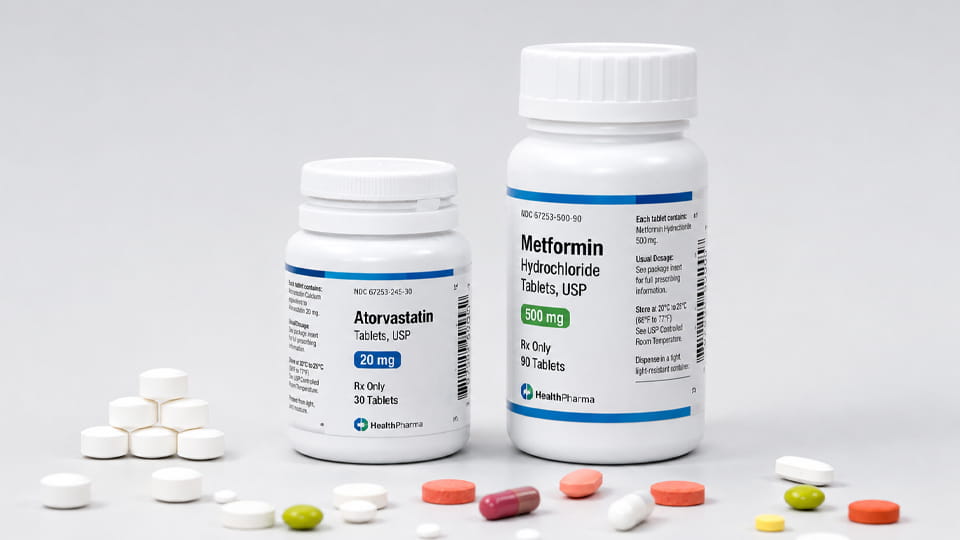
| Elemento de rótulo | Propósito |
| Nome do produto (marca & genérico) | Identifique o medicamento pelo nome, reduzir a confusão. |
| Ingrediente ativo(é) | Especifique a composição e dosagens do medicamento. |
| Força (dose) | Indicar dosagem (E.G.. mg por comprimido/mL). |
| Forma farmacêutica (comprimido, etc.) | Descrever a formulação (comprimido, cápsula, líquido). |
| Conteúdo líquido (contagem/volume) | Mostrar quantidade no pacote (E.G.. 30 comprimidos). |
| Número do lote/lote | Habilite a rastreabilidade e o recall, se necessário. |
| Expiração (termo) data | Certifique-se de que o medicamento seja usado antes que perca potência. |
| Nome do fabricante & endereço | Identifique a fonte de responsabilização. |
| Condições de armazenamento | Orientar sobre temperatura, luz, umidade. |
| Advertências/Cuidados | Avisos de segurança (Por exemplo, “Manter fora do alcance das crianças”). |
| Via de administração | Especifique o uso (Por exemplo, oral, injetável). |
| Uso/Indicação | (Opcional) Indique o que trata (especialmente. OTC). |
| Códigos regulatórios (NDC/MA Não.) | NÓS. NDC ou número de autorização de comercialização da UE. |
| Aviso inviolável | (Declaração “inviolável” se necessário). |
| Código de barras/DataMatrix | Codifica GTIN, lote, expiração para digitalização. |
Cada elemento tem um motivo claro. Por exemplo, o nome do produto e os ingredientes ajudam os pacientes a obter o medicamento certo; força, forma e via garantem a dosagem adequada; armazenamento e avisos protegem a segurança; lote/lote e vencimento fornecem rastreabilidade; e códigos de barras (Matriz de dados GS1) deixe as máquinas digitalizarem e verificarem o pacote. Autoridades reguladoras (FDA, Ema, etc.) exigem essencialmente todos esses itens. A tabela acima lista os campos comuns e suas funções. Em todos os casos, os rótulos devem ser legíveis (tamanho de fonte suficiente, contraste) e use formatos padrão (E.G.. Layout “Drug Facts” da FDA para medicamentos OTC).
Nos Estados Unidos, Regulamentos da FDA (21 Parte CFR 201) e orientações detalham o conteúdo dos rótulos dos medicamentos. Prescrição (Rx) drogas: Os principais requisitos incluem o estabelecido (genérico) nome da droga (21 CFR 201.50), forma farmacêutica, conteúdo líquido, e direções (21 CFR 201.55). Os rótulos também devem exibir o nome e endereço do fabricante/embalador/distribuidor (201.1), o Código Nacional de Drogas (201.2), e a declaração “Somente Rx”, se aplicável. Identificadores críticos como número de lote e data de validade são regidos por 21 CFR 201.17-18. Por exemplo, 201.17 determina a localização da data de validade na embalagem, e 201.18 requer um controle (muito) número para identificação. Na prática, A FDA insiste em imprimir claramente o lote ou número de lote e o prazo de validade tanto no recipiente imediato quanto na caixa. Por exemplo, A orientação “Drug Facts” da FDA observa explicitamente que o lote (lote) o código e a data de validade devem aparecer nos rótulos OTC, e a mesma lógica se aplica aos medicamentos Rx.
Medicamentos OTC (Painel de fatos sobre drogas): Todos os medicamentos sem receita médica devem levar o rótulo padronizado “Drug Facts” da FDA para ajudar os consumidores. Este painel segue um formato fixo com seções como Ingrediente Ativo(é), Propósito(é), Usos, Avisos, Instruções, e ingredientes inativos. O objetivo é consistência e clareza (a mesma estrutura para analgésicos, remédios para alergia, etc.). Por exemplo, o “Ingrediente Ativo(é)”linha lista a substância terapêutica e a força, “Propósito” dá sua categoria, e “Avisos/Instruções” fornecem orientação de uso. Além dessas seções, cada rótulo OTC deve mostrar uma data de validade (ou regra de expiração padrão de 3 anos) e código de lote, junto com o nome/endereço do fabricante e quantidade líquida. A página da FDA sobre fatos sobre medicamentos OTC confirma: “O rótulo também informa… a data de validade… Lote ou código do lote… Nome e endereço do fabricante… Quantidade líquida”. A não inclusão destes em um rótulo OTC violaria as regras de rotulagem da FDA.
Os regulamentos da FDA listam muitas declarações de rotulagem detalhadas. Por exemplo, 21 CFR 201.50-201.56 e 201.100-201.128 cobrir rótulos de contêineres e rótulos de caixas. Alguns destaques incluem:
Além do CFR, A orientação da FDA esclarece essas regras. Notavelmente, A FDA agora define a rotulagem de medicamentos prescritos em três partes: as informações de prescrição profissional (bula), o rótulo físico na caixa/recipiente, e qualquer folheto direcionado ao paciente. O próprio rótulo do recipiente deve conter o nome estabelecido do medicamento, força, forma farmacêutica, unidades de dosagem, número do lote, data de validade, CDN, e nome/endereço comercial – cobrindo essencialmente todas as caixas de seleção em nossa tabela acima. Isso garante que as farmácias distribuam o produto correto e que os pacientes vejam as principais informações de segurança.
Na União Europeia, Diretiva 2001/83/CE (conforme alterado) e regulamentos relacionados regem a rotulagem de medicamentos. As regras são amplamente semelhantes às dos EUA, mas com algumas diferenças (E.G.. requisitos de idioma, detalhes da autorização de comercialização). Artigo 54 de 2001/83 especifica o que deve estar na embalagem externa (ou embalagem imediata se não houver caixa externa). Deve exibir o nome completo do produto, força, forma farmacêutica, e via de administração. Deve indicar se o produto é para adultos ou crianças, se apropriado, e liste quaisquer advertências ou precauções especiais (E.G.. temperatura de armazenamento). Crucialmente, Artigo 54 requer a data de validade e o número do lote na embalagem externa, juntamente com o endereço do Titular da Autorização de Introdução no Mercado (MAH) e o número de autorização de introdução no mercado da UE. Na prática, isso significa que as embalagens da UE devem conter essencialmente as mesmas informações que as etiquetas dos EUA: nome, ingredientes, força, quantidade, avisos, termo, e lote, mais contato MAH.
Orientações e modelos da EMA (Declarações QRD) alinhar-se com essas regras. Para produtos autorizados centralmente, QRD (Revisão de Qualidade de Documentos) modelos padronizam a redação das declarações principais. A EMA também abordou recentemente a tecnologia moderna: permite códigos QR opcionais ou tecnologia de digitalização em etiquetas, se aprovado. Marcações Braille (Artigo 56.º-A) são necessários para a maioria caixas de remédios (indicando o nome do produto, força, formulário em Braille) como recurso de segurança para deficientes visuais. Cada país da UE também exige rotulagem na sua língua oficial(é). O resultado final: Etiquetas da UE (primário ou secundário) deve transmitir todos os detalhes críticos sobre medicamentos em termos claros (muitas vezes vários idiomas), semelhante aos requisitos dos EUA, mas com ênfase adicional na identidade do titular da AIM, números regulamentares, e folhetos multilíngues.
Formatos de embalagens primárias, como blisters, garrafas e frascos apresentam desafios especiais.
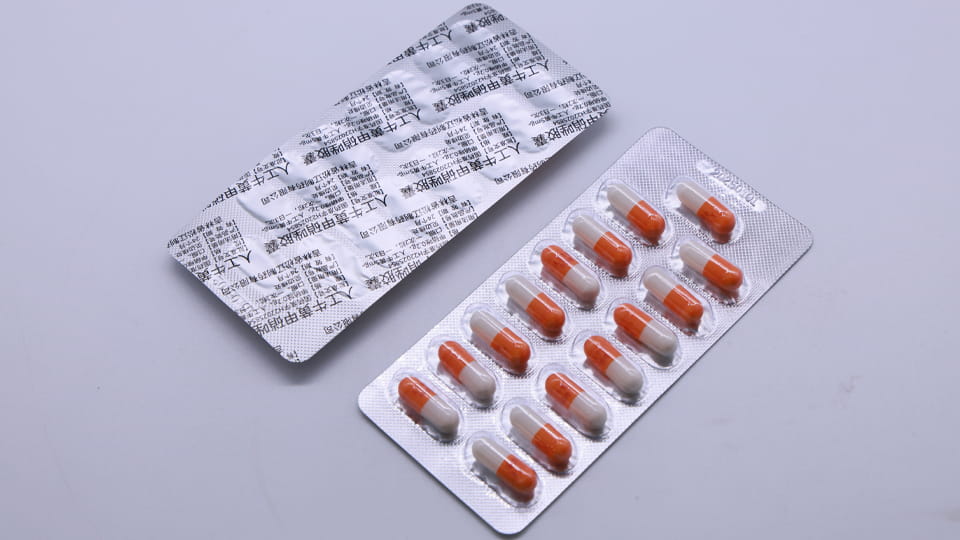
Blister pacotes: Por design, uma bolha (tira de bolsos selados) tem espaço limitado. Os reguladores reconhecem isso: A UE permite frequentemente rotulagem abreviada em cavidades individuais dos blisters se os detalhes completos estiverem na embalagem (usando um rótulo ou folheto de “bandeira”). Nos EUA, rótulos de blister (E.G.. suporte de folha) ainda deve incluir o nome do medicamento, força, número do lote e data de validade. Notas resumidas de um setor: “Embalagem blister os rótulos devem incluir o nome proprietário/genérico, força, muito, expiração… e cumprir os requisitos da FDA, como altura e contraste mínimos de texto.” Na prática, as películas blister geralmente têm o nome e o código impressos em cada cavidade ou em uma etiqueta de papel que envolve. Às vezes, um cartão blister terá um rótulo destacável que cobre múltiplas doses, mas ainda precisa das mesmas informações. A evidência de violação é inerente aos blisters selados, mas se for usado, uma declaração inviolável (E.G.. “não use se o selo estiver quebrado”) é necessário.
Garrafas e frascos: Garrafas redondas normalmente usam rótulos na frente e no verso. A etiqueta frontal geralmente mostra o nome do produto, força e quantidade para identificação rápida, e o contra-rótulo tem instruções, avisos e detalhes regulatórios. Máquinas de etiquetagem em tempo real (Veja abaixo) aplique esses rótulos em garrafas. Um exemplo do folheto da Jinlu Packing: a etiquetadora TBJ-120 foi projetada para garrafas redondas (20–110 mm de diâmetro) e inclui um codificador de fita em linha para impressão em lote/vencimento. Isso garante que o rótulo adesivo de cada frasco também receba o número de lote e o prazo de validade corretos, conforme necessário. Para blisters e frascos, o tamanho da fonte e o contraste da cor devem atender aos padrões legais (E.G.. FDA 21 CFR 201.15 na legibilidade). Resumidamente, Os fluxos de trabalho de rotulagem de blisters e frascos são projetados para atender às mesmas regras de conteúdo - nome, ingredientes, lote e vencimento - mesmo que o método de entrega (descascar, impressão direta, ou adesivo) difere.
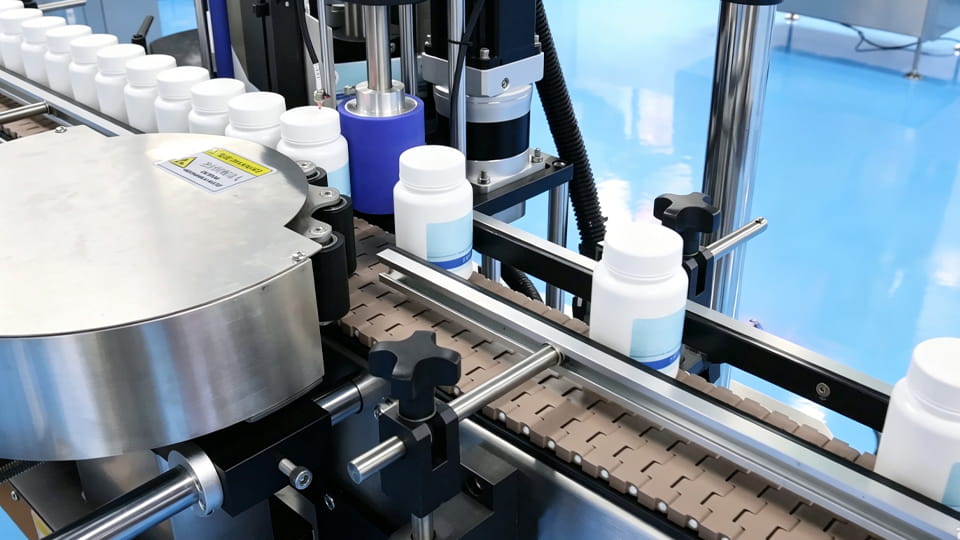
Figura: Frascos farmacêuticos rotulados em uma linha de produção. Os rótulos dos frascos devem exibir claramente a identidade do produto (nome, ingrediente ativo, força) e dados regulatórios essenciais (número do lote, termo, fabricante) para que cada frasco ou frasco individual possa ser verificado.
Imprimir números de lote e datas de validade é uma parte crítica da etiquetagem. Nas linhas farmacêuticas, equipamento de codificação dedicado é usado para imprimir essas informações em alta velocidade. Tecnologias comuns incluem Jato de tinta contínuo (CIJ) impressoras, Jato de tinta térmico (DELE) impressoras, Impressoras de transferência térmica (TTO) e Codificadores laser.
Essas impressoras normalmente são integradas logo após a etiquetagem. Por exemplo, uma garrafa pode passar por um codificador de jato de tinta imediatamente após a aplicação do rótulo, que imprime o lote e o vencimento na etiqueta na linha. A máquina Jinlu TBJ-120 (acima) inclui um máquina de codificação de fita para carimbar códigos em cada etiqueta. Independentemente do método, os dados impressos devem ser altamente legíveis e posicionados conforme exigido pelos regulamentos (E.G.. perto da parte inferior do painel de exibição para data de validade). Formatos legíveis por humanos (como AAMMDD) deve corresponder a todos os dados do código de barras. Em todo o caso, seja por jato de tinta ou laser, o objetivo principal é o mesmo: cada embalagem individual deve ter seu número de lote e data de validade para estar em conformidade com a rastreabilidade GMP. Sistemas de inspeção (Veja abaixo) verificará se cada código impresso está presente e correto.
As regulamentações modernas geralmente exigem códigos legíveis por máquina para rastreabilidade e combate à falsificação. O padrão global é o Matriz de dados GS1 2Código de barras D, que pode codificar vários elementos de dados em um pequeno símbolo quadrado. Na saúde, o padrão GS1 especifica a codificação de quatro atributos principais: GTIN (Número global do item comercial), data de validade, número do lote/lote, e número de série. O GTIN identifica exclusivamente o produto, enquanto os outros três permitem rastreamento e verificação em cada pacote.
Nos EUA, o 2013 Lei de Qualidade e Segurança de Medicamentos (DQSA) exige a serialização faseada de medicamentos prescritos. Por 2023, a Lei de Segurança da Cadeia de Abastecimento de Medicamentos exige um identificador de produto em cada unidade (que inclui lote e vencimento) para que as farmácias possam verificar os produtos no recebimento. Na UE, a Diretiva sobre Medicamentos Falsificados (Directive 2011/62/EU) já exige números de série exclusivos em muitas embalagens de medicamentos prescritos. Os pacotes da UE devem conter um DataMatrix GS1 contendo o GTIN, o número de série atribuído pelo fabricante, vencimento e lote (identificadores de aplicativos 17, 10). A orientação GS1 orienta explicitamente os fabricantes: “codifique seu GTIN, lote e prazo de validade no código de barras GS1 DataMatrix e afixar no produto”. Alguns mercados (Brasil, Índia, outros) também estão adotando requisitos de serialização semelhantes.
Além do DataMatrix, as empresas podem usar códigos QR ou RFID em etiquetas para engajamento do consumidor ou gerenciamento de estoque, mas o foco regulatório permanece nos códigos de barras 2D para conformidade. Esses códigos são impressos por etiquetadoras ou codificadores especializados na embalagem. Por exemplo, um método é fazer com que uma impressora a laser ou de etiquetas adicione o DataMatrix após a aplicação da etiqueta primária. Os sistemas de visão então examinam o DataMatrix para garantir que ele seja lido corretamente. Codificando lote e vencimento no código de barras, digitalizando em qualquer ponto (distribuição, dispensando) verifica instantaneamente esses valores. Resumindo, serialização significa cada pacote de dose unitária tem um código único que pode ser escaneado, vinculando-o aos seus dados de produção.
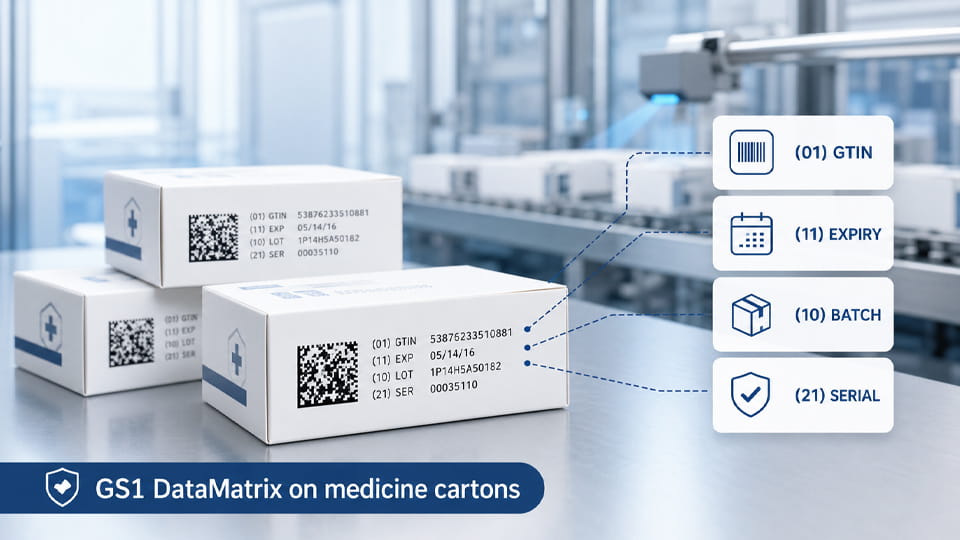
Figura: Código GS1 DataMatrix em embalagens de medicamentos contendo (01)GTIN, (11)termo, (10)lote, (21)serial. As embalagens farmacêuticas geralmente trazem um GS1 DataMatrix (2Código de barras D) com o GTIN, data de validade e número do lote/lote codificados. Isso permite digitalização e verificação em alta velocidade de todos os principais dados de rastreamento.
Máquinas automatizadas são essenciais para aplicar todos os rótulos e códigos necessários na velocidade da linha. Um fluxo de trabalho típico de embalagem farmacêutica com rotulagem pode ser assim:
Enchimento/carregamento de recipientes → Etiquetadora automática → Lote & Codificador de validade → Marcação de código de barras/serialização → Estação de inspeção visual → Embalagem / Embalagem secundária

Figura: Rotuladora automática com divisão de garrafas e codificador (Ascender Máquina de etiquetagem JL-TBJ-120). Rotuladoras automáticas aplicam etiquetas adesivas em garrafas, enquanto uma impressora integrada carimba o lote/validade. As etiquetadoras modernas podem funcionar em alta velocidade (Por exemplo, 120 garrafas/minuto) com precisão, e muitas vezes incluem impressoras de código para impressão térmica/jato de tinta de lote e data. Essas máquinas garantem que rótulos e códigos sejam aplicados de forma consistente em todos os contêineres.
Ao integrar essas etapas, uma linha de embalagens farmacêuticas garante que desde o envase até a embalagem final, cada unidade é rotulada corretamente e rastreável. Usando um sistema vinculado (ou linha de máquinas sincronizadas) minimiza o erro humano. Para inspeção crítica, câmeras de visão verificam se cada pacote atende à conformidade. Em última análise, equipamento de etiquetagem de alta qualidade (desde alimentadores de frascos até aplicadores de rótulos e codificadores) torna viável o cumprimento das regras de rótulo da FDA/EMA em grande escala.
Mesmo com cuidado, erros de rotulagem podem ocorrer. Problemas comuns incluem:
As estratégias de mitigação incluem: protocolos de mudança rigorosos (verifique novamente os rótulos ao trocar de produto), controles em processo (verificações manuais no local on-line), e 100% inspeção de visão. Leitores de código automatizados verificam se cada código impresso corresponde ao registro de produção. Muitas linhas também possuem leitores de código de barras de backup para garantir que as impressões de lote/validade sejam legíveis. Manter os arquivos de arte atualizados e seguir as listas de verificação de idiomas evita erros de conteúdo. Finalmente, o fornecimento de rótulos e tintas deve atender aos requisitos do sistema (E.G.. Tinta resistente a UV, se necessário). Um processo robusto de controle de qualidade detectará defeitos de rotulagem antes do lançamento.
Use esta lista de verificação para garantir que cada rótulo e embalagem atenda aos requisitos:
| Ponto de verificação de rotulagem | Concluído? |
| Nome do produto (marca & genérico) presente | ☐ |
| Ingrediente ativo(é) listado (com força) | ☐ |
| Força (dosagem) claramente declarado | ☐ |
| Forma farmacêutica (comprimido, solução, etc.) incluído | ☐ |
| Número do lote/lote impresso e legível | ☐ |
| Data de validade impressa e legível | ☐ |
| Fabricante (nome & endereço) presente | ☐ |
| Condições de armazenamento declaradas (E.G.. "Loja <25°C”) | ☐ |
| Declarações de aviso/cuidado incluídas | ☐ |
| Código de barras/DataMatrix (GTIN+expiração+lote) presente | ☐ |
| Conteúdo líquido (quantidade ou volume) indicado | ☐ |
| Códigos regulatórios (CDN, número de licença) incluído | ☐ |
| O tamanho/legibilidade da fonte atende aos regulamentos | ☐ |
| Declaração inviolável (se necessário) | ☐ |
Revise cada ponto acima em relação às suas etiquetas impressas. Por exemplo, A FDA exige explicitamente a data de validade e o número do lote, e os regulamentos da UE determinam o nome do produto, força e conteúdo. Se algum item estiver faltando ou ilegível, o pacote não é compatível. Esta lista de verificação pode servir como uma tabela de referência para auditorias de qualidade.
A rotulagem precisa é uma parte inegociável da fabricação farmacêutica. Ao compreender os requisitos acima, você pode criar rótulos e fluxos de trabalho em conformidade com a FDA, EMA e regras globais. Lembre-se dos principais elementos do rótulo (identidade do produto, ingredientes, informações de segurança, e codificação) e compare-os com a lista de verificação de conformidade. As linhas de embalagem modernas usam etiquetadoras automatizadas, codificadores e sistemas de visão para manter as taxas de erro próximas de zero.
Se você precisa de equipamentos robustos para etiquetagem e codificação, considere as soluções da Jinlu Packing. Jinlu oferece uma variedade de máquinas de embalagem farmacêutica - de máquinas automáticas de rotulagem de garrafas (E.G.. a série TBJ) para codificadores de lote/expiração e completo linhas de embalagem – tudo projetado para Conformidade com BPF. Nossas máquinas integram etiquetagem, impressão e inspeção para ajudá-lo a atender facilmente aos requisitos de etiquetagem. Por exemplo, A etiquetadora de garrafas redondas da Jinlu lida com garrafas de 20 a 110 mm em até 120 BPM, aplicação de etiquetas e impressão de códigos de data/lote em uma única passagem. Explore as máquinas de etiquetagem e de embalagem da Jinlu para obter mais detalhes. Combinando bons processos com o equipamento certo, você pode garantir que cada embalagem de medicamento esteja corretamente rotulada quanto à segurança e conformidade.
Os requisitos de rotulagem farmacêutica são as regras que definem quais informações devem aparecer no rótulo de um medicamento, recipiente, caixa, ou folheto informativo. Eles podem cobrir o nome do produto, ingredientes ativos, força, forma farmacêutica, número do lote, data de validade, avisos, condições de armazenamento, detalhes do fabricante, e outras informações regulatórias. Os requisitos variam de acordo com o país, tipo de droga, e formato da embalagem.
Um rótulo farmacêutico pode precisar incluir o nome do produto, ingrediente ativo, força, forma farmacêutica, conteúdo, número do lote ou lote, data de validade, informações do fabricante ou autorização de comercialização, condições de armazenamento, avisos, e outros detalhes específicos do mercado. A informação exata depende do quadro regulamentar aplicável e da categoria do produto.
Nos Estados Unidos, os rótulos dos medicamentos devem estar em conformidade com os regulamentos de rotulagem aplicáveis da FDA, incluindo 21 Parte CFR 201. Os requisitos diferem entre medicamentos prescritos e vendidos sem receita. A rotulagem de medicamentos prescritos segue requisitos como 21 CFR 201.56 e 201.57, enquanto os produtos OTC geralmente usam o formato padronizado Drug Facts sob 21 CFR 201.66.
Os requisitos de rotulagem farmacêutica da UE exigem geralmente informações importantes, como o nome do medicamento, força, forma farmacêutica, substâncias ativas, conteúdo, excipientes relevantes, data de validade, e número do lote. Requisitos adicionais podem ser aplicados dependendo do produto e do mercado. O quadro da UE também inclui requisitos para folhetos informativos e recursos de acessibilidade, como Braille nas embalagens.
Sim, a identificação de lote ou lote é uma parte importante da embalagem farmacêutica e da rastreabilidade. Por exemplo, As regras da UE exigem especificamente o número do lote em determinadas embalagens imediatas, incluindo blisters, juntamente com informações como nome do produto e data de validade. Os requisitos específicos podem variar de acordo com o mercado e o tipo de produto.
Uma data de validade é exigida em muitas embalagens farmacêuticas e é um elemento-chave para a identificação e uso seguro do produto. Por exemplo, Os requisitos da UE especificam informações sobre o prazo de validade para embalagens imediatas, como blisters e pequenas unidades de embalagem. O formato e posicionamento exatos dependem dos requisitos de mercado aplicáveis.
Os requisitos do blister dependem do mercado e da configuração da embalagem. Sob as regras da UE, os blisters colocados dentro de uma embalagem externa devem conter informações importantes, incluindo o nome do medicamento, titular da autorização de introdução no mercado, data de validade, e número do lote. As informações também devem ser legíveis, compreensível, e indelével.
A serialização farmacêutica é a atribuição e o gerenciamento de um identificador exclusivo para uma embalagem individual de medicamento vendável para apoiar a identificação e rastreabilidade do produto.. A serialização geralmente funciona com códigos 2D e outros sistemas de identificação de produtos, mas os requisitos exatos dependem do mercado-alvo e dos regulamentos aplicáveis.
Equipamentos comuns de rotulagem e codificação farmacêutica incluem máquinas de rotulagem automática, máquinas de rotulagem de garrafas, sistemas de codificação em lote, impressoras jato de tinta ou laser, leitores de código de barras, sistemas de inspeção visual, e equipamento de serialização. A configuração correta depende do formato da embalagem, velocidade de produção, design de etiqueta, requisitos de dados variáveis, e nível de inspeção exigido.
Os fabricantes devem primeiro identificar os requisitos para cada mercado-alvo e produto, em seguida, aprove a arte da etiqueta e os dados variáveis antes da produção. A linha de embalagem também deve controlar a seleção do rótulo, impressão em lote e data de validade, código de barras ou dados de serialização, posicionamento da etiqueta, inspeção de visão, e rejeição de produtos incorretos. Os procedimentos GMP devem apoiar a documentação, liberação de linha, controle de mudança, e rastreabilidade.
Referências:
1.Perguntas frequentes sobre rotulagem de medicamentos prescritos —— NÓS. Food and Drug Administration
2.Recursos de rotulagem de caixas e contêineres —— NÓS. Food and Drug Administration
3.TRS 902 – Anexo 9: Diretrizes sobre embalagens de produtos farmacêuticos —— QUEM
4.Requisitos de informações do produto —— Agência Europeia de Medicamentos
5.Anexo da diretriz da Comissão Europeia sobre “Excipientes na rotulagem e folheto informativo de medicamentos para uso humano”’ —— Agência Europeia de Medicamentos
6.21 CFR § 201.66 – Requisitos de formato e conteúdo para balcão (OTC) rotulagem de medicamentos. —— Instituto de Informação Jurídica