

Boas Práticas de Fabricação (BPF) diretrizes ditam regras rígidas para equipamento de embalagem farmacêutica para garantir a qualidade do produto e a segurança do paciente. Os principais requisitos incluem design higiênico da máquina, materiais não reativos, qualificação completa do equipamento (IR/WH/PQ), limpeza validada, automação para reduzir erros, integridade de dados (21 CFR Parte 11) e rastreabilidade do produto (serialização). Este guia cobre a FDA, Padrões da EMA/UE e da OMS, apresenta uma lista de verificação de BPF e explica como escolher e manter Máquinas de embalagem em conformidade com GMP.
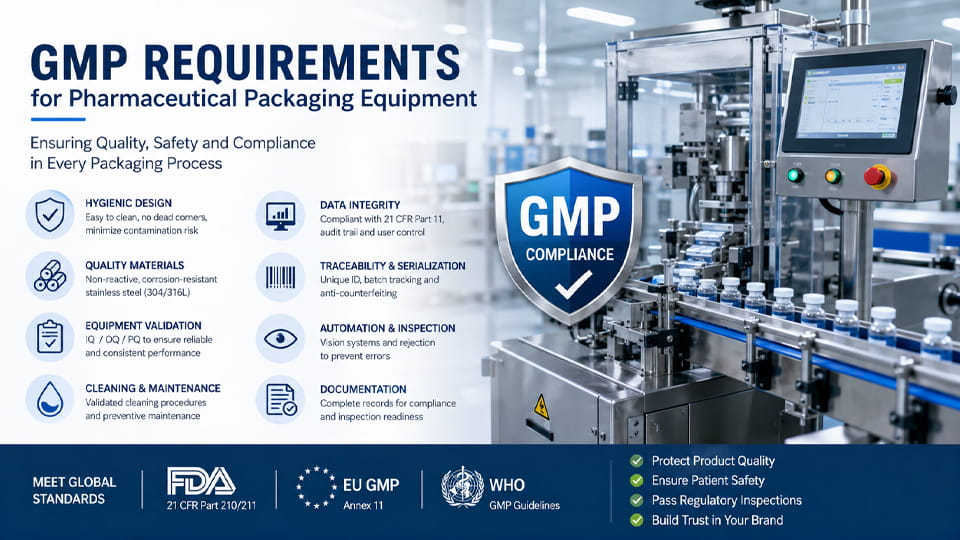
BPF (Boas Práticas de Fabricação) é a estrutura de qualidade que garante que os produtos farmacêuticos sejam produzidos e controlados de forma consistente. Na embalagem, GMP significa projetos e processos que evitam confusões ou contaminação. Agências reguladoras como a FDA (21 CFR210/211), Ema (EU GMP Part I, Anexos) e QUEM (diretrizes de qualidade farmacêutica) todos exigem equipamentos usados em embalagens para atender aos princípios GMP. O objetivo é proteger o produto identidade, força, qualidade e pureza (sem reações químicas indesejadas ou contaminação). Os reguladores globais também enfatizam que os processos e equipamentos de embalagem devem ser validado/qualificado assim como as etapas de fabricação de medicamentos, e que apenas pessoal treinado opere sob procedimentos escritos.
As máquinas de embalagem devem ter sanitário, design limpável. Isso significa aço inoxidável (E.G.. 304 ou 316L de qualidade alimentar) construção, superfícies lisas, planos inclinados para evitar armadilhas de poeira, e sem pernas mortas ou cavidades escondidas. A orientação da FDA observa que o equipamento “deve ser construído e localizado para facilitar a limpeza” e “evitar a contaminação de outras… operações”. Da mesma forma, as GMP da UE exigem equipamentos de fabricação “fácil e completamente limpos” com procedimentos escritos detalhados. Na prática, máquinas GMP modernas geralmente usam cantilever ("sacada") projetos que isolam motores e sistemas de lubrificação da área do produto. Todas as zonas devem ser acessíveis para inspeção, limpando, e esfregando. Por exemplo, A Jinlupacking observa que as máquinas de blister compatíveis usam superfícies inclinadas e aço SUS316L em todas as peças de contato com o produto para evitar armadilhas de partículas.
Todas as peças em contato com o produto devem ser não reativo e não absorvente, então eles não lixiviam ou ligam ingredientes ativos. O CGMP da FDA exige que “qualquer superfície de equipamento em contato com…produtos farmacêuticos reativos, aditivo, ou absorvente de modo a alterar a... qualidade do medicamento”. Da mesma maneira, GMP da UE diz que as peças de contato “não devem ser reativas, aditivo ou absorvente…que afetará a qualidade do produto”. Na prática, isso significa usar aço inoxidável de qualidade limpa (SUS316L) ou plásticos de qualidade farmacêutica, e lubrificantes de qualidade alimentar. Todos os acessórios, as vedações e as mangueiras devem ser compatíveis com os medicamentos e agentes de limpeza utilizados. Por exemplo, juntas de nível hospitalar e tubos de PTFE são preferidos para evitar corrosão ou resíduos. O resultado são equipamentos de embalagem que não podem contaminar ou degradar o produto.
GMP exige qualificação completa do equipamento. Após a instalação, uma máquina nova ou modificada deve ser submetida Qualificação de Instalação (QI), Qualificação Operacional (QO), e Qualificação de Desempenho (QP).
Os inspetores da FDA enfatizam que “os novos equipamentos devem ser instalados adequadamente… e limpos antes do uso de acordo com procedimentos escritos” com “limpeza documentada e validada”. Fornecer equipamentos em conformidade com GMP significa fornecer um pacote completo de documentação de validação (Por exemplo, Protocolos e relatórios IQ/OQ/PQ). Isso geralmente é feito via FAT/SAT e forte suporte do fornecedor. Por exemplo, o blog da Hikma observa que as máquinas em conformidade com a FDA exigem “aço inoxidável SUS316L para todas as peças de contato” e “uma documentação IQ/OQ/PQ à prova de balas” para o sucesso da auditoria. Em outras palavras, sem QI/OQ/PQ documentado, o equipamento não é considerado validado por GMP.
(Diagrama de sereia: fluxo de etapas de validação IQ→OQ→PQ)
As linhas de embalagem devem ter processos de limpeza validados. Após cada execução de produto ou lote, o equipamento é limpo de acordo com procedimentos operacionais padrão (POPS). Os reguladores exigem que os procedimentos de limpeza sejam documentados, verificado, e periodicamente revalidado. A orientação das BPF da OMS observa que o design do equipamento deve ser considerado ao planejar a validação da limpeza, uma vez que o design pode influenciar a eficácia. Somente superfícies de contato requerem validação completa – áreas sem contato podem ser excluídas. Itens críticos (como funis ou bicos reutilizáveis) muitas vezes exigem o uso dedicado ou de um único produto para simplificar a limpeza. Na prática, as empresas definem limites de aceitação para resíduos e realizam testes de swab ou enxágue. As perguntas frequentes da FDA recomendam o uso de métodos como Carbono Orgânico Total (Índice) ou ensaios específicos para confirmar a remoção de resíduos.
Manutenção e calibração também são obrigatórias. GMP espera manutenção preventiva regular: peças defeituosas ou desgastadas devem ser reparadas antes que causem riscos de contaminação. Calibração de equipamentos (pesos, escalas, sensores) deve seguir procedimentos escritos com registros (21 CFR211.68). Por exemplo, A orientação da FDA diz que os dispositivos de medição e controle “devem ser calibrados e verificados em intervalos definidos” com registros mantidos. Isso garante que a máquina continue a funcionar dentro das especificações (Por exemplo, volume de enchimento correto, posicionamento da etiqueta).
Recursos automatizados suportam GMP, reduzindo erros humanos. As máquinas modernas geralmente incluem sistemas de visão, leitores de código de barras, ou controladores de peso para inspeção em linha. Por exemplo, leitores automatizados de etiquetas/códigos de barras verificam se cada pacote está corretamente rotulado e identificável – uma etapa central do GMP. A integração com sistemas MES/ERP pode registrar dados em lote. A rejeição automatizada elimina embalagens com preenchimento insuficiente ou defeituosas. Robótica (para manuseio de garrafas ou pick-and-place) aumentar a consistência. Na prática, muitas linhas GMP incluem recursos de dispositivos como intertravamentos (Por exemplo, a máquina não funciona se uma porta estiver aberta), protetores de mudança automática, e sensores para capturar congestionamentos. Todo software deve ter contas de usuário seguras (veja a próxima seção).
As GMP farmacêuticas exigem forte integridade de dados. Nos EUA e em muitos mercados, controles computadorizados devem atender 21CFRPart11: isso inclui logins exclusivos, trilhas de auditoria, e assinaturas eletrônicas. Todos os registros em lote, alarmes e alterações devem ser marcados com data e hora e protegidos contra adulteração. Por exemplo, FDA alerta que balanças com calibração automática ainda precisam de verificações externas, e o software de controle devem rastrear quem alterou os parâmetros e quando. Os principais requisitos incluem acesso baseado em função (operadores vs gerentes), registros de auditoria inalteráveis de alterações de parâmetros, e aprovação digital em etapas críticas. O Anexo11 da UE também exige sistemas validados e trilhas de auditoria para quaisquer sistemas informatizados relevantes para GMP. Em essência, a IHM/PLC da máquina deve impedir alterações não autorizadas. A integridade adequada dos dados também significa cópias eletrônicas dos POPs, registros de lote e registros de manutenção.
Regulamentações recentes (E.G.. Diretiva da UE sobre medicamentos falsificados, DSCSA dos EUA) exigem identificadores exclusivos em cada pacote primário. Os equipamentos de embalagem GMP devem suportar isso imprimindo/gravando códigos de barras 2D ou códigos QR. Rastreabilidade significa vincular cada código serializado a um lote de produção. O equipamento deve ser integrado ao software de serialização ou às câmeras para garantir que cada unidade receba um código exclusivo que esteja em conformidade com as regras do país. Isto não é apenas GMP, mas também lei de mercado. Na prática, os fabricantes geralmente instalam um codificador a laser ou jato de tinta e o conectam a um banco de dados que verifica a autenticidade de cada código. A linha de embalagem final deve permitir o recall ou rastreamento de qualquer lote através do seu código.
As GMP abrangem não apenas máquinas, mas todas as operações de embalagem. Os principais controles incluem:
Seguindo esses controles de processo, as empresas garantem que não ocorram confusões ou contaminações durante a embalagem.
| Exigência | Pontos-chave |
| Projeto | Higiênico, design cantilever ou varanda; sem zonas mortas; inclinado, superfícies acessíveis |
| Materiais | Grau farmacêutico (316eu) aço inoxidável; vedações/lubrificantes não reativos; soldas lisas |
| Validação | QI completo, QO, QP (instalação, qualificação operacional e de desempenho) |
| Limpeza | Procedimentos de limpeza validados; documentação/POPs; limpar no local, se aplicável |
| Manutenção | Cronogramas de manutenção preventiva; registros de peças de reposição; calibração (com registros) |
| Automação | Sistemas de visão, detectores de metais, rejeitar portões, scanners de etiquetas para reduzir confusões e erros |
| Integridade de dados | 21 Conformidade com CFRPart11: trilhas de auditoria, assinaturas eletrônicas, controles de acesso do usuário |
| Rastreabilidade | Serialização (2Códigos de barras/UIDs D); codificação em lote; ligação de códigos a registros de lote |
Máquinas diferentes têm desafios diferentes de GMP:
Máquinas de embalagem de bolha: Eles formam e selam bolsas de plástico/alumínio. Principais pontos de BPF: A área de formação e selagem térmica deve ser fechada ou em uma zona limpa para evitar contaminação. Os rolos e matrizes de vedação térmica não devem ter arestas vivas, e o sistema de vácuo (se presente) não deve liberar partículas nas bolhas. Para medicamentos sensíveis, máquinas de blister podem funcionar em ambientes controlados (capelas de fluxo laminar ou salas limpas).
Máquinas de encadernação: Essas caixas eretas, inserir produtos (bolhas, garrafas, saquetas), e feche as caixas. Necessidades de BPF: impressão e digitalização precisas de códigos de lote em cada caixa (100% verificação), e controle rígido de revistas cartonadas (para evitar confusão entre produtos diferentes). O controle de poeira pode ser um problema ao alimentar caixas e folhetos; portanto, filtros ou funis fechados são usados.
Máquinas de etiquetagem: Eles aplicam rótulos ou folhetos nas embalagens. Problemas de BPF: sincronização (para que os rótulos correspondam ao produto certo); câmeras de verificação para detectar etiquetas mal aplicadas ou ausentes; e superfícies de rotulagem limpas (os adesivos não devem contaminar o produto).
Contando & Máquinas de enchimento: Contadores de tablets, preenchimentos de cápsula, e enchedoras de garrafas lidam com sólidos ou líquidos a granel. GMP exige que todas as peças de contato possam ser limpas (às vezes CIP para sistemas líquidos), e todos os preenchimentos sejam precisos. Defeitos como preenchimento insuficiente devem ser rejeitados automaticamente (através de um controlador de peso). Para líquidos, bicos selados e desgaseificação podem evitar bolhas.
Máquinas de sachês/bolsas: Para pós ou grânulos. Eles geralmente precisam de recursos de limpeza de sachês (para remover pó derramado), e inspeção de tração da resistência da vedação. As facas para aparar bordas devem ser protegidas.
Em todos os casos, procurar validação específica do equipamento: Por exemplo, uma máquina de blister precisa de um teste de vazamento a vácuo (para garantir uma bolha verdadeiramente selada), e um cartonador precisa de validação de teste de queda (para mostrar que as caixas aguentam). Os fabricantes geralmente fornecem documentação (E.G.. um exemplo de plano OQ) para cada tipo de máquina. Ao considerar um linha chave na mão, garantir que o fornecedor tenha experiência na integração dessas máquinas em conformidade com GMP (E.G.. A integração demonstrada da Jinlu de blister + cartonadora + etiquetadora com controle contínuo).
[jl_youtube src=”https://www.youtube.com/embed/1Bb_J6rluac”]
Ao selecionar máquinas para sua linha farmacêutica, garantir que ele seja projetado e suportado para operações GMP:
👉 Para soluções personalizadas em conformidade com GMP, entre em contato com Jinlu Packing ou solicite um orçamento detalhado. Oferecemos certificado Máquinas de embalagem de bolha, máquinas de embalagem, máquinas de etiquetagem e pacotes completos de documentação. Nosso equipamento é projetado para atender aos padrões cGMP e integra recursos como transportadores de aço inoxidável, ferramentas de troca rápida, e módulos de serialização automatizados.
Os requisitos de BPF para equipamentos de embalagem farmacêutica abrangem todos os aspectos da máquina e do processo – desde o grau de aço e o design higiênico até a validação, limpeza, automação, e controles de dados. Implementá-los adequadamente garante que seus produtos sejam seguros, rastreável, e pronto para auditoria. Investir em equipamentos e processos compatíveis não atende apenas às regulamentações (FDA/EMA/OMS) mas também minimiza lembra e fortalece a garantia de qualidade. Escolha máquinas construídas para GMP, e sua linha de produção será eficiente e pronta para inspeção.
Os principais requisitos de GMP incluem design higiênico (aço inoxidável, sem zonas mortas), validação (IR/WH/PQ), procedimentos de limpeza validados, manutenção e calibração regulares, controles automatizados para evitar erros, e integridade robusta de dados (21 CFR 11) e rastreabilidade (serialização) medidas. Isso garante que não haja contaminação ou mistura de produtos.
A validação IQ/OQ/PQ fornece prova documentada de que o equipamento foi construído e funciona conforme planejado. IQ verifica a instalação adequada; OQ testa todas as funções e limites; PQ mostra que a máquina produz resultados consistentes em condições reais. Sem esta documentação, reguladores veem o equipamento como “não validado” e quaisquer dados de lote são suspeitos.
Equipamento GMP usa alta qualidade, materiais não corrosivos (como aço inoxidável 316L) para todas as peças em contato com o produto. Tem suave, soldas e superfícies laváveis. Os recursos incluem proteções fáceis de remover, Capacidades CIP, e rolamentos selados. Os painéis de controle devem ser selados ou blindados. Essencialmente, nada no projeto deve introduzir contaminação ou risco de corrosão.
Parte 11 rege registros e assinaturas eletrônicas. Para máquinas de embalagem, isso significa que o software/HMI deve impor logins de usuário, ter uma trilha de auditoria segura de quaisquer alterações (quem fez o quê, quando), e ativar a assinatura eletrônica de relatórios em lote. Ele garante dados em lote (preencher quantidades, números de lote, etc.) não pode ser alterado sem deixar vestígios. Os sistemas PLC modernos geralmente têm 21 CFR 11 modos integrados para uso farmacêutico.
A serialização está atribuindo um identificador exclusivo a cada unidade empacotada (geralmente um código 2D) e gravá-lo em um banco de dados. Regulamentos (Por exemplo, febre aftosa na UE, DSCSA dos EUA) agora exigem serialização em embalagens primárias e secundárias para evitar falsificações e permitir recalls. As linhas GMP devem ter codificadores e scanners para aplicar e verificar esses códigos. Isso permite a rastreabilidade total de cada caixa/garrafa até seu lote de produção.
A conformidade com as BPF garante que os medicamentos sejam embalados corretamente, evitando contaminação, confusões, e erros de rotulagem. Ajuda a manter a qualidade do produto e protege a segurança do paciente em toda a cadeia de abastecimento.
Os principais regulamentos GMP incluem:
•FDA 21 Parte CFR 210/211 (EUA)
• EU GMP (Volume EudraLex 4)
• Diretrizes de BPF da OMS
Os fabricantes devem cumprir os regulamentos do seu mercado-alvo.
Ao selecionar o equipamento, considerar:
• Design e materiais em conformidade com GMP
• Disponibilidade de documentos de validação (IR/WH/PQ)
• Integridade de dados e recursos de rastreabilidade
• Conformidade com os padrões FDA/UE/OMS
Escolher o fornecedor certo garante auditorias mais tranquilas e conformidade a longo prazo.
Referências:
1.Perguntas e respostas sobre os requisitos atuais de boas práticas de fabricação | Equipamento -- NÓS. Food and Drug Administration
2.Anexo 9 Diretrizes sobre embalagens de produtos farmacêuticos —— gmp-compliance.org
3.21 Parte CFR 211 – BOAS PRÁTICAS ATUAIS DE FABRICAÇÃO DE PRODUTOS FARMACÊUTICOS ACABADOS —— Instituto de Informação Jurídica
4.Princípios principais de GMP para produtos farmacêuticos -- QUEM