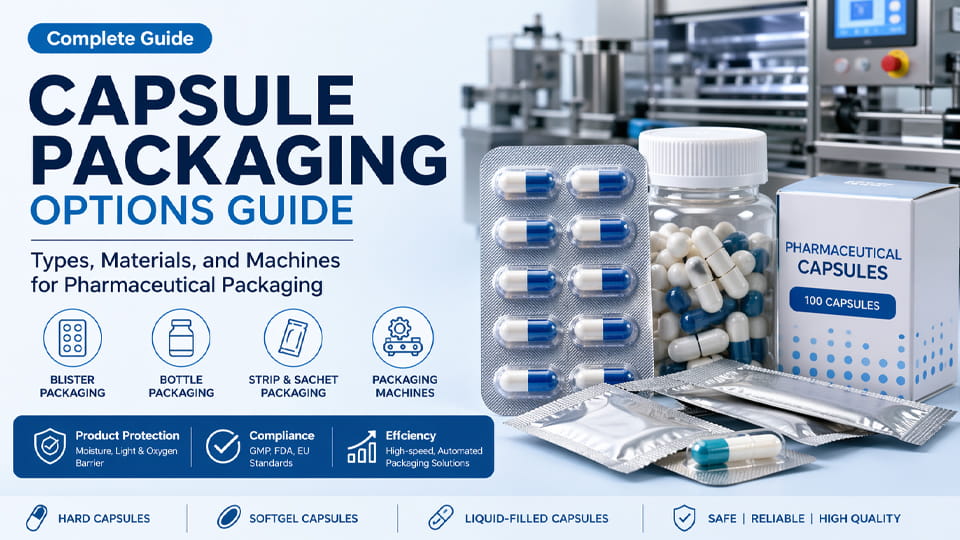
Guia completo para opções de embalagem de cápsulas: Tipos, Materiais, e máquinas para embalagens farmacêuticas
Guia completo para opções de embalagem de cápsulas: Tipos, Materiais, e máquinas para embalagens farmacêuticas
abril 25, 2026
Sem comentários
A embalagem das cápsulas refere-se à forma como as cápsulas farmacêuticas (casca dura ou cápsula mole) são fechados para distribuição e uso. Inclui embalagem primária (o recipiente imediato em contato com as cápsulas, E.G.. cavidades de bolhas ou garrafas) e embalagem secundária (caixas externas, caixas, e rótulos que protegem e identificam ainda mais o produto). Uma boa embalagem de cápsulas deve proteger o medicamento da umidade, luz, e contaminação, garantir a estabilidade durante o prazo de validade, e atender aos requisitos regulatórios. Por exemplo, A OMS observa que “Os componentes da embalagem envolvem o produto desde a produção até o uso,” e deve satisfazer funções como proteção, estabilidade, e identificação. Regulamentos GMP da FDA (21 CFR 211) exigir procedimentos escritos para inspecionar e testar materiais de embalagem após o recebimento, e exigir rotulagem segura e controles de violação. Na prática, devemos combinar o produto cápsula (forma farmacêutica, sensibilidade, dosagem, etc.) ao formato e material de embalagem apropriado.
A embalagem primária das cápsulas farmacêuticas – é crítica para proteção do produto, conformidade, e segurança do paciente: Mantém as cápsulas secas, não contaminado, e claramente rotulado. Por exemplo, blisters e frascos âmbar são conhecidos por serem ideais para medicamentos sensíveis à umidade. A embalagem certa também apoia a adesão do paciente (dosagem de blister de dose unitária, garrafas resistentes a crianças, rotulagem clara) e necessidades da cadeia de suprimentos (serialização, logística). Abaixo revisamos cada opção em detalhes.
Tipos de embalagens de cápsulas
Embalagem blister para cápsulas
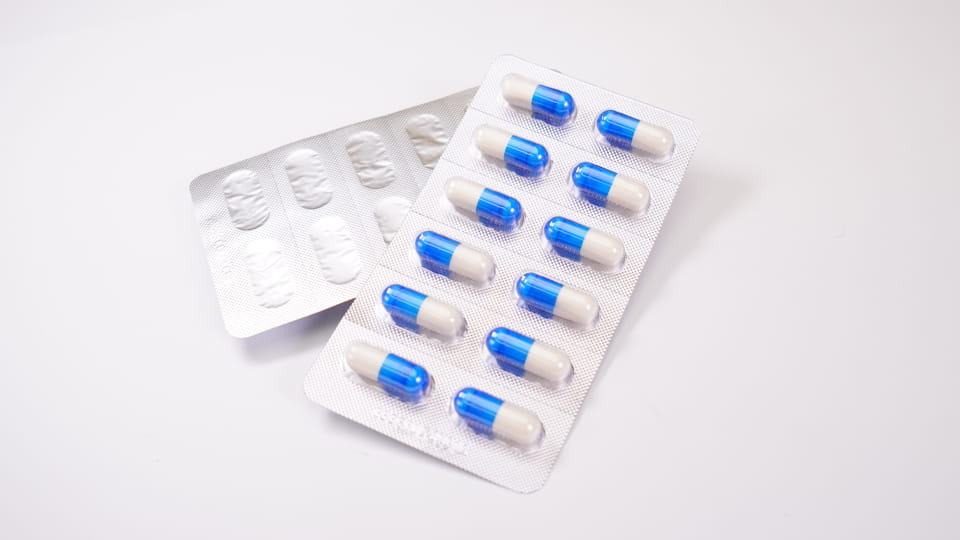
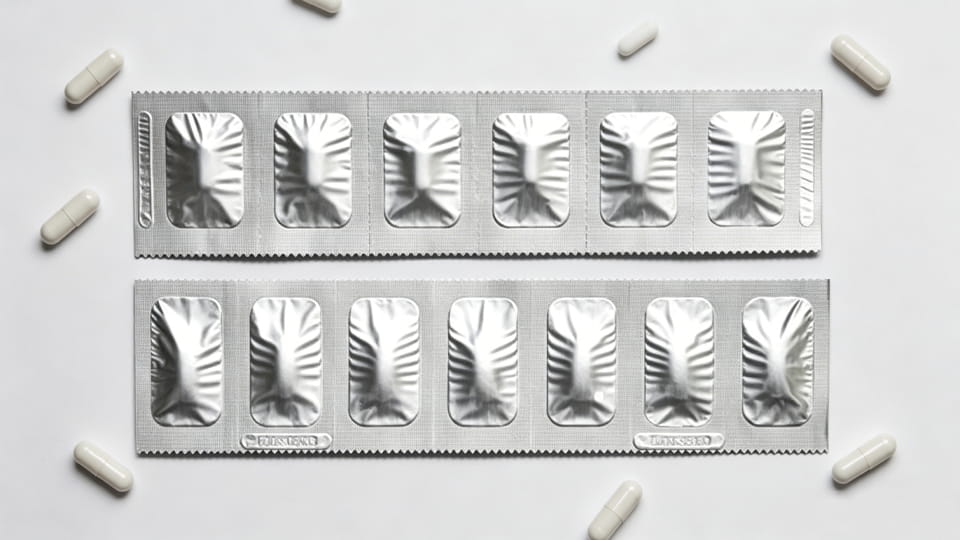
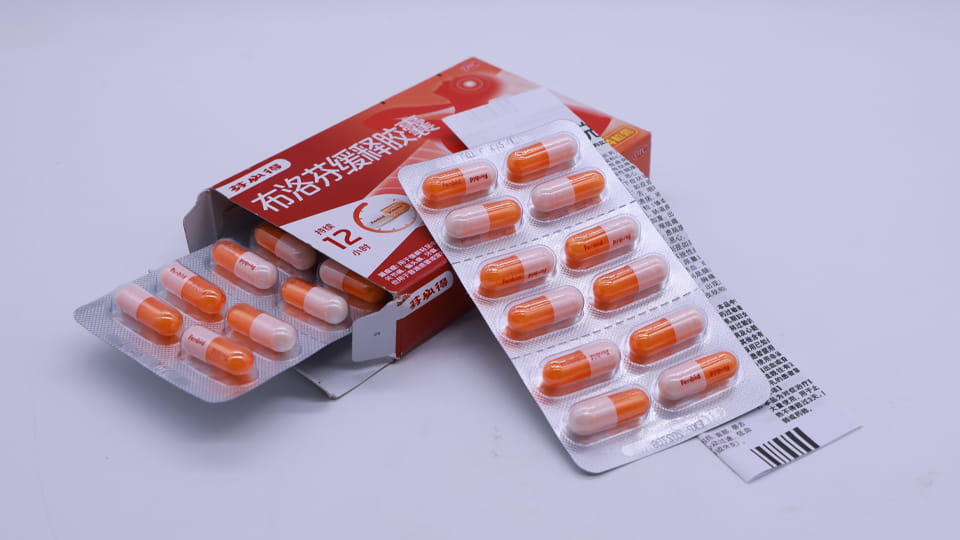
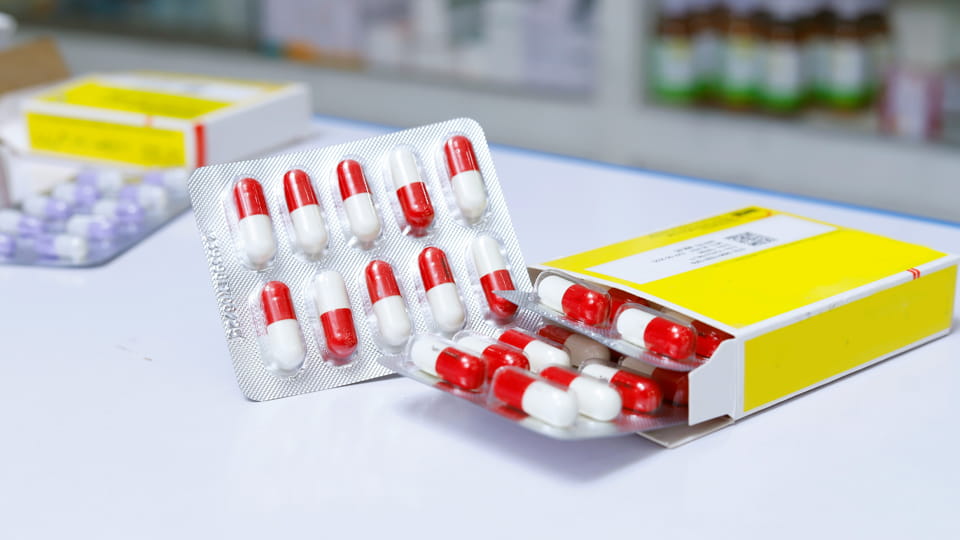
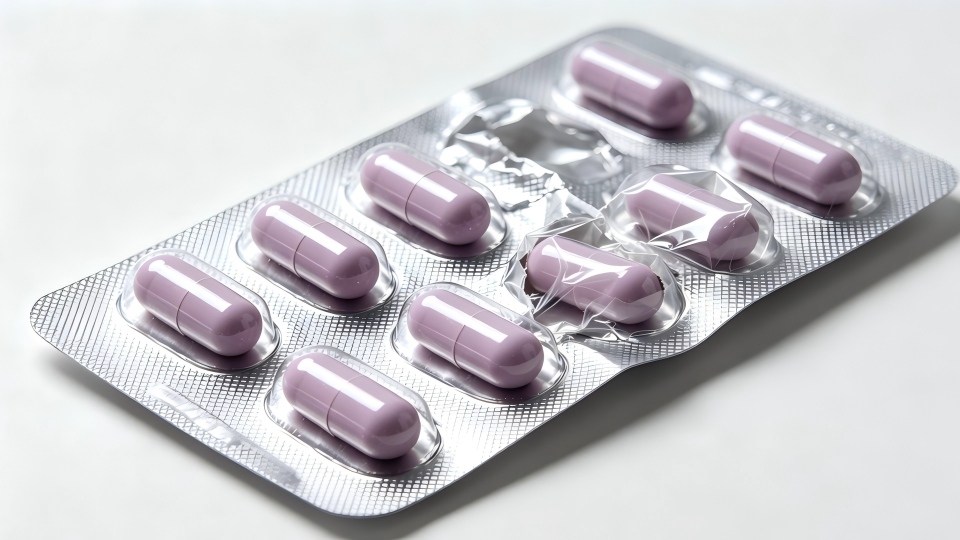
Blister pacotes consistem em cavidades plásticas pré-formadas (“bolhas”) que contém cápsulas individuais, selado com um suporte (folha ou plástico). Esse embalagem primária ofertas proteção de dose unitária. Bolhas fornecem excelente barreira propriedades: eles podem ser feitos com materiais como PVC/PVDC ou folha (Alu-PVC, Alu-Alu) para bloquear a umidade, oxigênio e luz. Por exemplo, A máquina de blister DPP-180Pro da Jinlu pode formar e selar até 4,800 bolhas de cápsula por hora em laminados Alu-PVC ou Alu-Alu. As principais características da embalagem tipo blister incluem:
Proteção: Cada cavidade é hermeticamente selada, protegendo a cápsula da umidade, oxigênio e luz. Como observa um estudo, bolhas “fornecer proteção superior contra umidade e luz” (melhor que garrafas). Folhas de alta barreira (E.G.. Alu-Alu) prolongar a vida útil de cápsulas higroscópicas ou sensíveis ao oxigênio.
Evidência de adulteração: Um blister mostra claramente se uma dose foi removida ou se o selo foi quebrado. Isso garante a integridade do produto e a segurança do paciente.
Conveniência: Blisters de dose unitária permitem que os pacientes tomem uma cápsula de cada vez, reduzindo erros de dosagem e desperdício. Eles são especialmente úteis para esquemas de dosagem curtos ou formulações pediátricas.
Personalização: Os blisters podem ser feitos em vários formatos e tamanhos de cavidades para caber em diferentes dimensões de cápsulas. Máquinas modernas (como termoformadoras ou máquinas plug-assist) adapta-se facilmente aos tamanhos das cápsulas.
Eficiência Espacial: As bolhas são compactas e empilháveis. Eles minimizam o espaço vazio em comparação com garrafas, economizando em remessa e espaço nas prateleiras.
Figura:Máquina de embalagem blister Jinlu JL-180Pro formando bolhas de cápsula (Alu-PVC), 4,800 cavidades/hora.
Máquinas de bolhas de Jinlu (E.G.. o DPP-180Pro) pode formar cavidades automaticamente, cápsulas de alimentação, selo, cortar placas, e até imprimir códigos de lote. Eles normalmente funcionam em velocidade média-alta (milhares de cáries por hora), ideal para produção em massa. Diferentes formatos de blister (Alu-PVC vs Alu-Alu) são selecionados por produto: Alu-Alu (folha-folha) oferece a maior barreira (melhor para medicamentos muito sensíveis à umidade), enquanto o PVC/PVDC é comum para cápsulas padrão. A embalagem blister também simplifica a contagem e a inspeção: a maioria das linhas integra facilmente inspeção por câmera ou máquinas de contagem de comprimidos para verificar o preenchimento da cápsula.
Garrafa (Frasco/frasco de cápsula) Embalagem
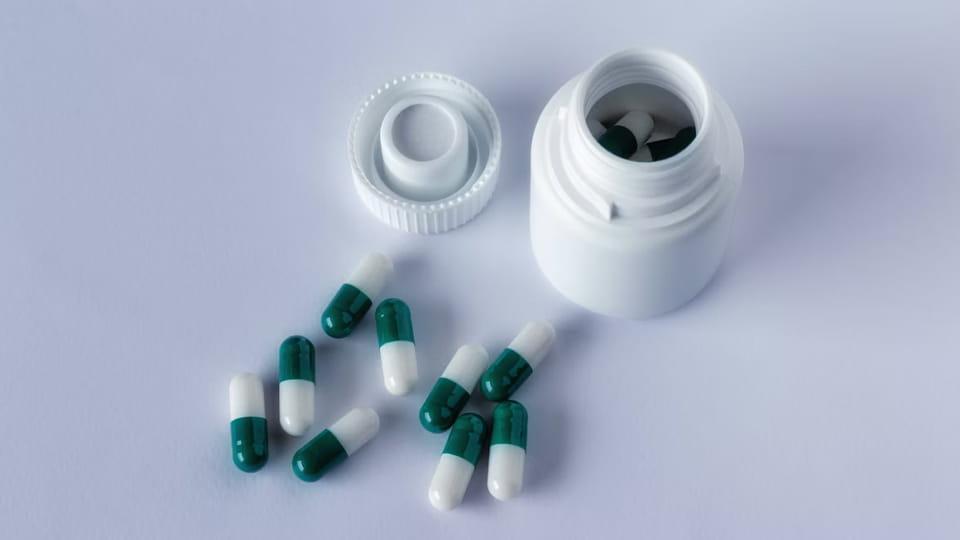
As garrafas são o recipiente multidose clássico. As cápsulas são colocadas em frascos (plástico ou vidro) que são então limitados. Este formato é bem conhecido pelas vitaminas, suplementos, e muitos comprimidos prescritos. Principais recursos:
Versatilidade: As garrafas podem conter grandes quantidades (50–1000+ cápsulas) e uma variedade de produtos (comprimidos, cápsulas, pós, até líquidos). Eles geralmente são feitos de plástico HDPE ou PET, ou vidro (para forte inércia química).
Embalagem a granel: Para cápsulas destinadas a serem tomadas repetidamente (vitaminas diárias, terapias de longo prazo), garrafas são convenientes. Os pacientes podem dispensar múltiplas doses de uma só vez.
Eficiência de custos: As linhas de enchimento de garrafas são relativamente simples. As máquinas contam ou pesam as doses mais rapidamente (E.G.. O JL-16H de Jinlu pode encher até 100 garrafas/minuto). O custo unitário do material é muitas vezes inferior ao do blister, especialmente em escala.
Fácil manuseio: Os consumidores sabem como abrir garrafas. Pode ser mais fácil para pacientes idosos abrir um frasco (especialmente com tampas de fácil abertura ou resistentes a crianças) do que descascar bolhas.
Embalagem secundária: As garrafas permitem a inclusão de itens auxiliares como pacotes dessecantes (para controle de umidade) ou algodão. Eles também acomodam rótulos completos de produtos ao redor do corpo da garrafa, e pode ser embalado em caixas.
Figura: Linha de engarrafamento de cápsulas/comprimidos Jinlu JL-16H (100 garrafas/min) com decodificador, enchimento, capsulador, e rotulador.
As linhas de engarrafamento de cápsulas integram várias máquinas: um decodificador de garrafas (ou funil de alimentação), um máquina de contagem e enchimento (que coloca X cápsulas em cada frasco), um máquina de tampar/selar (aplique e aperte as tampas), e um máquina de rotulagem. Por exemplo, A linha JL-16H da Jinlu pode lidar com cápsulas de 3–40 mm, atingindo ~100 garrafas/min com >99.8% precisão de contagem. As garrafas podem ser enchidas a granel muito rapidamente. Para atender aos regulamentos, as linhas de garrafas geralmente incluem uma estação para inserção de dessecantes (E.G.. pacotes de sílica) e uma estação de selo inviolável. Tampas resistentes a crianças são outra característica comum em medicamentos pediátricos.
Na escolha da embalagem da garrafa, considere o volume e a estabilidade do produto: produtos de alto volume (E.G.. vitaminas diárias) garrafas de terno, enquanto cápsulas de baixo volume ou altamente sensíveis podem preferir bolhas. Observe que as garrafas geralmente oferecem menos proteção inerente contra umidade/oxigênio do que bolhas de alta barreira. Vidro âmbar ou recipientes opacos podem adicionar proteção contra luz, e vedações internas (forros de folha de alumínio) pode melhorar a barreira.
Saquetas & Pacotes de palitos (Bolsas de dose única)
Saquetas (e pacotes de palitos) são pacotes flexíveisque contém uma dose de pó, grânulos ou líquido. Embora não seja tão comum para cápsulas, eles são relevantes para formas farmacêuticas relacionadas (E.G.. cápsulas nutracêuticas quebradas em pó, ou o próprio enchimento em pó). Apesar disso, sachês e pacotes de palitos merece menção em um guia de embalagem de cápsulas:
Saquetas geralmente são pacotes planos ou em forma de travesseiro selados 3 ou 4 lados. Eles são frequentemente usados para pós de dose única (E.G.. grânulos efervescentes) ou cápsulas muito pequenas (algumas farmácias dispensam cápsulas em sachês para dosagem pediátrica). Máquinas modernas de formar-encher-selar podem encher saquetas com volumes exactamente pequenos. As vantagens incluem portabilidade (cabe no bolso), conveniência, e dosagem precisa (sem desperdício parcial). Os sachês também proporcionam uma boa vedação: a vedação hermética prolonga a vida útil e evita contaminação. Muitos produtos farmacêuticos (pós, géis, pomadas, comprimidos de dose única) usar sachês; por exemplo, soluções de reidratação injetáveis de emergência ou antibióticos em pó descartáveis.
Pacotes de palitos são longos, saquetas estreitas (muitas vezes selado ao longo de uma costura longa mais uma costura final). Eles são populares para suplementos em pó (E.G.. misturas para bebidas instantâneas) e pode ser usado para cápsulas em pó. As embalagens stick geralmente usam menos material do que os sachês e o rendimento da máquina é maior (30–50% mais rápido). Eles são ideais para pós de fluxo livre devido à abertura delgada.
Tanto os sachês quanto os sticks são produzidos pela forma-preenchimento-selagem vertical (Vfs) ou máquinas FFS horizontais. Série JL-VP de Jinlu, por exemplo, é uma máquina FFS em bastão/sachê de múltiplas pistas (40 Bolsas/min/pista, Precisão de ±0,02g) para pós, grânulos, líquidos ou géis. Se as próprias cápsulas fossem embaladas em saquetas, alguém abriria a saqueta para recuperar a dose – mas mais comumente, as cápsulas são embaladas intactas em blister ou frasco, enquanto os sachês/pacotes manuseiam conteúdo em pó.
Nota regulatória: sachês e stick packs são permitidos para medicamentos sólidos e semissólidos (de acordo com as definições da OMS). São consideradas embalagens primárias se contiverem diretamente o produto. Como bolhas, os sachês podem ser projetados para serem resistentes a crianças ou com entalhes para rasgar.
Embalagem em tira
Pacotes de tiras (também chamadas de tiras de alumínio ou “faixas de dose”) são outra forma de embalagem primária de dose unitária. Uma tira é normalmente uma teia estreita de material (geralmente alumínio ou laminado multicamadas) dobrado e selado, com perfurações entre doses. Ao contrário das bolhas, pacotes de tiras não formam cavidades profundas - em vez disso, a cápsula é imprensada entre duas camadas de filme. As embalagens de tiras são amplamente utilizadas na Ásia e para produtos onde é necessária alta proteção contra umidade, mas as bolhas são muito volumosas. Pontos-chave:
Excelente Barreira: As embalagens de tiras geralmente usam papel alumínio que é impermeável à umidade e ao oxigênio. Isso os torna ideais para cápsulas sensíveis à umidade ou medicamentos pediátricos onde é necessária uma longa vida útil.. A OMS ainda define embalagens de tiras como adequadas para “doses únicas… de preparações sólidas ou semissólidas”.
Compactar & Dose unitária: Como bolhas, embalagens de tiras permitem o uso de uma dose por vez. Eles são mais leves e planos que as bolhas, economizando espaço.
Equipamento: Máquinas de embalagem de tiras formam e selam a folha ao redor de cada cápsula. Jinlu também oferece máquinas de embalagem de tiras. Por exemplo, As embalagens de tiras com notas de embalagem ricas usam laminação de alumínio ou plástico e podem atingir comprimentos de muitas doses.
Figura:Máquina de embalagem de tira
Do ponto de vista da seleção, strip packs ocupam um meio termo entre garrafa (volume) e bolha (rigidez). Muitas vezes são escolhidos quando barreira de umidade muito alta é necessário, mas em um fino, forma leve. (Observação: as embalagens de tiras podem não fornecer evidência de violação tão claramente quanto os blisters, a menos que sejam usados selos adicionais.)
Embalagem secundária & Rotulagem
Depois de escolher um pacote primário, as cápsulas são geralmente colocadas em embalagem secundária como caixas de papelão ou embrulhado casos. As caixas fornecem proteção extra durante o transporte, permitir rotulagem adicional (informações sobre drogas, marca, selos invioláveis), e ajudar a organizar produtos com várias embalagens. Principais considerações para embalagens secundárias:
Caixas & Inserções: As embalagens médicas devem incluir bulas dos produtos (Folhetos com instruções de dosagem, número do lote, termo, informações do fabricante, etc.). Geralmente são folhetos de papel inseridos na caixa.
Selos de violação: A embalagem secundária geralmente possui selos invioláveis (E.G.. fitas de segurança, faixas retráteis) para mostrar se a caixa foi aberta.
Serialização/rastreamento & Rastreamento: Em muitos mercados (DSCSA dos EUA, febre aftosa na UE), pacotes individuais devem conter códigos de série exclusivos (códigos de barras/QR) para combate à falsificação. Uma solução de embalagem robusta inclui impressoras de etiquetas ou codificadores a jato de tinta para imprimir números de lote/lote e códigos 2D em caixas.
Recursos de segurança e resistentes a crianças: Para certos medicamentos, regulamentos (E.G.. 21 CFR 211) exigir embalagens resistentes a crianças. Isso pode incluir películas de bolhas que são difíceis de serem abertas pelas crianças, ou tampas especiais em garrafas. As caixas secundárias também podem ter travas ou exigir abertura em duas etapas, se necessário.
Estabilidade e Conformidade: O sistema combinado primário+secundário deve manter o produto estável sob condições de armazenamento rotuladas. Por exemplo, Os estudos de estabilidade da ICH exigem explicitamente o teste da forma farmacêutica final embalada.
Resumindo, a embalagem secundária envolve o produto para distribuição final e garante que todos os recursos de rotulagem e conformidade estejam em vigor. Um bom design aqui melhora a imagem da marca e a conveniência do usuário (caixas de fácil abertura, rotulagem clara).
Materiais para embalagem de cápsulas
Escolher o material de embalagem certo é fundamental para proteger as cápsulas. Os materiais devem ser compatíveis com o medicamento, atender às necessidades de barreira, e cumprir os regulamentos (ISO 15378 GMP para materiais de embalagem, etc.). Os materiais comuns incluem:
Filmes blister:
PVC (Cloreto de Polivinila): Baixo custo, plástico transparente frequentemente usado para bolhas. O PVC é permeável à umidade (não tão protetor) a menos que revestido.
PVC/PVDC: PVC revestido com PVDC (cloreto de polivinilideno) reduz drasticamente a entrada de umidade (blister comum de Alu-PVC usa uma barreira de PVDC).
Alu-PVC ou Alu-Alu: Folha de alumínio laminada em PVC ou PET. Alu-PVC fornece boa barreira à umidade/oxigênio (comum), enquanto Alu-Alu (folha-folha) fornece o mais alto barreira (usado para cápsulas muito higroscópicas ou sensíveis à luz).
Polipropileno (PP): Emergindo como uma alternativa sustentável. Bolhas PP (monomaterial) pode ser totalmente reciclado, como acontece com o forro PharmaGuard da Südpack, e ainda ter um bom desempenho em linhas automatizadas.
Materiais para garrafas:
PEAD (Polietileno de alta densidade): Plástico comum para frascos farmacêuticos; relativamente inerte e econômico.
BICHO DE ESTIMAÇÃO (Tereftalato de polietileno): Oferece melhor clareza e rigidez; boa barreira vs gases. Frequentemente usado para nutracêuticos/suplementos.
Vidro (Borossilicato tipo I): Usado para produtos muito sensíveis à umidade ou parenterais; o vidro oferece excelente barreira à umidade e inércia química. O vidro âmbar também bloqueia a luz UV.
Outros filmes: Para saquetas e embalagens stick, filmes laminados multicamadas (E.G.. PET/Go/PE) são usados para controlar a umidade e vedar.
Geralmente, escolha a barreira mais alta que faça sentido para sua cápsula. Por exemplo, uma cápsula de gelatina sensível à umidade pode justificar um blister de Alu-Alu ou um frasco de vidro âmbar com dessecante. Em contraste, cápsulas não sensíveis podem usar blister de PVC padrão ou frasco de HDPE. Considere também o prazo de validade: produtos de longo prazo precisam de barreira mais robusta.
Notas de segurança/reciclagem: Tendências sustentáveis favorecem embalagens monomateriais (E.G.. Bolhas PP, garrafas PET recicláveis). Materiais de teste para extraíveis, compatibilidade, e atendendo aos limites da FDA/UE (E.G.. USP <661> para plastificantes) faz parte da conformidade da embalagem.
Tipos de cápsulas e impacto da embalagem
As cápsulas vêm em vários tipos e sua formulação determina as necessidades de embalagem:
Cápsulas duras de gelatina: As conchas de duas peças mais comuns. Eles contêm pós/grânulos secos. As cascas de gelatina retêm um pouco de umidade e tornam-se quebradiças se estiverem muito secas, ou macio se estiver muito molhado. Geralmente, cápsulas de gelatina dura exigir moderado controle de umidade. Uma condição de armazenamento amplamente citada é 15–25°C e 35–65% de umidade relativa. A embalagem deve manter este ambiente: por exemplo, blisters com revestimentos de PVDC ou Alu-Alu, ou garrafas com dessecantes, ajudar a estabilizar cápsulas.
HPMC (Vegetariano) Cápsulas: Feito de celulose vegetal, essas cascas geralmente têm umidade inerente mais baixa do que a gelatina e toleram até ~70% de umidade relativa. Eles são frequentemente usados para APIs sensíveis à umidade. No entanto, até Cápsulas de HPMC requerem embalagens de barreira para enchimentos muito higroscópicos ou sensíveis à luz. Na prática, Cápsulas de HPMC + Bolhas de PVC geralmente são suficientes, mas a alta barreira ainda adiciona segurança.
Cápsulas Softgel (Cheio de líquido):Cápsulas gelatinosas tem uma gelatina (ou gelatina modificada) concha cheia de óleo ou outros líquidos. Eles contêm água significativa (frequentemente ~5–10%) na casca e pode perder umidade ou oxidar. Softgels são muito sensíveis à umidade: eles normalmente exigem garrafas de vidro âmbar (com dessecante) ou embalagens blister de alta barreira para evitar a perda de água e manter a potência. Porque os invólucros de cápsula mole são sensíveis à temperatura/umidade durante a fabricação, às vezes são necessárias embalagens de cadeia de frio e especializadas.
Cápsulas de liberação entérica/modificada: Estes têm revestimentos especiais para retardar a liberação no trato gastrointestinal. O revestimento adiciona outra camada de sensibilidade (pode ser sensível ao pH ou mais frágil). Essas cápsulas ainda devem ser mantidas secas e normalmente embaladas em blister ou frasco como qualquer outra cápsula. O revestimento exige condições consistentes; portanto, embalagens que garantam o controle de temperatura/UR durante a distribuição são importantes.
Resumidamente, o material do invólucro da cápsula e tipo de preenchimento afetará a escolha da embalagem. Formulações altamente sensíveis à umidade sempre favorecem a barreira mais estanque (Blister Alu-Alu, sachê de papel alumínio, ou frasco selado com dessecante). Formulações menos sensíveis têm mais opções. Sempre teste a estabilidade do cápsula final embalada (ICH Q1A requer estabilidade no contêiner proposto).
Escolhendo a embalagem certa (Fluxograma de Decisão)
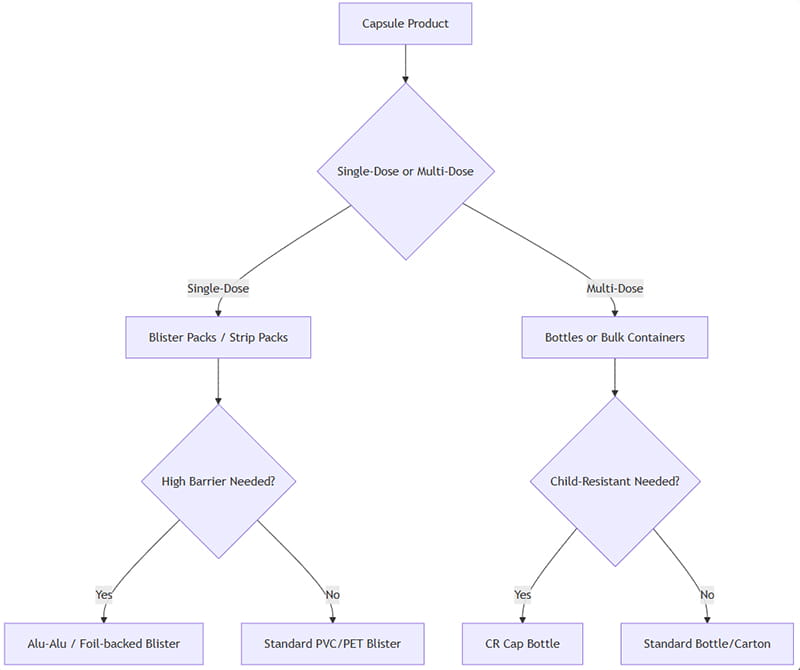
A seleção de uma embalagem de cápsula ideal envolve a avaliação de vários fatores: forma farmacêutica, conformidade com o paciente, sensibilidade do produto, prazo de validade, requisitos regulamentares, e custo. Abaixo está uma estrutura de decisão simplificada:
Como aplicar isso: Se as cápsulas se destinarem a unidades individuais (E.G.. dosagem apertada ou cartões blister de varejo), blisters/tiras são preferidos. Para multidoses (E.G.. suplementos ou medicamentos de alto uso), garrafas são mais eficientes. Se a proteção contra umidade/luz for crítica, selecione opções de alta barreira (Alu-Alu, garrafa âmbar). Se a segurança pediátrica for necessária, use tampas de frasco resistentes a crianças ou designs de blister invioláveis.
Outros critérios da indústria incluem:
Forma farmacêutica: Comprimidos/cápsulas → blister, garrafa, ou tira; Pós → sachês/sticks.
Sensibilidade do produto: Para medicamentos sensíveis à umidade, use blisters de Alu-Alu ou bolsas de alumínio. Para sensíveis à luz, use garrafas âmbar ou filmes opacos.
Conformidade do paciente: Formatos de dose unitária (blister/tira) adesão à ajuda. Garrafas fáceis de abrir ajudam os idosos.
Regulatório: Incluir evidências de violação e cumprir as diretrizes de embalagem da FDA/EMA.
Prazo de validade: Uma vida útil mais longa requer materiais de maior barreira (Alu-Alu, filmes multicamadas).
Escala de produção: As máquinas blister são de alta velocidade (volume médio), linhas de garrafas se destacam em grandes lotes, máquinas de sachês lidam com taxas de linha flexíveis.
Custo: Equilibre os custos de material versus custos de máquina. Por exemplo, garrafas podem ter menor mão de obra por unidade, mas maior custo de plástico; embalagens stick usam muito pouco filme por dose.
Em última análise, teste piloto (estudos de estabilidade, estudos de consumo) e a análise do custo total orientará a decisão final. O fluxograma acima é um ponto de partida para cenários típicos.
Equipamento de embalagem de cápsulas
Embalagem de cápsulas requer maquinário especializado. Depois que as cápsulas estiverem cheias (por enchimentos de cápsulas), estes são transferidos para linhas de embalagem:
Máquinas de blister: Já notamos o de Jinlu DPP-180Pro, uma máquina de blister termoformadora de alta velocidade. Forma cavidades (Filme de PVC ou PET), alimenta cápsulas (ou comprimidos), e sela com papel alumínio, tudo automaticamente. Jinlu oferece máquinas (E.G.. DPP-180, DPP-270Max) até 4.800–11.200 cavidades/hora. As máquinas blister são combinadas com alimentadores de contagem para colocar exatamente uma cápsula por bolsa, e muitas vezes têm cortadores para separar as bolhas em cartões. Módulos adicionais (impressão/inspeção) garantir que cada blister esteja legível e correto.
Contando & Linhas de preenchimento (Linhas de garrafas): Estes transformam cápsulas soltas em frascos. Uma linha típica tem: um decodificador de garrafas (organiza garrafas vazias), um contador de comprimidos/cápsulas (tigela vibratória ou sistema óptico que conta e coloca um número definido em cada garrafa), uma máquina de tampar/selar, e uma estação de rotulagem. Jinlu's JL-16H linha, por exemplo, embaralha garrafas, conta cápsulas de 3–40 mm neles, aplica limites, e etiquetas até 100 garrafas/min com 99.98% precisão. Para alto volume (embalagem a granel) operações, linhas modulares com vários cabeçotes de contagem ou enchimentos sem-fim podem atingir velocidades mais altas. Selantes por indução ou por encolhimento também podem ser adicionados para cobertura de folha metálica.
Máquinas de sachês/stick-pack: Estes são formar-preencher-selar (FFS) máquinas. Jinlu's JL-VP A série é um sistema VFFS de múltiplas pistas que pode produzir de 30 a 40 sachês ou embalagens stick por minuto por pista. Dosa com precisão pó ou líquido (parafusos helicoidais para pó, bombas para líquidos) e selos 3- ou saquetas de 4 lados ou embalagens de palitos de 3 lados. As máquinas incluem controles PLC para comprimento do saco, servoalimentadores para precisão (±0,02g), e selagem térmica hermética. Essas máquinas são ideais para produtos de dose única, embora as próprias cápsulas raramente sejam “embaladas em sachês” intactas.
Máquinas de embalagem de tiras: Os pacotes de tiras são feitos em máquinas especializadas que selam a quente folhas ou filmes sobrepostos. Muitas vezes se assemelham a máquinas de blister, mas usam filme plano. (Se Jinlu oferecer empacotadores de tiras, integração semelhante às máquinas de sachês.)
Máquinas de embalagem secundária:Máquinas de embalagem pode erguer caixas, inserir blisters ou frascos e folhetos, e fechar caixas. Os encartuchadores farmacêuticos geralmente manuseiam blisters ou sacos de cápsulas. Empacotadores de caixas (para casos externos) e paletizadoras completam a linha para produção em massa.
Conformidade do equipamento: Todas as máquinas de embalagem de produtos farmacêuticos devem atender ao projeto GMP (aço inoxidável, superfícies limpáveis, desempenho validado). As máquinas da Jinlu são certificadas CE/cGMP, muitas vezes com proteções configuráveis e sistemas de rejeição para pílulas fora das especificações. Integração é fundamental: por exemplo, uma máquina de blister pode alimentar diretamente uma encartuchadora que monta caixas e embala cada cartão blister. Sistemas abrangentes (desde o enchimento até a caixa final) permitir automação ponta a ponta da embalagem de cápsulas.
Considerações regulatórias e de conformidade
As embalagens de cápsulas para produtos farmacêuticos devem cumprir regulamentações rigorosas. Os pontos principais incluem:
Requisitos de BPF: FDA 21 CFR 211 A Subparte G exige procedimentos escritos para recebimento e teste de todos materiais de embalagem antes de usar. Isso significa bolhas, garrafas, rótulos, caixas etc.. deve atender às especificações (sem defeitos). O armazenamento separado de materiais de embalagem por produto é obrigatório para evitar confusões. Anexo GMP da OMS 9 da mesma forma detalha os controles de embalagem. Boas Práticas de Fabricação exigem rastreabilidade (números de lote na embalagem) e manuseio limpo.
Diretrizes de Estabilidade e ICH: Eu Q1A(R2) estipula que sejam feitos estudos de estabilidade do produto em sua forma final sistema de fechamento de contêiner. Na prática, isso significa que você deve embalar lotes de cápsulas de teste exatamente como planejado (mesma folha de blister, mesmo tipo de garrafa) e expô-los a condições de estabilidade em tempo real. Qualquer alteração na embalagem poderá exigir novos testes de estabilidade.
Serialização & Rastreabilidade: Em muitos mercados, identificadores exclusivos (códigos de barras/códigos 2D) em embalagens secundárias (e às vezes bolhas primárias) são obrigados a rastrear medicamentos ao longo da cadeia de abastecimento. As linhas devem incluir impressoras ou aplicadores para estes códigos. O design da embalagem também inclui frequentemente evidências de violação (per US/EU law).
Embalagem resistente a crianças e adequada para idosos: Substâncias controladas ou certos medicamentos exigem recursos resistentes a crianças. Isso geralmente significa tampas especiais em garrafas (E.G.. empurrar e girar) ou bolhas difíceis de descascar. No entanto, a acessibilidade do paciente também deve ser considerada (fácil de abrir para idosos). Consultando a Lei de Embalagens de Prevenção de Venenos (NÓS) ou regras regionais semelhantes são necessárias.
Padrões ISO: Fornecedores de embalagens primárias devem seguir a ISO 15378 (GMP para materiais de embalagem primária) para garantir qualidade. Embora não seja citado diretamente aqui, este é um padrão comumente reconhecido para fabricantes de embalagens. As próprias máquinas devem cumprir os padrões de máquinas farmacêuticas (CE, Ul, etc.) e 21 Parte CFR 11 se houver gravação de dados.
Regulamentos de Rotulagem: As cápsulas devem ser rotuladas com o nome do produto, dosagem, data de validade, fabricante, etc.. Isso se estende a caixas e blisters (às vezes, cada segmento do blister traz alguma informação impressa). A FDA e a EMA têm requisitos específicos sobre quais informações devem aparecer nos rótulos primários e secundários.
Geral, encontro com a FDA, As diretrizes da EMA e da OMS são essenciais. Muitos embaladores trabalham com fornecedores regulamentados (como Jin Lu) quem pode fornecer máquinas validadas e documentação (IR/WH/PQ).
Conclusão
Escolher a embalagem certa para cápsulas requer proteção de equilíbrio, usabilidade, e custo. Blister pacotes, garrafas, saquetas, e tiras cada uma tem seu lugar embalagens farmacêuticas. Fatores como sensibilidade à umidade, forma farmacêutica, e as necessidades do paciente orientam a decisão. Ao lado, rigorosos requisitos regulatórios e de BPF devem ser atendidos.
No Embalagem Jinlu, somos especializados em soluções completas de embalagens farmacêuticas. Nossos equipamentos – de máquinas de blister de alta velocidade para contagem totalmente automatizada & linhas de engarrafamento – ajuda você a embalar cápsulas de forma eficiente e compatível. Também apoiamos escolhas sustentáveis (E.G.. máquinas que executam novos filmes recicláveis) e oferecer um serviço completo (personalização, validação). Nossa equipe pode ajudá-lo a avaliar o melhor sistema de embalagem de cápsulas para o seu produto.
Pronto para otimizar a embalagem da sua cápsula?Entre em contato com a Jinlu Packing hoje para orientação especializada e orçamentos. Nossas soluções são apoiadas por padrões globais de qualidade e mais 3,000 clientes satisfeitos em todo o mundo. Vamos embalar suas cápsulas para o sucesso!
Perguntas frequentes sobre embalagens de cápsulas
O que é embalagem de cápsula?
A embalagem de cápsulas refere-se ao processo de envolver cápsulas farmacêuticas em materiais protetores para manter a estabilidade, segurança, e conformidade. Os formatos comuns incluem blisters, garrafas, e embalagem em tira. Na prática farmacêutica, embalagem não é apenas contenção – ela protege as cápsulas da umidade, oxigênio, e contaminação, que afeta diretamente a qualidade e o prazo de validade do medicamento.
Qual a melhor embalagem para cápsulas farmacêuticas?
Não existe uma única opção “melhor” – depende do seu produto e mercado. • Embalagem blister → melhor para medicamentos sensíveis à umidade ou de alto valor • Embalagem em garrafa → melhor para armazenamento a granel e suplementos • Embalagem em tiras → comum em mercados sensíveis a custos A embalagem blister é frequentemente preferida porque fornece proteção de dose unitária e melhor isolamento ambiental.
Que materiais devo usar para proteger meu produto em cápsula?
Use materiais que bloqueiem as principais ameaças (umidade, oxigênio, luz). Por exemplo, Blisters de alumínio-alumínio ou frascos de vidro âmbar oferecem excelente barreira para cápsulas sensíveis à umidade. Blisters de PVC ou PET com revestimento de PVDC são comuns e mais baratos para produtos estáveis. Os frascos de HDPE são padrão, mas podem precisar de uma bolsa dessecante se as cápsulas forem sensíveis. Avalie as taxas de transmissão de vapor de água (WVTR) de filmes. Na produção consciente da sustentabilidade, considere monomateriais recicláveis (E.G.. Bolhas PP). Sempre teste a compatibilidade da embalagem por meio de estudos de estabilidade.
Como a embalagem das cápsulas protege a estabilidade do medicamento?
As cápsulas são sensíveis a fatores ambientais, como umidade, oxigênio, e luz. Embalagem adequada: • Impede a absorção de umidade • Reduz a oxidação • Mantém a estabilidade química Embalagem blister, em particular, cria microambientes selados para cada cápsula, prolongando significativamente a vida útil.
Quais máquinas de embalagem eu preciso para cápsulas?
Depende do formato. Para bolhas, você precisa de uma máquina formadora/seladora de bolhas (com moldes de cavidade para caber na sua cápsula) além de possivelmente um cartonador. Para garrafas, você precisa de uma linha de enchimento / tampagem de garrafas (decodificador, contra-enchimento, capsulador, rotulador). Para pacotes de palitos, use uma máquina vertical de formar-encher-selar sachês. Jinlu oferece tudo isso: E.G.. nossos blisters da série DPP, Linha de contagem JL-16H, e empacotadora de sachês JL-VP. Selecionar a máquina certa envolve capacidade, Tamanho da cápsula, e integrações necessárias (sistemas de visão, estações de rejeição, etc.).
Como decido entre blisters e frascos para cápsulas?
Considere fatores como dosagem (solteiro vs.. múltiplo), necessidades de estabilidade, e uso do paciente. Para conveniência de dose única e alta proteção (especialmente para cápsulas sensíveis à umidade/luz), bolhas são frequentemente preferidas. Por motivos de grande volume ou econômicos, garrafas são geralmente escolhidas. Também, se forem necessários recursos resistentes a crianças ou adequados para idosos, garrafas podem oferecer mais opções. Como regra, combine as propriedades da sua cápsula com a embalagem: E.G.. cápsulas muito higroscópicas → blister Alu-Alu; suplementos de alta demanda → garrafas.
Petty Fu, Fundador da Jinlupacking, traz 20 anos de experiência para o setor de máquinas farmacêuticas. Sob sua liderança, Jinlu tornou-se um fornecedor confiável que integra design, produção, e vendas. Petty é apaixonado por compartilhar seu profundo conhecimento do setor para ajudar os clientes a navegar pelas complexidades das embalagens farmacêuticas, garantindo que eles recebam não apenas equipamentos, mas uma verdadeira parceria de serviços completa, adaptada às suas metas de produção.