Como selecionar uma prensa de comprimidos para diferentes tipos de comprimidos: Um guia completo do comprador (2026)
Como selecionar uma prensa de comprimidos para diferentes tipos de comprimidos: Um guia completo do comprador (2026)
abril 22, 2026
Sem comentários
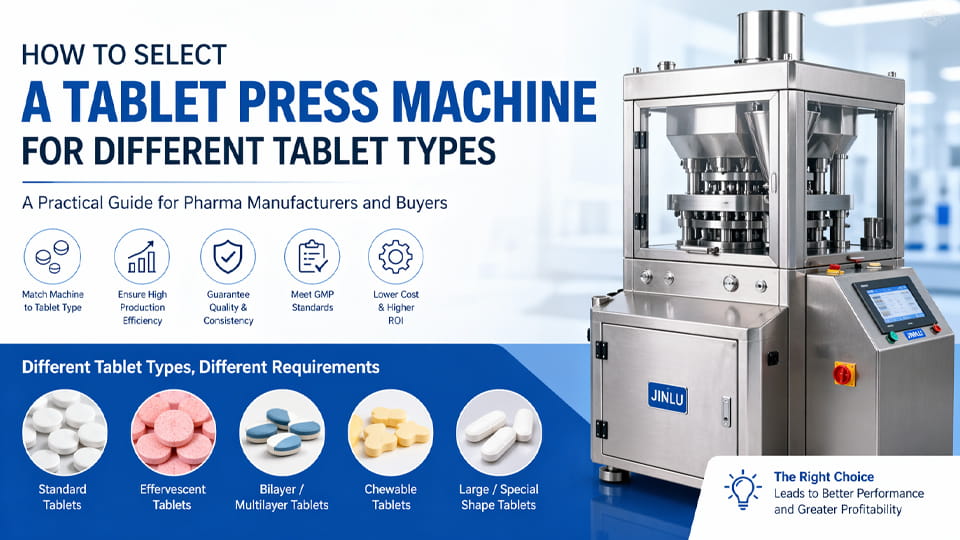
Escolhendo o direito máquina de prensa de comprimidos é fundamental para qualquer fabricante farmacêutico ou nutracêutico. As prensas para comprimidos vêm em vários tipos (soco único, rotativo, Bi-camada, etc.) e velocidades, cada um adequado para determinadas formulações de comprimidos e volumes de produção. Os próprios comprimidos variam amplamente – desde simples comprimidos redondos até comprimidos efervescentes ou de duas camadas – e cada tipo impõe requisitos específicos em termos de ferramentas., força de compressão, alimentação, e controle ambiental.
Este guia ajuda os compradores do setor a combinar o tipo de tablet com a máquina ideal. Cobrimos categorias de tablets (padrão, efervescente, Bi-camada, mastigável, grande/irregular), categorias de máquinas (soco único, rotativo, de alta velocidade, prensas bi/multicamadas), e fatores-chave de seleção, como capacidade de produção, tamanho do tablet, compatibilidade de ferramentas, projeto do alimentador, força de compressão, e conformidade com GMP. Incluímos uma tabela de comparação mapeando tipos de tablets para máquinas e recursos recomendados, armadilhas comuns para evitar, e dicas sobre escolhendo um fornecedor confiável. Até o final, você saberá como equilibrar a velocidade, flexibilidade e qualidade – e encontre uma impressora que atenda aos seus tablets e às suas necessidades de produtividade.
Compreendendo os tipos de tablets e seus requisitos
Diferentes produtos de tablet exigem diferentes recursos de impressão. Abaixo são comuns categorias de tablets e o que eles significam para os equipamentos:
Comprimidos padrão (Camada única, Redondo, Cápsula, etc.): Estas são pílulas farmacêuticas ou suplementos típicas. Eles usam Ferramentas B (19 perfurador mm, comprimidos de até ~13mm) na maioria das prensas rotativas. Força de compressão moderada (cerca de 60–100kN) geralmente é necessário para uma dureza uniforme. Máquinas padrão lidam com vários formatos (redondo, oval, oblongo) sem hardware especial. Por exemplo, a prensa Jinlu ZP-17D (um modelo para todos os fins) produz até 37,800 comprimidos/hora com um 25 mm diâmetro máximo e 100 força kN, cobrindo a maioria dos tablets padrão.
Comprimidos efervescentes (Efervescente, Efervescente): Esses comprimidos (usado em medicamentos, misturas para bebidas, produtos de limpeza) contém agentes ácido-base (ácido cítrico + bicarbonato de sódio) que reagem na umidade. Eles exigem alta compressão (para manter o tablet intacto) e muitas vezes matrizes maiores. Uma prensa rotativa para serviço pesado (muitas vezes com Ferramentas D) é recomendado. Criticamente, pós efervescentes absorvem a umidade rapidamente, então o controle ambiental é fundamental. Prensas efervescentes especializadas incluem recursos como desumidificadores em linha, câmaras de compressão seladas, e componentes resistentes à corrosão para evitar reações prematuras. Por exemplo, As impressoras de grande porte da Jinlu (até 400 kN vigor, 60 mm de diâmetro) foram projetados especificamente para lidar com pastilhas efervescentes e detergentes.
Bicamada / Comprimidos multicamadas: Quando um tablet tem duas ou mais camadas (drogas diferentes, cores, ou liberar perfis), você precisa de um prensa bicamada ou multicamada. Estas máquinas possuem duas ou mais tremonhas e alimentadores alimentando sequencialmente em uma torre. Eles comprimem a primeira camada, depois adicione o segundo (e terceiro, se necessário). Os principais recursos incluem alimentadores forçados duplos (para evitar a mistura de camadas), estações de compressão independentes, e portas de amostragem em processo. Por exemplo, a impressora de três camadas JL ZP-27/73D produz até 395,000 comprimidos/hora (com 50 milímetros diâmetro) e pressão de 150kN. Seus três funis sincronizados permitem até três camadas por comprimido (formulação codificada por cores ou variada). Uma figura de uma prensa multicamadas (Veja abaixo) ilustra a torre e os funis.
Figura: Uma prensa rotativa para comprimidos multicamadas (E.G.. JL ZP-27/73D) pode pressionar 2-3 camadas por comprimido em velocidade muito alta (até 395,000 comprimidos/hora). Alimentadores forçados especializados e câmaras fechadas ajudam a preencher cada camada uniformemente.
Mastigável / Comprimidos macios: Comprimidos mastigáveis (vitaminas, antiácidos) preciso de um textura mais macia e melhor sabor. Eles normalmente comprimem sob pressão mais baixa para evitar dureza, e muitas vezes uso Ferramentas BB (punções mais curtas de 19 mm para tablets pequenos). A fórmula em pó (E.G.. manitol, adoçantes, lubrificantes) tende a ser pegajoso ou macio. Os requisitos da máquina incluem compressão suave (kN inferior), velocidade lenta da torre (maior tempo de permanência), e revestimentos de ferramentas antiaderentes. Na prática, uma prensa rotativa padrão com ferramentas apropriadas (ou uma “prensa para comprimidos mastigáveis” dedicada) é usado. Os punções geralmente têm formatos especiais (corações, etc.) para marketing.
Comprimidos grandes ou irregulares: Alguns produtos (pastilhas de limpeza efervescentes, grandes comprimidos veterinários) são enormes – até 60 mm de diâmetro ou formatos estranhos. Estes exigem Ferramentas D (25.4 mm punção máx.) e prensas muito resistentes (alto torque, até 400kN). A velocidade deve ser menor; as faixas de saída são modestas (E.G.. 20,000–45.000 guias/hora) para garantir qualidade. Essas prensas de “tablets grandes” geralmente têm um tamanho de torre especial e cames para serviço pesado. Eles também podem lidar com algumas cores ou multicamadas como bônus. As prensas de tamanho grande da Jinlu para uso efervescente/detergente. A compensação é a capacidade: um comprimido de 60 mm a 400 kN pode produzir apenas ~ 30 k/h, mas é a única maneira de formar uma pílula sem rachar.
Resumindo, defina seu produto primeiro: diâmetro do comprimido, grossura, camadas, e formulação (fluidez, sensibilidade à umidade, friabilidade). Cada dimensão e propriedade restringe a escolha da máquina. Uma regra geral: dimensão e dureza tamanho da máquina de acionamento, não apenas a produção desejada. Não compre por banners de “100 mil abas/hora”; comece combinando as especificações do tablet com a torre e as ferramentas.
Tipos de prensas para comprimidos
As prensas para comprimidos se enquadram amplamente em duas categorias principais: soco único (excêntrico) e rotativo (estação múltipla), com variantes especializadas.
Soco Único (Excêntrico) Prensas: Estas máquinas simples têm apenas um soco e morrem, manual ou motorizado. Eles são ideais para R&D, lotes piloto, e produção em pequena escala. Uma prensa de estação única requer alimentação manual de pó (via funil ou matriz) e soca um comprimido de cada vez. Benefícios: custo muito baixo, fácil manutenção, e não há necessidade de sistemas de controle complexos. Desvantagens: rendimento extremamente baixo (algumas centenas de comprimidos/hora) e limitado a formulações simples. Incluímos este tipo para completar, mas a maioria dos compradores industriais preferirá máquinas rotativas, a menos que as necessidades de produção sejam muito pequenas.
Prensas rotativas para comprimidos: Estes são os cavalos de batalha para produção de médio a grande porte. Uma prensa rotativa possui uma torre giratória que contém muitos punções/matrizes (tamanhos de torre comuns são 8, 16, 20, 37, 45, 62, 80 estações). O pó é alimentado a partir de uma tremonha através de uma estrutura de alimentação rotativa. Uma rotação pode comprimir dezenas de comprimidos. As rotativas industriais alcançam de aproximadamente 20.000 a centenas de milhares de comprimidos por hora. As rotativas padrão podem lidar com tablets típicos: eles fornecem alto rendimento contínuo e controle preciso de peso/dureza. Dois subtipos são:
Prensa rotativa padrão: Oferece alta eficiência e resultados consistentes para volumes médios. Muitas vezes incluem pré-compressão rolos (para densificar o pó antes da compressão final), e pode correr em velocidades moderadas (E.G.. 60–120 rpm em uma torre de 45 estações rende aproximadamente 162k–243k abas/h).
Prensa rotativa de alta velocidade ou multicamadas: Voltado para produção de alto volume. Estes geralmente têm servomotores, torres duplas (um estacionário, um girando para dobrar a capacidade), e recursos avançados como sistemas de alimentação forçada (para empurrar pó pegajoso nas matrizes). Eles também podem ser configurados para bicamada/multicamada de uma só vez. Por exemplo, RichPacking observa que as prensas de alta velocidade incluem compressão multicamadas e controle de velocidade preciso para maximizar a produção. A série “ZP-26-40D” da Jinlu é um exemplo de sistema rotativo de alta velocidade.
Bicamada / Prensas multicamadas: Estas são rotativas especializadas projetadas com dois ou mais funis e estações de compressão sincronizadas. Uma configuração comum são estações de prensagem duplas em cada posição da torre – uma comprime a primeira camada, outro adiciona a segunda camada, então ejeção. Eles geralmente têm cames extras e alimentadores forçados. Use-os quando precisar combinar duas formulações em um comprimido (E.G.. uma camada de liberação imediata sobre uma camada de liberação sustentada). Os principais recursos incluem controle independente de peso da camada e amostragem automática de cada camada. O ZP-27/73D da Jinlu e modelos similares podem produzir camada tripla comprimidos (até mesmo um design de três cores) em uma máquina. Se o seu produto tiver algum design em camadas, uma prensa multicamadas é obrigatória.
Frente e verso (Prensa para comprimidos) / Torre Segmentada: Uma variante avançada menos comum. Estas máquinas possuem estações de puncionamento em ambos os lados da torre, permitindo dois comprimidos por rotação (efetivamente duplicando a capacidade). São máquinas de alta velocidade encontradas principalmente em grandes fábricas farmacêuticas. Eles geralmente incluem funis separados para cada lado da torre, mas por outro lado parecem duas prensas rotativas consecutivas.
Prensas para comprimidos mastigáveis: Geralmente são apenas máquinas rotativas padrão equipadas com ferramentas para comprimidos mastigáveis. JinLuPacking observa que as prensas mastigáveis utilizam ferramentas especiais para criar comprimidos com textura mais macia e sabor agradável. Na prática, você pode simplesmente ajustar a formulação e usar revestimento de borracha, mas a máquina em si pode ter configurações de força de compressão mais baixas e cobertura adicional contra poeira para lidar com pós à base de açúcar.
Em todos os casos, procure moderno automação e controle características: uma tela sensível ao toque PLC/HMI, sensores de pressão/peso, armazenamento de receitas, e rejeição automática de peso, especialmente se você precisar de conformidade regulatória. Boas máquinas também possuem travas de segurança, extração de poeira, e portas de fácil acesso (cobrimos isso nos fatores de seleção abaixo).
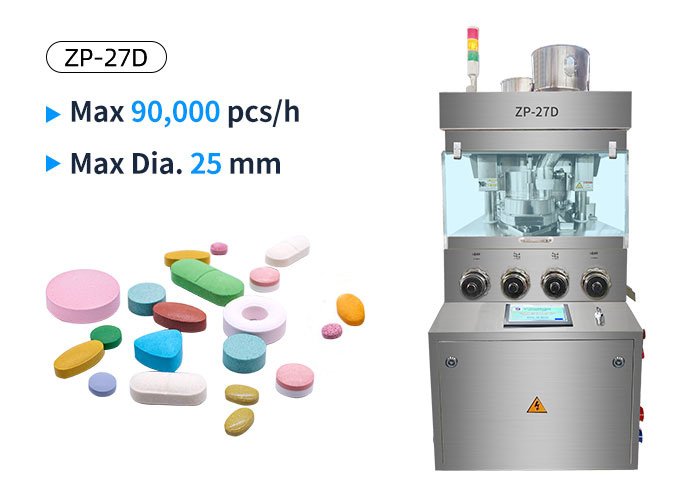
Máquina de compressão do comprimido rotativo ZP-27D
Principais fatores de seleção
Depois de conhecer seu tablet, avaliar especificações específicas da máquina é o próximo passo. Os principais fatores incluem:
Capacidade de produção (Taxa de transferência): Quantos comprimidos por hora você precisa? As prensas rotativas são classificadas por comprimidos/hora ou rpm da torre. Mais estações de perfuração = maior rendimento. Por exemplo, um 45-estação pressione em 60 rotação ≈ 162,000 guias/hora. Mas cuidado com a compensação: a velocidade de empurrar muito alta pode causar variação de enchimento/peso. Equilibre a velocidade da torre com o tempo de permanência (comprimidos mais grossos precisam de velocidade mais lenta para dureza). Para dica: Se você precisar >50lotes de k/h ou multi-SKU, uma prensa rotativa com ≥45 estações é aconselhável para um desempenho estável. Unidades de punção única ou rotativas pequenas só fazem sentido para <10k/h ou R&D.
Tamanho e forma do comprimido: O tablet diâmetro e espessura essencialmente determinar a classe da máquina. Cada modelo tem um diâmetro máximo da matriz e profundidade de preenchimento. Por exemplo, pequenas prensas de bancada (E.G.. “ZP-7”) tampar cerca de comprimidos de 6–12 mm, enquanto torres maiores suportam até 60 mm (com ferramentas D). Sempre combine primeiro o tamanho da matriz e a compatibilidade da torre: “Escolher uma impressora sem as dimensões do seu tablet é como comprar um carro sem saber o número de passageiros”. Também, comprimidos muito grossos precisam de mais força e muitas vezes mais tempo de permanência; uma pequena prensa pode não ser capaz de comprimir adequadamente um comprimido de 8 mm de espessura, mesmo que o diâmetro caiba.
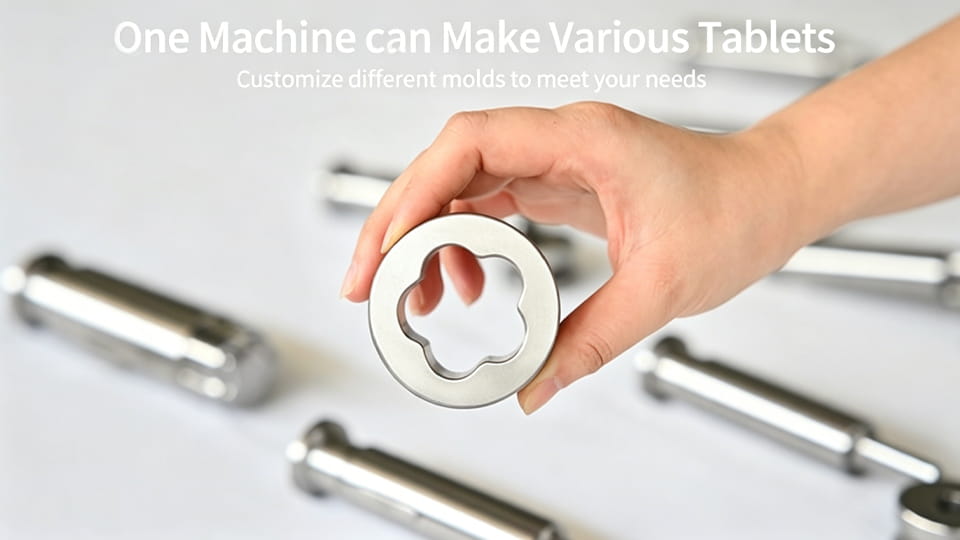
Compatibilidade de ferramentas: Punções e matrizes definem a geometria do comprimido. Verifique o que ferramentas padrão que a imprensa usa (padrões comuns são B, D, e ferramentas BB). Por exemplo, se você precisa fazer vitaminas para mastigar (pequeno, 6–8mm), Ferramentas BB são ideais; se você tiver comprimidos padrão de 12–13 mm, Ferramentas B são suficientes. Detergentes veterinários ou grandes (25 mm+ comprimidos) requer ferramentas D. Considere também o material/revestimento da ferramenta: aço temperado (E.G.. GCR-15) é usado para a maioria, mas misturas úmidas ou ácidas podem precisar de ferramentas inoxidáveis ou revestidas com TiN. A impressora ZP-17D da Jinlu usa Ferramentas de aço GCR-15 capaz de suportar 100kN. Recomendamos revestimentos antiaderentes (TiN/CrN) e alimentadores forçados, especialmente se você produz formulações efervescentes ou pegajosas.
Figura: Soca e morre (ferramentas para tablets) vêm em diferentes tamanhos/materiais. Por exemplo, A prensa padrão da Jinlu usa punções de aço GCR-15 com pressão de até 100kN. As ferramentas devem corresponder ao tamanho do tablet: E.G.. Ferramentas BB para mastigáveis de 6–8 mm, Ferramentas B para tablets farmacêuticos de aproximadamente 12 mm, Ferramentas D para comprimidos grandes de 25 mm ou mais.
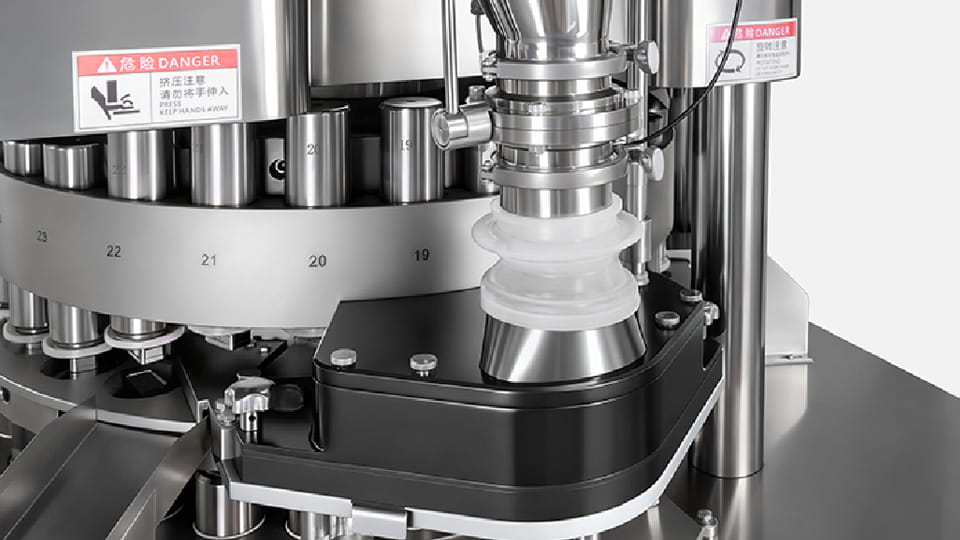
Fluxo e alimentação de pó: Pós desafiadores (muito bem, coeso, ou baixa densidade aparente) pode não fluir bem por gravidade. Verifique se a máquina possui alimentador forçado (agitadores ou pás que empurram o pó para dentro da matriz). A alimentação forçada evita a variação de peso quando a torre se move rapidamente. Pós pegajosos ou úmidos (E.G.. extratos de ervas) beneficiam-se especialmente dos alimentadores forçados e do design suave da tremonha. Considere também a pré-compressão: um pequeno rolo de pré-compressão pode retirar o ar ou pré-compactar o material para reduzir o nivelamento/laminação. Resumindo, garanta que o funil da prensa e as estruturas de alimentação sejam adequados ao fluxo do seu pó; pergunte se eles já executaram sua formulação antes.
Força de compressão: A dureza do comprimido e a densidade da formulação determinam a força necessária. Os comprimidos farmacêuticos padrão precisam de cerca de 60–100kN. Comprimidos muito duros ou grandes (como efervescentes de 60mm) pode precisar centenas de kN (As grandes máquinas da JL vão até 400kN). A especificação excessiva da força é melhor do que a falta; pouca força dá suavidade, comprimidos facilmente quebrados. RichPacking observa 60–100kN é típico, e “maior força melhora a dureza e a uniformidade”. Verifique também se a máquina possui transdutores de pressão para monitorar a compressão em tempo real. Se você precisar de comprimidos mastigáveis macios e comprimidos duros em uma máquina, certifique-se de que a faixa de força pode ser ajustada para baixo e para cima.
Automação & Controlar (CLP/IHM): Em instalações modernas, mostradores manuais estão desatualizados. Uma boa impressora terá um PLC e IHM touchscreen para receitas e registro de dados. Procure recursos como rejeição automática de excesso/abaixo de peso, sensores de pressão, e leituras digitais de posições de punção. Rastreamento de dados (arquivos em lote, Peça CMS21 CFR 11 conformidade) é importante para sistemas de qualidade farmacêutica. Acesso remoto ou módulos IoT permitem suporte técnico e alertas de manutenção preditiva. A impressora Jinlu ZP-27/73D, por exemplo, vem com uma IHM com tela sensível ao toque Siemens para armazenar receitas de compressão e facilitar o controle.
Conformidade com BPF & Materiais: Especialmente para produtos farmacêuticos, o design da prensa deve atender às cGMP. Isso significa superfícies de contato deveria ser aço inoxidável (muitas vezes 316L) e polido, com cantos mortos mínimos para limpeza. Selado, zonas de compressão fechadas evitam o escape de pó. Funis e torres de liberação rápida aceleram a limpeza e reduzem o risco de contaminação cruzada. Verifique se está disponível Documentação IQ/OQ/PQ do fornecedor. As máquinas geralmente vêm com CE, cgmp, ou certificados de design FDA. Para produtos sensíveis (como efervescentes), procure materiais resistentes à corrosão (cromagem ou inoxidável) na imprensa interna.
Mudança & Manutenção: O tempo de inatividade é muito caro. Veja como é fácil trocar ferramentas ou limpar a máquina. Recursos para verificar: projeto modular, desmontagem sem ferramentas, e sistemas de lubrificação. RichPacking destaca que torre removível, tremonha, e alimentadores, mais lubrificação automática cronometrada, pode reduzir drasticamente o tempo de manutenção. Um sistema de troca rápida de matrizes deve permitir a troca de punções sob 20 minutos. Portas de segurança transparentes e layout ergonômico ajudam os operadores. Um exemplo: algumas prensas modernas usam varetas de vácuo dentro da torre para sugar o pó residual entre as execuções. Pergunte se o fornecedor possui contratos de serviço, treinamento, e disponibilidade de peças de reposição.
Custo total de propriedade (TCO): Além do preço de etiqueta, calcular o custo do ciclo de vida. Uma máquina mais barata pode desgastar-se mais rapidamente ou exigir mais mão de obra. Fator no uso de energia, necessidades de peças de reposição, e expectativa de vida. Por exemplo, uma prensa bem construída com peças prontamente disponíveis pode economizar até 20% por ano em custos de tempo de inatividade. Pergunte também sobre a duração da garantia e o que está coberto.
Experiência do fornecedor & Serviço: Comprar uma prensa para comprimidos é uma parceria de longo prazo. Verifique o histórico do fornecedor (10+ anos de experiência em equipamentos farmacêuticos são ideais). Eles têm referências em seu mercado-alvo (Europa, NÓS, etc.)? Eles podem ajudar com o layout da fábrica, testes de receitas, e validação? Suporte pós-venda (instalação, comissionamento, treinamento, 24/7 ajuda remota) é crucial. Por exemplo, Jinlu Packing oferece testes de fórmula gratuitos e tem garantia de 3 anos em muitas máquinas. Comprando de um fornecedor completo (preenchimentos de cápsula, contadores, máquinas de bolha) pode simplificar a integração e validação - como observa RichPacking, ter um fornecedor simplifica o gerenciamento de manutenção. O site da Jinlu mostra que eles também fornecem Máquinas de preenchimento de cápsulas, máquinas de contagem, embaladores de bolhas, etc., o que pode ser útil se você planeja uma linha de produção completa.
Barulho, Poeira e Segurança: As prensas de comprimidos podem ser barulhentas e empoeiradas. Verifique o nível de ruído (deveria ser <80 dB) e se a prensa tiver filtros de poeira HEPA e calhas seladas. Intertravamentos de segurança (portas param o movimento, Parada de emergência) e sensores de sobrecarga protegem operadores e equipamentos. Vibração excessiva ou poeira derramada podem prejudicar o status de GMP.
Preparado para o futuro: Procure caminhos de atualização. A indústria está se movendo em direção à indústria farmacêutica 4.0: precisão servo-acionada, Conectividade Ethernet/IP para MES, manutenção preditiva, e complementos modulares. Comprar uma impressora com arquitetura aberta significa que ela pode acomodar novos sensores ou software posteriormente, economizando custos de modernização. Por exemplo, algumas impressoras agora oferecem inspeção por câmera ou módulos de amostragem automática. Garanta pelo menos o básico: a capacidade de integração em SCADA ou MES.
Combinando tipos de tablet com máquinas recomendadas
A tabela abaixo resume quais tipos de impressora e recursos são adequados para cada categoria de tablet:
Tipo de tablet
Máquina recomendada
Principais recursos da máquina
Comprimidos padrão
Imprensa rotativa (Ferramentas B) ou prensa de alta velocidade
19 milímetros (B) ferramentas, 60–100kN de força, 30mil – 250 mil guias/hora, pré-compressão, Controle CLP. Acabamento espelhado, Projeto BPF. Adequado para comprimidos redondos/ovais simples.
Efervescente / Detergente
Prensa rotativa para serviços pesados ou grande ferramenta D
25 milímetros (D) ferramentas, força muito alta (até 150–400kN), câmara selada, alimentador forçado, opções de desumidificação. Peças inoxidáveis ou revestidas (resistente a ácidos). Velocidade mais baixa, alimentador especializado.
Bicamada / Multicamadas
Prensa bicamada ou tricamada (especialidade rotativa)
2+ tremonhas & alimentadores, câmeras de compressão dupla, amostragem de peso em linha. Pré-compactar para cada camada, Controle VFD, torres sincronizadas. Capaz de lidar com camadas intermediárias finas. Usa formatos de punção padrão ou personalizados.
Mastigável / Macio
Rotativo padrão (Ferramentas B ou BB)
Ferramentas BB (socos curtos, ~6–8 mm), baixa força de compressão (~30–60kN), perfil de compressão suave, revestimento antiaderente. Tempo de permanência possivelmente maior (rotação lenta). Alimentação suave e proteção contra poeira (pó de açúcar).
Grande/Irregular
Prensa rotativa de matriz grande (Ferramentas D)
25+ socos mm (Ferramentas D), força muito alta (100–400kN), estrutura robusta, baixa velocidade da torre (~10–60 RPM), câmeras especializadas. Freqüentemente, torres de came pesadas para acomodar grandes deslocamentos da matriz. Lida com formas complexas.
Combinando as dimensões e o tipo do seu tablet com o acima, você pode selecionar modelos. Sempre verifique: E.G.. um comprimido efervescente de 40mm vai para o Prensa de ferramenta D grande linha, não é uma impressora padrão.
Erros comuns a evitar
Até mesmo compradores experientes cometem erros. Aqui estão as armadilhas a serem observadas:
Escolhendo primeiro por produção/preço: Não escolha uma máquina só porque ela possui “200.000 pastilhas/hora” ou um preço baixo. Se o seu tablet for muito grande ou grosso, a máquina rápida não aceitará a matriz ou sobrecarregará o sistema. Lembrar: o tamanho do tablet determina a máquina, não vice-versa. Sempre comece com o diâmetro e a espessura do comprimido.
Ignorando as dimensões do tablet: Relacionado, nunca ignore as especificações cruciais. Não fornecer ao seu fornecedor o diâmetro e a espessura do comprimido pode levá-lo a sugerir uma prensa subdimensionada. Confirme você mesmo o diâmetro máximo da matriz e a profundidade máxima de preenchimento da prensa.
Capacidade de superdimensionamento: Alguns compradores pensam que “é melhor superdimensionar do que subdimensionar”. Mas uma impressora superdimensionada pode custar 2–3× mais, consumir mais espaço, e funcionar de forma ineficiente em 10% carregar. Pior, pode ter folgas mais longas (menor tempo de permanência) tornando comprimidos finos muito moles. Um fornecedor competitivo deve recomendar o menor adequado modelo, ou no máximo um tamanho maior para crescimento futuro.
Ignorando ferramentas & Formulação: Verifique se a impressora pode usar as ferramentas exatas que você precisa. Erros de projeto de ferramentas causam variação de peso ou travamento. Avalie também o seu pó: se estiver pegajoso (ervas, à base de açúcar), garantir que punções revestidas e um alimentador forçado sejam especificados.
Subestimando Manutenção e Peças: Novas prensas requerem lubrificação e reformas ocasionais. Certifique-se de fazer um orçamento para punções extras, rolos, cintos, etc.. Como alerta RichPacking, não planejar peças de reposição é um erro comum. Considere também como é fácil obter peças de reposição em sua região.
Negligenciar conformidade & Instalação: Não se esqueça dos documentos de validação (IR/WH/PQ) se você é um operador farmacêutico. Certifique-se de ter um plano de instalação, treinamento, e testes de validação. Contar com o suporte do fornecedor aqui é mais seguro.
Não testando primeiro: Idealmente, execute um teste ou piloto com sua fórmula real no modelo da máquina. Muitos bons fornecedores (incluindo embalagem Jinlu) oferecer testes gratuitos ou testes de fórmulas. Se você pular o teste, você pode descobrir problemas somente após o envio, desperdiçando meses.
Resumidamente, concentre-se no perfil do seu tablet e nas metas do produto, não apenas especificações brilhantes. Erros como “Eu só queria a máquina mais rápida” muitas vezes saem pela culatra.
Como escolher o fornecedor certo (e por que embalagem Jinlu)
Depois de restringir as especificações da máquina, avaliar fornecedores com cuidado. Critérios importantes:
Experiência & Referências: O ideal é escolher um fornecedor com mais de 5 a 10 anos em equipamentos para tablets e clientes em seu setor/região. Peça estudos de caso ou referências (especialmente grandes nomes farmacêuticos globais). Embalagem Jinlu, por exemplo, é um fornecedor Fortune-500 com 30+ anos de experiência em máquinas (veja os logotipos de seus clientes).
Suporte Técnico: Eles ajudarão a determinar o modelo certo? Um bom fornecedor pedirá especificações do tablet (diâmetro, grossura, detalhes da formulação) antes de citar – como LinCi enfatiza, um fabricante nunca deveria adivinhar. Verifique se eles oferecem testes de aceitação de fábrica (GORDO) e estão dispostos a enviar ferramentas de amostra para confirmar o ajuste.
Serviço pós-venda: Comissionamento no local, treinamento, e o envio oportuno de peças sobressalentes são cruciais. Alguns fornecedores prometem atendimento remoto 24/7 apoiar. Prefira fornecedores com representantes locais ou uma rede de centros de serviços. Esclareça os termos de garantia (pelo menos 1 ano em toda a máquina, 3 anos nas partes principais é bom).
Capacidade de integração: Se você está construindo uma linha, veja se a impressora pode ser integrada com equipamentos upstream/downstream. Por exemplo, ele pode ser vinculado a um contador de comprimidos ou linha de blisters? Notas da RichPacking As impressoras da Rich se conectam a máquinas de contagem e blister. Jinlu também oferece um conjunto completo (contadores, cartonadores, embaladores de bolhas), para que possam aconselhar sobre linhas chave na mão.
Credibilidade da Empresa: Verifique as certificações (CE, ISO). Confirme também a estabilidade financeira.
Exemplos e referências: O site de Jinlu tem estudos de caso (E.G.. Uma prensa para comprimidos no Paquistão) e certificações (cgmp, CE, Rohs, Logotipos UL mostrados). Use-os para avaliar a competência. Revise também o feedback do fórum comercial ou pergunte aos colegas.
Cotação/Contato de Avaliação: Finalmente, ao entrar em contato com fornecedores, forneça uma folha de especificações concisa: formato/dimensões do tablet, resultado esperado, peso unitário, ingredientes principais (para desgaste/corrosão), e quaisquer excipientes coprocessados. Peça-lhes para confirmar o diâmetro da matriz e o tamanho da torre necessários para o seu produto. Uma bandeira vermelha é um fornecedor que cita imediatamente um modelo por preço, sem perguntar suas especificações.
Sempre que possível, escolha um fornecedor com presença local ou um distribuidor conhecido – isso simplifica o serviço de garantia. Muitos produtos farmacêuticos de nível 1 usam fornecedores como Fette, Bosch (Milstein), ou Cadmach para prensas; entre os fabricantes chineses, Embalagem Jinlu, RichPacking, e outros competem em escala global. A chave é verificar as reivindicações: por exemplo, Jinlu anuncia faixas e pressões de produção, mas você deve compará-los com seus requisitos.
Conclusão e próximos passos
Escolher a prensa de comprimidos certa é uma questão de alinhar a tecnologia à sua estratégia de produção. Para confiável, fabricação de tablets compatível, concentre-se no desempenho total – precisão, durabilidade, e suporte – não apenas o preço. Jinlu Packing oferece uma variedade de prensas rotativas em conformidade com GMP (solteiro, multicamadas, de alta velocidade) e equipamentos de apoio. Contate-nos com as especificações do seu tablet (diâmetro, grossura, camadas, saída) para obter uma recomendação e orçamento personalizados. Deixe que nossos especialistas orientem você até a máquina e as ferramentas certas, e ajudá-lo a evitar armadilhas comuns. Podemos até executar testes de amostra com sua fórmula. Para um orçamento detalhado ou consulta de projeto, solicite um orçamento ou fale com nossa equipe de vendas hoje.
Saiba mais sobre a linha de produtos da Jinlu: Máquinas de enchimento de cápsulas, Máquinas de embalagem de blister, e Máquinas de contagem de comprimidos tudo pode ser integrado à sua prensa para tablet. Confira nosso máquina de enchimento de cápsulas página ou máquinas de contagem de comprimidos para detalhes.
Perguntas frequentes sobre como selecionar uma máquina de prensar comprimidos
O que é uma prensa para comprimidos e como funciona?
Uma máquina de prensagem de comprimidos é um dispositivo farmacêutico usado para comprimir pós ou grânulos em comprimidos com formato definido., peso, e dureza. Funciona preenchendo o material em uma cavidade da matriz e aplicando força de compressão usando punções superiores e inferiores para formar um comprimido sólido.
Uma prensa de comprimidos pode lidar com produtos farmacêuticos e nutracêuticos (E.G.. vitaminas) produtos?
Muitas vezes sim, se os pós tiverem fluxo e lubrificação semelhantes. No entanto, pós de ervas pegajosos ou açúcar requerem revestimentos especiais ou alimentadores forçados. Certifique-se de que as configurações de ferramentas e alimentador possam ser alteradas para diferentes receitas.
Como escolho a prensa de comprimidos certa para diferentes tipos de comprimidos?
A chave é combinar a máquina com as características do seu tablet, incluindo tamanho, forma, formulação, e volume de produção. Por exemplo, comprimidos efervescentes requerem alta força de compressão e ferramentas maiores, enquanto os comprimidos de duas camadas precisam de sistemas de alimentação multicamadas. Escolher com base apenas no preço muitas vezes leva a problemas de produção posteriormente.
Quais fatores afetam a qualidade do tablet durante a compressão?
Vários fatores afetam a qualidade do tablet, incluindo: • Fluidez do pó • Força de compressão • Condição do ferramental • Conteúdo de umidade O fluxo deficiente de pó ou a alimentação inadequada podem causar defeitos e peso irregular do comprimido.
Quais são os problemas comuns em prensas de comprimidos?
Problemas típicos incluem: • Peso irregular do comprimido • Furar ou escolher socos • Comprimido rachado ou baixa dureza • Vazamento de pó Esses problemas são frequentemente causados por fluxo de material deficiente, configurações de pressão incorretas, ou ferramentas desgastadas.
Erros comuns que os compradores de primeira viagem cometem?
Comprar uma impressora superdimensionada pensando “mais é melhor”; ignorando a compatibilidade de ferramentas; subestimando as necessidades de manutenção; e pular testes ou orçamento de peças de reposição. Evite isso combinando cuidadosamente a máquina com as especificações do seu tablet e o plano de produção total.
Posso integrar uma prensa para comprimidos em uma linha completa?
Sim. Bons fornecedores (como embalagem Jinlu) projetar prensas para interagir com contadores de tablets, preenchimentos de cápsula, bolhas, e cartonadoras para produção pronta para uso. Se você planeja uma linha de várias etapas, discutir antecipadamente a integração e automação do transportador com o fornecedor.
Devo testar meu material antes de comprar uma prensa para comprimidos?
Absolutamente. Um teste usando sua formulação real é altamente recomendado. Permite avaliar a dureza do comprimido, consistência do peso, e taxas de defeitos em condições reais de produção antes de tomar uma decisão final de investimento.
Qual é a diferença entre ferramentas B e ferramentas D?
O ferramental B é comumente usado para tablets padrão (tamanho menor), enquanto o ferramental D é projetado para comprimidos maiores, como produtos efervescentes ou veterinários. Escolher as ferramentas corretas é fundamental porque afeta diretamente o tamanho do tablet, forma, e compatibilidade da máquina.
Petty Fu, Fundador da Jinlupacking, traz 20 anos de experiência para o setor de máquinas farmacêuticas. Sob sua liderança, Jinlu tornou-se um fornecedor confiável que integra design, produção, e vendas. Petty é apaixonado por compartilhar seu profundo conhecimento do setor para ajudar os clientes a navegar pelas complexidades das embalagens farmacêuticas, garantindo que eles recebam não apenas equipamentos, mas uma verdadeira parceria de serviços completa, adaptada às suas metas de produção.