
Em fabricação farmacêutica, produção em lote continua sendo o método padrão para fazer medicamentos. Cada lote – uma quantidade definida produzida em uma corrida – recebe um valor exclusivo número do lote. Este número é crucial para rastreabilidade, controle de qualidade, e Conformidade com GMP/FDA. Vinculando os produtos aos seus registros de lote, os fabricantes podem investigar problemas rapidamente, isolar defeitos, e realizar recalls direcionados, se necessário. Moderno linhas de embalagem (bolhas, engarrafamento, embalagem, rotulagem) integrar sistemas de codificação e inspeção que imprimem e verificam números de lote em cada unidade. Este artigo explica o que são produção de lote e números de lote, por que eles são importantes na indústria farmacêutica, e como máquinas de embalagem (impressoras de codificação, rotuladores, sistemas de visão, etc.) garantir rastreamento preciso de lotes. Também cobrimos as melhores práticas e perguntas frequentes para ajudar os gerentes de compras/produção e engenheiros de embalagem a entender como aproveitar a numeração de lote para qualidade, conformidade e eficiência.
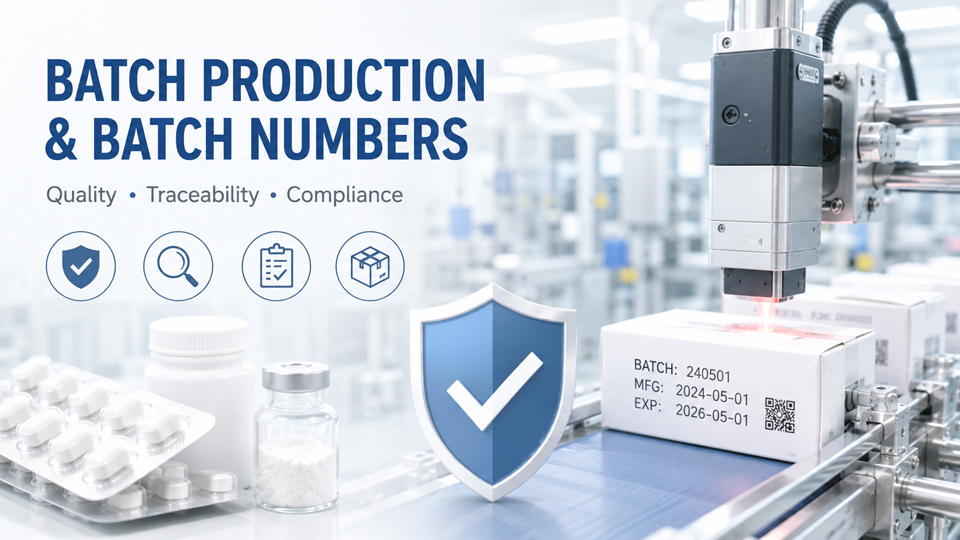
Na indústria farmacêutica, um “lote” normalmente se refere a uma quantidade específica de produto fabricado durante um único ciclo de produção – com base nas mesmas instruções de produção – que possui características de qualidade uniformes. De acordo com os EUA. Definição da FDA, um “lote” é uma quantidade específica de substância medicamentosa a granel ou material de forma farmacêutica destinada a ter qualidade uniforme.
A produção em lote significa fazer um definir quantidade de um produto de uma só vez, em seguida, iniciar uma nova execução para o próximo lote. Isso envolve o processamento de matérias-primas em cada etapa da produção (misturando, granulação, compressão, etc.) para um lote, completando todas as etapas, em seguida, limpar o equipamento antes do início do próximo lote. É diferente de fabricação contínua, onde a linha nunca para. No processamento em lote tradicional, “o lote atual deve terminar antes que um lote subsequente possa ser processado”.
As execuções de lotes são especialmente comuns na fabricação farmacêutica porque muitas formulações exigem controles rigorosos e limpezas ocasionais entre lotes. Cada lote produz um número fixo de unidades - dizer 100,000 comprimidos ou 50,000 cápsulas. Ao fazer isso, as empresas podem adaptar a produção às necessidades de demanda e qualidade. Por exemplo, se a fórmula do comprimido for alterada ou diferente prensa para comprimidos é necessário, o novo lote começa do zero sob condições controladas. Esta abordagem passo a passo ajuda a manter consistência.
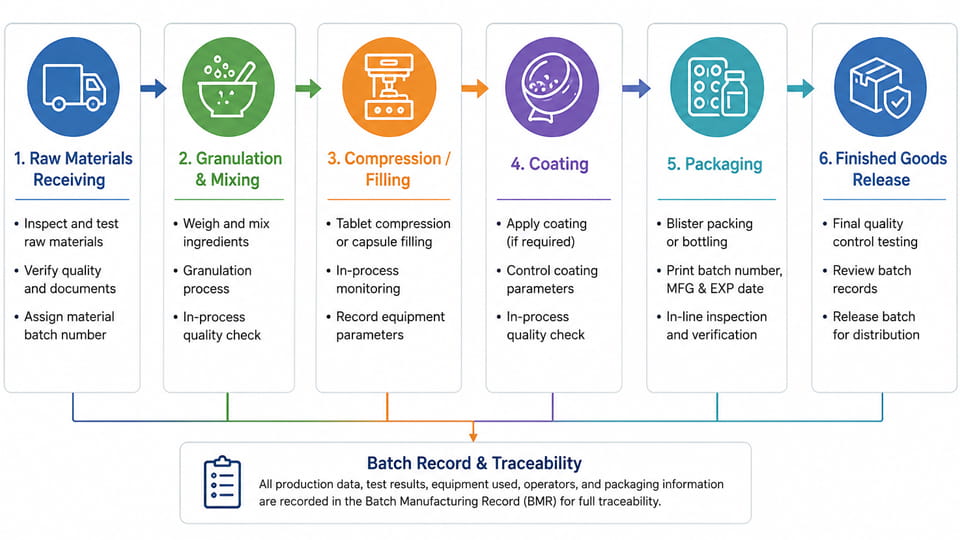
Figura: Fluxo simplificado de produção em lote na fabricação farmacêutica.
Na prática, após o enchimento da cápsula ou comprimido comprimindo o lote, a linha muitas vezes para, fica limpo, e o próximo lote é iniciado. Esta é uma pedra angular do GMP, porque evita a contaminação cruzada e permite que cada lote seja verificado individualmente. Se algo der errado (digamos que um teste de laboratório falhe), apenas esse lote é isolado. Como observa uma fonte da indústria, “usando produção em lote, as empresas farmacêuticas podem produzir quantidades específicas de um produto e depois ajustar as suas prioridades de acordo com a evolução da procura”..
UM número do lote (às vezes chamado de número de lote) é um código único dado a um lote de produto. Está carimbado ou impresso em cada unidade (ou seu pacote) daquele lote. Em termos simples, um número de lote vincula cada comprimido ou frasco à produção exata. De acordo com especialistas, “um número de lote é um identificador único atribuído a um grupo de produtos que foram fabricados juntos sob as mesmas condições”. Outro guia do setor resume tudo: um lote é a quantidade produzida em uma única tiragem, e o número do lote identifica essa execução.
Qual é a aparência de um número de lote? Não existe um formato global único – as empresas criam a sua própria codificação. Muitas vezes, um número de lote inclui alguma combinação de data, código de linha ou planta, e uma sequência. Por exemplo: B12345678-AB, onde “B” pode ser um código de produto ou categoria, os números são um ID de lote sequencial, e “AB” poderia indicar a planta ou linha. Da mesma maneira, um número como TAB240501-001 pode ser dividido como “TAB” (código do produto para tablet), “240501” (Poderia 1, 2024), e “001” (lote 1 do dia). Outro exemplo: CAP250318A03 pode significar cápsulas (PAC), data 25-mar-18, linha A, lote 03. A chave é a consistência: cada parte do código tem significado.
Independentemente do formato, o número do lote é registrado em todos os registros de produção. Isso é “documentado de forma consistente e sistemática – desde a produção até o armazenamento”. Geralmente é impresso em ambas as embalagens primárias (como um frasco de comprimidos) e em embalagens secundárias (como uma caixa ou caixa). Resumidamente, o número do lote é a ligação entre o produto na prateleira e seu histórico de fabricação.
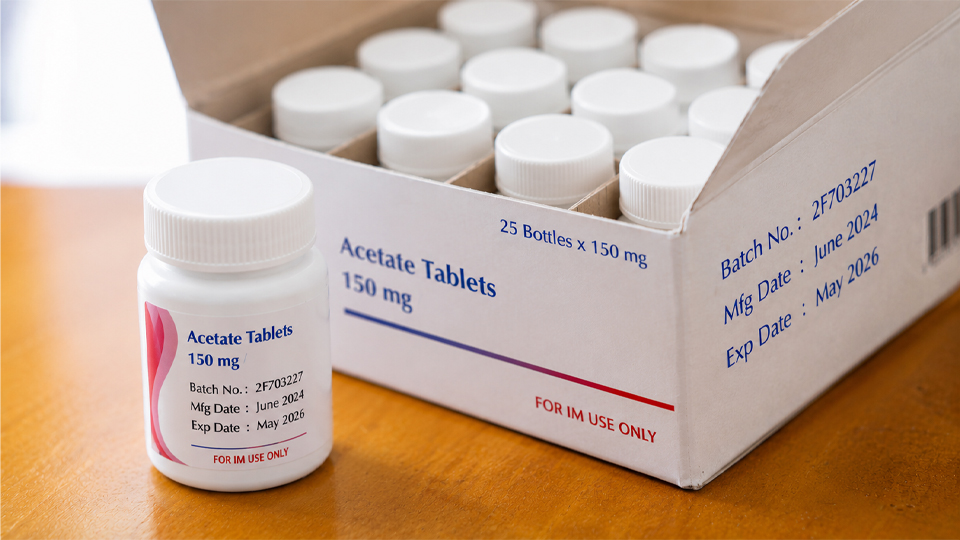
Ter um número de lote pode parecer apenas uma etiqueta extra, mas na verdade é um Requisito de BPF e uma ferramenta crítica de qualidade. Reguladores em todo o mundo exigem numeração de lote para produtos farmacêuticos. Por exemplo, as regras CGMP da FDA dos EUA (21 CFR 211.130) exigir explicitamente que os rótulos dos medicamentos contenham um número de lote ou de controle que “permite a determinação do histórico de fabricação e controle do lote”. Em outras palavras, todo medicamento vendido nos EUA deve ter um lote (muito) número nele para que seu histórico completo possa ser rastreado. De forma similar, As diretrizes de BPF da UE e PIC/S deixam claro que cada lote deve ser identificado e registrado exclusivamente para garantir a qualidade do produto e a segurança do paciente.
Por que é tão importante? Podemos agrupar os motivos em rastreabilidade, conformidade, qualidade, lembra, e investigações:
Os números de lote são âncoras de rastreabilidade. Eles criam uma ligação direta entre o produto acabado e tudo o que foi necessário para produzi-lo. Com um número de lote, você pode responder “quais matérias-primas, operadores, máquinas, e os resultados dos testes foram incluídos neste lote?”. Por exemplo, se um lote de medicamento estiver marcado BN12345, as equipes de qualidade sabem exatamente quais números de lote de ingredientes foram usados (dizer, API muito e excipiente muito), qual prensa de comprimidos foi usada, quais operadores estavam de plantão, e até mesmo os resultados de verificações em processo e testes finais de CQ. “Bnúmeros de registro servem a um propósito fundamental: rastreabilidade”. Eles permitem identificar problemas e verificar cada etapa do início ao fim. Resumidamente, cada número de lote é como uma trilha detalhada no processo de fabricação.
BPF farmacêutica (Boas Práticas de Fabricação) regulamentos exigir esta rastreabilidade. As agências esperam que o histórico de cada lote seja registrado. Por exemplo, na UE GMP Q&UM, os inspetores observam que os lotes de produtos a granel e acabados devem estar vinculados de forma rastreável (muitas vezes usando códigos de lote relacionados). Eles alertam que ter números de lote não relacionados em massa vs.. pacotes finais é "indesejável" porque pode confundir os esforços de recall. Em um nível superior, As diretrizes do PIC/S estabelecem que as empresas devem manter registros de distribuição para cada lote para que qualquer lote possa ser recuperado rapidamente, se necessário. Da mesma maneira, Eu Q7A (para APIs) diz que “deve haver um sistema pelo qual a distribuição de cada lote… possa ser prontamente determinada para permitir seu recall”. Em outras palavras, os reguladores esperam que os números dos lotes estejam vinculados a todo o sistema de registro GMP: registros de fabricação em lote, registros de embalagem, registros de distribuição, etc.. Sem números de lote, atender a esses requisitos seria impossível.
Ter um número de lote torna o controle de qualidade sistemático. Cada lote é testado por seus próprios méritos: ensaio, dissolução, pureza, esterilidade e assim por diante. Se um teste falhar, o laboratório pode identificar rapidamente o lote pelo seu número e remover todas as unidades com esse código. Como um guia aponta, “se um problema de qualidade for detectado, o lote afetado pode ser rapidamente isolado e analisado para identificar e resolver a causa raiz”. Na prática, isso significa que resultados inconsistentes ou abaixo do padrão afetam apenas um lote, não toda a produção. O número do lote vincula o resultado do teste com falha ao material do lote real. Esta abordagem garante que as ações corretivas (como reprocessamento ou rejeição) aplique apenas quando necessário, e não para outros bons lotes por engano.
Os números de lote são indispensáveis em uma situação de recall. Se surgir uma preocupação de segurança – digamos, uma impureza encontrada em testes de laboratório ou eventos adversos relatados por pacientes – a empresa precisa identificar exatamente quais produtos são afetados. Porque cada caixa ou frasco enviado possui um código de lote exclusivo, o recall pode ter como alvo apenas essas unidades. A orientação do PIC/S diz que os registros de distribuição de cada lote devem ser mantidos “para facilitar a recordação”. E os especialistas do setor concordam com isso: “A rastreabilidade dos lotes é essencial para a eficácia do recall de produtos”. GMP Trends alerta que sem números de lote exclusivos, um recall se torna um pesadelo. Se dois produtos diferentes compartilham um número de lote, você pode ter que retirar mais do mercado do que o necessário, arriscando danos ao paciente ou consequências legais. Com codificação de lote adequada, apenas o lote problemático é retirado, economizando tempo, custo e preocupação. “Em vez de recolher todos os produtos, apenas os lotes afetados precisam ser retirados” em um recall direcionado.
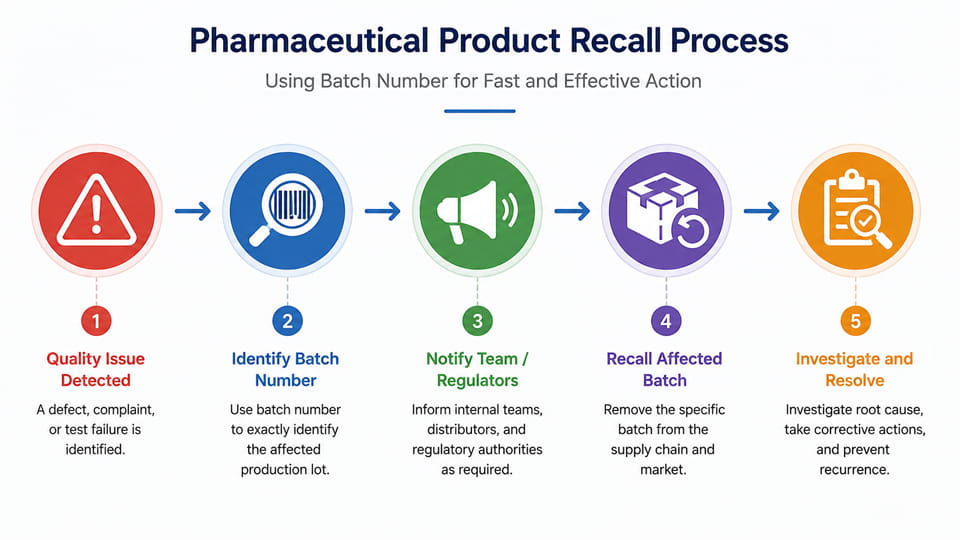
Figura: Processo simplificado de recall de produtos usando números de lote.
Sempre que algo dá errado – seja uma reclamação de um cliente, um desvio, ou um teste que falhou – os números dos lotes facilitam as investigações. As equipes de qualidade podem rastrear todos os aspectos desse lote. Eles sabem exatamente Quem cuidou disso, quando e onde foi feito, e quais materiais foram usados. “Quem fabricou um produto, quando foi fabricado, onde foi fabricado, quais máquinas e matérias-primas foram usadas”. Esta informação significa que você não precisa adivinhar. Por exemplo, se um dureza do comprimido teste falha, o controle de qualidade pode verificar se aquele lote específico tinha uma umidade de granulação diferente ou uma velocidade de prensagem diferente. Em outras palavras, os números de lote eliminam pontos cegos e aceleram a análise da causa raiz.
Resumindo, números de lote são exigidos pelos reguladores (FDA, EMA/PIC/S, QUEM) porque eles garantem rastreabilidade e controle total de cada lote fabricado. Eles apoiam diretamente a conformidade com GMP, garantia de qualidade, e seguro, recalls eficientes. Na verdade, em indústrias regulamentadas como farmacêutica, a numeração do lote não é opcional – é um requisito legal. Se um fabricante não conseguir rastrear um defeito em seu lote, os reguladores podem impor penalidades e os recalls podem se tornar desastrosamente amplos.
Em muitas indústrias, os termos número do lote e número do lote são frequentemente usados de forma intercambiável. Em produtos farmacêuticos, “número do lote” é mais comum (vinculado ao GMP e ao registro do lote), mas o conceito é semelhante. A principal diferença é o escopo:
| Número do lote | Número do lote | |
| Definição | Identifica um produção única de um produto sob um conjunto de condições. | Freqüentemente se refere a um grupo maior que pode incluir vários lotes compartilhando a mesma receita ou período de tempo. |
| Uso na Indústria | Padrão em produtos farmacêuticos (e produtos biológicos) para produção em lote e testes de liberação. | Comum na comida, cosméticos, etc.; às vezes usado em produtos farmacêuticos, mas pode abranger vários lotes. |
| Rastreabilidade | Vinculado ao histórico detalhado de um lote (Materiais, equipamento, registros). | Une vários lotes, geralmente para agrupamento em amostragem ou controle de qualidade, em vez de rastreamento detalhado. |
| Exemplo | Lote #001 para uma corrida em janeiro 1, 2024 de um comprimido antibiótico (uma corrida). | Muito 202401 pode incluir lote #001 e #002 dos mesmos comprimidos de antibióticos feitos em janeiro 2024. |
UM número do lote geralmente se refere a uma produção específica, enquanto um número do lote pode abranger múltiplas execuções feitas em condições semelhantes. Na prática, algumas empresas os usam como sinônimos. Mas em termos estritos de GMP, cada lote tem seu próprio registro e número. Muitos documentos regulatórios (como FDA e PIC/S) na verdade se refere lote ou número de lote junto, reconhecendo que eles são funcionalmente iguais para fins de rastreabilidade.
Um número de lote pode parecer uma simples combinação de letras e números, mas por trás disso está um sistema de identificação cuidadosamente projetado. Cada empresa farmacêutica estabelece suas próprias regras de numeração através de Procedimentos Operacionais Padrão internos (POPS), garantindo que dois lotes de produção nunca recebam o mesmo identificador.
Um número de lote típico geralmente combina diversas informações de fabricação. Por exemplo:
TAB-240501-001
Em vez de serem personagens aleatórios, cada seção carrega um significado específico. “ABA” pode representar um produto tablet, “240501” indica a data de fabricação, enquanto “001” identifica o primeiro lote de produção concluído naquele dia.
Alguns fabricantes também incluem identificadores adicionais, como linhas de produção, oficinas, ou turnos. Um fabricante de cápsulas, por exemplo, pode gerar um número de lote como CAP-250318-B02, onde “B” refere-se à Linha de Produção B e “02” representa o segundo lote produzido durante esse turno.
O formato exato varia de uma empresa para outra, mas todo sistema eficaz de numeração de lote segue três princípios básicos:
Esses princípios permitem que os fabricantes recuperem o histórico completo de produção de qualquer produto em poucos minutos, que é exatamente o que os inspetores regulatórios esperam durante as auditorias de BPF.
Todo o processo de fabricação de cada lote deve ser documentado em um Registro de produção em lote (RPB), também chamado de Registro de fabricação em lote (TMB). Esses registros servem como diário de produção para cada lote, demonstrando que o produto foi fabricado de acordo com a fórmula aprovada, instruções de fabricação, e requisitos de BPF. De acordo com os regulamentos da FDA, um registro de produção e controle de lote deve ser preparado para cada lote de medicamento e incluir informações completas de produção e controle.
Um BPR típico inclui:
O número do lote aparece em todo o BPR e serve como identificador chave que liga todos os registros de fabricação. Assim que a produção for concluída, o BPR deve ser revisado e aprovado pela Garantia de Qualidade (Controle de qualidade) departamento antes que o lote possa ser liberado. Durante as inspeções de GMP, as autoridades reguladoras verificam cuidadosamente se as informações registradas no BPR correspondem ao número do lote impresso no produto acabado. Um sistema abrangente de registro de lote permite que os fabricantes recuperem rapidamente os registros de produção, resultados laboratoriais, e distribuição de informações sempre que uma investigação de qualidade, reclamação do cliente, ou recall de produto ocorre, tornando-se um dos pilares da moderna gestão da qualidade farmacêutica.
As modernas linhas de embalagens farmacêuticas são comumente integradas com sistemas automáticos de codificação e inspeção que podem imprimir e verificar números de lote automaticamente durante todo o processo de embalagem. Dependendo do formato da embalagem, diferentes tipos de equipamentos aplicam informações de lote de maneiras diferentes:
As soluções completas de embalagens farmacêuticas da Jinlu Packaging integram codificação, Inspeção, e automação em uma única linha de produção. Por exemplo, uma linha de embalagem blister pode imprimir automaticamente um exclusivo número do lote e código QR em cada blister, enquanto um sistema de inspeção visual em linha verifica imediatamente a qualidade e a precisão da impressão. Esta verificação automatizada reduz significativamente o erro humano, ao mesmo tempo que melhora a rastreabilidade do produto e a integridade dos dados.
Resumindo, uma ampla gama de equipamentos de embalagem farmacêutica - incluindo Pressões de tablets, Máquinas de preenchimento de cápsulas, Máquinas de embalagem de bolha, linhas de embalagem de garrafas, máquinas de etiquetagem, e máquinas de embalagem—pode ser integrado a sistemas de codificação a jato de tinta ou a laser para imprimir números de lote e outras informações de rastreabilidade em embalagens primárias ou secundárias. Automatizando o gerenciamento de números de lote, fabricantes farmacêuticos podem melhorar a eficiência da produção, fortalecer a rastreabilidade do produto, e garantir a conformidade com os requisitos globais de GMP.
Resumindo, a produção e a numeração de lotes são a espinha dorsal da segurança, fabricação farmacêutica compatível. Eles permitem que as empresas produzam medicamentos com confiança – sabendo que podem sempre rastrear e isolar qualquer problema. A produção em lote garante qualidade uniforme e controle discreto, enquanto os números de lote fornecem a âncora de rastreamento. Junto, eles cumprem as regras GMP e protegem a segurança do paciente. A alternativa – produzir sem lotes ou números claros – é praticamente impensável num ambiente regulamentado.
Para produtos farmacêuticos, investir em máquinas de embalagem capazes também é investir na rastreabilidade. Codificadores da Jinlu Packing, máquinas de etiquetagem, encartuchadeiras e sistemas de inspeção são construídos com GMP em mente – garantindo que cada unidade carregue as informações corretas do lote. Para garantir que seu próximo lote seja seguro, compatível e totalmente documentado, considerar soluções chave na mão que integram codificação em lote e rastreabilidade automática.
Pronto para melhorar sua rastreabilidade? Explore a gama completa de Jinlu Packing máquinas de embalagem farmacêutica – desde codificadores e etiquetadores de lote até encartuchadores e inspeção visual – projetados para imprimir, verificar, e registre seus números de lote perfeitamente. Contato Jinlu para discutir como construir uma linha de embalagem que mantenha cada lote no caminho certo.
Um número de lote (ou número de lote) é um código único dado a uma produção de um medicamento. Identifica todas as unidades feitas juntas nas mesmas condições. O código vincula esse produto aos seus registros de fabricação (ingredientes, processo, testes). Essencialmente, é uma etiqueta de identificação para um lote de medicamento.
Os números de lote permitem rastreabilidade. Se surgir algum problema de qualidade ou preocupação de segurança, empresas e reguladores podem rastrear rapidamente esse lote em todas as etapas – matérias-primas, equipamento, operadores, resultados do teste, distribuição, etc.. Isto é exigido pelas regras GMP e torna possível recuperar apenas o lote afetado em vez de tudo.
Em produtos farmacêuticos, eles são frequentemente usados de forma intercambiável, mas às vezes com nuances. Um número de lote geralmente se refere a uma produção específica. Às vezes, um número de lote pode se referir a um grupo de lotes feitos em condições semelhantes. Muitos fabricantes os tratam como sinônimos, mas a chave é a consistência na sua documentação.
Produção em lote significa produzir uma quantidade finita de produto de uma só vez. Cada lote passa por todo o processo de fabricação, então é concluído antes de iniciar o próximo. É a maneira tradicional dos tablets, cápsulas, etc.. são feitos – passo a passo – em contraste com um processo de fluxo contínuo.
As empresas criam números de lote usando um formato definido. Elementos comuns incluem uma data (Por exemplo, AAMMDD), um código de produto ou planta, identificador de deslocamento ou linha, e um número sequencial. Por exemplo, “TAB240501-001” pode significar comprimidos de 2024-05-01, lote 001. Alguns adicionam letras para mais informações. O formato exato varia, mas é definido no sistema de qualidade e usado de forma consistente.
Dependendo do esquema da sua empresa, um número de lote pode codificar coisas como a data de produção, código do produto, linha de equipamentos, mudança e sequência. O objetivo é tornar o lote exclusivamente identificável. Por exemplo, Yaveon explica isso em um código como B12345678-AB, “B” pode indicar o tipo de produto, “12345678” o lote específico, e “AB” o site ou linha.
Rastreabilidade significa que você pode acompanhar a jornada de um produto até a fabricação. É vital para a segurança do paciente e a conformidade regulatória. Se surgir um problema de segurança de medicamentos, você deve saber quais lotes podem ser afetados. A rastreabilidade permite que você responda, “Quais lotes utilizaram aquela matéria-prima?” e “Quais unidades foram para quais mercados?"Sem isso, as empresas não podiam realizar recalls ou investigações precisas. Os reguladores exigem a rastreabilidade nas BPF exatamente por esta razão.
Se um defeito ou contaminação for descoberto em um medicamento, a empresa usa registros de lote para descobrir quais unidades de produto são afetadas. Eles notificam os reguladores, em seguida, instrua atacadistas e farmácias a devolver ou colocar em quarentena os números de lote afetados. Por causa dos números dos lotes, apenas o lote ruim é retirado. É por isso que mantemos registros de distribuição “para cada lote… para facilitar o recall”. Depois de remover o produto, O controle de qualidade investiga a causa raiz para evitar recorrência.
Uma TMB (também chamado de registro de produção em lote) é o registro detalhado de tudo o que foi feito na fabricação de um lote. Inclui o nome do produto, número do lote, fórmulas, equipamento usado, nomes dos operadores, carimbos de data/hora, e todos os resultados dos testes. As GMP exigem que a BMR liste “o nome e o número do lote do produto”. A BMR é essencialmente a “certidão de nascimento” de um lote.
A produção em lote oferece flexibilidade para fábricas de vários produtos e documentação mais simples para cada execução. É mais fácil validar e qualificar processos passo a passo. Se um problema for encontrado no final de um lote, todo o lote pode ser descartado sem afetar outros produtos. A fabricação contínua traz benefícios de eficiência, mas muitas vezes exige investimentos pesados e controles rigorosos. Muitas empresas farmacêuticas ainda dependem do modo lote, especialmente para medicamentos de menor escala ou especializados.
Referências:
1.Produção em lote\Número do lote—— Wikipédia
2.Perguntas e respostas sobre os requisitos atuais de boas práticas de fabricação – registros e relatórios -- NÓS. Food and Drug Administration
3.21 CFR § 211.188 – Registros de produção e controle em lote. —— Instituto de Informação Jurídica
4.Q7A Orientação de Boas Práticas de Fabricação para Ingredientes Farmacêuticos Ativos -- NÓS. Food and Drug Administration