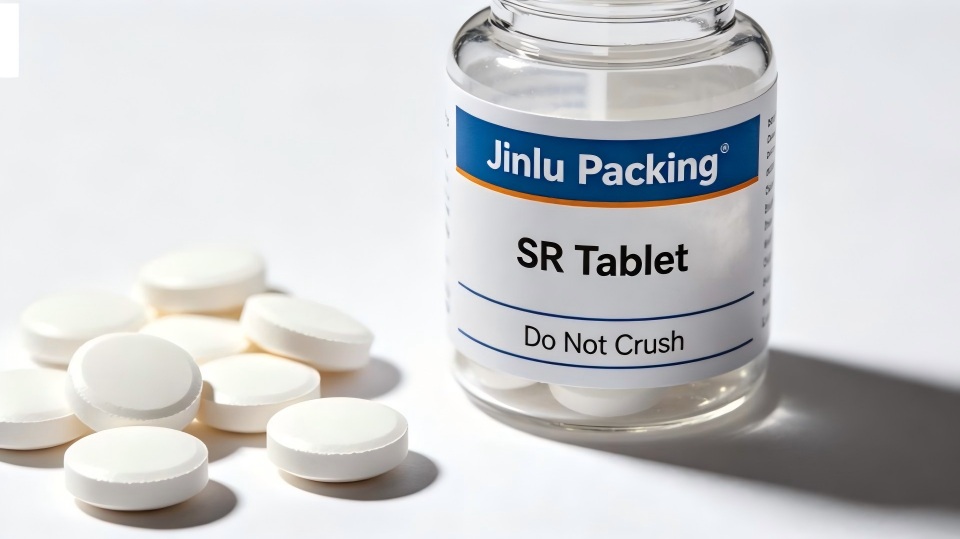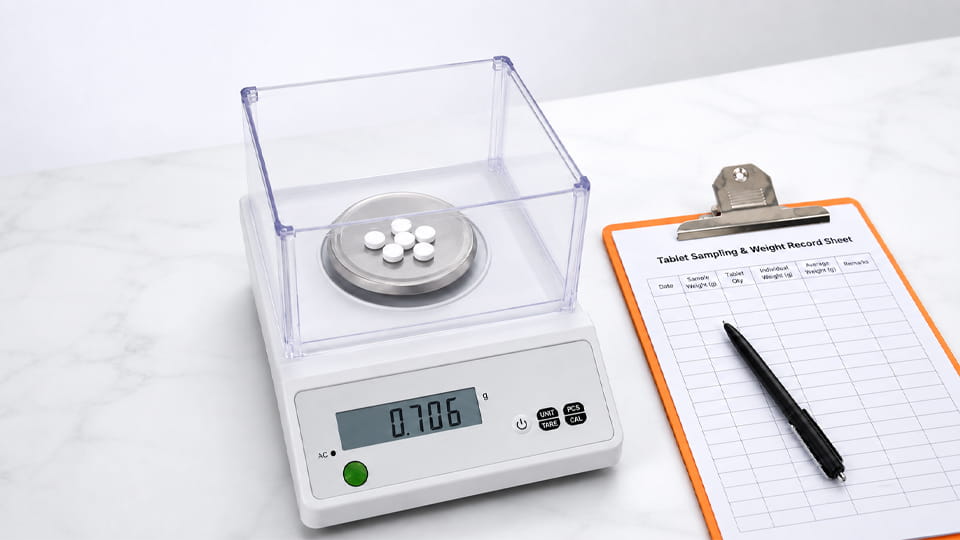

Em fabricação de tablets, dureza e friabilidade são duas medidas-chave de qualidade. Dureza (força de ruptura) nos diz quanta pressão um comprimido pode suportar antes de quebrar. A friabilidade mede a facilidade com que a superfície de um comprimido se lasca ou sofre erosão quando tombada ou manuseada. Em outras palavras, verificações de dureza força interna, enquanto a friabilidade verifica durabilidade da superfície. Ambas as propriedades afetam o processamento posterior – desde como os comprimidos são comprimidos até como são revestidos e finalmente embalados. Este artigo explica por que a friabilidade versus a dureza é importante, como cada um é testado, e como eles influenciam a compressão do tablet, revestimento, e qualidade de embalagem em linhas de produção reais.
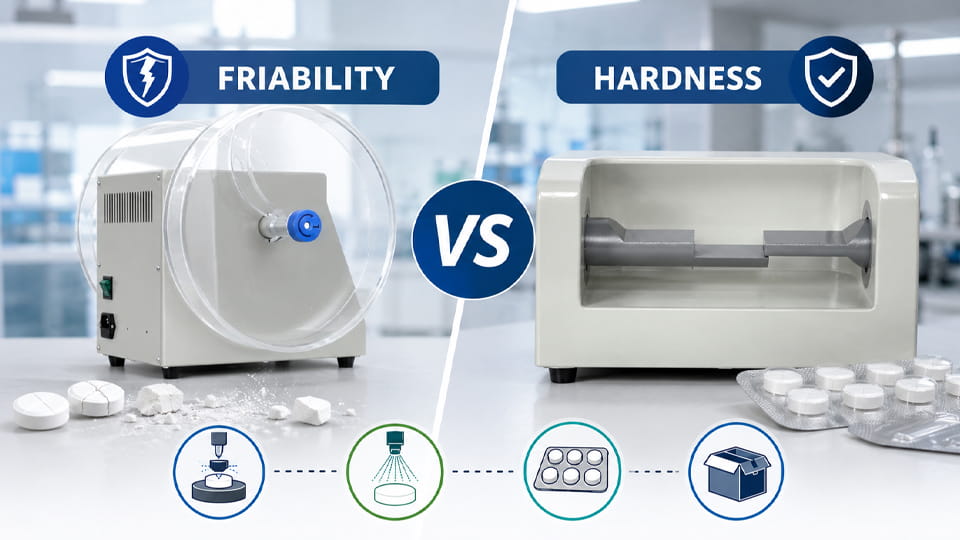
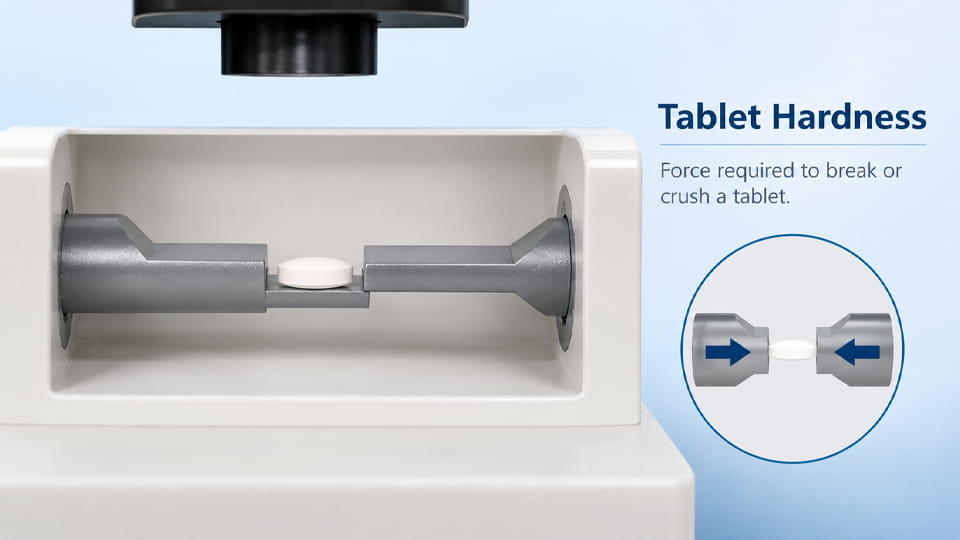
Dureza do comprimido (tecnicamente “força de quebra do comprimido”) é a força necessária para quebrar um comprimido por compressão. Na prática, a dureza é medida colocando o comprimido entre duas bigornas ou placas e aplicando força até fraturar. Testadores de dureza modernos (manual ou digital) meça o pico de força em quilogramas ou newtons. A força de ruptura do comprimido é crítica para controle de qualidade: um comprimido deve ser forte o suficiente para suportar o manuseio, embalagem, e envio sem quebrar. Os EUA. e as farmacopeias europeias especificam métodos padronizados para dureza (força de ruptura) teste. Alguma literatura da indústria prefere o termo “força de ruptura” sobre “dureza,” já que na ciência dos materiais “dureza” normalmente significa resistência à indentação da superfície, enquanto o teste de comprimidos mede a resistência à compressão.
A dureza do comprimido é influenciada pelos parâmetros de formulação e processo. Mais alto força de compressão geralmente produz comprimidos mais duros, enquanto fatores de formulação como aglutinantes e lubrificantes também afetam a dureza. Por exemplo, aumentando um fichário (E.G.. PVP ou HPMC) geralmente aumenta a força do comprimido, enquanto muito lubrificante (estearato de magnésio) pode enfraquecer a ligação interpartículas. O tamanho do tablet, forma, e a porosidade também desempenham papéis: comprimidos mais grossos ou densos geralmente requerem mais força para quebrar.
Dureza muito baixa (subcompressão) faz com que os comprimidos rachadura, esfarelar ou lascar facilmente. Uma dureza muito alta, no entanto, pode ter desvantagens: comprimidos muito duros podem desintegrar-se lentamente ou dissolver-se muito lentamente no corpo. Um tablet muito duro também pode ser difícil para os pacientes engolirem. Por isso, o design do tablet deve equilibrar resistência mecânica com desempenho. Na prática, fabricantes definem uma faixa de aceitação (E.G.. 4–10kg ou mais) para força de ruptura durante a produção.
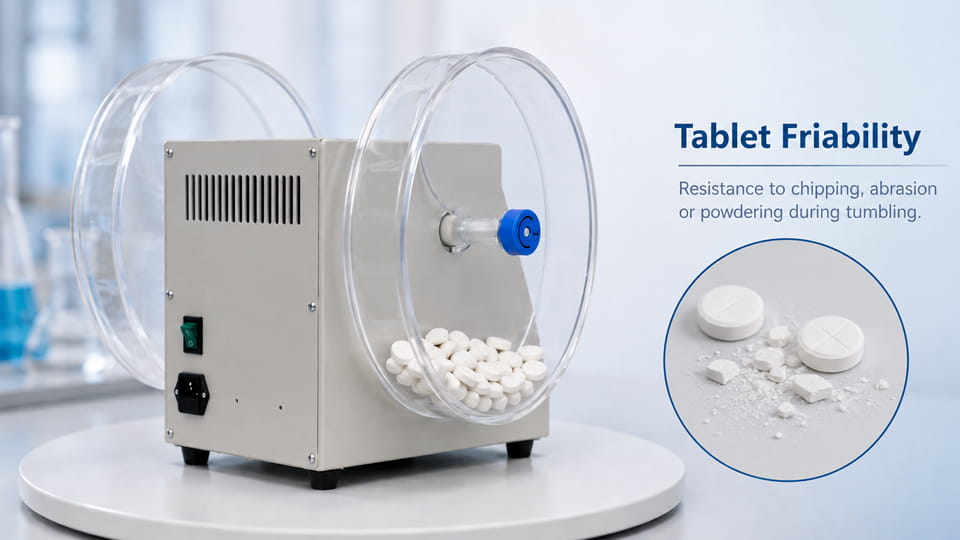
A friabilidade do comprimido é uma medida da facilidade com que um comprimido se esfarela ou perde massa quando submetido a estresse mecânico., como queda ou impacto. Teste de friabilidade envolve colocar comprimidos despoeirados em um tambor rotativo (Roche friável), normalmente a 25 rpm, e submetendo-os a 100 revoluções. Cada revolução tomba e deixa cair os comprimidos em uma altura fixa para simular o estresse durante o manuseio e transporte. Depois do teste, comprimidos são coletados, e qualquer poeira solta é removida. Os comprimidos são pesados antes e depois para determinar a porcentagem de perda de peso, que é relatado como friabilidade. Por exemplo, o USP <1216> e Ph.Eur. monografias descrevem este procedimento.
Quanto menor a friabilidade, mais resistente o tablet é à abrasão ou lascamento. Um limite de friabilidade aceitável é convencionalmente ≤1,0% perda de peso. Tablets que perdem mais do que esse limite, ou que visivelmente rachem ou quebrem durante o teste, falhar no critério de friabilidade. A friabilidade do tablet aborda especificamente durabilidade pós-compressão – simula o estresse físico que os comprimidos enfrentam nas panelas de revestimento, transportadores, enchedores de garrafas, linhas de bolhas, e embalagem. A alta friabilidade se manifesta como lascas nas bordas dos comprimidos, rachaduras visíveis, ou excesso de poeira. A friabilidade é, portanto, um atributo de qualidade intimamente ligado à robustez da embalagem e do manuseio..
Esses testes parecem semelhantes, mas investigam tensões diferentes. Em termos simples:
Imagine dois comprimidos: um testado em 20 kP (quiloponds) da força de esmagamento (muito difícil) e um em 5 kP (macio). Você pode pensar que 20 O tablet kP é indestrutível, mas se suas bordas forem quebradiças, ainda poderia perder 2–3% de massa em um tambor de friabilidade – o dobro do limite aceitável. Na prática, um comprimido pode ser “extremamente duro – exigindo força significativa para esmagar – mas surpreendentemente frágil.”. Isso mostra por que ambos testes são necessários. A tabela abaixo resume a diferença:
Resumidamente: dureza resiste esmagamento, enquanto a friabilidade resiste lascar. Um design robusto do tablet equilibra ambos: deve sobreviver à imprensa e às máquinas sem tirar pó, mas ainda assim dissolver adequadamente.
| Parâmetro | Dureza do comprimido (Força de ruptura) | Friabilidade do comprimido |
|---|---|---|
| O que mede | Resistência a uma única força aplicada (compressão ou tensão) causando fratura | Resistência à abrasão repetida, impacto, e lascar (perda de peso quando tombado) |
| Tipo de estresse típico | Grande carga única de compressão ou flexão de três pontos até a falha | Várias quedas/quedas (geralmente 100 rotações) simulando choques de manuseio |
| Objetivo principal | Avalie a resistência à ruptura do tablet (robustez da formulação sob compressão) | Avalie a durabilidade durante o transporte, revestimento, e embalagem |
| Resultado do teste | Valor da força de ruptura (E.G.. em Newtons ou kp) | Porcentagem de perda de peso após o teste (e inspeção visual quanto a danos) |
| Link para qualidade | Define parâmetros de compactação; garante que os tablets não quebrem sob força | Define as configurações da linha de embalagem; garante que os comprimidos sobrevivam ao revestimento/transporte |
| Substituível por outro teste? | Não. Estresse diferente; precisa de sua própria medição. | Não. Justificativa de teste diferente; não pode substituir o teste de dureza. |
A tabela acima destaca que dureza e friabilidade medem diferentes aspectos. Dureza (força de ruptura) é um teste de estresse único, Considerando que os testes de friabilidade repetiram choques de baixo nível. Importante, um comprimido pode ser difícil, mas frágil ou vice-versa. Por exemplo, um comprimido com alta força de ruptura ainda pode falhar no teste de friabilidade se suas bordas lascarem facilmente ou se a ligação interna for irregular. Resumidamente, dureza e friabilidade estão relacionadas, mas não são intercambiáveis – ambas devem ser avaliadas.
Os testadores de dureza de comprimidos aplicam uma força controlada a um único comprimido até que ele se quebre. Em um testador típico, duas bigornas planas (prato) segure o tablet – um estacionário, um em movimento. O testador registra a força na ruptura. Testadores manuais (baseado em primavera como Monsanto) e testadores digitais modernos (com células de carga e leituras eletrônicas) são comuns. Testadores eletrônicos fornecem resultados precisos, medições repetíveis e muitas vezes medem diâmetro e espessura simultaneamente. Durante o teste, fatores como orientação do tablet (para tablets de face plana) ou acessórios especiais (para formas incomuns) são cuidadosamente controlados para garantir resultados consistentes. A força de ruptura medida informa o controle de qualidade: lotes são aceitos somente se a dureza estiver dentro da faixa definida para aquela formulação.
UM friável ou o testador de friabilidade despeja uma amostra de comprimidos em um tambor transparente para simular o manuseio. Etapas principais (por USP/Ph.Eur.) são: 1. Despoeirar e pesar uma amostra de comprimido (E.G.. 6.5 g ou 10 comprimidos). 2. Coloque os comprimidos em um tambor giratório com uma aba de elevação dentro. 3. Gire a 25 rpm para 100 revoluções (4 minutos). 4. Remover comprimidos, remova a poeira solta, pesar novamente. 5. Calcular % perda de peso: .
Se qualquer tablet está rachado ou quebrado depois de cair, o lote falha imediatamente. De outra forma, se perda total de peso >1%, o teste é repetido em triplicado e uma média é usada. Na prática, comprimidos que passam mostram o mínimo de lascas ou poeira. Os resultados de friabilidade orientam as decisões antes do revestimento e embalagem: alta perda solicita reformulação ou mudança de processo.
Os métodos de teste assumem comprimidos não revestidos. Comprimidos revestidos também podem ser testados, mas muitas vezes apresentam menor friabilidade simplesmente devido à casca. Por outro lado, comprimidos efervescentes ou altamente porosos podem exigir controle especial de umidade durante o teste. Formato e tamanho do tablet afetar o comportamento de queda; para formas irregulares, a base do tambor pode ser inclinada ~10° para garantir movimento aleatório. Em todos os casos, padrões compêndios (USP, Ph.Eur.) especificar aparelho e procedimento. A prática laboratorial moderna também verifica a calibração dos testadores de dureza e friabilidade e executa regularmente o CQ com pastilhas de referência padrão.
Ambas as propriedades dependem da formulação e do processamento. Os principais fatores incluem tipo/concentração de aglutinante, força de compressão, e formato de comprimido. Por exemplo:
Porque tantas variáveis são importantes, os fabricantes definem intervalos-alvo em vez de valores únicos. Há nenhuma dureza universal “perfeita”; depende do produto forma farmacêutica, uso pretendido, e embalagem. Uma vitamina mastigável e um revestido por película analgésico pode ter níveis de dureza ideais muito diferentes, mesmo que pesem o mesmo.
O estágio de compressão na prensa de comprimidos determina em grande parte a dureza. Na prática:

Resumidamente, otimizar parâmetros de compressão e formulações é essencial. Como observa o guia de solução de problemas da JinluPacking, “se os comprimidos forem muito moles, eles podem lascar, quebrar, ou exibir alta friabilidade. Se for muito difícil, eles podem resistir ao revestimento ou dissolver-se lentamente.”. Ajustando a força de compressão e o conteúdo do aglutinante, os fabricantes podem buscar comprimidos que resistam às tensões do processo sem ultrapassar a dureza.
Revestimento de tablets (filme ou revestimento de açúcar) é muito sensível à força do núcleo do tablet. Durante o revestimento, os comprimidos caem em uma panela giratória e borrife solução sobre eles. Esta queda aplica estresse mecânico e umidade. Veja como a dureza e a friabilidade entram em jogo:
Depois que os comprimidos são prensados e revestidos, eles se mudam para linhas de embalagem – máquinas de bolha, cartonadores, ou linhas de enchimento de garrafas. A força do tablet também é crucial aqui:

Para obter comprimidos de alta qualidade que atendam às demandas de revestimento e embalagem, tenha esses pontos em mente:
Na prática, o objetivo é um tablet que seja “forte o suficiente para sobreviver ao manuseio, mas não tão forte a ponto de falhar nos testes de dissolução.”. Muitos fabricantes traçam gráficos de força de compressão, dureza, e friabilidade em tempo real para detectar tendências antecipadamente (por exemplo, uma mudança repentina na dureza pode sinalizar uma mudança na alimentação de pó ou na umidade).
Resumindo, dureza e friabilidade são duas faces da mesma moeda para qualidade de tablet. A dureza garante a resistência do núcleo do tablet sob compressão, enquanto a friabilidade mede a robustez da superfície contra a abrasão. Adequadamente equilibrado, eles garantem que os comprimidos passem pelos recipientes de revestimento e máquinas de embalagem sem lascar ou quebrar. Comprimidos muito moles gerarão poeira e defeitos de revestimento, enquanto os comprimidos muito duros podem resistir às soluções de revestimento ou proporcionar uma experiência ruim ao paciente.
Para fabricantes farmacêuticos e engenheiros de embalagens, prestar atenção a ambos os testes é fundamental. Certifique-se de integrar testes de friabilidade e dureza em seus pontos de verificação de qualidade, e ajuste a formulação/compressão conforme necessário. Fazendo isso, você minimizará rejeições dispendiosas e garantirá uma operação tranquila em seu linhas de embalagem blister, máquinas de embalagem, ou linhas de engarrafamento.
Pronto para otimizar sua linha de produção e embalagem de comprimidos? A equipe da JinluPacking tem décadas de experiência em compressão e embalagem farmacêutica. Se você precisa de um prensa para comprimidos de alta velocidade, despoeirador, ou uma solução de embalagem blister personalizada, podemos ajudar a garantir que seus comprimidos permaneçam intactos desde a impressão até o paciente. Contate-nos para discutir como nossas máquinas e experiência podem apoiar suas metas de produção.
Não. Dureza (força de ruptura) mede a força necessária para fraturar um comprimido sob uma única carga. A friabilidade mede a durabilidade do comprimido sob abrasão repetida, expresso como % perda de peso em um teste de bateria. Eles avaliam diferentes propriedades.
Sim. Um comprimido pode ter uma alta força de ruptura (duro) mas ainda lasca nas bordas se a ligação das partículas for ruim. Tal comprimido pode quebrar facilmente ao cair, produzindo alta friabilidade. Por outro lado, um comprimido com dureza moderada pode passar friabilidade se for robusto. Portanto, ambos os testes são necessários.
O padrão comum da indústria é ≤1,0% de perda de peso após testes de friabilidade. Muitos fabricantes definem 0,5–1% como especificação para tablets comuns. Alguns produtos (E.G.. comprimidos muito grandes ou incomuns) pode ter critérios especiais, mas 1% é uma diretriz típica.
A dureza pode influenciar significativamente a dissolução. Um comprimido excessivamente duro pode desintegrar-se lentamente, atrasar a liberação do medicamento. Testes regulamentares mostraram que comprimidos muito duros (comprimido em altas forças) pode ficar fora das especificações de dissolução porque a matriz do comprimido é muito apertada. Por outro lado, um comprimido muito macio pode desintegrar-se rapidamente, mas pode quebrar-se prematuramente. A dureza ideal garante a desintegração oportuna sem quebra.
As causas comuns incluem aglutinante insuficiente, umidade de granulação inadequada, compressão inadequada, excesso de lubrificante, e excipientes quebradiços. Por exemplo, comprimidos com muito pouco material aglutinante ou grânulos excessivamente secos tendem a ser mais friáveis. Uma solução típica é ajustar a formulação (E.G.. aglutinante mais eficaz) ou otimizar o processo de granulação úmida e secagem.
Nem sempre. Uma compressão mais alta geralmente aumenta a dureza e pode reduzir inicialmente a friabilidade, mas tem limites. Força excessiva pode levar ao nivelamento, laminação ou dissolução alterada. Também, se a formulação for falha (E.G.. ligação ruim), simplesmente aumentar a pressão pode não resolver a friabilidade. É melhor otimizar a formulação e a força juntas.
Porque eles abordam diferentes tensões mecânicas. A dureza garante que o comprimido possa sobreviver a uma única força de esmagamento (importante para compressão e corte), enquanto a friabilidade garante que ele possa sobreviver a golpes repetidos (importante para revestimento, manuseio, e embalagem). Somente avaliando ambos os fabricantes podem ter certeza de que os tablets manterão a integridade ao longo de toda a cadeia de produção e entrega.
O design do equipamento é crítico. Por exemplo, encartuchadores de alta velocidade usam sensores e rampas almofadadas para desacelerar suavemente os comprimidos (evitando quebra no impacto). Transportadores a vácuo com curvas suaves reduzem o choque. As linhas de engarrafamento geralmente possuem tubos flexíveis e transições lentas. Sistemas de manuseio de comprimidos bem projetados reduzem a vibração, gotas, e fricção, reduzindo diretamente a quebra e a geração de poeira.
Referências:
1.Teste de dureza de comprimidos —— Wikipédia
2.EU 4 Anexo QB 9 Friabilidade do comprimido – Diretriz científica —— Agência Europeia de Medicamentos
3.Anexo Q4B 9: Capítulo Geral sobre Friabilidade de Tabletes -- NÓS. Food and Drug Administration
4.Dependência da friabilidade nas propriedades mecânicas dos comprimidos e uma abordagem preditiva para misturas binárias —— Especialistas@Minnesota
5.Efeito da umidade e da resistência ao esmagamento na friabilidade dos comprimidos e na dissolução in vitro —— Biblioteca Online Wiley