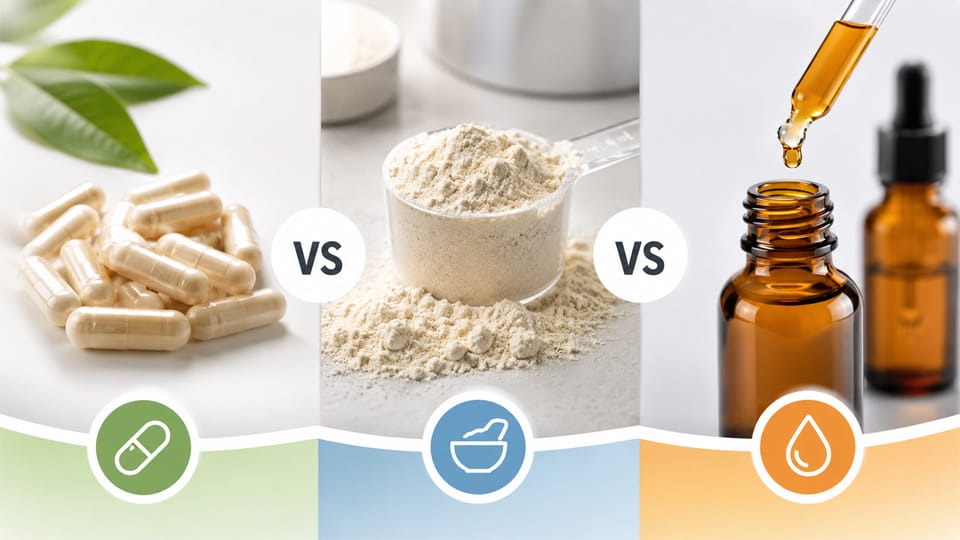

Os remédios não vêm apenas em frascos ou caixas – eles chegam em formas farmacêuticas. UM forma farmacêutica é o físico forma em que um medicamento é preparado e administrado. Na farmácia, isso significa que a droga ingrediente ativo é combinado com outros materiais (excipientes) e moldado em um tablet, cápsula, líquido, creme, ou outro formato. Em termos simples, o definição de forma farmacêutica é “como um medicamento é formulado e administrado” para que a dose certa chegue ao seu corpo com segurança. Por exemplo, um medicamento comum pode ser vendido como 500 cápsula de mg ou uma 250 comprimido para mastigar mg – mesmo medicamento, diferente forma farmacêutica.
Compreender as formas farmacêuticas é fundamental para qualquer pessoa na fabricação ou aquisição de produtos farmacêuticos. A escolha do formulário afeta o uso do paciente, estabilidade do medicamento, e métodos de produção. Neste guia, nós vamos quebrar o que significa uma forma farmacêutica em farmácia, por que isso importa, e o tipos de formas farmacêuticas você encontrará. Também abordaremos como os equipamentos modernos (como prensas de comprimidos e enchimentos de cápsulas) torna mais fácil produzir e embalar esses formulários.
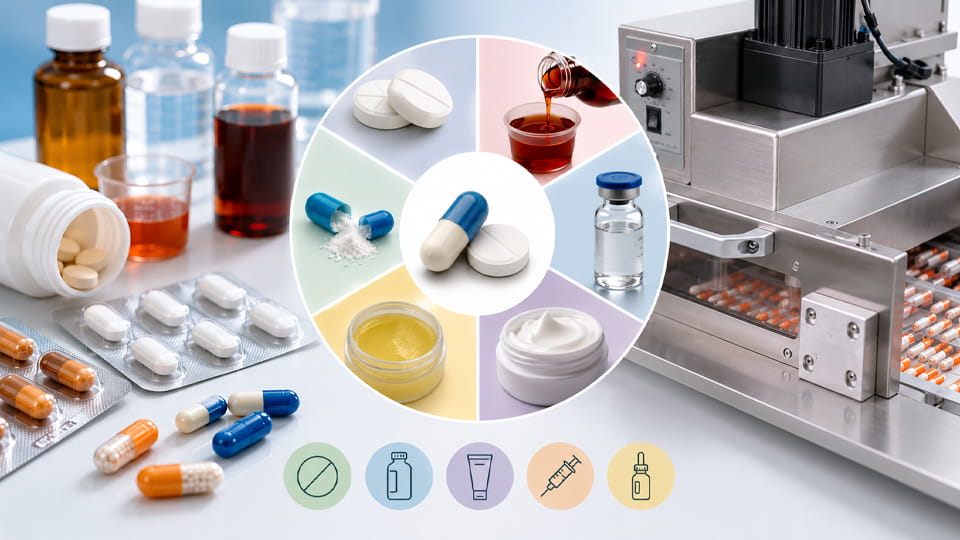
Por definição, um forma farmacêutica é a forma física de um produto farmacêutico. Em outras palavras, é como o medicamento ativo e quaisquer ingredientes inertes são combinados e apresentados para administração. O glossário do NIH o define simplesmente como “a forma física na qual um medicamento é fabricado ou administrado”. Outra fonte explica que as formas farmacêuticas são medicamentos “apresentado em forma específica para uso,” contendo uma mistura de componentes ativos e inativos, configurado em um formato específico.
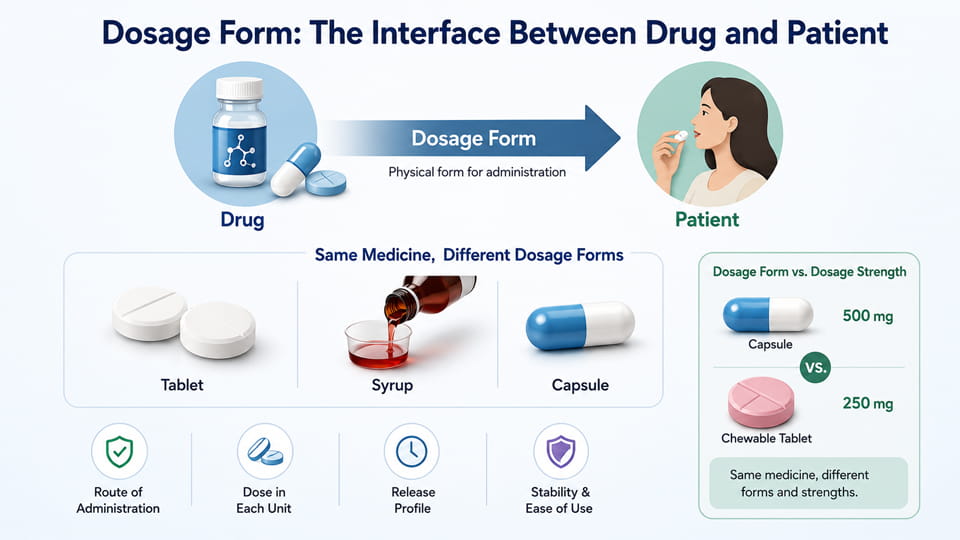
Pense na forma farmacêutica como o interface entre o medicamento e o paciente. Por exemplo, paracetamol vem em comprimidos, xarope, e até supositórios; estas são todas formas farmacêuticas diferentes do mesmo ingrediente ativo. Cada formulário é um formulação de dosagem – uma receita específica de medicamento ativo + excipientes moldados em algo conveniente. Como diz um guia JinLuPacking, fazer uma forma farmacêutica sólida é cerca de “transformar moléculas de drogas em uma forma sólida estável” misturando ingredientes ativos com ligantes e enchimentos. A forma finalizada pode ser um comprimido redondo, um invólucro de cápsula, ou um pacote de pó – cada um projetado para que o medicamento possa ser administrado de forma eficaz.
Na prática, quando farmacêuticos ou fabricantes falam sobre forma farmacêutica, eles estão considerando fatores como:
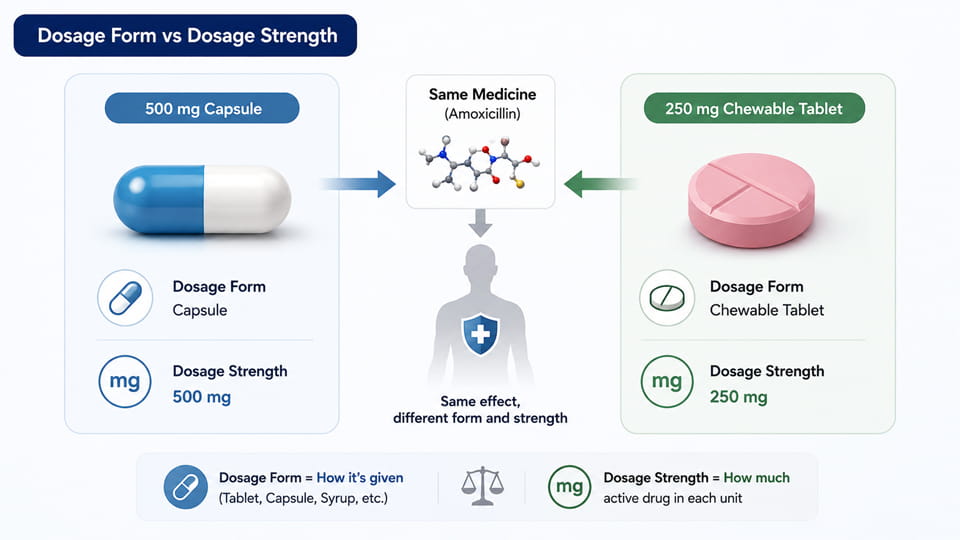
Por exemplo, o mesmo medicamento (dizer, amoxicilina) pode vir em “formas farmacêuticas” como um 500 mg cápsula ou um 250 mg comprimido mastigável”. Ambos entregam amoxicilina, mas a forma e a dose diferem. Isso destaca a diferença entre a forma farmacêutica (cápsula versus comprimido) e Força de dose (500 mg versus 250 mg).
A escolha da forma farmacêutica adequada é crucial por vários motivos:
Resumidamente, as formas farmacêuticas são mais do que “apenas embalagens”. Desempenham um papel crucial no bom funcionamento de um medicamento e na facilidade com que pode ser produzido e utilizado com segurança..
A medicação pode ser formulada em muitas formas, cada um adequado para fins específicos. Abaixo estão as principais categorias:

Figura: Cápsulas e comprimidos são exemplos de formas farmacêuticas sólidas usadas para administração oral.
Formas farmacêuticas sólidas são os mais comum na indústria farmacêutica. Isso inclui comprimidos (comprimidos de pó comprimido), cápsulas (gelatina ou HPMC conchas cheias de pó ou pellets), e pós ou grânulos a granel. Os tablets podem ser projetados em muitas variedades (E.G.. mastigável, efervescente, lançamento estendido) para controlar a rapidez com que a droga é liberada no corpo. As cápsulas geralmente usam um invólucro dissolvente que se decompõe no estômago para liberar o medicamento..
Por que sólidos? Eles são estáveis e convenientes. Comprimidos sólidos geralmente duram mais na prateleira e não requerem refrigeração. Cada unidade contém uma dose precisa do medicamento, então a dosagem é precisa. Para fabricação, formas sólidas são eficientes: moderno máquinas de prensagem de comprimidos e Máquinas de preenchimento de cápsulas (como aqueles de JinLu) pode produzir centenas de milhares de comprimidos por hora. Máquinas de embalagem em blister e linhas de engarrafamento embalam esses comprimidos ou cápsulas em produtos finais (cartões blister, garrafas, tiras, etc.).
Exemplos de formas farmacêuticas sólidas:
Nota sobre equipamento: A produção de formas sólidas requer maquinário especializado. Por exemplo, uma prensa rotativa para comprimidos (como a prensa para comprimidos da JinLu) comprime o pó em comprimidos. Máquinas de enchimento de cápsulas (manual ou automático) coloque o pó nas cápsulas. Depois de formar, comprimidos/cápsulas podem passar pelo revestimento, contando, e equipamentos de embalagem.

Figura: Xarope é uma forma farmacêutica líquida comum, útil para pacientes que têm dificuldade em engolir sólidos.
As formas farmacêuticas líquidas incluem soluções, suspensões, emulsões, e xaropes. Estes são ideais quando engolir sólidos é difícil (como para crianças ou idosos) ou quando um início rápido é necessário. Exemplos são xaropes para tosse (adoçado para mascarar o sabor da droga), gotas orais, e soluções intravenosas.
Por que líquidos? Eles permitem dosagem flexível (você pode medir uma colherada) e funcionam bem quando é necessária uma absorção rápida. Por exemplo, um medicamento em forma de solução entra na corrente sanguínea mais rápido que um comprimido. Os líquidos também ajudam a garantir menor os pacientes recebem doses menores e precisas.
Nota sobre equipamento: As formas líquidas geralmente requerem cubas de mistura e máquinas de envase. Depois de misturar (E.G.. em um granulador misturador de alta velocidade ou secador de leito fluidizado), o medicamento líquido é preenchido por máquinas de enchimento de garrafas ou bombeado em frascos (como ampolas). Por exemplo, Ofertas JinLuPacking linhas de enchimento de garrafas que pode enxaguar, preencher, e tampar centenas de garrafas por minuto para xaropes ou soluções.

Figura: Cremes e pomadas são formas farmacêuticas tópicas semissólidas aplicadas na pele.
As formas farmacêuticas semissólidas são principalmente para uso tópico - aquilo é, aplicado na pele ou membranas mucosas. Estes incluem cremes, pomadas, géis, loções, e pastas. Por exemplo, um creme antifúngico ou pomada de hidrocortisona permite que a droga atue diretamente em um problema de pele. Muitos cosméticos (loções para a pele) também são formas farmacêuticas tópicas para ingredientes ativos.
Por que semissólidos? Eles entregam drogas localmente com efeitos sistêmicos mínimos. O medicamento vai para a área afetada sem percorrer todo o corpo, reduzindo efeitos colaterais. Por exemplo, cremes para a pele permanecem principalmente na pele.
Formulação e Equipamento: Fazer cremes e loções requer misturar fases oleosas e aquosas com emulsificantes. JinLu's misturador de emulsionante a vácuo foi projetado para combinar esses líquidos imiscíveis em um creme ou loção estável. Depois de misturar, um máquina de enchimento de tubos ou linha de enchimento de frascos embala o produto em tubos, garrafas, ou potes. Como JinLu explica, um emulsionante a vácuo “combina líquidos imiscíveis (óleo & água) em uma emulsão estável” sob vácuo. Esta etapa é essencial para cremes e géis consistentes.
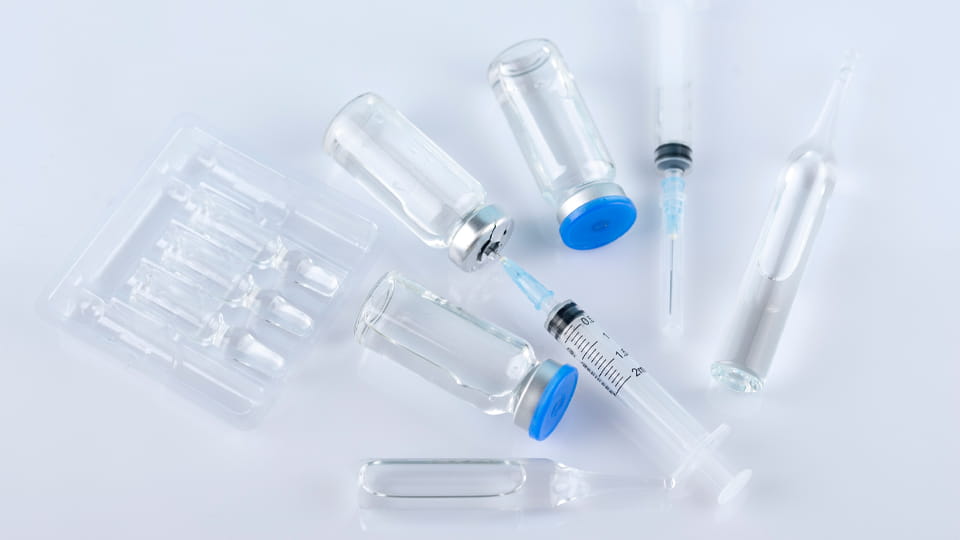
Figura: Injetável preparado em frascos ou ampolas.
Além de oral e tópico, parenteral (injetável) formas são críticos. Os injetáveis incluem intravenoso (4), intramuscular (EU SOU), subcutâneo (SC) injeções e infusões. Estas formas farmacêuticas líquidas são estéreis e projetadas para evitar a digestão para ação rápida. Muitos medicamentos que salvam vidas (E.G.. vacinas, insulina, certos antibióticos) usar formas injetáveis.
Cada uma delas é uma forma farmacêutica especializada escolhida por vantagens específicas (velocidade, efeito local, conveniência). O design geral de uma forma farmacêutica é uma parte essencial do formulações farmacêuticas – engenheiros e farmacêuticos adaptarão a formulação (dosagem e forma) para atender às necessidades do paciente e às propriedades do medicamento.
Farmacêuticos e engenheiros consideram muitos fatores ao selecionar uma forma farmacêutica para um medicamento:
Não é à toa que existem tantas opções de formas farmacêuticas. Cada um equilibra a conveniência, eficácia, e viabilidade. Uma boa formulação farmacêutica encontra o “ponto ideal” entre a necessidade do paciente e as características do medicamento.
É importante não confundir forma farmacêutica com Força de dose. O forma farmacêutica é como é o medicamento e como é tomado (comprimido, xarope, etc.), enquanto o Força de dose é quanto medicamento ativo existe em cada unidade. Por exemplo, duas versões do antibiótico amoxicilina poderiam ser: 500 cápsula de mg e 250 comprimido mastigável mg. Aqui, a cápsula/comprimido é a forma farmacêutica, e os números (500 mg, 250 mg) são as dosagens. Ambos entregam amoxicilina ao paciente, mas em diferentes formas e intensidades.
Na prática, os fabricantes fazem várias dosagens para cada forma para que os médicos possam ajustar as doses facilmente. O formulário (sólido, líquido, etc.) responde principalmente a “como é dado?" pergunta, enquanto a dosagem responde “quanta droga contém cada dose”.
Formas farmacêuticas são a ponte entre o desenvolvimento de medicamentos e o uso do paciente. Na farmácia, eles significam o específico formulações – comprimidos, cápsulas, xaropes, cremes, injeções, e muito mais – que transportam ingredientes ativos para o corpo. Escolher a forma certa é crucial: afeta a forma como o medicamento é absorvido, quão fácil é para os pacientes, e quão eficientemente ele pode ser produzido e embalado.
Equipamentos farmacêuticos modernos possibilitam a fabricação confiável de qualquer forma farmacêutica. Por exemplo, JinLuPacking oferece soluções completas: prensas de comprimidos de alta velocidade para sólidos orais, máquinas de enchimento de cápsulas para grânulos, linhas de envase de líquidos para xaropes e injetáveis, e máquinas de embalagem (embaladores de bolhas, tampadoras de garrafa, máquinas de contagem) para terminar o trabalho. Com a experiência e o maquinário certos, qualquer forma farmacêutica – seja um comprimido estável ou um creme complexo – pode ser produzida com alta qualidade.
Para concluir, entendimento definição de forma farmacêutica em farmácia significa reconhecer que a forma importa. Determina a experiência do paciente, ação de drogas, e métodos de fabricação. Ao projetar e escolher formas farmacêuticas eficazes, engenheiros farmacêuticos ajudam a garantir que os medicamentos sejam seguros e convenientes para os usuários.
Pronto para discutir suas necessidades de produção farmacêutica? Esteja você fazendo tablets, cápsulas, cremes, ou xaropes, nossa equipe pode ajudar. Contato JinLuEmbalagem explorar linhas de produção personalizadas e soluções de embalagem para qualquer forma farmacêutica. Nós oferecemos equipamento chave na mão desde prensas de comprimidos de alta velocidade até linhas automatizadas de embalagem em blister e envase de garrafas - todas projetadas para fornecer resultados consistentes, formas farmacêuticas de alta qualidade para seus produtos.
Uma forma farmacêutica é a forma física na qual um medicamento é produzido e administrado aos pacientes. Combina o princípio farmacêutico ativo (API) com excipientes para criar produtos como comprimidos, cápsulas, líquidos, cremes, injeções, ou pós. A forma farmacêutica correta ajuda a garantir uma dosagem precisa, estabilidade do produto, e entrega eficaz de medicamentos.
Muitas pessoas confundem esses dois termos.
• A forma farmacêutica refere-se à forma física do medicamento, como um tablet, cápsula, xarope, ou creme.
• A dosagem se refere à quantidade de ingrediente ativo contido em cada unidade, como 250 mg ou 500 mg.
Por exemplo, um 500 comprimido de mg e um 500 cápsula de mg tem a mesma dosagem, mas formas farmacêuticas diferentes.
As formas farmacêuticas são geralmente divididas em várias categorias:
• Formas farmacêuticas sólidas (comprimidos, cápsulas, pós)
• Formas farmacêuticas líquidas (soluções, suspensões, xaropes)
• Formas farmacêuticas semissólidas (cremes, pomadas, géis)
• Formas farmacêuticas injetáveis
• Formas farmacêuticas inalatórias e transdérmicas
Cada tipo é projetado para atender diferentes necessidades terapêuticas e do paciente.
A forma farmacêutica correta afeta diretamente:
• Absorção de medicamentos
• Conformidade do paciente
• Precisão de dosagem
• Estabilidade do produto
• Eficiência de fabricação
Por exemplo, as crianças podem preferir formas farmacêuticas líquidas, enquanto os adultos geralmente escolhem formas farmacêuticas em comprimidos ou cápsulas por conveniência.
Exemplos comuns de formas farmacêuticas incluem:
• Forma farmacêutica em comprimido
• Forma farmacêutica em cápsula
• Solução oral
• Xarope
• Suspensão
• Solução injetável
• Creme
• Pomada
• Gel
• Pó para reconstituição
Cada formulação farmacêutica é desenvolvida com base nas propriedades do medicamento e na via de administração pretendida.
A forma farmacêutica sólida oral é a forma farmacêutica mais utilizada em todo o mundo..
As formas farmacêuticas de comprimidos e cápsulas são populares porque oferecem:
• Alta eficiência de produção
• Longa vida útil
• Dosagem precisa
• Fácil transporte
• Fabricação econômica
É por isso que a maioria das linhas de produção farmacêutica são projetadas para fabricação de dosagens sólidas orais..
Uma linha típica de fabricação de dosagem sólida oral pode incluir:
• Equipamento de fabricação de tablets
• Máquina de enchimento de cápsulas
• Misturador de alto cisalhamento
• Secador de leito fluidizado
• Máquina de revestimento de comprimidos
• Máquina de contar comprimidos
• Máquina de embalagem blister
• Linha de enchimento de garrafas
• Máquina de encartuchamento
As modernas linhas de produção farmacêutica integram essas máquinas para produção automatizada e em conformidade com GMP.
formulários atendem a diferentes necessidades. Por exemplo, um antibiótico pode estar disponível em comprimido (para adultos), uma suspensão (para crianças), e uma forma injetável (para pacientes hospitalizados). Cada formulário otimiza a estabilidade, conveniência, ou absorção para o uso pretendido.
dose é a quantidade de medicamento tomado de uma só vez (E.G.. 250 mg). A forma farmacêutica é a forma física que contém aquele medicamento (E.G.. um comprimido de 250 mg ou uma cápsula de 250 mg). Em outras palavras, dose = quantidade de medicamento; forma farmacêutica = comprimidos, líquido, etc..
a rapidez com que uma droga se dissolve. Os comprimidos devem se desintegrar antes que o medicamento seja absorvido, enquanto os líquidos agem mais rápido. Comprimidos de liberação controlada retardam a dissolução para prolongar o efeito. Os tópicos são absorvidos pela pele, enquanto os injetáveis contornam completamente as barreiras. A escolha da forma é adequada às propriedades do medicamento e ao objetivo terapêutico.
Referências:
1.Formas farmacêuticas -- NÓS. Food and Drug Administration
2.Forma farmacêutica e via de administração -- NÓS. Food and Drug Administration
3.Formas farmacêuticas —— usp.org
4.Projeto de formulação, desafios, e considerações de desenvolvimento para combinação de dose fixa (CDF) de formas farmacêuticas sólidas orais —— tandfonline.com
5.Forma farmacêutica —— Wikipédia
6.Formas farmacêuticas orodispersíveis: melhorias biofarmacêuticas e requisitos regulatórios —— Ciência Direta