
Se você já se perguntou o que realmente faz um medicamento funcionar, a resposta geralmente é a API (Ingrediente Farmacêutico Ativo). Quer seja um tablet, cápsula, injeção, ou xarope, o API é o componente responsável por produzir o efeito terapêutico pretendido. Em termos simples, é a parte do medicamento que trata a doença, alivia os sintomas, ou oferece o resultado médico desejado, enquanto outros ingredientes - conhecidos como excipientes - apoiam principalmente a formulação e entrega. Para fabricantes farmacêuticos, equipes de compras, e gerentes de produção, entender as APIs é essencial porque elas impactam diretamente na qualidade do produto, conformidade regulatória, processos de fabricação, e, em última análise, segurança do paciente.
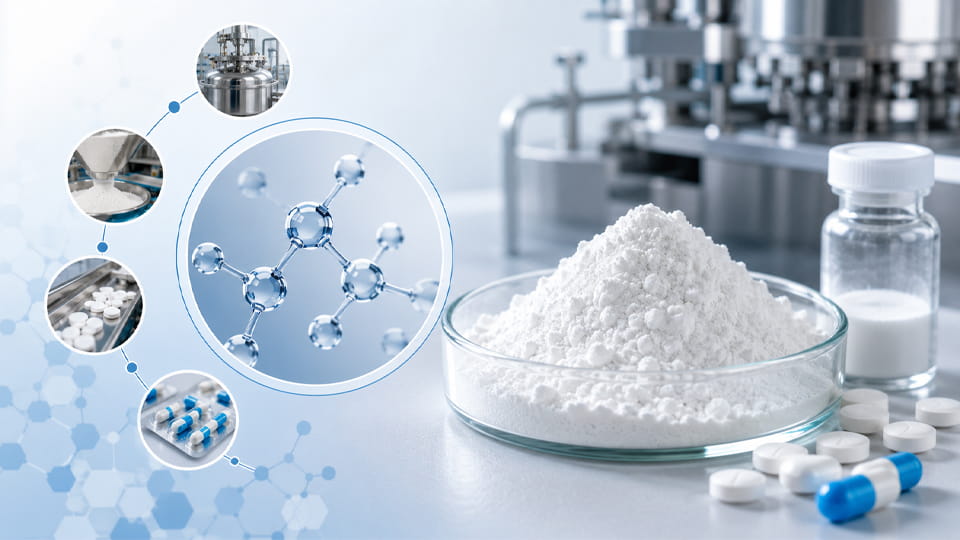
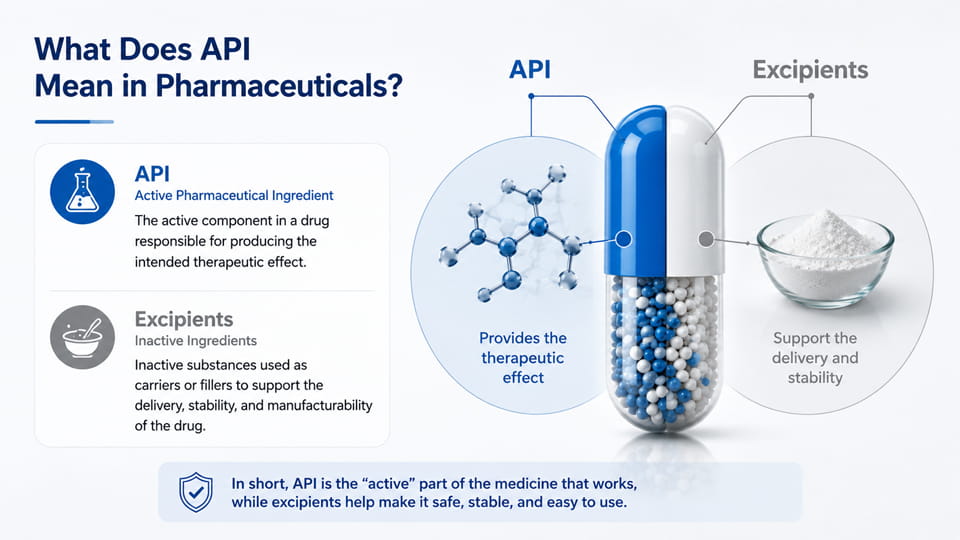
Um API é o Ingrediente Farmacêutico Ativo - o substância ativa do medicamento em um medicamento que proporciona seu efeito terapêutico. Em termos simples, é o produto químico (ou biológico) componente que faz o trabalho (E.G.. baixando a febre, matando bactérias, aliviando a dor). Por exemplo, em um comprimido de paracetamol, paracetamol em si é a API; os outros ingredientes (ligantes, enchimentos, revestimentos) são excipientes. Os EUA. Instituto Nacional do Câncer define uma API como “o ingrediente principal de um medicamento que causa o efeito desejado do medicamento”.
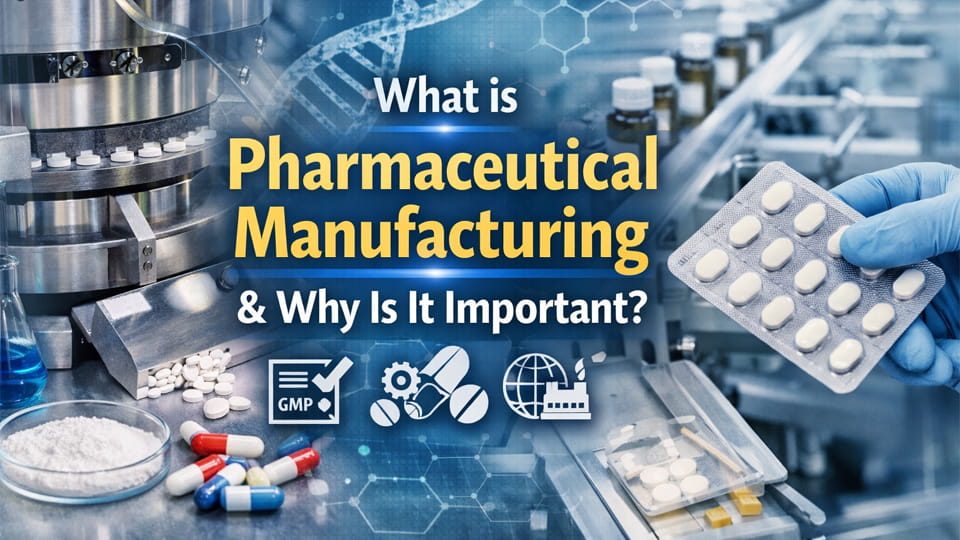
Na prática, a fabricação de medicamentos começa com um ou mais APIs e os transforma no produto final (comprimido, cápsula, líquido, etc.) sob rigorosos controles de qualidade. Como observa uma fonte, fabricação farmacêutica essencialmente “significa transformar ingredientes farmacêuticos ativos (APIs) e excipientes em formas farmacêuticas (como comprimidos, cápsulas, líquidos, ou injetáveis) através de várias operações unitárias (fresagem, granulação, compressão, revestimento, enchimento, etc.)”. Cada passo deve ser preciso: os reguladores exigem que cada lote “tenha os ingredientes e a força que afirma ter”. Resumidamente, sem APIs, não haveria remédio – eles são os espinha dorsal da formulação de medicamentos.
APIs geralmente são pós ou concentrados de alta pureza; eles são então misturados com excipientes e transformados em comprimidos, cápsulas, ou outras formas farmacêuticas (Veja abaixo). O ponto chave é que APIs são os medicamentos ativos, Considerando que todo o resto da formulação simplesmente ajuda a administrar o medicamento de forma segura e eficaz.
| Recurso | API (Ingrediente Ativo) | Excipiente (Ingrediente Inativo) |
| Função/Função | Fornece o efeito terapêutico (droga ativa) | Serve como transportador, fichário, enchimento, estabilizador, etc., para a API |
| Atividade Farmacológica | Sim – biologicamente ativo. | Não – farmacologicamente inerte. |
| Quantidade típica | Geralmente pequena quantidade (mg ou µg). | Geralmente volume de formulação. |
| Exemplos | Paracetamol (paracetamol), amoxicilina, atorvastatina, etc.. | Lactose, celulose microcristalina, estearato de magnésio, etc.. |
| Importância | Crucial para a eficácia; determina a função da droga. | Garante a estabilidade do comprimido, capacidade de fabricação, e biodisponibilidade. |
Em outras palavras, APIs são as partes “ativas”, enquanto excipientes são as partes de “suporte”. Como explica uma fonte da indústria: “Os APIs são medicamentos a granel que são farmaceuticamente ativos e geram um efeito farmacológico desejado, Considerando que os excipientes são substâncias farmacologicamente inativas que são geralmente utilizadas como transportadores do API”.
Ambos são necessários: APIs para efeito, excipientes para proporcionar esse efeito de forma segura, forma farmacêutica estável. Compreender a diferença é fundamental na fabricação farmacêutica.
APIs entram duas categorias amplas: molécula pequena (sintético) medicamentos e produtos biológicos.
Uma maneira útil de lembrar: Moléculas pequenas são sintetizados quimicamente e geralmente comprimidos; Produtos biológicos de moléculas grandes vêm de sistemas vivos e muitas vezes são injetáveis. Cada tipo tem seu próprio caminho de fabricação e regulamentação, mas ambos são “APIs”, desde que sejam o ingrediente ativo de um medicamento final.
A produção de API é complexa, processo de várias etapas envolvendo química ou biologia cuidadosa. Um simplificado fluxograma de fabricação típica de API (para APIs sintéticas de pequenas moléculas) é mostrado abaixo:
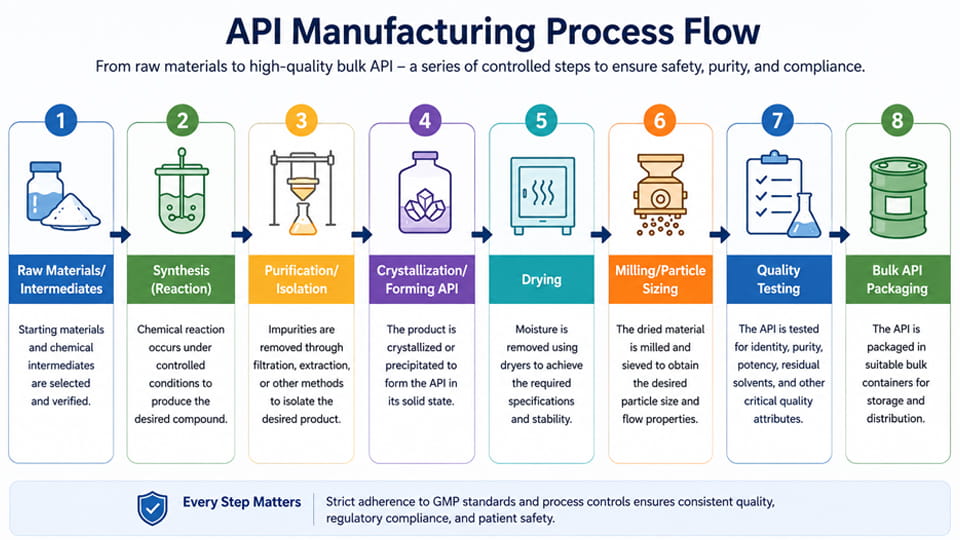
Cada passo deve seguir cgmp (Boas Práticas de Fabricação atuais) regras. Por exemplo, Eu Q7 (e BPF da OMS) fornecer orientação específica para APIs. Como observa a OMS, “o rigor das BPF na fabricação de API deve aumentar à medida que o processo avança das etapas iniciais da API até as etapas finais, purificação, e embalagem”. Na prática, isso significa documentação rigorosa, limpeza validada de equipamentos, pessoal qualificado, e controles em processo.
Tecnologia Analítica de Processos (PAT) e a automação são cada vez mais utilizadas para monitorar reações em tempo real. A indústria também está caminhando para fabricação contínua onde as matérias-primas fluem continuamente através de etapas de reação e purificação em vez de lotes. Processos contínuos podem melhorar a eficiência e a consistência, embora a produção em lote permaneça comum.
Resumindo: A fabricação de API é uma linha de produção altamente controlada, desde produtos químicos brutos ou culturas de células até o ingrediente ativo final, com portões de qualidade rigorosos em cada etapa. O resultado é uma API em massa segura, potente, e pronto para ser formulado em um medicamento.
A qualidade é fundamental na produção de API. Agências reguladoras (FDA, Ema, etc.) exigir que os fabricantes de API sigam rigorosamente Boas Práticas de Fabricação (BPF) para garantir que cada lote atenda aos padrões de qualidade. Para APIs, ICH Q7 é uma diretriz chave que descreve as BPF específicas para ingredientes ativos. Alguns aspectos críticos incluem:
Organização Mundial de Saúde (QUEM) orientação enfatiza que o rigor aumenta em direção às etapas finais. Os primeiros intermediários podem ter menos controles, mas uma vez definido um material inicial da API (o ponto a partir do qual as BPF se aplicam), os passos posteriores (cristalização, purificação final) são mantidos nos mais altos padrões.
Resumidamente, O controle de qualidade da API é abrangente: “A garantia de qualidade é um aspecto crítico da fabricação de API” e as GMP cobrem tudo “desde o fornecimento de matéria-prima até o teste do produto final”. Isso garante que o API final será seguro e eficaz quando transformado em medicamento.
É importante distinguir o API do forma farmacêutica acabada (a final, medicamento pronto para o paciente).
O FPP determina como a API é entregue na prática. De acordo com definições regulatórias, uma forma farmacêutica acabada é “o produto final, medicamento totalmente fabricado que contém a substância medicamentosa e todos os excipientes necessários, e é processado em um formato de entrega específico, como um tablet, cápsula, injeção, etc.”.
Principais diferenças:
| Estágio | Definição/Exemplo |
| API (Substância Droga) | O composto ativo da droga por si só (E.G.. pó de gentamicina). |
| Medicamento acabado | A forma do medicamento (E.G.. injeção de gentamicina) contendo a API mais excipientes. |
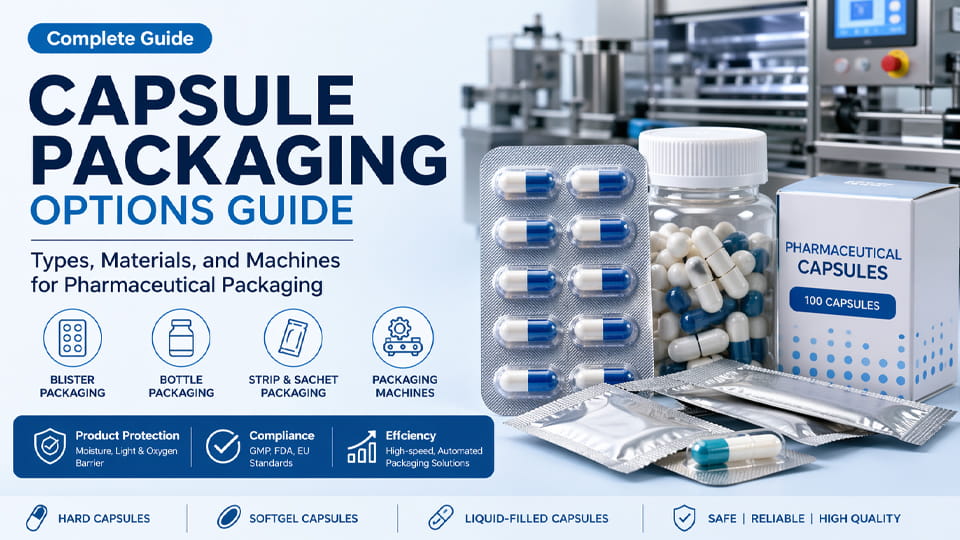
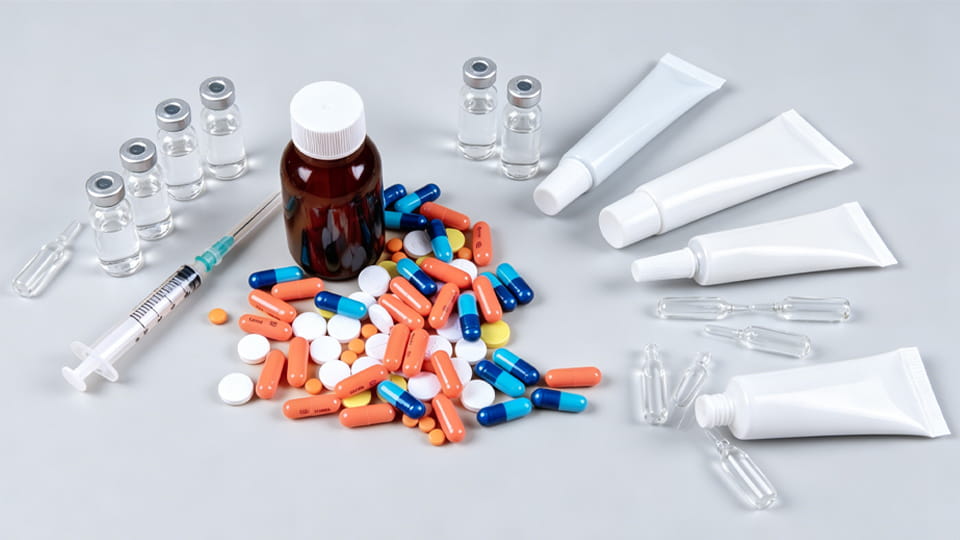
Por isso, a API é a principal agente medicinal, enquanto o produto final é como esse agente é formulado e embalado para uso. Uma boa fabricação garante que “o medicamento acabado contém o API certo na dosagem certa”. Equipamentos de embalagem como Pressões de tablets ou preenchimentos de cápsula em seguida, converta misturas de excipientes API em FPPs, que são selados em blisters, garrafas, ou outros recipientes.
Os produtores de API enfrentam vários desafios da indústria:
Esses desafios significam que os fabricantes de APIs precisam investir continuamente na otimização de processos, conformidade, e resiliência. Como uma fonte aconselha, implementar sistemas de qualidade robustos e manter-se atualizado com as regulamentações são estratégias-chave. Resumindo: mantendo alta qualidade sob pressão de custos, e garantindo a segurança (especialmente para HPAPIs), são os principais obstáculos na produção moderna de APIs.
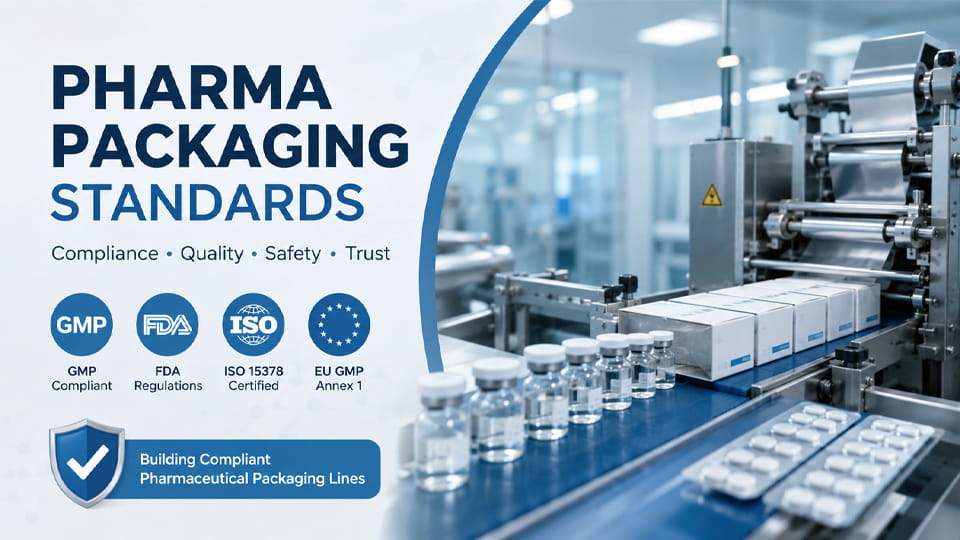
Depois que um API é produzido e formulado em um medicamento, embalagem torna-se crucial para proteger a qualidade desse produto e garantir a segurança do paciente. Embalagem funcional protege o medicamento (e sua API) de fatores ambientais e garante que a dose correta seja administrada. As principais considerações de embalagem incluem:
Na prática, máquinas de embalagem farmacêutica links diretamente para APIs. Por exemplo:
Ao integrar esses sistemas, fábricas farmacêuticas garantem que o API (ingrediente ativo) chega ao paciente exatamente como pretendido. Embalagem farmacêutica funcional (bolhas, garrafas, fechamentos invioláveis) é “crucial” para proteger os produtos da umidade, oxigênio, leve e para segurança do paciente.
Para empresas como Embalagem Jinlu, isso significa oferecer soluções completas de embalagens que atendam às necessidades das APIs: Por exemplo, blisters e linhas de contagem otimizadas para comprimidos sensíveis à umidade, ou cartonadoras concebidas para manusear garrafas de xaropes ou frascos. Resumidamente, máquinas de embalagem são o elo final da cadeia que mantém as APIs estáveis e eficazes até o ponto de uso.
O API (Ingrediente Farmacêutico Ativo) é o componente central que confere ao medicamento o seu efeito terapêutico. Desde a fabricação e controle de qualidade até a conformidade regulatória e embalagem final, proteger a integridade da API é essencial para garantir a segurança do produto, eficácia, e consistência em toda a cadeia de fornecimento farmacêutico.
À medida que os produtos farmacêuticos se tornam mais avançados, equipamentos de embalagem confiáveis desempenham um papel cada vez mais importante na proteção de medicamentos baseados em APIs. Quer você esteja embalando comprimidos, cápsulas, pós, ou grânulos, a solução de embalagem certa ajuda a manter a qualidade do produto e, ao mesmo tempo, melhora a eficiência e a conformidade da produção.
Procurando equipamentos confiáveis para embalagens farmacêuticas? Jinlu Packing fornece máquinas de embalagem blister, contando linhas, sistemas de enchimento de garrafas, máquinas de embalagem, e completo soluções de embalagem prontas para uso adaptado às necessidades dos fabricantes farmacêuticos modernos. Entre em contato com nossa equipe para discutir seu próximo projeto de embalagem.
API significa Ingrediente Farmacêutico Ativo. É a substância activa de um medicamento que proporciona o seu efeito terapêutico. Por exemplo, o API em um comprimido contra a gripe seria o composto que combate o vírus ou alivia os sintomas.
A API é o núcleo de um medicamento, mas por si só não é a forma final do medicamento. A última droga (pílula, cápsula, injeção) é chamado de produto acabado ou forma farmacêutica acabada. O IFA deve ser formulado com excipientes (ingredientes inativos) e processado em uma dosagem antes de se tornar o medicamento real que os pacientes tomam.
APIs são substâncias ativas que causam o efeito farmacológico desejado. Excipientes são ingredientes inativos que não afetam a doença, mas ajudam a formular o medicamento (adicionar volume, estabilizar, absorção de ajuda, etc.). Resumidamente: APIs têm atividade terapêutica; excipientes não.
A fabricação de API geralmente envolve síntese química (ou fermentação biológica), seguido de purificação, cristalização, secagem, e fresagem. Cada etapa é rigorosamente controlada para garantir pureza e potência. Este processo segue Boas Práticas de Fabricação (BPF). Um fluxo simplificado é: Matérias-primas → (Químico ou biológico) Síntese → Purificação → Cristalização → Secagem → Moagem → Teste de qualidade → Embalagem (conforme ilustrado acima).
A qualidade do API é crítica porque afeta diretamente a segurança e a eficácia do medicamento. IFAs impuros ou degradados podem causar efeitos adversos ou eficácia reduzida. Reguladores exigem testes de qualidade rigorosos de APIs (identidade, pureza, potência) sob as diretrizes GMP. APIs de alta qualidade ajudam a evitar recalls de medicamentos e garantem que cada dose funcione conforme o esperado.
Exemplos de APIs incluem substâncias medicamentosas comuns como o paracetamol (paracetamol), ibuprofeno, amoxicilina, atorvastatina, e metformina. Em produtos biológicos, exemplos são insulina, Herceptina (trastuzumabe), anticorpos monoclonais, e vacinas. Essencialmente, o nome de uma API geralmente é o nome do medicamento genérico.
GMP para APIs (E.G.. Eu Q7) requer instalações qualificadas, processos validados, equipe treinada, e testes abrangentes. Os fabricantes devem controlar a contaminação cruzada, documente todas as etapas, e teste cada lote quanto à pureza e potência. A OMS observa que o rigor das BPF aumenta em direção às etapas finais da API, garantindo que cada lote atenda aos padrões de identidade e qualidade.
A embalagem adequada protege os APIs do medicamento final contra fatores ambientais. Por exemplo, blisters e sistemas de frascos mantêm a umidade e o oxigênio afastados, preservando a estabilidade da API. Equipamento de embalagem (máquinas de bolha, enchimentos, bonés, rotuladores, cartonadores) garante que o medicamento contendo API seja dosado com precisão, selado, e rotulado, mantendo a segurança e a conformidade.
HPAPIs (APIs altamente potentes) são compostos extremamente ativos (muitas vezes câncer ou medicamentos hormonais) que são tóxicos em doses muito baixas. Eles exigem equipamento de processamento especial (isoladores, sistemas fechados) para proteger os trabalhadores. A demanda por HPAPIs está aumentando com terapias direcionadas, então os fabricantes devem investir em contenção e experiência.
O API é combinado com excipientes e processado para formar a forma final do medicamento. Por exemplo, um comprimido é feito misturando API com enchimentos e compactando-o. O produto final entrega então o API ao paciente de maneira conveniente. Máquinas de embalagem (do enchimento à rotulagem) conecta a produção de API ao medicamento pronto para o consumidor.
Referências:
1.Q7 Orientação de Boas Práticas de Fabricação para Ingredientes Farmacêuticos Ativos Orientação para a Indústria - NÓS. Food and Drug Administration
2.Diretrizes de qualidade: substância ativa - Agência Europeia de Medicamentos
3.Ingredientes Farmacêuticos Ativos - QUEM
4.TRS 957 – Anexo 2: Boas práticas de fabricação da OMS para ingredientes farmacêuticos ativos (substâncias medicamentosas a granel) – QUEM