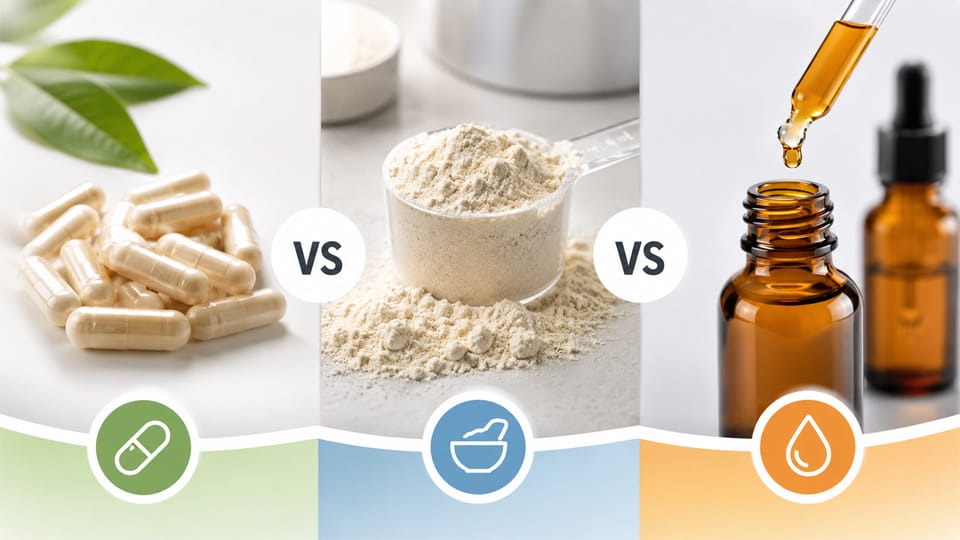
Cápsulas, pós, e suplementos líquidos diferem na rapidez e eficiência com que seu corpo pode absorver seus nutrientes. Líquidos (já dissolvido) geralmente entra na corrente sanguínea mais rápido, pós vêm a seguir (nenhuma camada externa para dissolver), e as cápsulas são mais lentas, pois a casca deve quebrar primeiro. No entanto, absorção (absorção no sangue) e biodisponibilidade (a fração de nutriente realmente usada) dependem tanto dos detalhes da formulação quanto da forma. As cápsulas oferecem conveniência e precisão de dosagem, pós oferecem flexibilidade e economia de custos, e líquidos oferecem rapidez e facilidade para quem não consegue engolir comprimidos. Na prática, os fabricantes escolhem formato de suplemento equilibrando os benefícios de absorção com os custos de produção, embalagem, e necessidades do consumidor. Por exemplo, suplementos de proteínas e eletrólitos geralmente são pós, extratos de ervas e óleo de peixe geralmente são cápsulas (ou cápsulas moles), e vitaminas para crianças ou idosos podem ser líquidos. Abaixo explicamos essas diferenças em detalhes e fornecemos uma tabela de comparação, um fluxograma de decisão, e considerações sobre equipamentos (preenchimentos de cápsula, empacotadores de pó, linhas de engarrafamento de líquidos) para ajudar os produtores de suplementos a fazer a escolha certa.
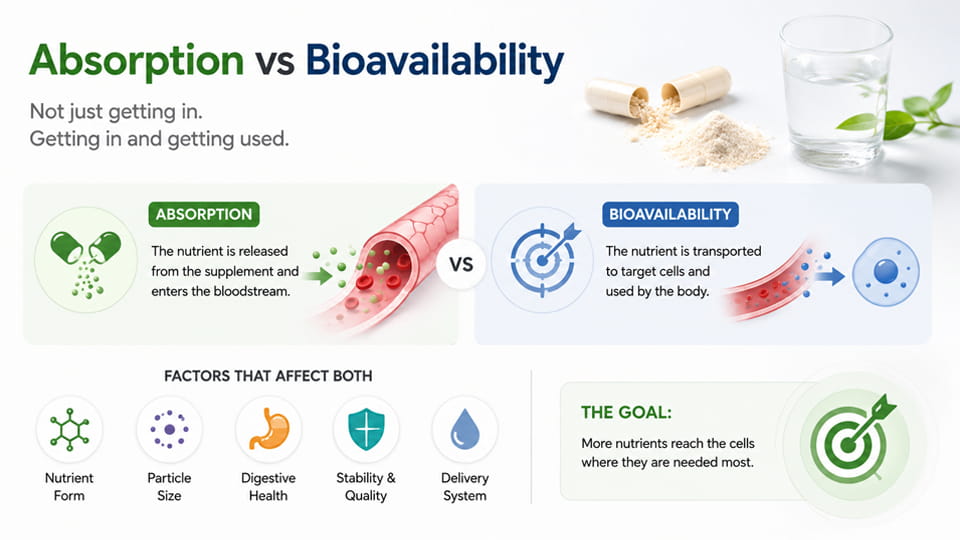
Antes de comparar formulários, é importante definir absorção e biodisponibilidade em suplementos. Absorção é o processo pelo qual um nutriente passa através da parede intestinal para a corrente sanguínea. Biodisponibilidade é a porção dessa dose que realmente atinge a circulação sistêmica na forma ativa. Em termos mais simples, absorção é entrando no sangue, enquanto a biodisponibilidade é estar disponível para usar. Um suplemento pode ser absorvido, mas ainda assim perder potência (por exemplo, pelo metabolismo de primeira passagem no fígado). Portanto, dois fatores determinam a eficácia de um suplemento: quão rápido ele entra no sangue (taxa de absorção) e quanto dele permanece ativo (biodisponibilidade).
Os principais fatores que afetam a absorção incluem a solubilidade do suplemento, tamanho de partícula, e formulação, bem como fatores individuais (saúde intestinal, presença de alimentos ou gorduras, interações com outros nutrientes). Por exemplo, vitaminas lipossolúveis (UM, D, E, K) requerem que a gordura da dieta seja absorvida adequadamente, independentemente de estarem em uma cápsula ou líquido. Alguns minerais (como magnésio) são muito melhor absorvidos nas formas citrato ou quelato do que como óxidos simples. Por isso, o suplemento formulação (incluindo intensificadores como piperina para curcumina) muitas vezes é mais importante do que apenas a forma de entrega. Resumindo, absorção significa entrar na corrente sanguínea, enquanto biodisponibilidade significa utilizável fração – dois conceitos distintos, mas relacionados.
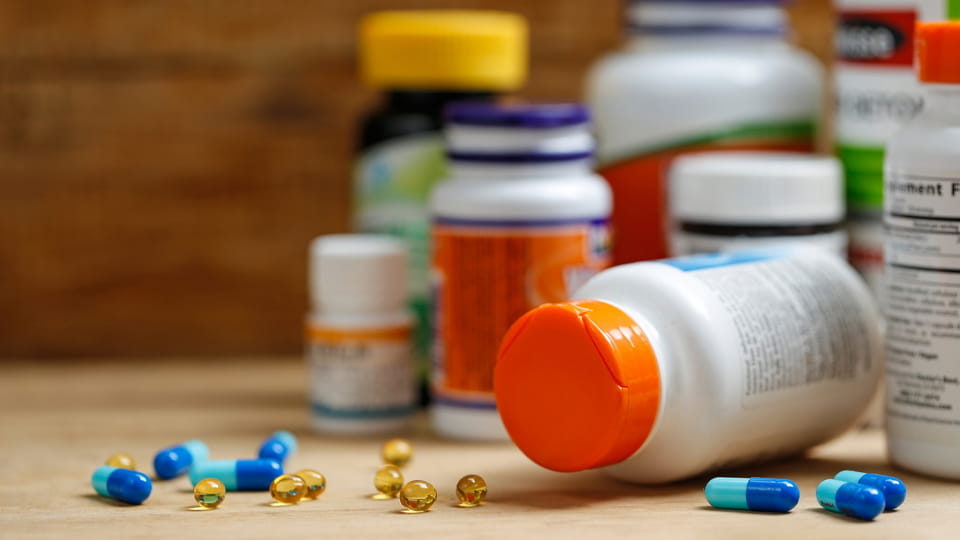
As cápsulas são uma forma farmacêutica tradicional feito de gelatina ou casca de origem vegetal cheia de pós, pelotas, grânulos ou mesmo óleos líquidos. Eles são populares porque são pré-medido, estável em prateleira, e fácil de engolir. Uma vez ingerido, o invólucro de uma cápsula se dissolve no estômago (geralmente em 20 a 30 minutos), liberando os ingredientes ativos para serem absorvidos no intestino delgado.
Vantagens das cápsulas:
Limitações das cápsulas:
Exemplos: Cápsulas são comumente usadas para vitaminas (multivitaminas, vitamina D), extratos de ervas (cúrcuma, ginseng), probióticos, aminoácidos como creatina, e óleo de peixe (cápsulas moles). Eles são adequados para produtos onde a conveniência e a longa vida útil são importantes. Por exemplo, colágeno e vitamina B12 são frequentemente vendidos em cápsulas. Como fabricante, um máquina de enchimento automática de cápsula pode lidar com eficiência com milhões de cápsulas por hora (E.G.. Os modelos de Jinlu são preenchidos até 468,000 cápsulas duras/hora com alta precisão).
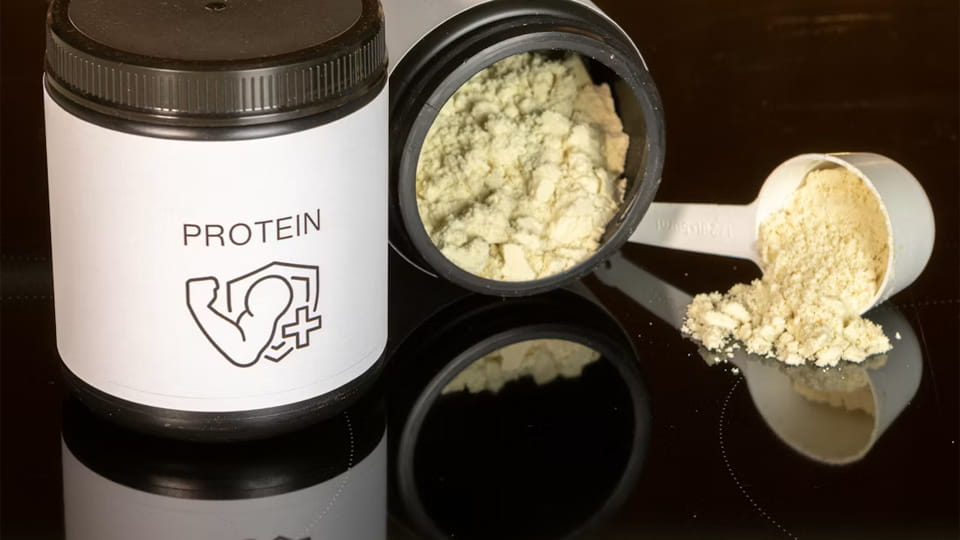
Os suplementos em pó consistem em ingredientes ativos secos até formar um pó fino. Eles normalmente são misturados em água ou outras bebidas antes de serem tomados.. Os pós são especialmente populares na nutrição esportiva (proteína em pó, pré-treinos, eletrólitos) e para nutrientes em altas doses (como colágeno ou cogumelo em pó) onde uma cápsula seria impraticavelmente grande.
Vantagens das formas em pó:
Desvantagens das formas em pó:
Exemplos: Proteína em pó (soro de leite, proteína vegetal) e a creatina são suplementos clássicos em pó – basta misturá-los em uma bebida. Pós eletrolíticos ou verdes, peptídeos de colágeno, vitamina C em pó, ou pós de ervas (como ashwagandha ou misturas de açafrão em pó) também são comuns. Às vezes, as empresas vendem suplementos em sachês de dose única por conveniência (E.G.. misturas para bebidas, bastões de vitamina C). Do lado da fabricação, forma-preenchimento-selagem vertical (Vfs) máquinas ou máquinas de embalagem em bastão podem porcionar e embalar pós. Por exemplo, A empacotadora de sachês da Jinlu lida com aproximadamente 40 sacos por pista por minuto com precisão de ±0,02g, ideal para pacotes de pó de dose única.
Suplementos líquidos já estão dissolvidos (ou suspenso) em forma de bebida. Exemplos incluem multivitaminas líquidas, tinturas de ervas, ou beber misturas (às vezes pronto para beber). Os líquidos são absorvidos mais rapidamente porque ignoram completamente a etapa de dissolução. Como explica a Texas Health, “quando você consome um suplemento líquido… seu corpo pode absorver os nutrientes de forma rápida e eficiente, uma vez que eles já estão em estado dissolvido”.
Vantagens das formas líquidas:
Desvantagens das formas líquidas:
Exemplos: Líquidos comuns incluem tinturas (E.G.. gotas de equinácea), vitaminas líquidas (como B12 ou gotas multivitamínicas), xaropes de ervas, e suplementos prontos para beber (tiros verdes, bebidas de colágeno). Por exemplo, vitamina D líquida ou biotina é popular para dosagem fácil. Do ponto de vista da fabricação, máquinas de enchimento de líquidos são usados. Enchimento líquido de Jinlu, por exemplo, pode lidar com 20–80 garrafas por minuto (5–4.800 garrafas/hora) com precisão de ±0,2 g, adequado para tônicos nutricionais, xaropes, e bebidas.

Abaixo está uma comparação resumida dos três formatos em termos de absorção e fatores práticos. Como regra geral, líquidos absorvem mais rápido (nenhuma etapa de dissolução), pós são os próximos (disponibilidade imediata uma vez hidratado), e as cápsulas são mais lentas (requer dissolução da casca). No entanto, biodisponibilidade (absorção eficaz) também depende da formulação (E.G.. intensificadores adicionados, nutrientes solúveis em gordura vs solúveis em água).
| Recurso | Cápsulas | Pós | Suplementos Líquidos |
| Velocidade de absorção | Moderado – a casca se dissolve (≈20–30 minutos) | Rápido – ingredientes já gratuitos (≈10–20 min quando misturado) | Muito rápido – nutrientes prontos para serem absorvidos (≈5–10 minutos) |
| Biodisponibilidade | Bom para muitos ingredientes (dependendo da formulação) | Muitas vezes mais alto que as cápsulas | Potencialmente mais alto (sem barreiras) |
| Conveniência | Alto – portátil, pré-dosado | Médio – requer mistura | Variável – saborear ou engolir, não é necessária mistura |
| Gosto / Palatabilidade | Neutro (fechado) | Variável – muitas vezes aromatizado ou mascarado | Geralmente aromatizado (adoçantes), pode ser mais palatável ou não, dependendo da fórmula |
| Flexibilidade de dose | Fixo por cápsula; pode ser dividido pela metade se aberto | Totalmente ajustável por colheres | Ajustável (conta-gotas ou despeje) |
| Vida de validade | Longo (forma sólida, selado) | Longo (forma seca, se mantido seco) | Geralmente mais curto; alguns precisam de refrigeração ou conservantes |
| Portabilidade | Excelente | Moderado (precisa de recipiente ou sachê) | Moderado (garrafa, risco de derramamentos) |
| Custo de produção | Moderado (moldagem de cápsula adiciona custo) | Baixo (enchimento simples em garrafas/banheiras) | Alto (recheio especial, embalagem, envio) |
| Melhor para / Adequação | Uso geral; ingredientes ativos em doses normais | Nutrientes em altas doses, suplementos esportivos, regimes personalizáveis | Necessidades de entrega rápida, vitaminas infantis ou geriátricas, usuários sensíveis à palatabilidade |
Mesa: Comparação prática de formatos de suplementos. Fontes: indústria de saúde e literatura de manufatura.
Não existe uma resposta única para qual formato “absorve melhor” – depende do nutriente, caso de uso, e consumidor-alvo. Aqui estão algumas diretrizes gerais:
Em última análise, considere a absorção no contexto: Como observa Texas Health, “As vitaminas líquidas muitas vezes apresentam uma biodisponibilidade potencialmente maior em comparação com as formas sólidas”. No entanto, qualidade da formulação e sistema de entrega (E.G.. usando lipossomas ou intensificadores de absorção) pode ser mais importante que cápsula versus pó. Também é fundamental que os consumidores tomem o suplemento de forma consistente; a “melhor” forma é aquela que eles usam regularmente.
Quando uma empresa de suplementos escolhe um formato, esta decisão impulsiona a linha de fabricação e as necessidades de embalagem. Abaixo estão as principais categorias de equipamentos para cada formato, com exemplos de especificações de Embalagem Jinlu máquinas:
Combinando o formulário de suplemento com o equipamento correto, fabricantes garantem eficiência, produção de alta qualidade. Por exemplo, uma linha de vitaminas à base de cápsulas usaria um enchedor automático de cápsulas e um Polhener de cápsula, enquanto um novo suplemento para bebida energética usaria uma linha de engarrafamento de líquidos de alta velocidade com pasteurização. As máquinas da Jinlu são projetadas para oferecer flexibilidade: eles geralmente incluem peças de reposição para diferentes tamanhos de cápsulas, e suas linhas de pó/líquido podem ser combinadas com sistemas automáticos de tampagem e rotulagem para uma solução completa.
[jl_youtube src=”https://www.youtube.com/embed/MFcu-kFN2Vc”]
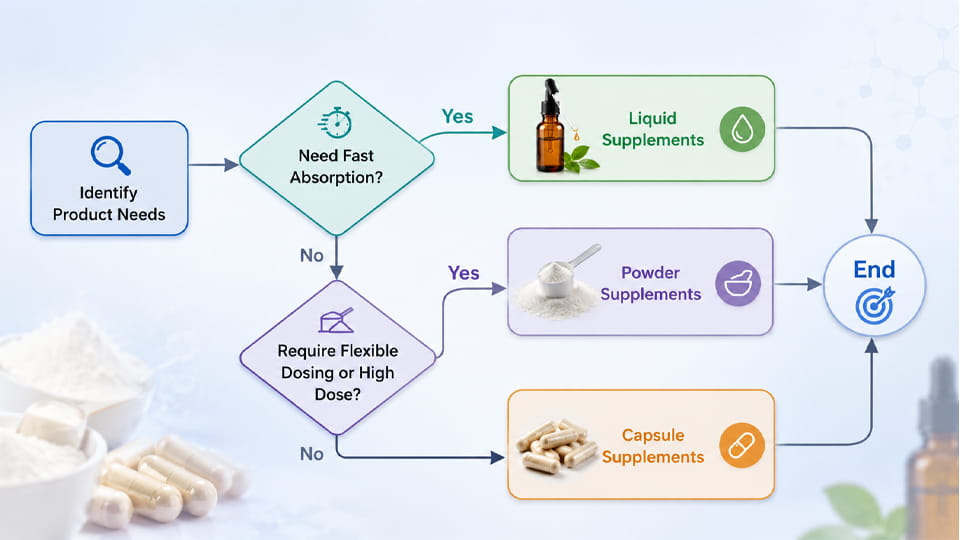
Fluxograma: Este fluxo de decisão sugere começar com suas prioridades. Se a rápida absorção for crítica (E.G.. recuperação pós-treino, dose pediátrica), escolher líquido. Se você precisar de uma dosagem muito flexível ou grande (ou combinando vários pós), pó é ideal. De outra forma, cápsulas geralmente são a escolha padrão. Observe que a preferência do consumidor (E.G.. facilidade de uso) e ingredientes ativos específicos podem substituir estas regras gerais.
Ao planejar um produto suplementar, use esta lista de verificação para escolher o formato e o equipamento corretos:
Seguir esta lista de verificação ajudará a alinhar os objetivos do produto com as realidades de produção, garantindo um lançamento econômico e de alta qualidade.
No debate “cápsulas vs pós vs líquidos”, não há vencedor absoluto. Líquidos são absorvidos mais rapidamente, pois são pré-dissolvidos, mas custam mais e têm vida útil mais curta. Pós permitem dosagem personalizada e absorção geralmente mais rápida do que pílulas, tornando-os ideais para suplementos de altas doses (proteínas, eletrólitos). Cápsulas são os mais convenientes e estáveis, embora sua casca exija tempo extra de dissolução. A biodisponibilidade muitas vezes depende mais da qualidade da formulação (melhoradores de solubilidade, excipientes) do que apenas na forma farmacêutica.
Para fabricantes, a chave é equilibrar necessidades do consumidor (absorção rápida vs.. conveniência) com considerações de produção. Use cápsulas para vitaminas e produtos fitoterápicos convencionais, pós para nutrição esportiva ou quando é necessária flexibilidade de dose, e líquidos para suplementos de nicho de ação rápida ou fáceis de tomar. Selecione o maquinário apropriado – envasadoras de cápsulas, empacotadores de pó, e enchimentos líquidos – para garantir uma produção eficiente. Com a formulação e o equipamento certos (como a cápsula de alta precisão de Jinlu, sachê, e linhas de enchimento de líquidos), você pode maximizar a absorção de nutrientes e o sucesso no mercado.
Em muitos casos, suplementos líquidos podem ser absorvidos um pouco mais rápido porque já estão dissolvidos e não exigem que o invólucro da cápsula se quebre primeiro. No entanto, absorção mais rápida nem sempre significa maior eficácia. A biodisponibilidade real depende do ingrediente, qualidade da formulação, e a saúde digestiva do indivíduo.
Sim, suplementos em pó geralmente iniciam a digestão e absorção um pouco mais rápido do que as cápsulas porque não há casca que precise ser dissolvida. A diferença geralmente é pequena para a maioria dos nutrientes, mas pode ser mais perceptível para produtos como pré-treinos, eletrólitos, ou aminoácidos.
Não existe uma forma única de suplemento que forneça sempre a mais alta biodisponibilidade. Embora os líquidos muitas vezes ofereçam absorção mais rápida, a forma nutritiva, tecnologia de entrega, estabilidade do ingrediente, e o design da formulação têm um impacto maior sobre a quantidade de nutriente que o corpo pode realmente usar.
As cápsulas são frequentemente preferidas por conveniência, dosagem precisa, portabilidade, e mascaramento de sabor. Suplementos em pó são geralmente melhores para produtos com altas doses, como proteínas, colágeno, e creatina porque podem fornecer maiores quantidades de ingredientes ativos de forma mais econômica.
Produtos de nutrição esportiva, como proteína em pó, creatina, e misturas de eletrólitos geralmente requerem porções maiores. A fabricação desses produtos como cápsulas exigiria que os consumidores tomassem várias cápsulas por porção. Os formatos em pó oferecem melhor flexibilidade de dosagem e menores custos de produção.
Geralmente, sim. Suplementos líquidos geralmente requerem processos de formulação especializados, conservantes, embalagem de garrafa, equipamento de enchimento, e controles de estabilidade mais rígidos. Esses fatores normalmente aumentam os custos de produção e embalagem em comparação com cápsulas e pós.
Os suplementos líquidos são frequentemente uma opção preferida para crianças e idosos porque são mais fáceis de engolir e podem ser consumidos sem cápsulas ou comprimidos. No entanto, a melhor escolha depende das preferências e necessidades nutricionais do indivíduo.
Não. A absorção é influenciada por múltiplos fatores, incluindo tipo de nutriente, saúde digestiva, horário das refeições, solubilidade do ingrediente, tamanho de partícula, e tecnologia de entrega. A forma farmacêutica é apenas um fator que afeta a absorção e eficácia geral.
As cápsulas geralmente oferecem a vida útil mais longa porque os ingredientes ativos são protegidos dentro de um invólucro selado., ajudando a reduzir a exposição à umidade, oxigênio, e luz. Suplementos líquidos normalmente têm prazos de validade mais curtos e podem exigir conservantes ou embalagens especializadas.
Os fabricantes normalmente avaliam vários fatores, incluindo características dos ingredientes, consumidores-alvo, requisitos de dosagem, custos de produção, expectativas de vida útil, necessidades de embalagem, e demanda do mercado. Por exemplo, extratos de ervas são frequentemente vendidos em cápsulas, produtos de nutrição esportiva em pó, e vitaminas infantis em forma líquida.
Diferentes formatos de suplementos requerem diferentes equipamentos de produção e embalagem:
• Cápsulas: Máquinas de preenchimento de cápsulas, máquinas de polimento de cápsulas, linhas de contagem de cápsulas
• Pós: máquinas de enchimento de pó, máquinas de embalagem de sachês, máquinas de embalagem de palitos
• Líquidos: máquinas de enchimento de líquidos, máquinas de tampar garrafas, sistemas de rotulagem
Selecionar o equipamento certo é essencial para manter a qualidade do produto, eficiência de produção, e conformidade regulatória.
Para a maioria dos produtos suplementares, a conformidade do consumidor é muitas vezes mais importante do que pequenas diferenças na velocidade de absorção. Um suplemento que os consumidores tomam consistentemente todos os dias é geralmente mais eficaz do que um produto teoricamente de absorção mais rápida e inconveniente ou desagradável de usar.. Esta é uma das razões pelas quais as cápsulas continuam sendo um dos formatos de suplementos mais populares em todo o mundo..
Referências:
1.Suplementos Dietéticos - NÓS. Food and Drug Administration
2.Perguntas e respostas sobre suplementos dietéticos - NÓS. Food and Drug Administration
3.Suplementos dietéticos e de ervas - NCCIH
4.Suplementos Dietéticos –Nutrição.gov
5.Usando suplementos dietéticos com sabedoria – NCCIH