
Voordat we de capsulematerialen bespreken, productiemethoden, of verpakkingsapparatuur, het is nuttig om te begrijpen wat lege capsules eigenlijk zijn en waarom ze zo veel worden gebruikt. Van receptgeneesmiddelen tot nutraceuticals en kruidensupplementen, lege capsules bieden farmaceutische fabrikanten een flexibel, nauwkeurig, en efficiënte doseringsoplossing. Hun compatibiliteit met automatisch vullen van capsules en verpakkingslijnen maakt ze ook tot een essentieel onderdeel van de moderne farmaceutische productie. Of u nu lege gelatinecapsules selecteert, het evalueren van plantaardige alternatieven, of het plannen van een nieuwe capsuleverpakkingslijn, Als u de basisprincipes begrijpt, kunt u betere productie- en inkoopbeslissingen nemen.
In farmaceutische productie, lege capsules (ook wel blanco capsules of lege pilcapsules genoemd) zijn de fundamentele holle schelpen die worden gebruikt om oraal te creëren doseringsvormen. Ze fungeren als containers voor poeders, korrels of pellets van medicijnen en supplementen. Een lege capsule bestaat doorgaans uit twee hoofdonderdelen – de dop en het lichaam – die erin passen samen vergrendelen een gesloten schil vormen. (De dop is de kortere bovenste helft, en het lichaam is de langere onderste helft.) Moderne capsuleontwerpen omvatten een vergrendelingsmechanisme (zoals bijpassende borgringen of groeven op de dop en het lichaam) om ervoor te zorgen dat de capsule na het vullen goed gesloten blijft. Dit voorkomt dat de capsule per ongeluk opengaat tijdens de verwerking, verzending of afhandeling.
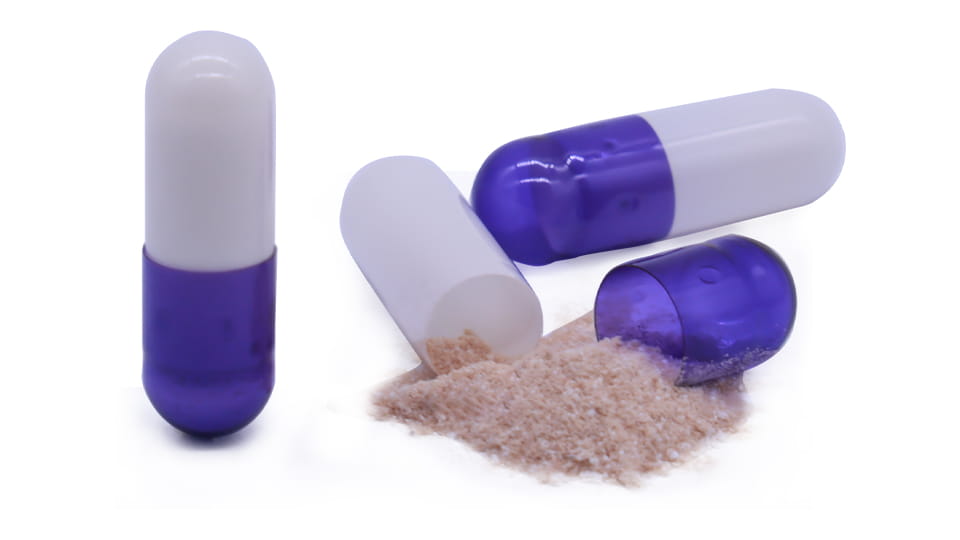
In de praktijk, lege capsules dienen als handig hulpmiddel “leeg vat” voor medicijnen. Ze zijn meestal gemaakt van gelatine of plantaardige materialen, en zijn beladen met API of supplementen tijdens de productie. Na het vullen, de dop en het lichaam klikken samen om de inhoud veilig te houden. Onder een microscoop, je kunt de zien capsule-dop, capsule lichaam, en vaak een in elkaar grijpende ring of dubbele klik ontwerp bij de verbinding (zoals hieronder weergegeven):
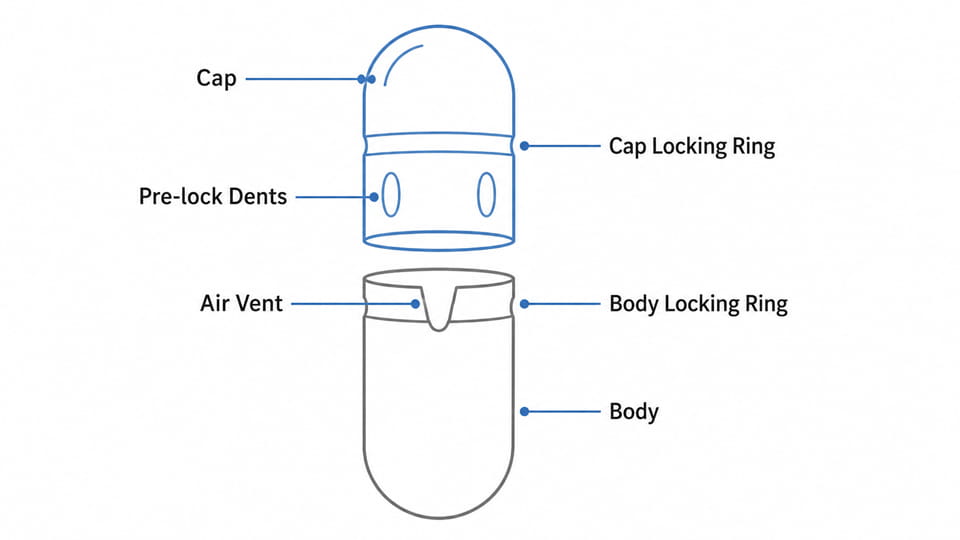
Samengevat, een lege capsule is een klaar om te vullen omhulsel bestaande uit een dop en een lichaam die in elkaar klikken of vergrendelen. Deze harde schalen zijn elastisch genoeg om te monteren, maar stijf genoeg om hogesnelheidsvul- en verpakkingslijnen te overleven. Ze worden voorgemonteerd geleverd of als losse doppen en behuizingen (vaak geleverd in bulktrays), en worden in afzonderlijke fasen in de fabriek gevuld.
Er zijn verschillende soorten lege capsules, onderscheiden zich vooral door hun schaalmateriaal. De meest voorkomende zijn:
De moderne farmaceutische industrie is verder gegaan dan dierlijke gelatine. “Naarmate wetenschap en technologie gevorderd zijn, nieuwe materialen en procesverbeteringen hebben geleid tot de ontwikkeling van lege capsules gemaakt van HPMC, hydroxypropylzetmeel, en pullulan, naast gelatine”. In de praktijk, wanneer iemand vraagt om “lege gelatinecapsules”, ze bedoelen meestal harde, tweedelige capsules van het gewone materiaal. Maar capsuleleveranciers bieden tegenwoordig beide gelatine en HPMC (vegetarisch) capsules in verschillende kleuren en maten om aan verschillende behoeften te voldoen. (Bij het bestellen, Mogelijk ziet u ze ook wel genoemd lege pilcapsules, lege medicijncapsules, of lege capsulehulzen.)
Elk materiaal heeft voor- en nadelen. Gelatine is traditioneel, goedkoop en lost gemakkelijk op, maar niet geschikt voor strikte vegetariërs. HPMC en andere veganistische opties kosten iets meer, maar zijn geschikt voor een bredere consumentenbasis. Pullulan heeft een zeer goede vochtbescherming, die de houdbaarheid van sommige medicijnen of supplementen kunnen verbeteren.

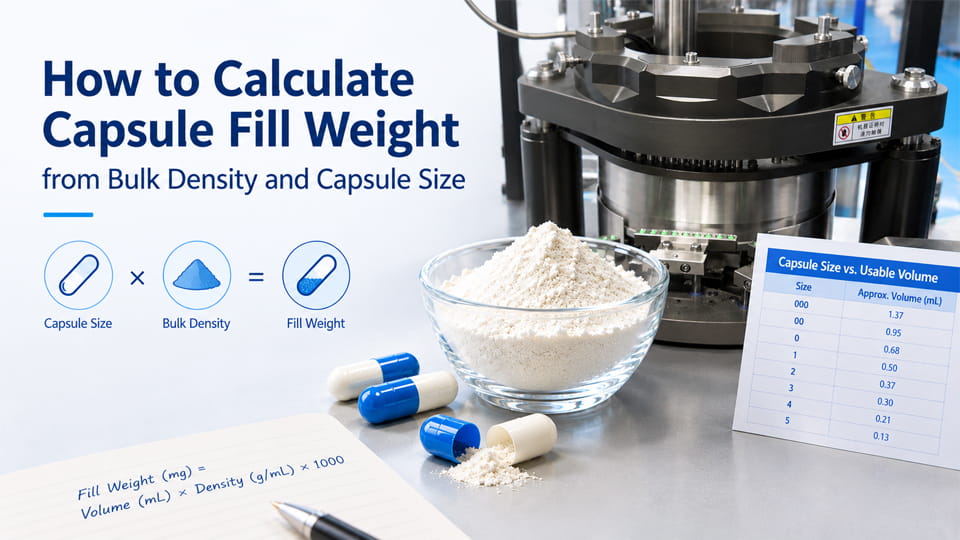
Lege capsules worden geleverd in een scala aan maten om verschillende dosisvolumes mogelijk te maken. De standaardmaten zijn genummerd vanaf 000 (de grootste) naar beneden 5 (de kleinste). Maat 000 is erg groot – ongeveer 1.37 ml intern volume – terwijl grootte 5 is klein (~0,21 ml). Het recht kiezen capsulegrootte hangt af van de vulgewicht en dichtheid van het poeder of de korrels:
Tafel 1 Typische maten van harde gelatinecapsules
| Maataanduiding | Vulvolume (ml) | Vulvolume (oz) | Hoogte van vergrendelde capsule (mm) | Buitendiameter (mm) |
|---|---|---|---|---|
| 000 | 1.37 | 1/20 | 26.1 | 10.0 |
| 00 | 0.95 | 1/30 | 23.3 | 8.5 |
| 0 | 0.68 | 1/40 | 21.7 | 7.7 |
| 1 | 0.50 | 1/55 | 19.4 | 6.9 |
| 2 | 0.37 | 1/75 | 18.0 | 6.4 |
| 3 | 0.30 | 1/100 | 15.9 | 5.8 |
| 4 | 0.21 | 1/135 | 14.3 | 5.3 |
| 5 | 0.13 | 1/220 | 11.1 | 4.9 |
Het vulvolume van elke maat wordt doorgaans verstrekt door de capsulefabrikant. Bijvoorbeeld, een standaardgrafiek laat zien capsulevolumes van 1.37 ml (maat 000) naar beneden 0.21 ml (maat 5). Dit volume komt overeen met een bepaald gewicht op basis van de poederdichtheid. In werkelijkheid, Tafel 2.1 in een farmaceutische referentie worden de volumes en geschatte gewichten voor verschillende maten vermeld, gebaseerd op typische getikte dichtheden. Bij het formuleren, fabrikanten berekenen de benodigde capsulegrootte aan de hand van het beoogde dosisgewicht en de dichtheid van het materiaal (dichtheid van poedertap).
Toepassingen op grootte: Nutraceuticals (zoals multivitaminen of kruidensupplementen) gebruik vaak grotere capsules (0 of 000) omdat ze grote hoeveelheden kruiden of vitamines moeten leveren. Veel tabletten omgezet in capsules (over-inkapseling voor klinische onderzoeken) gebruik standaard capsulegroottes 1 of 0. Omgekeerd, zeer kleine capsules (maten 3–5) zou kunnen worden gebruikt voor krachtige medicijnen, of om gemakkelijk door kinderen te kunnen inslikken.
Samengevat, lege capsules zijn verkrijgbaar in maten 000 naar 5. Een algemene richtlijn is: hoe kleiner het getal, hoe groter de capsule (d.w.z. 000 is het grootst, 5 is het kleinst). Fabrikanten en capsuleleveranciers bieden maattabellen zodat samenstellers een capsule kunnen kiezen die voldoet aan de volumevereiste van de beoogde dosis. Een juiste maatkeuze zorgt ervoor dat elke capsule de juiste hoeveelheid API bevat voor een consistente dosering.
Lege harde capsulehulzen (capsulelichamen en -doppen) worden geproduceerd door een dompelcoatingproces. De basisstappen zijn als volgt (zie klinische farmaceutische referenties voor details):
Al deze productiestappen zijn geautomatiseerd en worden nauwlettend gecontroleerd op kwaliteit. In werkelijkheid, een gepubliceerde handleiding voor de productie van capsules vat deze fasen samen: "Stap 1: bereiding van gelatine-oplossing; Stap 2: dompelcoating op metalen pinnen; Stap 3: rotatie van de gecoate pinnen; Stap 4: drogen van de gecoate pinnen; Stap 5: strippen en trimmen; Stap 6: het verbinden van de bijgesneden capsulehuls; Stap 7: afdrukken”. (Stap afdrukken: Na montage, capsules zijn vaak bedrukt met productcodes of logo's, vervolgens geïnspecteerd en verpakt.)
Gedurende dit hele proces, uitgebreid kwaliteitscontrole controles worden uitgevoerd (bloeisterkte van gelatine, viscositeit, microbiële grenzen, enz.) om uniforme schelpen te garanderen. Moderne capsulelijnen kunnen miljoenen schelpen per dag maken, met zeer consistent gewicht en afmetingen.
Bij het selecteren van een capsuletype en -grootte, overweeg eerst het actieve ingrediënt en de formulering, dan de productiemethode.
Kies op ingrediënt/formulering:
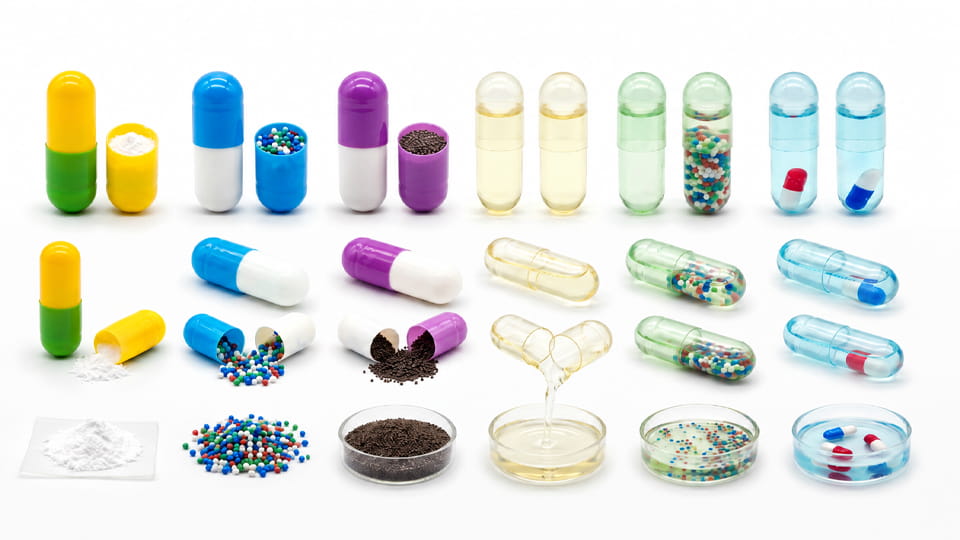
Kies op uitrusting en schaal:
Samengevat, kies het capsulemateriaal dat bij uw API past (stabiliteit, voedingsbehoeften) en kies vervolgens de capsulegrootte voor uw dosis. Zorg ook voor compatibiliteit met uw vulapparatuur (handmatig versus. automatisch). Moderne capsulevullers (zoals die van Jinlu) zijn ontworpen om alle standaard capsuletypes te verwerken. Bijvoorbeeld, geteste opstellingen tonen aan dat gelatine, HPMC- en pullulan-shells werken allemaal soepel op dezelfde hogesnelheidsmachines.
Lege capsules worden in veel industrieën gebruikt. Belangrijke toepassingen zijn onder meer:

Deze voorbeelden tonen de veelzijdigheid van lege capsules. Ze zijn een universele doseringsvorm voor elk poeder- of korrelvormig product dat in een precieze dosis moet worden doorgeslikt.
Het vullen van lege capsules met product kan op verschillende manieren, afhankelijk van schaal:


In alle vulmethoden, Er wordt speciale zorg besteed aan zeer lichte of plakkerige poeders (stromingsversterkers, smering). Stofopvang en elektrostatische controle (ionisatoren) zijn belangrijk voor de veiligheid van de operator en de vulnauwkeurigheid. Voor grote operaties, capsulevulmachines vormen een belangrijk onderdeel van de procesketen: ze zetten de ‘lege capsules’ op grote schaal om in eindproducten.
Zodra de capsules zijn gevuld, de doseringsvormen moeten efficiënt worden verpakt. Er zijn er een paar gangbare verpakkingsoplossingen voor harde capsules:
In de praktijk, een farmaceutische fabriek kan deze oplossingen combineren. Bijvoorbeeld, een hogesnelheidsproductielijn zou kunnen beginnen met een Automatische capsulevulder, stuur de capsules vervolgens naar een tel-aftoppingmachine, en tenslotte de flessen naar een kartonneerder sturen. Als alternatief, voor eenheidsdoses, de capsules uit de filler gaan naar een inline blistermachine.
Belangrijk punt: De verpakkingsapparatuur moet zo worden gekozen dat deze bij de capsules past. Blistermachines moeten rekening houden met de grootte en vorm van de capsules (om een betrouwbare voeding in de holtes te garanderen). Telmachines moeten compatibel zijn met de vereisten voor capsulefragiliteit en snelheid. Veel machineleveranciers (zoals Jinlu) maatwerk bieden: bijvoorbeeld, het aanpassen van feeders of gootgeleiders aan uw capsulegrootte en materiaal. Zoals de fabrikant adverteert, hun blisterverpakkingen zijn gebouwd volgens GMP-normen en kunnen tabletten verpakken, capsules, en andere vormen met hoge snelheid.
Uiteindelijk, geïntegreerde verpakkingslijnen – het combineren van capsulevulling, het tellen, blaren/afdekken, en kartonneren – bieden de meest efficiënte oplossing voor grootschalige productie. Ze automatiseren de stroom van lege capsule naar verpakt eindproduct.
Lege capsules (de tweedelige schelpen voor pillen en supplementen) zijn een fundamenteel element in de farmaceutische productie. Hun materialen begrijpen, maten, en ontwerpkenmerken (zoals vergrendelingsmechanismen) helpt u bij het kiezen van de juiste schaal voor uw product. Even belangrijk is het kennen van het productie- en vulproces: capsules worden gemaakt door middel van dip-coating (gelatine/HPMC) en vervolgens gevuld op geautomatiseerde machines die scheiden, dosis, en sluit elke capsule. Eindelijk, een goede verpakking – via blistermachines of tellijnen – zorgt ervoor dat de gevulde capsules tijdens de distributie intact en conform blijven.
Als u een farmaceutische of nutraceutische fabrikant bent en op zoek bent naar betrouwbare apparatuur, overweeg een one-stop-oplossingsleverancier die capsules begrijpt. Bedrijven zoals Jinlu Packing bieden geïntegreerde capsulevul- en verpakkingslijnen die voldoen aan de cGMP-normen. Zij kunnen u helpen de lijn af te stemmen op uw specifieke capsuletype en outputbehoeften. Neem vandaag nog contact op met een expert om te bespreken hoe u de productie en verpakking van uw capsules kunt stroomlijnen.
Lege capsules zijn lege capsulehulzen die worden gebruikt om farmaceutische ingrediënten te bevatten, poeders, korrels, of voedingssupplementen. Ze bestaan meestal uit een capsuledop, capsule lichaam, en vergrendelingsmechanisme, waardoor fabrikanten nauwkeurige en gemakkelijke orale doseringsvormen kunnen produceren.
Harde capsules zijn meestal gemaakt van gelatine (van dieren afkomstig) of vegetarische alternatieven zoals HPMC (cellulose) en pullulan (gefermenteerd tapiocazetmeel). In de praktijk, “lege capsule” verwijst meestal naar een van deze tweedelige schalen die klaar zijn om te worden gevuld.
De belangrijkste soorten lege capsules zijn harde gelatinecapsules, HPMC-capsules, en pullulan-capsules. Harde gelatinecapsules worden vaak gebruikt voor farmaceutische medicijnen, terwijl HPMC en plantaardige capsules populair zijn voor nutraceutische en vegetarische producten.
De belangrijkste soorten lege capsules zijn harde gelatinecapsules, HPMC-capsules, en pullulan-capsules. Harde gelatinecapsules worden vaak gebruikt voor farmaceutische medicijnen, terwijl HPMC en plantaardige capsules populair zijn voor nutraceutische en vegetarische producten.
Lege capsules zijn verkrijgbaar in verschillende maten, inbegrepen 000, 00, 0, 1, 2, 3, 4, En 5. Grotere maten zoals 000 En 00 worden vaak gebruikt voor supplementen, terwijl kleinere maten vaak worden gebruikt voor farmaceutische medicijnen met lagere doseringsvereisten.
De meest voorkomende harde schaalmaten in de farmaceutische sector en supplementen zijn maten 0 En 1. Deze bieden een goede balans tussen vulvolume en slikbaarheid. (Echter, zeer hoge dosis formules kunnen gebruiken 00 of 000, en voor pediatrische doses kan maat 3-5 worden gebruikt.)
Standaard tweedelige capsules zijn ontworpen voor vaste stoffen (poeders, korrels). Ze kunnen lekken als ze met vloeistof worden gevuld. Voor oliën of vloeistoffen, Meestal worden softgelcapsules of gespecialiseerde vloeibare capsules gebruikt. (Opmerking: er is vloeistofgevulde harde capsuletechnologie, maar die gebruiken nog steeds een poederbarrière binnenin.)
Goed bewaarde capsules zijn lang houdbaar. Zowel gelatine- als HPMC-capsules kunnen meerdere jaren meegaan (vaak 2 tot 5 jaar) indien afgesloten en koel bewaard, droge omstandigheden. Na verloop van tijd, vochtverlies of -winst kan hierop van invloed zijn, daarom moeten de opslagaanbevelingen worden gevolgd.
Lege capsules worden via verschillende stappen vervaardigd, inclusief voorbereiding van grondstoffen, vorming van het capsuleomhulsel, drogen, kwaliteit inspectie, en verpakking. Het proces zorgt voor een consistente capsulegrootte, kracht, en kwaliteit voor farmaceutische productie.
Ja. Vanwege de grondstoffen en verwerking, HPMC- en pullulan-capsules kosten aanzienlijk meer om te vervaardigen dan gelatinecapsules. Dit komt tot uiting in de prijsstelling van lege vegetarische capsules.
Referenties:
1.Harde gelatinecapsules: Formulering & Productie —— studylib.net
2.Vergrendelende harde gelatinecapsule —— Google-patenten
3.HPMC-capsules: huidige status en toekomstperspectieven —— Nationale Bibliotheek voor Geneeskunde
4.Harde gelatine -capsules —— apotheek180.com
5.Een uitgebreide recensie over: Capsule —— Internationaal tijdschrift voor farmaceutische wetenschappen (IJPS)



