Koudvormen versus thermovormen: Welke medische blisterverpakking is geschikt voor Pharma?
Koudvormen versus thermovormen: Welke medische blisterverpakking is geschikt voor Pharma?
augustus 26, 2026
Geen opmerkingen
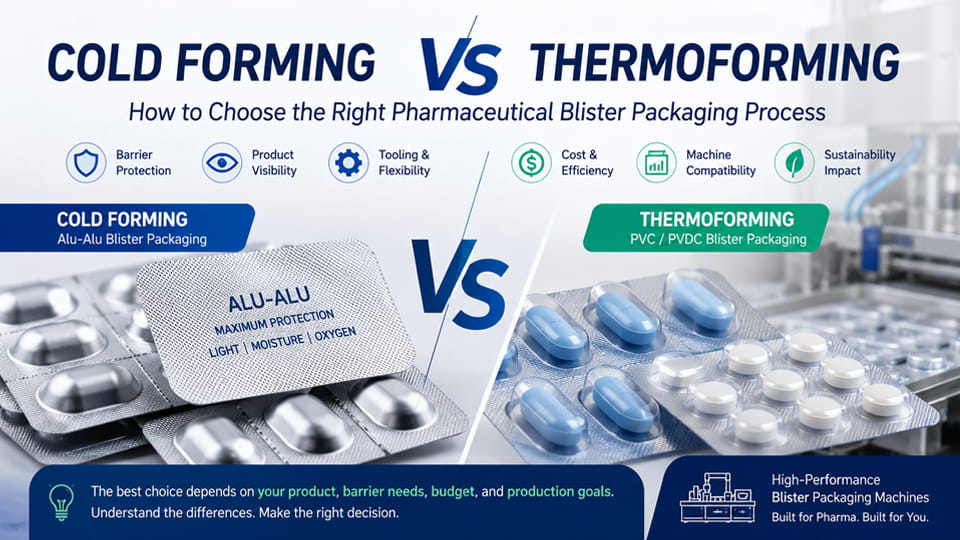
Farmaceutische producten worden vaak verzegeld in blisterverpakkingen voor bescherming per eenheidsdosis en aantrekkelijkheid op de plank. In blisterverpakking, de twee belangrijkste vormingsmethoden zijn Thermovormen En Koude vorming. Bij thermovormen wordt een plastic web verwarmd (zoals PVC of PET) totdat het buigzaam is en vervolgens stofzuigt of in mallen drukt. Koude vorming, daarentegen, maakt gebruik van hogedrukstansen op een meerlaags laminaat op aluminiumbasis bij kamertemperatuur. Elke methode gebruikt verschillende materialen en geeft zeer verschillende resultaten: thermogevormde blisters zijn transparant en goedkoper, terwijl het koud gevormd is (Aller tijden) blisters zijn ondoorzichtig maar bieden een veel hogere barrièrebescherming. In deze handleiding wordt uitgelegd hoe ze werken, belangrijkste verschillen (barrière, kosten, snelheid, enz.), en hoe u de juiste methode en machine voor uw product kiest.
Wat is thermovormen?
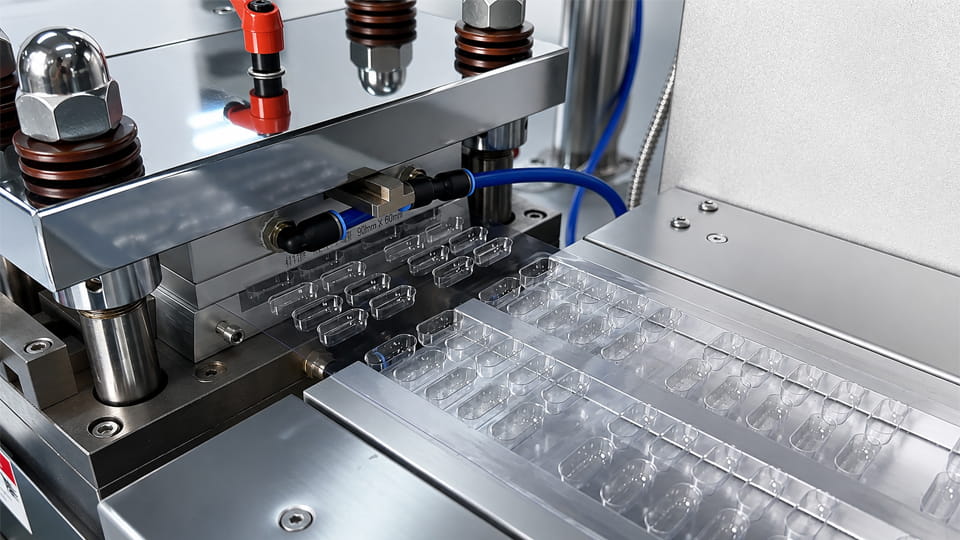
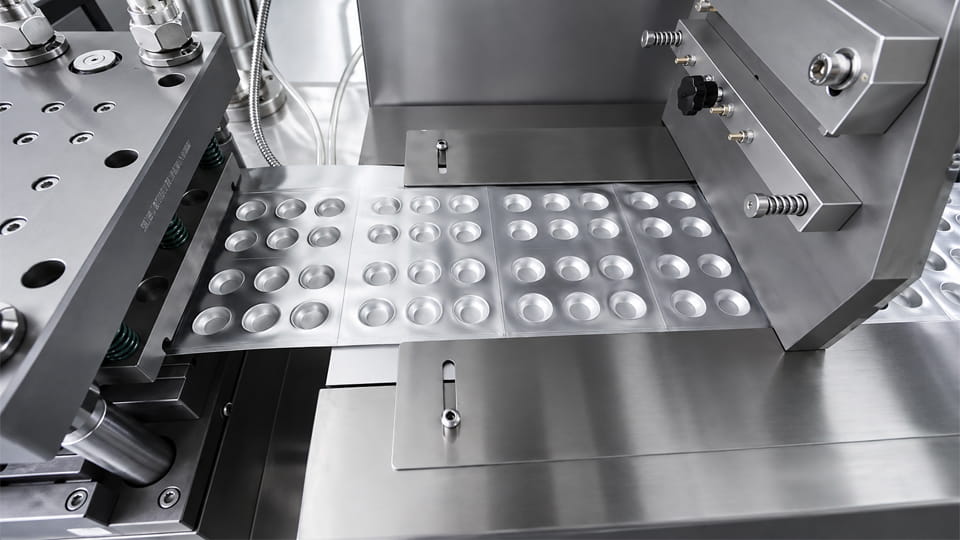
Thermovormen Blisterverpakkingen verwarmen een plastic vel totdat het zacht wordt en vormen er vervolgens holtes van door vacuüm of druk. Een temperatuurgecontroleerd apparaat (vaak 150–180°C) verwarmt PVC of een andere thermoplastische film, die vervolgens over een mal wordt gevormd. Zodra de film is afgekoeld, de gevormde holtes worden gevuld met product en afgesloten met een folie- of papieren deksel.
Dit proces is zeer aanpasbaar: gebruikelijke vormfilms omvatten PVC, HUISDIER, PP, of copolymeren, soms met barrièrecoatings (PVDC, COC, PCTFE, enz.). Thermovormen biedt een hoge ontwerpflexibiliteit – blistervormen kunnen diep of complex zijn (gebruik van plug-assisten) zonder de basismaterialen te veranderen. Het is ook kosteneffectief voor grote oplages: thermoplastische films zijn goedkoop en machines draaien op hoge snelheden. Het belangrijkste voordeel is de betaalbaarheid en de doorvoersnelheid, zoals een bron opmerkt, “de belangrijkste voordelen van PVC zijn de lage kosten en het gemak van thermovormen”.
Voordelen van thermovormen
Lagere materiaalkosten: Kunststof films (zelfs met barrièrecoatings) zijn veel goedkoper dan meerlaagse metaalfolies. Dit maakt de eenheidskosten lager voor grote productie.
Hogere snelheid: Thermovormmachines draaien doorgaans sneller. Bijvoorbeeld, een moderne thermovormende blisterlijn kan ruim overlopen 150 verpakkingen/min, hoger dan de typische koudevormsnelheden.
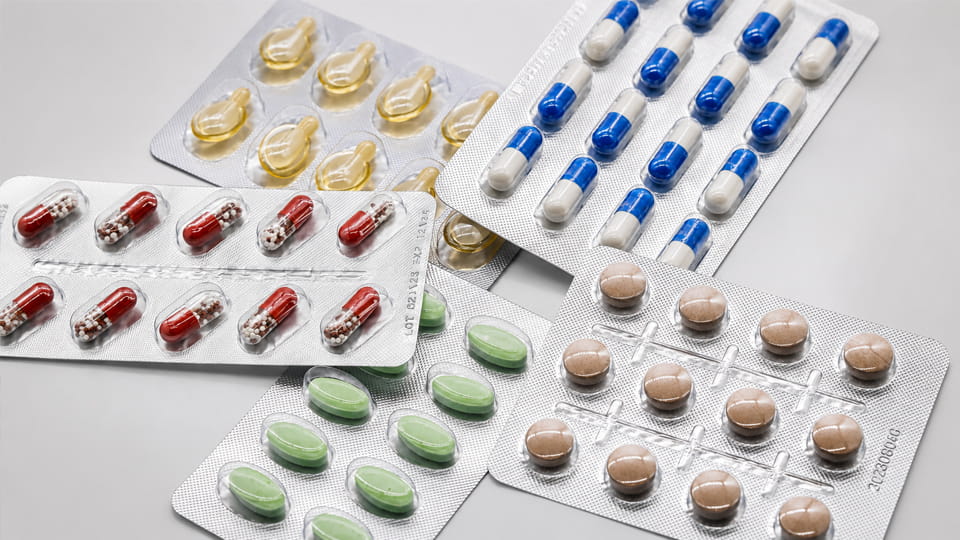
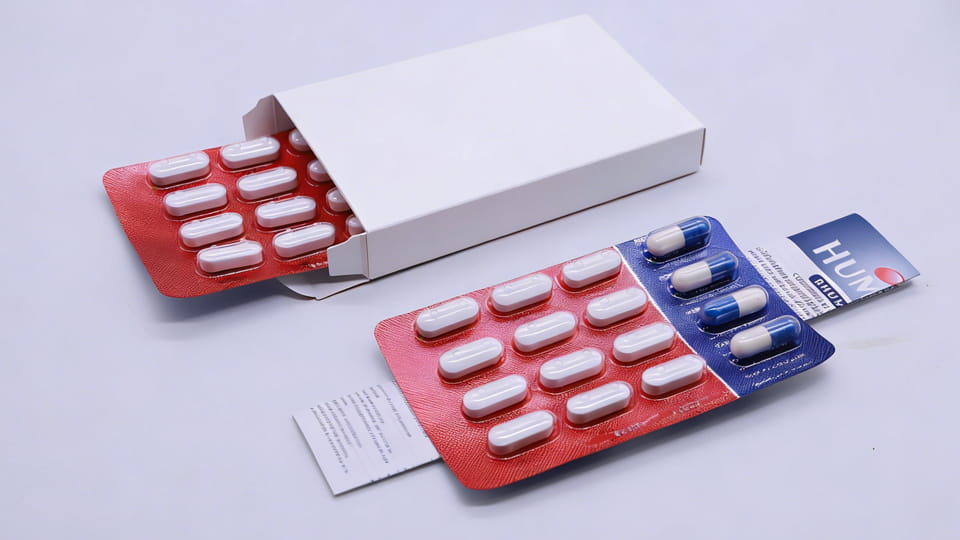
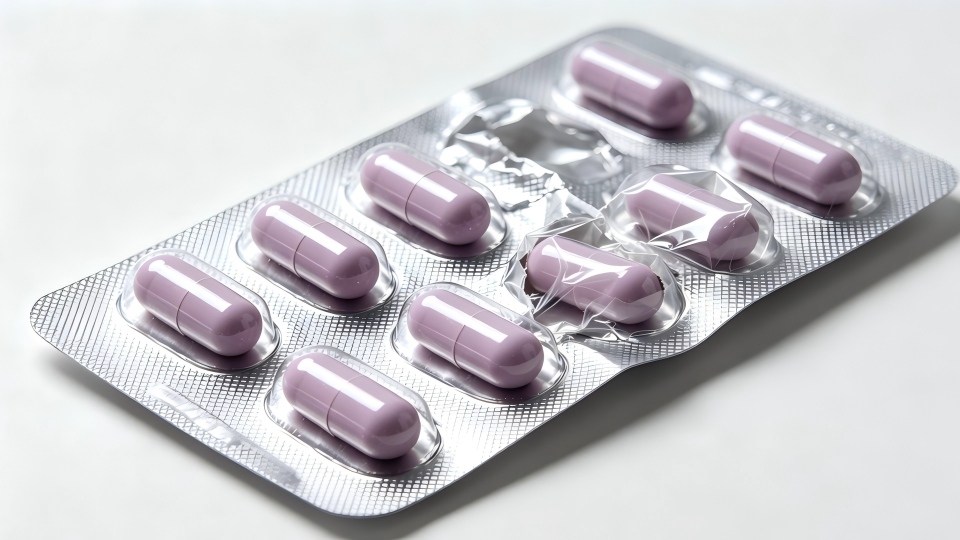
Zichtbaarheid van producten: Doorzichtige PVC/PET-verpakkingen laten gebruikers de pillen of tabletten erin zien. Deze transparantie is goed voor de aantrekkelijkheid van de consument (bijv. detailhandel vitamines) en voor visuele inspectie.
Ontwerpflexibiliteit: Complexe caviteitsvormen of diepe trekkingen kunnen worden gerealiseerd met verwarmde folie (vaak geholpen door vacuüm of plug-assist). Het kan ook gemakkelijk worden geïntegreerd met snelvul- en snelle afdichtingsprocessen.
Beperkingen bij thermovormen
Barrièrebescherming: Een gewone PVC-film biedt slechts een gematigd vocht- en zuurstofbarrière. Ongecoat PVC heeft een hoge waterdampdoorlaatbaarheid (bijv. ~3g/m²·dag bij 90% RV). Om de houdbaarheid te verbeteren, thermopacks moeten dure meerlaagse films gebruiken (bijv. PVC/PVDC of PVC/PCTFE-laminaten) of dikkere films. Zelfs dan, de barrière blijft meestal onder wat aluminiumfolie bereikt.
Lichtgevoeligheid: Heldere films laten UV- en zichtbaar licht door. Dat betekent dat thermogevormde blisterverpakkingen dat wel zijn niet Ideaal voor lichtgevoelige medicijnen – ze bieden vrijwel geen UV-bescherming, tenzij je UV-blokkerende additieven toevoegt.
Beperkte houdbaarheid: Voor zeer vochtgevoelige of reactieve API's, thermogevormde pakken (zelfs met coatings) geven vaak een kortere stabiliteit. Wikipedia-aantekeningen: “de nadelen [van PVC] zijn de slechte barrière tegen het binnendringen van vocht en zuurstof”.
Stijve gereedschapskosten: Terwijl machines over het algemeen goedkoper zijn, Voor dieptrek-thermovormen zijn mogelijk precisiemallen en plug-assist-matrijzen nodig, waardoor de gereedschapskosten toenemen.
Wat is koudvormen?
Koude vorming (vaak gebeld Aller tijden blaarverpakking) gebruikt een meerlaagse film op aluminiumbasis als vormweb. Een typisch koudvormlaminaat is PVC/Aluminium/Polyamide, met de aluminiumlaag aan de buitenkant. In dit proces, de film is niet verwarmd. In plaats van, een robuuste hogedrukpons stempelt de folie bij kamertemperatuur in holten. Het aluminium rekt uit, maar vervormt plastisch, en het behoudt de vorm van de holte zodra de stempel is verwijderd. Elke gevulde holte wordt vervolgens afgedicht (vaak met een aluminium of met folie bedekte papieren deksel).
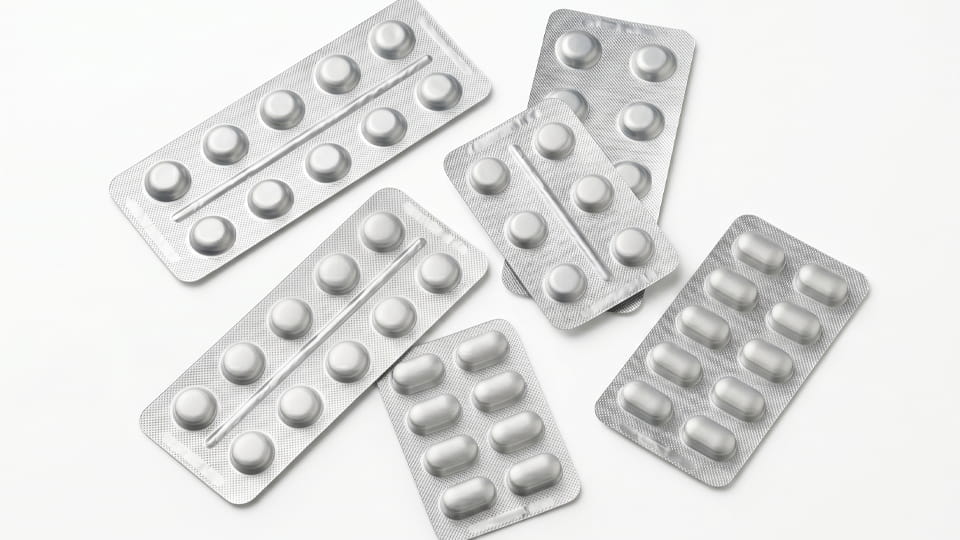
Omdat koudvervormen het materiaal niet verwarmt, het vermijdt elke thermische belasting van gevoelige medicijnen. Het resultaat is een blaar die volledig ondoorzichtig is (geen zicht op de inhoud) maar biedt een uitstekend barrière. De aluminiumfolie houdt vrijwel al het vocht tegen, zuurstof, en licht het medicijn niet bereiken, wat de houdbaarheid aanzienlijk kan verlengen.
Voordelen van koudvervormen
Superieure barrière: De aluminiumlagen maken de blister vrijwel ondoordringbaar. Zoals Wikipedia opmerkt: “Het belangrijkste voordeel van koudgevormde folieblisters is dat het gebruik van aluminium een vrijwel volledige barrière biedt voor water en zuurstof, waardoor een verlengde vervaldatum van het product mogelijk is”. Dit is de reden waarom Alu-Alu-blisters worden gebruikt voor hygroscopisch, zuurstofgevoelig, of lichtgevoelige geneesmiddelen.
Bescherming tegen vocht en licht: Koudgevormde blaren houden vocht vast, zuurstof En licht uit. Bijvoorbeeld, meerlaagse folies blokkeren UV/zichtbaar licht volledig en vormen een luchtdichte afsluiting rond elke dosis. Dit vergrendelt de potentie van medicijnen die snel afbreken in vochtige lucht of fel licht.
Materiaalflexibiliteit: Het vormende web (PVC/Alu/PA) heeft nog een PVC-kant, waardoor de zakvorm behouden blijft en enige elasticiteit wordt geboden, terwijl het aluminium bescherming biedt. Dit maakt de holte sterk en ondiep, wat vaak genoeg is voor de meeste tabletten en capsules.
Beperkingen bij koudvervormen
Hogere materiaalkosten: Aluminiumlaminaten zijn veel duurder dan plastic films. De folie bestaat uit meerdere lagen (bijv. 9–15μm Al plus 80–100μm andere lagen) en gespecialiseerde composities, dus de grondstofkosten per verpakking zijn hoog. Een bron merkt dit specifiek op “de kosten voor het koudvormen van blisterverpakkingen zijn doorgaans hoger dan voor thermovormen”.
Lagere snelheid: Vanwege het stempelproces en de noodzaak om met folie om te gaan (dat niet rekbaar is zoals plastic), koudvormmachines draaien op lagere snelheden. Zoals een samenvatting aangeeft, koudgevormde folieblisters hebben last van “een lagere productiesnelheid vergeleken met thermovormen”.
Geen zichtbaarheid: Beide zijden van de blister zijn van aluminium (of de bovenkant is van aluminium), zodat gebruikers het product helemaal niet kunnen zien. Dit beperkt het gebruik tot producten die geen visuele bevestiging in het schap vereisen. (Het betekent ook dat conformiteitspakketten goede gedrukte etiketten moeten hebben, omdat u de inhoud niet visueel kunt controleren.)
Machineslijtage: Koudvervormgereedschappen en matrijzen kunnen zware lasten verdragen, machines moeten dus zeer robuust zijn. De stempel en de tegenmatrijs moeten nauwkeurig worden gemaakt en hebben vaak dikker staal nodig, onderhoud toevoegen.
Grotere verpakkingsgrootte: Omdat aluminium niet zo veel kan uitrekken als plastic, koudgevormde holtes zijn meestal ondieper of hebben grotere omringende randen. Wikipedia merkt op dat er meestal een Alu-Alu-pakket terechtkomt “groter formaat van de blisterkaart” en minder steile pocketwanden.
Koudvormen versus thermovormen: Belangrijke verschillen
De onderstaande tabel belicht de belangrijkste verschillen tussen thermovormende en koudvormende blisterverpakkingen:
Factor
Thermovormen
Koude vorming (Aller tijden)
Vormingsproces
Verwarm de plasticfolie tot ze zacht is, vervolgens vacuüm-/drukvorm in holtes.
Gematigd (Alleen PVC is doorlaatbaar; PVDC-gecoate films verbeteren de barrière).
Uitstekend – aluminiumfolie is vrijwel ondoordringbaar voor water en zuurstof.
Lichte bescherming
Beperkt – doorzichtig plastic biedt geen UV/lichtbarrière (tenzij pigment wordt toegevoegd).
Compleet – ondoorzichtige folie blokkeert al het licht.
Zichtbaarheid
Transparant – de klant kan het product zien.
Ondoorzichtig – het product is binnenin verborgen.
Productiesnelheid
Over het algemeen hoger (lijnen met een hoog rendement).
Over het algemeen langzamer (mechanisch stempelen beperkt de snelheid).
Materiaal & machinekosten
Lager – plastic folie is goedkoper, Machines zijn eenvoudiger.
Hoger – aluminiumlaminaten kosten meer, en machines vereisen robuuste persen.
Typische gebruiksgevallen
OTC-medicijnen met een hoog volume, vitamines, standaard tabletten; wanneer zichtbaarheid & kosten zijn belangrijk.
Vocht- of lichtgevoelige medicijnen (antibiotica, biologische producten), lange houdbaarheid nodig.
Elke bovenstaande factor weerspiegelt de afwegingen tussen de twee methoden. Thermovormen heeft de neiging om goedkopere materialen te gebruiken en sneller te werken, terwijl bij koudvormen gebruik wordt gemaakt van dure metaalfolies voor eersteklas bescherming.
Gedetailleerde vergelijking: 8 Sleutelfactoren
Om samen te vatten, hier zijn acht belangrijke factoren die thermovormen en koudvormen onderscheiden:
Vormmethode:
Thermovormen: Kunststofplaat wel verwarmd, vervolgens vacuüm/drukgevormd over een mal.
Koude vorming: Metaallaminaat wel koud gestempeld met hoge druk; aluminium houdt de vorm vast.
Materialen:
Thermovormen: Maakt gebruik van films als PVC, HUISDIER, PP (vaak met barrièrecoatings PVDC/COC/COP). Bijvoorbeeld, veel blisterlijnen gebruiken niet-geplastificeerd PVC (RPVC) als het vormende web.
Koude vorming: Gebruikt een laminaat op aluminiumbasis (typisch PVC/aluminium/nylon). Deze “koudvormfolie” is speciaal ontwikkeld voor vorming met een hoge barrière.
Vocht & Gasbarrière:
Thermovormen: Een kale PVC-film heeft een slechte barrière (WVTR ~3g/m²·dag, OTR ~20 ml/m²·dag). Meerlaagse PVC-films (gecoat met PVDC of gecoëxtrudeerd met PCTFE/COC) kan dit verbeteren, Maar nooit tot het niveau van metaalfolie. Wikipedia merkt op dat het nadeel van PVC is “slechte barrière tegen vocht en zuurstof”.
Koude vorming:Uitstekend. Aluminiumfolie creëert een vrijwel ondoordringbare barrière. Zoals opgemerkt, koudgevormde blaren geven a “bijna volledige barrière voor water en zuurstof”, de vervaldatum aanzienlijk verlengen.
Lichtbescherming:
Thermovormen: Heldere films laten al het licht door (tenzij u speciale gepigmenteerde films gebruikt of UV-blokkerende middelen toevoegt). Dit is de reden waarom doorzichtige PVC-blisters dat zijn niet aanbevolen voor lichtgevoelige medicijnen.
Koude vorming: Compleet. Ondoorzichtige folieblokken 100% van licht, het beschermen van lichtgevoelige API's.
Productiesnelheid:
Thermovormen: Meestal hoger. Omdat plastic films snel worden ingevoerd en de vormingscycli snel zijn, deze lijnen overschrijden vaak de 150–200 verpakkingen/min (op hoogwaardige roterende machines).
Koude vorming: Over het algemeen langzamer. Het stempelen en hanteren van folie beperkt de doorvoer. Zelfs de beste koudvormmachines vallen meestal onder 100 verpakkingen/min voor diepe Alu-Alu-ontwerpen.
Kosten (Materiaal & Apparatuur):
Thermovormen: Kunststof onbewerkte films kosten veel minder per strekkende meter dan 3-laags folie. Machines zijn eenvoudiger (alleen verwarmingsplaten en vacuümstations), dus de initiële machinekosten zijn over het algemeen lager. Eén bron vat het samen, De “belangrijkste voordelen” van PVC zijn de lage kosten en het gemakkelijke vervormbaarheid ervan.
Koude vorming: Hoger. De speciale folie is duur, en machines moeten steviger zijn. Studies noteren “koudgevormde blisterverpakkingsapparatuur … is bijzonder geschikt voor vochtgevoelige producten,” maar tegen een premium prijs.
Productzichtbaarheid:
Thermovormen: Ja – het product is zichtbaar door helder plastic. Goed voor weergave in de detailhandel of voor eenvoudige dosiscontrole.
Koude vorming: Nee – volledig ondoorzichtig.
Typische toepassingen:
Thermovormen: Standaard OTC- en recepttabletten/capsules waarbij een hoge barrière niet van cruciaal belang is (bijv. pijnstillers, vitamines). Bulkgeneesmiddelen, supplementen, of elk product dat een snelle hogesnelheidslijn nodig heeft. Wordt ook gebruikt voor medische blisterverpakking van niet-steriele apparaten.
Koude vorming: Premium of kritische medicijnen (bijv. antibiotica, gevoelige API's, vacuümverpakte enzymen) en elk product dat maximale bescherming tegen vocht/licht en een lange houdbaarheid vereist. Vaak gezien bij PTP (doordrukken) verpakkingen voor een zeer stabiele dosering, of voor producten die wereldwijd worden gedistribueerd met variabele klimaten.
Deze verschillen laten dat zien Thermovormen blinkt uit in snelheid, kosten en zichtbaarheid, terwijl Koude vorming blinkt uit in bescherming en stabiliteit. In de praktijk, ontwerpers wegen deze factoren af tegen de eisen van het product.
Het kiezen van de juiste methode: Begeleiding voor kopers van farmaceutische machines
Bij de keuze tussen koudvormen en thermovormen (en het bijbehorende blaarverpakkingsmachine), vragen:
Behoeften aan productstabiliteit: Is jouw API of formulering die zeer gevoelig is voor vocht, zuurstof of licht? Als Ja, koud gevormd (Aller tijden) blaren zijn meestal vereist. Als uw product relatief stabiel is (bijv. standaard tablet), thermovormen is waarschijnlijk voldoende.
Gewenste houdbaarheid: Heeft het product een verlengde houdbaarheid nodig? (18+ maanden)? Koudgevormde verpakkingen kunnen de houdbaarheid aanzienlijk verlengen vanwege hun superieure barrière. Voor een korte houdbaarheid (<1 jaar) producten, PVC-pakketten zijn vaak acceptabel.
Productievolume en snelheid: Heeft u een zeer hoge doorvoer nodig?? Thermovormlijnen werken over het algemeen sneller, ze zijn dus geschikt voor grootschalige productie. Voor kleinere series van zeer waardevolle medicijnen, de langzamere koudevormmethode kan acceptabel zijn.
Kostenbeperkingen: Als het budget krap is en de barrièrevereisten gematigd, thermovormen is economischer. Bijvoorbeeld, Jinlupacking merkt op dat “de kosten voor het koudvormen van blisterverpakkingen doorgaans hoger zijn dan voor thermovormen”. Neem zowel de materiaal- als de apparatuurkosten mee in uw TCO-analyse.
Regelgevend / Marktbehoeften: Sommige markten of formuleringen kunnen dat wel zijn vereisen bepaalde verpakkingen. Bijvoorbeeld, een wettelijke specificatie zou Alu-Alu-folie voor een bepaald antibioticum kunnen verplichten, of marketing kan de voorkeur geven aan doorzichtige verpakkingen voor een merkvitamine.
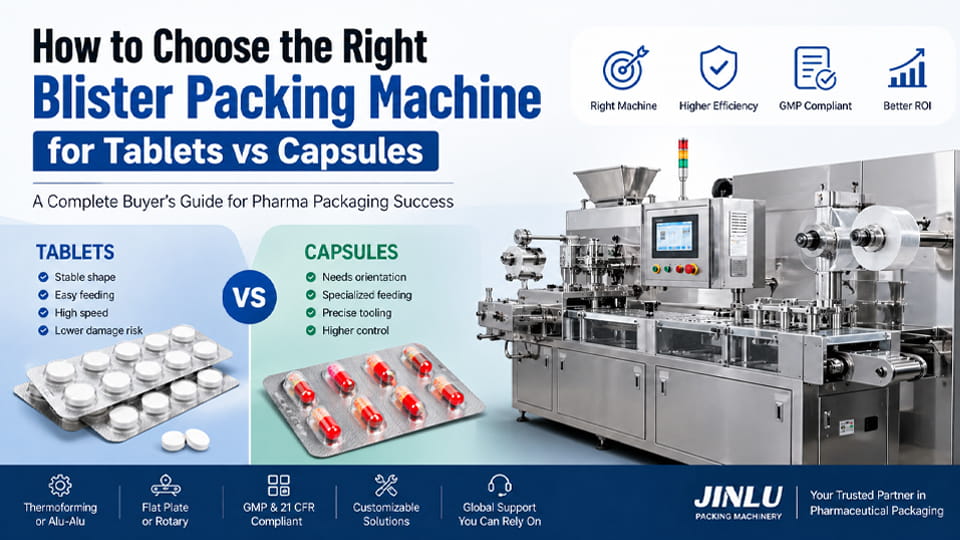
Machine-compatibiliteit: Bedenk of u één machine wilt voor beide methoden of afzonderlijke lijnen. Enkele moderne machines (zoals die van Jinlu DPP-180PRO blistermachine) kan voor beide thermo's worden geconfigureerd- of koudvervormen, maar veel bedrijven gebruiken speciale lijnen om elk proces te optimaliseren.
DPP-180pro blistermachine voor capsuletablet
Een snelle vuistregel: Gebruik thermovormen voor standaardmedicijnen waarbij zichtbaarheid voor de klant en kosten van cruciaal belang zijn; gebruik koudvervormen voor toepassingen met hoge barrières waarbij bescherming van het grootste belang is.
Wanneer kiest u voor thermovormen?
Uw product is dat niet uiterst vocht- of lichtgevoelig (basis OTC-tabletten, vitamines).
Hoge productiesnelheid en lage kosten zijn prioriteiten.
U wilt een transparante verpakking zodat het product gezien kan worden.
De verwachte houdbaarheid is relatief kort tot matig.
U bent van plan standaard plastic films te gebruiken (PVC, PVDC/PVDC-gecoat, COC, enz.).
Uw blisterverpakkingsmachine is ingesteld voor verwarmde vormstations.
Wanneer kiest u voor koudvervormen?
Jouw product is zeer vocht-/zuurstofgevoelig of lichtgevoelig (bijv. hygroscopische tabletten, sterolen, bepaalde biologische geneesmiddelen).
U hebt de absoluut beste barrière en de langste houdbaarheid nodig.
Je hebt een kleinere run of bent bereid snelheid in te ruilen voor bescherming.
U kunt ondoorzichtige verpakkingen accepteren (of gebruik zware etikettering om onderscheid te maken).
Het budget maakt hogere materiaalkosten mogelijk (aluminiumfolie laminaten).
Uw machines (of leverancier) ondersteunt het koudvormproces met stevige metalen matrijzen.
Bijvoorbeeld, Veel farmaceutische blisterverpakkingen in koude vorm dragen het label “Aller tijden' op de folie. Deze worden precies wanneer gekozen het maximaliseren van de stabiliteit van het geneesmiddel is het doel.
Kostenvergelijking
De kosten zijn een belangrijke overweging. Materiaalkosten: PVC-film (zelfs met een PVDC-coating) is veel goedkoper dan een 3-laags aluminiumlaminaat. Per eenheid, het materiaal van een thermogevormde verpakking kost misschien maar een paar cent, terwijl een gelijkwaardig Alu-Alu-foliepakket een veelvoud daarvan kan zijn. Eén bron uit de sector bevestigt dat “de kosten voor het koudvormen van blisterverpakkingen zijn doorgaans hoger dan voor thermovormen”.
Machinekosten en OEE: Thermovormmachines zijn over het algemeen eenvoudiger (verwarmingseenheden en vacuümkamers) en vaak goedkoper in onderhoud. Koudvormmachines hebben zware ponsen en soms dubbele voeding nodig (voor binnen- en buitenfolies), waardoor de kapitaalkosten kunnen stijgen. Echter, als koudvervormen productverliezen voorkomt (bijv. van bederf), de hogere kosten vooraf kunnen gerechtvaardigd zijn. Overweeg altijd totale eigendomskosten, inclusief stilstand, onderhoud, en materiaalverspilling, niet alleen lijnsnelheid.
Machineselectie en verpakkingslijnen
Uw keuze bepaalt mede de verpakkingslijn. Blaarverpakkingsmachines zijn ontworpen voor het ene of het andere proces. A thermovormende blistermachine zal beschikken over verwarmings- en vacuümstations; A koudvormende blistermachine zal beschikken over een grote pers en foliefeeders. Sommige hybride machines (vaak in onderzoek of kleinschalig gebruik) kan van modus wisselen, maar een bepaalde lijn is meestal geoptimaliseerd voor één methode.
Bijvoorbeeld, de Jinlu DPH-270MAX Roller Blister Machine is in staat tot beide methoden, maar de meeste productielijnen zullen toegewijd zijn. Als u kiest voor thermovormen, verzeker uw blisterverpakkingsapparatuur ondersteunt de door u gekozen film (PVC-dikte, soort coating) en heeft voldoende temperatuurbeheersing. Als u kiest voor koudvervormen, Zorg ervoor dat uw machine Alu-Alu folierollen aankan en de benodigde stempelkracht heeft.
Als je met leveranciers praat, vermeld uw productbehoeften: zeg of u “een blisterverpakkingsmachine voor Alu-Alu blisterverpakkingen” of “een thermovormbare blisterverpakkingsmachine voor PVC/PVDC-films” nodig heeft.
Hoe te beslissen: Een snelle checklist
Evalueer de productgevoeligheid: Controleer of uw medicijn bescherming tegen vocht nodig heeft, zuurstof, of licht. Als elk hiervan zijn van cruciaal belang, koudvervormen is waarschijnlijk vereist.
Houdbaarheidsdoelstellingen: Is een verlengde vervaldatum nodig?? Voor 2+ jaar houdbaarheid, de Alu-Alu-barrière is de veiligste keuze.
Visuele vereisten: Wil je dat klanten het product zien?? Zo ja, geven de voorkeur aan thermovormen (transparant).
Productievolume & Kosten: Voor zeer hoog volume en kostengevoeligheid, thermovormen wint meestal. Als het volume lager is en de productkosten hoog, De lagere snelheid van koudvervormen kan acceptabel zijn.
Machinemogelijkheden: Bevestig dat uw blistermachine kan omgaan met het gekozen materiaal. Veel fabrikanten kunnen beide typen leveren, maar je hebt de juiste gereedschappen en lijnopstelling nodig.
Bij twijfel, raadpleeg een deskundige: verpakkingsingenieurs zullen vaak de stabiliteit van het specifieke medicijn in verschillende materialen modelleren. Maar een goede heuristiek is dat Koude vorming (welkom) biedt de beste bescherming tegen hogere kosten, en thermovormen (plastic) geeft de beste zichtbaarheid en doorvoer tegen lagere kosten.
Conclusie
Koudvormen en thermovormen hebben elk duidelijke voor- en nadelen. Thermovormen (Op PVC-basis) is snel, transparant, en kosteneffectief, waardoor het ideaal is voor veel routinematige farmaceutische producten. Koude vorming (welkom) is langzamer en duurder, maar het levert onverslaanbaar vocht, zuurstof- en lichtbescherming voor hoge waarde, gevoelige medicijnen. In de praktijk, Voor standaardtabletten worden thermovormverpakkingen gebruikt, vitamines en OTC-producten, terwijl koude verpakkingen worden gekozen voor vochtgevoelige medicijnen of medicijnen met een lange houdbaarheid.
Uiteindelijk, uw beslissing moet worden ingegeven door productvereisten. Als ultieme barrière essentieel is, u zult waarschijnlijk kiezen voor een alu-alu blisterverpakking op een koudvorm-blisterverpakkingsmachine. Als je snelheid nodig hebt, zichtbaarheid en kostenbesparingen, een PVC-thermovormverpakking op een thermovorm-blistermachine is waarschijnlijk voldoende.
Voel je vrij om Neem contact op met onze verpakkingsspecialisten voor begeleiding. Wij kunnen het juiste aanbevelen automatische blisterverpakkingsmachine en proces voor uw product – of u nu een snelle thermovorm-blisterlijn of een koude vorm nodig heeft (welkom) blistermachine.
Blijf compliant en kostenefficiënt met de juiste keuze aan blisterverpakkingen!
Veelgestelde vragen over koudvormen versus thermovormen blisterverpakkingen
Wat is het verschil tussen koudvormen en thermovormen?
Bij thermovormen wordt gebruik gemaakt van warmte om plastic folie in blisterholtes te vormen, terwijl koudvormen mechanisch een laminaat op aluminiumbasis in vorm drukt zonder hitte. Thermovormen is doorgaans sneller en kosteneffectiever, terwijl koudvervormen een sterkere barrièrebescherming biedt.
Is koudvormen beter dan thermovormen??
Niet noodzakelijkerwijs. Koudvervormen is beter voor producten die een sterke bescherming tegen vocht vereisen, zuurstof, of licht, terwijl thermovormen vaak de voorkeur heeft voor stabiele producten waar de kosten hoog zijn, snelheid, en productzichtbaarheid zijn prioriteiten.
Dat is goedkoper, koudvormen of thermovormen?
Thermovormen is over het algemeen goedkoper. Kunststof vormmaterialen kosten doorgaans minder dan de op aluminium gebaseerde laminaten die worden gebruikt voor koudgevormde Alu-Alu blisterverpakkingen, hoewel de totale kosten ook afhankelijk zijn van de machinesnelheid, gereedschap, en productievereisten.
Wat zorgt voor een betere vochtbescherming?
Koudvervormen biedt over het algemeen een betere bescherming tegen vocht. Het op aluminium gebaseerde laminaat biedt een zeer sterke barrière, waardoor het geschikt is voor vochtgevoelige farmaceutische producten. De werkelijke eis moet worden bevestigd door middel van productstabiliteit en verpakkingsstudies.
Dat is sneller, koudvormen of thermovormen?
Thermovormen is over het algemeen sneller dan koudvormen. Het vormingsproces is zeer geschikt voor de productie van grote volumes, terwijl koudvormen doorgaans met lagere snelheden gebeurt omdat het aluminiumlaminaat mechanisch vormen vereist.
Waarom wordt Alu-Alu blisterverpakking gebruikt voor gevoelige medicijnen??
Alu-Alu blisterverpakking biedt uitstekende bescherming tegen vocht, zuurstof, en licht. Het wordt daarom algemeen overwogen voor farmaceutische producten met een hoge gevoeligheid voor blootstelling aan het milieu of veeleisende houdbaarheidseisen.
Is thermovormen geschikt voor farmaceutische blisterverpakkingen??
Ja. Thermovormen wordt veel gebruikt voor tabletten en capsules wanneer het product niet het hoogste niveau van barrièrebescherming vereist. Materialen zoals PVC en PVC/PVDC kunnen verschillende niveaus van vochtbescherming bieden, afhankelijk van de formulering en verpakkingsspecificatie.
Wat is het verschil tussen een Alu-Alu blisterverpakking en een thermoform blister?
Een Alu-Alu blisterverpakking maakt gebruik van een op aluminium gebaseerd vormlaminaat en is ondoorzichtig, terwijl een thermovormblister meestal een plastic film gebruikt en transparant kan zijn. Alu-Alu biedt een sterkere barrièrebescherming, terwijl thermovormen over het algemeen een beter zicht en lagere kosten biedt.
Kan één blisterverpakkingsmachine zowel koudvormen als thermovormen aan??
Meestal niet zonder specifiek machineontwerp of -configuratie. De twee processen vereisen verschillende vormsystemen, gereedschap, en materiaalbehandeling. Als beide formaten nodig zijn, de machinefabrikant moet vóór aankoop de compatibiliteit bevestigen.
Hoe kies ik tussen een koudvorm- en thermovormblistermachine??
Begin met de gevoeligheid van het product, vereiste houdbaarheid, verpakkingsmateriaal, productievolume, en doelkosten. Kies voor koudvervormen wanneer een hoge barrièrebescherming van cruciaal belang is; kies thermovormen als snelheid, zichtbaarheid, en kostenefficiëntie zijn belangrijker.
Kleine fu, Oprichter van Jinlupacking, brengt over 20 jarenlange expertise in de farmaceutische machinesector. Onder zijn leiding, Jinlu is uitgegroeid tot een vertrouwde leverancier die design integreert, productie, en verkoop. Petty is gepassioneerd over het delen van zijn diepgaande kennis van de sector om klanten te helpen bij het navigeren door de complexiteit van farmaceutische verpakkingen, ervoor te zorgen dat ze niet alleen apparatuur ontvangen, maar een echt one-stop-servicepartnerschap, afgestemd op hun productiedoelen.