×
온라인 서비스
✉️이메일: 💬WhatsApp: +86 18011793320
💡
  • 블로그
  • Pharmaceutical Equipment Utility Requirements: A Complete Guide to Power, 압축공기, 진공 & 물

Pharmaceutical Equipment Utility Requirements: A Complete Guide to Power, 압축공기, 진공 & 물

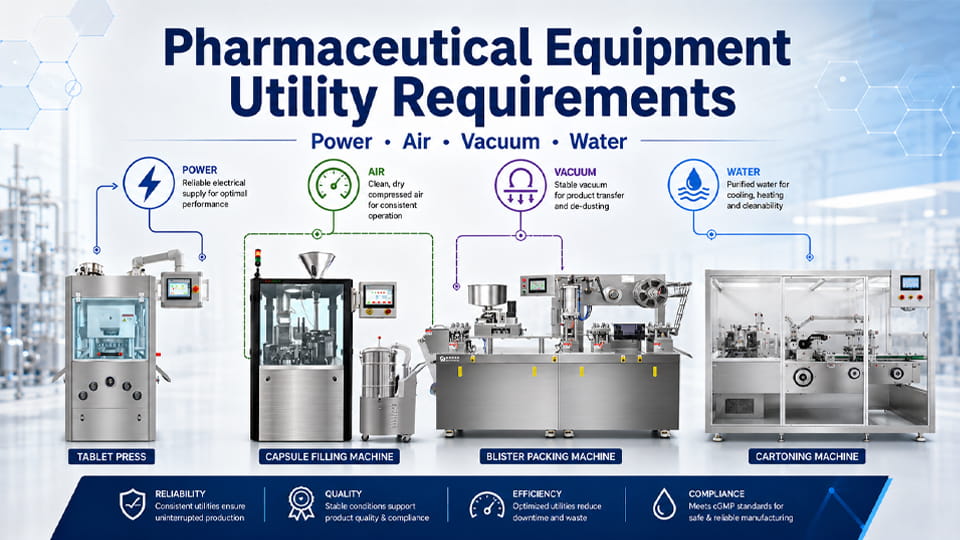
Buying 제약 기계 is not only about speed, 정확성, 오토메이션, and machine size. Before the equipment reaches your factory, you also need to know whether the site can support it.

That means checking the pharmaceutical equipment utility requirements: 전력, 압축 공기, 비어 있는, 물, 냉각, exhaust, and any process-specific services such as steam or nitrogen.

A machine can be mechanically perfect and still fail to reach its rated performance if the voltage is wrong, air pressure drops during peak production, vacuum capacity is undersized, or cooling water is too warm. For procurement, 공학, and production teams, utility planning should start before the purchase order—not during installation.

주요 시사점

  • Confirm voltage, 빈도, phase, installed power, and peak demand rather than checking voltage alone.
  • For compressed air, specify pressure and flow, plus required air quality at the point of use.
  • For vacuum, check both vacuum level and pumping capacity.
  • Do not treat cooling water, potable water, 정제수 (PW), and Water for Injection (WFI) as interchangeable.
  • Size shared utilities for simultaneous and peak demand.
  • Put agreed utility requirements into the URS and supplier utility sheet before FAT, shipment, 앉았다, and qualification.

Pharmaceutical equipment utility requirements for power, 압축 공기, vacuum and water


What Are Pharmaceutical Equipment Utility Requirements?

Pharmaceutical equipment utility requirements are the site services a machine needs to operate as designed. Electrical power is almost universal. Depending on the machine and process, you may also need compressed air, 비어 있는, 냉각수, process water, exhaust, 증기, 질소, drainage, or controlled environmental conditions.The exact list depends on the equipment, 프로세스, 옵션, 용도와 용도.

Not every utility is automatically a critical utility in the GMP sense. The key question is whether the utility can affect product quality, process performance, or contamination risk.

FDA Q7 identifies utilities such as steam, gas, 압축 공기, 난방, ventilation, and air conditioning as systems that should be qualified and appropriately monitored when they can affect product quality. It also addresses ventilation, 여과법, exhaust, 먼지, 습기, 온도, pressure control, and water suitability.

WHO guidance follows the same intended-use principle: utilities such as HVAC, 물, 질소, and compressed air should be suitable for their intended purpose and should not negatively affect product quality or become a contamination source.

For buyers, the practical point is simple: Machine requirements and plant utility capability must match before installation.


Why Utility Requirements Matter Before Installation

Utilities directly affect equipment performance and product quality. Utility mismatches often happen because procurement, 생산, 공학, and validation teams focus on different parts of the project. 그만큼 FDA’s GMP guidance (Q7A) explicitly states that “all utilities that could affect product quality (예를 들어, 증기, gas, 압축 공기, 난방, ventilation, and air conditioning) should be qualified and appropriately monitored”. 다시 말해서, if your compressed air or water supply fails, it can stop the machine or even contaminate the product. 예를 들어, inadequate compressed air filtration could introduce oil or microbes into capsules or blister packages. 비슷하게, voltage that is too low or a clogged air line can cause motors and valves to underperform.

Early utility confirmation helps prevent three costly outcomes:

  • facility modifications after equipment purchase;
  • delayed SAT and qualification;
  • equipment that cannot achieve rated performance under actual site conditions.

This is also why utility planning belongs much earlier in the equipment lifecycle than many buyers expect. During installation (SAT/IQ), utilities are a major focus. A Jinlu Packing equipment installation checklist explicitly verifies “utilities (전원 전압, 공압, 물, 등.)” against the machine’s specifications. In Site Acceptance Testing (앉았다), engineers will 실제 전압을 측정, 공기압/유량, water temperature, 등. from the facility supply to confirm they stay within the ranges specified by the machine. 요컨대, matching utilities to the equipment spec is vital to avoid surprises: a machine cannot run at full speed or may break if, 말하다, the plant air is only 3 bar instead of the required 6 bar, or if the motor is on the wrong voltage.


Core Pharmaceutical Equipment Utility Requirements

Electrical power: 전압, phase, 빈도, and load

Start with the pharma equipment power requirements stated on the final data sheet—not a specification copied from another model.

Confirm voltage, 하나의- or three-phase supply, 빈도, installed/rated power, maximum demand, main connection, and any separate supply for auxiliaries. Export equipment can often be configured for different markets. 예를 들어, JinLu’s NJP-2600D capsule filler lists 220/380 다섯, 50/60 Hz customizable power and 8.0 kW total power; its DPP-260R blister machine lists 380/220/110 다섯, 50/60 Hz and 5.5 kW. These examples show why buyers should never assume one “standard pharmaceutical voltage.”

Also separate installed power from normal operating consumption. Installed or rated power is useful for electrical infrastructure planning, but actual demand changes as heaters, 모터, 진공 펌프, 컨베이어, and optional modules cycle. 물어보세요 pharmaceutical equipment supplier for maximum/peak demand and expected running load where available. Final cable, breaker, 보호, 접지, and isolation design should follow the destination country’s electrical rules and the project’s qualified electrical design.

핵심 사항:

  • Verify the required supply voltage (다섯), phase (1φ/3φ) and frequency (HZ) matches your plant.
  • Confirm power (kW or horsepower) and breaker size on the equipment spec. 예를 들어, 에이 7 kW machine might need an 11 kW circuit for startup.
  • Check if neutral or ground connections are needed.
  • Ensure the electrical panel and wiring can handle the total load plus a margin.


Compressed air: pressure is only half the specification

Pneumatic cylinders, 밸브, grippers, reject devices, cleaning functions, and product-handling mechanisms may all depend on compressed air.

How much compressed air does pharmaceutical equipment need?
There is no universal pharmaceutical-machine air requirement. Specify both operating pressure—usually stated in bar or MPa—and consumption in NL/min, L/분, Nm³/h, or another clearly defined reference condition. Two machines can require the same pressure but very different flow, so compressor sizing from pressure alone is unreliable.

Air 품질 matters separately from pressure and quantity. ISO 8573-1:2010 classifies compressed-air purity by particles, 물, and oil; as of August 2026, that edition remains published while a revision is under development. ISO does ~ 아니다 prescribe one universal purity class for every pharmaceutical application, so the required class should be based on intended use and contamination risk.

Specify filtration, allowable particles, total oil, 수분, 그리고 pressure dew point (PDP) where relevant. PDP describes the temperature at which moisture would condense at system pressure; a lower PDP means drier compressed air. For air that can affect exposed product or critical surfaces, establish point-of-use quality requirements and verification. FDA inspection guidance specifically discusses reviewing compressed-air systems and point-of-use particulate filtration in relevant pharmaceutical operations.

Should it be oil-free? 때때로, but “oil-free compressor” should not replace a measurable air-quality specification. Define acceptable oil at the point of use, evaluate product-contact risk, and use suitable drying, 여과법, 모니터링, and qualification. The goal is controlled delivered air—not simply a compressor label.

핵심 사항:

  • Provide the specified pressure (bar) and ensure adequate flow (SCFM or NL/min) at peak usage. Sum flows of all machines plus 10–20% headroom.
  • Use oil-free compressors (Class 0 in ISO 8573) and coalescing filters to remove oil/mist.
  • Include refrigerated or membrane dryers to achieve a low dew point (often ≤–40 °C).
  • Install appropriate filtration (particulate and microbial) near the machine.


진공: level and flow are different

에이 pharmaceutical vacuum system may support 캡슐 분리, vacuum-assisted powder dosing, blister or material handling, suction pickup, product transfer, or dust removal. 진루의 NJP-2600D capsule filling machine, 예를 들어, uses a vacuum pump for capsule cap/body separation.

Always ask for two parameters:

Vacuum level tells you how low a pressure, or how much differential pressure, the process requires. Vacuum flow/pumping speed tells you how much gas the system can remove over time. Pump manufacturers therefore publish them separately; 그들, 예를 들어, specifies both pumping speed in m³/h and achievable pressure for its vacuum equipment.

A built-in pump is simple and keeps one machine relatively independent. A central system can reduce the number of pumps and centralize maintenance, but pipe losses, simultaneous demand, contamination segregation, and failure consequences must be assessed. Ask the machine supplier for required vacuum at the machine connection—not merely the pump’s nameplate rating.

핵심 사항:

  • Ensure a vacuum pump or central vacuum system can supply the needed flow rate at the specified pressure. (Sum the required CFM of all machines if they run concurrently.)
  • Check if the machine needs dry or oil-free vacuum (for dust-sensitive processes, dry pumps are preferred).
  • Provide a vacuum tank or surge capacity if multiple machines use vacuum at once.
  • Connect gauge and safety measures (예를 들어. overflow protection) to avoid tank collapse or cross-contamination.


물: start with intended use

What water does pharmaceutical equipment require?
Water quality depends on what the water does. Closed-loop cooling water, potable water, 정제수, and WFI are not interchangeable specifications. Determine whether water contacts product or product-contact surfaces, supports cleaning or processing, or only removes heat; then assign the appropriate quality, 온도, 압력, 흐름, and monitoring requirements.

WHO states that the appropriate pharmaceutical-water grade should be selected according to the intended application, 제품, and manufacturing stage; WFI is associated with specific higher-risk uses rather than every pharmaceutical machine. FDA Q7 similarly requires process water to be suitable for its intended use.

This is especially important for pharmaceutical equipment water requirements. Machine cooling water may simply circulate through a heat exchanger or cooling plate and never touch the product. FDA Q7 nevertheless requires heating fluids and coolants to be controlled so they do not adversely contact or affect product.

Cooling/chiller, 증기, and exhaust

에이 블리스 터 패커, coating system, or other heat-generating equipment may require cooling water or an external chiller depending on design. Before selecting a chiller, obtain required inlet temperature, 흐름, 압력, heat-rejection load, water/glycol compatibility, and connection size. Do not size it only from the machine’s electrical kW.

Steam is not a standard utility for every packaging machine. It becomes relevant in particular heating, 청소, 멸균, 코팅, or process systems. When steam can affect product quality, FDA and ISPE treat it as a utility requiring appropriate control.

마지막으로, do not forget dust extraction and exhaust. 정제 압축, 캡슐 충전, 육아, and powder handling can generate dust loads requiring local extraction or containment. FDA Q7 calls for adequate ventilation, 여과법, and exhaust where appropriate, including control of dust and cross-contamination risk.

핵심 사항:

  • Clarify if the water is for process (예를 들어. product contact or cleaning) or only for equipment cooling. Use potable water for cooling and CIP, PW/WFI for any direct product use.
  • Provide the required pressure (예를 들어. 30–50 psi) and flow (L/min or GPM) at the machine. Install a drain with air break to avoid back-siphonage if needed.
  • If a chiller is needed (for low temperature), ensure it is sized to handle the machine’s heat load (consult manufacturer).


Other Utilities & 서비스

Beyond the four main utilities, consider these common services:

  • Clean Steam: High-purity steam (fed by PW or WFI) is often needed to sterilize equipment or cylinders. It must be “dry” (minimal moisture carryover). 예를 들어, experts advise using WFI and stainless-steel piping to generate clean steam, validating its dryness fraction during qualification.
  • Nitrogen (N₂): Used for blanketing, pressurizing, or pneumatic conveying (예를 들어. pillow pack filling). 고순도, filtered nitrogen (일반적으로 99.9%) is required to avoid introducing moisture or particulates. 안전: ensure proper venting or O₂ monitoring if large volumes are used.
  • HVAC/Cleanroom Air: The room’s HVAC is a utility for the process environment. Proper temperature, humidity and cleanliness (HEPA/ISO class) are critical for some equipment (예를 들어. steriles or certain packaging operations). 예를 들어, guidelines note HVAC must have HEPA filtration and control particle counts, per the cleanroom class. If equipment requires a specific cleanroom (예를 들어. ISO 7 태블릿용), the HVAC system must meet those specs.
  • 먼지 수집 / 추출: Solid-dosage machines (태블릿 먼지 제거기, 폴리셔) may require a dust-extraction line or vacuum vent to capture powders. Check if the equipment includes a connector for local exhaust; otherwise plan a duct to a collection bag or central dust collector.
  • Drainage & Compressed Gases: Don’t forget floor drains (for washdown/CIP) and any specialty gases (CO₂, compressed air in packaging). 예를 들어, some blister or pouch lines use filtered air or inert gas to create modified-atmosphere packages.


Utility Requirements by Pharmaceutical Machine

The following matrix is a planning tool, not a machine specification. “Common” means frequently encountered; “Model-dependent” means the final configuration, 제품, or process decides.

장비 압축공기 진공 물 / 냉각기 Exhaust / 먼지
태블릿 프레스 Required 흔한 Model-dependent Usually limited 흔한
캡슐 충전 기계 Required 흔한 흔한 Usually limited 흔한
블리스 터 포장기 Required 흔한 Model-dependent Model-dependent Model-dependent
Tablet/capsule counter Required Model-dependent Usually limited Usually no Model-dependent
포장기 Required 흔한 Model-dependent Usually no Usually limited
Coating machine Required 흔한 Model-dependent Common/process-dependent 흔한
과립기 / fluid-bed system Required 흔한 Process-dependent Process-dependent 흔한

Manufacturer data supports the variation rather than a single industry number: JinLu lists customizable electrical supplies across its 캡슐 충전 기계 그리고 물집 포장 기계, and publishes 6-bar compressed air for one tablet press and specific flow values for a capsule filler.

A useful supplier-facing example utility specification might look like this:

Utility Illustrative Requirement What Buyer Should Verify
380 다섯, 50 HZ, 3-phase Local supply, tolerance, 보호
Installed power 8 kW Peak demand and auxiliaries
Compressed air 6 bar at machine inlet Pressure during peak production
공기 소비 200 NL/분 Normal vs maximum flow
Air quality ISO 8573-1 class: TBD by URS Particles, water/PDP, 기름
진공 −60 kPa(g), 80 m³/h Required level 그리고 흐름
Cooling water 15–20°C, 5 L/분 Heat load, 압력, return temperature
Exhaust 500 m³/h Static pressure and filtration
Connections Supplier to define 크기, 옆, elevation, fitting

These are deliberately illustrative values, not specifications for any JinLu or third-party model. Final figures must come from the selected machine’s approved utility sheet. Real manufacturer sheets demonstrate how wide the values can vary.


How to Calculate Utility Capacities

For a new line, do not add every nameplate value blindly and do not size only for one machine.
For each utility, build a load schedule:
Design demand ≈ Σ (equipment demand × expected simultaneous-use factor) + justified reserve
Use the supplier’s maximum operating consumption where a machine can run continuously at that load. Identify intermittent users separately. Then test a worst credible production scenario—for example, 물집 기계, 카토너, 계수기, and pneumatic reject devices all operating while another line starts.


Installation/Buyer Checklist

Before installation, verify all utilities at the site match the equipment’s specs. A checklist might include:

  • 전기 같은: Check supply 전압, phase, and frequency match each machine’s nameplate. Confirm breaker/fuse sizes and cable gauges are adequate. Verify a suitable power point or panel with proper earthing.
  • 압축공기: Verify the plant compressor can provide the required pressure (typically 5–6 bar) and flow. Ensure appropriate filters/dryers are installed for oil-free, dry air. Provide a flexible hose or fixed line connection with regulator.
  • 진공: Confirm the vacuum system (central line or pump) can meet the machine’s vacuum level and flow. Check for vacuum take-off points or flanges at the installation site.
  • Water/Cooling: Ensure potable water is plumbed to any cooling or CIP connections at the required pressure (예를 들어. 30–50 psi). If a chiller is needed, confirm its capacity and that supply/return lines are in place. Check that there is a drain with an air gap for any wastewater.
  • 공간 & 환경: Verify adequate floor space, height clearance, and structural support for the equipment. Ensure ambient conditions (온도, 습기, 클린룸 클래스) meet the URS.
  • 부속품: Prepare additional utilities if needed (예를 들어. clean steam supply for sterilizers, compressed N₂ for special packaging). Arrange dust capture or explosion venting if handling powders.
  • 우르스 & 선적 서류 비치: Cross-check the URS/Specification against site conditions. Have equipment manuals or utility requirement sheets available. 예를 들어, Jinlu’s SAT documentation suggests verifying “installation qualification” items like utility hookups.

예: Before shipping, a supplier may provide an Equipment Specification Sheet listing “Air: 6.0 bar, 200 NL/분; 진공: –60 kPa; 힘: 380VAC 3-phase, 10 kW.” Use this to set up circuits and piping. During installation IQ, measure each supply to confirm it meets those specs.


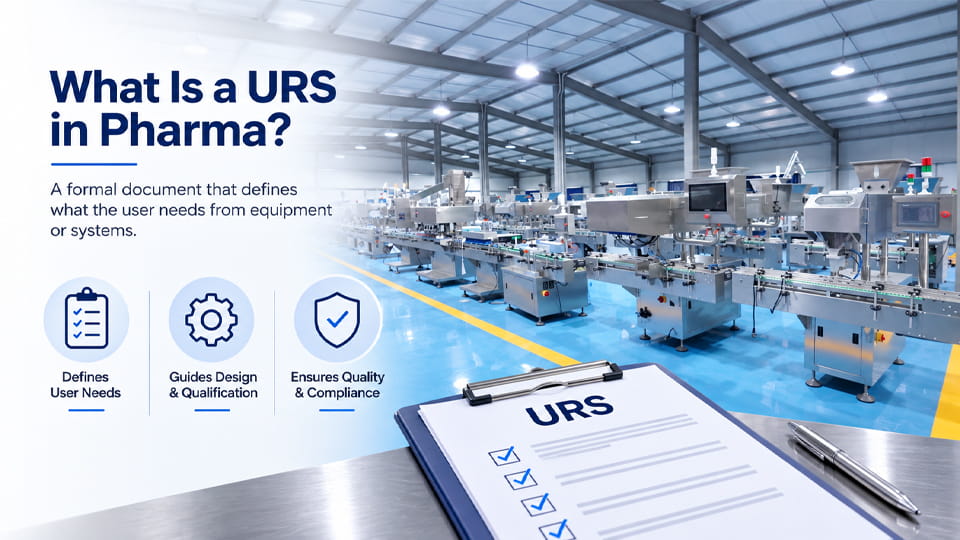
Utilities in the URS (사용자 요구 사항 사양)

A thorough URS should explicitly list all required utilities and conditions. Under the “Utilities and Environment” section, specify exact values (예를 들어. “Compressed air: 6.0 bar ±0.2, 100 NL/분, ISO 8573‑1 Class 1.0. 전기 같은: 400 다섯, 3-φ, 50 HZ, 15 kW.”). 규제 지침 (EU GMP 부속서 15) requires verifying URS requirements during Design Qualification. 실제로, including clear utility specs in the URS/contract drawings forces both buyer and vendor to agree on needs up front. It also makes IR/WH/PQ testing straightforward – each utility hookup can be traced back to a URS item.


피해야 할 일반적인 실수

  • Vague Specs: Simply requesting “oil-free compressed air” without setting a particle or oil limit can lead to ambiguity. Specify ISO classes or specific mg/m³ values. 비슷하게, saying “sterile air” doesn’t define dew point, filter rating, or verification test – spell out exact requirements.
  • Ignoring Diversity: Assuming all machines will not run at once can be risky. Poor air or power supply if loads align unexpectedly. Always size conservatively with diversity factors and overhead.
  • Mixing Utilities: Never use non-potable or untreated water for CIP unless approved. (예를 들어, using softened city water as “purified” is invalid – minimum standards apply.) 또한, don’t tie in compressed air from a general shop line without filtration – a pharma line often needs its own filtered supply.
  • Overlooking Quality Testing: Utilities should not just be connected – their quality must be tested. Omitting validation (예를 들어. microbial check on water, dewpoint test on air) is a common audit finding. FDA inspectors routinely note failures in utility qualification (~와 같은 “Poor Compressed Air Quality”) when purity tests are skipped.
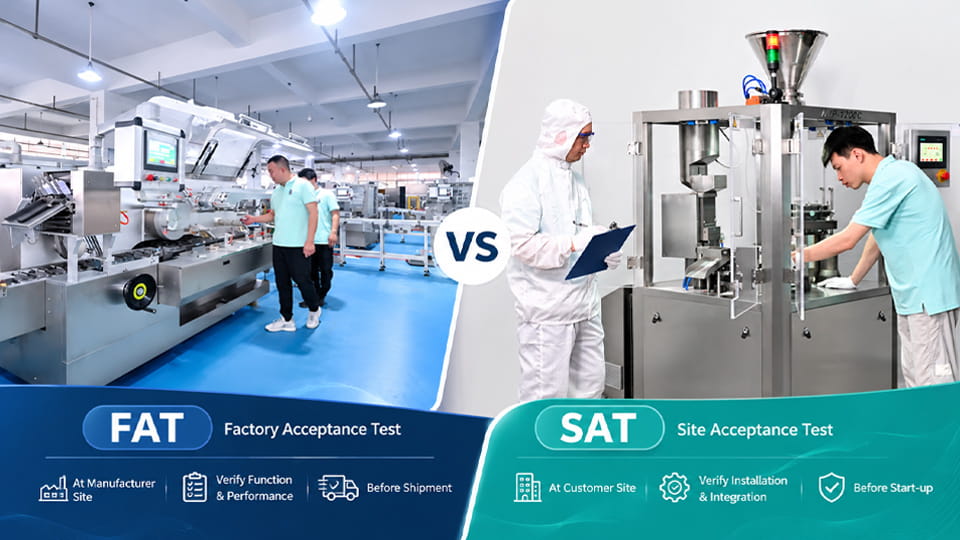
  • Delayed Checks: Waiting until after installation to discover wrong utilities can delay startup by months. 대신에, verify during 지방/토. A thorough FAT at the vendor site and SAT on-site (with utilities live) can catch mismatches early.


Confirming Utilities with the Supplier

Always confirm the utility list with your vendor before ordering. Suppliers should provide a Utility Requirement Sheet or dataplate for each machine. Review these in a kickoff meeting or add them to the purchase order. 예를 들어, request the supplier to include utility specs in the Vendor Data (as part of FAT). During SAT, physically verify each hookup: measure the site’s voltage, 압력, and flow against the supplier’s specs. Keep documented sign-off (often as part of the IQ report) that “utilities are connected and within spec” – this is a GMP expectation (IQ typically includes checks of power, pneumatic, water connections).

If anything doesn’t match (예를 들어. the site only has 200 V but the machine needs 400 다섯), resolve it immediately – either provide a transformer or have the supplier reconfigure the machine. 기억하다, utility mis-match issues are easier to fix before production starts than after.


결론 & 다음 단계

요약, careful utility planning is as important as choosing the right machine. An equipment line can only run at its intended speed and quality if 힘, 공기, 비어 있는, 그리고 물 are available at the correct specifications. Use this guide’s tables, checklists and formulas to estimate your needs and include them in the URS. Work with your equipment vendor (such as Jinlu Packing) to document each utility requirement and verify it on-site.

Ready to simplify utility planning? Jinlu Packing’s experts can advise on power and utility hookups for all our 제약 포장 기계. Visit Jinlu’s product pages – for example the 캡슐 충전물 기계, 정제 프레스기, 블리스 터 포장기, 계산 기계, 포장 기계, 향 주머니 포장 기계 또는 미리 메이드 파우치 포장 기계 – for utility specs and contact information. For further assistance, get in touch with our team to ensure your facility is utility-ready for a smooth installation and compliant operation.


FAQs About Pharmaceutical Equipment Utility Requirements

What are the main utilities needed for pharmaceutical packaging machines?

The basics are electrical power, 압축 공기, 비어 있는, and water/cooling. Many packaging lines also use clean steam (for sterilizers), inert gas (N₂ for pillow packs), and dust extraction. Regulatory guides (예를 들어. FDA Q7A) explicitly call out steam, gas (air/nitrogen), 공조, 등. as utilities that must be qualified.

What power supply do pharma machines require?

Most equipment is 3-phase industrial power. Commonly 380–400 VAC (50 HZ) 또는 480 VAC (60 HZ) with a neutral or ground. Some smaller units can run on single-phase 220–240 VAC. It is important to confirm the exact voltage and phase (Jinlu machines often support 380/220/110 VAC 50/60 HZ). Also check if the machine is 50 Hz vs 60 Hz or if it can accept both (as many can).

How much compressed air does packaging equipment need?

It depends on the machine and number of units. A single blister or cartoning machine might need on the order of 50–200 NL/min (at ~5–6 bar). A capsule filler or counting machine might use 30–100 NL/min. The pressure is usually ~5–6 bar (0.5–0.6 MPa). Check each machine’s spec for flow (often given in NL/min or SCFM) 그리고 압력. Sum them for your line (remember diversity factor). Always provide a little extra volume in the plant’s compressor system to meet peak demand.

What compressed air quality is required?

Pharmaceutical standards require oil-free, dry air. Typically ISO 8573-1 Class 2 (or better) is recommended for air in pharma areas. This means essentially 0 기름 (Class 0 인증), water dew point ≤–40 °C, and tight particle filters (예를 들어. 0.01 μm). Specify these in your URS. 예를 들어: “Compressed air: 6.0 bar, 99.995% oil-free, dew point –40 °C, 0.01 µm filter at point-of-use” is a clear requirement.

Do packaging machines require purified water or WFI?

Generally no, unless it’s a sterilized process. For rinsing or cooling, regular potable water is acceptable. FDA guidance says at minimum process water must meet WHO potable (drinking water) 표준. Use higher-quality PW or WFI only if the equipment is directly involved with injectable product or if clean steam is generated from it. Always clarify in the URS: “Water supply: potable (NSF-approved) for cooling; no water contact with product.”

How should I include utilities in my URS?

Dedicate a section to “Utilities and Environment” and list exact numbers. 예를 들어: “Electric: 400 VAC, 3φ, 50 HZ, 15 kW. Air: 6.0 bar ±0.2, 100 NL/분. 진공: –70 kPa (abs). 물: 30 psi, 20 L/min.” The Jinlu URS guide emphasizes that utilities (전압, 공기압/유량, 냉각수, 비어 있는, 등.) must be specified. Include these requirements in the purchase order so the supplier can guarantee them at FAT/SAT.

Who is responsible for checking utilities?

Ultimately the buyer/facility must ensure site utilities meet specs, but the supplier should document what is needed. FAT 중, the vendor may simulate utilities; but SAT/IQ is where you (사용자) confirm with real supplies. GMP requires documented IQ tests for utilities. 실제로, maintenance/engineering teams prepare the site, and QA or engineering will verify utilities on installation day.

What if utilities don’t match the machine requirements?

Any mismatch is a “nonconformance.” For example, if site power is wrong, you’ll need an electrician to modify the panel (or the supplier to change transformers). If air pressure is low, you may need a booster or regulator. Do not start the machine in these conditions – it may not run or could damage equipment. Fix the issue or get the supplier to adjust the design. 이상적으로는, such problems are caught in SAT and resolved before commissioning.

Are there any special utility considerations for pharmaceutical machines?

예. Use food-grade oils in vacuum or pneumatic systems; ensure all lubricants are compatible with pharmaceutical use. Label utility lines clearly (pipe labeling helps avoid mistakes). Provide emergency stops and ensure utility shutoffs are accessible in a cleanroom. Avoid deadlegs in piping (no stagnant zones). And remember utility quality checks are part of GMP – e.g. FDA inspectors will look at your compressed air certificate and water tests.


참고자료:
1.모범 사례 가이드: Critical Utilities GMP Compliance —— ispe
2.Critical Utilities —— ispe
3.Q7A 활성 의약품 성분에 대한 우수제조관리기준(GMP) 지침 —— 우리를. 식품의약품안전청
4.Cleanrooms and associated controlled environments —— ISO 14644-1:2015

이 기사를 공유하세요:
사진 사소한 푸
사소한 푸

사소한 푸, 진루패킹 창업자, 가져오다 20 제약 기계 부문에 대한 다년간의 전문 지식. 그의 리더십 아래, Jinlu는 디자인을 통합하는 신뢰할 수 있는 공급업체로 성장했습니다., 생산, 그리고 판매. Petty는 고객이 제약 포장의 복잡성을 헤쳐나갈 수 있도록 깊은 산업 지식을 공유하는 데 열정을 갖고 있습니다., 장비뿐만 아니라 제품도 받을 수 있도록 보장, 생산 목표에 맞춘 진정한 원스톱 서비스 파트너십.

목차

문의 보내기

답장을 남겨주세요

귀하의 이메일 주소는 공개되지 않습니다. 필수 입력란이 표시되어 있습니다 *

무료 견적 받기

*우리는 귀하의 기밀성을 존중하며 모든 데이터는 보호됩니다. 귀하의 개인정보는 JL 솔루션을 위해서만 사용 및 처리됩니다..