×

온라인 서비스

💬 왓츠앱: +86 1801179332
💡
  • 블로그
  • Dietary Supplements vs Medications: Understanding the Differences in Manufacturing, 규정 준수, 및 포장

Dietary Supplements vs Medications: Understanding the Differences in Manufacturing, 규정 준수, 및 포장

At first glance, dietary supplements and medications can look very similar. Both may be sold as 정제, 캡슐, 분말, 구미, 또는 액체, and both often use comparable manufacturing and packaging processes. 하지만, the similarities largely end there.

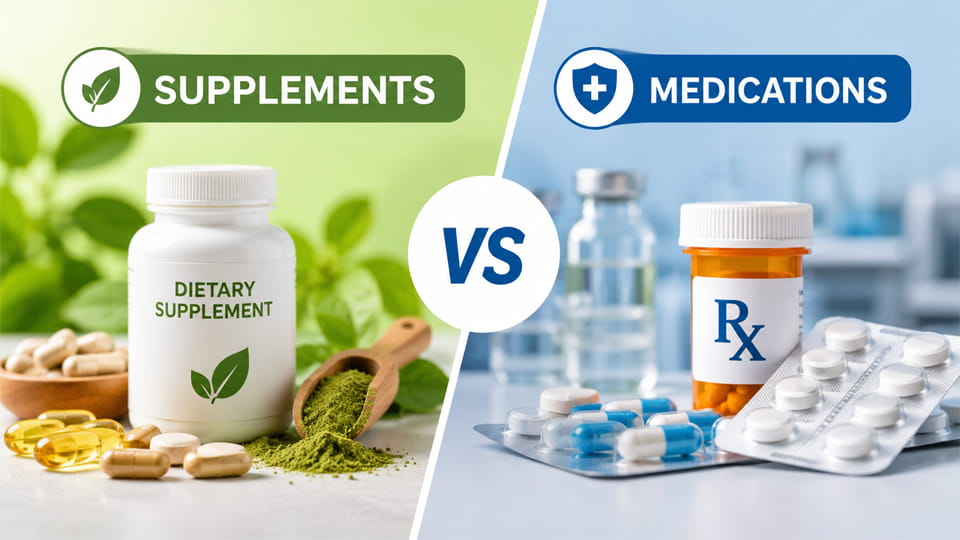
When comparing Dietary Supplements vs Medications, the biggest differences lie in their intended use, 규제 요구 사항, quality standards, and compliance obligations. 식이 보충제 are designed to supplement the diet and support overall health, ~하는 동안 medications are intended to diagnose, 대하다, prevent, or manage diseases. Because of these different purposes, manufacturers must follow different rules for formulation, 생산, 확인, 라벨링, 그리고 포장.

For supplement and pharmaceutical manufacturers, understanding these distinctions is essential when selecting production equipment, designing packaging lines, and ensuring regulatory compliance. 이 가이드에서는, we’ll explore the key differences between dietary supplements and medications and what they mean for modern manufacturing and packaging operations.

Dietary Supplements vs Medications


What Are Dietary Supplements?

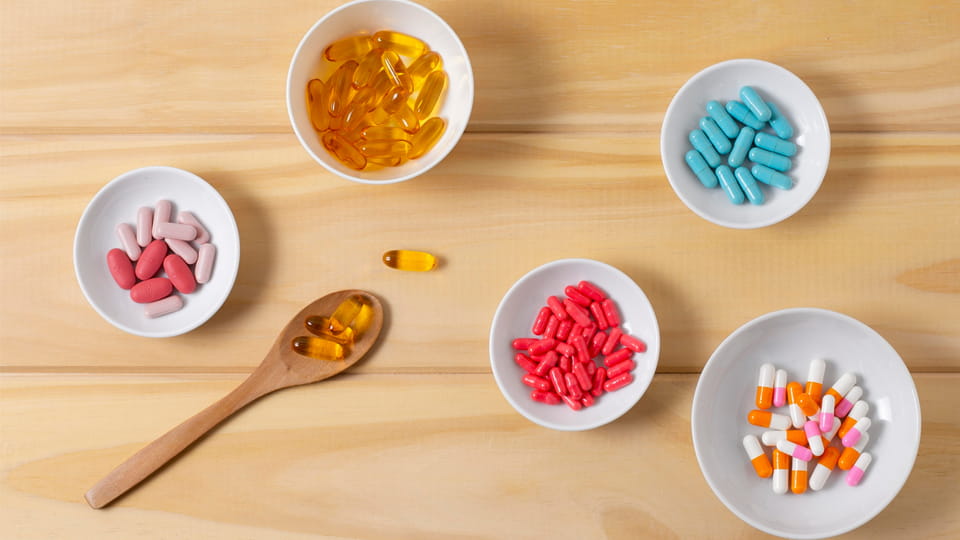
식이 보충제 (라고도 기능식품 또는 식품 보충제) are products taken by mouth to add nutritional value. By US law (DSHEA 1994), a supplement must contain one or more “dietary ingredients” such as vitamins, 탄산수, 허브, amino acids or other botanicals, intended to 보충 the diet. Examples include multivitamin tablets, 생선 기름 캡슐, 약초 추출물, or protein powders. EU에서는, the term 식품 보충제 사용된다: they are “concentrated sources of nutrients or other substances” in dose form (캡슐, 분말, 액체, 등.). Supplements can provide nutrients missing from the diet or support general health, but they are not authorized to claim disease treatment or prevention. Labels typically bear a Supplement Facts panel and disclaimers (예를 들어. “not intended to diagnose, 대하다, 치유법, or prevent any disease”). EU law harmonizes allowable vitamins/minerals in supplements (Directive 2002/46/EC) and requires risk assessment of novel ingredients by EFSA.

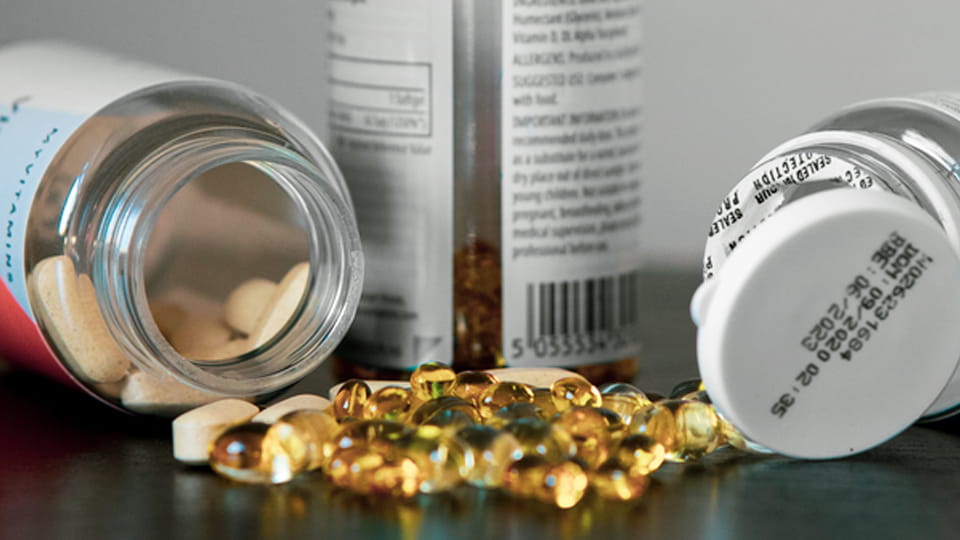
Dietary Supplements in dose form (캡슐, 분말, 액체, 등.)

Key points for supplements: no prescription needed; regulated as foods; labeling must list ingredients and suggested use; manufacturers must follow FDA’s dietary cGMP rules (21 CFR 111) to ensure identity, 청정, and strength of products. FDA does not review supplements for safety or efficacy before sale, so responsibility rests with the maker (who must notify FDA of any serious adverse events, 아래를 참조하세요).


What Are Medications (약제)?

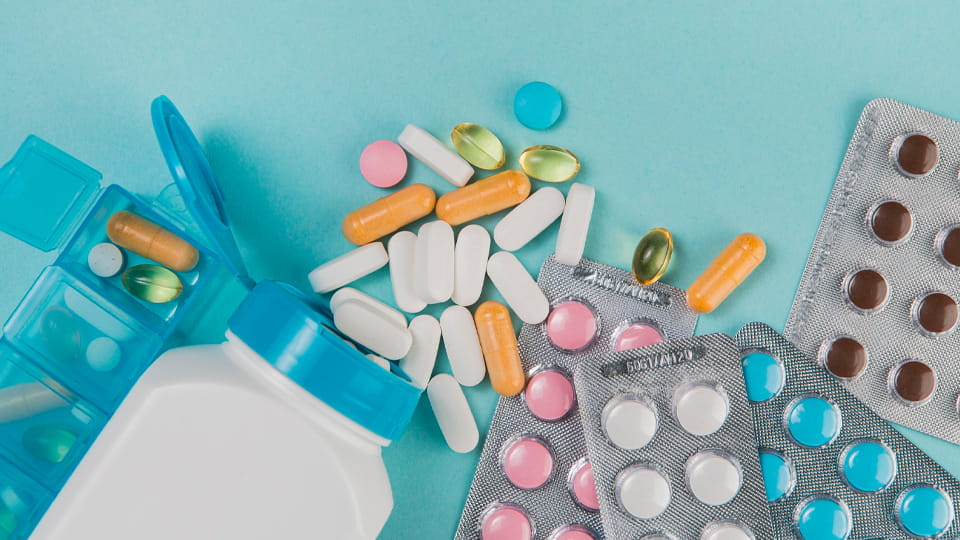
Medications (약제) include prescription drugs and over-the-counter (OTC) drugs used to treat, 치유법, mitigate or prevent human disease. FDA defines a 의약품 as any substance intended for use in diagnosis, 치유법, mitigation, treatment, or prevention of disease, or to affect body structure/function. This includes both brand-name and generic pharmaceuticals, 생물학제, and certain OTC remedies (진통제, 제산제, cough syrups, 등.). 대조적으로, dietary supplements specifically exclude substances marketed for disease treatment.

Medications must meet strict regulatory standards. 미국에서는, new drugs require a New Drug Application (NDA) or Abbreviated NDA (for generics), backed by clinical trial data demonstrating safety and efficacy. The FDA’s Center for Drug Evaluation and Research (CDER) monitors ~11,000 marketed drugs, enforcing 현재 우수제조관리기준 (CGMP) for pharmaceuticals (21 CFR 210–211) 일관된 품질을 보장하기 위해. EU에서는, medicines must be authorized by EMA or national agencies, and manufacturers must comply with EU GMP (as coordinated by EMA) to ensure high quality and compliance with the approved dossier. Drug packaging typically requires features like tamper-evident seals, child-resistant containers (Poison Prevention Act), serialized tracking (DSCSA, EU FMD), and extensive labeling (NDC 코드, 지침, 만료) that are more stringent than supplements.

Medications (약제) used to treat, 치유법, mitigate or prevent human disease

Key points for medications: FDA/EMA approval required before marketing; clinical trials and technical dossiers; strict cGMP compliance; regulated labeling (Drug Facts); and both Rx and many OTC drugs require robust safety/quality controls.


Supplements vs Medications: 주요 차이점

Purpose and Claims

The core difference is intent. Medications are specifically intended to diagnose, 대하다, or cure diseases. Supplements are intended to supplement the diet. 따라서:

  • Medications: Can claim to relieve symptoms or cure conditions. Claims are backed by evidence (clinical trial data) and must be approved by FDA. The product is evaluated for efficacy.
  • 보충제: Can only claim to “support” or “maintain” normal body functions (예를 들어. “calcium builds strong bones”), never to treat a disease. Any disease claim (like “cures arthritis”) would classify it as a drug. Companies don’t submit efficacy data to FDA for supplements; they only need to ensure claims are truthful. As NIH notes: “Supplements are not medicines and are not intended to treat, diagnose, mitigate, prevent, or cure diseases”.

Regulatory Approval Process

  • Medications: Must go through a defined pathway. Prescription drugs require an NDA with full clinical data. OTC drugs might conform to a monograph or an OTC drug application. The process includes FDA review of clinical safety and effectiveness. Only after approval can marketing begin. Packaging and labeling must match the approved labeling.
  • 건강보조식품: Governed by DSHEA. No pre-market FDA review is required (unless there is a new dietary ingredient). Manufacturers self-affirm 안전 (withholding marketing of any known unsafe product) and notify FDA of new ingredients. Labeling claims are not pre-approved; only structure/function claims are allowed, with a required disclaimer. The NIH explains: “FDA regulations for dietary supplements are different from those for prescription or over-the-counter medicines. Medicines must be approved by FDA before they can be sold or marketed. Supplements do not require this approval.”

Scientific Evidence & Safety Testing

  • Medications: Proven by robust science. Drugs typically undergo multiple phases of clinical trials (Phase I–III) to demonstrate safety and efficacy for the intended use. Each lot of drug product is tested (힘, 불순물, sterility if needed) before release. FDA can inspect manufacturing sites frequently.
  • 건강보조식품: Safety is typically demonstrated through historical use and laboratory testing. No clinical trials are legally required (though some companies do conduct small trials). Finished products may undergo analytical testing to verify active ingredient levels and contaminants. Manufacturers often use third-party labs or certifications to bolster credibility. The FDA can inspect supplement facilities, but the emphasis is on identity/purity tests. As one source states, supplements “are exempt from FDA safety and effectiveness regulations” until/if concerns arise. If FDA later deems a supplement unsafe, it can remove it from the market or ask for a recall.

Manufacturing Standards

  • Medications: Must comply with 21 CFR 210 and 211 (CGMP). This includes validated processes, 변경 제어, environmental monitoring, strict QA/QC, 그리고 더. Facilities often have controlled environments (헤파 여과, 클린룸) especially for sterile or high-potency products. Everything is documented and audited.
  • 건강보조식품: Follow 21 CFR 111 (DS GMP). These rules cover quality control, sanitation, 장비 유지 보수, and record-keeping. The goal is to prevent mix-ups and ensure consistent dosage and purity. 21 CFR 111 is slightly less rigid; 예를 들어, process validation is required, but the scope is narrower (as supplements are not drugs, they don’t require proof of efficacy). 아직, FDA has enacted DS GMP specifically “to help ensure the identity, 청정, 힘, and composition” of supplements. 실제로, a supplement line might resemble a food manufacturing line with GMP overlays (예를 들어. stainless equipment, 금속 탐지, allergen controls), whereas a pharma line might use enclosed tablet machines, rigorous dust control, and airlocks.

라벨링

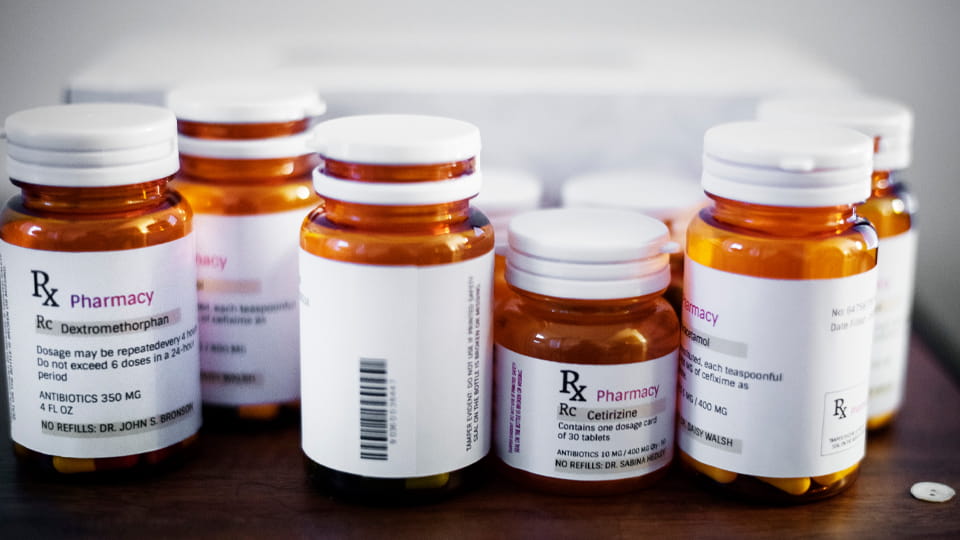
  • Medications: Labels follow a strict format (section headings, 경고, 복용량). Must include National Drug Code (NDC), drug facts (for OTC), 로트 번호, 만료일, indications, contraindications, side effects, 등. Prescription labels also require a Medication Guide for patient safety.
  • 보충제: Labels bear a “Supplement Facts” panel listing all “dietary ingredients” (비타민, 탄산수, 허브, 등.). They must list all active ingredient amounts and added “other ingredients” (필러, 바인더, 부형제). Health claims are limited to very general “structure/function” statements. There is no NDC or similar code for a supplement. If a supplement product includes a substance that was ever approved as a drug, it usually cannot claim to be a supplement (FDA excludes approved drugs from being marketed as supplements).

Pharmaceutical packaging labels

Packaging Requirements

  • Medications: Packaging must often be child-resistant and tamper-evident per the Poison Prevention Packaging Act (PPPA). For many pills, that means special safety caps on bottles. 물집 팩 may require perforations or seals. Child-resistant packaging is mandated for many drugs (예를 들어. 아스피린, 아세트아미노펜, iron supplements, prescription drugs). Drugs also require lot/serial numbers and expiration dates on packaging. In global markets, serialization requirements (unique barcodes on each saleable unit for traceability) are often required (예를 들어. EU 위조 의약품 지침, 미국 DSCSA). All this means medication packaging lines often include printing and verification stations, vision inspection for correct labels/closure, and equipment to insert serialized codes.
  • 보충제: Largely treated as foods. There are no federal requirements for child-resistant packaging on most supplements (with exceptions, like iron-containing vitamins sometimes). Tamper-evidence is still common (예를 들어. shrink seals or induction foil under caps) but usually by industry practice rather than law. Labeling requirements focus on listing ingredients, serving size, and daily values. Because supplements are “over the counter” by nature, their packaging tends to prioritize marketing (attractive bottles, UV protection for vitamins, 재밀봉 가능한 파우치) 그리고 비용 효율성. According to Amcor’s industry blog, supplement brands have “latitude in what constitutes safety” and often explore innovative packaging since their regulatory constraints are fewer.

Supplements bottles with induction foil under caps

Similarities: Shared Packaging Forms

Many dosage forms overlap between supplements and medicines. Both can be:

  • Tablets or Capsules: counted and filled into bottles or blisters. (예:. a fish oil capsule or a multivitamin capsule looks like a drug capsule.)
  • Pouches/Sachets: For single-dose powders or liquids (think powdered electrolyte drink vs a medicine powder pack).
  • Topicals or Liquids: Though topicals (크림) are more often drugs, supplements can also be liquids (예를 들어. herbal tonics). 두 경우 모두, filling machines and cappers apply.

From an equipment standpoint, the machines are very similar. A GMP-compliant counting/filling line that handles 50 mL vitamin bottles can often also fill pharmaceutical bottles of similar size (perhaps with minor adjustments). Blister lines for solid doses handle any pills. Rotating tablet presses 또는 캡슐 필러 on the upstream side produce the 복용 형태; downstream, the lines diverge little until labeling/inspection. The main differences in machinery come from production scale and regulatory features (예를 들어. more sophisticated inspection cameras on a pharma line).


Buyer Guidance: Selecting Packaging Machinery

장비를 선택할 때, focus on the product’s 체재, 용량, 그리고 규정 준수가 필요합니다:

  • 복용 형태: Start with the product. Solid tablets need a 태블릿 프레스; solid capsules need a 캡슐 필러. If the product is gummy or chewable, 에이 계산기 may work. Powders often use sachet or pouch fillers. Liquids use 액체 충전 라인 (for bottles or ampoules).
  • 처리량: Estimate batches per hour/day. If millions of pills are needed, high-speed rotary presses and automatic lines (예를 들어. 진루의 high-capacity Automatic Capsule Filling Machine) 필수적이다. For lower output, semi-automatic machines may suffice.
  • 완성: Decide how automated you want the line. Will you connect a press to a blister machine to a cartoner? Many suppliers (진루처럼) provide complete lines. Ensure equipment can interface (예를 들어. 안 자동계수기 can feed directly into a capping unit).
  • 규제 준수: Machines should meet relevant standards (FDA cGMP, EU GMP, CE마킹). 의약품용, 찾다 cGMP-certified design, sanitary features (drip pans, sealed guards), and ease of cleaning. For dietary supplements, food safety (예를 들어. FDA’s 21 CFR 111) 핵심이다, but some manufacturers also choose pharma-grade machines for flexibility.
  • 유연성 & 전환: Consider if you need to switch products/dosages. Machines with quick-clean or quick-change parts (for different capsule sizes or pouch sizes) save downtime.
  • Space and Utilities: Check the factory layout, 힘, 공기, and exhaust requirements. Tablet presses and fillers can be large and may need compressed air and refrigeration (for some liquids).
  • 서비스 & 지원하다: Choose a manufacturer that offers 기술 지원, 설치, 그리고 훈련. 그들, 예를 들어, provides on-site commissioning and a 3-year warranty on many machines. Verify spare parts availability and user manuals.
  • Cost vs ROI: Balance the machine cost against expected efficiency gains. Higher-speed machines cost more but may pay off with labor savings.

Tables below summarize key differences and suggest equipment per product type.

기인하다 건강보조식품 Medications (약제)
Definition/Use Nutrients/herbs to supplement diet Treat/diagnose/prevent disease
Approval Required No FDA pre-approval (DSHEA) FDA/EMA approval (NDA/ANDA/BLA)
Clinical Testing No mandatory clinical trials Rigorous trials for safety/efficacy
GMP Regime Dietary GMP (21 CFR 111) Pharma GMP (21 CFR 210–211, EU GMP)
라벨링 Supplement Facts; “not for treatment” disclaimer Drug Facts; includes indications, 복용량, side effects
Claims Structure/function claims only Specific therapeutic claims allowed
Packaging Control Standard food-grade; child caps if needed Mandatory tamper-evident/child-resistant closures; 직렬화
품질 테스트 Batch testing by maker (신원, 청정) Comprehensive QC (힘, 용해, 안정)
예시 제품 비타민, 탄산수, 허브, 아미노산 아스피린, 항생제, 호르몬, OTC analgesics


Product Form Typical Packaging Formats Recommended Machinery
정제 병 (세다 & 캡); 블리스 터 카드 태블릿 프레스; Coater; 계산 기계; Bottle Filler & Capper; 물집 기계; Cartoner
캡슐 병 (건조제와 함께); 블리스 터 카드 캡슐 충전물 기계; 계산 기계; Bottle Filler & Capper; 물집 기계; Cartoner
분말/과립 향낭/스틱 팩; Stand-up Pouches; 항아리 (tubs) Mixers/Granulators; Sachet/Stick-Packer; Premade Pouch Filler; Powder Jar Filler; 실러; Cartoner
액체 병 (dropper or cap); 앰플 Liquid Filling Line; 캡핑 기계 (child-resistant if needed); Labeler; Cartoner
구미/츄 물집 팩; 병 거미 예금자; 블리스 터 포장기; 계산 기계; Bottle Filler; Cartoner

Each cell lists both supplement and drug lines: the same machine can often handle both with minor adjustments. 예를 들어, 진루의 물집 포장 기계 can package vitamins, pills or gummy supplements just as they do pharmaceutical tablets.

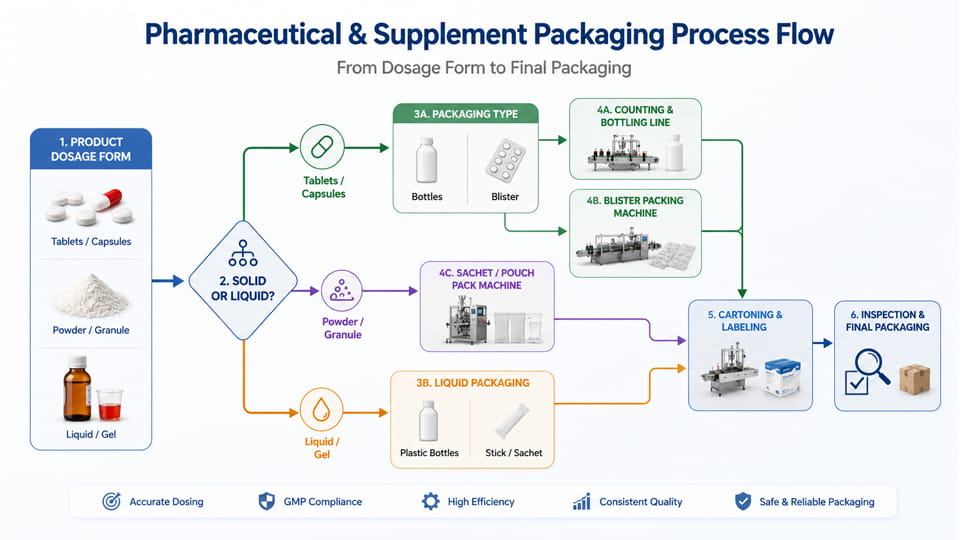
제약 & Supplement Packaging Process Flow

Mermaid Diagram: The flowchart above illustrates a simplified decision process. Start with the product form (solid tablet, 캡슐, 가루, 등.), use the appropriate production equipment (누르다, 막대, 믹서), then choose a packaging line. 병, 물집, 향 주머니, and cartons are the common endpoints.


Supplement vs Medication Manufacturing Processes

Both industries may use similar unit operations (mixing powders, 육아, 태블릿 압축, 캡슐 충전). 하지만, certain steps diverge:

  • 테스트: Drugs require release testing on every batch (용해, assay of active ingredient, sterility if needed). Supplements often test for active ingredient levels and contaminants, but frequency can be less rigid.
  • Facility: Pharma plants may have stricter environmental controls (iso-certified rooms for sterile products, 등.). Dietary supplement plants often resemble food plants, with bulk ingredient bins, 믹서, 태블릿 프레스, all GMP-cleanable.
  • 선적 서류 비치: Both need batch records, but pharma records are audited intensively; supplement records also required but enforcement is somewhat lighter.
  • 청소: Validation of cleaning procedures to prevent cross-contamination is more stringent in pharma due to drug potency.

Despite these differences, Jinlu’s expertise in pharma packaging means its equipment is suitable for supplements with minimal change. 예를 들어, our capsule counting machine lists “pharmaceutical and medical use, 태블릿을 계산하십시오, 캡슐, 의사, 등., 2-40mm, 산출 100 병/시간, 정확성 >99.98%”. That same machine can count 구미 비타민 or pet supplements as easily as pills.

Packaging Line Example (병입)

A typical tablet/capsule bottle line for supplements might include: bottle unscrambler → tablet/capsule counter → cap placer/torquer → induction foil sealer → labeler → inkjet coder → conveyor. For medications, the line might be very similar but enclosed in a laminar flow hood (for sterile/non-contaminated environments) and will include a vision system to check label and tamper-evidence. Jinlu’s counting line can integrate with capping and labeling equipment for a complete turn-key solution.

JL-16H 고속 카운팅 패킹 라인
JL-16H 고속 카운팅 패킹 라인

Packaging Line Example (Blister-to-Carton)

For high-speed pharmaceutical production, a blister machine (예를 들어. JL DPP-270Max) forms and seals blister sheets, which feed directly into a cartoner. The cartoner takes each blister card and inserts it into a printed carton box, then closes and sometimes seals the carton. This entire flow can run at several thousand units per hour. Supplement manufacturers often use similar lines for items like effervescent tablets or vitamins that are blister-packed. The machinery is largely the same (Our blister packing machines can improve productivity in packaging tablets, 캡슐…), but the cleanroom and inspection features may be scaled to meet GMP.

[jl_youtube src=”https://www.youtube.com/embed/1Bb_J6rluac”]


결론

Understanding the differences between dietary supplements and medications is key for equipment planners and production managers in the health products industry. While the active processing machinery (태블릿 프레스, 캡슐 필러, 물집, 계산 라인, 등.) is largely shared, regulatory demands differ: supplements fall under food/Dietary rules and rely on manufacturer-managed safety, whereas medications demand validated processes and regulatory approvals. When selecting packaging equipment, buyers should align machines to product form and regulatory needs: ensure GMP 준수, proper material handling, and any special features (어린이에게 저항하는, 변조 방지, 직렬화) required for drugs. A knowledgeable equipment partner can tailor solutions to each case.

By carefully matching product type to equipment—using resources like 진루 포장’s Capsule Filling Machines, 태블릿 프레스, Blister Packagers, Counting Lines, Sachet/Pouch Fillers, and Cartoners—manufacturers can build efficient lines that meet both market demand and regulatory standards. This synergy of process know-how and the right machinery ensures safe, compliant production whether you’re making supplements or medicines.


FAQs on Dietary Supplements vs Medications

What is the difference between dietary supplements and medications?

Dietary supplements are intended to supplement the diet and support overall health, while medications are designed to diagnose, 대하다, prevent, or manage diseases. Because of these different purposes, medications are subject to stricter regulatory approval, 테스트, and compliance requirements than supplements.

Are dietary supplements considered medications?

아니요. In most jurisdictions, including the United States, dietary supplements are regulated differently from medications. Supplements are generally classified under food-related regulations, whereas medications are regulated as drugs and must meet specific safety and efficacy requirements before entering the market.

Can dietary supplements and medications use the same packaging line?

종종 그렇습니다, with adjustments. If a line is built to cGMP (stainless, easy-clean, 등.), it can run either product type. You may need to change molds or settings. The main caution is regulatory: ensure supplements are labeled appropriately, and if switching to a drug, validate any sterilization/cleaning steps. Jinlu’s machines are multi-purpose – for example, a counting filler is said to be ideal for “almost all shapes of tablets and capsules”.

Do supplements need child-resistant bottles like medicine?

일반적으로, no – the Poison Prevention Packaging Act (PPPA) covers drugs and certain hazardous substances. 일부 보충제 (예를 들어. iron pills, which can be toxic to children) may fall under PPPA. Most vitamins and herbal pills do not legally require child-proof caps, but many manufacturers use them as a safety and marketing measure. It’s best practice to follow consumer expectations.

What doesGMP for supplements vs pharmaceuticalsreally mean?

Both have GMP, but supplemental GMP (21 CFR 111) is a subset of pharma GMP (21 CFR210/211). 예를 들어, supplements require identity testing of ingredients and some impurity testing, but do not mandate clinical validation of processes. 하지만, all GMP means you must keep things clean, record production data, and test products to ensure label claims. If FDA inspects a supplement line, they will check for proper cleaning, documented procedures, and test results just as they would in a drug plant. 의약품용, FDA expects additional layers: 검증된 방법, 안정성 연구, more rigorous environmental controls, 등.

How important is equipment validation for supplements?

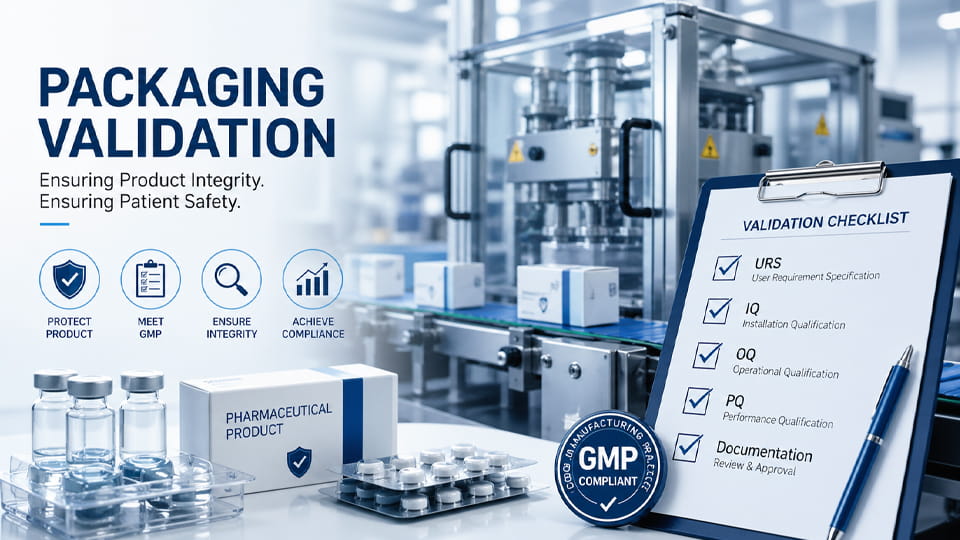
It’s still important. While supplement companies don’t file a report with FDA, they must still prove their product is what they say. This means equipment (like a tablet press or blister machine) should be qualified (IR/WH/PQ) to ensure it consistently produces the correct dosage form. At a minimum, USP or company standards would require weighing and content tests. Good Modern Quality Practices (MQP) in supplements increasingly mirror pharma, especially for export markets. 그들, 예를 들어, mentions compliance with “cGMP, CE, FDA, and EMA” for its pouch machines, indicating they design machines to meet those requirements.

What should a B2B buyer look for in packaging equipment for supplements?

주요 요인은 다음과 같습니다: machine speed vs expected volume, 유연성 (can it handle different bottle shapes or blister types?), ease of cleaning (스테인레스 부품, CIP), and automation features (like servo controls, HMI, 및 검사). Also consider after-sales service and spare parts. Jinlu highlights a 7-day delivery and 3-year warranty on its machines, reflecting strong after-sales support. Buyers should also ask about integration (예를 들어. can the counting machine easily sync with an existing cartoner?). 마지막으로, 규정 준수: ensure the machine can produce “pharmaceutical-grade” packaging if needed, even for supplements. Jinlu’s packaging lines pass CE and FDA-related standards, and they emphasize using brand-name components (like Omron, 지멘스) for reliability.


참고자료:
1.건강보조식품에 대한 질문과 답변우리를. 식품의약품안전청
2.현재 우수제조관리기준 (CGMP) 식품 및 건강보조식품용우리를. 식품의약품안전청
3.식이 및 허브 보충제NCCIH
4.Small Entity Compliance Guide: Current Good Manufacturing Practice in Manufacturing, 포장, 라벨링, or Holding Operations for Dietary Supplements우리를. 식품의약품안전청
5.건강보조식품: What You Need to KnowNational Institutes of Health
6.Quality guidelines: 조작유럽의약품청

이 기사를 공유하세요:
사진 사소한 푸
사소한 푸

사소한 푸, 진루패킹 창업자, 가져오다 20 제약 기계 부문에 대한 다년간의 전문 지식. 그의 리더십 아래, Jinlu는 디자인을 통합하는 신뢰할 수 있는 공급업체로 성장했습니다., 생산, 그리고 판매. Petty는 고객이 제약 포장의 복잡성을 헤쳐나갈 수 있도록 깊은 산업 지식을 공유하는 데 열정을 갖고 있습니다., 장비뿐만 아니라 제품도 받을 수 있도록 보장, 생산 목표에 맞춘 진정한 원스톱 서비스 파트너십.

목차

문의 보내기

답장을 남겨주세요

귀하의 이메일 주소는 공개되지 않습니다. 필수 입력란이 표시되어 있습니다 *

무료 견적 받기

*우리는 귀하의 기밀성을 존중하며 모든 데이터는 보호됩니다. 귀하의 개인정보는 JL 솔루션을 위해서만 사용 및 처리됩니다..