×

온라인 서비스

💬 왓츠앱: +86 1801179332
💡
  • 블로그
  • Vitamin Gummies vs Pills: Which Supplement Format Is Better in 2026?

Vitamin Gummies vs Pills: Which Supplement Format Is Better in 2026?

The rise of gummy supplements has challenged the traditional tablet/capsule model in the vitamin industry. Gummies are popular because they taste like candy and are easy to swallow, but they often contain added sugar and tend to be less stable over time than pills. Tablets and capsules, 대조적으로, can deliver higher nutrient doses with longer shelf life and exact dosing accuracy. This article compares Vitamin Gummies vs Pills in terms of absorption, user experience, 안정, 설탕 함량, 복용량, 그리고 유통기한. We examine why gummies are booming (especially among kids, seniors and the on-the-go market), when pills are preferred (for high doses and strict compliance), and how manufacturers package each format. We also highlight the roles of equipment like counting machines, 필러, cappers and labelers in a supplement packaging line, with examples of Jinlu Packing’s solutions.

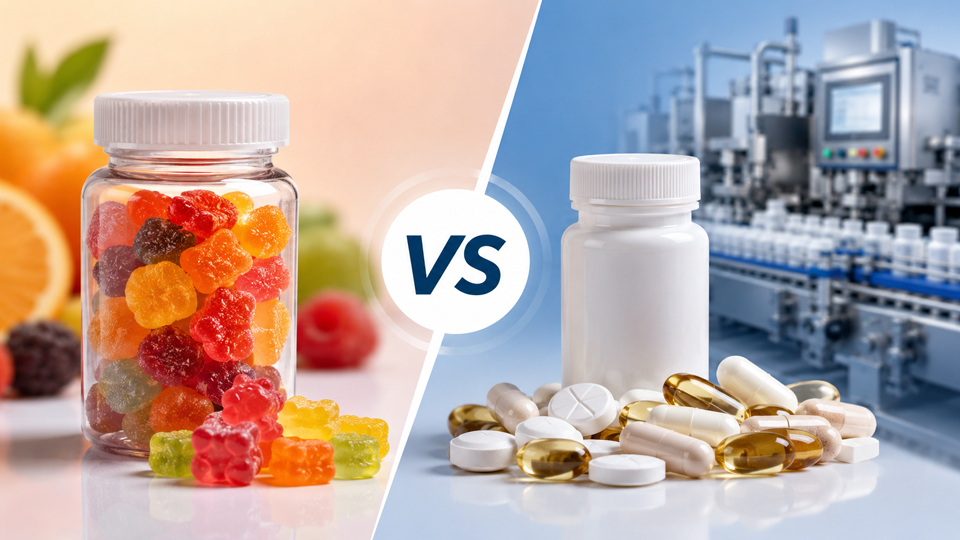
Vitamin Gummies vs Pills


What Are Vitamin Gummies?

Vitamin gummies are chewable gummy candies formulated with vitamins, minerals or other supplements. They look like fruit-flavored candy (often bear or ring shapes) and use a gelatin, pectin or starch base for chewability. Gummies are designed to make taking supplements more enjoyable. 예를 들어, a gummy multivitamin might contain vitamins C, D or B12, flavored and colored to taste like a snack.

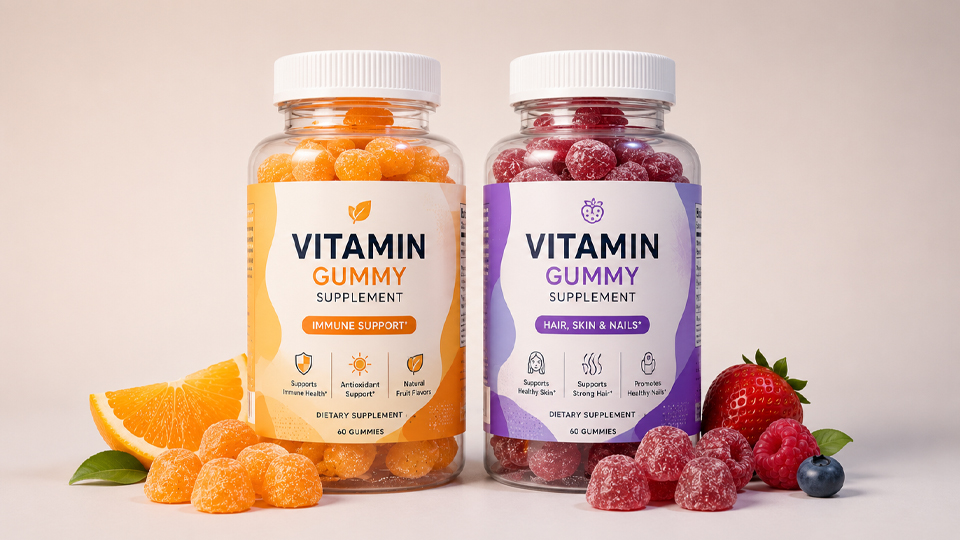
Vitamin Gummies supplements in candy form

수치: Vitamin gummy supplements in candy form. Gummies appeal especially to consumers who dislike swallowing pills. As UCLA Health notes, gummies “taste like candy” and are easier on the stomach because they lack the binding agents found in tablets. Modern gummy counters can even handle a wide size range (예를 들어. Jinlu’s machines process gummies 2–130 mm long). The result is a portable, chewable vitamin that looks and feels like a treat.


What Are Traditional Vitamin Pills?

“Pills” include tablets, capsules and softgels – the familiar solid formats for supplements. Tablet pills are compressed powders or granules (with binders) formed under high pressure. A rotary tablet press can output tens of thousands of tablets per hour. 태블릿은 다재다능하다: they can be coated (예를 들어. 영화 또는 sugar coated) for taste or delayed release, and can be shaped or printed. 캡슐 consist of two shell halves (일반적으로 젤라틴 또는 HPMC) that enclose powders, granules or even liquids. 소프트젤 캡슐 are single-piece gelatin shells containing liquid vitamins or oils (좋다 생선 기름). Pills require swallowing but are highly efficient at delivering nutrients. A well-engineered tablet will have stable weight, 적당한 경도, smooth appearance and consistent quality.

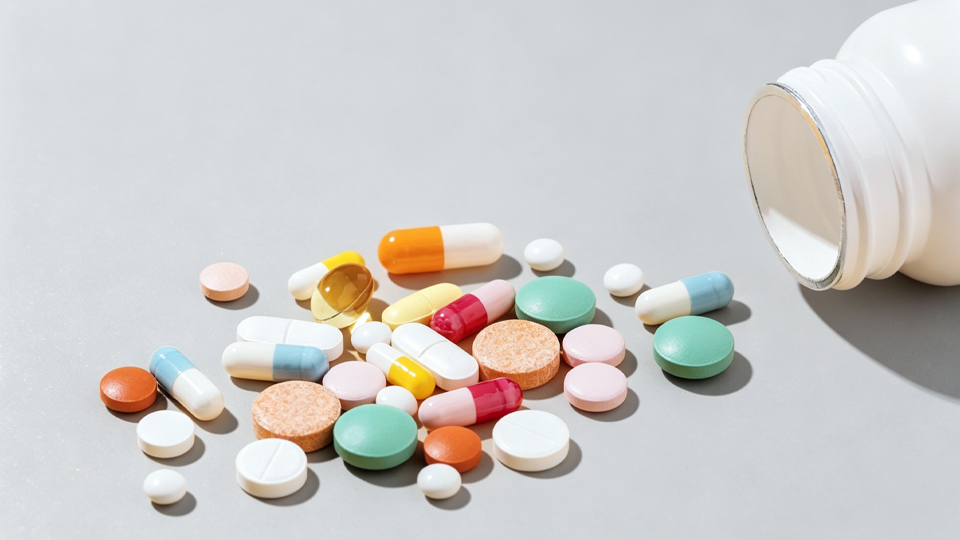
정제, capsules and softgels solid formats Vitamin Pills

수치: Vitamin Pills include tablets, capsules and softgels. Tablets and capsules generally have higher concentrations of active ingredients than gummies. Because tablets/capsules are compressed or encapsulated solids, they often stay potent for years if stored well. 예를 들어, a pharmaceutical-style tablet line can include blending, 육아, 압축 (태블릿 프레스) and optional coating, followed by counting and bottling. Modern capsule filling machines can process hundreds of thousands of capsules per hour. 요약하면, pills are a high-throughput, high-dose form favored by bulk manufacturers.


Vitamin Gummies vs Pills: 주요 차이점

1. 흡수 & 생체 이용률

Studies on bioavailability show mixed results. Some research found that nutrient uptake can be similar (or even higher) in gummies vs pills. 예를 들어, 에이 2019 study in Nutrients reported that vitamin D gummies achieved slightly better bioavailability than tablets. 비슷하게, UCLA Health notes: “research shows your body can absorb nutrients in gummy vitamins as easily as those in traditional vitamins”. This is partly because chewing gummies mixes the vitamins with saliva, initiating absorption early. 하지만, not all nutrients fare equally in gummies; water-soluble vitamins and minerals may degrade or leach into the gummy matrix.

실제로, gummies often have lower label-dosed strengths. Cleveland Clinic notes “gummy vitamins actually have fewer vitamins and minerals than regular vitamins” and manufacturers may “pack them with more than the label says” to compensate for losses over time. 요컨대, while a well-formulated gummy can deliver nutrients effectively, pills generally guarantee a precise dose. 테이블:

측면 구미 의사 (Tablets/Capsules)
Nutrient Content Typically lower per unit; often extra added to offset degradation High nutrient load; more predictable potency
흡수 Comparable for many vitamins; begins during chewing After dissolution in stomach/intestine; efficient for most supplements
Formulation Limits May lack certain vitamins (철, B12) due to taste/stability Can include wide range (even sensitive actives); coatings mask taste
Tablet vs Gummy 츄어블, may skip needing water; better for picky swallowers Swallowed whole; easier for very high-dose or pharmaceutical grades

2. 맛 & User Experience

Taste is where gummies shine. They come in fruity flavors and chewy textures that feel like candy. This sweet, enjoyable experience encourages compliance, especially in kids and seniors. As VitaMedica notes, gummies solve pill-swallowing issues: “If you’ve ever struggled with traditional supplements, chewable gummies could be an easy, convenient alternative”. 대조적으로, tablets often have an unpleasant aftertaste or chalky texture (코팅하지 않는 한), and capsules can be large or hard to swallow.

하지만, the candy-like taste has a downside: sugar and additives. Most gummies use sugar, fruit juice or sweeteners to mask bitterness. UCLA Health reports most gummy supplements have 2–8 grams of sugar per serving, which can add up (the AHA recommends <25g daily for women). Sugar-free versions use sugar alcohols (소르비톨, xylitol) or intense sweeteners, but those can cause digestive upset in sensitive people. Pills generally contain no sweeteners (just excipients and binding agents).

요약, gummies offer a 맛좋은 user experience: easy, 맛있는, and fun. Pills prioritize function: efficient ingestion of high doses. 많은 사람들에게, the choice comes down to preference and lifestyle.

3. Nutrient Stability & 저장 수명

Stability is a major distinction. Chewable formats (gummies or chewables) ~이다 prone to moisture uptake. Healthline and Medical News Today both note that gummies degrade faster than tablets. The water/moisture content in gummies causes vitamins (especially C, B’s) to break down or lose potency over months. Manufacturers counteract this by “over-fortifying” gummies, but potency can still drop below label claims over time. 대조적으로, 정제 (마른, compressed) retain potency for several years if stored properly.

  • 예: Healthline explains chewables and gummies absorb moisture more easily, so “chewable vitamins and vitamin gummies…degrade faster” whereas tablets may remain potent for years.
  • Implication: Gummies often carry shorter expiration dates (~1–2 years). Even under good storage, active ingredients diminish.

Packaging helps prolong shelf life. Gummy bottles usually require desiccants and tight seals to mitigate humidity. 비교하여, tablets are often packed in simple blister packs or bottles with far fewer humidity issues.

4. 설탕, Sweeteners and Additives

Gummies nearly always contain sweetening agents. 위에서 언급한 바와 같이, added sugar is a concern. Besides dental/health issues, 감미료 (even “natural” juice concentrates) dilute nutritional value per gummy. Artificial colors and flavors are also common in gummies to make them appealing. People with dietary restrictions (당뇨병, phenylketonuria) or those avoiding artificial ingredients may find gummies problematic.

대조적으로, tablets/capsules use excipients (필러, 바인더) that are typically flavorless and inert. Many pills are sugar-free (coated or uncoated). There are sugar-free gummy options, but these often use sorbitol or xylitol which can cause gas or laxative effects.

5. Dosage Accuracy

Because gummies look like candy, consumers sometimes take extra. Overdose risk is real: nutrients like vitamins A, 디, 이자형, K or minerals like iron have upper limits. UCLA warns, “It’s tempting to take more than the recommended dose… Too much iron and zinc can cause stomach pain, vomiting or worse”. Gummies may also have variable potency: one study noted individual gummy dosages can vary, despite labeling.

Tablets and capsules come with standardized dosages per unit. One swallow delivers exactly the intended milligrams, and this precision is easier to control in manufacturing. Automated counting lines ensure exactly, 말하다, “100 tablets per bottle,” while gummies can clump or stick, making count a challenge. (하지만, modern gummy counters achieve >99.9% count accuracy once set up properly.)

6. 저장 수명

As hinted above, shelf life differs greatly. Tablets/capsules typically have shelf lives of 2–3 years, often expiring long after production. 구미, with their moisture and sugar, often last only 1–2 years under the best conditions. 요점:

  • Tablets/capsules remain potent if kept cool and dry (some even last beyond labeled date).
  • Gummies must use airtight, moisture-proof packaging (and desiccant) to approach a ~2-year shelf life.
  • Heat and humidity are especially harmful to gummy stability.

This means retailers and consumers must rotate gummy stock more quickly. 제조업체를 위해, it implies faster production-to-market cycles and robust packaging (아래를 참조하세요) to preserve quality.

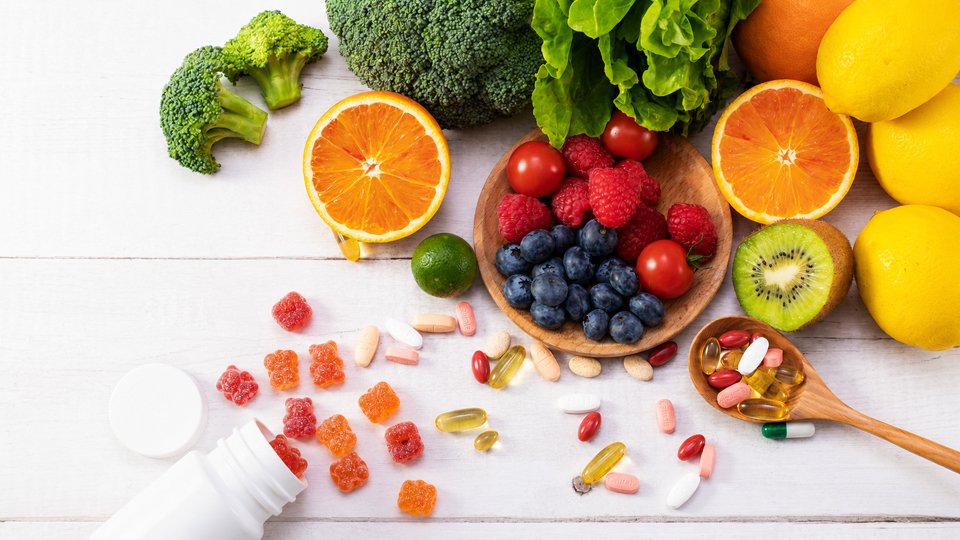
Fruit, wooden spoons, vitamin gummies and pills on the table


Why Are Gummy Vitamins Becoming So Popular?

The rise of gummies is driven by changing consumer preferences. A phenomenon known as “pill fatigue” is pushing people to demand more enjoyable formats. As Glanbia notes, many consumers now find pills uninspiring, driving “new, enjoyable supplement formats that cater to convenience, 맛, and personalization”. Market trends illustrate this:

  • Broad Appeal: Gummies appeal to both young and old. 미국에서는, gummies have “tied with tablets as the largest-selling supplement format” due to their taste and ease. They’re particularly popular among women and younger demographics who enjoy the flavors.
  • 사용 편의성: For children and elderly who struggle to swallow pills, gummies are a game-changer. Parents often prefer gummy vitamins for kids since they’re “on par with or better than chewable alternatives” in acceptability. Even adults who dislike swallowing pills find gummies a convenient daily option.
  • Personalization: Modern consumers want supplements tailored to their lifestyle. Gummies come in a variety of shapes, colors and additive “boosters” (like collagen or probiotics) that resonate with niche wellness trends. Clean-label (natural flavors, no high-fructose corn syrup) and functional claims (beauty, stress relief) further boost gummy demand.
  • 편의: On-the-go lifestyles favor grab-and-go formats. Gummies can be carried in bags or pockets, requiring no water. This convenience matches the growth of e-commerce and targeted niche brands that sell gummies for specific benefits.
  • 사회의 & Marketing Trends: Visually appealing gummies (밝은 색상, 재미있는 모양) thrive on social media and in influencer marketing, reinforcing their popularity. People are more likely to enjoy taking a vitamin gummy as part of a “wellness” routine shared on Instagram or TikTok.

요컨대, consumer demand for enjoyable, flavored supplements is high. The supplement market is responding: multivitamin gummies grew into a multi-billion-dollar category, and industry reports forecast continued high growth (예를 들어. Glanbia predicts global gummy supplement market nearly tripling by 2034). Gummies have shifted from niche to mainstream, fueled by this pill-fatigue trend and broad demographic appeal.

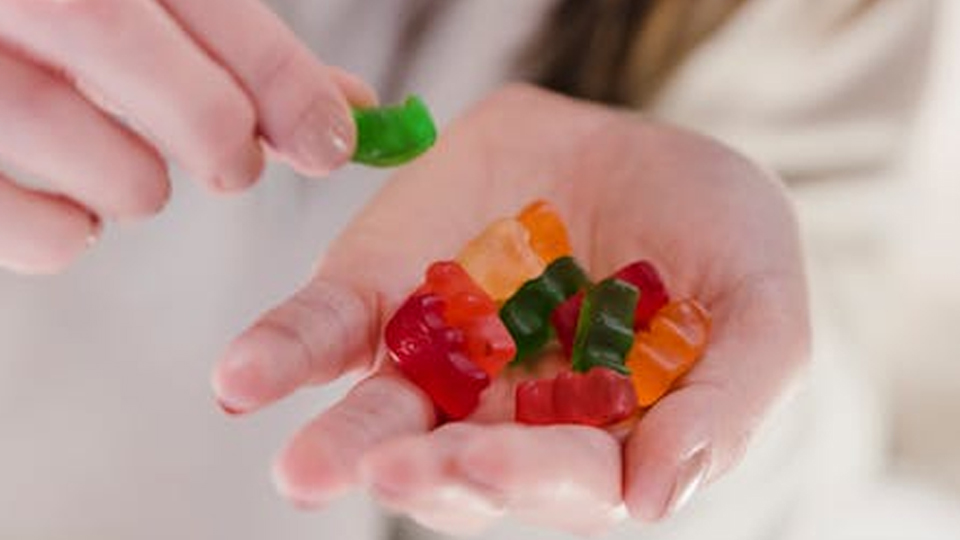
woman held a handful of Gummy Vitamins


Are Gummy Vitamins Really Effective?

Gummy vitamins can be effective if formulated and consumed properly, but they have limitations. 주요 고려사항:

  • Vitamin Formulation: Some vitamins (like vitamin C, B complexes) are stable in gummies, but others (like iron or D3) pose challenges. Many gummy formulas omit certain nutrients that are hard to mask (vitamin A, B12, 철, zinc) because of taste or stability issues. Consumers must check labels closely; a gummy might only cover a subset of needed vitamins.
  • 생체 이용률: 언급한 바와 같이, studies (including one in Nutrients 2019) showed comparable or even slightly better uptake of vitamin D from gummies vs tablets. 전반적인, research suggests well-made gummies can deliver nutrients effectively. 그 말은, always follow recommended dosages: it’s easy to overeat gummies thinking of them as “just candy.”
  • Quality of Brands: Efficacy depends heavily on product quality. Look for reputable manufacturers with third-party testing and transparent labels. A key tip is ensuring gummies explicitly list expiration dates and actual content (not “may contain” disclaimers). Good gummy products often add extra antioxidants or stabilizers to prolong potency.
  • Role in Routine: 많은 사람들에게, the verdict is: Better than no supplement at all. UCLA sums it up: if someone 필요합니다 supplements but can’t take pills, gummies are a valid option (“they’re better than not taking vitamins at all”). But they’re not superior for everyone. For a person who can tolerate tablets, pills may provide higher doses with fewer additives.

실제로, gummy vitamins do work, especially for bridging minor nutritional gaps. Just bear in mind: they may not fully replace higher-potency tablets, and they should complement a balanced diet. Always store them as directed (cool, 마른) and heed the sugar content when planning your daily intake.

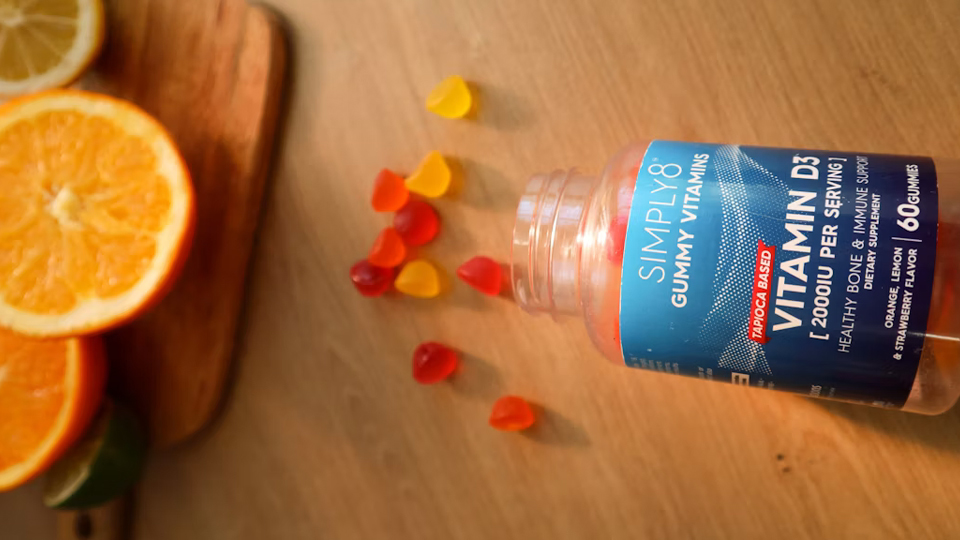
Gummy Vitamins D3


Who Should Choose Gummies?

  • Children and Teens: Kids often refuse to swallow pills. Gummy vitamins (with parent supervision on dosage) are popular for multivitamins, 비타민 D, or specific nutrients (like calcium gummies for teens). Cleveland Clinic suggests if kids refuse pills, gummies may be considered after ruling out chewables. Parents should watch out for overconsumption (excessive sugar/vitamin intake).
  • Seniors or Disabled: Older adults with dysphagia (difficulty swallowing) or cognitive issues may take gummies more reliably. The chewable format can ensure adherence, as long as the formulations match their needs.
  • Pill-averse Adults: Some people simply hate pills. Gummies can improve compliance for these individuals (again, mindful of sugar). Those with slight nausea from swallowing pills might find gentle on stomach.
  • General Wellness Consumers: Many adults buy gummies for general health (beauty, stress, immunity) because they enjoy them. For nutrient maintenance rather than correction of a deficiency, gummies can be a “fun” supplement.

요컨대, gummies suit those who need a palatable supplement form. They should be chosen when convenience and compliance outweigh the need for very high doses.


Who Should Choose Pills?

  • High-Dose Requirements: If a person needs a large vitamin dose (예를 들어. 50,000 IU vitamin D, 1000 mg vitamin C, or high-strength B12), pills or capsules can deliver it without an excess of sugar or bulk. Gummies simply cannot pack as many milligrams per chew without being huge or overly sweet.
  • Specific Nutrients: Pills can include any nutrient – iron, 칼슘, medicinal herbs – that gummies often skip. If you need those, a tablet or capsule is necessary.
  • Strict Compliance: In clinical settings (병원, 진료소) or serious fitness regimens, the precise dosing of pills matters. Professional populations (예를 들어. pharmacists, doctors) will typically prefer tablets for traceability and dosage uniformity.
  • 비용 & Shelf-life: Pills often cost less per mg of vitamin and last longer on shelves. Pharmacies and large retailers prefer tablets/capsules for these logistical reasons.


Manufacturing and Packaging: Gummies vs Pills

생산적인 관점에서 보면, gummies and pills present different challenges:

  • Gummy Manufacturing: Gummies require specialized equipment. The process involves mixing vitamins with gelatin/pectin and sweeteners, extruding or molding them into shapes, and drying. Consistency of texture and avoiding clumping are big issues. 하나의 가이드 노트로, machines use anti-clumping designs (spiked agitators, non-stick surfaces, air-blasts) to handle sticky gummies. Formulating gummies also involves controlling water content and heat (vulnerable vitamins may degrade).
  • Pill Manufacturing: Tablet/capsule lines are well-established. Steps include blending powders, 육아 (moist or dry), compression into tablets (via rotary tablet presses), and optional coating. 태블릿 프레스 (like Jinlu’s rotary presses) are designed for stable weight, hardness and output. Capsules are filled by machines that load powder or liquid into shell halves at high speed (Jinlu’s automatic capsule filler can do ~468,000 caps/hour). These processes are generally drier and more forgiving of wide room conditions than gummy lines.
  • Packaging Lines: Both formats ultimately need counting/filling, 건조제 (for gummies), capping and labeling, but with tweaks:
  • Gummy Packaging: Because gummies clump and are often sticky, producers use dedicated gummy counters. These machines separate and count individual gummies via vibration and sensors. A typical automated gummy line is: bulk hopper → gummy counting machine → desiccant inserter → capper → labeler. 예를 들어, Jinlu’s gummy counting machine can feed counted gummies directly into bottles, 그리고 “the container then moves on… to the desiccant inserter, 절정, or labeler”. Desiccants are common (to absorb moisture), and cap systems may need to handle wider necks (for jelly shape). Non-sticky coatings (PTFE) are used to aid flow.
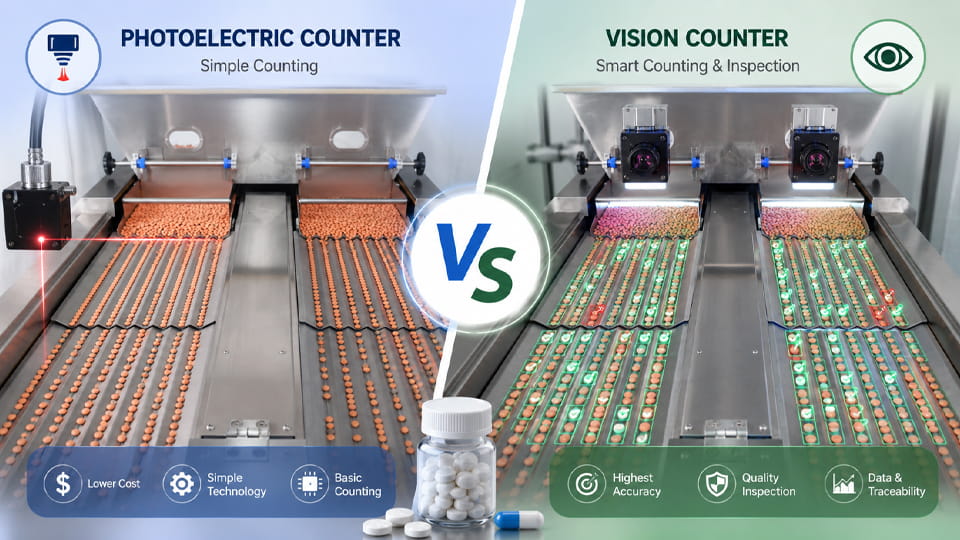
  • Pill Packaging: Pills flow more easily, so standard tablet/capsule counters and bottle fillers 사용된다. A tablet counter (vibratory hopper + multi-lane sensor) feeds tablets into bottles with high accuracy. Any stubs or broken pills are minimal. Desiccants may not be needed except for moisture-sensitive capsules. Many lines use 물집 팩 (sealing tablets between foil and plastic) – Jinlu’s blister machines can pack up to 11,200 물집/시간. 대안으로, bulk bottles are filled, capped and labeled.

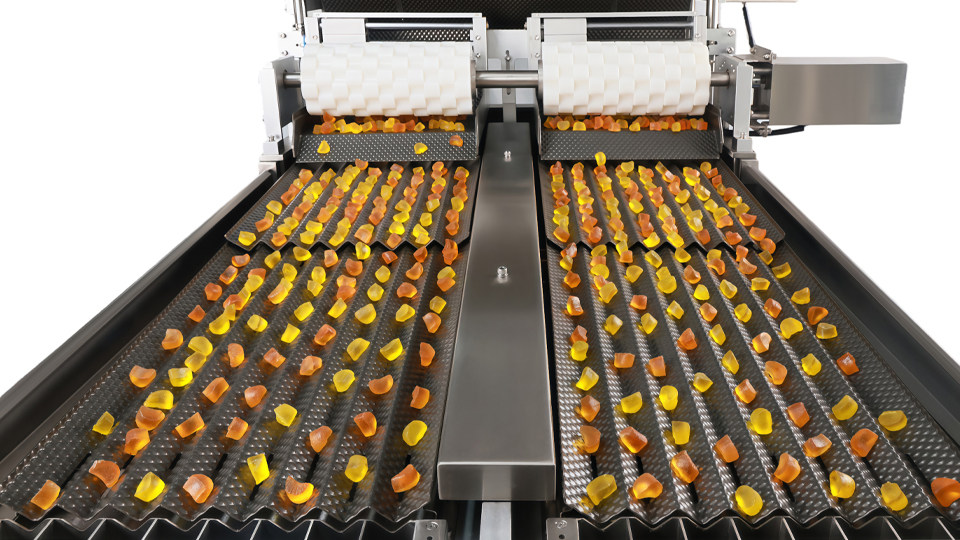
Gummy counting machine separates and counts pieces on vibrating rollers

수치: A gummy counting machine separates and counts pieces on vibrating rollers (영상: 진루 포장). 통합이 핵심이다. As Jinlu notes, modern gummy counters are “integration ready” – they hook up with upstream bottle unscramblers and downstream cappers, 유도 실러, 라벨러. 실제로, a fully automated gummy packaging line moves bottles from unscrambler to filling (계산) to dosing (건조제) to capping and labeling without manual intervention. For pills, analogous lines exist: a tablet counter fills bottles, then a capper tightens caps, foil sealers may apply seals, and labeling finishes the process.

Relevant Equipment (Jinlu examples):

  • 구미 계산 기계: For high-speed counting of gummies (Jinlu’s JL-16R or 16H machines count up to ~80 bottles/hour with 99.97% 정확성).
  • 건조제 삽입기: Inserts moisture-absorbing packets into bottles (common on gummy lines).
  • 자동캡핑기: Tightens caps on bottles (works for both gummy and pill lines).
  • Bottle Filling Line: Combined filler + 절정 + labeler for bulk pills or gummies.
  • 정제 프레스기: Rotary presses that compress powder into tablets (JL machines output 37,800–950,000 tablets/hour).
  • 캡슐 충전물 기계: Fills powder or pellets into capsules (JL’s are fully automatic at ~468K caps/hr).
  • 자동 계산 (알약) 기계: Multi-lane counters for pills and capsules (JL’s counters handle tablets/caps at 99.9%+ 정확성).
  • 블리스 터 포장기: For packaging tablets/capsules into blisters (JL’s DPP-270Max runs 11,200 물집/시간).

Each piece of equipment can be linked on the Jinlu site for more info. These tools help manufacturers scale production of either format.


결론

There is no one-size-fits-all “best” vitamin format. 구미 win on flavor, convenience and compliance for many demographics, but trade off potency and shelf stability. 의사 deliver maximum nutrients, longer shelf life and dosing precision, but can be harder to swallow and less fun. Manufacturers must consider their target customers: if taste and convenience are king (예를 들어. for gummies or children’s vitamins), the gummy format makes sense despite its challenges. If high-dosage or strict regulation is needed, tablets/capsules remain the workhorses.

Packaging equipment bridges the gap: automated counting, filling and sealing lines ensure either format can be produced at scale. Jinlu’s range—from gummy counters and bottle lines to tablet presses and blister machines—illustrates how modern supplement factories can adapt to either market. By understanding the pros and cons of each format (Vitamin Gummies vs Pills), industry buyers can choose the right products and equipment for their customers’ needs.


FAQs on Vitamin Gummies vs Pills

Are vitamin gummies better than pills?

Vitamin gummies are not necessarily better than pills, but they are often easier and more enjoyable to take. Gummies can improve supplement compliance because people are more likely to take them consistently. 의사, 반면에, usually offer better nutrient stability, 더 길어진 유통기한, and higher dosage capacity.

Do gummy vitamins absorb better than pills?

Some gummy vitamins may dissolve faster and enter the digestive system more quickly, especially certain nutrients like Vitamin D or B12. 하지만, in most cases, the overall absorption difference between gummies and pills is relatively small when products are manufactured correctly.

Why are gummy vitamins becoming so popular?

Gummy vitamins have become popular because they taste better, are easier to consume, and reduce “pill fatigue.” Many consumers prefer gummies because they feel more like a snack than a traditional supplement. Social media wellness trends and personalized nutrition products have also accelerated market demand.

Are gummy vitamins effective for adults?

예. High-quality gummy vitamins can be effective for adults when they contain the correct nutrient dosage and are stored properly. Many adults choose gummy supplements for convenience and improved daily consistency.

Do gummy vitamins contain sugar?

Most gummy vitamins contain some form of sweetener, such as sugar, 포도당 시럽, or natural fruit concentrates. 하지만, many manufacturers now offer sugar-free gummy vitamins to meet clean-label and health-conscious consumer demand.

What are the disadvantages of gummy vitamins?

Gummy vitamins may have:
• Shorter shelf life
• Lower nutrient stability
• Limited high-dose formulation capability
• Higher sensitivity to heat and moisture
• Additional sugar or flavoring ingredients
These factors can create extra challenges in manufacturing and packaging processes.

Who should choose vitamin pills instead of gummies?

Vitamin pills are often better for:
• High-dose supplement users
• Professional nutrition programs
• Sports nutrition applications
• Sugar-conscious consumers
• Long-term storage requirements
Tablets and capsules also provide more accurate dosage control for pharmaceutical manufacturers.

Are gummy vitamins harder to manufacture?

예. Gummy supplement production is generally more complex than traditional tablet manufacturing. Gummies require strict moisture control, temperature management, accurate depositing systems, cooling tunnels, and specialized packaging equipment to prevent sticking or deformation.

What packaging equipment is commonly used for gummy vitamins?

Common gummy vitamin packaging equipment includes:
• Gummy counting machines
• Bottle filling lines
• Desiccant inserters
• 캡핑 기계
• Labeling systems
• 인덕션 씰링 기계
Proper packaging is critical because gummy products are sensitive to humidity and heat.

How does packaging differ for gummies vs pills?

Gummies usually need special lines: a gummy counting machine (separating sticky pieces) followed by desiccant insertion, capping and labeling. Pills can go through standard pill counters and bottling or blister machines with less need for moisture control. Jinlu offers integrated lines for both types.


참고자료:
1.Do Gummy Vitamins Work? The Benefits and Downsides —— Healthline
2.Do Gummy Vitamins Work as Well as Traditional Vitamins? —— Cleveland Clinic
3.Gummy vitamins vs pills. Does it really matter? —— Reddit
4.식이 보충제: Dubious value, hidden dangers —— Harvard Health Publishing

이 기사를 공유하세요:
사진 사소한 푸
사소한 푸

사소한 푸, 진루패킹 창업자, 가져오다 20 제약 기계 부문에 대한 다년간의 전문 지식. 그의 리더십 아래, Jinlu는 디자인을 통합하는 신뢰할 수 있는 공급업체로 성장했습니다., 생산, 그리고 판매. Petty는 고객이 제약 포장의 복잡성을 헤쳐나갈 수 있도록 깊은 산업 지식을 공유하는 데 열정을 갖고 있습니다., 장비뿐만 아니라 제품도 받을 수 있도록 보장, 생산 목표에 맞춘 진정한 원스톱 서비스 파트너십.

목차

문의 보내기

답장을 남겨주세요

귀하의 이메일 주소는 공개되지 않습니다. 필수 입력란이 표시되어 있습니다 *

무료 견적 받기

*우리는 귀하의 기밀성을 존중하며 모든 데이터는 보호됩니다. 귀하의 개인정보는 JL 솔루션을 위해서만 사용 및 처리됩니다..