多くの場合 パッケージライン, 小袋, ポーチ, または小さな袋が上流の機械から出てきます。 ランダムなごちゃ混ぜ – 杭が互いに重なり合う, 向きが一貫していない. これらを手作業で分類すると時間がかかり、間違いが発生しやすくなります. 作業者は各パウチを分離して裏返す必要があります, これは労働集約的であり、数え間違いのリスクがあります (重複すると数え間違いが発生する). この矛盾により、 飢えるかジャムになるか 箱詰め機やケース包装機などの下流機器. その上で, 手作業による取り扱いは汚染リスクを増大させる - 医薬品や食品にとって大きな懸念事項.
a パウチ仕分け機 これらの問題点を解決します. 自動で分離してくれる, 整列する, シーケンス, 次の機械に投入される前に、ランダムに配置されたパウチまたは小袋をカウントします。. 事実上, 混沌としたバッグの束をきちんとしたものに変えます, 単一ファイルのストリーム. 結果はスムーズです, カートナーまたはケースパッカーへの連続的な流れ, 最小限の人間的タッチで.
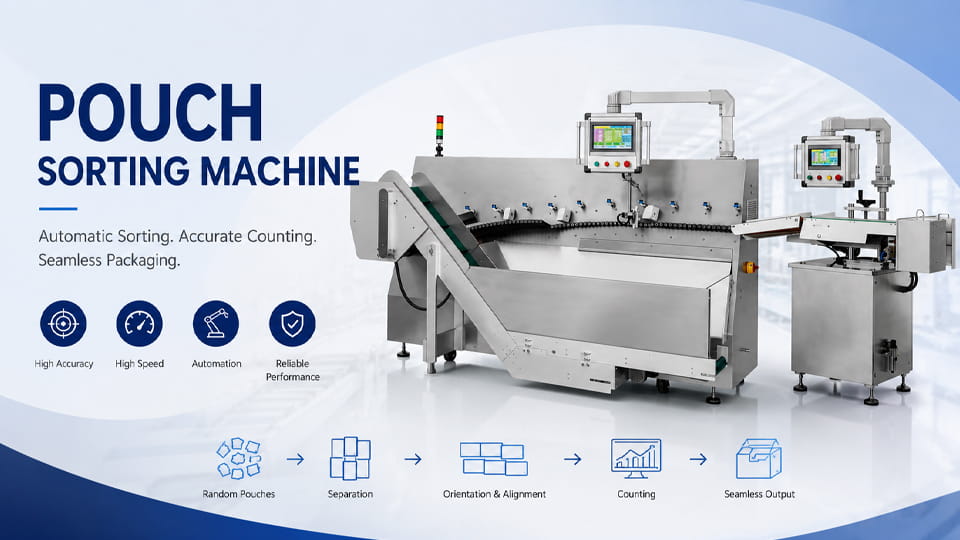
形: 小袋を手動で仕分けするのは労力がかかり、間違いが発生しやすい. 自動 パウチ仕分け機 このタスクを迅速かつ正確に処理します, パウチを包装ラインに安定的に供給.
パウチ仕分け機とは?
a パウチ仕分け機 (または パウチソーター) 小さなものを整理するために設計された自動産業機械です。 フレキシブルパッケージ – ポーチ, 小袋, スティックパック, または小さなバッグ – 充填機または包装機から注文なしに出てくるもの. 簡単に言うと, の出力を受け取ります パウチまたは小袋包装機 そして シーケンス アイテム: 重なった袋を分離する, それらを均一に向ける, それらを数えています, そして彼らを次のステージに送り出す.
別の言い方をすると, 包装ライン専用のフィーダー/オーガナイザーです. 多くのオペレーターが必要となるタスクを処理します。. 例えば, JinLuの小袋仕分け機 「自動的に整理してくれる, 向きを変える, 種類, 注文されていない小袋を数えます (粉, 液体, 錠剤, ジェルの種類) 毎分最大 100 ~ 420 袋の速度で. これらのマシンは、 24/7 生産: ほとんどの場合、簡単な操作のために PLC タッチスクリーンを使用し、さまざまなバッグのサイズにその場で適応します.
パウチソーターはよくある問題を解決します: それ 分離する ごちゃ混ぜポーチ, ダブルスを削除します (2つの袋がくっついてる), 方向を修正します, そして それぞれの個数を正確に数えます. 出力は、ダウンストリーム マシンが処理できる一貫した単一ファイル ストリームです。. 実際に, これは、カートンが均等に充填されることを意味します (紛失した荷物はありません), 手動でのカウントと供給が不要になります. 基本的に、手動の仕分けテーブルに代わる自動バッファーおよびフィーダーになります。.
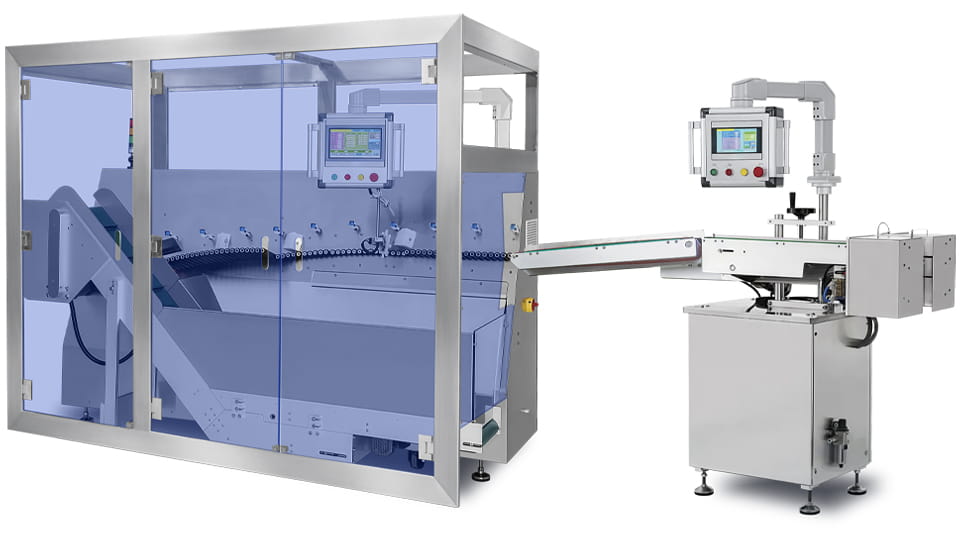
パウチ自動仕分け機の仕組み?
最新のパウチ仕分け機は複数のステップで動作します, 完全に自動化されたプロセス. 各ステップはサーボ制御システムと高速センサーによって同期されます。. 全体的なワークフローは次のようになります:
- ポーチの摂食 (読み込み中): パウチは最初にホッパーまたは供給エリアにロードされます, 手動または上流の包装機から. ホッパーは通常、大容量で、ロープロファイルのためロープロファイルが簡単です。. 例えば, 一部の仕分け機には高さ調整が可能です, 300-バッグをシステムに安定的に供給するリットルホッパー. 機械は、 多段同期供給システム ポケットを詰まらせたり、ポケットを残さずに袋をホッパーから取り出すことができます。.
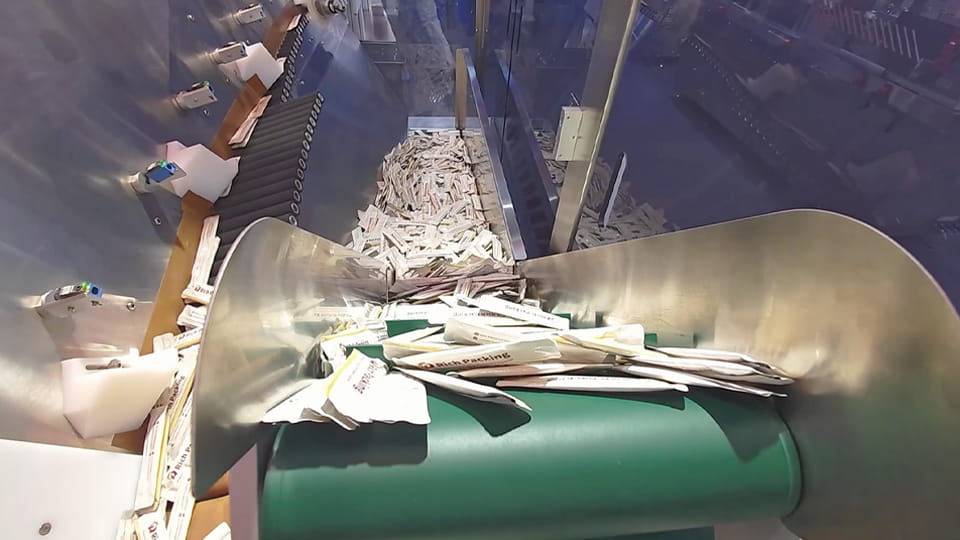
- パウチの分離: 袋がホッパーから出るとき, 重なったり積み重なったりして出てくることがよくあります. 機械の スタッキング防止システム それらを分離して、一度に 1 つのポーチだけを通過させます. 重送を防止します. 例えば, JinLu の設計では、「一度に通過できるバッグは 1 つだけ」, 複数の荷物が同時に通過することによるエラーを完全に排除します。」. 通常、分離は特殊なローラーまたはコンベアを使用して行われ、詰まった袋をゆっくりとこじ開けます。.
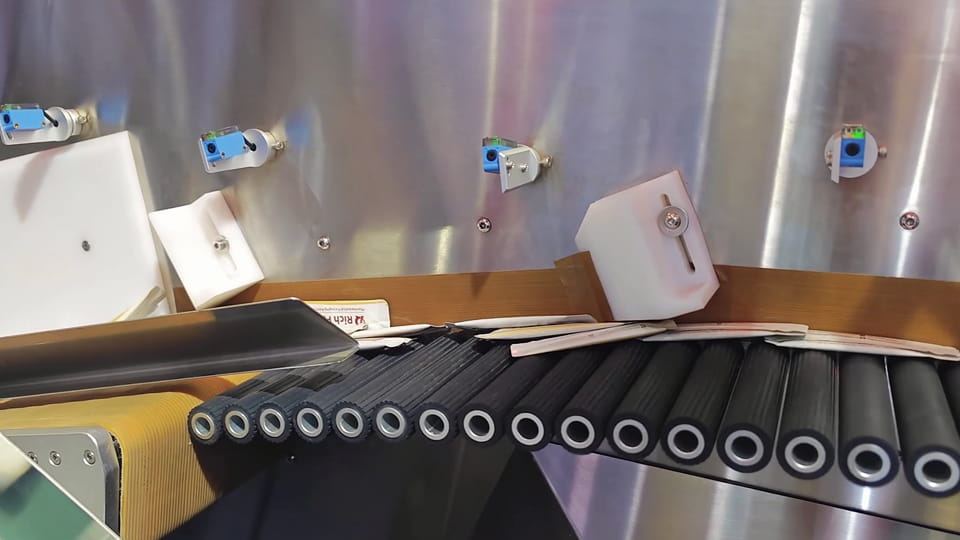
- ポーチの向きと位置合わせ: 次, 機械 向きを変える 各袋を均一な方向に (例えば. すべてのラベル面を上にするか、すべてのシールを片面にします). これは通常、サーボ駆動のローラーまたはベルトを使用して行われます。. 高精度サーボモーターが各バッグを回転させ、移動中に位置決めします。. 防塵, 静電気防止ローラーがバッグを掴んで位置を調整します. 例えば, 1つのデザインが使用する 11 サーボダイレクトドライブモーター ローラーの動きを同期させるため, バッグが「完璧に同期して動く」, 滑ったり飛び跳ねたりすることなく,」 それらを揃えて維持する. その結果、一連のポーチがすべて同じ方向を向いた状態になります。.
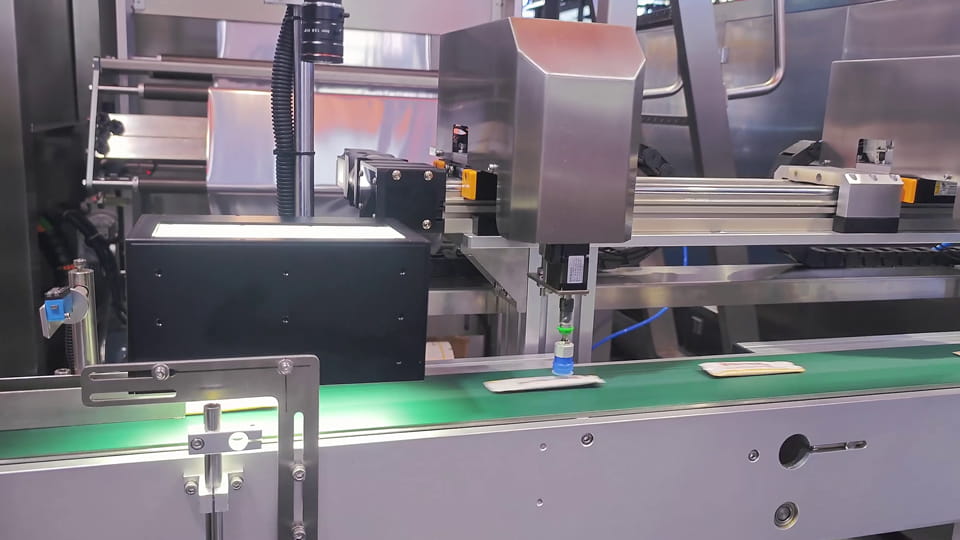
- センサー検出: プロセス全体を通して, 光電センサーまたはビジョンセンサーが各ポーチを監視します. センサーがバッグの存在を検知, 向き, そして異常があれば (はみ出したオーバーラップや斜めのフィードなど). バッグが正しく整列していない場合、または詰まっている場合, センサーは即座に応答をトリガーします. これらのセンサーはリアルタイム データを制御システムに供給します。. 高品質なマシンで, ライン内のすべての位置にセンサーがあり、 死角のない カバレッジ. フィードバック ループにより、並べ替えプロセスでエラーが発生しません。.
- 並べ替えと数え方: 位置を合わせたら, パウチは最終的な選別および計数ステーションを通過します。. ここ, この機械は、袋が 1 つずつ排出コンベアまたはシュートに確実に供給されるようにします。. それ カウント 各ポーチの精度は非常に高く、多くの場合、 99.97% 正確さ. 高度なシステムではカウントにタイムスタンプやバーコードを付けることもできます. 高速カウンターにより、パウチの正確な数が確実に把握され、不一致がある場合はアラートをトリガーできます。. この精度により、下流でのミスカウントエラーが大幅に減少します.
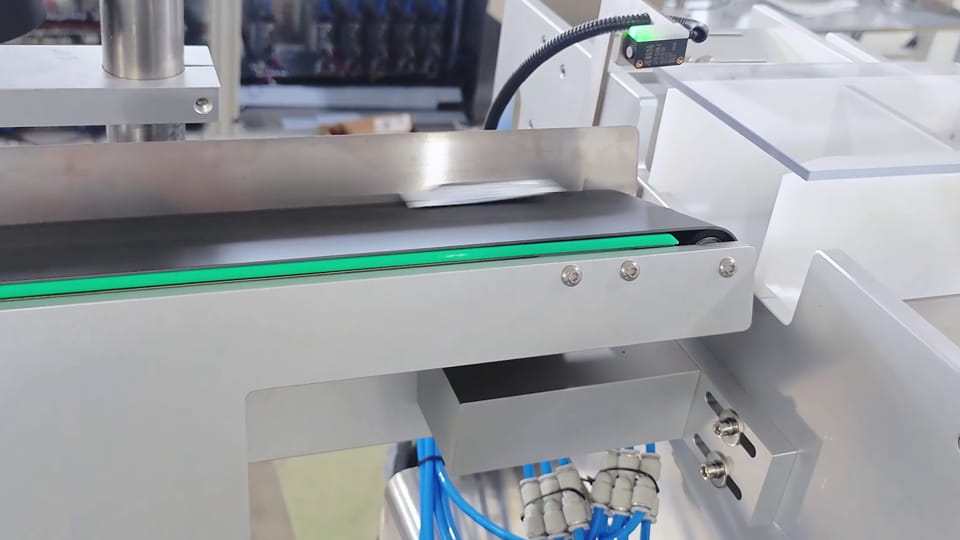
- 欠陥の拒否: まだ位置がずれているポーチ, フラット (水平), または不良品が拒否メカニズムによって排除される. 例えば, ポーチが直立ではなく平らに置かれている場合, 「水平パウチ拒否」システムによりラインから外されます。. 同様に, センサーは破れた袋や詰め込みが間違っている袋を発見できます, 自動拒否をトリガーする. こちらです, 適切な向きのみ, シングルパウチは続行します. プロセス全体により、詰まった袋や誤って仕分けされた袋が箱詰め機や箱詰め機に到達しないことが保証されます。.
各ステップは人間の介入を最小限に抑えて自動的に実行されます. 最新の機械は、これらのステップをコンパクトなシステムに統合します。. 例えば, 1つ フルサーボ選別機 単一のフレーム上に構築されています: ホッパーが袋に供給します, サーボベルトとローラーがそれらを調整します, 複数のセンサーがそれらを検査します, そしてコンベアがそれらを順番に排出します – すべてが 1 つの連続した流れになります.
[jl_youtube ソース=”https://www.youtube.com/embed/NxTAzsZIx-s”]
パウチ仕分け機を使用する主な利点
パウチ自動仕分け機の導入により、 即時の利益 あらゆる包装ラインに. 主な利点としては、:
- 生産効率の向上: 自動化により仕分けが劇的にスピードアップ. 高速パウチソーターで対応可能 毎分数百個のバッグ, 人間の能力をはるかに超えた. 例えば, JinLu の選別機が駆け寄る 420 バッグ/分, および他のモデルのハンドル 400 以上. この連続, 迅速な生産により、下流の包装機にフルスピードで供給が維持されます. その結果、時間あたりのスループットが大幅に向上します. 実際に, 手動仕分けを自動システムに置き換えると、生産率が飛躍的に向上し、納期が短縮されます。.
- 選別精度の向上: 自動仕分け機で人間のミスをなくす. 手荷物の重複や取り逃しが事実上なくなります. を超える計数精度を誇るハイエンドマシン 99.9% (以下のエラー率 0.009%). スタッキング防止システムや光電センサーなどの特殊な機能により、エラー率が超低く抑えられます. つまり、二重フィードはもう発生しません, カウント漏れなし, ジャムはほとんどありません. 自動化ラインでは, 各ポーチは追跡され、カウントされます, 最終的なパッケージ数は信頼できるものになります. 結果として, パッケージ担当者は、カウントミスによるコストのかかるリコールや再梱包作業を回避します.
- 人件費の削減: 手動タスクを置き換えることにより, これらの機械は人員配置の必要性を削減します. これまで手作業で仕分けや計数を行っていたオペレーターの再配置が可能. 例えば, ある栄養補助食品植物は、 90% 手作業による仕分け作業の削減 自動仕分け機導入後. プロセスを監督するために必要なオペレーターの数は少なくなり、多くの場合、複数のマシンに対して 1 人のスーパーバイザーだけが必要になります。. 時間の経過とともに、この ROI は重要になります: 賃金を節約し、人間の疲労やミスを軽減します.
- 衛生管理とコンプライアンスの向上: 人との接触を最小限に抑えることは、製薬会社や食品会社では特に重要です. パウチソーターはクリーンな環境向けに構築されています: 接触部分は通常、 304 または 316 ステンレス鋼 表面は滑らかで洗いやすいです. 例えば, JinLu の選別機は製品との接触に 316L を使用しており、 304 構造用, ミーティング CGMP 標準. 同梱デザイン (多くの場合、安全ガラス窓が付いています) 衛生的なバリアを維持するのにも役立ちます. マシンの掃除が簡単な機能と隅が少ないため、すばやく消毒できます. これにより、手作業に比べて汚染リスクが大幅に軽減されます。.
- 包装ラインとの簡単な統合: パウチ仕分け機はお客様のラインに合わせて設計されています. 様々な向きでパウチを排出可能 (フラット, 直立, または積み重ねられた) 次のマシンに合わせて. 例えば, 排出の高さや角度を調整できるので、パウチが直接容器に供給されます。 箱詰め機, ある カウント/アキュームコンベア, またはケースパッカー. 多くの機械には、標準化されたコンベア高さまたは取り付けキットが付属しています. 実際に, 最小限のレイアウト変更でソーターを既存のシステムに「プラグアンドプレイ」できます。. これにより自動化の追加が効率化されます: 仕分け機の出口をカートナーの入口コンベアに接続するだけです. 結果はシームレスです, 充填から最終包装までのエンドツーエンドの自動化ライン.
パウチ仕分け機の用途
パウチソーターは業界全体で幅広く使用されています – 小さなポーチや小袋を数えたり、規則的に授乳する必要がある場所ならどこでも. 主な応用分野は次のとおりです。:
- 医薬品包装: これは主要な使用例です. 製薬会社では粉末を包装することがよくあります, 顆粒, または液体を小袋やパウチに入れる. パウチソーターが各投与量を確実にします (例えば. 薬の小袋, サプリメントパウダー パック) 正しく処理されています. 医薬品に必要な精度とコンプライアンスを提供します. 例えば, そのような機械は日常的に処理します 薬の小袋, ビタミンパック, 経口液体パウチ, 小さなホイルブリスターパックも. 彼らは会うから GMP基準 そして正確に数えることができます, 精度とトレーサビリティが重要な薬局ラインに最適です。. 多くの製薬メーカーはソーターを使用してカートナーに供給したり、 ブリスターパッカー 人間の手を介さずに.
- 栄養補助食品 & サプリメントの包装: ビタミンドリンクミックスを考える, プロテインパウダーの小袋, 健康補助食品パック, プロバイオティクス, 等. これらの製品はよくあります 小袋またはスティックパック 形状. パウチソーターは次のような製品を扱います プロテインパウダーの小袋, ビタミンドリンクミックス, そしてプロバイオティクスパック. ボックスに入れる前に、各サービングが数えられ、調整されていることを確認します。. 栄養補助食品ラインは追加のスループットを重視します, 需要が高い可能性があるので. 選別機は、インスタント エネルギー パウダーやコラーゲンの小袋などの製品の品質と速度を維持するのに役立ちます.
- 食べ物 & 飲料の包装: パウチソーターは食品ラインで一般的です. 例えば, 彼らは分類します コーヒーまたは紅茶のスティックパック, 砂糖や調味料の小袋, インスタント飲料ミックス, ソースと調味料のポーチ. いくつかのスナックラインでは、個別のナッツやスパイスの小袋に使用しています。, あまりにも. 選別機の丁寧な対応 (ソフトローラーと制御された送り) 壊れやすい食品の小袋が損傷しないことを意味します. 実際に, 高速包装ライン (例えば. マルチレーンサシェフィラー) カートン/ボックス梱包用の出力を蓄積するための仕分け機が必要. 事前に仕分けすることで, 機械は下流での詰まりを防ぎ、正確なカウントを保証します (例えば. 10 1箱あたりのティーバッグ) と一緒です.
- パーソナルケアおよび家庭用化学薬品: パウチの仕分けは食品や医薬品だけではありません. パーソナルケア製品や化学製品にも適用されます. 例えば, 化粧品フェイスマスク小袋, シャンプー/コンディショナーのサンプルパック, ポーチに入った洗濯洗剤ポッド, または 液体うがい薬の小袋 すべて並べ替えることができます, 日常の化学物質を含む (うがい薬, 洗剤) そして化粧品 (フェイスマスク, ローション) ポーチ. ローションテスターからミニ洗剤パックに至るまで、使い捨てパックを使用するあらゆる業界が恩恵を受けることができます。. 選別機で形状の異なる袋を選別 (ジッパー付きポーチ, 枕パック, 等) 次の機械に正しく供給されています.
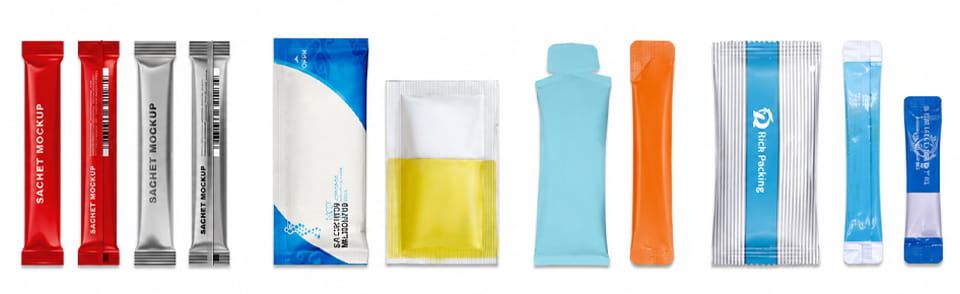
Jinlupacking のパウチ仕分け機は、スナックやコーヒーのパウチから洗剤や化粧品の小袋まで、幅広い業界にサービスを提供しています。, パウチ仕分け技術の幅広い応用性を反映.
要約すれば, 製品が小さな袋に入っている場合, バッグ, またはポーチの場合は、数えて確実に餌を与える必要があります, パウチ仕分け機が解決策の候補です. その柔軟性は現在使用されているほぼすべてのパウチ形式をカバーします.
適切なパウチ仕分け機の選び方
理想的なソーターの選択は、製品とラインの要件によって異なります. 考慮すべき主な要素は次のとおりです:
- パウチサイズ: 機械の許容される長さと幅を確認してください. 例えば, JinLu の仕分け機は長さ 185mm、幅 110mm までのパウチを処理します. ポーチがかなり大きい場合, 別のモデルが必要です. 形状も考慮: ほとんどの仕分け機はピローポーチを処理できます, スティックパック, そして長方形の小袋, ただし、非常に高いものや珍しい形状の場合はカスタマイズが必要になる場合があります.
- 必要な生産速度: ソーターの速度をラインに合わせます. 1分あたり何袋になるかを計算します (BPM) 充填剤と包装目標に基づいて必要な. ソーターにはさまざまな階層があります: 100 ~ 150 BPM で実行されるものもあります, ハイエンドモデルは 300 ~ 400+ BPM を実行します. 覚えて, より高速な速度は、多くの場合、より小さいバッグのサイズまたは製品の種類に依存します. 回線の量が多い場合, 高速ソーターを選ぶ; 線が小さい場合, 低速ユニットでも十分かもしれません.
- パウチ素材: フィルムや素材を検討する. ホイル, プラスチックラミネート, 紙袋の動作は異なります. フォイルやコーティングされたフィルムは滑りやすく、静電気が発生しやすい場合があります. マシンに次の機能があるかどうかを確認してください。 静電気防止機能 またはテクスチャードローラー (例えば. 防塵, 静電気防止ローラー). 一部の仕分け機では、さまざまな袋の質感に合わせてローラーの圧力や表面素材を調整できます。. ポーチが非常に軽い場合、または非常に硬い場合, メーカーがハンドリング機構を調整できるように、選択時にこのことを言及してください。.
- 下流機器: 仕分け機が何を供給するのかを考える. 自動箱詰め機ですか? ケースパッカー? 計数コンベヤ? これは放電形式に影響します. 例えば, 平らな小袋を積み重ねることを期待するカートナーに供給する場合, 仕分け機はパウチを平らに出力する必要があります. パウチ計数コンベアに供給する場合, 直立させたいかもしれません. ほとんどの機械では、排出の高さと向きを設定できます. 接続箇所も考慮する (例えば. コンベアの高さと制御の互換性).
- 衛生と清掃の要件: 医薬品または食品用途, 構造をチェックする. 探す 304/316 ステンレス鋼, 密閉型モーター, お手入れが簡単なデザイン. ソーターは必要に応じて GMP や CE などの基準を満たす必要があります。. クイックリリースコンベアベルトなどの機能, シールローラー, およびCIP (定位置クリーン) 互換性が重要になる場合があります. 原則として, 隙間が少ないほど, 掃除にはその方が良い. あなたの業界が製薬の場合, cGMP準拠のビルドを要求する.
マシンスペックを慎重に合わせることで (スピード, サイズ範囲, マテリアルハンドリング) あなたの製品とラインに, 最も効果的なモデルが見つかります. 実際に, ベンダーはポーチの寸法を尋ねます, 望ましいスループット, そして次に何が起こるか - その情報を使用して最適なソーターを入手します.
自動パウチ仕分け機と手動パウチ仕分け機
手動と自動の並べ替えを並べて比較すると、どちらを選択するかは簡単です。:
| 特徴 |
手動ソート |
パウチ自動仕分け |
| 労働要件 |
非常に高い (数人) |
低い (オペレーターが 1 人、またはオペレーターがいない) |
| 仕分け速度 |
限定 (数十袋/分) |
非常に高い (100–400袋以上/分) |
| 計数精度 |
オペレータ依存 (間違いが起こりやすい) |
自動化された高精度 (99.9%+) |
| 連続動作 |
難しい (倦怠感, 休憩) |
24/7 連続運転 |
| 人間との接触 |
直接 (汚染のリスク) |
最小限 (密閉型機械) |
| 統合 |
限定 (引き継ぎが必要) |
簡単 (ダイレクトコンベア出力) |
この表は主な違いを示しています. 手動による並べ替えは、非常に少量の生産量や遅いラインでも機能します, しかし、大規模になるとすぐに実行不可能になります. オートメーション 生産をスピードアップするだけでなく、一貫性とトレーサビリティも提供します. ほとんどすべての最新の包装工場で, 自動仕分け機への投資 報われる 出力を高めてエラーを減らすことによって.
結論
a パウチ仕分け機 製品を小さな袋や小袋に包装するあらゆる業界にとって重要な自動化ツールです. 自動整理することで, 整列する, カウント, そしてあなたの袋に栄養を与える, 手動のボトルネックを解消し、生産スループットを向上させます。. より高速な操作が可能になります (毎分数百個のパウチ), ほぼ完璧な計数精度, 人件費の削減, 衛生状態の向上 – 下流の箱詰め業者やケース包装業者での詰まりを防ぎながら.
高品質が必要な場合は、 自動パウチ仕分け機 医薬品小袋用, 食品の小袋, 液体スティックまたはその他の小さなポーチ, JinLu Packing のソリューションを検討してください. 機械をご用意しております (のように JL-PA-420) までを処理します 420 袋/分 >99.97% 正確さ. 当社の機械は箱詰めおよび計数機器とシームレスに統合されています. 当社のエンジニアリングチームは、お客様のパウチサイズに合わせて仕分けシステムをカスタマイズできます。, スピード, および包装ラインのレイアウト.
カスタマイズされた自動化に向けて, お問い合わせ ポーチの仕分けニーズについて話し合う. JinLu Packing はパウチ/小袋包装ラインのワンストップ ソリューションを提供します, 仕分けから充填まで, 箱詰め, もっと. 当社の専門家に理想的な選別および供給システムを設計してもらい、一貫した成果を実現します。, 高速, ライン上の完全に自動化された操作.
パウチ仕分け機に関するよくある質問
パウチ仕分け機で対応できるパウチの種類は何ですか?
最新のパウチソーターは多用途に使用できます. 平袋を仕分けできる, スティックパック, 立ち上がる (ドイ) ポーチ, ジッパーバッグ, 注ぎ口ポーチ, 不定形なバッグも. 例えば, 機械は多くの場合、三方シールおよび四方シールパウチをサポートしています。, 注ぎ口ポーチ, スタンドアップジッパーポーチ, スティックパック, と形のポーチ. バッグが機械のサイズ範囲内にあり、柔軟性がある場合, それはそれらを処理する必要があります. 特殊な形状や厚さの袋がある場合は、必ずサプライヤーに指定してください。.
パウチ仕分け機は医薬品の小袋を仕分けることができますか?
絶対に. 医薬品小袋 (粉体用, 顆粒, または液体) 主要なアプリケーションです. これらの機械は製薬基準を満たすように構築されています (ステンレス鋼, cGMP準拠). 医薬品に求められる高精度かつ衛生的な設計を実現します。. 実際に, 多くの製薬メーカーは、パウチソーターを使用して、手作業なしで用量パックをカートナーに供給しています。.
パウチ仕分け機とパウチ計数機の違いは何ですか?
パウチ仕分け機は、ランダムに並べられたパウチを単に数えるだけでなく、整列・配列する機械です。. 面倒なことになる可能性があります, 入力と出力をきれいにオーバーラップする, 順序付けられたストリーム. 対照的に, パウチ計数機 (またはカウンティングコンベア) 通常、ポーチはすでに一列に並んでいることを前提としています; 通過する際に、重量または光電センサーによって単にカウントし、分類するだけです。. 計数機は混合袋を分離したり方向を合わせたりしません. したがって、乱れた入力を処理する必要がある場合は、, 仕分け機が必要です; ポーチがすでに整っていて、数えるだけでいい場合, 計数機を使うことができます.
機械は箱詰め機に接続できますか?
はい. 実際には, パウチソーターは、自動カートナーやケースパッカーなどの下流の機器に供給するように設計されています。. 多くの場合、仕分け機から箱詰め機の供給口にコンベヤを直接取り付けることができます。. 多くの選別機では排出高さや方向を調整できます (フラット vs. 直立) 次のマシンに合わせて. このシームレスなハンドオフにより、連続したラインが作成されます。, 小袋充填機→パウチソーター→自動箱詰め機から直接, 間に手動の手順はありません.
パウチ自動仕分け機はどれくらいの速さで動作するのか?
速度はモデルや製品サイズによって異なります. 典型的な範囲は約からです 100 1分あたりのパック数 (ppm) までの小型機械用 400+ ハイエンドユニットのppm. 例えば, JinLuの高性能モデルは、 420 バッグ/分. ルイーダの選別機がヒット 400 バッグ/分. 低速マシン (100–150ppm) より小さい回線または低速な回線に存在します. 実際の速度は、パウチのサイズとパウチがどれだけスムーズに流れるかによっても異なります。. 希望の回線速度以上のモデルを必ず選択してください.
機械が処理できるパウチサイズ?
各マシンには指定されたサイズ範囲があります. 一般的な制限は長さ 80 ~ 185 mm、幅 10 ~ 110 mm 程度です。, しかしこれはモデルによって異なります. 例えば, JinLuの選別機は185×110mmまで対応, キーパックのハンドルの長さは 84 ~ 168 mm. 必ずメーカーの仕様書を確認してください. ポーチが最大値に近い場合, 確実に動作することを確認する (またはカスタムバージョンを検討してください).
生産ラインに適したパウチ仕分け機を選択するにはどうすればよいですか?
上記の「選択方法」セクションを参照してください。. 簡単に言うと: ポーチの寸法を定義する, 目標速度 (バッグ/分), と素材の種類. 次に、マシンの仕様がそれらと一致またはそれを超えていることを確認します。. カートナーまたは計数コンベヤーがある場合は、下流の機器も考慮してください。, ソーターが統合できることを確認する. 衛生要件を確認する (304医薬品ライン向けSS) 必要に応じて証明書も取得可能. 適切なサプライヤーは、モデルをニーズに適合させるのに役立ちます。. (例えば, 彼らはあなたのポーチの寸法を尋ねるかもしれません, 生産率, 適切な選別機を推奨する下流の機器。)
参考文献:
1.動くベルトコンベア上で品物を仕分けする. 一部 1: 物体を検出して分類するための技術 —— サイエンスダイレクト
2.対象物の外縁に応じた自動デザイン仕分けシステムを開発 —— ワイリーオンラインライブラリ
3.マニピュレーターによる間欠送りを備えたビジョンベースの選別機の設計と実装 —— リサーチゲート
4.構造化光学習と深層学習に基づく食品パッケージの認識および仕分けシステム —— arxiv.org
5.マシンビジョンとパラレルロボットによる薬袋仕分けシステムの設計 —— qikan.cmes.org