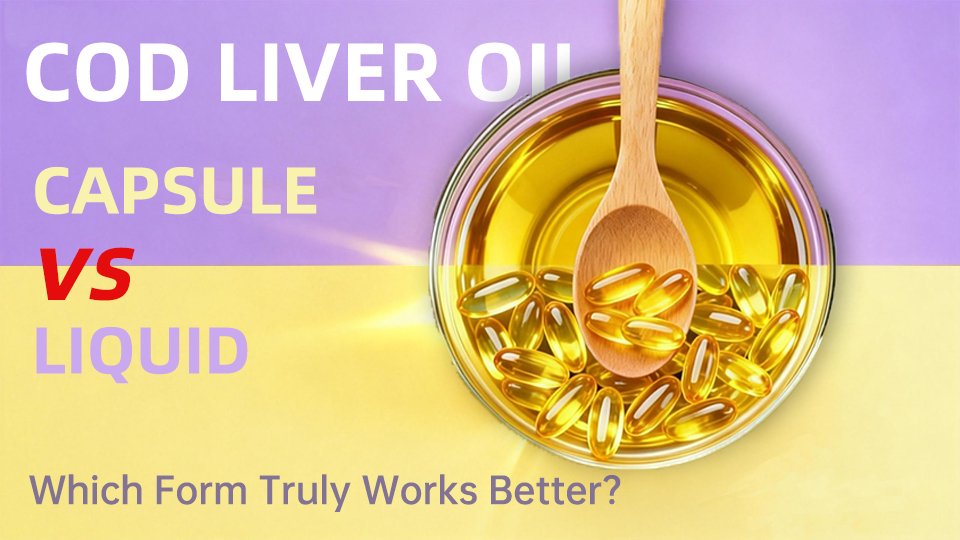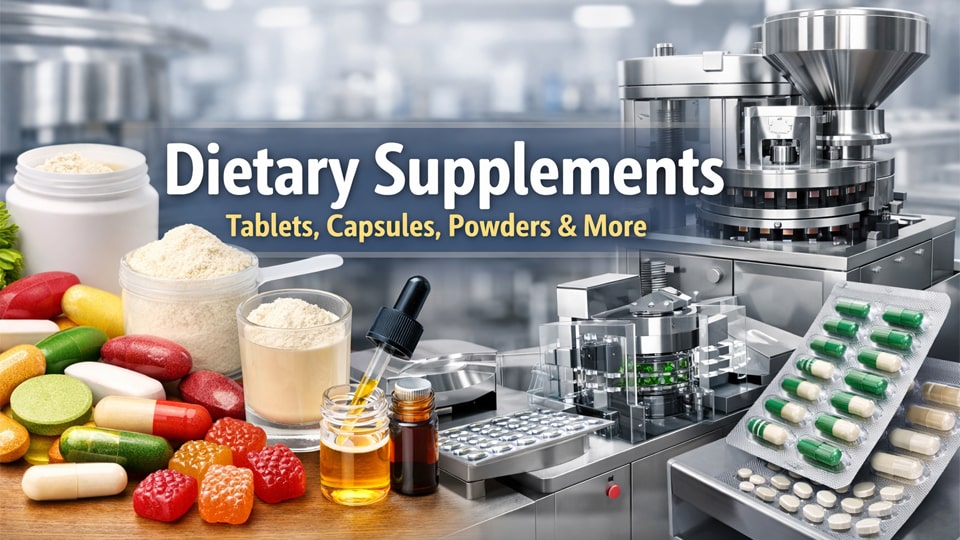

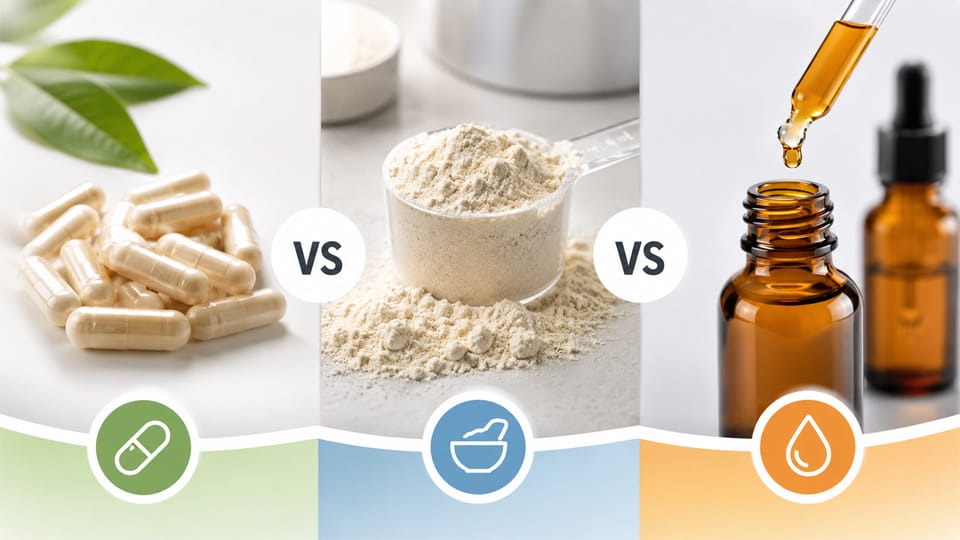
カプセル, 粉末, 液体サプリメントは、体が栄養素をどれだけ早く効率的に吸収できるかが異なります。. 液体 (すでに解散している) 一般に最も早く血流に入る, 次は粉末です (外殻が溶けない), カプセルは最初に殻を分解する必要があるため遅くなります。. しかし, 吸収 (血中への取り込み) そして バイオアベイラビリティ (実際に使用される栄養素の割合) 形状だけでなく配合の詳細にも依存する. カプセルは利便性と投与量の正確性を提供します, 粉末は柔軟性とコスト削減を実現します, 液体は錠剤を飲み込めない人にとっても早くて簡単です. 実際に, メーカーが選ぶ 補足フォーマット 吸収の利点と生産コストのバランスをとることにより、, パッケージング, そして消費者のニーズ. 例えば, プロテインと電解質のサプリメントは通常粉末です, ハーブエキスと 魚油はカプセルであることが多い (またはソフトジェル), 子供や高齢者向けのビタミン剤は液体の場合もあります. 以下にこれらの違いを詳しく説明し、比較表を示します。, 意思決定のフローチャート, および機器の考慮事項 (カプセル充填剤, 粉末パッカー, 液体瓶詰めライン) サプリメント生産者が正しい選択をできるよう支援する.
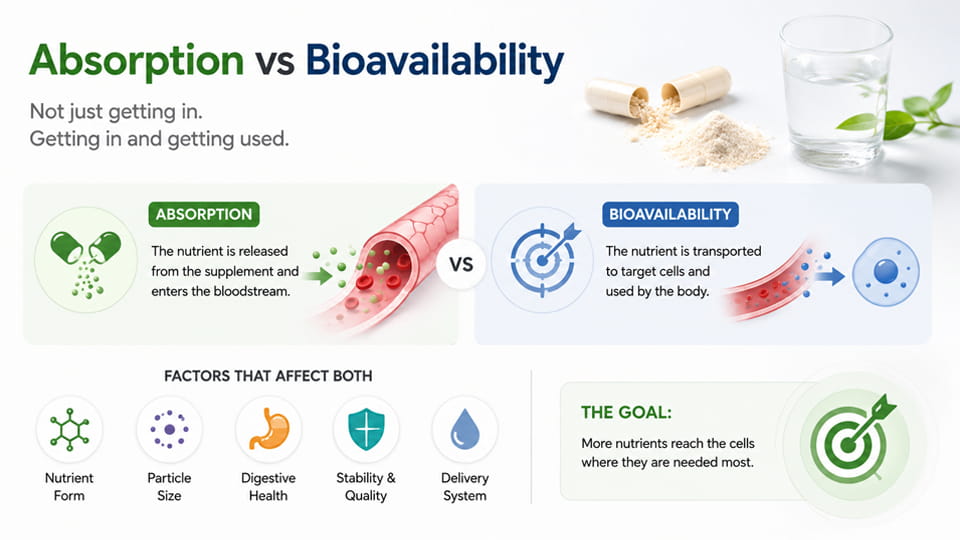
フォームを比較する前に, 定義することが重要です 吸収 そして バイオアベイラビリティ サプリメントで. 吸収 栄養素が腸壁を通って血流に入るプロセスです. バイオアベイラビリティ 実際に活性型で体循環に到達する線量の一部です. もっと簡単に言うと, 吸収は 血液に入る, 一方、バイオアベイラビリティは 使用可能であること. サプリメントは吸収される可能性がありますが、それでも効力は失われます (例えば, 肝臓の初回通過代謝による). したがって, サプリメントの有効性を決定する 2 つの要素: どれくらいの速さで血液中に入るのか (吸収率) そして そのうちのどれくらいがアクティブのままか (バイオアベイラビリティ).
吸収に影響を与える主な要因には、サプリメントの溶解度が含まれます, 粒径, そして配合, 個々の要因だけでなく (腸の健康, 食物または脂肪の存在, 他の栄養素との相互作用). 例えば, 脂溶性ビタミン (a, D, e, k) 食事の脂肪が適切に吸収される必要がある, カプセルに入っているのか、液体に入っているのかは関係なく、. 一部のミネラル (のように マグネシウム) 単純な酸化物よりもクエン酸塩またはキレートの形でよりよく吸収されます. したがって, サプリメント 定式化 (ピペリンなどのクルクミン増強剤を含む) 多くの場合、納品フォームだけよりも重要です. 要約すれば, 吸収 血流に入ることを意味します, その間 バイオアベイラビリティ 手段 使える 分数 – 2 つの異なるが関連する概念.
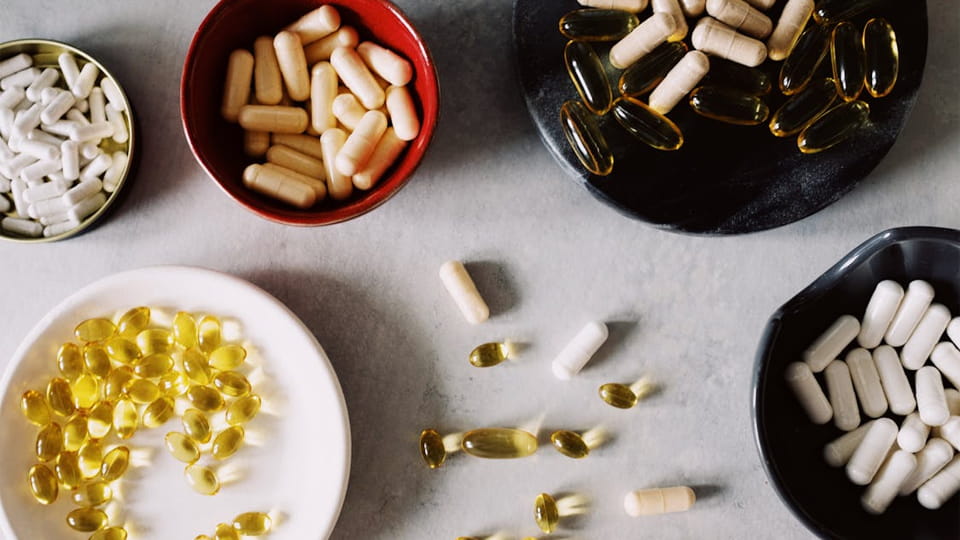
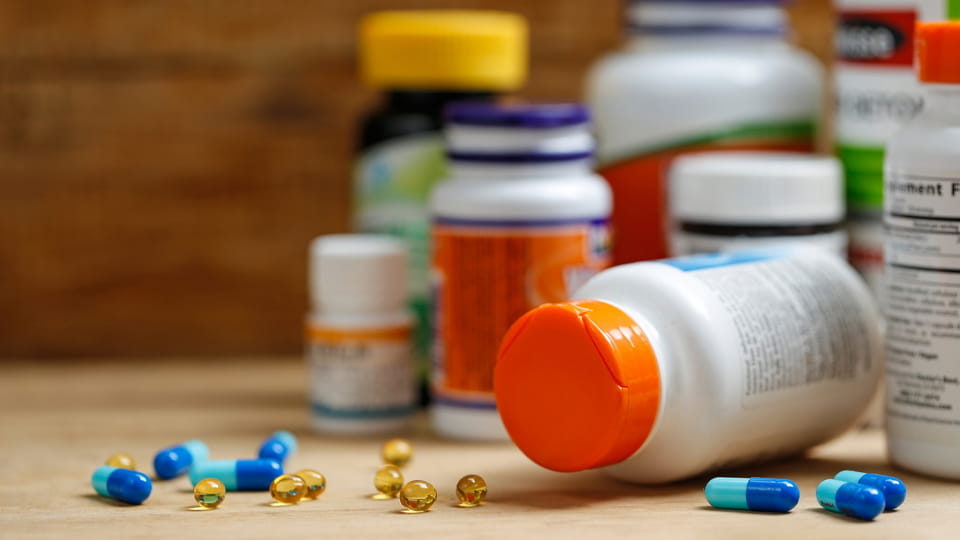
カプセルは伝統的な剤形です ゼラチンまたは植物由来の殻に粉末を詰めたもの, ペレット, 顆粒または液体油. 人気があるのは、 事前に測定された, 常温保存可能, そして飲み込みやすい. 一度摂取すると, カプセルの殻は胃の中で溶けます (通常 20 ~ 30 分以内), 有効成分を放出して小腸で吸収される.
カプセルの利点:
カプセルの限界:
例: ビタミン剤にはカプセルがよく使われます (マルチビタミン, ビタミンD), ハーブ抽出物 (ターメリック, 人参), プロバイオティクス, クレアチンなどのアミノ酸, そして魚油 (ソフトジェル). 利便性と長い保存期間が重要な製品に適しています. 例えば, コラーゲンとビタミンB12はカプセルとして販売されることが多い. メーカーとして, の 自動カプセル充填機 1時間あたり数百万個のカプセルを効率的に処理できます (例えば. Jinlu のモデルは次のようになります。 468,000 高精度のハードカプセル/時間).
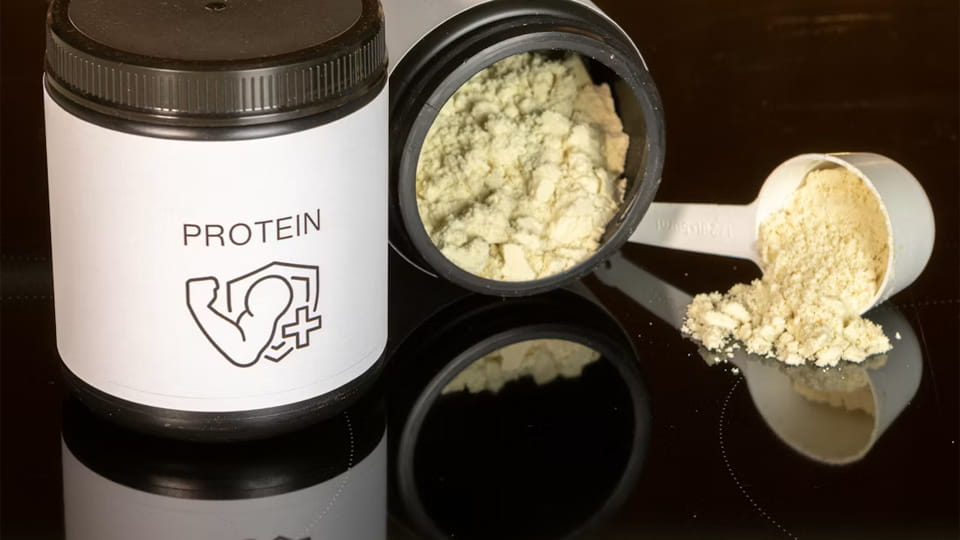
粉末サプリメントは、有効成分を乾燥させて微粉末にしたものです。. 通常、摂取前に水または他の飲料に混ぜて使用します。. パウダーはスポーツ栄養分野で特に人気があります (プロテインパウダー, プレトレーニング, 電解質) そして高用量の栄養素については (コラーゲンやキノコの粉末など) カプセルが非現実的に大きい場合.
粉末形態の利点:
粉末形態の欠点:
例: プロテインパウダー (乳清, 植物性タンパク質) クレアチンとクレアチンは古典的な粉末サプリメントで、飲み物に混ぜるだけです。. 電解質またはグリーンパウダー, コラーゲンペプチド, 粉末ビタミンC, またはハーブパウダー (アシュワガンダやターメリックパウダーブレンドなど) も一般的です. 便宜上、企業がサプリメントを 1 回分分のスティック状の小袋で販売することがあります。 (例えば. ドリンクミックス, ビタミンCスティック). 製造側では, 縦型フォーム充填シール (VFFS) 機械 またはスティック包装機は粉末を小分けして包装することができます. 例えば, Jinlu のスティックサシェパッカーは、±0.02g の精度で 1 レーンあたり 1 分あたり最大 40 袋を処理します, 1回分の粉末パケットに最適.
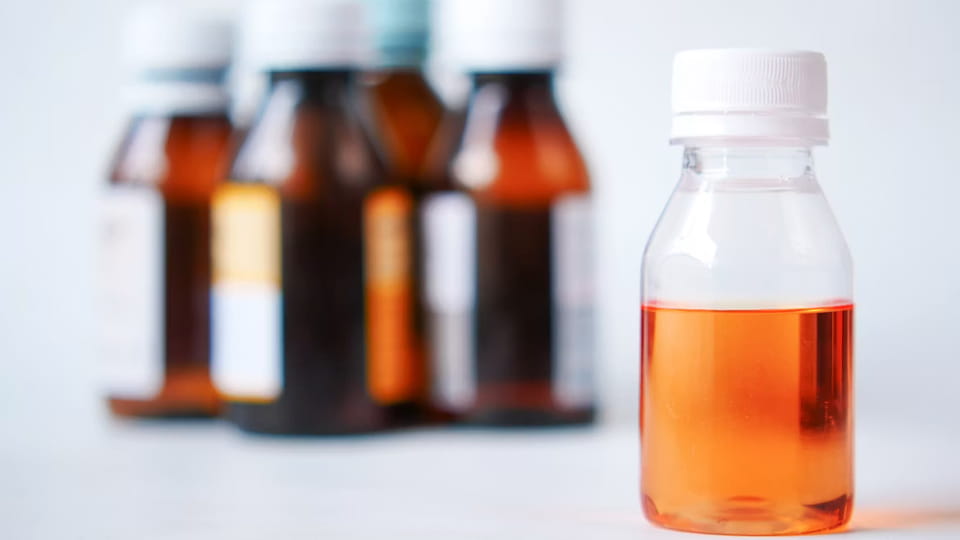
液体サプリメントはすでに溶けています (または停止) 飲み物のような形で. 例としては液体マルチビタミンが挙げられます。, ハーブチンキ剤, またはドリンクミックス (時々すぐに飲める). 液体は溶解ステップを完全に回避するため、最も速く吸収されます。. テキサス州保健局が説明するように, 「液体サプリメントを摂取すると…栄養素はすでに溶解状態にあるため、体は栄養素を迅速かつ効率的に吸収できます。」.
液体の利点:
液体の欠点:
例: 一般的な液体にはチンキ剤が含まれます (例えば. エキナセアドロップ), 液体ビタミン (B12やマルチビタミンドロップなど), ハーブシロップ, すぐに飲めるサプリメント (グリーンショット, コラーゲンドリンク). 例えば, 液体ビタミンDまたはビオチンは簡単に投与できるため人気があります. ものづくりの立場から, 液体充填機 使用されています. Jinluの液体フィラー, 例えば, 毎分 20 ~ 80 本のボトルを処理できます (5–4,800本/時間) ±0.2gの精度, 滋養強壮に適しています, シロップ, そして飲み物.
以下は、吸収性と実際的な要素の観点から 3 つのフォーマットを簡単に比較したものです。. 経験則として, 液体は最も早く吸収されます (溶解ステップなし), 次は粉末です (水分を補給すればすぐに使用可能), そしてカプセルは遅いです (殻の溶解が必要). しかし, バイオアベイラビリティ (効果的な摂取) 配合にもよるけど (例えば. エンハンサーを追加, 脂溶性栄養素と水溶性栄養素).
| 特徴 | カプセル | 粉末 | 液体サプリメント |
| 吸収速度 | 中程度 – 殻が溶ける (約20~30分) | 早い – 材料はすでに無料です (混合時約 10 ~ 20 分) | 非常に早い - 栄養素がすぐに吸収されます (約5〜10分) |
| バイオアベイラビリティ | 多くの食材に適しています (配合に応じて) | カプセルよりも高い場合が多い | 潜在的に最高 (障壁がない) |
| 利便性 | 高 – ポータブル, 投与前 | 中 – 混合が必要 | 変化 – 一口飲むか飲み込むか, 混合する必要はありません |
| 味 / おいしさ | 中性 (同封された) | 変動性 – 風味付けまたはマスクされることが多い | 普通に味付けされてる (甘味料), より美味しいかそうでないかも知れません, 式に応じて |
| 用量の柔軟性 | カプセルごとに固定; 開けると半分になる | スコップで完全に調整可能 | 調整可能 (スポイトまたは注ぐ) |
| 貯蔵寿命 | 長さ (ソリッドフォーム, 封印された) | 長さ (乾燥した形, 乾燥したままにしておくと) | 一般的に短い; 冷蔵や保存料が必要なものもある |
| 携帯性 | 素晴らしい | 適度 (容器または小袋が必要です) | 適度 (ボトル, 流出の危険性) |
| 生産コスト | 適度 (カプセル成形によりコストが増加する) | 低い (ボトル/浴槽に簡単に充填) | 高い (特別な充填, パッケージング, 配送) |
| 最適な用途 / 適合性 | 一般用途; 通常の用量での有効成分 | 高用量の栄養素, スポーツサプリメント, カスタマイズ可能なレジメン | 迅速な配送ニーズ, 小児用または高齢者用のビタミン, おいしさに敏感なユーザー |
テーブル: サプリメント形式の実践的な比較. 情報源: 健康産業と製造に関する文献.
どの形式が「最も吸収される」かについて、万能の答えはありません。それは栄養素によって異なります。, 使用事例, そしてターゲットとなる消費者. ここでは一般的なガイドラインをいくつか示します:
最終的に, 状況に応じて吸収を考慮する: テキサス州保健局が指摘しているように, 「液体ビタミンは多くの場合、固体形態と比較して潜在的に高い生体利用効率を誇ります。」. しかし, 製剤の品質と納品システム (例えば. リポソームまたは吸収促進剤を使用する) カプセルか粉末よりも重要な場合があります. 消費者が実際にサプリメントを一貫して摂取することも重要です; 「最良の」フォームとは、彼らが定期的に使用するフォームです.
サプリメント会社がフォーマットを選択する場合, この決定により、製造ラインとパッケージングのニーズが促進されます. 以下は各フォーマットの主要な機器カテゴリです。, 仕様例を使用して、 ジンルパッキング 機械:
サプリメントフォームを正しい機器に適合させることにより、, メーカーは効率性を保証します, 高品質の生産. 例えば, カプセルベースのビタミンラインでは、自動カプセル充填機と カプセルポリッシャー, 一方、新しいエナジードリンクサプリメントには低温殺菌を備えた高速液体瓶詰めラインが使用されます。. Jinlu の機械は柔軟性を考慮して設計されています: 多くの場合、さまざまなカプセルサイズに対応する交換部品が含まれています, 粉体/液体ラインは自動キャッピングおよびラベル付けシステムと組み合わせて完全なソリューションを実現できます。.
[jl_youtube ソース=”https://www.youtube.com/embed/MFcu-kFN2Vc”]
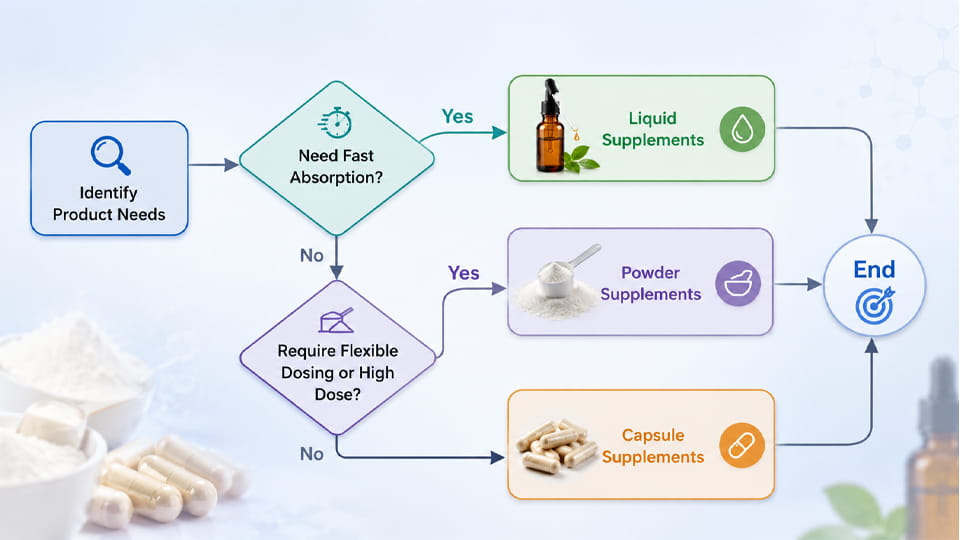
フローチャート: この意思決定フローでは、優先順位から始めることを提案しています. 迅速な摂取が重要な場合 (例えば. トレーニング後の回復, 小児用量), 選ぶ 液体. 非常に柔軟な投与または大量の投与が必要な場合 (または複数の粉末を組み合わせる), 粉 理想的です. さもないと, カプセル 通常は標準的な選択です. 消費者の好みに注意してください (例えば. 使いやすさ) 特定の有効成分がこれらの一般規則を無効にする場合があります.
計画を立てるとき、 サプリメント製品, このチェックリストを使用して、適切な形式と機器を選択してください:
このチェックリストに従うと、製品の目標と生産の現実を一致させることができます。, 費用対効果が高く、高品質な打ち上げを保証します.
「カプセル vs 粉末 vs 液体」の議論, 絶対的な勝者はいない. 液体 あらかじめ溶解されているため、最も早く吸収されます, しかし、それらはより高価であり、保存期間が短いです. 粉末 カスタム投与が可能で、一般に錠剤よりも速い摂取が可能, 高用量のサプリメントに最適です (タンパク質, 電解質). カプセル 最も便利で安定しています, ただし、シェルの溶解には追加の時間が必要です. バイオアベイラビリティは、多くの場合、製剤の品質により大きく左右されます。 (溶解促進剤, 賦形剤) 剤形単独よりも.
メーカー向け, 重要なのはバランスです 消費者のニーズ (速い吸収 vs. 利便性) と 生産上の考慮事項. 主流のビタミンやハーブ製品にはカプセルを使用する, スポーツ栄養のための粉末、または用量の柔軟性が必要な場合, ニッチな即効性または摂取しやすいサプリメント用の液体. 適切な機械を選択します – カプセル充填機, 粉末パッカー, および液体充填剤 – 効率的な生産を確保するため. 適切な配合と機器を使用することで (Jinluの高精度カプセルなど, 小袋, および液体充填ライン), 栄養素の摂取と市場での成功の両方を最大化できます.
多くの場合, 液体サプリメントはすでに溶解しており、最初にカプセルの殻を分解する必要がないため、わずかに早く吸収されます。. しかし, より速い吸収は必ずしもより高い効果を意味するわけではありません. 実際のバイオアベイラビリティは成分によって異なります, 製剤品質, 個人の消化器の健康状態.
はい, 粉末サプリメントは一般に、溶解する必要のある殻がないため、カプセルよりもいくらか早く消化と吸収を開始します。. 通常、ほとんどの栄養素ではその差は小さいです, ただし、プレワークアウトなどの製品ではより顕著になる可能性があります。, 電解質, またはアミノ酸.
常に最高のバイオアベイラビリティを提供する単一のサプリメント形態はありません。. 液体の方が吸収が早い場合が多いですが、, 栄養形態, 配信技術, 成分の安定性, 配合設計は、体が実際に利用できる栄養素の量に大きな影響を与えます。.
利便性のためにカプセルが好まれることがよくあります, 正確な投与, 携帯性, そして味のマスキング. 一般に、プロテインなどの高用量製品には粉末サプリメントの方が適しています。, コラーゲン, クレアチンは、大量の有効成分をより経済的に送達できるためです。.
プロテインパウダーなどのスポーツ栄養製品, クレアチン, 電解質ブレンドには通常、より大きな分量が必要です. これらの製品をカプセルとして製造すると、消費者は1回分につき複数のカプセルを摂取する必要があります。. 粉末フォーマットにより、投与の柔軟性が向上し、生産コストが削減されます。.
一般的に, はい. 液体サプリメントは多くの場合、特殊な配合プロセスを必要とします, 防腐剤, ボトル包装, 充填装置, 安定性制御の強化. これらの要因により、通常、カプセルや粉末に比べて製造コストと包装コストが増加します。.
液体サプリメントは、飲み込みやすく、カプセルや錠剤を使わずに摂取できるため、子供や高齢者にとって好まれる選択肢となることがよくあります。. しかし, 最適な選択は個人の好みと栄養ニーズによって異なります.
いいえ. 吸収は複数の要因の影響を受ける, 栄養素の種類も含めて, 消化器の健康, 食事のタイミング, 成分の溶解度, 粒径, と配信テクノロジー. 剤形は全体的な吸収と有効性に影響を与える要因の 1 つにすぎません.
カプセルは、有効成分が密閉されたシェル内に保護されているため、一般に最長の保存期間を提供します。, 湿気への曝露を減らすのに役立ちます, 酸素, そして光. 液体サプリメントは通常、賞味期限が短く、防腐剤や特殊な包装が必要な場合があります。.
メーカーは通常、いくつかの要素を評価します, 成分の特徴も含めて, 対象となる消費者, 必要用量, 生産コスト, 期待される保存期間, 梱包のニーズ, そして市場の需要. 例えば, ハーブエキスはカプセルに入って販売されることが多い, 粉末のスポーツ栄養製品, 液体状の子供用ビタミン.
サプリメントの形式が異なれば、異なる製造設備と包装設備が必要になります:
• カプセル: カプセル充填機, カプセル研磨機, カプセルカウントライン
• 粉末: 粉末充填機, 小袋包装機, スティックパックマシン
• 液体: 液体充填機, ボトルキャッピングマシン, ラベルシステム
製品の品質を維持するには、適切な機器の選択が不可欠です, 生産効率, 規制遵守と.
ほとんどのサプリメント製品の場合, 多くの場合、消費者のコンプライアンスは、吸収速度の小さな違いよりも重要です. 消費者が毎日一貫して摂取するサプリメントは、一般に、理論的には吸収が速く、使用が不便または不快な製品よりも効果的です。. これが、カプセルが世界中で最も人気のあるサプリメント形式の 1 つである理由の 1 つです。.
参考文献:
1.栄養補助食品 — 私たち. 食品医薬品局
2.栄養補助食品に関するQ&A — 私たち. 食品医薬品局
3.栄養補助食品およびハーブサプリメント — NCCIH
4.栄養補助食品 – Nutrition.gov
5.栄養補助食品を賢く利用する – NCCIH