×
オンラインサービス
✉️メール: 💬WhatsApp: +86 18011793320
💡
  • ブログ
  • Best Capsule Filling Machine for Pharmaceutical Contract Manufacturers: A Multi-Product Production Guide

Best Capsule Filling Machine for Pharmaceutical Contract Manufacturers: A Multi-Product Production Guide

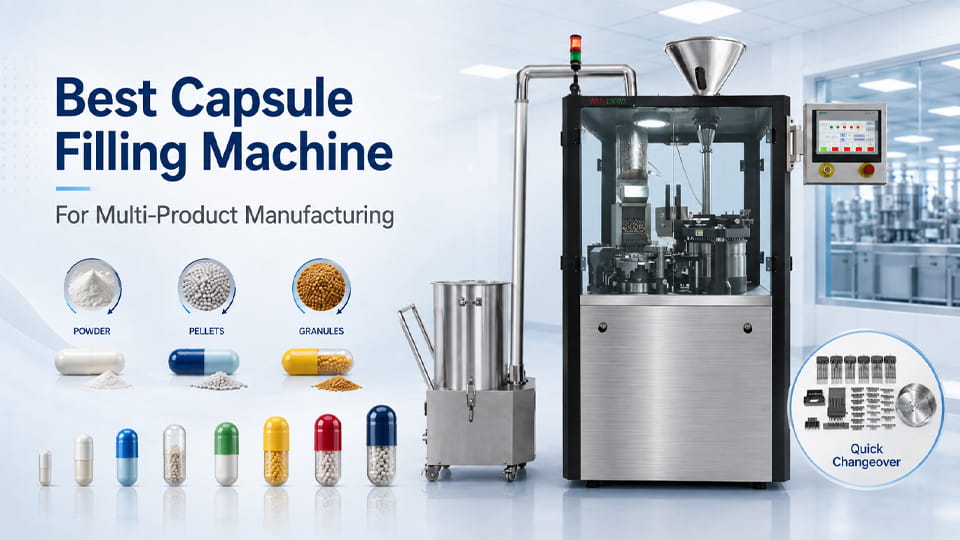
For a contract manufacturer handling diverse products, the best capsule filling machine is a high-speed automatic machine with multi-size capability, fast changeovers, and easy cleaning. It should handle the full capsule range (#000–#5) and fill powders, 顆粒, pellets or similar media. Key features include modular tooling for under 15-minute mold swaps, precision dosing (例えば. ≤3% fill error or ≥97% fill accuracy), and sanitary design (CIP or tool-less disassembly) to meet cGMP cleaning standards. 実際に, machines like Jinlu’s NJP-1500D (90,000 キャップ/時間, #000–5, <15min changeover) exemplify these qualities. The right choice balances throughput with real-world efficiency: don’t oversize based on peak speed alone, and always plan for cleaning, downtime and validation.

Capsule filling machine for multi-product pharmaceutical manufacturing with different capsule sizes, filling materials and quick-change tooling.


Why Contract Manufacturers Need Flexible Capsule Filling Equipment

Pharmaceutical CMOs (受託製造業者) run many SKUs on shared lines. They often must switch between products, カプセルのサイズ, and formulas rapidly. A single-purpose machine (configured for one size or product) can’t meet this variety without multiple units. A multi-size capable filler covers #000–#5 (largest to smallest hard capsule) 1台のマシンで. This lets CMOs consolidate equipment, saving space and capital. It also accelerates launches of new products: instead of ordering a new filler for each SKU, an adjustable machine can produce multiple recipes.

しかし, flexibility brings tradeoffs. Changeovers become a bottleneck if tooling swaps are slow or complex (次のセクションを参照してください). Cleaning and validation are also critical: a CMOs filler must be easy to sanitize between different drugs to avoid cross-contamination (non-dedicated equipment しなければならない be cleaned between batches). 要するに, CMOs need capsule fillers designed for rapid mold changes, gentle cleaning, and precise dosing so one machine can reliably make many products under GMP rules.


Key Selection Factors for Multi-Product Capsule Filling

When evaluating machines for a multi-product environment, focus on these factors (table below), then read the details after. A well-balanced choice minimizes compromises across your portfolio.

要素 何を探すべきか
Capsule Size Range Supports all needed sizes (#000–#5 is common in pharma) without special mods. Equally important is quick changeover between sizes.
Formulation Types Handles your powders/granules. Check if it can dose your specific API powder, pellets or micro-tablets. Some models even dose liquids (requiring special nozzles).
生産速度 Rated output (カプセル/時間) should exceed your highest run rate. But note quoted speeds assume ideal conditions (サイズ #00, 自由流動性の粉末).
Changeover Ease Look for modular tooling and quick-adjust designs. Modern machines can swap mold sets in <30 分 (15 min in advanced models).
Cleaning/CIP Design GMP requires validated cleaning between products. Prefer stainless steel contact parts and CIP capability or tool-less disassembly.
Filling Accuracy Check dosing system (auger/disc, タンピングピン) and precision specs. Good fillers hit ~±1–3% weight variation. High-end lines advertise >97% 塗りつぶし精度.
自動化レベル Fully automatic machines run continuously with minimal labor (auto load/lock, PLC制御), while semi-auto requires an operator but costs less (以下を参照してください).
検証サポート Confirm the machine supports IQ/OQ/PQ protocols, data logs and CFR21 Part 11 必要に応じて. Check if supplier provides validation docs or assistance.
フットプリント & スケーラビリティ For CMOs, floor space and future growth matter. A single flexible machine saves space vs multiple dedicated units, but ensure it can scale (例えば. adding stations or linking fillers if volumes rise).

Each factor above should be tailored to your situation. 例えば, if you handle potent APIs, の Cleaning/CIP Design becomes extremely crucial (you’ll need full containment or frequent validated cleanings to protect operators and prevent cross-contamination). If you frequently switch between many capsule sizes, then “Changeover Ease” is paramount; as noted below, skipping size-change automation can cost hours of downtime.


スピード vs. Real-World Efficiency

High capsule throughput is appealing, but real-world efficiency depends on more than top speed. Manufacturers often quote machine capacity under ideal conditions, but actual output can be much lower if your product is challenging. 例えば, fine or sticky powders may jam an auger, or small capsules yield slower pace. Always factor in the effects of capsule size, 粉体の流れ, and downtime..

For capacity planning, start with your required output (capsules per batch or per year) and work backwards. Determine how many production hours you can realistically run (例えば. two shifts vs full 24×7). Then divide your needed capsules by operating hours to get a target capsules/hour. Compare this to the machine’s effective speed (often 80–90% of its max rating). 注記: Oversizing can backfire if other line equipment (カウント, キャッピング, ラベリング) can’t keep up. As one guide put it, installing a 150k/hr filler on an 80k/hr line caused 47% idle time, wasting money. Always aim for balanced line throughput.

To capture efficiency, also account for changeover and cleaning losses. Even a “30-minute” changeover reduces capacity if it happens between every batch. If your line switches SKUs frequently, include those downtime windows in your calculation. 実際に, target a filler whose 効果的 容量 (actual run time output) exceeds your peak need, so you have headroom for changeovers or minor slowdowns.


Changeover Time and Flexibility

Long changeovers can erode the benefits of any flexible machine. Traditional rotary capsule filling machines often required 4–6 hours for a size change. Modern designs use servo drives and quick-lock mold plates to cut that dramatically – often to 30–45 minutes for a full size swap. When evaluating, ask suppliers to demonstrate a size change on your capsule sizes.

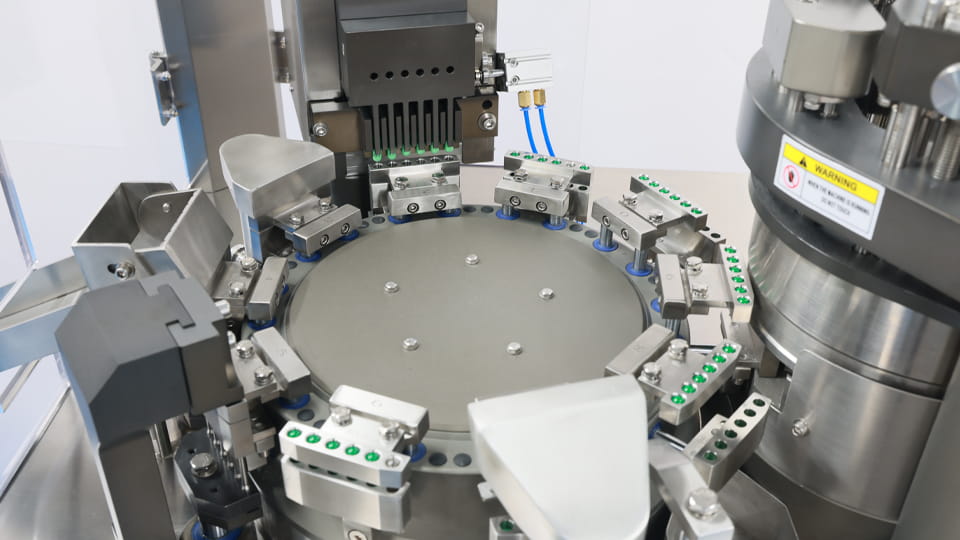
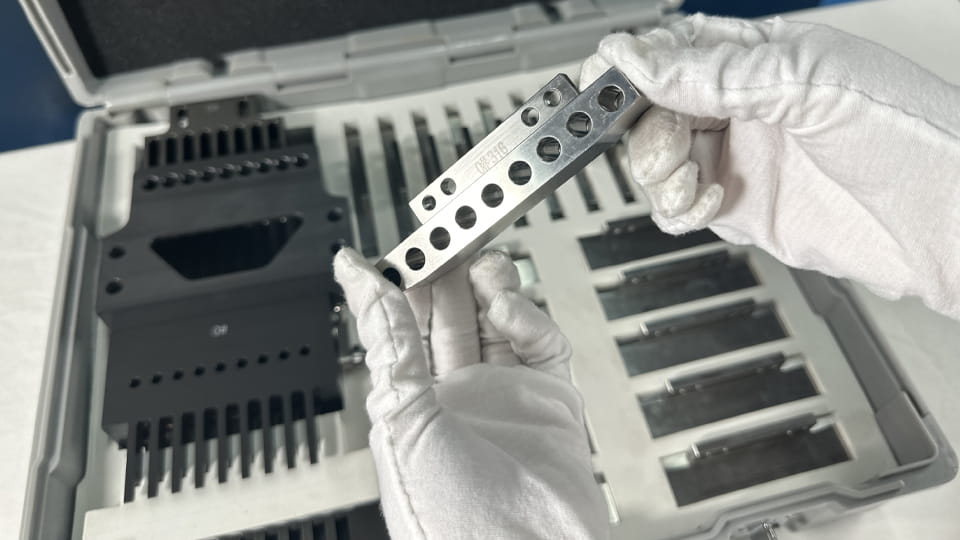
Ease of changeover comes from modular components: typically the capsule feeding station, the upper/lower mold plates, the dosing disc and scraper, the filling rods, and the discharge guides must all be switched for a new size. Machines with tool-less clamps or indexed mold housings can save time here. 例えば, Jinlu’s NJP series uses a modular mold design that enables full mold changes in under 15 分. In one real-world case, switching from a cam-driven filler to a servo-driven one cut changeover from 6 までの時間 35 分, saving over \$120,000 年間.

要約すれば, minimize changeover: look for machines with quick-mold-release, preset adjustment features, and stored “recipes” so operators don’t have to manually fine-tune offsets each time. If you expect dozens of size changes per quarter, changeover speed should be a top selection criterion.


クリーニング, 汚染管理 & コンプライアンス

A pharmaceutical CMO must enforce strict cleaning and contamination controls when running multiple products on one machine. FDA guidance (and simple GMP logic) state that nondedicated equipment must be cleaned between different products 相互汚染を防ぐために. 実際には, an FDA warning letter recently noted it is “unacceptable as a matter of CGMP to manufacture drugs using the same equipment … also used to manufacture non-pharmaceutical products” without rigorous cleaning.

To meet these requirements, choose a pill capsule filler with 衛生的なデザイン: smooth 316L stainless construction, rounded edges, 最小限の隙間, and sealed bearings where possible. Many machines now support 定置洗浄 (CIP): built-in spray balls and circulating cleaning systems that let you wash internal surfaces without full disassembly. If CIP is unavailable, verify that all hoppers, 投与ディスク, and feed trays can be removed or opened tool-free for manual cleaning.

Also establish validated cleaning protocols: worst-case soiling (例えば. highly potent or sticky ingredients) must be removable to acceptable residue limits. The pharmaceutical equipment upplier should provide cleaning guides or even simulated-contamination tests. ついに, maintain thorough cleaning logs as required under 21 CFR 211.67(b). (As one FDA inspector reminded, inadequate cleaning validation is a repeat violation.) 要するに: design for cleanability and document everything. Ensuring fast changeovers is moot if the machine can’t be cleaned quickly and reliably between batches.


Dosing Systems for Powders, 顆粒, & Special Fills

Not all formulas flow the same. Capsule filling machines use different dosing mechanisms to handle product variability. Common systems include:

  • オージェまたはディスクフィラー: Many automatic machines use a rotating auger (スクリュー) または 投与ディスク to meter powder. The disc traps powder and forms a plug that drops into the capsule. Look for fine electronic adjustment of fill volume via a PLC interface, and possibly a vacuum or vibration-assisted hopper to feed difficult powders.
  • タンピングピン: Some fillers add タンピングピン (plungers) that gently compress the powder in the disc, increasing fill density. Adjustable tamping depth can improve consistency. This works well for fine or hygroscopic powders.
  • ペレット & Mini-Tablets: If you fill small pellets or mini-tablets, confirm the machine’s dosing area can handle them. Some models allow an “insert” in the auger or use a different feed screw.
  • 液体 & 油: For liquid-oil fills, you need a specialized 液体カプセル充填剤 (a related machine type with pumps/nozzles). Standard dry-fill machines cannot meter liquids accurately.
  • Feedback/Controls: Advanced units might include load cells or inline checkweighers to monitor fill weight and reject under/over fills in real time.

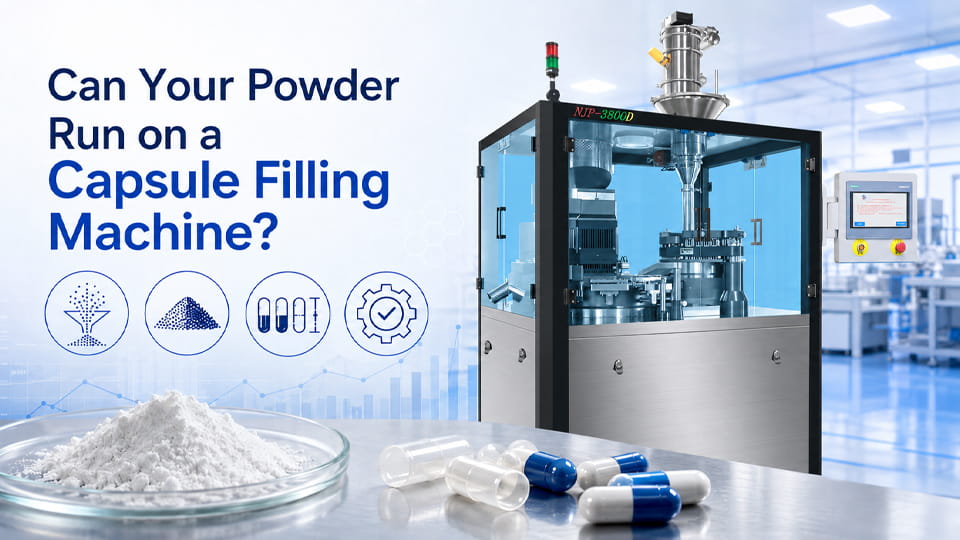
Aim for fill weight accuracy within ±1–3% of target. Top-tier machines (like high-end pharma capsule maker machines) advertise precision in this range. 例えば, Jinlu’s NJP-3800D automatic filler maintains >97% 重量精度. Always verify with test data: ask vendors for typical weight variation at your target capsule size and weight.

Dosing system selection should match your material. If you handle very fine, electrostatic, or cohesive powders, make sure features like anti-static coatings or fluidizing platforms are available. And always ensure the contact parts material suits your chemistry (generally 304 または 316 stainless steel is standard). 要約すれば, match the dosing tech to your product and confirm accuracy specs with evidence.


Capsule Size Flexibility: One Machine vs. Multiple

Choosing between one multi-size machine or several dedicated machines is a classic trade-off. Consider these pros and cons (table below) in the context of your SKUs and volumes.

側面 One Multi-Size Machine Multiple Dedicated Machines
Capsule Range Handles full range (例えば. #000–#5) 切り替えあり. Requires tool swaps between sizes. Each machine tailored to one size (no swaps needed per machine).
Capital Cost Lower upfront: buy one high-end unit instead of many. より高い: multiple machines (often with overlapping features).
Floor Space Saves space with one footprint. Larger footprint; multiple units require more room.
スループット Limited by max speed of one machine. If volumes are high, you may need a very big machine. Combined throughput can be higher (parallel running); size can match each product’s volume.
Product Mix Flexibility 非常に高い: any product can use the same machine (with changeover). Great for many SKUs. Fixed by machine; switching product means moving batches between machines or buying additional units.
切り替え & ダウンタイム You’ll incur downtime for every size change (とクリーニング) on that one line. No size-change downtime on each unit (they stay set up); but you’ll need cleaning anyway.
Clean Risk Every batch cleaning between products, higher cross-contam risk if not cleaned well. If dedicated per SKU or containment, lower cross-contam risk (with fewer cleaning cycles needed).
メンテナンス Only one machine to maintain and spare-part inventory for. More machines means more upkeep and parts to manage.
Utilization May have idle time if demand is low for some sizes. Each machine can run continuously at its designated size if demand exists.
Future Scaling Scale by upgrading to faster model or adding same type machine later. To increase capacity for a size, add more units of that size.

A single flexible filler is generally best if: you have many small-to-medium batches and need space or capital efficiency, and you can schedule changeovers. Multiple dedicated machines are better if: one or two products dominate volume (justifying their own machines), or if contamination risk demands strict separation (例えば. one machine for highly potent, another for standard formulations). For most CMOs with 複数 medium-volume products, one adaptable machine – or a pair of flexible machines – is often optimal.


自動 vs. Semi-Automatic Fillers (比較)

Semi-auto and fully automatic capsule filling machines each have use cases. 一般的に:

特徴 半自動充填機 Fully Automatic Filler
出力 (キャップ/時間) 適度: ~10,000–40,000 (typical) 高い: ~30,000–200,000+ (up to 468k in top models)
投資コスト より低い (tens of thousands USD). Much higher (typically six-figure price tags).
Operator Labor Requires 1 operator loading capsules and powder. 最小限 (1–2 operators) – machine auto-feeds and ejects.
柔軟性 良い: many can switch sizes, but manual load adds cycle time. 良い: some can switch sizes too, but with preset programs; very fast continuous run.
切り替え Generally easier (fewer stations), but still takes minutes to swap parts. Also takes minutes, but machines often include automated adjustments and recipe storage for changeover.
Floor Space Smaller footprint. より大きな, with more stations/turrets.
Typical Users Small companies, 栄養補助食品, contract labs, or CMOs with <40k/hr needs (as “bridge” solution). Large pharma/nutra manufacturers with high demand. Better if demand justifies >50k/hr throughput.

実際に, many contract makers find semi-automatics ideal for initial volumes or pilot batches, since they greatly cut labor vs manual without overspending on a full line. But as product lines grow or diversify, the consistency and speed of fully automatic rotary machines become attractive. の table above highlights that semi-automatics trade speed for cost and simplicity, whereas automatics excel at high volume but require significant investment and technical skill to run.


7 Key Questions to Ask Capsule Filler Vendors

When speaking with pharma machinery manufacturers or OEMs, ask directly:

  1. Capsule Size Range: “Which capsule sizes does your model support?」 Ensure #000–#5 compatibility if needed, and ask how mold changeover is handled.
  2. 切り替え時間: “How long to swap sizes and tooling?」 (Request a demo showing a full changeover.) Quick-lock, color-coded parts or hydraulic assists can shrink downtime.
  3. Dosing Options: “What dosing system does it use, and can it handle X material?」 (X = your powder/granule/pellet.) Some machines offer multiple fill systems (オーガー, タンピング, even vacuum).
  4. 洗浄性: “Is it CIP-capable or quick to disassemble?」 Look for smooth CIP spray ports or removable hoppers/trays without tools.
  5. Throughput Specs: “What’s the nominal output by capsule size, and what throughput should I expect with my product?」 (Ask for performance data with similar formulations.) Remember quoted rates assume ideal conditions.
  6. オートメーション & コントロール: “Does it have recipe storage, PLC/表示器, データロギング (21 CFRパート 11)?」 Good automatics let you save product recipes for faster changeovers, and produce electronic batch records.
  7. サポート & 検証: “What’s included in training, サービス, and validation support?」 Ensure the vendor provides documentation for IQ/OQ/PQ, SOPガイダンス, and a parts list. Rapid tech support (especially if overseas) is crucial for CMOs on tight timelines.

Bonus: “What safety/containment features for potent APIs?」 該当する場合, verify glovebox isolators or filter systems. The vendor’s willingness to answer these questions thoroughly will distinguish a partner who understands CMO needs.


How to Calculate Required Capacity

To size equipment or choose machine quantities, 次の手順に従ってください:

  1. Forecast Demand: Calculate total yearly capsule output (all SKUs combined). Include any growth plans.
  2. Define Batch/Run Sizes: Determine target batch sizes and desired production frequency.
  3. Run-Time Planning: Estimate how many operating hours per day/shift you can allocate (例えば. 16 h/day over 250 days/year).
  4. Machine Throughput: Divide total capsules by total available hours to get required speed (カプセル/時間). Remember actual speed varies by capsule size: smaller capsules fill slower.
  5. Apply Efficiency Factor: Subtract time for changeovers, クリーニング, メンテナンス (often 10–20% of time). If a machine is rated 100,000 キャップ/時間, realistic output might be ~80,000/hr in long-term use.
  6. Machine Count: If one machine’s output is insufficient, plan multiple units. Or choose a higher-capacity model. Use tables or calculations to compare options.
  7. Validate Assumptions: もし可能なら, run a test with real materials or pilot batches. This will confirm your estimated throughput and highlight bottlenecks.

Always err on the side of flexibility with headroom. For contract work, demand can surge or change. Picking a machine that meets exact baseline might cause capacity crunches later. If budgets allow, a machine with 20–30% extra capacity (or the option to easily add another unit) is often safer.


Decision Framework: Best Case Uses

Summarizing the considerations:

  • Many SKUs, 少量のバッチ: Flexible fully-automatic capsule fillers (or premium semi-autos) 理想的です. Their ability to switch sizes and recipes frequently is invaluable for multiple small runs. Prioritize ease of changeover and cleaning.
  • Few High-Volume SKUs: One or more dedicated machines (even semi-auto units) for each product might suffice. If volumes are high and less switching is needed, an ultra-high-speed rotary capsule filler filling machine can maximize output. But ensure you truly need that speed — extra capacity with nothing to fill it is wasted money.
  • Medium Volumes Across Multiple Products: A modular automatic filler that can handle all needed capsule sizes is usually best. You get one line that does it all, with some downtime between changeovers. あるいは, two mid-sized automatics can split the workload (例えば. one machine for odd sizes, another for even sizes) to reduce swaps.
  • Cleaning/Containment Requirements: If you process potent APIs or allergens, you may need segregated lines or full containment on your filler. This often means dedicated equipment or special isolators, which pushes toward multiple machines (one per containment class).

実際に, most CMOs start with one flexible semi-auto or smaller auto filler (to serve as a generalist) and add specialized machines only when a product’s volume or regulatory needs justify it.


Why Consider Jinlu’s NJP Series (例)

As an example of a multi-product machine, Jinlu’s NJP series of automatic fillers illustrates many of the desired specs. 例えば, の NJP-1500D モデル:

  • スピード & サイズ: まで 90,000 カプセル/時間, handling #000–#5 hard capsules. (Our larger NJP-3800D hits ~228,000/hr.)
  • Quick Changeover: Modular mold design allows swapping the entire mold set in under 15 分. This meets a CMO’s need to minimize downtime.
  • 投与精度: It uses a patented 3D-adjustable dosing plate with an error ≤3%. (Jinlu delivers >97% fill accuracy on its larger models.)
  • マテリアルハンドリング: It supports powders, 顆粒, pellets and even micro-tablets. The NJP’s pneumatic capsule feeding is said to handle poor-flow materials better than standard screw feeds.
  • Build & コンプライアンス: It is cGMP-compliant, with stainless-steel contact parts (see the cGMP logo on the spec sheet).

Jinlu also backs machines with warranties and documentation (私たちのを参照してください 見積もりを取得する and contact pages). While we highlight the NJP specs for illustration, any vendor should ideally match or exceed these features for a CMO application.


Final Checklist Before Buying

  • Production Requirements: Define your highest monthly or annual capsule volume, number of SKUs, and batch sizes. Ensure the machine’s capacity (adjusted for uptime) meets this.
  • 製品の特徴: List fill material properties (流動性, 静的, 粒径), 目標充填重量, and capsule type (#000–#5, gel/HPMC). Verify compatibility.
  • Changeover Details: Check how long it actually takes to switch capsule sizes, and whether extra tooling sets are needed. Ask about the cost/lead time of spare mold sets for sizes you use.
  • クリーン & GMP設計: Confirm contact parts are stainless steel, and ask for cleaning SOPs. Evaluate if CIP or quick-disassembly is provided. Look for any certifications (例えば. CGMP, ce) 機械の上で.
  • オートメーション & コントロール: Does it have a user-friendly HMI? Recipe storage for each product? Data logging with export to LIMS/MES? Are emergency stops and guards compliant with regulations?
  • 将来の成長: Consider upcoming products or higher demand. Can the machine be expanded (例えば. adding an extra dosing station or capsule loader)? Is a larger model available with minimal new investment?
  • サプライヤーサポート: What warranty and spare-parts program is offered? How fast is tech support? For an international vendor, is there a local service partner?

Use this checklist to compare vendors side-by-side. The best カプセル充填装置 for your CMO will meet your current needs そして leave some headroom for tomorrow’s projects.


結論 & 次のステップ

Choosing the right capsule maker is a balance of flexibility, スピード, そして品質. For multi-product CMOs, a high-end automatic capsule filling machine often delivers the needed versatility: it supports all sizes (#000–#5), quick mold changes, and validated cleaning. Jinlu’s NJP series is one example of such equipment, but the principles apply to any supplier’s model. Evaluate machines against your specific portfolio and priorities, and don’t hesitate to involve engineering and QA teams early.

When you’re ready to proceed, explore Jinlu’s capsule filler offerings (私たちのを参照してください カプセル充填機 section) or contact our sales engineers for a custom quote. Ensure the vendor understands your multi-SKU workflow and regulatory requirements. With the right machine in place, your CMO can efficiently manufacture a wide product range, meet GMP standards, and respond nimbly to client demands.

Ready to discuss your capsule filling needs? Contact Jinlu Packing via our 連絡する page or request a detailed quote for guidance on the optimal solution.


FAQs About Capsule Filling Machine for Multi-Product Pharmaceutical Manufacturing

What is the best capsule filling machine for a pharmaceutical contract manufacturer?

For most multi-product commercial CMOs, the best choice is a flexible fully automatic capsule filling machine sized around real batch volumes rather than maximum possible speed. Prioritize formulation compatibility, quick mechanical changeover, 洗浄性, capsule-size range, repeatable dosing, validation support and effective daily output.

Can one capsule filling machine handle different capsule sizes?

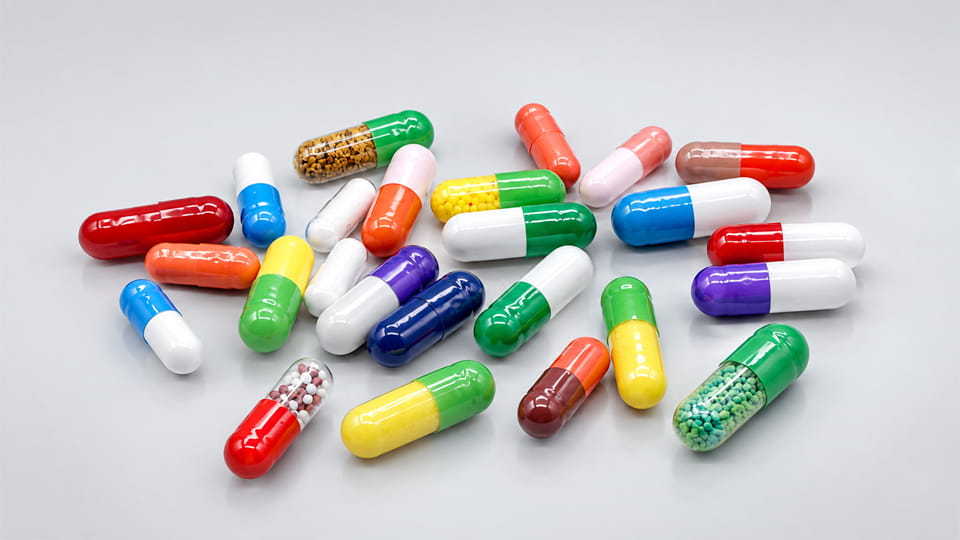
はい, provided the machine is designed with the required change parts. Jinlu currently lists #000, #00, #0, #1, #2, #3, #4 そして #5 hard capsules for the NJP-1200C, NJP-1500D and NJP-7800D. Changing capsule size normally requires format/tooling changes, so buyers should include every planned size in the URS and quotation.

Can an automatic capsule filling machine fill both powder and pellets?

はい, suitable industrial capsule fillers can process powders and pellets, and some architectures can fill combinations into the same capsule using separate dosing stations. ACG, Syntegon and MG2 all document multi-material or combination-filling capability in their capsule-filling portfolios. The exact configuration should be verified because “supports powder and pellets” does not necessarily mean simultaneous combination filling is included as standard.

How long does capsule filling machine changeover take?

Always separate mechanical changeover from validated product changeover. Jinlu publishes approximately 15-minute mold-change figures for the NJP-1200C, NJP-1500D and NJP-7800D, but full product changeover can also include line clearance, disassembly, クリーニング, 乾燥, 検査, verification and documented release. FDA expects cleaning processes to be demonstrated as effective, so complete changeover time depends heavily on the product and the site’s validated cleaning procedure.

Is a semi-automatic or fully automatic capsule filling machine better for multiple products?

A semi-automatic capsule filler can be a strong choice for small batches because capital cost is lower and the equipment is relatively simple. A fully automatic capsule filling machine becomes more attractive as commercial volumes, 人件費, repeatability requirements and downstream automation increase. Jinlu’s current semi-automatic CGN-208D is listed at up to 30,000 カプセル/時間, compared with 72,000, 90,000 そして 468,000 capsules/hour for the three automatic models discussed above.

How can cross-contamination be reduced when using one capsule filler for different products?

Start with hygienic design, accessible product-contact parts, effective dust control and a scientifically justified cleaning procedure. Then validate cleaning as required by the facility’s quality system. For potent products, assess whether dedicated equipment or purpose-designed containment is required rather than relying on ordinary dust extraction. FDA identifies preventing contamination and carryover as a core reason for equipment cleaning, while specialist capsule equipment is available with OEB-rated containment and WIP cleaning.

How much does an automatic capsule filling machine cost?

There is no useful single capsule filling machine price for multi-product pharmaceutical production because configuration drives cost. 出力, capsule tooling, dosing modules, powder or pellet feeders, 封じ込め, 重量チェック, オートメーション, 検証ドキュメント, インストール, spare parts and service all affect the project. Compare total cost of ownership and cost per saleable capsule, not the purchase price alone.

Does a pharmaceutical capsule filling machine need IQ, OQとPQ?

The exact qualification strategy belongs to the pharmaceutical manufacturer’s quality system and applicable market requirements. EU GMP 付属書 15 explicitly describes IQ, OQ and PQ and also discusses URS and FAT/SAT. FDA’s process-validation guidance similarly expects equipment to be qualified as suitable for its intended use before commercial process qualification. Vendor documentation can support this work, but it does not replace the user’s own approved qualification and validation responsibilities.

Which dosing system is best for different capsule products?

The ideal dosing system depends on the product characteristics.
• Powder formulations often use tamping pin or dosator systems.
• Granules require dedicated feeding mechanisms.
• Pellets and micro-tablets may need specialized dosing units.
A flexible capsule filling machine should support multiple filling methods to meet changing production requirements.

Should a contract manufacturer buy one flexible machine or multiple dedicated machines?

It depends on production strategy. One flexible capsule filling machine is often suitable for manufacturers with many SKUs, frequent product changes, and medium production volumes. Dedicated machines may be more efficient for very high-volume products or specialized applications.


参考文献:
1.粉末流動特性がカプセル充填重量の均一性に及ぼす影響 —— テイラー & フランシス・オンライン
2.Low-dose capsule filling of inhalation products: critical material attributes and process parameters —— 国立医学図書館
3.低用量ドセータカプセル充填プロセス中の粉体層の均一性に及ぼす材料特性とプロセスパラメータの影響 —— サイエンスダイレクト
4.MODELING A DOSATOR CAPSULE FILLING PROCESS FOR HARD-SHELL CAPSULES —— ワイリーオンラインライブラリ
5.タンプ充填機でハードゼラチンカプセルに粉末を充填 —— サイエンスダイレクト

この記事をシェアする:
の写真 ペティフー
ペティフー

ペティフー, 金魯包装の創設者, もたらす 20 製薬機械分野における長年の専門知識. 彼のリーダーシップの下で, Jinlu はデザインを統合する信頼できるサプライヤーに成長しました, 生産, と販売. ペティは、クライアントが医薬品包装の複雑さを乗り越えられるよう、業界の深い知識を共有することに情熱を持っています。, 機器だけでなく確実に受け取れるようにする, しかし、生産目標に合わせて調整された真のワンストップ サービス パートナーシップ.

目次

お問い合わせを送信してください

返信を残す

あなたのメールアドレスは公開されません. 必須フィールドにマークが付いています *

無料見積もりを取得する

*私たちはあなたの機密性を尊重し、すべてのデータは保護されます. あなたの個人データは、JL ソリューションのためにのみ使用および処理されます。.