L'immissione sul mercato di un nuovo prodotto farmaceutico implica molto di più che lo sviluppo di una formulazione efficace. Una delle decisioni più importanti che i produttori devono affrontare è la scelta del giusto imballaggio. L'imballaggio selezionato per un prodotto farmaceutico può influenzarne direttamente la stabilità, durata di conservazione, conformità normativa, sicurezza dei trasporti, e esperienza del paziente. Un pacchetto che non riesce a proteggere dall'umidità, ossigeno, leggero, oppure la contaminazione può compromettere la qualità del prodotto molto prima che raggiunga l'utente finale. L’imballaggio quindi non è semplicemente un contenitore, ma è una parte essenziale del sistema di protezione del prodotto.
Per i produttori farmaceutici, responsabili della produzione, e team di approvvigionamento, selezionare l'imballaggio giusto richiede il bilanciamento di molteplici fattori, compresa la forma farmaceutica, compatibilità materiale, prestazioni di barriera, sicurezza del paziente, Efficienza della produzione, e futura scalabilità. Se il prodotto è un tablet, capsula, polvere, liquido, o iniettabile, la giusta soluzione di imballaggio può contribuire a garantire l'integrità del prodotto supportando al tempo stesso un'efficiente produzione commerciale. In questa guida, esploreremo i fattori chiave che ogni produttore dovrebbe considerare quando sceglie l'imballaggio per un nuovo prodotto farmaceutico.
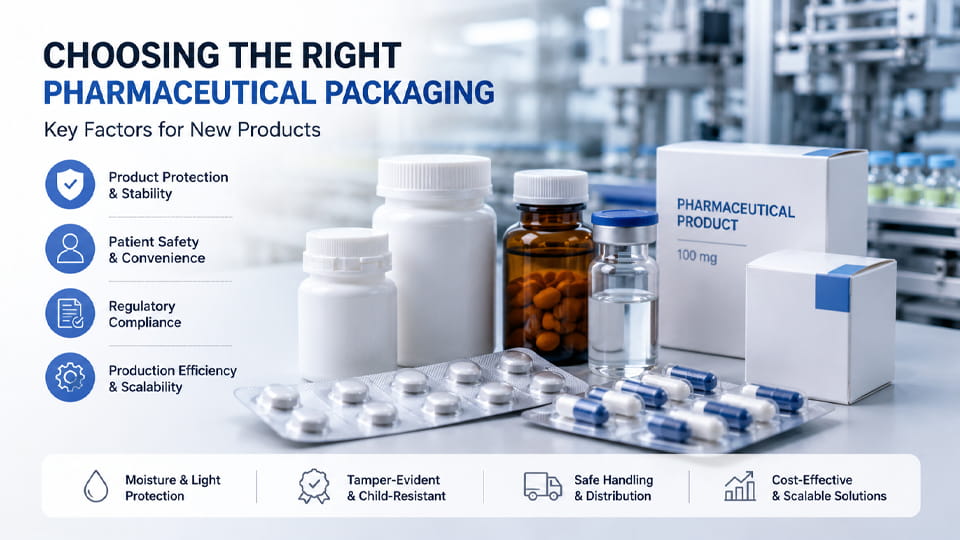
Perché la scelta del packaging è importante nel settore farmaceutico
Packaging farmaceutico È vitale, non facoltativo. A differenza del normale imballaggio di consumo, l'imballaggio farmaceutico deve proteggere l’integrità del farmaco durante tutta la sua durata di conservazione. L’OMS e le linee guida normative sottolineano che l’imballaggio deve proteggere i medicinali da umidità, leggero, ossigeno e altre minacce esterne. In altre parole, “preserva la stabilità e la qualità dei medicinali” e previene deterioramenti o manomissioni.
Le funzioni chiave dell'imballaggio includono:
- Protezione del prodotto: Tenere fuori l'umidità, ossigeno, leggero, calore e contaminanti. Per esempio, una guida USP lo rileva le pillole solide “devono essere protette dal vapore acqueo” poiché l'umidità può modificare la potenza o la dissoluzione del farmaco. Materiali ad alta barriera (foglio di alluminio, pellicole rivestite, vetro ambrato) sono spesso utilizzati dove la sensibilità è elevata.
- Conformità normativa: L'imballaggio deve soddisfare la FDA, EMA e OMS Requisiti GMP. Ciò include il corretto integrità della chiusura del contenitore (CCI), materiali validati, e caratteristiche simili a prova di manomissione sigilli. Confezione a prova di bambino è necessario per molti farmaci per prevenire l'ingestione accidentale. Serializzazione e tracciabilità (codici a barre univoci su ogni confezione) sono ora obbligatori nei principali mercati (FDA DSCSA, FMD dell’UE).
- Sicurezza e compliance del paziente: Il design della confezione dovrebbe prevenire errori di dosaggio e usi impropri. Etichette antimanomissione e tappi a prova di bambino “proteggere da avvelenamenti accidentali”. Funzionalità intuitive (facile da aprire, aiuti al dosaggio, blister di calendario) aiutare i pazienti ad assumere i farmaci correttamente.
- Marchio e comunicazione: Imballaggio secondario (cartoni, etichette) fornisce istruzioni, avvertimenti, e marchio. Secondo gli esperti, le etichette devono essere resistenti e chiare per evitare confusioni. Infatti, un'analisi ha trovato quasi 50% dei richiami di farmaci sono legati a problemi di imballaggio/etichettatura.
Insomma, l'imballaggio è una tutela attiva. La mancata scelta del pacchetto giusto può portare a API degradate, danno al paziente, e grattacapi normativi. L'imballaggio giusto “protegge la qualità del farmaco" e quindi rafforza l’efficacia e la reputazione del prodotto.

Fare un passo 1: Comprendere le caratteristiche del nuovo prodotto farmaceutico
Il primo passo è a audit approfondito del prodotto. Chiedere: Qual è la forma di dosaggio (tavoletta, capsula, polvere, liquido, iniettabile, ecc.)? Quali sensibilità ha il farmaco (umidità, ossigeno, leggero, Calore)? Ha bisogno di un controllo del dosaggio speciale (inalatore predosato, contagocce, siringa precaricata)?
- Forma di dosaggio: Compresse e capsule sono in genere dose solida e spesso confezionato blister o flaconi. Entrano liquidi/sospensioni bottiglie o fiale. Gli iniettabili richiedono fiale sterili, fiale o siringhe preriempite. I gas/inalatori utilizzano contenitori specializzati. È possibile confezionare polveri o granuli bustine, stick pack o bottiglie.
- Sensibilità chimico/fisiche: Il farmaco è igroscopico o soggetto a ossidazione? Farmaci altamente sensibili all'umidità (per esempio. compresse effervescenti) Bisogno imballaggi ad alta barriera come blister Alu-Alu o bottiglie rivestite di essiccante. Necessitano di composti sensibili alla luce contenitori opachi o colorati. I farmaci reattivi richiedono materiali inerti (per esempio. bicchiere, alcuni polimeri).
- Validità e stabilità: Considerare l'eventuale controllo della temperatura richiesto (refrigerazione) o condizioni di vuoto/sterilità. Alcuni vaccini o prodotti biologici possono richiedere un confezionamento della catena del freddo o fiale specializzate.
Punto chiave: L'imballaggio primario deve essere inerte e protettivo. Non dovrebbe lisciviare o assorbire il farmaco, e deve mantenere un ambiente sigillato. Per esempio, La FDA rileva che i contenitori orali solidi dovrebbero avere un “basso tasso di permeazione del vapore acqueo, e il sistema di chiusura dovrebbe costituire un sigillo”. L'esecuzione di test di compatibilità ed estraibili con i componenti di imballaggio candidati è fondamentale.
Lista di controllo per l'audit del prodotto:
- Forma/tipo di dosaggio (tavoletta, capsula, liquido, ecc.)
- Condizioni di conservazione/stabilità (temperatura, umidità, leggero)
- Requisiti di dosaggio/somministrazione (contagocce, pompa, dose unitaria)
- Considerazioni sull'uso da parte dei pazienti (medicina del bambino vs dell’adulto, mobilità, adatto agli anziani)
- Vincoli normativi (per esempio. fa parte delle informazioni sul paziente del pacchetto primario?)
Questa comprensione guiderà la scelta dell’imballaggio primario (la confezione a diretto contatto con il farmaco). Prossimo, discutiamo di queste opzioni.
Fare un passo 2: Scegli l'imballaggio primario appropriato
Imballaggio primario è il contenitore immediato che contiene il farmaco. Tocca direttamente il farmaco. I tipi di imballaggio primario comuni includono pacchetti di blister, bottiglie (plastica/vetro), fiale/fiale, buste, tubi, ecc. Ognuno ha pro/contro:
- Confezioni blister (Alu-Alu o Alu-PVC): Ideale per forme solide monodose (compresse, capsule). Forniscono eccellente barriera all'umidità/luce, soprattutto il Alu-Alu (foglio formato a freddo) tipo. I blister assicurano che ogni dose sia sigillata fino all'uso, migliorare la conformità e ridurre la contaminazione incrociata. I blister moderni possono essere resi a prova di bambino. Attrezzatura: Ad alta velocità macchine da imballaggio con blister gestire la formazione, alimentazione, termosaldatura e taglio (per esempio. Blister Alu-Alu di JinluPacking).
- Bottiglie (Plastica o vetro): Comune per l'imballaggio a più unità (sciroppi, capsule, compresse). Le bottiglie sono convenienti per grandi volumi. Bottiglie di vetro (Borosilicato di tipo I) offrono un'eccellente inerzia chimica e possono essere colorati di ambra per la protezione dalla luce. Bottiglie di plastica (HDPE, PP) sono leggeri e infrangibili ma di solito hanno una maggiore permeabilità all'umidità. Le bottiglie spesso usano tappi a prova di bambino. Attrezzatura: Le macchine conta/riempitrici riempiono e tappano le bottiglie, e può inserire gli essiccanti o sigilli in alluminio (vedere sulle righe di conteggio). Le linee di riempimento bottiglie e le tappatrici automatiche di Jinlu integrano questi passaggi.
- Bustine & Pacchetti di bastoncini: Utilizzato per le polveri, granuli, o liquidi monodose (per esempio. antibiotici, ORS). Si tratta di buste flessibili in alluminio o laminato sigillate su tutti i lati. Le bustine offrono un'eccellente barriera (spesso con un foglio di alluminio) e comodità. Attrezzatura: Forma di macchine confezionatrici di bustine, riempire, e sigillare questi sacchetti in una volta sola.
- Fiale & Fiale: Standard per iniettabili sterili (soluzioni, polveri liofilizzate). Fiale (vetro o plastica) con tappi di gomma mantengono la sterilità. Fiale (bicchiere) sono ermeticamente chiusi fino al momento dell'utilizzo. Entrambi garantiscono un'elevata purezza e sono adatti per aghi/siringhe. Attrezzatura: Linee di riempimento flaconi, vengono utilizzate macchine tappatrici e aggraffatrici (spesso con aree di flusso laminare per la sterilità).
- Altri: Tubi (metallo o plastica) sono comuni per unguenti/creme. Siringhe o inalatori preriempiti (MDI/DPI) implicano un imballaggio personalizzato del dispositivo. Questi spesso richiedono attrezzature specializzate per il riempimento e l'assemblaggio.
L'idoneità di ciascuna opzione dipende dal prodotto:
- Costo vs. Protezione: La tabella seguente mette a confronto i tipi di confezioni primarie:
| Tipo |
Meglio per |
Livello di protezione |
Costo |
Attrezzatura |
| Pacchetto blister |
Compresse, Capsule |
Molto alto (Umidità/Luce) |
Medio |
Macchina confezionatrice in blister |
| Bottiglia |
Compresse, Sciroppi, Pillole |
Medio (buono con gli inserti) |
Basso |
Linea di riempimento/tappatura bottiglie |
| Bustina/bastoncino |
Polveri, Granuli |
Alto (Barriera in lamina) |
Medio |
Macchina da imballaggio a bustina |
| Fiala/Fiala |
Iniettabili, Sieri |
Molto alto (Vetro sterile) |
Alto |
Riempimento fiale & Linea di sigillatura |
Scegli la confezione primaria che corrisponde alla forma di dosaggio e alle esigenze di barriera. Per esempio, una compressa sensibile all'umidità può richiedere un Blister in alluminio-alluminio o una bottiglia di vetro ambrato con essiccante. Le compresse da banco più comuni potrebbero essere confezionate in una bottiglia di plastica con un tappo a tenuta di fibra (oltre alla funzione a prova di bambino).
Mancia: Se il rispetto della dose unitaria è importante (PER ESEMPIO., distribuzione ospedaliera o pacchi da viaggio), spesso sono preferiti i fogli blister o le confezioni stick. Per flessibilità (i dosaggi possono essere modificati), le bottiglie sono migliori.
Fare un passo 3: Considerare i requisiti di stabilità e durata di conservazione
Le decisioni sugli imballaggi sono inseparabili dalla stabilità. Il contenitore sbagliato può causare deterioramento o guasti all'etichetta. Considerazioni chiave:
- Proprietà barriera: Utilizzare materiali che blocchino i fattori critici. Per farmaci sensibili all’umidità, sono necessarie pellicole o vetri ad alta barriera. Ad esempio, blister in alluminio formato a freddo forniscono essenzialmente zero ingresso di umidità. La guida alla stabilità FDA/ICH rileva che i prodotti sono contenuti in contenitori veramente impermeabili (PER ESEMPIO., blister di alluminio o vetro sigillato) può essere testato in condizioni normali senza studi speciali sull'umidità. Al contrario, confezioni semipermeabili (come alcune materie plastiche) richiedono un'attenta valutazione dell'umidità.
- Protezione dalla luce: Le API sensibili alla luce necessitano di un packaging opaco o ambrato. Per esempio, le bottiglie di vetro ambrato o le buste metallizzate proteggono dai raggi UV. Una pratica comune è quella di avvolgere le fiale trasparenti in un involucro di alluminio, se necessario.
- Compatibilità: Assicurarsi che i materiali di imballaggio non reagiscano con il farmaco. Il vetro è inerte, ma alcune plastiche possono lisciviare o assorbire composti. Eseguire studi sugli estraibili/liscibiliabili sui componenti primari. Indicazioni normative (FDA, Ema) aspettarsi integrità della chiusura del contenitore (CCI) test durante tutta la durata di conservazione.
- Determinazione della durata di conservazione: Studi sulla stabilità (IQ1A/R2) deve usare il sistema di chiusura del contenitore proposto. Se le prove sulla durata di conservazione mostrano un degrado, potrebbe essere necessario modificare l'imballaggio (per esempio. passare a una barriera migliore) o istruzioni per la manipolazione/conservazione delle etichette.
- Funzionalità avanzate: Alcuni pacchetti integrano essiccanti o assorbitori di ossigeno. Laminati multistrato (PET/alluminio/PE) sono spesso utilizzati per la distribuzione globale. Per una protezione di altissima precisione, imballaggio attivo (assorbitori di umidità incorporati) può essere utilizzato.
Lista di controllo per la compatibilità della stabilità:
- Se necessario, scegliere materiale primario ad alta barriera (Alu-Alu, bicchiere, laminati).
- Verificare il metodo di sigillatura (termosaldatura, berretti) raggiunge una bassa trasmissione del vapore acqueo (MVTR).
- Condurre stabilità accelerata (40°C/75%UR) secondo ICH per garantire l'assenza di ingresso di umidità o cambiamenti chimici.
- Pianificare l'integrità della chiusura del contenitore (test di ingresso del vuoto o del colorante) soprattutto per prodotti liquidi/sterili.
- Assicurarsi che l'imballaggio possa resistere agli shock di distribuzione (prove di caduta/vibrazione con imballaggi secondari/terziari).
Selezionando un imballaggio che soddisfi in anticipo i requisiti di stabilità, si evitano costose riformulazioni o riconfezionamenti successivi.
Fare un passo 4: Valutare la comodità e la compliance del paziente
Oltre la protezione, un packaging moderno dovrebbe aiutare i pazienti a utilizzare correttamente il medicinale. Progettazione dell'imballaggio influenza direttamente l’adesione e sicurezza. Considerare:
- Apertura/facilità d'uso: I pazienti anziani possono avere difficoltà con i cappucci stretti. Offerta berretti adatti agli anziani oppure i sigilli facili da staccare possono essere utili. Per i farmaci a dose unitaria, blister di calendario (giorni o orari etichettati) può ricordare ai pazienti di prendere la pillola corretta.
- Ausili per il dosaggio: Se applicabile, includere misurini/cucchiai per liquidi, contagocce per oftalmica, o pompe dosatrici. Segni chiari sul contenitore (lauree, fasce di colore) migliorare la precisione.
- Portabilità: Se i pazienti viaggiano o trasportano medicinali, sono utili bustine compatte o piccoli flaconi. Le caratteristiche anti-manomissione rassicurano la sicurezza.
- Funzionalità di conformità: Alcuni pacchetti primari sono progettati per essere conformi: PER ESEMPIO., distributori di pillole con allarmi integrati, o carte blister intelligenti che monitorano l'utilizzo. Se l'elevata aderenza è fondamentale, considerare tali innovazioni.
- Etichette e inserti: Assicurarsi che sia chiaro, istruzioni multilingue sulla scatola o sul foglio illustrativo. Un buon imballaggio aiuta i farmacisti e i pazienti con etichette leggibili, tabelle di dosaggio, e icone di archiviazione.
Essenzialmente, chiedere: Il paziente troverà questo pacchetto facile e sicuro da usare?? Se non, potrebbero abusare o abbandonare il prodotto. Incluse funzionalità incentrate sul paziente (serrature per bambini, facile da aprire, etichettatura chiara) soddisfa anche le autorità di regolamentazione che pongono l'accento sulla sicurezza del paziente.
Fare un passo 5: Garantire la conformità normativa
Il packaging farmaceutico è fortemente regolamentato. Principali questioni relative alla conformità:
- A prova di bambino (CR) requisiti: Molti paesi (NOI, Unione Europea, AU) imporre l’imballaggio CR per i farmaci orali ad alto rischio. Lo rileva l’OMS “sono state sviluppate chiusure a prova di bambino” per proteggere i bambini. Assicurarsi che i farmaci da prescrizione solidi e liquidi orali utilizzino tappi CR certificati o meccanismi push-turn, se richiesto dalla legge. (Per esempio. NOI 16 CFR 1700 oro norme UE EN 14375).
- Sigilli antimanomissione: La FDA e altri richiedono la prova che una confezione non è stata aperta. Fascette antimanomissione, involucri termoretraibili, o i sigilli staccabili sono comuni sulle bottiglie; i sigilli in alluminio sono comuni sui barattoli. Anche i blister dovrebbero essere difficili da aprire senza danni evidenti.
- Etichettatura: I pacchetti primari e secondari devono contenere tutte le informazioni richieste (nome del farmaco, forza, forma di dosaggio, numero di lotto/lotto, scadenza, condizioni di stoccaggio, produttore). I caratteri devono essere leggibili e conformi alle linee guida della farmacopea. Per esempio, FDA 21 CFR 201.15 copre la durabilità dell'etichetta.
- Serializzazione e tracciabilità: Regolamenti come il DSCSA della FDA (NOI) e la Direttiva UE sui medicinali falsificati richiedono codici univoci (per esempio. 2Codici a barre D) su ogni unità vendibile. Il design dell'imballaggio deve consentire la stampa o l'incisione di numeri di serie e codici datamatrix su blister o etichette di bottiglie. La tua linea di confezionamento potrebbe aver bisogno di una stampante di codifica e di un sistema di visione, e integrazione con un database track-and-trace.
- Buone pratiche di produzione (GMP): Linee di confezionamento deve soddisfare GMP (pulibilità, tracciabilità dei materiali, ecc.). Tutti gli imballaggi primari utilizzati devono essere qualificati GMP (per esempio. ISO 15378 per i materiali di imballaggio). Le macchine dovrebbero esserlo IR/WH/PQ qualificato. (Vedi sotto per le attrezzature per l'imballaggio Jinlu).
Suggerimento normativo chiave: Non considerare la conformità come un ripensamento. Per esempio, la mancata inclusione di una funzione anti-manomissione può bloccare la registrazione del prodotto. Rivedere tempestivamente le norme specifiche per paese, ad es. USP <661> per contenitori in plastica, CFR 211 per i controlli sugli imballaggi. Verificare sempre che l'imballaggio e le attrezzature di imballaggio scelti possano soddisfare questi standard.
Fare un passo 6: Bilanciare i costi di imballaggio e l'efficienza della produzione
In questa fase, valutare costo totale di proprietà (TCO) per le opzioni di imballaggio. Considerare:
- Costo del materiale: Le buste flessibili e i blister possono costare di più per unità rispetto alle semplici bottiglie. Il foglio blister Alu-Alu è più costoso del foglio PVC. Le bottiglie di vetro costano più di quelle di plastica.
- Produttività dell'attrezzatura: I formati ad alta barriera come i blister potrebbero funzionare più lentamente delle linee di bottiglie, incidendo sul conteggio delle attrezzature necessarie. Al contrario, le riempitrici di bottiglie possono raggiungere velocità molto elevate (diverse migliaia di bottiglie/ora) ma necessitano di riordinatori, berretti, ed etichettatrici in linea.
- Complessità della linea: Confezione più complessa (per esempio. blister monodose) richiede macchine specializzate. Controlla se l'investimento di capitale e la manutenzione rientrano nel tuo budget.
- Lavoro: Le linee completamente automatizzate riducono il lavoro manuale ma aumentano il capitale. Le macchine semiautomatiche costano meno ma necessitano di più operatori.
- Logistica: Anche l’imballaggio secondario/terziario ha un costo. Le bottiglie di vetro di grandi dimensioni sono più pesanti da spedire. I cartoni ingombranti aumentano i costi di trasporto.
- Spreco e resa: Più elaborazione (per esempio. punzonatura di blister) potrebbe generare scarti. Valutare i materiali sprecati (tagliare dalle vesciche, bottiglie rotte, ecc.).
Esegui un lavoro approssimativo confronto dei costi: per esempio. costo per confezione finale comprensivo di materiali e lavorazione. Considera anche la velocità (unità all'ora) e la dimensione del lotto richiesta.
UN Lista di controllo del TCO:
- Confronta il costo del materiale di imballaggio per unità.
- Valutare la produttività della macchina necessaria rispetto alla domanda.
- Calcolare i costi di manodopera ed energia per ciascuna linea.
- Includere i costi di smaltimento/riciclaggio dei rifiuti.
- Fattore di rischio di rilavorazione (per esempio. se l'imballaggio fallisce, costo di rietichettatura o reimballaggio).
- Futuro ampliamento: se i volumi raddoppiano, questa soluzione si ridimensiona?
Spesso il il materiale a basso costo non è il migliore se porta a richiami o rifiuti. Trovare un equilibrio è fondamentale: a volte pagare di più per una barriera migliore o l'automazione ripaga in termini di rendimento e conformità più elevati.
Fare un passo 7: Garantire che il packaging possa adattarsi alla domanda futura
Considera non solo il lancio immediato, ma il ciclo di vita a lungo termine del prodotto:
- Pilota contro. Commerciale: Per lotti clinici iniziali o per piccoli mercati, è possibile utilizzare linee manuali o semiautomatiche. Per la produzione su larga scala, sarà necessaria una linea completamente automatizzata. Assicurati che la tua scelta (o la proposta del venditore) consente aggiornamenti modulari.
- Modularità delle apparecchiature: Puoi aggiungere corsie o unità per aumentare la velocità? Per esempio, alcune macchine blister possono aggiungere più tasche rotanti. Le linee di imbottigliamento possono aggiungere riempitivi paralleli.
- Integrazione: Pensa dall'inizio alla fine: conteggio/riempimento → sigillatura → astucciamento → imballaggio in scatole → pallettizzazione. Se collabori con Jinlu Packing o simili, possono progettare a linea di confezionamento chiavi in mano che include la serializzazione, astucciamento, imballaggio della cassa, ecc.
- Ridimensionamento normativo: Qualsiasi modifica ai componenti dell'imballaggio (per esempio. un nuovo fornitore di bottiglie) richiede una nuova approvazione normativa se influisce sulla stabilità o sulla conformità. Pianificare il controllo qualità dei fornitori di imballaggi e i fornitori di backup.
- Prodotti futuri: Se la tua azienda può produrre altre forme di dosaggio (per esempio. un gel in futuro), scegli attrezzature flessibili. Riempitrici di capsule modulari o macchine blister in grado di gestire vari formati possono essere un buon investimento.
Coinvolgere tempestivamente gli ingegneri del packaging o un consulente può evitare colli di bottiglia in seguito. Come nota un esperto del settore, “Il confezionamento dovrebbe essere considerato parallelamente allo sviluppo della formulazione, non come un ripensamento. Le giuste decisioni iniziali renderanno più agevole lo scale-up e l’espansione della linea.
Errori comuni nella selezione dell'imballaggio da evitare
- Lasciare la selezione del packaging troppo tardi: Non decidere l’imballaggio solo dopo aver bloccato la formulazione. I primi studi sulla stabilità dovrebbero utilizzare l'imballaggio finale, non barattoli fittizi.
- Saltare i test di stabilità: Non dare mai per scontato che un contenitore funzioni; testare sempre il farmaco nell'effettivo contenitore/chiusura in condizioni ICH. Una formula altrimenti stabile può degradarsi se l'imballaggio è scadente.
- Concentrarsi solo sui costi: I materiali economici possono far risparmiare denaro in anticipo, ma costano di più in caso di richiamo o di durata di conservazione ridotta. Bilanciare i costi con la protezione.
- Ignorare i fattori del paziente: Una bottiglia standard potrebbe adattarsi agli obiettivi di costo, ma se i pazienti non riescono ad aprirlo o ad aderire, il prodotto avrà una performance inferiore al mercato.
- Sottovalutare le esigenze normative: La mancata inclusione di un sigillo antimanomissione o di una chiusura a prova di bambino quando richiesto può impedire l'approvazione. Consultare sempre le linee guida.
- Trascurare la catena di fornitura: Considerare i tempi di consegna e la durata di conservazione dell'imballaggio. Alcuni materiali speciali (come le navi che eliminano l'ossigeno) potrebbero avere tempi lunghi.
Evitando questi errori e la revisione interfunzionale (R&D, QA, Produzione, Normativa), ti assicuri che l'imballaggio scelto sia fattibile, compiacente, ed efficace.
Imballaggio consigliato per nuovo tipo di prodotto farmaceutico
| Tipo di prodotto |
Imballaggio primario consigliato |
| Compresse/Capsule |
Dose unitaria pacchetti di blister (Alluminio-Alu o PVC/Allu) O massa bottiglie. Tappi per bottiglie a prova di bambino. Attrezzatura ideale: macchina confezionatrice blister o conteggio compresse/capsule & linea di imbottigliamento. |
| Polveri/Granuli orali |
Bustine O pacchetti di bastoncini (per dose singola); O bottiglie (per massa). Confezionatrici per bustine monodose, riempitrici a coclea per bottiglie. |
| Liquidi/sciroppi |
Bottiglie di plastica o di vetro con tappi a vite (spesso con sigillo in alluminio e tappo a prova di bambino). Per elevata purezza, Vetro di tipo I. Attrezzatura: linea di riempimento liquidi (pompe, tappatura in linea). |
| Iniettabili |
Fiale o fiale di vetro (sterile) o siringhe preriempite. Utilizzare macchine sterili per il riempimento e l'aggraffatura delle fiale in una camera bianca. |
| Creme/Unguenti (Semisolidi) |
Tubi o barattoli (tubi in alluminio/plastica, barattoli di vetro/plastica). Tubi con sigilli anti-manomissione. Riempitrici semiautomatiche o automatiche per tubetti. |
| Compresse effervescenti |
Tubi o bottiglie di alluminio (per mantenersi asciutto); spesso con essiccante. Sono comuni anche i blister in foglio di alluminio. Macchine per tubi (per tablet) o macchine blister. |
| Supposte |
Vassoi blister (tipicamente Alu/PVC o Alu/Alu) o scatole di unità confezionate singolarmente. Confezionatrici in blister o termoformatrici. |
| Inalatori/Spray nasali |
Bombolette MDI o cartucce DPI (specifico del dispositivo). Coordinamento con il produttore del dispositivo; attrezzature personalizzate per il riempimento/riempimento di lattine. |
Questa mappatura aiuta a garantire che ogni forma di farmaco riceva la protezione adeguata. Per esempio, i blister sono eccellenti per dosi orali solide, mentre le fiale di vetro sono un must per gli iniettabili sterili. La tabella suggerisce anche l'attrezzatura: per esempio. macchine da imballaggio con blister, linee di riempimento e tappatura bottiglie, macchine confezionatrici di bustine, riempitivi di fiale, e così via.
In che modo Jinlu Packing aiuta le aziende farmaceutiche
Jinlu Packing è leader produttore di macchine per l'imballaggio farmaceutico. Offriamo soluzioni chiavi in mano per nuove linee di confezionamento di farmaci. Offerte chiave:
- Macchine per l'imballaggio con blister: Blister ad alta velocità per confezioni in PVC/Alu o Alu-Alu. Disegni personalizzati per adattarsi al formato del tablet/capsula e ai requisiti di velocità.
- Riempimento di bottiglie & Linee di chiusura: Riempimento automatico delle bottiglie, tappatura, e sistemi di etichettatura. Le nostre linee di conteggio e riempimento possono integrare riordinatori, inseritori di essiccante, sigillanti di fogli, e tappatori per flaconi di compresse/gommose.
- Macchine Astucciatrici: Astucciatrici orizzontali e verticali per formare astucci attorno ai blister, bottiglie, o bustine. Caratteristiche come 100% scansione del codice per serializzazione e cambi rapidi.
- Sistemi di serializzazione/codifica: Possiamo equipaggiare le linee con codificatori a getto d'inchiostro/laser e ispezione visiva per stampare e verificare i lotti, scadenza, e codici univoci.
- Linee complete di confezionamento: Dall'alimentazione del prodotto all'inscatolamento, possiamo progettare una linea completamente integrata che soddisfi le esigenze cGMP e di serializzazione. Le nostre macchine sono costruite per una facile pulizia (Acciaio inossidabile SUS316L) e includere la documentazione IQ/OQ.
- Supporto & Conformità: Assistiamo con la qualificazione della macchina (IR/WH/PQ) e offrono installazione e formazione in loco in tutto il mondo.
Lavorando con noi, non ottieni solo l'attrezzatura, ma competenza nel confezionamento. Assicuriamo il metodo di imballaggio scelto (linea del blister, linea di bottiglie, ecc.) è ottimizzato per il tuo prodotto e le tue esigenze normative, rendendo il lancio del tuo prodotto più agevole.
Conclusione
Scegliere il packaging giusto per un nuovo prodotto farmaceutico è a decisione multiforme. Richiede il bilanciamento della stabilità del farmaco, sicurezza del paziente, conformità, costo, e scalabilità. Ricordare: l'imballaggio migliore è quello che mantiene il tuo prodotto sicuro ed efficace fino a quando non raggiunge il paziente. Non si tratta solo di essere attraenti o economici, ma di qualità. Analizzando attentamente le proprietà del prodotto, testare le opzioni di confezionamento, e seguenti normative, i produttori possono evitare costosi richiami e garantire che i loro medicinali rimangano efficaci, puro, e sicuro. Con una strategia di packaging ben scelta (e i macchinari giusti), proteggi sia i tuoi clienti che la reputazione del tuo marchio.
Domande frequenti sulla scelta dell'imballaggio per un nuovo prodotto farmaceutico
Perché il packaging è importante per un nuovo prodotto farmaceutico?
L'imballaggio fa molto di più che contenere un medicinale. Protegge il prodotto farmaceutico dall'umidità, ossigeno, leggero, contaminazione, e danni fisici. Un imballaggio adeguato contribuisce inoltre a garantire la conformità normativa, sicurezza del paziente, stabilità del prodotto, e durata di conservazione durante la distribuzione e lo stoccaggio.
Quali fattori dovrebbero essere considerati nella scelta del packaging farmaceutico?
I produttori dovrebbero valutare diversi fattori, tra cui:
• Forma di dosaggio (tavoletta, capsula, liquido, polvere, iniettabile)
• Sensibilità all'umidità e all'ossigeno
• Requisiti di protezione dalla luce
• Obiettivi di durata di conservazione
• Requisiti normativi
• Comodità per il paziente
• Costi di imballaggio
• Efficienza produttiva
• Scalabilità futura
La soluzione di imballaggio ideale dovrebbe bilanciare la protezione del prodotto, conformità, ed efficienza operativa.
Qual è il miglior packaging per compresse e capsule?
Blister e flaconi sono le opzioni più comuni.
• La confezione in blister fornisce un'eccellente protezione contro l'umidità e la contaminazione offrendo al contempo la comodità della dose unitaria.
• Le bottiglie sono convenienti per la produzione di grandi volumi e vengono comunemente utilizzate per le compresse, capsule, e integratori alimentari.
La scelta migliore dipende dai requisiti di stabilità del prodotto e dal mercato di riferimento.
In che modo il confezionamento influisce sulla stabilità dei farmaci?
I materiali di imballaggio influenzano direttamente l’esposizione di un farmaco a fattori ambientali come l’umidità, ossigeno, e luce. Un imballaggio scadente può accelerare il degrado, ridurre la potenza, e ridurre la durata di conservazione. Ecco perché i test di stabilità vengono generalmente eseguiti utilizzando la configurazione di imballaggio finale destinata alla distribuzione commerciale.
Come possono le aziende farmaceutiche garantire la conformità degli imballaggi??
I produttori dovrebbero verificare che i materiali di imballaggio, etichette, chiusure, e le attrezzature per l'imballaggio sono conformi alle normative applicabili come FDA, GMP dell’UE, serializzazione, e requisiti di imballaggio a prova di bambino. Collaborare con fornitori esperti di apparecchiature per l'imballaggio farmaceutico può contribuire a semplificare i processi di convalida e conformità.
Quando è opportuno prendere in considerazione l'imballaggio durante lo sviluppo di un prodotto farmaceutico?
L'imballaggio dovrebbe essere valutato il prima possibile durante lo sviluppo del prodotto. Aspettare la commercializzazione può creare problemi di stabilità, ritardi normativi, costi di riprogettazione del packaging, e sfide produttive. La selezione anticipata dell'imballaggio consente ai produttori di condurre studi accurati sulla stabilità e di sviluppare una strategia di imballaggio commerciale più efficiente.
Come scelgo i giusti macchinari per il confezionamento farmaceutico per un nuovo prodotto?
Inizia valutando:
• Tipo di prodotto e forma di dosaggio
• Formato dell'imballaggio (vescica, bottiglia, bustina, fiala)
• Capacità produttiva richiesta
• Livello di automazione
• Requisiti normativi
• Piani di espansione futuri
La scelta di apparecchiature scalabili per il confezionamento farmaceutico può contribuire a ridurre i costi di investimento futuri e supportare la crescita aziendale a lungo termine.
Riferimenti:
1.Sistemi di chiusura di contenitori per il confezionamento di farmaci e prodotti biologici per uso umano -- NOI. Amministrazione degli alimenti e dei farmaci
2.Sviluppo farmaceutico ICH Q8 —— Banca dati ICH
3.Buone pratiche di produzione per i prodotti farmaceutici -- CHI
4.USP Q&UN: Standard per i sistemi di imballaggio in plastica per prodotti farmaceutici —— usp.org
5.Test di integrità della chiusura dei contenitori: aspetti pratici e approcci nell'industria farmaceutica —— pda.org
